
Journalist

Lee Hugh
=
-
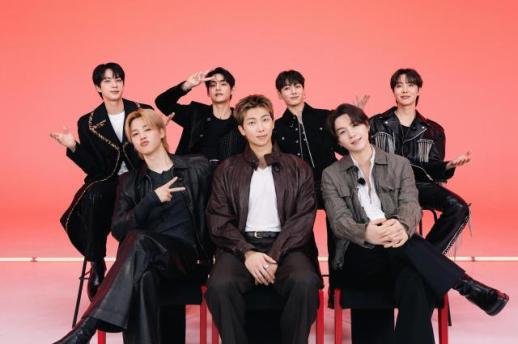 BTS’ ‘SWIM’ Holds Top 3 on Billboard Global Charts for Sixth Week BTS extended its run near the top of Billboard’s global charts, keeping a top-three position for a sixth straight week. According to Billboard’s latest rankings released May 5 for the May 9 charts, “SWIM,” the title track from the group’s fifth full-length album “ARIRANG,” ranked No. 2 on both the Global (Excl. U.S.) and Global 200 charts. On the Global 200, it rose one spot from the previous week. The momentum has not been limited to the title track. Thirteen vocal tracks from the album — excluding the track featuring the bell sound of the Sacred Bell of King Seongdeok — have remained on both global charts for six weeks, indicating continued listening across the full release. On Billboard’s main charts, “ARIRANG” placed No. 5 on the Billboard 200, staying in the top tier for six consecutive weeks. The album previously became the first by a Korean artist to rank No. 1 for three straight weeks. “SWIM” also held at No. 32 on the Hot 100 for a sixth week. The album and single posted steady results across other rankings. “ARIRANG” ranked No. 4 on Top Album Sales, No. 11 on Top Streaming Albums and No. 5 on Vinyl Albums. “SWIM” placed No. 16 on Digital Song Sales and No. 19 on Adult Contemporary, and also ranked No. 12 on Pop Airplay, No. 14 on Adult Pop Airplay and No. 24 on Radio Songs. The group’s current tour has also boosted interest in older material. “Pied Piper,” a 2017 track performed on the North American tour, re-entered the World Digital Song Sales chart at No. 9. BTS began its “BTS WORLD TOUR ‘ARIRANG’ IN NORTH AMERICA” on April 25 in Tampa and is playing 31 shows across 12 cities. The group met about 100,000 concertgoers on May 2-3 at Sun Bowl Stadium in El Paso and is set to continue the tour from May 7 at Estadio GNP Seguros in Mexico City. Catalog interest has remained strong as well. The choreography version of the 2020 “Dynamite” music video recently surpassed 300 million views on YouTube, with the main video and related clips continuing to draw views. * This article has been translated by AI. 2026-05-06 09:06:17
 -
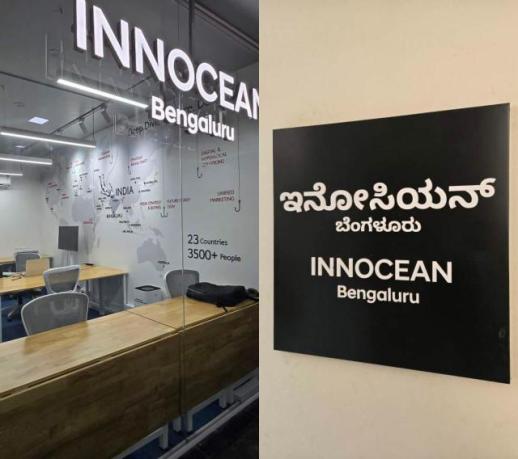 Innocean Opens Bengaluru Office to Expand in India’s Fast-Growing Ad Market Hyundai Motor Group affiliate Innocean said it is stepping up its push into the global advertising market by establishing a base in Bengaluru, India, as it looks for growth outside a shrinking domestic market. Innocean said May 6 it has opened a local office in Bengaluru — often called India’s Silicon Valley — and will expand its role into a tech-based business solutions hub that combines data, AI and content. Bengaluru is one of India’s key growth centers, home to tech companies, startups and global capability centers. Innocean India said it will build a hybrid business model at the new office by pairing data- and AI-driven performance and predictive analytics with content and platform planning. It also plans to strengthen its role as an offshoring service hub for the company’s global network. India is drawing attention as a new growth market for global advertising. With a population of more than 1.42 billion this year, it is one of the world’s largest consumer markets. Advertising-spend forecasts for major global markets show India’s ad market reached $13.8 billion (about 20.3895 trillion won) last year and is expected to grow 8% this year and 9.7% next year. By contrast, South Korea’s ad market has been contracting. According to the 2024 survey on the domestic broadcasting industry released last year by the Korea Communications Commission, broadcast advertising revenue totaled 2.3073 trillion won, down 183.2 billion won (7.4%) from a year earlier. Innocean India said it plans to expand client touchpoints and strengthen marketing execution, focusing on high-growth industries. Innocean established its India unit in 2005, its first overseas subsidiary, to secure opportunities including Bollywood. As of last year, non-affiliate clients accounted for a share in the 30% range, and the company said it has built a growth structure based on competitiveness in external markets. Chief Executive Officer Kim Jeong-a said the launch of the Bengaluru base is “not simply a regional expansion, but an important turning point for Innocean as it evolves beyond an agency into new business areas.” 2026-05-06 09:03:00
 -
 SK hynix tops 1.6 million won, Samsung Electronics hits 250,000 in premarket trade Shares of SK hynix and Samsung Electronics surged in premarket trading, extending a broader rally in chip stocks. According to Nextrade (NXT), SK hynix was trading at 1,609,000 won as of 8:48 a.m. on the 6th, up 11.2% from the previous session. Samsung Electronics rose 7.53% to 250,000 won. The gains were attributed to expectations for improving global semiconductor conditions. Overnight, the Philadelphia Semiconductor Index climbed 4.23% to a record high. The MSCI Korea ETF jumped 6.04%, and the MSCI Emerging Markets ETF rose 2.03%, signaling continued appetite for risk assets. On the back of that momentum, the Kospi is expected to attempt a move above the 7,000 level. In the previous session on the 4th, the Kospi closed at 6,936.99, up 338.12 points (5.12%), helped by net buying from foreign and institutional investors. SK hynix led that advance, ending up 12.52% at 1,447,000 won. Samsung Electronics gained 5.44% and, during the session, set a new high for the year, surpassing 230,000 won (April 30).* This article has been translated by AI. 2026-05-06 09:01:19
 -
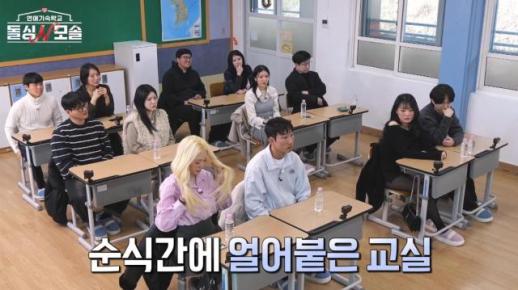 Dating Show Sparks Ethics Debate After Delaying Disclosure of Children A dating reality show can build its story around feelings, but critics say it should not do so by withholding basic facts about participants' lives. MBC Every1 and E Channel's "Love Dorm School: Divorced and Never-Dated" has drawn questions about production ethics after it held introductions without disclosing whether divorced participants have children. In the episode aired May 5, the divorced women introduced themselves, sharing their ages, jobs and views on dating. Their occupations included an English academy director, hair designer, beauty shop owner, nurse, home-shopping host and editorial designer. The introductions shifted the interest levels of the men, who are portrayed as having no dating experience. The segment did not include whether participants have children or the reasons for their divorces. Producers may have concluded that delaying those details would help cast members get to know each other without preconceptions. In similar shows, relationships have often cooled sharply after a participant reveals they have children, and the program may have sought to avoid reducing someone to a single condition. Still, the article argues that the rationale does not settle the ethical question. Whether someone has children is not routine biographical detail, it said, but a key factor in relationships that could lead to marriage. Because the show centers on divorced women seeking to date again and men with no dating experience, the article said the information should be shared before feelings deepen, not saved as a twist. The article said dating programs often delay core disclosures in the name of "emotional storytelling," but emotions should not be built by obscuring reality. A late reveal may create drama for viewers, it said, while placing pressure on participants who must reconcile growing feelings with practical decisions. It also said parents on the show risk having a central part of their lives treated as a test or plot device. Delaying disclosure may encourage people to see each other as individuals rather than checklists, the article said, but it can also postpone necessary judgment until after emotions take hold. It said the risk is higher for the "never-dated" men, who may be more likely to treat early feelings as absolute and underestimate the responsibilities involved. The article cited the sentiment "I'll raise them with love" as something that can sound appealing, while noting that parenting and family relationships cannot be handled by emotion alone. The article stressed that dating someone with children is not impossible and that having children is not disqualifying. Precisely for that reason, it said, the issue should be handled with greater care. Children are not a weakness or a "reversal" for television, it said, but a deeply connected part of a person's life and a factor that requires real responsibility and consideration from a partner. When and how that information is shared reflects how producers treat participants, not just an editing choice. It also described the show's premise as risky from the start: placing people who have experienced the end of love together with those who have not experienced its beginning, and watching the gap. That structure, it said, calls for stronger safeguards. In that context, delaying disclosure about children functions less as protection and more as a device to heighten emotional swings, the article said. The article said the appeal of dating shows should not depend on hiding information. Deeper stories can emerge, it argued, when participants choose despite knowing each other's realities. Disclosing whether someone has children does not erase emotion, it said; it can instead show the real choices people make, including approaching, hesitating or stepping back honestly. Producer Kim Jae-hoon has said he wanted to make a program that breaks prejudice. The article said doing that requires design that helps viewers see people in full even with the facts, not by concealing them. If the show aims to move beyond bias, it said, it should not treat participants' realities as obstacles to the story. Whether someone has children is not a "dopamine" bomb, it said, but part of a life and information that deserves respect in any decision about a relationship. It concluded that programs that help people understand one another differ from those that turn people into dramatic consumption, and said the show must prove it knows the difference. 2026-05-06 08:57:17
 -
 Kyobo Securities Raises Samsung Electronics Target Price to 330,000 Won on HBM Boom Kyobo Securities said Tuesday that the strength and durability of the memory upcycle have been confirmed, raising its target price for Samsung Electronics to 330,000 won from 220,000 won, a 50% increase. It maintained its “buy” rating. Choi Bo-young, an analyst at Kyobo Securities, said the key investment point is “visibility and sustainability,” not just the absolute size of profits. “Expanding long-term supply contracts and the full-scale rollout of HBM4 are structural changes that strengthen both variables at the same time,” Choi said. Samsung Electronics posted first-quarter revenue of 133.9 trillion won, up 69% from a year earlier, and operating profit of 57.2 trillion won, up 756%, marking a record quarterly result. Operating profit in the DS division came to 53.7 trillion won, leading companywide performance. Profitability in memory improved sharply as DRAM and NAND flash prices rose 91% and 89%, respectively. By contrast, non-memory and set businesses faced growing pressure from higher component costs. Kyobo Securities expects the improvement to continue in the second quarter, forecasting revenue of 158 trillion won and operating profit of 81 trillion won. It said a supply-tight market across memory is likely to persist as HBM demand rises with expanded investment in AI data centers, alongside stronger demand for server DDR5 and mobile LPDDR5X. It also projected faster product-mix improvement as shipments of 12-high HBM4 ramp up and gains from process transitions take hold. For NAND, it expects the company to sustain a record quarterly revenue trend on rising demand for data center eSSDs. Kyobo Securities forecast Samsung Electronics’ full-year 2026 revenue at 670 trillion won and operating profit at 339 trillion won, above the market consensus. It said some risks remain, including a union strike and weakness in non-memory, but expects the strong memory cycle to offset them, limiting the overall impact. * This article has been translated by AI. 2026-05-06 08:51:14
 -
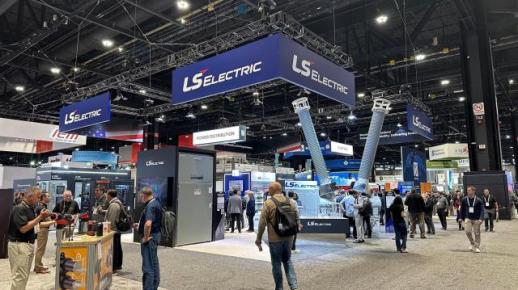 LS Electric Showcases UL-Certified DC Power Gear at IEEE PES T&D 2026, Targets North America LS Electric said it is accelerating its push into North America with next-generation solutions spanning direct current (DC) distribution, extra-high-voltage transmission and data center power infrastructure. The company said Tuesday it is taking part in IEEE PES T&D 2026, North America’s largest power and energy exhibition, being held for three days from May 5 to 7 (local time) at McCormick Place in Chicago, Illinois, where it will present power solutions tailored to the North American market. LS Electric is exhibiting with a 30-booth display covering 278.7 square meters. The booth is organized into three zones: DC solutions, extra-high-voltage transmission and substation solutions, and hyperscale data center solutions, highlighting products aimed at shifts in the global power industry. The company is emphasizing DC capabilities, a key technology for the next power market. It is showcasing a broad lineup of UL-certified DC distribution solutions, including DC switchboards, which it said are essential for entering the North American market. LS Electric said it has moved early to secure the ability to supply UL-certified DC power equipment and aims to take an early lead as the North American DC market expands. The company said its North American performance has been rising sharply. First-quarter North American sales reached about 300 billion won, up about 80% from a year earlier and a quarterly record. It attributed the growth to increased AI data center investment by big tech companies and rising demand for DC solutions that reduce power losses. LS Electric said it has built and operates a “DC Factory” at its Cheonan site, commercializing DC distribution and accumulating field experience and technical know-how. In extra-high-voltage transmission, the company is unveiling a full lineup of core equipment, including 345-kilovolt-class transformers, circuit breakers, switchgear and STATCOM reactive power compensation systems. It plans to highlight total-solution capabilities across transmission and distribution infrastructure, from power plants to substations and end users such as industrial plants, large buildings and data centers. With replacement of aging power grids and new infrastructure investment expanding in North America alongside AI industry growth, LS Electric said it aims to seize opportunities by promoting a broad portfolio spanning extra-high voltage through distribution. For data centers, the company is presenting high-reliability distribution systems and high-efficiency power equipment designed for hyperscale facilities. It said investment in North American data centers is surging as AI spreads, driving demand for high-end power solutions that deliver both stable supply and energy efficiency. LS Electric said it plans to build customer confidence based on local project experience and supply track records, and to further strengthen its position as a key player in the North American data center power market. “Global customers will once again be able to confirm LS Electric’s core solution capabilities that will lead the next-generation power market,” a company official said. “With differentiated competitiveness from extra-high voltage to data centers and DC solutions, we will accelerate our North American push and strengthen market leadership as a game changer in the DC era.”* This article has been translated by AI. 2026-05-06 08:48:21
 -
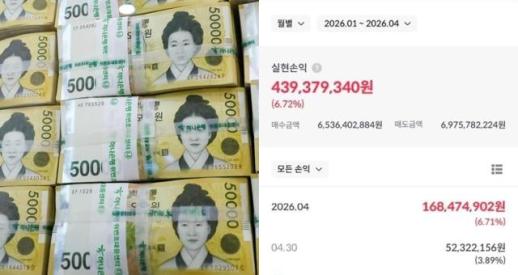 Korean Civil Servant Claims 430 Million Won Profit From Semiconductor Stock Bet A post by a retail investor claiming hundreds of millions of won in profits from a concentrated bet on semiconductor stocks has drawn attention online. A recent post on Blind, an anonymous workplace community, was titled “Latest update on the civil servant who went all-in with 500 million won on Hynix.” The poster, identifying as the person in question, wrote, “Yes, that’s me,” and said he kept investing in semiconductor shares despite being mocked with warnings that “you’ll go broke investing like that.” He said he made about 430 million won from January through April and posted a screenshot as proof. The image shows cumulative realized profit and loss of about 439.37 million won from January to April 2026, for a return of about 6.72%. It also lists total purchases of about 6.5364 billion won and total sales of about 6.97578 billion won, with about 168.47 million won in profit in April alone. The investor cited SK hynix and Samsung Electronics as key holdings, indicating a heavy focus on the semiconductor sector. He also wrote, “Semiconductors will keep trending upward through 2028,” signaling strong conviction about the market outlook. Online commenters responded with remarks such as, “He proved it with results,” “Hynix surged on the first trading day of May, so it probably pumped even more from there,” and “I didn’t think it would turn out like that back then.” Others wrote, “Semiconductors will save Korea,” “foresight,” and “Should I sell Samsung Electronics and move to Hynix?” As more retail investors share posts touting high returns, interest is rising again in “concentrated investment” strategies focused on specific sectors. 2026-05-06 08:45:15
 -
 LS Securities Raises KEPCO Engineering Target 12% on Expected Profit Rebound LS Securities on Wednesday raised its target price for KEPCO Engineering & Construction to 230,000 won from 190,000 won, saying the company’s operating performance is expected to rebound sharply this year after what it called a transitional slump last year. It maintained a “buy” rating. Analyst Seong Jong-hwa said first-quarter operating profit is forecast at 10.1 billion won and revenue at 120.1 billion won, up 751% and 25%, respectively, from a year earlier. Revenue is expected to match the market consensus, while operating profit is projected to beat it by a wide margin, he said. For the full year, LS Securities forecast operating profit of 66.3 billion won and revenue of 622.3 billion won, up 87% and 20% from a year earlier. Seong said the estimates reflect a recovery in progress rates for major design projects, pre-design revenue for Dukovany units 5 and 6, and orders for renewable-energy EPC (engineering, procurement and construction) projects. Seong said this year’s results are expected to normalize on a dramatic rebound from last year’s weakness, but added that the stock’s cycle is difficult to explain based solely on fundamental value tied to near- and midterm earnings trends. He said the company’s valuation also requires pricing in the long-term direction of nuclear power expansion at home and abroad, but that estimating value based on complex assumptions and probabilities — including schedules, order prospects and deal sizes for major nuclear equipment projects — is itself uncertain. Citing a favorable nuclear market environment, strong long-term growth potential and the company’s position as a nuclear design firm and a representative nuclear EPC stock, Seong said the shares could be dull in periods without nuclear-related events or issues. Still, he said, it remains a representative long-term nuclear investment tied to the sector’s long-term growth trajectory at home and abroad.* This article has been translated by AI. 2026-05-06 08:40:15
 -
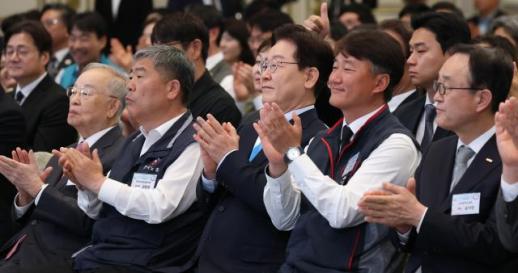 President Lee Jae-myung says ‘real estate never loses’ myth is over President Lee Jae-myung said on Tuesday that the notion that real estate prices never fall is no longer valid. In a post on X, formerly Twitter, Lee shared a report saying roughly half of real estate experts and licensed brokers expect home prices to decline, adding, “Real estate never loses? That myth is gone now.” The report, citing the KB Financial Group Management Research Institute’s “KB Real Estate Report,” said expectations for price increases dropped sharply compared with a survey in January, while forecasts for declines rose. Lee wrote that “everything in South Korea is returning to normal,” citing the removal of illegal facilities in valleys and what he called a recovery in the stock market. He said normalizing the housing market is “an unavoidable trend of the times” and “a core national task that must be carried out.” Lee also shared media coverage alleging that poor progress in restoring areas damaged by wildfires was linked to unqualified firms, including paper companies, joining bids and authorities allowing what the report described as a “wildfire cartel.” Lee wrote, “Thank you for the report.” He said he instructed the Cabinet to determine how such structural corruption and wrongdoing were left in place for a long period and to review fundamental countermeasures and accountability steps. Separately, Lee on Monday pushed back against calls for fiscal tightening, sharing an analysis of International Monetary Fund data showing South Korea’s net debt ratio is far below the average for the Group of 20. Sharing an article titled, “IMF: South Korea’s net debt ratio this year 10.3% … 79.3 percentage points below G20 average,” Lee posted a message titled, “To the strange people who sing the austerity song at every turn.” Lee also cited an analysis by the Institute for Fiscal Studies, which said that if funds raised through government bonds are invested in ways that lift growth and expand social productivity, potential growth and the future revenue base, the debt ratio can instead stabilize. According to the institute’s review of the IMF Fiscal Monitor, South Korea’s general government net debt ratio is projected at 10.3% this year. That is 79.3 percentage points below the projected G20 average of 89.6%, and also well below the overall average of 80.1%. * This article has been translated by AI. 2026-05-06 08:36:14
 -
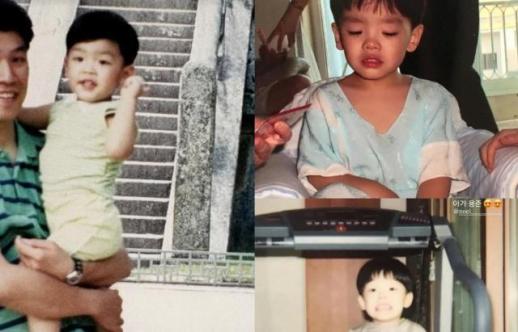 Rapper Noel Shares Childhood Photo With Late Father Jang Je-won on Children’s Day Rapper Noel (26), whose real name is Jang Yong-jun, marked Children’s Day by recalling his childhood with his father, the late Jang Je-won, a lawmaker. On May 5, Noel posted a photo to his social media account without a caption. In the image, Jang is seen holding a young Noel in his arms, smiling broadly. Noel is also smiling playfully, creating a warm scene. Born in 2000, Noel became known through Mnet audition programs “High School Rapper” and “Show Me the Money 6.” In 2019, he received a sentence of 1 year and 6 months in prison, suspended for two years, over a drunk-driving crash. He also drew controversy after indications emerged that he called an acquaintance after the crash and tried to switch drivers. In 2021, Noel was sentenced to one year in prison on charges including unlicensed drunk driving and assaulting a police officer. He served the term and was released in October the following year. Jang, who was serving as a vice president at a university in Busan, was accused in November 2015 of sexually assaulting his secretary (quasi-rape causing injury). While under police investigation, he was found dead on March 31 last year at an officetel in Seoul’s Gangdong district.* This article has been translated by AI. 2026-05-06 08:33:57