
Journalist

Lee Hugh
=
-
 Cho Eung-cheon Announces Run for Gyeonggi Governor as Reform Party Candidate Cho Eung-cheon, a former Reform Party lawmaker, announced on April 28 that he will run for governor of Gyeonggi Province, urging voters to “put down the wrong answer sheets of bad and strange candidates” and choose him as a “good candidate.” Speaking at a news conference at the National Assembly, Cho said he has lived by “principles and conviction.” He criticized eight years of Democratic Party leadership in the province, from Lee Jae-myung to Kim Dong-yeon, asking what had changed for residents. Cho noted the population rose by 1 million, from 13 million to 14 million, and the province’s main budget expanded from 20 trillion won to 40 trillion won, more than doubling, but questioned how much residents’ lives improved. Cho said the Democratic Party now treats Gyeonggi residents like “fish already caught,” and took aim at Democratic Party candidate Choo Mi-ae, saying it was arrogant to nominate someone with no ties to the province who had not lived there and had focused on political fights in the National Assembly. He also criticized the People Power Party, saying its “bullying politics” of using Gyeonggi as a sacrifice for personal political advancement must end. He said the party still had the race vacant because no senior figure stepped forward despite encouragement and it failed to find a competitive candidate even after additional recruitment. “The two major parties have taken away Gyeonggi residents’ right to choose,” Cho said, adding, “Gyeonggi needs administration, not politics. What matters is competence and experience, not a party label.” Cho called the long-standing gap in living conditions between southern and northern Gyeonggi a key challenge. He said the southern belt should be further strengthened as a foundation for South Korea’s growth and innovation, and that the results should be shared more evenly with northern Gyeonggi and the country as a whole. He pledged a denser, more rational transportation network for residents who moved from Seoul to Gyeonggi, and said new momentum is needed for first-generation new towns where 300,000 households in Bundang, Ilsan, Pyeongchon, Sanbon and Jungdong are aging at the same time. Cho also said he is the only candidate who can fight “with conviction and professional capability” against the ruling party’s push to move a semiconductor industrial complex to what he called an uncompetitive, remote area. Cho pointed to Hwaseong’s Dongtan, saying residents showed in the last general election that they can make a better choice by electing Rep. Lee Jun-seok. “Now it’s time to make the Dongtan miracle happen across all of Gyeonggi,” he said, calling for a political upset. Asked about the possibility of a conservative alliance with the People Power Party, Cho said his party has no reason to unify candidacies, but added, “If a proposal comes, we’ll listen.” * This article has been translated by AI. 2026-04-28 11:54:51
 -
 Ruling, Opposition Parties Clash Over Claim Witness Met Committee Chair Before Hearing Rival parties clashed April 28 at the National Assembly over allegations that Kim Seong-tae, a former Ssangbangwool chairman testifying as a witness, entered committee Chair Seo Yeong-gyo’s office before the hearing. Rep. Kim Hyeong-dong, floor secretary for the People Power Party, asked during the special committee’s comprehensive hearing that officials confirm whether Kim entered the chair’s office before 10 a.m., before proceedings began. If the witness met the chair in advance, Kim said, the testimony “could have been tainted.” Fellow PPP lawmakers Kwak Gyu-taek and Shin Dong-wook said the matter could be settled by checking CCTV footage. Seo denied the claim, saying Kim had not entered her office and calling it “nonsense.” Democratic Party lawmaker Park Sun-won said that when he entered Seo’s office at 9:18 a.m., no one was there except Rep. Cha Gyu-geun of the Rebuilding Korea Party. Cha also said he was the first to enter and that Park arrived a minute later. Kim said he did not know whether the place was the chair’s office, but said he had gone somewhere to drink a cup of water from a purifier. He added that he saw Seo for the first time at the hearing. Kim declined to answer most questions, saying he could not speak because he is on trial, but he acknowledged coercive investigations by prosecutors. On the case involving alleged remittances to North Korea, he said he is acquainted with former Gyeonggi Province peace vice governor Lee Hwa-young but “doesn’t even know” President Lee Jae-myung. Later, PPP lawmaker Na Kyung-won pressed Kim, saying that if a future special prosecutor is appointed, prosecutors could drop charges against President Lee while also holding Kim responsible for illegal gambling. Kim replied that he is already on trial on 28 charges and said, “If there’s more to do, they’ll do it.” 2026-04-28 11:51:21
 -
 India’s Prasada Urges Skoda Auto to Expand Investment in Indian Auto Sector India’s Minister of State for Commerce and Industry Prasada met with executives of Czech automaker Skoda Auto and urged the company to expand investment in India’s automotive industry, PTI reported on the 23rd. Prasada held the talks while on an official visit to the Czech Republic from the 22nd to the 23rd. Skoda’s vehicle sales in India in January-March rose 17% from a year earlier to 20,028 units. During his stay, Prasada also visited leading local companies in automobiles, transport equipment and advanced engineering.* This article has been translated by AI. 2026-04-28 11:49:00
 -
 South Korea Envoy Says North Korea Nuclear Issue Is Top Challenge to NPT Jeong Yeon-du, South Korea’s senior representative for North Korea nuclear diplomacy, reaffirmed the government’s goal of the “complete denuclearization of the Korean Peninsula” and stressed the urgency of resolving the North’s nuclear issue at a meeting of the Nuclear Non-Proliferation Treaty, the Foreign Ministry said. In a keynote address on April 27 (local time) at the 11th NPT Review Conference in New York, Jeong, director-general of the ministry’s Foreign Strategy and Information Bureau, said North Korea is “the only case” to have benefited from the NPT system, then declared its withdrawal and openly continued developing nuclear weapons. He called it “the most urgent challenge” to the nonproliferation regime. Jeong said all countries seeking to uphold the NPT must send a clear message that returning to the treaty is the only path that can guarantee security and prosperity. He also urged Russia to halt what he described as illegal military cooperation with North Korea. The ministry said Jeong outlined Seoul’s plan to pursue a phased denuclearization process moving from suspension to reduction and then dismantlement. Jeong said today’s unstable international security environment is undermining the NPT’s credibility and effectiveness, and proposed that nuclear-armed states engage in dialogue to increase transparency and build mutual trust. * This article has been translated by AI. 2026-04-28 11:48:17
 -
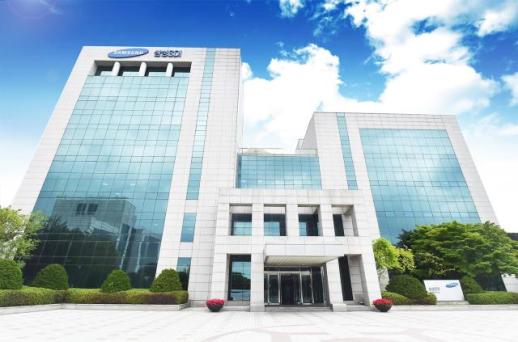 Samsung SDI narrows Q1 loss, eyes profit turnaround in H2 SEOUL, April 28 (AJP) - Samsung SDI reported an operating loss of 155.6 billion won ($105.5 million) for the first quarter of 2026, sharply narrowing its deficit from 434.1 billion won a year earlier. The South Korean battery maker disclosed Tuesday in a regulatory filing that revenue climbed 12.6 percent year-on-year to 3.576 trillion won, while net profit swung to a positive 56.1 billion won. The battery segment, which accounts for the bulk of revenue at 3.354 trillion won, cut its operating loss by 61 percent as demand recovered across energy storage systems, power tools and battery backup units. The electronics materials unit posted an operating profit of 21 billion won on revenue of 222 billion won, buoyed by resilient semiconductor materials sales and a rebound in display materials demand. Samsung SDI said it secured a multi-year supply agreement with Mercedes-Benz during the quarter, completing its lineup of all three major German premium automakers as clients. The company also unveiled its first pouch-type all-solid-state battery sample developed for physical AI applications. "Uncertainty in the global business environment is expected to persist into the second quarter," said a Samsung SDI spokesperson. "We will execute our response strategies by segment and work to achieve a quarterly profit turnaround in the second half." The company said it expects upstream demand to continue recovering through the rest of the year, with ESS battery sales in the United States set to expand alongside growth in AI data center construction, while European EV demand is projected to improve on the back of broader subsidy programs. Shares of Samsung SDI traded at 688,000 won per stock on 11:40 a.m., 8.35 percent higher than a day ago. 2026-04-28 11:44:12
 -
 Iran Central Bank Opens Rial, Yuan, Dollar and Euro Accounts to Collect Strait of Hormuz Tolls Iran’s central bank has opened four dedicated currency accounts to collect tolls from ships transiting the Strait of Hormuz. Arab Times and other outlets reported on the 27th (local time) that Alaeeddin Boroujerdi, a member of Iran’s parliament on the National Security and Foreign Policy Committee, said the central bank set up accounts in the rial, Chinese yuan, U.S. dollar and euro to manage toll revenue. The funds are expected to be managed in cooperation with the Islamic Revolutionary Guard Corps (IRGC) Navy, in line with parliamentary discussions, the reports said. Arsenio Dominguez, secretary-general of the International Maritime Organization (IMO), said international law does not allow tolls, taxes or customs duties to be imposed in straits used as international sea lanes. The Strait of Hormuz is a strategic chokepoint through which about 20% of the world’s seaborne crude oil shipments pass, and the move is expected to ripple through the global shipping industry and regional security. Iran moved to control the strait after war broke out following U.S. and Israeli attacks on Feb. 28, and the United States responded by imposing a maritime blockade targeting Iranian ports and other sites. Boroujerdi said parliament is pursuing a “Strait of Hormuz Security Plan” to put a toll system into law and secure a stable revenue source. He added that payment could later shift to digital currency and mentioned the possible adoption of a blockchain-based payment system to strengthen financial influence in international transactions. The policy has also moved into actual collection. Iran’s PressTV previously reported that on the 23rd, Iran’s military collected a Strait of Hormuz toll for the first time in cash. The toll was deposited into a single central bank account and was paid in cash, not cryptocurrency, the report said.* This article has been translated by AI. 2026-04-28 11:38:40
 -
 South Korea Stock Market Jumps to No. 8 Globally by Value, Passing U.K., on AI Chip Rally South Korea’s stock market has risen to the world’s eighth-largest by market capitalization, overtaking the United Kingdom as a surge in artificial intelligence and semiconductor shares pushed the benchmark KOSPI sharply higher, Bloomberg News reported on the 28th. Bloomberg data showed South Korea’s market capitalization has climbed 45% so far this year to about $4.04 trillion, edging past the U.K. at $3.99 trillion. As recently as the end of 2024, the U.K. market was about twice the size of South Korea’s, but South Korea’s value expanded rapidly over the past year or so to move ahead, Bloomberg said. The rally has been driven largely by the AI boom. Samsung Electronics and SK hynix, seen as major beneficiaries of the AI-led semiconductor “supercycle,” have been rising in earnest since last year and helped lift the broader market. The KOSPI, after first clearing 6,600 on the previous day, also broke above 6,700 on the 28th, extending its record run. Taiwan’s stock market, led by Taiwan Semiconductor Manufacturing Co., the world’s largest contract chipmaker, also surpassed the U.K. to rank seventh globally, Bloomberg said. Taiwan’s market capitalization was put at $4.48 trillion. The United States ranked No. 1 at $75.04 trillion, followed by mainland China at $14.84 trillion, Japan at $8.19 trillion, Hong Kong at $7.41 trillion, India at $4.97 trillion and Canada at $4.49 trillion, according to Bloomberg’s figures. Francesco Chan, an emerging markets and Asia-Pacific investment specialist at JPMorgan Asset Management in Hong Kong, said the rapid rise of South Korea and Taiwan reflects a structural reshaping of global equity markets rather than a tactical asset-allocation shift. “Structural capital inflows are continuing into these countries, which play a central role in the AI supply chain, backed by the advantages of the ‘supercycle’ in advanced foundry and memory,” he said. By contrast, the U.K. market has appeared more removed from the AI cycle, with its benchmark FTSE up just 4% so far this year. Analysts cited Europe’s heavier weighting toward traditional sectors such as financials, consumer staples and energy, compared with South Korea’s larger share of AI and semiconductor-related stocks. Patrick Kellenberger, an emerging-market equity strategist at Swiss asset manager Lombard Odier, said factors including AI, rising global defense spending and corporate governance reforms have provided strong momentum for South Korean and Taiwanese equities. “Europe is still struggling to commercialize innovation and scale it up,” he said, adding that creating conditions for innovative companies to emerge and grow is important but takes time. Bloomberg noted that despite strong chip-company earnings, South Korea and Taiwan still have gross domestic products of about $1.9 trillion and $1 trillion, respectively, below the scale of major European economies such as the U.K., Germany and France, each with GDP above $3 trillion. 2026-04-28 11:32:43
 -
 KOSPI Rally Raises Minsky-Style Warnings as Leverage and Debt Build The KOSPI has been setting fresh record highs and pushing toward the uncharted 7,000 level. As investors cheer rising screens and pile into leverage, the late economist Hyman Minsky’s warning echoes: “Stability ultimately breeds instability.” The question is whether the market is at a peak celebration or nearing a cliff edge. The so-called Buffett indicator — stock market capitalization divided by nominal GDP — has topped 200% for the first time. That suggests the equity market has expanded beyond the size of the broader economy. It has already surpassed Japan (186%) and China (71%), and is narrowing the gap with the United States (227%), the world’s largest market. The market’s support looks increasingly fragile. Outstanding margin loans in South Korea hit a record 35.46 trillion won. Individual investors, drawn into a rally that has continued even amid wartime turmoil, are maximizing leverage and increasing their vulnerability to a sudden reversal. This “shadow debt” is building alongside rising delinquency rates in the financial sector. The combined delinquency rate at the five major commercial banks rose to 0.40% in the first quarter. Delinquencies among small business owners and households are at their highest levels in eight to 10 years. A sharp rise in delinquencies in real estate and leasing points to a disconnect between asset-market gains and the everyday economy. A deeper concern is the slide in the economy’s underlying potential growth rate. First-quarter GDP growth came in at 1.7%, a surprise rebound, but it also indicates the economy is running into a ceiling near its estimated potential growth rate of 1.71%. The OECD projects South Korea’s potential growth rate will fall to 1.57% next year, down from 3.6% 14 years ago. Business sentiment is also weakening. April’s Composite Business Sentiment Index appeared to rebound, but excluding a one-off factor — lower inventories due to supply disruptions linked to the Middle East war — perceived conditions have declined for a second straight month. Behind strong exports, domestic demand and manufacturing sentiment are eroding. External risks may be only beginning. Oil-price volatility and supply-chain disruptions tied to the Middle East war, along with the won’s real value falling to a 17-year low (real effective exchange rate 85.44), suggest a “Gulf shock” could intensify. If high interest rates persist longer than expected, accumulated bad loans could swell and trigger margin calls across asset markets. The current stock-market boom is being built on debt. The government and financial sector should not miss the window for sound risk management by mistaking headline indicators for lasting strength. Past “Minsky moments” have ended painfully, underscoring the need for early cleanup of weak assets and structural reforms. 2026-04-28 11:31:45
 -
 Korea business sentiment rises on illusion of recovery as inventories shrink SEOUL, April 28 (AJP) — Pessimism among South Korean businesses eased to a 21-month low in April, but the improvement largely reflected inventory drawdowns driven by Middle East supply disruptions rather than a genuine recovery in demand, data showed Tuesday. The Composite Business Sentiment Index (CBSI) for all industries rose 0.8 point from a month earlier to 94.9, the highest since July 2024, according to the Bank of Korea. Despite the gain, the index remained below the 100 mark, indicating that negative sentiment still outweighs optimism. Strip out the inventory effect, and the picture weakens. The central bank estimated that overall sentiment would have slipped by 0.1 point across industries and by 0.4 point in manufacturing. “While manufacturing conditions improved on sustained exports and higher sales prices, the drop in inventories partly reflects firms running down existing stock to cope with disruptions in raw material supplies,” said Lee Heung-hoo, head of the BOK’s economic sentiment survey team. Manufacturing sentiment rose 2.0 points to 99.1, its highest level this year and just shy of the neutral threshold. The outlook for next month also improved, climbing 2.1 points to 98.0. By firm size, large corporations reached the 100 benchmark, while small and medium-sized enterprises (SMEs) lagged at 96.8. Export-oriented firms continued to outperform, posting a CBSI of 103.4 for a fourth consecutive month, compared with 96.4 for domestically focused companies. The improvement in manufacturing was overwhelmingly driven by inventories. Falling stock levels contributed 2.3 points to the CBSI, compared with a 0.7-point gain from better business conditions. As a countercyclical component, lower inventories mechanically lift the index even when underlying demand remains weak. Outside manufacturing, momentum was far weaker. The non-manufacturing CBSI edged up just 0.1 point to 92.1, while the outlook for next month remained unchanged at 91.2. In services, sentiment deteriorated, slipping to 92.9 from 93.4, as rising oil prices tied to the Middle East conflict pushed up sea and air freight costs, particularly weighing on wholesale and retail sectors. Cost pressures have emerged as the dominant concern across industries. In manufacturing, the share of firms citing rising raw material prices as a key difficulty surged 13.2 percentage points to 34.2 percent. In non-manufacturing, the figure rose to 19.4 percent, also the top concern, reflecting elevated energy prices, logistics disruptions around the Strait of Hormuz, and a weakening Korean won, which has depreciated by more than 2 percent from 1,458 per dollar in January to around 1,488 this month. Detailed indicators point to a widening margin squeeze. The manufacturing business conditions index rose 3 points to 74, with gains in sales and new orders, but profitability fell 5 points to 68 and financial conditions worsened by 3 points to 76. The raw material purchase price index jumped 12 points to 149, the highest since October, far outpacing the rise in product sales prices, which climbed to 110 — insufficient to offset rising input costs. The broader Economic Sentiment Index (ESI), which combines business and consumer confidence, fell 2.3 points to 91.7, marking a second straight monthly decline and the lowest level in six months. Its cyclical component also edged down 0.3 point to 94.4, signaling a slowdown in underlying economic momentum. The survey was conducted from April 9 to 16, covering 3,205 companies, including 1,781 manufacturers and 1,424 non-manufacturers. 2026-04-28 11:31:11
 -
 KOSPI extends record-setting rally as chip halo trickles down SEOUL, April 28 (AJP) — The KOSPI extended record-setting rally Tuesday with eyes on the 7,000 milestone, shrugging off the stalemate in U.S.-Iran talks even as the conflict nears the 60-day mark this week. As of 11:00 a.m., the benchmark index rose 0.65 percent to 6,658.25, as foreign and institutional investors continued buying despite retail profit-taking. Market breadth remained tight, with gainers narrowly outpacing losers 424 to 409. Investor sentiment was buoyed by expectations that strong earnings from U.S. technology heavyweights would reinforce momentum in Korea’s semiconductor- and IT-led market. With a substantial share of S&P 500 firms already reporting solid first-quarter results, attention has shifted to earnings from five “Magnificent Seven” companies. Microsoft, Alphabet, Amazon and Meta are due Wednesday, followed by Apple a day later. In U.S. trading, Nvidia surged 4 percent to a fresh intraday high on earnings optimism, while Alphabet gained 1.72 percent. Microsoft added 0.05 percent and Meta rose 0.53 percent, with Tesla up 0.63 percent. Apple slipped 1.27 percent. The strength spilled over into Korean chipmakers. SK hynix climbed 2.55 percent to 1,325,000 won, hitting a 52-week high, while Samsung Electronics edged up 0.22 percent to 225,000 won. South Korea’s broader rally has also lifted its global standing. Total market capitalization has surged more than 45 percent this year to about $4.04 trillion, overtaking the U.K. to rank as the world’s eighth-largest equity market, supported by global inflows into AI and semiconductor stocks. Cyclicals joined the advance. Hyundai Motor jumped 7.06 percent to 561,000 won, while Kia rose 3.41 percent to 157,800 won. Battery makers were also firm, with Samsung SDI gaining 4.72 percent and LG Energy Solution up 0.97 percent. Power equipment shares also remained firm, with Hyosung Heavy Industries up 0.96 percent at 3,979,000 won, extending gains since April 22 and continuing a run of successive record highs on expectations tied to AI infrastructure expansion and North American grid replacement demand. Financial and industrial shares edged higher, with KB Financial Group and Samsung C&T both up 0.64 percent. Losses were limited, though defense and shipbuilding stocks came under pressure. Hanwha Aerospace fell 1.10 percent, while HD Hyundai Heavy Industries slipped 0.74 percent. On the KOSDAQ, the index dropped 0.84 percent to 1,215.87 as foreigners and institutions sold a combined 458.6 billion won, offsetting net buying of 461.3 billion won by retail investors. Biotech stocks led declines, with AblBio plunging 19.86 percent, while Samchundang Pharm and LigaChem Biosciences also fell. Battery-related shares bucked the trend, with EcoPro rising 3.07 percent and EcoPro BM gaining 2.17 percent. In currency markets, the Korean won weakened slightly to 1,474.50 per dollar from 1,472.50 previously. Elsewhere, Japan’s Nikkei 225 fell 0.54 percent to 60,211.50, retreating from a record high as investors positioned ahead of the Bank of Japan’s policy decision. Chip-related stocks led declines, with Advantest down 4.51 percent and SoftBank Group tumbling 7.14 percent. Hong Kong’s Hang Seng Index slipped 0.52 percent, while China’s Shanghai Composite edged down 0.22 percent. Regional markets face a shortened trading week, with Japan closed Wednesday and South Korea, China, Hong Kong and Taiwan shut Friday for Labor Day. 2026-04-28 11:30:59