
Journalist

Lee Hugh
=
-
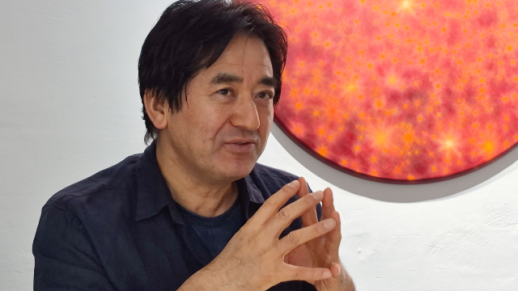 Civilization designer urges transition to meaning as AI automates traditional productivity SEOUL, April 28 (AJP) -Captain Kang Sang-bo, a South Korean civilization designer and author of The Master Key, argues that the rapid integration of artificial intelligence into production and social structures requires a radical reassessment of human value. Speaking in a recent interview, Kang stated that the core transition of the AI era is not a matter of increasing technical skill but moving from "methods" to "meaning." He maintained that this shift is essential for constructing a new form of civilization that prioritizes human purpose over mechanical efficiency. The urgency of this transition stems from the potential for human displacement within purely technical systems. Kang pointed out that when AI can perform nearly all tasks, individuals who fail to set their own direction risk becoming mere functional components of an automated structure. This shift matters because it moves the focus of human progress from the logistics of "how" to the existential "why," requiring a fundamental redesign of social, financial, and educational institutions in South Korea and beyond. Kang has spent years researching the "Meaning Civilization," a concept that attempts to bridge philosophical inquiry with self-growth and the content industry. In his view, the technical civilizations of the past focused on what to build, whereas the AI era forces a shift toward whether something should be built at all. He suggested that technology must operate in a way that brings humans closer to their own essence, moving from a technology-centered loop to a "human-technology-human" cycle. Within this framework, the captain identified four specific domains that define human uniqueness: meaning, vivid dreams, responsibility, and LOVE. He posited that AI and robotics ultimately exist to help humans focus more deeply on these four values, which he believes will become the primary criteria for future judgment. Regarding the definition of success, Kang proposed a formula he calls "BTS x LOVE." In this context, BTS represents Body, Talent, and Spirit, while LOVE signifies human connection and empathy. He argued that because speed and efficiency are being rapidly commoditized by technology, success in the future will depend on creating deeper connections and generating meaning within those bonds rather than simply performing tasks faster. This transition is particularly relevant for the "1030 Young Stars," a demographic of individuals in their teens to thirties whom Kang describes as civilization designers. He noted that this generation cannot expect to gain an advantage by competing with AI on efficiency, which was the logic used by previous generations focused on capital and growth. Instead, he emphasized that their core role must be to create new directions for society. The transition also requires institutional shifts, specifically in the realms of "meaning finance" and "meaning education." Kang suggested that as economic systems begin to function with less direct human labor, finance must move away from a production-centric model and toward investing in human values. He criticized South Korea's current education system for remaining stuck in a "pre-AI" mode of knowledge acquisition. He argued that schools should delegate information gathering to AI and allow students to focus on exploring their own direction, transforming the role of teachers from providers of answers to those who ask the right questions. Kang warned that in a society obsessed with results and capital, the concept of meaning is at risk of being marginalized. He observed that if the public prioritizes only the final outcome, individuals may lose the capacity to judge the purpose behind their actions. He maintained that the 1030 Young Stars currently stand at a crossroads, deciding whether to be the architects of a new civilization or remain passive consumers within an automated system. The interview with Captain Kang Sang-bo was conducted as part of a series examining the long-term social effects of automation in South Korea. 2026-04-28 10:33:02
 -
 Nonghyup Cooperative Leaders, Farmers Urge Parliament to Drop Provisions in Farm Law Revision As the government moves to revise the Nonghyup Act, 500 cooperative heads and farmers gathered at the National Assembly on the 28th to voice concerns about stronger government oversight and proposed changes to how the federation chair is chosen. They called for scrapping provisions they said could undermine Nonghyup’s autonomy. Nonghyup said 500 heads of local agricultural and livestock cooperatives and farmers from across the country held a “joint farmers’ declaration to defend Nonghyup autonomy” at the Assembly on the morning of the 28th. Earlier, the Ministry of Agriculture, Food and Rural Affairs, through consultations with the ruling party, announced a reform plan centered on tighter internal controls and introducing direct elections by cooperative members for the chair of the central federation. Participants urged lawmakers to: immediately halt what they called government-led supervision that infringes on Nonghyup autonomy; remove “poison pill” clauses they said would weaken legal stability; preserve the federation’s authority to guide and supervise subsidiaries to protect its cooperative identity; withdraw a plan to create a new, inefficient audit body; and stop attempts to change the direct election system for the federation chair. The Emergency Committee to Defend Nonghyup Autonomy said the government’s stance had not changed since a farmers’ rally on the 21st. It argued the government is pushing revisions that include contentious items — such as changing the chair’s direct election system and establishing a Nonghyup audit committee — without sufficient discussion. The committee also criticized the limits of regional briefings. It said briefings held on the 22nd in Daegu and on the 24th in Cheongju and Suwon included cooperative heads and farm groups, but ended without adequately collecting views from the field, leaving concerns in farming communities unresolved. Major national farm organizations joined the event and issued a solidarity statement. “Excessive regulation and control of Nonghyup could ultimately lead to cuts in support programs for farmers and increased management burdens on farm households,” the groups said, adding that they would “respond together to the end” because the issue is directly tied to farmers’ right to make a living. Park Kyung-sik, a co-chair of the emergency committee, said farmers had again gathered in front of the Assembly after setting aside their livelihoods because they believe losing Nonghyup autonomy would “directly lead to a crisis in agriculture.” Calling the revision “intervention, not reform,” he said institutional changes should come through sufficient discussion and public debate, not “speed-driven legislation.” Park said the rally showed on-the-ground determination to defend Nonghyup autonomy and asked the Assembly to reflect views in a balanced way from farmers, Nonghyup members and farm groups. The committee delivered the joint declaration it read at the event to the National Assembly. 2026-04-28 10:29:39
 -
 NATO Weighs Scaling Back Annual Summits as Members Seek to Avoid Clash With Trump NATO is discussing whether to scale back its practice of holding a leaders’ summit every year, a move diplomats described as aimed in part at avoiding a public clash with U.S. President Donald Trump. Reuters reported on April 27, citing six diplomats and senior officials from NATO member states, that internal discussions include ending the annual summit routine. NATO leaders have met each summer since 2021. This year’s summit is scheduled for July 7-8 in Ankara, Turkey. The focus is on changing the schedule. One diplomat said the 2027 summit in Albania is likely to be held in the fall, and that an option under discussion is not holding a summit in 2028. That year includes a U.S. presidential election and is Trump’s last full year in office. Some members are also arguing for summits every two years, Reuters said. No decision has been made, and the final call will be made by NATO Secretary-General Mark Rutte. NATO officials stressed that high-level consultations would continue. “NATO will continue to hold regular meetings at the highest level,” a NATO official told Reuters, adding that between summits allies would keep consulting, planning and making decisions on collective security. The talks come amid strains between Trump and other NATO members. Reuters said the Trump administration has repeatedly criticized many of the 31 member countries other than the United States. More recently, it publicly rebuked some allies for not providing greater support for U.S. military operations against Iran. Tensions are expected again at this year’s summit. Reuters reported that after allies declined to support the Iran war, Trump publicly questioned whether the United States should honor NATO’s mutual defense pledge and mentioned the possibility of withdrawal. His claim to sovereignty over Greenland, a Danish territory, also remains a source of friction within the alliance. Some inside NATO argue that frequent summits can undermine long-term strategy. “It’s better to have fewer summits than a bad summit,” one diplomat told Reuters. Another official said the alliance should be judged by the quality of its discussions and decisions, not the number of meetings. Analysts have voiced similar views. Phyllis Berry, a nonresident senior fellow at the Atlantic Council, wrote in a commentary last week that reducing top-level summitry could help NATO focus on its core work and lower tensions that have repeatedly surfaced in recent trans-Atlantic meetings. She also noted that during the Cold War, NATO held only eight summits over several decades. Trump has applied heavy pressure at NATO summits before. At the 2018 summit, he threatened to walk out in protest over what he said was low defense spending by other members. Former NATO Secretary-General Jens Stoltenberg wrote in a memoir published last year that if Trump had actually left, “we would have had to pick up the pieces of a shattered NATO.”* This article has been translated by AI. 2026-04-28 10:28:49
 -
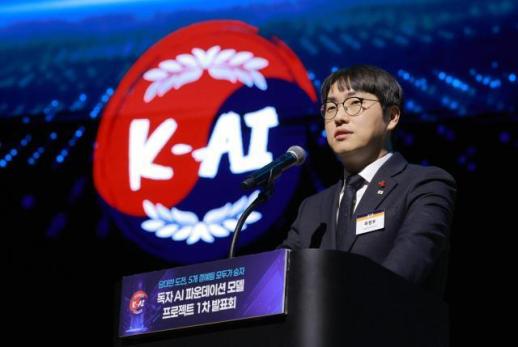 AI Policy Continuity in Question as Presidential AI Aide Resigns to Run for Parliament Ha Jung-woo, the presidential office’s senior secretary for AI future planning, has offered to resign and is moving toward a run in the parliamentary by-election in Busan’s Buk-gu Gap district. The Democratic Party is reviewing a strategic nomination process, and the district has emerged as a battleground expected to draw major candidates from the ruling and opposition parties as well as independents. Ha has been regarded as an expert with experience across the private AI sector and academia. Since joining the presidential office, he has played a central role in coordinating the national AI strategy, driving interagency cooperation and refining an industry development roadmap. With the government positioning AI, along with semiconductors, as a future growth engine, the departure of the dedicated senior secretary is not a routine personnel shift. Global competition in AI is intensifying rapidly. The United States is expanding infrastructure with big tech and government working together, while China is spreading AI across industries under state leadership. Japan and Europe are also moving quickly to update laws and institutions. South Korea, the editorial argues, cannot afford to leave its control tower vacant because of the political calendar. Political participation itself is not the issue, it said. Specialists entering the National Assembly to support industrial policy through legislation can be necessary, and the AI era demands lawmakers who understand technology. If Ha advances work on data use, talent development, regulatory reform and expanded computing infrastructure in parliament, it could benefit the country. The question, the editorial said, is not who leaves, but whether the system keeps working after the departure. South Korea’s policy structure has long been criticized as overly dependent on individuals. Momentum can build under a capable minister or a strong senior secretary, but it has often faded when personnel change. Each change of administration has brought new labels for industrial strategy, and reorganizations have repeatedly sent existing plans back for review. In a field like AI, where long-term investment and consistency are essential, that pattern is especially damaging. The AI industry cannot be judged by results over one or two years, the editorial said. Building large-scale computing infrastructure, improving the data ecosystem, expanding the power grid, training specialized talent, investing in startups and adopting public services are national projects that take at least five years and often more than 10. If policy direction wavers whenever a responsible official moves for election reasons, companies may delay investment decisions and talent may be more likely to leave for overseas, it said. The government and the ruling party should quickly complete the selection of a successor, it said, not merely to fill a post but to minimize any gap by appointing someone with industry understanding and coordination skills. AI policy should also be embedded in institutions rather than personal capability, through a whole-of-government framework, annual budget plans, public-private consultation channels and a legislative roadmap with the National Assembly that are set out in clear terms. The opposition should not treat the issue only as a political fight, the editorial said. If the strategy is meant to endure regardless of which party holds power, it requires bipartisan agreement. Measures such as a special semiconductor law, revisions to data regulations, expansion of power infrastructure and AI talent visa policy should not be judged by partisan advantage, it said, warning that South Korea will fall behind if politics keeps blocking progress while other countries mount all-out efforts. An individual is free to enter politics, the editorial said, but national strategy should not be shaken by personal moves. In an era of competition over AI sovereignty, what is needed is not a single star player but a national system that keeps operating even when people change. Ha’s resignation should not end as another political headline, it said, but should prompt a review of the durability of South Korea’s AI policy. 2026-04-28 10:27:40
 -
 Washington 'restricts intelligence sharing on North Korea,' raising security concerns in Seoul SEOUL, April 28 (AJP) - The U.S. has reportedly restricted the sharing of certain intelligence related to North Korea, raising concerns in South Korea about possible frictions between the two allies and surveillance gaps in joint monitoring capabilities. According to multiple government sources, Washington has limited access to technical intelligence including satellite data on North Korean nuclear facilities since early this month. Some relevant military information such as imagery and activities detected by U.S. reconnaissance satellites has also reportedly not been shared for about a month. The development comes after Unification Minister Chung Dong-young brought up Kusong in North Pyongan Province as a new uranium enrichment site in North Korea, information that had not previously been officially confirmed by either government. Chung referred to it as one of three such facilities during a parliamentary session last month, in a rare public disclosure of sensitive details about North Korea. Although he said the information was based on open-source intelligence, Washington is thought to have regarded it as a potential leak of classified information and appears to have responded by restricting intelligence sharing with Seoul. Experts warn that if such restrictions continue, the intelligence gap between the two allies could widen, potentially weakening South Korea's ability to monitor North Korea's military activities and other provocations. Defense Minister Ahn Gyu-baek, however, downplayed the concern recently, saying there have been "not many major limitations." He further clarified that the two countries continue to closely share critical information, particularly data related to North Korea's missile launches. In fact, intelligence was reportedly shared during the North's missile tests earlier this month. Nevertheless, the restrictions are likely to affect more sensitive intelligence, particularly satellite data on nuclear facilities, which is essential for tracking North Korea's military movements and nuclear development in real time. Until now, the U.S. has provided detailed monitoring of suspected nuclear sites, including reactors, uranium enrichment facilities, and storage areas for nuclear materials. While South Korea operates five reconnaissance satellites capable of monitoring specific targets at roughly two-hour intervals, analysts say this is not enough to ensure constant surveillance, making it difficult to track multiple locations or mobile missile launchers simultaneously. This may mean North Korea can evade South Korean surveillance. By comparison, the U.S. operates more than 200 military satellites, along with additional private-sector assets, offering far more comprehensive, high-resolution real-time coverage. 2026-04-28 10:21:36
 -
 Trump Reviews Iran Proposal but Keeps Nuclear Red Lines, White House Says President Donald Trump has been discussing Iran’s latest proposal related to ending the conflict with advisers, but is maintaining key “red lines,” including preventing Iran from obtaining nuclear weapons, according to reports. Bloomberg News reported that White House press secretary Karoline Leavitt said at a briefing on the 27th (local time) that Trump convened a national security team meeting at the White House to review Iran’s proposal. “The president’s red lines on Iran are very clear,” Leavitt said, adding that Trump would state his position soon. Her comments followed reports that Iran proposed an interim arrangement under which it would reopen the Strait of Hormuz in exchange for the United States lifting its blockade of Iranian ports. The proposal was also said to include postponing complicated issues, including Iran’s nuclear program, to later talks. Bloomberg, citing The Wall Street Journal, said Trump and his advisers are taking a cautious view of the proposal, particularly on the nuclear issue. The Journal previously reported that Trump was skeptical of what it described as Iran’s “three-step peace plan.” Sen. Lindsey Graham, a Republican and Trump ally, wrote on X that if the proposal is accurate, “Iran is playing games to buy time,” and said the president should hold to his existing position “for the country and the world.” Iran, meanwhile, said it would continue to strengthen cooperation with partners. Foreign Minister Abbas Araghchi, visiting Russia, met with President Vladimir Putin and emphasized closer ties, saying, “The Iranian people have endured U.S. attacks and will overcome them.” Iran has also conveyed through mediators, including Pakistan, that ending the dispute would be possible if the United States lifts its maritime blockade and halts military action, according to reports. The United States, however, views the nuclear issue as central to any agreement. Trump has said the maritime blockade will remain unless Iran’s nuclear program is resolved. The United States is demanding that Iran halt its nuclear program for 20 years and remove all of its roughly 440 kilograms of highly enriched uranium. Iran previously proposed suspending uranium enrichment for five years, followed by allowing low-level enrichment for civilian use for an additional five years. It also proposed diluting its uranium stockpile, keeping half in Iran under international monitoring and transferring the other half to Russia. After Trump judged those steps insufficient, Iran offered a new approach that would push the nuclear issue to later negotiations, The New York Times reported. Still, some analysts say the gap between the two sides may be narrower than it appears. CNN, citing sources, reported that back-channel contacts are continuing and that the early stage of any potential deal is likely to focus on reopening the Strait of Hormuz.* This article has been translated by AI. 2026-04-28 10:21:09
 -
 Hyundai to Speed Hydrogen City Bus Rollout in Seoul Area, Targeting 400 in Five Years Hyundai Motor Co. said it is teaming up with major transit operators and related businesses in the Seoul metropolitan area to accelerate decarbonization in transportation. The automaker said it signed a business agreement on April 27 at its UX Studio Seoul in its Gangnam-daero building with Dowon Transportation, Samhwan Transportation, Sewoon Industry and Hyundai Motor Securities to jointly speed the rollout of hydrogen-powered city buses in the capital region. Participants included Hyundai Motor domestic sales chief Yeom Jae-seop, Dowon Transportation CEO Kim Jeong-hwan, Samhwan Transportation CEO Han Kang-su, Sewoon Industry CEO Ahn Gwang-heon and Hyundai Motor Securities planning and finance chief Yang Young-geun, the company said. The agreement aims to build a foundation for wider adoption by converting CNG fueling stations in the region into hydrogen refueling stations. It also targets introducing a total of 400 hydrogen fuel cell city buses on routes operated by Dowon and Samhwan within five years. Hyundai Motor said it will supply its Elec City hydrogen fuel cell buses to the two operators on schedule and support specialized maintenance training to help ensure smooth operations. The Elec City hydrogen fuel cell bus is equipped with a 180-kW hydrogen fuel cell system, a motor rated at 180 kW with maximum torque of 4,500 N·m, and a 78.4-kWh high-output lithium-ion battery. Based on an official efficiency rating, it can travel up to 751.2 kilometers on a single charge, supported by an efficiency-focused motor, a high-performance fuel cell system and what Hyundai Motor called best-in-class hydrogen tank capacity, making it suitable for power-intensive city routes. Dowon and Samhwan said they will replace aging CNG buses with the Elec City hydrogen fuel cell model and gradually expand hydrogen city bus operations. Sewoon Industry, a refueling business operator, said it will actively cooperate in converting existing CNG hubs in the capital region into hydrogen stations. It also plans to build 10 new hydrogen refueling stations in Seoul and Incheon by 2029. Hyundai Motor Securities said it will support the project with advice and investment as needed. Hyundai Motor said it expects the agreement to help expand hydrogen transportation and infrastructure and support South Korea’s 2030 Nationally Determined Contribution goal of cutting transport-sector greenhouse gas emissions by up to 37.8% from 2018 levels by 2030. “This agreement with transit operators, a refueling business and a financial institution is meaningful in that it offers a practical solution to accelerate the adoption of hydrogen fuel cell buses,” a Hyundai Motor official said. “We will continue working to help strengthen the hydrogen ecosystem.” * This article has been translated by AI. 2026-04-28 10:16:09
 -
 Democratic Party’s Cheon Jun-ho Vows to Pursue Probe Into Alleged Prosecutorial Abuse Cheon Jun-ho, acting floor leader of South Korea’s Democratic Party, said April 28 that his party will “dig to the end” into what it calls state violence uncovered through a National Assembly special committee investigating allegations of politically motivated, fabricated indictments under the Yoon Suk Yeol administration. He also criticized the People Power Party’s decision to nominate Rep. Choo Kyung-ho as its Daegu mayoral candidate as a “Yoon-again nomination.” Speaking at a Democratic Party floor leadership meeting at the National Assembly, Cheon said the committee’s work was nearing its final stage and that the probe had revealed “the reality of state violence” by what he called the “Yoon Suk Yeol prosecution-led administration.” He said signs of fabrication were found without exception in cases including the Ssangbangwool remittances to North Korea, Daejang-dong, the Wirye new town development, the killing of a South Korean public official in the West Sea, and alleged statistics manipulation. Cheon said “fabricated indictments, sentence deals and manipulated recordings” were used for media campaigns that affected even the last presidential election. He said the Democratic Party would pursue accountability for what he described as abuses of state power to eliminate political opponents, adding that such acts trampled the Constitution and human rights. Cheon also pointed to the People Power Party’s April 26 nomination of Choo for the June 3 local elections, calling it “a clear Yoon-again nomination.” He said Choo is a defendant on trial on charges of playing an important role in an insurrection and is accused of obstructing a vote to lift martial law at the time. Cheon said the nomination made the People Power Party’s character clear and urged it to stop what he called “Yoon-again nominations.” He added that South Korea would overcome insurrection and move forward.* This article has been translated by AI. 2026-04-28 10:15:18
 -
 Patriots Ministry Standardizes Gen. Hong Beom-do’s Birthplace and Birth Date as Pyongyang, Aug. 27, 1868 Different government and related institutions have used varying information for Gen. Hong Beom-do’s birthplace and birth date, but those details have now been standardized. The Ministry of Patriots and Veterans Affairs, led by Minister Kwon O-eul, said on 28 it will unify Hong’s birthplace and birth date based on expert advice and consultations with relevant organizations and will notify related institutions of the updated information. The ministry said there have been no definitive records such as a family register transcript or court ruling. After South Korea established diplomatic ties with the Soviet Union and its constituent republics in 1990 and new materials such as Hong’s diary and survey forms became known, institutions began using slightly different entries. After consulting historians, gathering views from the Hong Beom-do Memorial Foundation and the War Memorial of Korea, and coordinating with the Independence Hall of Korea and the National Memorial Museum of the Provisional Government of the Republic of Korea, the ministry concluded it is most reliable and reasonable to list Hong’s birthplace as Pyongyang, South Pyongan Province, and his birth date as Aug. 27, 1868. The ministry said it will share the findings with related bodies, including the Defense Ministry and the Korea Military Academy, as well as the War Memorial of Korea and the Independence Hall of Korea, and guide them on making corrections. Kwon said correcting records related to Hong “clarifies historical facts and, at the same time, sets right the basic national respect owed to an independence hero.” He added that the government will continue careful verification of records on independence patriots so the public can fully remember their lives and achievements. The ministry also operates the “Gonghun Electronic Archives” to provide information on state honors for independence patriots, their merits and the “Independence Activist of the Month,” and it includes details on Hong’s contributions. * This article has been translated by AI. 2026-04-28 10:14:26
 -
 LS Eco Advanced Materials Wins First Robot Winding Supply Deal With Global Parts Maker LS Eco Advanced Materials said April 28 it has won an order to supply robot motor windings to a global robot parts company, marking its first deal in the robotics sector. The company said the contract is its first step in expanding beyond its electric-vehicle-focused portfolio. It plans to begin deliveries this month and supply windings for thousands of actuators through the end of this year. LS Eco Advanced Materials said demand for actuator windings is expected to grow to more than about 1 million units a year by 2030, noting that a single robot can use dozens of actuators. An actuator is a drive system combining a motor, reducer and control unit that converts electrical signals into movement. Windings used in motors are a key component that converts electricity into force and affects output and precision. LS Eco Advanced Materials has supplied EV windings to Hyundai Motor and General Motors, among others, and said it has moved early to secure the market. The product to be supplied is a high-performance winding made with fine wire that the company said can deliver higher output and efficiency in motors of the same size. It said the technology is used in future mobility industries such as robots, EVs and urban air mobility. In South Korea, LS Cable & System first developed the product and has expanded competitiveness after entering a market previously dominated by Japanese and European companies, it said. The company said the expansion is expected to create synergies with LS Eco Energy’s rare-earth metals business. If mass production of rare-earth metals ramps up, it said, the group would be positioned to secure a non-China supply chain for key robot components at the same time. Hong Young-ho, CEO of LS Eco Advanced Materials, said the company will respond to expanded mass production “based on quality tailored to customer needs and stable supply capabilities,” and will “continue to expand global supply, centered on North America.”* This article has been translated by AI. 2026-04-28 10:13:41