
Journalist

Lee Hugh
=
-
 AI Tops Tokyo University Entrance Exam, Raising Questions for Education Artificial intelligence has reached the top of Japan’s most competitive university admissions tests, according to reports that OpenAI’s latest model outscored the highest-performing human test-takers on the University of Tokyo’s 2026 entrance exam and posted results strong enough to rank first on Kyoto University’s exam. The tests were jointly graded by a Japanese evaluation body and an admissions specialist organization. The result drew attention because the same AI fell short of the passing line just two years ago. The numbers may look like a routine technology milestone, but the implications are broader. Entrance exams reflect what a society chooses to reward as excellence. If AI can outperform people on what is widely considered the country’s hardest test, it suggests limits in how knowledge and ability are being measured, not just a race in computing power. One point highlighted in the assessment was a perfect score in math, indicating AI has reached — and in some areas surpassed — top human performance in logical reasoning, calculation and pattern recognition. At the same time, evaluators said the model still showed weaknesses on tasks such as written responses in world history and questions requiring layered interpretation. AI has not replaced humans across the board, but it is showing clear advantages in exam systems built around fixed correct answers. South Korea’s education system, the article argues, cannot ignore that shift. If admissions continue to emphasize memorization, speed and finding the single right answer, students will be pushed into competing on terrain where machines are faster and more accurate. It calls for a fundamental review of what the college entrance exam, school records and other selection tests are designed to measure. The article says the skills that matter most will be less about producing answers and more about designing questions, weighing information, taking ethical responsibility and working with others to create new value. Even if AI can generate answers, people still decide which questions to ask, it said, and education should move toward that center of gravity. Universities, it adds, will also need to change. Selection systems focused mainly on problem-solving are likely to become outdated, it said, arguing for greater weight on creative projects, debate and writing, real-world problem-solving and interdisciplinary ability. Hiring practices face similar pressure, it said, as employers place more value on what applicants can produce using AI than on test scores and certificates. The article cautions against excessive fear based on a single AI report card, noting that technology is a tool and its use remains a human choice. Still, it says the transition is clear: from an era when people solved test questions to one in which people define problems alongside AI. It frames the challenge as a choice: whether to train students to beat machines, or to develop people who can build the future with them. Education policymakers, universities, parents and industry must answer, it said, warning that delay will raise the cost.* This article has been translated by AI. 2026-04-28 09:05:27
 -
 Labor Ministry to Add 30,000 Low-Income Youth With No Work History to Job Support Program The Ministry of Employment and Labor said on the 28th it will select and support 30,000 low-income young people with no employment experience under the “National Employment Support System, Type I (selection track).” The ministry said it will use 78.6 billion won from this year’s supplementary budget to reach young people who have been hard to cover under existing rules. Under the current program, applicants must meet income and asset requirements and also show prior work experience, which has excluded youth without a job history. The government said it is expanding access to boost job-search motivation and ease financial burdens for young people preparing for employment. Applications are being accepted at employment centers nationwide and on the Employment24 website. Eligible applicants are ages 15 to 34, with up to three years added for time spent fulfilling mandatory military service. The program may close early once 30,000 applicants are accepted on a first-come, first-served basis. Those selected will receive the same level of support as existing participants, the ministry said. They will be paid a “Job-Seeking Promotion Allowance” of 600,000 won a month for six months, along with tailored employment services such as one-on-one in-depth counseling, an individualized job-search plan, and links to vocational training and work-experience programs. For those at or below 60% of the median income, an employment success bonus will also be paid, with up to 1.5 million won available for long-term employment. Lim Young-mi, the ministry’s director general for employment policy, said the additional selection through the supplementary budget “will serve as a practical ladder” for young people struggling in a difficult job market, and urged active participation.* This article has been translated by AI. 2026-04-28 09:04:24
 -
 Hassabis Warns AI Is Moving Too Fast; South Korea Urged to Set the Rules The conversation between President Lee Jae-myung and Demis Hassabis at Cheong Wa Dae on April 27 was brief but pointed. When Lee asked whether universal basic income would be needed in the AI era, Hassabis agreed, saying society would have to redesign how it defines work and redistributes wealth. He also said artificial general intelligence, or AGI — systems that can match all human cognitive abilities — could come into view within the next five years. The remark was framed not as distant speculation but as a diagnosis of change already underway. Hassabis is not known for exaggeration. He led breakthroughs such as AlphaGo and AlphaFold, and his warning focused on pace: AI is advancing faster than institutions can be updated and societies can adapt. Competition has begun and will not stop, leading many to conclude AI itself cannot be controlled. The article argues, however, that stopping at that conclusion misses a key point. While the speed of AI may be hard to slow, governments can still shape the environment in which it operates — including rules for data flows and use, and how markets function. The central task, it says, is not simply to chase technology but to set the rules that govern it, the one area where individual countries can retain initiative. It says the global AI race is shifting from company-to-company competition to a contest over national order. Big Tech firms such as Google, Microsoft and OpenAI are consolidating ecosystems with capital and data, making it unrealistic for latecomers to compete on identical terms. The proposed alternative is to design rules and build a structure in which competition takes place within them. From that perspective, the article says Hassabis’ visit to South Korea and plans to establish an AI campus should be viewed with both opportunity and risk. Attracting overseas research hubs can support joint research and technology exchange, but it warns that global Big Tech does not readily share core technology and can instead absorb talent and data as it expands. A campus, it says, can be a site of cooperation and a channel for talent outflow. It calls for conditional cooperation: ensuring some joint research results accrue domestically, creating safeguards against one-way talent leakage, and keeping data use within domestic norms. The piece describes this as a new form of industrial diplomacy — open to collaboration while protecting initiative. The AGI debate, it adds, should be seen in the same context. If technology emerges that can replace human cognitive abilities, labor markets will be shaken, but that does not mean human roles disappear immediately. It outlines a transition: in the short term, humans continue to design and deploy AI; in the medium term, human-machine collaboration becomes common; in the long term, replacement occurs in some areas. The priority now, it argues, is not fear but building the capacity to work with AI. Skills such as data interpretation, algorithm design and system integration remain important — not as an end state, but as capabilities needed to navigate the transition. Talent strategy, it says, should distinguish between short- and long-term needs. The article says the larger issue is distribution. AI can sharply raise productivity while accelerating wealth concentration, with firms that control data and algorithms capturing most gains. It says Hassabis raised basic income in that context, but argues basic income is less an answer than a question because the central issue is how to fund it. It points to limits of national policy as Big Tech earns profits across borders, making it difficult for any one country to capture and tax those gains. It proposes two approaches: international coordination, including global taxation systems such as a digital tax to reclaim excess profits; and domestic systems that return value for data use and ensure AI-generated gains circulate back to society. Companies must also change, it says. Manufacturers such as Samsung Electronics and SK hynix should treat AI not as a tool but as core competitiveness, and the same applies to autos, shipbuilding and energy. AI, it argues, is a foundation for all industries, and failure to use it effectively could quickly erode existing strengths. In the end, it says competition in the AI era comes down to three capabilities: developing technology, using it, and making the rules under which it operates. South Korea has some strength in the first and is catching up in the second, but still has far to go on the third. The piece concludes that Hassabis’ remarks were not merely a technology forecast but a call to choose. If AI’s speed cannot be stopped, it argues, countries must design the world in which AI operates — and decide whether to be swept along or to build order on top of rapid change. It says South Korea now faces a crossroads between remaining a follower and becoming a rule-maker, with the remaining question being execution.* This article has been translated by AI. 2026-04-28 09:03:21
 -
 Hana Securities Raises Tes Target to 117,000 Won on Expected DRAM, NAND Gains Hana Securities on Tuesday raised its target price for Tes to 117,000 won from 67,000 won, saying the semiconductor equipment maker is positioned to benefit from both DRAM and NAND investment. It maintained its “buy” rating. Analyst Kim Rok-ho said Tes’ first-quarter revenue is forecast to rise 16% from a year earlier to 97.7 billion won, with operating profit up 11% to 18.0 billion won. He said Tes continues to benefit from new DRAM investment and NAND conversion investment tied to Samsung Electronics’ Pyeongtaek P4 (fourth plant) in Gyeonggi province and SK hynix’s M15X plant in Cheongju, North Chungcheong province. Kim said solid memory demand is prompting customers to move faster than expected on capital spending, increasing the likelihood that the scale of DRAM conversion investment will exceed earlier estimates. He said Tes could post quarter-on-quarter growth each quarter, supported by expanded customer investment and what he described as company-specific growth drivers. Kim said new DRAM-driven equipment, known as BSD, is receiving positive feedback for use in HBM, or high-bandwidth memory, and could begin contributing to revenue as early as the second half. He added that ACL, Tes’ main equipment line, is also increasingly likely to be reflected in second-half results. With shipments of those tools expected to lift average selling prices, Kim said Tes may see not only top-line growth but also improved profitability. Kim said expectations for expanded investment by memory makers and for new fabs from next year have pushed the average price-to-earnings ratio for global front-end equipment makers to 35.5 times. He said Korean companies could also benefit and potentially track the higher valuation multiples of global peers.* This article has been translated by AI. 2026-04-28 09:01:09
 -
 Samsung Electronics wins 16 Red Dot Design Awards, including two top honors Samsung Electronics said April 28 it won 16 awards at the 'Red Dot Design Award 2026,' including two of the competition's top honors, known as 'Best of the Best.' The Red Dot Design Award is a major international design prize that began in 1955 under Germany's North Rhine-Westphalia Design Center. Samsung submitted 16 entries in the product design category, and all were recognized. The Best of the Best awards went to the OLED TV 'S95H' and the Bespoke AI laundry appliance series. The S95H was praised for a silver metal frame on the front that makes the ultra-slim OLED screen appear to float above the body. Samsung said the frame blends naturally with a wall, enhancing immersion and giving the set an art-like presence. The Bespoke AI laundry series received top marks for applying a unified design while preserving each product's distinct characteristics. Other winners included the portable screen 'The MovingStyle,' the AI WindFree Combo Pro wall-mounted air conditioner, and the Jet Fit cordless stick vacuum cleaner. Samsung also said products such as the Galaxy Z Fold 7, Galaxy XR and a 5G street radio solution were selected for awards. Mauro Porcini, president and chief design officer for Samsung Electronics' DX division, said the company pursues design that reflects people's identity, emotions and diversity. He said Samsung will continue to focus on design with purpose and meaningful connection beyond basic functionality.* This article has been translated by AI. 2026-04-28 09:00:16
 -
 South Korea Expects Up to 200,000 Chinese and Japanese Visitors for May Holidays Higher airfares are pushing travelers toward short-haul trips, and South Korea expects a surge of visitors from China and Japan during the Labor Day and Golden Week holiday period. The government says it will deploy targeted marketing to extend the strong momentum seen in the first quarter. The Ministry of Culture, Sports and Tourism and the Korea Tourism Organization forecast on the 28th that a combined 180,000 to 200,000 tourists will visit around May 1, including 80,000 to 90,000 from Japan and 100,000 to 110,000 from China. In the first quarter, arrivals from Japan reached 940,000, up 20% from a year earlier, while visitors from China totaled 1.45 million, up 29%, already near record highs. ◆ Japan targets families; Kyushu travelers steered to Busan For Japan’s Golden Week (4. 29~5. 6), the ministry is focusing on families and proximity. Working with Jin Air and Air Busan, it will offer families traveling with children airfare discounts of 1,000 to 2,000 yen and an extra 5 kilograms of checked baggage allowance. It will also provide discount coupons for Shinsegae duty-free shops and department stores and recommend tailored attractions such as Jeju’s Snoopy Garden to encourage spending during visits. For residents of Japan’s nearby Kyushu region, the ministry is launching a “Now is the time for Busan” campaign with special discounts on ferries and flights to Busan. Programs including cruise-ship fireworks will be discounted 40% to 50% to ease perceived costs. A “K-tourism roadshow” in Fukuoka on the 30th will feature Hwang Min-hyun, and a May 1 special broadcast on Japan’s Mainichi Broadcasting System (MBS) is aimed at boosting demand for weekend one-night, two-day trips. Welcome events for charter-flight passengers will also be held May 2 and 3 at Cheongju Airport. ◆ “Shortest-distance appeal stands out” as four China cruises call During China’s Labor Day holiday (5. 1~5), the ministry expects South Korea’s appeal as a nearby destination to be especially strong. Four cruise ships are scheduled to call at South Korean ports during the period. According to travel agencies in Shandong, bookings on the shortest routes between South Korea and China rose to 30% to 60% above last year’s level. To welcome travelers arriving on direct flights from Shanghai to Gimhae, the ministry will set up a reception booth in the Gimhae Airport arrivals hall and promote repeat visits to regional destinations. Through a roulette event, it will offer experience vouchers for a Haeundae “K-beauty all-in-one course” and a Gwangalli “ocean activity course,” along with souvenirs from four southeastern cities — Busan, Ulsan, Pohang and Changwon. In a joint promotion with Hong Kong Express, it will also offer airfare discounts on Hong Kong-to-regional airport routes (Gimhae, Daegu and Jeju), aiming to draw demand from Guangzhou into regional tourism. Culture Minister Choi Hwi-young said the ministry has operated a weekly tourism situation “war room” since February to respond early to changing conditions. “Even amid concerns about a slowdown in international tourism demand, we will make the most of Golden Week and Labor Day to firmly maintain the growth trend in inbound tourism,” he said. 2026-04-28 08:59:02
 -
 Hyundai Motor Securities Raises LG Innotek Target Price 82% on Substrates, Optics Outlook Hyundai Motor Securities on 28 raised its target price for LG Innotek to 710,000 won from 390,000 won, an 82% increase, citing expectations for growth in its package-substrate business and improving conditions for its optical solutions unit. It maintained a “buy” rating. Analyst Kim Jong-bae said the stock’s recent surge reflected rising optimism about the package-substrate market, LG Innotek’s fast execution and near-term results. He added that a recovery in optical solutions “is a key basis” supporting earnings growth, and said growth potential should be higher than in 2021-2022, when the company’s expansion was centered on optics. LG Innotek reported first-quarter consolidated revenue of 5.5348 trillion won and operating profit of 295.3 billion won, well above market expectations. Revenue rose 11% from a year earlier and operating profit jumped 136%. The firm attributed the performance to favorable exchange rates, stable camera-module pricing and premium-led demand for North American smartphones. Hyundai Motor Securities expects strength to continue in the second quarter, estimating revenue of 4.9034 trillion won and operating profit of 137.9 billion won, up 25% and 1,063% year over year, respectively. It cited strong North American smartphone sales, a sustained weak won and improved conditions for camera pricing negotiations. The package-substrate business was highlighted as a key growth engine. The brokerage expects market-share gains in RF-SiP on the back of technical capabilities, and said a shift toward 6G and higher specifications could support a high-margin structure. Entry into FC-CSP for memory and FC-BGA for servers was also cited as a medium- to long-term growth driver. Despite the sharp rise in the share price, Kim said the stock still looks reasonable, trading at a 2026 price-to-earnings ratio of 12.4 and a price-to-book ratio of 1.9. He said the company has entered an upcycle in which both earnings and momentum are strengthening. * This article has been translated by AI. 2026-04-28 08:58:17
 -
 Hyundai Rotem Signs Deal to Build Poland-Specific K2 Tanks in Poland Hyundai Rotem said Monday it held a signing ceremony in Warsaw on April 27 (local time) with BUMAR-ŁABĘDY, a defense company under Poland’s state-owned PGZ group, to cooperate on local production and maintenance of the Poland-specific K2PL main battle tank and an armored recovery vehicle. The ceremony, attended by Hyundai Rotem CEO Lee Yong-bae and BUMAR-ŁABĘDY CEO Monika Kruczek, was aimed at finalizing details for local production and maintenance that form a key part of the second implementation contract for Poland’s K2 tank program signed in August last year. Local production of other variants, including an engineering vehicle and a bridge-laying vehicle, will be discussed later, the company said. Hyundai Rotem described the K2PL as a customized version developed to meet Polish requirements. It said the K2 platform will also be applied to related variants to be produced in Poland in the future. A central element of the agreement is cooperation on local assembly of the K2PL. The deal also includes a localization approach dubbed the “Polish Solution,” under which some onboard systems will be sourced from Poland. Hyundai Rotem cited front and rear cameras that allow crews to monitor surroundings from inside the tank, and an inertial navigation system that measures position and attitude to support precise movement and firing. The agreement also includes an on-site training plan in which BUMAR personnel will take part in Hyundai Rotem’s maintenance work for K2 tanks operated by the Polish military. Hyundai Rotem said the goal is to help build maintenance capabilities and project experience before local production begins. Hyundai Rotem said it plans to strengthen long-term cooperation with BUMAR and other Polish defense firms, accelerate development of the local production system and complete the second implementation contract without disruption. The company said it previously demonstrated its execution capability by delivering tanks under the first implementation contract months ahead of schedule or on time. If Poland develops into a K2 production hub, Hyundai Rotem said it could create long-term growth opportunities for South Korea’s defense industry ecosystem by enabling partner companies to participate in exports and use the project as a foothold for overseas expansion, including in Europe. Hyundai Rotem said it last month announced a cooperation strategy with suppliers, including financial support measures such as a performance-sharing program and an expanded co-growth fund, as well as 200 billion won in supplier R&D investment over two years and a new organization dedicated to cooperation. “Through this agreement, we strengthened cooperation with BUMAR, established a practical local production plan to support the first overseas production of the K2 tank, and laid the groundwork to expand the K2 program in Poland,” a Hyundai Rotem official said. “Together with our partners, we will focus on stabilizing quality and providing timely logistics support to contribute to Poland’s national security and industrial competitiveness, while also working to build a sustainable defense industry ecosystem in Korea.” * This article has been translated by AI. 2026-04-28 08:57:11
 -
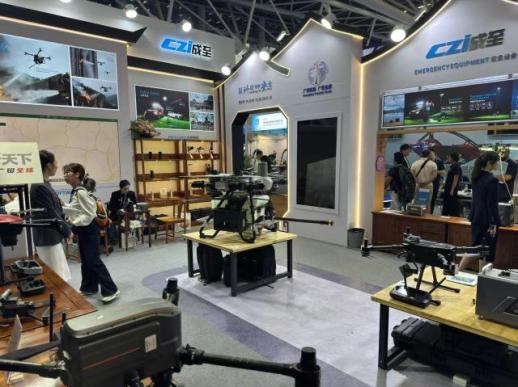 U.S.-Japan Drone Partnership Raises Stakes for South Korea’s Defense Industry The United States and Japan have agreed to jointly develop and produce advanced weapons, including attack drones, a move that is rapidly reshaping the global defense industry. The partnership pairs U.S. technology with Japan’s manufacturing capacity, giving it the character of an industrial alliance as well as a military one. While it is framed as a supply-chain shift aimed at China, it could also affect South Korea’s defense exports. The immediate goal is clear: to check China, which dominates the global drone market, and to adapt to changing battlefield conditions. In recent wars, drones have become core combat power rather than a supporting tool. Because they can be produced cheaply and deployed in large numbers, manufacturing capacity itself can translate into military strength. A division of labor in which the U.S. provides technology and Japan handles production is well suited to that shift. The larger issue is that the partnership may go beyond replacing Chinese supply. By combining technology and production, the two countries aim to secure price competitiveness, quality and stable supply at the same time. If that is reinforced by alliance-based political trust, global defense procurement could be reorganized. For South Korea’s defense industry, which has already posted results in Southeast Asia and the Middle East, the risk of market erosion cannot be ruled out. South Korea’s drone industry remains at an early stage. Exports are growing, but its global market share is still low. Its direct competitor is China, but over the medium to long term it is likely to face competition from an alliance-based supply chain led by the U.S. and Japan. South Korea’s defense sector, which has grown around finished weapons, could also come under pressure in “package export” competition. Once drones and other unmanned systems are integrated with existing weapons, the competitive field widens. Still, the shift does not have to be viewed only as a threat. It can be a chance to reset strategy. Defense production is moving beyond hardware toward a systems industry that combines artificial intelligence, data and communications. Competition is expanding from airframes to software and platforms. If South Korea misses that transition, its current strengths may not last. A response strategy needs to be clear. First, South Korea should separate short-term and medium- to long-term approaches. In the near term, it should protect export competitiveness by building on existing strengths and expanding real-world deployment of drones and unmanned systems. At the same time, it should focus on securing AI-based autonomous systems and data-integration capabilities. Speed and structural improvement must proceed in parallel. Second, it should strengthen links to a U.S.-centered defense ecosystem. A stronger U.S.-Japan alliance does not necessarily mean South Korea will be excluded. With fast production capacity and maintenance experience, South Korea could find a complementary role. The key is not participation alone but securing differentiated areas, particularly in communications, security and software. Third, it should push practical integration of civilian technology and defense production, which will require institutional change. Security rules should be maintained, but pathways should be created for private companies to participate. Opportunities for testing in constrained environments should be expanded, and technology development using defense data should be supported. The government should also make active use of advance purchases and test-bed programs to help early-stage technology firms enter the market. The need is for execution, not declarations. Ultimately, the U.S.-Japan cooperation is a signal that defense competition is shifting from company-to-company rivalry to competition among national industrial alliances. The sector is being reorganized into a complex industry combining technology, production and diplomacy. If South Korea fails to keep pace, its current gains may not endure. What is needed now is not simply a sense of crisis, but strategy and follow-through. South Korea’s defense industry has already shown its potential. The question raised by a U.S.-Japan drone partnership is straightforward: What position will South Korea hold in this new order? The answer will depend on prepared strategy and rapid execution.* This article has been translated by AI. 2026-04-28 08:54:24
 -
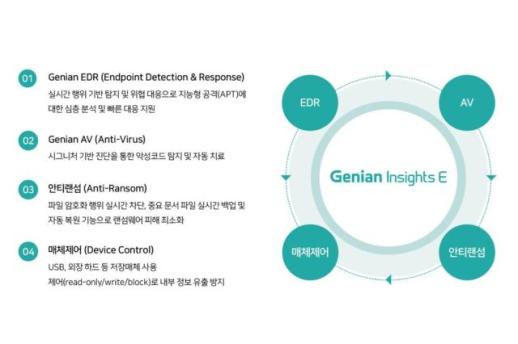 Genians Leads South Korea’s Public EDR Procurement Market for Seventh Straight Year South Korean cybersecurity company Genians said it ranked No. 1 in the public procurement market for endpoint detection and response, or EDR, for the seventh consecutive year. The company said Monday that it held a 46% share in 2025 based on the Public Procurement Service’s Nara Marketplace data. Genians said it has expanded its foothold in the public sector by building on technical competitiveness from the early days of South Korea’s EDR market in 2019 through today’s AI-driven security environment. EDR is a security technology that analyzes activity on endpoints such as PCs and servers in real time to detect and respond to threats. Its importance has grown as sophisticated cyberattacks have intensified alongside the spread of generative AI. Genians said it was the first in South Korea to develop EDR and has helped public institutions improve security visibility and respond to advanced threats. The company said it obtained a security function verification certificate from the National Intelligence Service, meeting stringent public-sector requirements, and has contributed to protecting government administrative networks and key infrastructure. Genians said its EDR has been deployed on more than 750,000 agents across central government agencies, local governments, financial institutions and large manufacturers, and that it has secured more than 200 references at home and abroad. The company said it is strengthening a single-console integrated security platform strategy by combining EDR with next-generation antivirus, anti-ransomware and device control to build an integrated endpoint response system. It also highlighted linking a machine-learning engine with AI-based cyber threat intelligence to detect previously unknown malware. The company said its system can identify threats from the hacking attempt stage and trace and analyze activity after an incident. Lee Dong-beom, Genians’ CEO, said defenses must be rebuilt on the assumption that threats can be constant in an era when AI can autonomously design attack scenarios. He said the company will combine its EDR technology with AI-based automated response to provide an endpoint security platform that blocks sophisticated attacks in real time.* This article has been translated by AI. 2026-04-28 08:48:20