

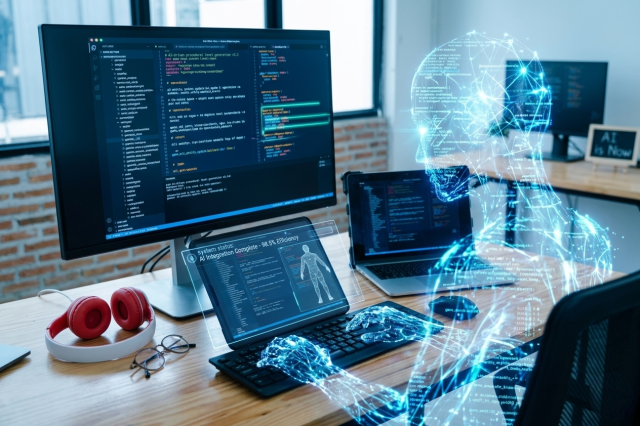
Artificial intelligence has reached the top of Japan’s most competitive university admissions tests, according to reports that OpenAI’s latest model outscored the highest-performing human test-takers on the University of Tokyo’s 2026 entrance exam and posted results strong enough to rank first on Kyoto University’s exam. The tests were jointly graded by a Japanese evaluation body and an admissions specialist organization. The result drew attention because the same AI fell short of the passing line just two years ago.
The numbers may look like a routine technology milestone, but the implications are broader. Entrance exams reflect what a society chooses to reward as excellence. If AI can outperform people on what is widely considered the country’s hardest test, it suggests limits in how knowledge and ability are being measured, not just a race in computing power.
One point highlighted in the assessment was a perfect score in math, indicating AI has reached — and in some areas surpassed — top human performance in logical reasoning, calculation and pattern recognition. At the same time, evaluators said the model still showed weaknesses on tasks such as written responses in world history and questions requiring layered interpretation. AI has not replaced humans across the board, but it is showing clear advantages in exam systems built around fixed correct answers.
South Korea’s education system, the article argues, cannot ignore that shift. If admissions continue to emphasize memorization, speed and finding the single right answer, students will be pushed into competing on terrain where machines are faster and more accurate. It calls for a fundamental review of what the college entrance exam, school records and other selection tests are designed to measure.
The article says the skills that matter most will be less about producing answers and more about designing questions, weighing information, taking ethical responsibility and working with others to create new value. Even if AI can generate answers, people still decide which questions to ask, it said, and education should move toward that center of gravity.
Universities, it adds, will also need to change. Selection systems focused mainly on problem-solving are likely to become outdated, it said, arguing for greater weight on creative projects, debate and writing, real-world problem-solving and interdisciplinary ability. Hiring practices face similar pressure, it said, as employers place more value on what applicants can produce using AI than on test scores and certificates.
The article cautions against excessive fear based on a single AI report card, noting that technology is a tool and its use remains a human choice. Still, it says the transition is clear: from an era when people solved test questions to one in which people define problems alongside AI.
It frames the challenge as a choice: whether to train students to beat machines, or to develop people who can build the future with them. Education policymakers, universities, parents and industry must answer, it said, warning that delay will raise the cost.
* This article has been translated by AI.
Copyright ⓒ Aju Press All rights reserved.