
Journalist

Lee Hugh
=
-
 Lee Jae-myung’s Vietnam state visit yields 85 MOUs, sets $150B trade goal by 2030 President Lee Jae-myung wrapped up his state visit to Vietnam with a series of major agreements through the final day. The two countries signed a total of 85 memorandums of understanding — 12 government-to-government MOUs covering areas such as nuclear power, railways and artificial intelligence, and 73 MOUs between companies — and formally set a goal of raising bilateral trade to $150 billion (about 221 trillion won) by 2030. The outcome was described as a step toward moving the comprehensive strategic partnership into an implementation phase. ◆ $150 billion trade goal formalized; growth since 1992 Vietnamese media outlets including Cheongnyeon Sinmun reported that expanding economic cooperation was the central agenda of the trip. Lee and Prime Minister Le Minh Hung co-chaired an economic roundtable and forum, formally reaffirming their shared commitment to lift trade to $150 billion by 2030. They also agreed to work together to carry out an economic integration vision suited to a changing international environment. Bilateral trade has risen sharply. From several hundred million dollars at the time diplomatic ties were established in 1992, trade expanded to $89.5 billion last year, and reached $26.9 billion in the first quarter of 2026. The $150 billion target is about 1.5 times the 2025 result, the report said. Companies also moved in parallel. Businesses from both countries signed and exchanged 73 MOUs spanning energy, finance, technology, electronics, telecommunications, processing, manufacturing, machinery, construction, infrastructure, trade, tourism and aviation. Government ministries and agencies signed 12 cooperation documents, strengthening the institutional framework, the report said. The summit schedule also included cultural events. On April 24, To Lam and his wife hosted a special friendship program for Lee and first lady Kim Hye-kyung at Hanoi’s Thang Long Imperial Citadel. The two sides agreed that bilateral ties have reached their most advanced stage and reaffirmed that they are moving into a new phase under a long-term strategic direction. The program, themed “Thang Long: A Thousand Years of Vitality, the Depth of Cultural Heritage,” featured performances including xoan singing, listed by UNESCO as intangible cultural heritage, as well as Vietnamese court music, Hue chau van singing and a “six royal flowers” dance. The leaders toured sites including Doan Mon, the main hall of Kinh Thien Palace and an exhibition hall while receiving historical briefings. In talks, Lee said, “The relationship between our two countries is special and close, like brothers,” and said South Korea would be a reliable partner in achieving Vietnam’s goals of becoming an upper-middle-income developing country by 2030 and a high-income advanced country by 2045. Vietnam’s leadership said the visit carried added significance as the first state visit after a leadership reshuffle following the 16th National Assembly election. During the state visit from April 21 to 24, Lee also visited the Ho Chi Minh Mausoleum and attended an official welcoming ceremony and a state banquet. On the final afternoon, Lee and Kim departed Hanoi after completing the schedule. The visit was widely seen as coming at a time when bilateral ties are at their strongest, providing a platform to expand trade and deepen strategic cooperation. The shared $150 billion goal is now moving beyond leader-level agreement into an execution phase through cooperation documents and contracts by governments and companies, the report said.* This article has been translated by AI. 2026-04-28 06:10:17
 -
 Korea Bond Yields Rise on Middle East War, Inflation Fears Despite WGBI Boost South Korea’s government bond yields are climbing again as Middle East war risks and rising inflation pressure outweigh the boost from the country’s inclusion in the World Government Bond Index, or WGBI. While index-tracking foreign inflows are adding downward pressure, concerns about prolonged conflict, higher prices and possible policy-rate hikes are dominating, increasing borrowing costs across the market. According to the Korea Financial Investment Association on the 27th, the three-year government bond yield stood at 3.492% a year. The 10-year yield ended at 3.820%. That is up 53.9 basis points and 43.5 basis points, respectively, from the end of last year (1 basis point equals 0.01 percentage point). After WGBI inclusion on the 1st sent yields down more than 20 basis points in a single day, the market has since reversed much of that drop. The rebound reflects renewed worries about an oil-driven inflation shock as countries continue to spar over a ceasefire in the Middle East. The WGBI factor has not been enough to keep yields down. Finance Ministry data showed foreigners posted net purchases of 8.5 trillion won in Korean Treasury bonds over about three weeks after April’s WGBI inclusion, well above the usual average of 4.5 trillion won. Even so, yields have not returned to prewar levels — the 3.0% range for three-year bonds and the 3.5% range for 10-year bonds. Kiwoom Securities, citing China’s earlier WGBI inclusion, said index entry can broaden demand but does not necessarily drive yields lower on its own. Economic conditions and policy responses, it said, have a larger influence on rates. Expectations for additional policy tightening are also pushing yields higher. With the policy rate at 2.5%, the three-year government bond yield is nearly 1 percentage point above it. Because the three-year tenor typically reflects expectations for the policy path most sensitively, the market is pricing in the possibility that the Bank of Korea could raise rates at least twice more. Increased government bond supply is adding to the upward pressure. Higher government bond yields can spill into the real economy because they serve as benchmark rates for market borrowing costs. When they rise, corporate bond yields and bank lending rates can follow. Corporate financing conditions have already worsened. The yield on three-year AA- rated corporate bonds rose to 4.147% from 3.476% at the end of last year. Smaller companies with weaker credit could face a sharper squeeze, including difficulty raising funds. Households are also exposed: if bank loan rates move higher in line with government bond yields and the COFIX funding rate, borrowing costs for vulnerable borrowers could approach their limits. Prospects for Bank of Korea rate hikes have strengthened after first-quarter gross domestic product growth delivered a surprise that far exceeded market expectations. With Middle East-driven inflation risks already elevated, analysts say stronger-than-expected growth could add to price pressure and lead the central bank to place greater weight on inflation control when setting policy. Cho Yong-gu, a researcher at Shinyoung Securities, said, “With the domestic first-quarter GDP surprise, the terminal rate is now more likely to reach 3.00%,” and forecast an upward revision to the ‘K-dot plot’ in May, a minority dissent for a hike in July, and a 25-basis-point increase in August.* This article has been translated by AI. 2026-04-28 06:09:15
 -
 Korea to Host 13th ISO Health Organization Management Standards Meeting in Seoul The Ministry of Trade, Industry and Energy’s Korean Agency for Technology and Standards said Monday it will hold the 13th International Standards Meeting on Health Organization Management in Seoul for three days through April 30. The meeting will be the first hosted by South Korea since it took on the chair and secretariat roles for ISO/TC 304 (health organization management). South Korea plans to serve as a designer and coordinator for global health and medical standardization work during the session. Delegates will discuss five proposed international standards submitted by South Korea, including evaluation methods for logistics processes and performance based on autonomous driving robots in smart hospitals. The meeting will also establish a “smart hospital” subcommittee (SC1) as South Korea seeks to lead international standardization for smart health and medical systems. KATS Administrator Kim Dae-ja said, “By taking the lead in smart hospital standards, our medical industry will be able to strengthen its competitiveness in the global market and improve both patient safety and hospital operational efficiency.” She added, “We will continue to provide support so our standards experts can actively participate in international standardization for smart hospitals.” * This article has been translated by AI. 2026-04-28 06:08:28
 -
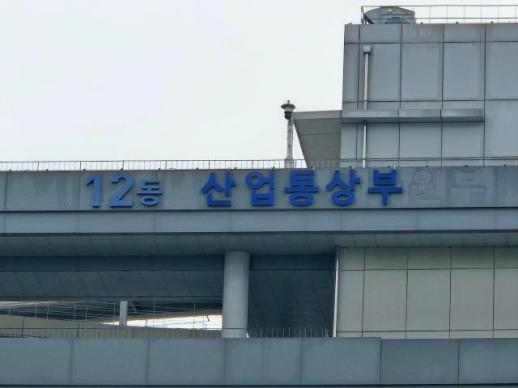 South Korea launches AI project to turn factory know-how into data, speed M.AX shift The South Korean government is launching a project to convert skilled manufacturing workers’ experience and know-how — known as “tacit knowledge” — into artificial intelligence data for use on factory floors, as concerns grow that aging workforces could disrupt the transfer of core techniques. The Ministry of Trade, Industry and Energy said on 28 it will 추진 the “AI model development project based on manufacturing tacit knowledge.” The program will use 48 billion won in central government funding secured through a supplementary budget this year to help turn key shop-floor know-how into data and support AI model development based on it. Tacit knowledge refers to work techniques, judgment standards and hands-on know-how that veteran workers develop through years on the job. It is difficult to document, but is considered a key competitive asset that affects productivity and quality. The ministry said rapid aging in manufacturing is increasing retirements among skilled workers. It warned that if master craftsmen’s tacit knowledge is lost, it could weaken domestic manufacturing competitiveness and undermine the foundation for the manufacturing AI transformation known as M.AX. Industry has also called for systematic efforts to turn tacit knowledge into data and support AI use, the ministry said, adding that concerns are especially high in sectors facing severe labor shortages in higher-risk or more technically demanding processes. The project will support 30 tasks in selected industries and processes deemed urgent and likely to have broad impact. Funding will total 48 billion won — 1.6 billion won per task — and the project period will run for about nine months, from June through February next year. Eligible applicants are consortia involving manufacturing companies and AI firms. The government plans to provide comprehensive support beyond research and development funding, including dataset construction, AI model development, consulting and equipment installation. Work will include securing and refining unstructured data containing master craftsmen’s tacit knowledge, developing AI models using that data, and verifying datasets. The ministry said companies and institutions with strong results will receive preferential treatment in a large-scale follow-up project planned for the future. To broaden participation, the ministry and the Korea Institute for Advancement of Technology will hold regional briefings. After holding a briefing in the Seoul metropolitan area on the 23rd, they plan to run briefings from 28 through 29 in Yeongnam (Changwon), Honam (Gwangju) and the central region (Daejeon). A ministry official called it “a project that is essential to protecting manufacturing competitiveness,” and said the ministry will “communicate closely with industry, research and labor to move quickly.”* This article has been translated by AI. 2026-04-28 06:07:37
 -
 South Korea Weighs Second Extra Budget as Higher Rates Raise Debt-Funding Concerns With high oil prices and inflation pressures tied to the Middle East still unresolved, lawmakers are again raising the idea of a second supplementary budget. Unlike the first extra budget, which relied on higher-than-expected tax revenue, a second package would likely require issuing deficit-financing government bonds, adding to upward pressure on interest rates. The first supplementary budget used 25 trillion won in excess tax revenue, allowing spending to expand without issuing new bonds. Of that, 1 trillion won was allocated to repay government debt. A second supplementary budget would be different. With limited room in tax revenue, much of the funding under discussion would have to come from issuing deficit bonds. Because bond yields typically move inversely to bond prices, a larger supply of government bonds can push prices down and yields up. With U.S. Treasury yields already elevated, a rise in domestic deficit-bond issuance could further jolt South Korea’s bond-market rates, which some analysts say are already near a threshold. Analysts warn of a potential vicious cycle: If fiscal expansion aimed at supporting growth also drives market rates higher, the economy could slow, increasing the burden on public finances. The Korea Capital Market Institute said an increase in government bond supply driven by expansionary fiscal policy is a main factor weakening the market’s capacity to absorb issuance and increasing rate volatility. Government bond yields affect funding costs across the economy and play a major role in pricing risk assets such as stocks and real estate. A sharp rise in rates could spill over into the real economy and financial markets, including wider corporate-bond credit spreads and higher household loan rates at banks, it said. A Korea Development Institute study found that for every 1 trillion won increase in Treasury bond issuance, the Treasury yield rises by 0.025 to 0.029 percentage points. It also found that for every 10% increase in government debt, bond yields rise by 0.43 percentage points. Whether rates rise further is expected to depend on how the Middle East war develops and whether a second supplementary budget is pursued. If the situation in which international oil prices do not fall below $100 a barrel persists, the government is more likely to press ahead with a second extra budget to support the economy. In that process, analysts say coordination between fiscal authorities and the Bank of Korea will be needed to avoid stoking rates. If the roles of fiscal and monetary policy fall out of balance, the costs could be borne most heavily by vulnerable groups. Experts say policymakers should be cautious about a second supplementary budget to avoid fueling interest rates. They also urge the government to craft policies based on longer-term economic prospects rather than focusing only on short-term relief. Yeom Myeong-bae, a professor of economics at Chungnam National University, said government policy consists of fiscal policy that spends money and financial policy that manages the money supply. “If the two are out of sync, the damage will be greater for vulnerable groups,” Yeom said. “When fiscal spending is financed with debt, in the short term the current generation suffers through things like higher prices, and it also creates debt that future generations must repay. Policy should be run with a long-term perspective.”* This article has been translated by AI. 2026-04-28 06:06:34
 -
 Surging Treasury Yields Raise Fears of Uneven Blow to Vulnerable Borrowers, Weak Firms A renewed surge in South Korean Treasury yields is fueling concerns that the hit will fall hardest on vulnerable borrowers and financially weak companies. With household loans still heavily tied to floating rates, higher rates could quickly raise interest burdens, curb spending and weigh on domestic demand, analysts said. According to the financial sector on April 27, Treasury yields have continued to rise as markets price in inflation pressure tied to Middle East geopolitical risks and expectations that global monetary tightening will last longer. Because Treasury yields serve as a benchmark for market rates, moves typically feed into corporate bonds, financial bonds and loan rates within days to weeks. Corporate bond yields and bank lending rates are structured to track Treasury yields, meaning higher long-term rates can spread quickly across the financial system. In that transmission process, the burden tends to concentrate on weaker borrowers and marginal firms. Since funding costs are Treasury yields plus a credit spread, the lower the credit quality, the larger the increase in actual borrowing costs. Large companies, with greater access to direct financing such as bond issuance and stronger cash positions, generally have more room to respond early in a rate upswing. Small and midsize firms and marginal companies, however, rely more on bank loans and often have weaker credit, making it more likely that rising rates will tighten funding conditions. If refinancing becomes difficult or new bond issuance costs jump, short-term liquidity pressure can intensify and raise default risks. Households are also unlikely to escape the impact. With a high share of floating-rate household debt, increases in Treasury and bank bond yields can lift banks’ funding costs and flow through to lending rates via benchmarks such as COFIX, after a relatively short lag. That can quickly raise debt-service burdens, especially for vulnerable borrowers with limited repayment capacity or heavy exposure to floating rates. Signs of strain are already appearing in financial indicators. The delinquency rate on won-denominated loans at domestic banks stood at 0.62% at the end of February, up 0.05 percentage points from 0.56% a month earlier, the highest in nine months. For February readings, it was the highest in 10 years. A similar trend is emerging outside the banking sector. As of the end of March, card loan balances at nine major credit card companies totaled 42.9942 trillion won, rising for a third straight month to a record high. The increase points to a balloon effect from tighter bank lending rules and a shift in funding demand toward higher-rate nonbank lenders. Experts warned that if Treasury yields rise beyond a certain level, the impact could spread from higher interest burdens to broader financial stability risks. If distress grows among vulnerable borrowers and marginal firms, it could weaken financial institutions’ asset quality and lead to tighter credit conditions, they said, calling for preemptive steps. Kim Sang-bong, a professor of economics at Hansung University, said, “When bond yields rise, the interest burden on floating-rate loans inevitably increases.” He added, “Because prices are expected to keep rising, Treasury yields will also keep rising.” Kim said restructuring is needed for marginal firms and that policies should also aim to curb growth in household debt. A key concern is that the rate environment may not ease quickly. With the U.S. Federal Reserve maintaining a tightening stance and oil prices rising due to Middle East developments, inflation pressure is persisting. As a result, upward pressure on rates, led by long-term yields, may continue for some time. Markets are watching next month’s Monetary Policy Board meeting, the first to be chaired by newly appointed Bank of Korea Gov. Shin Hyun-song. The focus has sharpened after first-quarter gross domestic product posted a surprise increase above expectations, strengthening the case for monetary tightening. During his confirmation hearing on the 15th, when he was still a nominee, Shin said, “In the current situation, I will put more weight on prices, especially in an economy like Korea that is so sensitive to oil prices, where the oil shock has a considerable impact on inflation.”* This article has been translated by AI. 2026-04-28 06:05:14
 -
 Bank of Korea: April Business Sentiment Index Rises 0.8 Points as Inventories Shrink Business sentiment, which had been dampened by the war in the Middle East, rebounded in April. The headline improvement, however, largely reflected inventory drawdowns caused by supply disruptions. According to the Bank of Korea's April business survey results and economic sentiment index released on the 28th, the all-industry Composite Business Sentiment Index, or CBSI, rose 0.8 points from the previous month to 94.9 as both manufacturing and nonmanufacturing improved. The central bank said sentiment was supported by higher manufacturing sales and new orders and smaller finished-goods inventories, despite rising raw material prices and production disruptions in some industries tied to the Middle East war. The CBSI is a sentiment gauge calculated from key Business Survey Index components — five for manufacturing and four for nonmanufacturing. A reading above the long-term average of 100, based on data from January 2003 to December 2025, indicates optimism; below 100 indicates pessimism. Lee Heung-hoo, head of the BOK's economic sentiment survey team, said the biggest driver of the April increase was a drop in product inventories as firms met demand by using existing stockpiles amid disruptions in raw material supplies. He added that manufacturing conditions also improved somewhat on continued strong exports and higher selling prices. Lee said the central bank recalculated sentiment excluding the finished-goods inventory component to account for the unusual supply factor, and found that April conditions and the May outlook edged down. He noted the CBSI has been on an upward trend since March 2025 but remains below 100. By sector, the manufacturing CBSI rose 2.0 points to 99.1, led by finished-goods inventories (+2.3 points) and business conditions (+0.7). The nonmanufacturing CBSI inched up 0.1 point to 92.1 as sales (+0.6) offset a decline in profitability (-0.5). For May, the CBSI outlook was 98.0 for manufacturing, up 2.1 points, while nonmanufacturing was unchanged at 91.2. In detailed BSI results, manufacturing improved in chemicals and chemical products, primary metals and fabricated metal products. In nonmanufacturing, wholesale and retail fell, while construction and information and communications rose. The April Economic Sentiment Index, or ESI — which incorporates the BSI and the Consumer Sentiment Index — fell 2.3 points from the previous month to 91.7. The BOK cited weaker readings for the manufacturing outlook on funding conditions (-0.6 points) and for household income and consumer spending outlooks, down 1.0 point and 0.8 point, respectively. * This article has been translated by AI. 2026-04-28 06:04:05
 -
 Rubio: U.S. Won’t Accept Iran Controlling Strait of Hormuz or Having Nuclear Weapons U.S. Secretary of State Marco Rubio said Sunday that Iran is still seeking to maintain control over the Strait of Hormuz, calling that unacceptable for the United States. He also reaffirmed that Iran cannot be allowed to possess nuclear weapons. His remarks, made as talks on ending the war with Iran face difficulties, were widely seen as a clear statement of U.S. red lines. According to Yonhap News Agency, Rubio said in an interview with Fox News that if Iran’s idea of keeping the strait “open” means, “Yes, it’s open, but you have to coordinate with Iran, get our permission, and if not we’ll attack you, and you have to pay a toll,” then “that’s not opening the strait.” “The Strait of Hormuz is an international waterway,” Rubio said, adding that the United States cannot accept Iran “normalizing” a system in which it decides who can use the waterway and how much they must pay to do so. Earlier, U.S. political news outlet Axios reported that Iran, through mediators, had sent the United States a proposal to first open the Strait of Hormuz and declare an end to the war, then continue nuclear talks later. Rubio’s comments appeared to argue that what Iran calls opening the strait would amount to controlled passage rather than free navigation. Rubio also said Iran seeks to threaten the world with nuclear weapons, “the way it does now with oil,” and to hold the world hostage to get what it wants. “That is unacceptable,” he said. 2026-04-28 06:03:16
 -
 Nearly 400,000 Leave South Korea’s Housing Subscription Accounts as Seoul Cutoffs Hit Perfect Scores The point-based apartment subscription system, designed to protect end users, is increasingly criticized as favoring a small group of asset-rich applicants. With presale prices rising on surging construction costs and strict lending rules limiting financing, some applicants with high scores are giving up because they cannot raise the money. Others say winning has become unrealistic without both cash and a large number of dependents. As a result, more would-be buyers are either crowding into no-rank lotteries or leaving the subscription market altogether. According to Cheongyak Home data released on the 26th, the number of housing subscription account holders fell from 26,438,085 to 26,051,929 over the past year (March 2025 to March 2026), a drop of more than 380,000. Monthly declines were modest in the first half of last year, ranging from 0.03% to 0.09%, but the pace accelerated from October. The decline peaked in December at 0.305% from the previous month, and this year the monthly drop has continued at nearly 0.2%. Over the past 14 months, the cumulative net decrease totaled about 400,000. Critics link the exodus to unusually high barriers, including complexes where the cutoff has reached a perfect score. In a first-round subscription held on the 9th for “Acro de Seocho” in Seoul’s Seocho district, the cutoff for the 59-square-meter Type C unit was the maximum 84 points, the first such case in Seoul’s private apartment presale history. Competition for that type hit 1,099.1 to 1, the highest on record. But general sales accounted for only 4.8% of the project, or 56 units, prompting assessments that the market has become a contest for a tiny group of wealthy applicants with perfect-score accounts. As regular subscriptions have effectively narrowed, demand has surged into no-rank subscriptions held just days later. On the 13th, 106,093 people applied for two no-rank units at “Gangdong Heritage Xi,” a competition rate of about 53,000 to 1. The units were offered at about 730 million won, the 2022 presale price, allowing an estimated market-price gain of about 1 billion won. Observers say the lottery system — with odds of about 1 in 50,000 — has become the only remaining channel for unsubsidized, score-disadvantaged households without homes. High cutoffs are also being driven by large-family, perfect-score accounts winning smaller units at price-capped projects in the Gangnam area. At “Otiere Banpo,” the minimum winning score across all unit types was 69 points, with many types in the low-to-mid 70s — levels seen as requiring a perfect-score account typically associated with families of five or more. This score inflation is spreading beyond Gangnam across Seoul. The maximum score a four-person household can receive after more than 15 years without owning a home — 69 points — has effectively become the minimum needed to win. Cutoffs have risen above 69 points not only in Jamsil and Banpo but also in major areas such as “The Fine Yeonhui” in Seodaemun district and “Ichon Rael” in Yongsan district. Even four-person families that have remained without a home for 15 years are finding it difficult to win newly built apartments in Seoul, intensifying debate over whether the system still works as intended. Cash requirements are also filtering out end users. For example, “Otiere Banpo,” which began taking subscriptions on the 13th, required winners to raise more than 1.1 billion won in cash within three months because it is a post-completion sale. The requirement led even some top-score applicants with 84 points to forgo applying due to insufficient funds. Park Ji-min, head of the Wol-yong Subscription Research Institute, said the current system remains centered on older, large-family household structures and “fails to serve as a housing ladder at all” for the rapidly growing number of one- and two-person households. Park urged an overhaul that increases the weight of points for time without homeownership or length of subscription account membership, so that smaller households that have remained without a home can receive meaningful advantages. * This article has been translated by AI. 2026-04-28 05:09:37
 -
 Takaichi’s Fast-Track Leadership Meets Resistance in Japan’s Political System What has the new political approach dubbed the “Takaichi style” produced in practice? There are clear cases where Takaichi’s top-down, fast-track decision-making has delivered results. A leading example was her immediate decision, soon after taking office, to abolish an additional gasoline tax that the ruling and opposition parties had agreed to end under the previous administration but repeatedly delayed. For many Japanese, it was a moment that made politics feel like it was moving again. But the approach has also brought setbacks. One prominent case was her November response in the Diet about a “survival-threatening situation in the event of a Taiwan contingency.” The Yomiuri Shimbun quoted a government official as saying the remark was an ad-lib not included in prepared materials, adding that “this wouldn’t have happened if there had been even a face-to-face review of answers with bureaucrats.” The official pointed to the abolition of the prime minister’s answer-prep sessions — a core element of the Takaichi style — as a direct cause. Even after voices within the Liberal Democratic Party urged her to contain the fallout, Takaichi did not retract the comment. The result, the article said, was that Chinese visitors to Japan fell to about half, and relations with China have continued to worsen. The pattern is not new: the article noted that when she served as internal affairs minister 10 years ago, controversy also grew after she said broadcasters that repeatedly violated political fairness could be ordered off the air, and she did not back down then either. Takaichi’s preference for refusing dinner gatherings and relying on documents has also strained ties with the party and the bureaucracy. In one example, LDP officials who visited to coordinate wording for the party’s 70th anniversary address said they were sent off after about 10 minutes, having heard only Takaichi’s brief instruction: “Please fix it like this.” During deliberations on the 2026 budget, one senior LDP figure said he had spoken directly with the prime minister about the budget only once. That communication gap has spilled into governance. Takaichi insisted the budget bill be passed within the fiscal year, but after pushing ahead without sufficient coordination with the party, it failed to clear the House of Councillors. The Nikkei said reliance on “the power of numbers” in running the Diet widened the distance between the prime minister’s office and the party and parliament. Relations with the bureaucracy have been similarly tense. Consumption tax cuts have long been opposed by the Finance Ministry over concerns about reduced revenue, and past prime ministers have typically adjusted their rhetoric after behind-the-scenes coordination. But in a February budget committee session, Takaichi said “some ministry” was spreading obstructive information in connection with discussions of a consumption tax cut — a remark the article described as an effective public rebuke of the Finance Ministry. Finance Ministry officials reacted with shock, asking whether she viewed them as resistance to the administration. A senior government official was quoted as saying that to build a long-running administration, the Finance Ministry, which controls the budget, must be made an ally, and that turning the entire bureaucracy into one team remains a task. Despite the side effects, the article said Takaichi has shown no sign of changing course. Instead, she has moved to tighten her grip within the party through personnel decisions. She sought to replace an LDP leader in the House of Councillors over responsibility for the failed budget passage and has repeatedly excluded lawmakers who challenged her from key posts. The Yomiuri said pressure is spreading within the party that even veterans will be treated coldly if they do not follow the prime minister’s line. The article said there is little open criticism inside the party. Rather, after factions were dissolved and groups reorganized, they are competing to draw closer to Takaichi. Her camp is said to be envisioning an uncontested re-election as LDP president in September next year, with no clear rival in sight. If she wins again and also prevails in the 2028 House of Councillors election, the article said, the possibility of long-term rule has been raised. Whether the “Takaichi style” becomes a new standard in Japanese politics or is forced to adjust under real-world constraints remains to be seen. * This article has been translated by AI. 2026-04-28 05:08:21