
Journalist

Lee Hugh
=
-
 Prosecutors Seek 20-Year Prison Term for Park Sung-jae in Martial Law Insurrection Case Park Sung-jae, a former justice minister indicted on charges of participating in insurrection-related crimes tied to the Dec. 3 martial law declaration and acting on an alleged request involving first lady Kim Keon Hee, was asked to be sentenced to 20 years in prison. At a closing hearing Monday before the Seoul Central District Court’s Criminal Division 33, the special counsel team led by Cho Eun-seok requested the sentence for Park on charges including playing a key role in an insurrection and abuse of authority. The team urged the court to impose a severe judgment “to sound the alarm for a ‘legal technician’ who destroys the law in the name of the law.” On the insurrection allegation, the special counsel said Park “actively went along” so that “Yoon Suk Yeol’s crime using martial law as a means could succeed,” and that he took the lead in justifying and procedurally supporting it. On the allegation involving Kim, the team said Park accepted and carried out “an improper request” from the president’s wife, adding that his actions should be seen not as communication but as “active collusion tied to power.” Park is accused of sequentially joining Yoon’s alleged insurrection after the Dec. 3, 2024, martial law declaration by convening a Justice Ministry executives’ meeting and ordering reviews of dispatching prosecutors to a joint investigation headquarters, checking correctional facilities’ capacity, and having staff responsible for travel bans report to work. He is also accused of giving improper instructions to subordinates after receiving a request from Kim in May last year to determine how a dedicated investigative team at the Seoul Central District Prosecutors’ Office was formed for a case involving the receipt of a luxury bag. The court is scheduled to deliver its first-trial verdict on June 9.* This article has been translated by AI. 2026-04-27 19:48:19
 -
 Special counsel seeks 20 years for Park Sung-jae over martial law role, alleged Kim Keon-hee favor Special counsel prosecutors on Sunday sought a 20-year prison term for Park Sung-jae, a former justice minister on trial for allegedly taking part in the Dec. 3 martial law episode and acting on a request tied to an investigation involving first lady Kim Keon-hee. The team led by special counsel Cho Eun-seok asked the Seoul Central District Court’s Criminal Division 33, presided over by Judge Lee Jin-kwan, to sentence Park to 20 years in prison on charges including playing a key role in an insurrection and abuse of power. In closing arguments, the special counsel team described Park as a “legal technician who destroys the law,” arguing that he knew the emergency martial law declared by Yoon Suk Yeol lacked constitutional requirements but still offered ideas to give it the appearance of legality and mislead the public. Prosecutors said Park’s actions immediately after the declaration — moving to the Justice Ministry complex in Gwacheon and ordering an emergency standby for the travel-ban team, reviewing the dispatch of prosecutors to a joint investigation headquarters, and checking prison capacity — amounted to concrete steps to carry out the alleged insurrection. They said the measures were meant to isolate resisting opponents and process them through the justice system, adding that Park “turned the Justice Ministry overnight into an instrument for executing an insurrection.” On the allegation of collusion involving the first lady, prosecutors said Park accepted what they called a directive-like request from the president’s spouse, a private citizen, and exercised law-enforcement authority arbitrarily. “This was not communication but active collusion,” they said. They urged the court to impose a severe sentence, saying it must “send a warning to those who destroy the law in the name of the law.” Park has denied the charges, saying he carried out normal duties under relevant laws. The first-trial verdict has drawn public attention because the case involves what prosecutors described as an unprecedented justice minister accused of joining an insurrection. According to the special counsel’s investigation, Park is accused of sequentially joining Yoon’s alleged insurrection after Yoon declared emergency martial law on Dec. 3, 2024. Prosecutors say Park convened a meeting of senior officials at the Justice Ministry, ordered staff responsible for travel bans to report to work, and directed reviews of sending prosecutors to a joint investigation headquarters and checking prison capacity. He is also accused of having the ministry’s prosecution bureau draft an “abuse of authority document” containing arguments to justify martial law shortly after it was lifted. Park is also accused of ordering staff to confirm details after receiving a Telegram message from Kim last May asking him to determine the progress of an investigation. The allegation arose after then-Prosecutor General Lee Won-seok instructed the formation of an investigative team over suspicions that Kim received a luxury bag. Separately, the special counsel team sought a three-year prison term for Lee Wan-kyu, a former head of the Korea Legislation Research Institute, who was indicted for perjury before the National Assembly under the Act on Testimony, Appraisal, etc. at the National Assembly. Lee is accused of falsely testifying that there was no discussion of martial law at a post-lifting “safe house meeting.” Lee told the court the gathering was merely social, but prosecutors argued that, amid a grave political situation in which a presidential impeachment bill had been introduced, key aides meeting while carrying stacks of documents amounted to a countermeasure session to develop arguments to justify martial law. They also said Lee deliberately committed perjury by reducing the number of attendees in his testimony from five to four.* This article has been translated by AI. 2026-04-27 19:33:20
 -
 South Korea Unveils Slogan for Kim Gu’s 150th Birth Anniversary UNESCO Commemoration “My Wish, Culture of Peace.” Prime Minister Kim Min-seok on Monday convened the Lee Jae-myung government’s first National Patriots and Veterans Committee meeting at the Government Complex Seoul. The committee finalized a plan to carry out commemorative projects for the UNESCO commemoration year marking the 150th anniversary of Kim Gu’s birth and announced the official slogan. The government chose “My Wish, Culture of Peace” to underscore what it called the universal value of Baekbeom’s ideas. The government said it will continue to refine and develop the plan through communication and cooperation with the Baekbeom Kim Gu Memorial Museum, the Korean National Commission for UNESCO, the Liberation Association, the cultural sector and young people. It set three main directions for the projects: “reexamining values,” “unity and solidarity,” and “remembrance and succession,” and said it will pursue commemorative programs under subthemes aligned with those goals. Planned flagship events include an international academic conference in July and August, a joint academic conference by the Baekbeom Kim Gu Memorial Museum and the National Museum of Korean Contemporary History in October, Gwanghwamun Culture Week in August, and the Baekbeom Award ceremony in August. * This article has been translated by AI. 2026-04-27 19:06:17
 -
 Mirae Asset Securities Seen Leading Q1 Operating Profit on SpaceX Valuation Gain A shift may be underway in the race for the top spot between Korea Investment & Securities and Mirae Asset Securities. After trailing for three straight years, Mirae Asset is increasingly seen as likely to reclaim the lead in first-quarter operating profit, helped by gains tied to its SpaceX investment. Attention is also turning to whether the annual ranking could flip as well. Financial data provider FnGuide said Monday that Mirae Asset’s consolidated first-quarter operating profit consensus stands at 1.3572 trillion won. If realized, it would mark the first time a Korean securities firm posts more than 1 trillion won in quarterly operating profit. Rival Korea Investment & Securities is estimated at about 822 billion won for the quarter. Mirae Asset’s strong quarter reflects a large valuation gain related to its SpaceX stake. The firm invested more than 400 billion won in SpaceX through vehicles including Mirae Asset AI Investment Association No. 1 and Space Investment Association No. 1. The company’s valuation is said to have surged ahead of a planned initial public offering. SpaceX, a U.S. private aerospace company founded by Elon Musk, is pursuing an IPO with June as its target. The outlook has fueled talk of a reversal in the full-year standings. The market expects Mirae Asset to post 3.1240 trillion won in operating profit for the year, topping the 2.8116 trillion won forecast for Korea Investment & Securities. Last year, Korea Investment & Securities ranked No. 1 with 2.3427 trillion won, ahead of Mirae Asset’s 1.9150 trillion won. The two firms’ rivalry has swung in recent years. In 2022, Mirae Asset led with 835.5 billion won in operating profit versus Korea Investment & Securities’ 400.1 billion won, but the positions later reversed. In 2023, Korea Investment & Securities posted 664.0 billion won, beating Mirae Asset’s 521.0 billion won, and in 2024 it stayed ahead with 1.2837 trillion won versus 1.1590 trillion won. Last year, Korea Investment & Securities widened the gap by becoming the industry’s first to surpass 2 trillion won in operating profit. The swings reflect differences in business structure. Mirae Asset has strengthened fee income from wealth management and brokerage while expanding overseas investing, a mix that can produce stable fees but also sharper earnings moves depending on global investment results. Korea Investment & Securities, by contrast, is stronger in investment banking and trading, using large-scale funding such as short-term notes to generate returns even during volatile markets. Analysts cite the global investment environment and whether the firms can establish their IMA businesses as key variables in the fight for the top spot. “Korea Investment & Securities has held the No. 1 position in recent years, but its IB- and trading-centered structure can lead to earnings swings with market volatility,” a financial investment industry official said. “With a strong market, Mirae Asset’s brokerage and WM-based income is relatively stable, and if investment returns support it, it can regain the lead at any time.” * This article has been translated by AI. 2026-04-27 19:03:12
 -
 Democratic Party Picks Lee Kwang-jae, Kim Yong-nam and Kim Nam-kuk for Gyeonggi By-elections The Democratic Party said it has decided to make strategic nominations for upcoming by-elections in Gyeonggi province, naming Lee Kwang-jae, a former Gangwon governor, for Hanam Gap; Kim Yong-nam, a former lawmaker, for Pyeongtaek Eul; and Kim Nam-kuk, a former lawmaker, for Ansan Gap. Kang Jun-hyeon, the party’s chief spokesperson, told reporters after a meeting of the Strategic Nomination Management Committee at the National Assembly on the afternoon of the 27th that the committee approved the three nominations. Kang said Lee was chosen in part because he has put the party ahead of personal interests when it faced difficulties. He described Lee as a heavyweight candidate who has served three terms in the National Assembly and led a provincial government, and said he is suited to push forward national projects such as the GTX rail plan. Kang also highlighted Lee’s past election win in conservative-leaning Gangwon and said Lee has a strong grasp of issues affecting the Seoul metropolitan area. Explaining Kim Yong-nam’s nomination, Kang said the party aimed to field a “reasonable and reform-minded” conservative figure in Pyeongtaek Eul, an area with strong conservative tendencies. He said Kim contributed significantly to broadening support and winning the last presidential election, and that the party believes Kim can draw backing across political lines and remain competitive even in a difficult district. Kang said Kim Nam-kuk was nominated because he has, until recently, shared President Lee Jae-myung’s governing philosophy and previously served as a lawmaker representing the Ansan area. “Former lawmaker Kim Nam-kuk understands President Lee Jae-myung’s governing philosophy most deeply,” Kang said, adding that Kim’s understanding of local issues, built during his time representing Ansan, would help lead the party to victory. The party, however, ruled out nominating Kim Yong, a former deputy head of the Democratic Research Institute, who had consistently expressed interest in running in the Gyeonggi area. Secretary-General Cho Seung-rae said some inside and outside the party argued Kim deserved an opportunity, describing him as a victim of what he called a “prosecutorial fabricated indictment” and someone who contributed to the party and President Lee. But Cho said the party decided not to nominate him because it could affect the by-elections. Cho added that it would also be difficult to consider Kim for nomination in another district and said he explained the circumstances to Kim on the 27th. Cho also said the party would continue its recruitment process for Ha Jung-woo, the presidential office’s senior secretary for artificial intelligence, who is widely expected to run in Busan’s Buk-gu Gap district. Cho said he met Ha personally on the 6th, and that party leader Jung Cheong-rae also spoke with Ha on the 26th about a potential run. Cho said Ha had expressed his intention to resign, and that if it is approved soon, the party plans to proceed with steps to bring him in as a candidate.* This article has been translated by AI. 2026-04-27 18:38:24
 -
 LG Innotek, Samsung Electro-Mechanics defy seasonal slump on AI-driven demand LG Innotek and Samsung Electro-Mechanics are posting unusually strong results despite what is typically a seasonal lull for electronics parts makers, helped by an artificial intelligence-driven boost in demand. Steady smartphone camera-module sales and rising shipments of high-value semiconductor substrates used in AI data centers and servers are supporting growth. LG Innotek said in a regulatory filing on 27 that its first-quarter consolidated revenue rose 11.1% from a year earlier to 5.5348 trillion won, the highest ever for a first quarter. Operating profit jumped 136% to 295.3 billion won, beating market expectations. The first quarter is usually considered an off-season because the impact of new smartphone launches fades. This year, the company said demand stayed firm as popularity of the iPhone 17 series, released in September, carried into early 2026, lifting its core camera-module business. The optical solutions division, which accounts for about 80% of revenue, posted 4.6106 trillion won in sales, up 11.4% and a first-quarter record. Growth was not limited to cameras. The package solutions division, which handles semiconductor substrates, reported revenue of 437.1 billion won, up 16% from a year earlier. The company cited surging demand for high-performance substrates such as flip chip ball grid array, or FC-BGA, as global big tech companies expanded AI investment. It said higher-value communications substrates, including RF-SiP, performed strongly, and profitability improved as supplies of advanced substrates used in AI servers and accelerators increased. Samsung Electro-Mechanics, which is set to report earnings on 30, is also expected to benefit from AI-related demand. According to a securities-industry consensus, the company’s first-quarter revenue is estimated at 3.2027 trillion won and operating profit at 295.0 billion won, up 16.7% and 47.1%, respectively, from a year earlier. A key driver is multilayer ceramic capacitors, or MLCCs. The article said an AI server uses 10 to 15 times more MLCCs than a general-purpose server, and unit prices are several times higher, pushing MLCC production lines close to full utilization. FC-BGA, which Samsung Electro-Mechanics has identified as a future growth area, is also expected to contribute more meaningfully as the AI accelerator market expands, accelerating a shift toward higher-value products. Industry watchers said the company could be on track to return to the “1 trillion won club” in annual operating profit starting from this first quarter. An industry official said, “As the AI era takes hold, the seasonal swings in the electronic components industry are being offset,” adding that Korean parts makers, having secured mass-production capacity through early investment, are likely to maintain solid growth for the time being as key partners in the global AI supply chain.* This article has been translated by AI. 2026-04-27 18:37:30
 -
 Korean Shipbuilders Ramp Up Offshore Wind Bets, but Grid and Port Infrastructure Lags Domestic shipbuilders are accelerating into offshore wind as a new growth engine, but the infrastructure needed to support the industry is not keeping pace. While corporate investment is rising quickly, structural constraints that could slow broader expansion remain, industry officials say. According to the shipbuilding industry on the 27th, Hanwha Ocean has been among the most aggressive. The company said it held a board meeting that day and disclosed plans to participate in a paid-in capital increase at its wholly owned unit, Ocean E&I, by subscribing to 25,439,900 common shares. Ocean E&I is a Hanwha Ocean subsidiary set up for businesses related to operating a wind turbine installation vessel, or WTIV. A WTIV is a specialized ship used to install offshore wind turbines and is considered essential equipment for placing large turbines at sea. By funding the WTIV operating unit, Hanwha Ocean plans to expand beyond ship construction into installation and operations. Since December 2024, it has broadened its footprint by taking over wind power operations from Hanwha Corp. and carrying out work from project development to engineering and construction for onshore and offshore wind projects. In a 400-megawatt offshore wind project, the company said it directly handled site identification, power-generation permits and related approvals to build development capabilities. Last year, it also signed an EPC contract for the Shinan Ui offshore wind project to build a 390-megawatt offshore wind complex in waters southeast of Uido, Ui Island, in Sinan County, South Jeolla Province. HD Hyundai is focusing on producing floating platforms, or substructures, and offshore substations, and supplying power equipment. It has obtained certification for 15- and 18-megawatt floating platforms and developed a 500-megawatt large-scale offshore substation model, aiming to secure an early lead in Korea’s floating offshore wind market and take an active role in large complex development through 2030. Samsung Heavy Industries is concentrating on floating offshore wind, centered on semi-submersible substructure technology. The company said it obtained approvals in principle last year for a 15-megawatt large model, positioning it to compete in the sector. It is also strengthening exclusive supply cooperation on large floating wind complexes, including the Ulsan Firefly project, with global energy companies such as Equinor, as it seeks to bolster competitiveness in renewable energy. Shipbuilders say offshore wind is attractive because it closely aligns with their core capabilities. Shipyards already have design and manufacturing expertise for large structures, giving them an edge in producing offshore wind components. Strong cash flow from a boom in orders for liquefied natural gas carriers and ultra-large container ships has also supported investment in new businesses. The offshore wind market is widely seen as having strong growth potential as decarbonization drives large project orders, particularly in the United States and Europe. The International Energy Agency projects the global offshore wind market will grow about 13% annually to roughly 1,335 trillion won by 2040. South Korea’s offshore wind market is also expected to expand to as much as 200 trillion won by 2035. But industry participants say investment and policy updates are not keeping up with project timelines. A key constraint is a lack of grid capacity. Even after securing generation permits, projects often face delays connecting to the grid because of limited transmission capacity. Port infrastructure is another bottleneck. Wind towers, blades and substructures are oversized and extremely heavy, requiring dedicated berths and nearby space for storage and assembly. Many major domestic ports are still geared toward container and bulk cargo, leaving limited offshore wind-specific capability. Industry officials warn that if multiple large projects move forward at once, logistics bottlenecks could become a real risk. As a result, calls are growing to draw lessons from leading offshore wind countries such as Taiwan and the United Kingdom. Those countries have improved investment predictability by laying out long-term auction road maps and sharply streamlining permitting procedures. By contrast, uncertainty over policy direction and project schedules remains in South Korea. Developers say they need clear auction volumes and timelines, as well as grid-connection plans, to justify equipment investments that can run into the hundreds of billions of won, but predictability is still low. “Domestic shipbuilders have extensive experience in offshore plants and manufacturing large structures, so they are highly competitive in offshore wind as well,” an industry official said. “But the industry will not grow automatically just because companies invest first. A predictable policy environment must be put in place for the market to expand in earnest.”* This article has been translated by AI. 2026-04-27 18:33:02
 -
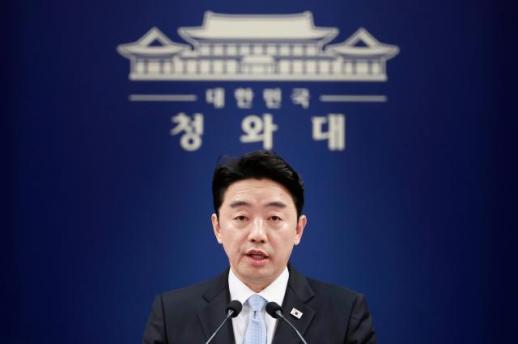 Chief of Staff Kang Hoon-sik Bars Any Election-Influencing Acts Ahead of June 3 Local Vote Kang Hoon-sik, the presidential chief of staff, on Sunday stressed that public officials must remain politically neutral ahead of the June 3 local elections. In a written briefing on a senior aides meeting chaired by Kang, Cheong Wa Dae Deputy Spokesperson Ahn Gwi-ryeong said Kang emphasized that officials must strictly refrain from any act that could influence the election. Kang said election-related involvement by public officials could undermine the fairness of the vote and public trust. He urged thorough oversight and inspections by relevant agencies, including the senior civil affairs office and police, to prevent violations of election law by public officials. Kang also addressed market-disrupting conduct such as hoarding as the Middle East war entered its 59th day. He said the government is securing alternative supply lines for crude oil and naphtha and has imposed anti-hoarding measures on closely related daily necessities, including petroleum products, urea solution and syringes. Kang said overall order has been maintained, but some cases of “antisocial behavior” aimed at making money have been found. He warned that the government will further strengthen inspections of unfair practices that exploit the crisis and respond forcefully to violations through swift investigations, strict punishment and the maximum level of administrative sanctions. Earlier, the Ministry of Food and Drug Safety found 32 distributors of syringes and needles suspected of hoarding, and the Industry Ministry’s nationwide inspections of gas stations confirmed 99 violations, including stockpiling and sales of counterfeit oil. Kang also said applications for high oil price relief payments for basic livelihood recipients, near-poverty households and single-parent families began Sunday. He called for cooperation between relevant ministries and local governments to ensure the payments are carried out without disruption.* This article has been translated by AI. 2026-04-27 18:32:16
 -
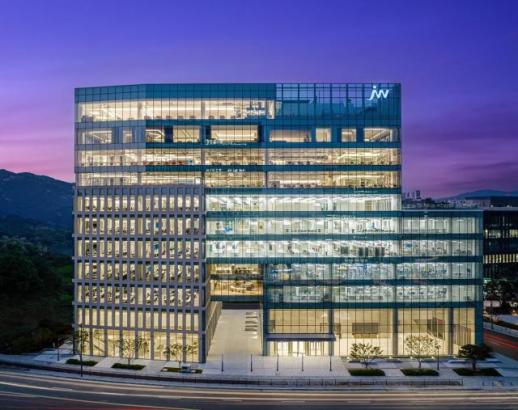 JW Pharmaceutical Expands License-In Drug Strategy With VC Acquisition JW Pharmaceutical is doubling down on a “license-in” strategy—bringing in drug candidates developed elsewhere and handling development and regulatory approval in South Korea—while widening its reach by adding venture investment, industry officials said. According to the industry on the 27th, JW Holdings, the group’s holding company, recently acquired venture capital firm Solidus Investment and made it a subsidiary. The deal was valued at 30.6 billion won. Solidus Investment is a biotech-focused VC with investments that include Alteogen, Orum Therapeutics and OliX. Venture capital firms review a wide range of biotech companies and assess the commercial potential of their technologies. By bringing a VC in-house, the group aims to secure promising pipelines early and then use its research and development capabilities to move them into clinical trials and commercialization. A JW Pharmaceutical official said the company concluded it would be more efficient to identify partners for joint research through a VC than to invest directly in biotech firms, calling it part of an effort to expand open innovation. The company has continued to sign license-in deals structured to secure direct marketing rights rather than co-promotion. The approach requires higher upfront costs but allows stable sales without paying commissions. JW Pharmaceutical said it has used the strategy to establish high-revenue products including the cholesterol drug “Livalo family,” the hemophilia treatment “Hemlibra” and the arthritis drug “Actemra.” More recently, JW Pharmaceutical signed an exclusive South Korea license agreement with China’s Gan & Lee Pharmaceuticals for the glucagon-like peptide-1 (GLP-1) receptor agonist “bofanglutide.” The total contract value is $81.10 million (about 119.8 billion won). Bofanglutide is being developed as a subcutaneous injection given once every two weeks, with dosing convenience positioned as a differentiator. The company plans to begin a domestic Phase 3 trial in the second half of this year for obesity and Type 2 diabetes. The strategy is to respond early to the metabolic disease treatment market by licensing in a candidate that is already well advanced in development. License-in deals are difficult to turn into results without strong in-house R&D. On the 23rd, JW Pharmaceutical completed dosing the last patient in a multinational Phase 3 trial of its gout candidate “epaminurad.” Epaminurad is an oral new drug candidate being developed for hyperuricemia and gout, conditions marked by abnormally high uric acid levels in the blood. Trials were conducted in five Asian countries including South Korea, and the company expects to produce a results report within the year after the final dosing in Malaysia. The company said it aims to develop the drug as a “best-in-class” therapy. JW Pharmaceutical’s R&D spending ratio last year was 14%, the biggest increase among major drugmakers. It exceeded the average for the top 10 pharmaceutical companies as of 2024 (11.3%), and R&D spending reached 107.9 billion won, topping 100 billion won for the first time in the company’s history. An industry official said JW Pharmaceutical is placing more weight on building a medium- to long-term growth base than on short-term results, adding that it is likely to continue building a stable profit structure on the license-in strategy it has pursued for years.* This article has been translated by AI. 2026-04-27 18:31:25
 -
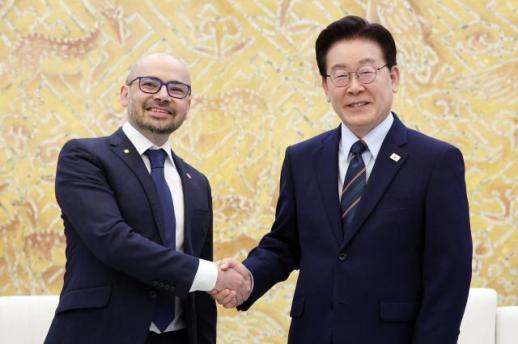 South Korea says Google to open AI Campus in Seoul; Lee discusses AI safety with DeepMind CEO Google will open a Google AI campus in Seoul within this year to expand cooperation with researchers and startups, South Korea’s presidential office said Sunday. Google DeepMind and the government also agreed to build a cooperation framework for “K-Moonshot,” a government project aimed at AI-driven innovation in science and technology. Cheong Wa Dae said President Lee Jae-myung met Demis Hassabis, Google DeepMind’s co-founder and CEO, to discuss ways to cooperate in artificial intelligence. The meeting was arranged as part of the government’s push to broaden global AI cooperation. Since taking office, Lee has met with OpenAI CEO Sam Altman, Nvidia CEO Jensen Huang and SoftBank Group Chairman Son Jeong-ui to discuss AI partnerships, the office said. The government also said it helped lead adoption of an “AI initiative” at last year’s APEC meeting in Gyeongju and is working with international organizations including the World Health Organization, the U.N. Development Programme and the International Telecommunication Union to establish a “global AI hub” in South Korea. During the meeting at Cheong Wa Dae, Lee said he has strong interest in AI and that the country is investing heavily, but questioned whether AI will be used “only in a direction that helps improve human welfare” or could move toward “attacks on humans” or harming peace. Hassabis said Lee had raised an important issue and said AI should be actively used to advance science and in medical fields. If used properly, he said, it could bring major benefits to people worldwide. Hassabis led DeepMind’s work on the 2016 Go match between Lee Sedol and the AI program AlphaGo. He also developed AlphaFold, an AI model for predicting protein structures, and won the Nobel Prize in Chemistry two years ago. Hassabis said AlphaGo helped validate the technology and became a starting point for tackling harder problems. He said the lessons were expanded into science and medicine, citing AlphaFold as a key example that helped researchers understand diseases in greater detail. Lee, referring to Google’s generative AI service Gemini, said he uses it often but that it sometimes does things he did not ask for, and asked whether it was a kind of bug. Hassabis said foundation models can veer in a different direction if guidance is not precise, and said “guardrails” must be built in when using and developing AI. He said as AI becomes more powerful, it will gain autonomy as “agent AI,” and that strong safety controls will be essential if the era of artificial general intelligence, or AGI, arrives. After the meeting, Policy Office Chief Kim Yong-beom told a briefing that the two held an in-depth discussion on rapid advances in AI, where the technology is headed and ways to strengthen global cooperation on responsible AI. Kim said Hassabis predicted that within five years — as early as 2030 — AGI capable of exercising all human cognitive abilities could become visible. Lee and Hassabis also exchanged views on job changes and distribution issues driven by AI, Kim said. Lee raised the need to prepare for unemployment and job disruption, while Hassabis said the impact is hard to predict and argued for a new economic model that rethinks the definition of work and redistribution of wealth. Kim said Lee asked whether now is the time for a basic income, noting he had discussed it for more than 20 years, and that Hassabis responded in a way that indicated agreement on the need. Kim said Hassabis also mentioned ideas such as the state providing housing, education, transportation and health services while incorporating capital-market principles, and linking gains from robot-driven productivity to support for workers. Kim said the government will pursue practical cooperation with DeepMind. He said Lee asked DeepMind to join as a key partner in efforts to establish a global AI hub through cooperation among the government, international organizations and companies so that everyone can share the benefits of AI advances. Kim said Google will also actively consider sending researchers to South Korea along with the AI campus. He said the government requested at least about 10 researchers and that Google agreed on the spot. Kim described the Seoul AI campus as a space where South Korea’s top scientists can freely use Google’s latest models for joint research, and where Korean researchers and Google researchers can conduct reciprocal work, including internships and hiring. Kim said the meeting was “completely unrelated” to issues involving Google Maps. Ahead of the meeting, Hassabis prepared a gift commemorating the AlphaGo match with Lee Sedol, presenting Lee with a Go board signed by both Hassabis and Lee Sedol. At the end of the meeting, Lee said he hoped that just as the AlphaGo match 10 years ago opened the AI era together with South Korea, they would work together over the next 10 to 20 years to build “AI for everyone” and a brighter future. Google attendees included Wilson White, vice president for global government affairs and public policy, and Yoon Koo, head of Google Korea. South Korean officials present included Science and ICT Minister Bae Kyung-hoon, Chief of Staff Kang Hoon-sik, Policy Office Chief Kim Yong-beom, Senior Secretary for AI Future Planning Ha Jung-woo, Protocol Secretary Kwon Hyuk-ki, National AI Policy Secretary Kim Woo-chang and spokesperson Jeon Eun-su. Hassabis is also scheduled to attend the “Google for Korea 2026” event in Seoul on April 29. He is set to hold a discussion with Lee Sedol and author Cho Seung-yeon on “10 years of AlphaGo, a vision of AI for everyone.”* This article has been translated by AI. 2026-04-27 18:27:08