
Journalist

Lee Hugh
=
-
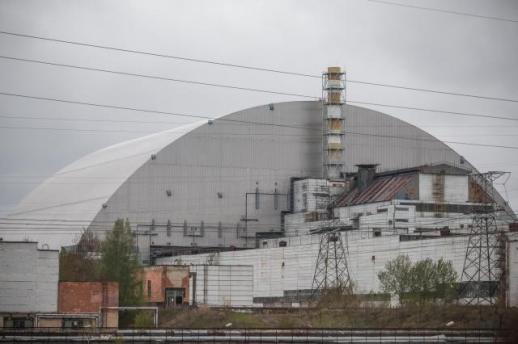 Forty years after Chernobyl and nuclear power is back in vogue SEOUL, April 27 (AJP) - Forty years ago today, the Chernobyl Nuclear Power Plant became a global epitaph for technological hubris. The radioactive clouds that drifted across Europe did more than contaminate soil; they poisoned the public's trust in the atom for a generation. In a historical paradox, the very anniversary of the disaster finds the world—and South Korea included—sprinting back toward nuclear energy with newfound urgency. The shift is being driven by today's "perfect storm": a volatile Middle East destabilizing energy markets, the relentless power hunger of the AI revolution, and the unforgiving clock of the climate crisis. For decades, Chernobyl stood as the ultimate cautionary tale. However, the narrative among experts has shifted from categorical fear to forensic distinction. "Chernobyl was a bizarre event stemming from reckless behavior and a flawed RBMK design that lacked a containment structure," says Jacopo Buongiorno, professor of nuclear science at MIT. Modern engineering has effectively "designed out" the vulnerabilities of the past. Today’s Western-standard reactors, such as the AP1000 or South Korea’s APR-1400, utilize passive safety systems—mechanisms that rely on the laws of physics, like gravity and natural convection, to cool a core without human intervention or external power. “No modern reactor approved under a Western regulatory framework combines those characteristics,” said Sara A. Pozzi, professor of nuclear engineering and radiological sciences at the University of Michigan and president of the IEEE Nuclear and Plasma Sciences Society. Nuclear energy is now undergoing a broad reassessment, driven by converging pressures: climate change, energy security, and surging electricity demand from artificial intelligence and digital infrastructure. It already covers roughly 10 percent of global electricity and about a quarter of all low-carbon power. More than 400 nuclear reactors are in operation across 31 countries, with about 70 more under construction. The United States remains the largest producer, operating 94 reactors and aiming to quadruple nuclear capacity by 2050. China, meanwhile, is rapidly expanding, with nearly 40 reactors under construction and ambitions to surpass the U.S. “The world cannot power its industries, meet the demands of artificial intelligence or secure its energy future without nuclear power,” U.S. Undersecretary of State Thomas DiNanno said recently. Even Europe, once the epicenter of anti-nuclear sentiment, is shifting its stance. European Commission President Ursula von der Leyen has acknowledged that turning away from nuclear energy was a “strategic mistake,” citing the continent’s growing dependence on imported fossil fuels. Geopolitical shocks have accelerated the shift. Russia’s invasion of Ukraine exposed Europe’s energy vulnerabilities, while Middle East tensions have underscored the fragility of global supply chains. Ukraine itself still relies on nuclear power for roughly half its electricity—even during wartime. In this environment, nuclear energy is no longer viewed solely as a climate solution, but increasingly as a strategic asset. “Nuclear power is among the safest and cleanest power options,” said Daniel Hoornweg, faculty member in engineering and applied science at Ontario Tech University. “Yes, they are safe—historical accidents cannot happen,” Pavel Tsvetkov of Texas A&M University also assured. But the drawbacks are equally clear: high upfront costs, long construction timelines, regulatory hurdles and persistent public skepticism. Waste management and proliferation concerns remain unresolved, complicating expansion. “The challenges with Fukushima and TMI are largely about public perception,” Hoornweg added. At the forefront of the next phase are small modular reactors (SMRs), which promise lower costs, faster deployment and greater flexibility. Yet their commercial viability remains uncertain. While pilot projects are underway, particularly in Canada, their economics are still unproven. “They may remain a niche solution,” Hoornweg added. “SMRs are not commercially available yet,” Buongiorno agreed. South Korea remains a titan in the nuclear sector, boasting a robust supply chain and the rare ability to build reactors on time and within budget. However, the domestic path is fraught with political and social friction. While the current administration has signaled support, domestic experts like Lee Jeong-ik of KAIST argue that policy has yet to fully revitalize the industry. The 12th Basic Plan for Electricity Supply and Demand remains a point of contention, with critics arguing it lacks the aggressive expansion needed for Small Modular Reactors (SMRs)—the factory-built, "plug-and-play" future of the industry, he pointed out. The massive upfront costs and the perennial "NIMBY" (Not In My Backyard) sentiment also pose setback. For Koreans, the memories of the 2011 Fukushima meltdown remain vivid, even as the "inconvenience" of energy price hikes pushes the public toward pragmatic acceptance. As the world marks four decades since the tragedy in Ukraine, the atom has undergone a profound rebranding. It is no longer just a source of fear, but a source of possibility. The question for 2026 is no longer whether we can afford to live with nuclear power, but whether we can afford to live without it. 2026-04-27 18:08:47
 -
 Special Counsel Expands Martial Law Probe With Raids on Prosecutors’ Network, Joint Chiefs Kwon Chang-young’s second comprehensive special counsel team, which is investigating remaining allegations after the three special counsel probes (insurrection, Kim Keon-hee and the deceased Marine), is accelerating its follow-up investigation into the Dec. 3 martial law declaration. The team has carried out searches and seizures targeting the prosecution’s internal network and Joint Chiefs of Staff-related suspects, while questioning Yeo In-hyeong and National Security Office officials as witnesses. Special Counsel Assistant Kim Jimi said at a regular briefing on the 27th at the special counsel office in Gwacheon, Gyeonggi Province, that the team summoned three suspects and 52 witnesses for questioning last week. Of those, 15 were witnesses in the insurrection case. The team is searching and seizing servers for e-Pros, the prosecution’s internal network, to verify allegations that former Prosecutor General Shim Woo-jung was involved in the Dec. 3 martial law declaration and to determine why prosecutors did not file an immediate appeal of a court decision canceling the detention of former President Yoon Suk Yeol. The team plans to continue the search through this week. The special counsel also carried out compulsory measures involving Joint Chiefs of Staff personnel. Kim said the team executed search-and-seizure warrants for three suspects in connection with allegations of performing key duties in the insurrection. In a separate line of inquiry into allegations that the Korea Coast Guard took part in martial law, investigators visited Yeo at the Seoul Detention Center to question him as a witness. Yeo is a witness in a case involving allegations that Ahn Seong-sik, former planning and coordination officer at the Coast Guard, was involved in the insurrection. Ahn is suspected of being involved in reflecting language in internal counterintelligence rules that would automatically dispatch Coast Guard personnel if a joint investigation headquarters is formed after a martial law declaration. The team is also pursuing an investigation involving the National Security Office. It questioned the head of the NSO crisis management center as a witness on the 27th, and previously questioned former Foreign Minister Cho Tae-yul as a witness. Former Defense Intelligence Command chief Noh Sang-won did not provide any statements during questioning, Kim said. “Noh refused to make any statement,” she said, adding, “If he refuses to testify, we have no choice but to assess the case based on other evidence.” The team is reviewing allegations tied to Noh’s so-called “Investigation Unit 2” and the contents of the “Noh Sang-won notebook.” In the case involving allegations of outside pressure on the investigation into the death of a Marine, the team said it obtained some meaningful statements from Jeong Jong-beom, former deputy commander of the Marine Corps. Investigators also questioned Lee Si-won, former senior presidential secretary for public service discipline, as a witness. The probe into allegations involving the closure of the North Jeolla provincial government office is also moving forward. The team notified Kim Kwan-young, governor of North Jeolla Special Self-Governing Province, to appear at 2 p.m. on the 30th as a suspect on allegations of aiding the insurrection. Kim has been reported over alleged access restrictions at the provincial government office and eight city and county offices in the province during the Dec. 3 martial law declaration. The special counsel is also investigating allegations involving first lady Kim Keon-hee. The team questioned two prosecution investigators as witnesses who participated in the probes into the Deutsche Motors stock manipulation case and the Dior bag case. It plans to summon a former Presidential Security Service employee as a witness this week. The team previously completed a search and seizure of the Supreme Prosecutors’ Office information and communications division. In the investigation into allegations surrounding the relocation of the presidential residence, the team has questioned 19 witnesses so far. To determine whether Kim Keon-hee improperly intervened, investigators executed search-and-seizure warrants at the residences of Covana Contents-related figures and questioned four related witnesses. Searches and seizures were also carried out targeting two staff members of People Power Party lawmaker Yoon Han-hong. In the case involving allegations of a cover-up of an investigation into the Unification Church, the team completed searches and seizures at the National Police Agency, the Gangwon Provincial Police Agency and the Chuncheon Police Station. It plans to summon people connected to foreign intelligence within the police in sequence this week. Separately, the team said it has named the allegations tied to the Ssangbangwool remittances to North Korea case, which were transferred from the Seoul High Prosecutors’ Office, as the “case involving allegations of presidential office interference in the Suwon District Prosecutors’ Office investigation.” The team said it changed the name to more objectively describe the target of the investigation, noting that the previous wording could include subjective judgment.* This article has been translated by AI. 2026-04-27 18:04:19
 -
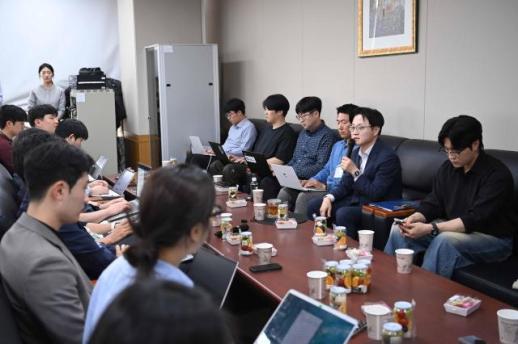 South Korea Industry Minister Urges Caution as Samsung Electronics Labor Dispute Grows “Samsung Electronics is not just a company; it is an asset of the national community.” Industry Minister Kim Jeong-gwan’s remark captures the stakes in the labor dispute now unfolding at Samsung Electronics. While the conflict appears to center on wages and performance bonuses, it also touches on South Korea’s core industrial competitiveness and its future. Treating it as a routine labor negotiation, he suggested, understates its broader impact. Samsung Electronics is a private company, but it also functions as a pillar of the South Korean economy. A wide network of suppliers is tied to its semiconductor business, and public assets — including the National Pension Service — are deeply intertwined. Millions of small shareholders also have a direct interest in the company’s performance. In that structure, Samsung’s gains are difficult to frame as belonging to any single group. At the same time, workers’ rights cannot be curtailed; the issue is how those rights are exercised and the ripple effects. Kim underscored the nature of the semiconductor business. “Semiconductors are not an industry where you make a profit once and you’re done,” he said. The sector requires sustained, large-scale investment, and today’s profits must feed tomorrow’s capital spending and research and development. If that link breaks, competitiveness can erode quickly. In semiconductors, current results and future preparation cannot be separated. The union’s proposed approach to performance bonuses has become a point of contention in that context. A distribution formula tied to operating profit can reflect short-term results clearly, but it also carries the risk of sharp swings as the business cycle turns. The semiconductor industry is known for pronounced booms and downturns. Designing a fixed distribution structure around performance in a particular period could later weigh on investment plans. The dispute, the article argues, is not over the idea of bonuses but over their size and structure. Sharing gains is necessary, it said, because corporate performance is built on employees’ efforts. But standards should not be locked to short-term profit alone. A system that reflects medium- and long-term performance is needed, taking into account value created after investment, cash flow and capital efficiency. With transparent and predictable criteria, conflict can ease and trust can be rebuilt. The realities of global semiconductor competition have already been demonstrated, the article said. U.S. chipmaker Intel and Japan’s semiconductor industry once led the world but lost competitiveness after falling behind in investment timing and strategic decisions. The lesson is not about labor disputes, it said, but that once a country or company slips in investment and strategy, recovery is difficult. South Korea’s semiconductor sector faces a similar environment, with gaps hard to maintain and setbacks hard to reverse. Both labor and management must confront that reality, it said. Workers have a rightful share, but it should be designed within limits that do not damage future competitiveness. The company, in turn, must present compensation standards that are reasonable and persuasive. If trust collapses, conflict is likely to repeat. The government’s role also matters, the article said. Market autonomy is a basic principle, but when an issue can affect an entire industry, officials may need to set direction and standards. Kim’s comments were framed as a reminder of principles rather than direct intervention — a question of how to balance current profits with future investment. If that balance fails, both the company and the industry risk losing sustainability. Samsung Electronics sits at the center of South Korea’s industrial ecosystem, and its decisions affect suppliers, employment and investment. For that reason, the article said, the current dispute requires extra caution and should be judged through the lens of long-term competitiveness, not short-term interests. The solution is balance, it concluded: share performance while preparing for the future. If either side dominates, sustainability will be shaken. Kim’s warning, it said, points to that risk, and what is needed now is restraint and responsible choices rather than confrontation.* This article has been translated by AI. 2026-04-27 18:02:55
 -
 Review: Lee Myung-se’s ‘Ran 12.3’ Recasts Dec. 3, 2024, as a Cinematic Documentary Director Lee Myung-se, long known as a visual stylist whose images often outshine story, has turned to documentary filmmaking. Billed as a “cinematic documentary,” ‘Ran 12.3’ is a tightly assembled visual record of the night of Dec. 3, 2024 — and a large-scale collage shaped by Lee’s editing and staging choices. Lee avoids the usual documentary tools of narration and interview clips. Instead, he builds a 96-minute work from music, archival footage and a small amount of newly staged material, structured like an orchestral piece. The approach is unusual for the genre, and the “cinematic” label becomes clear early. The film opens by showing the screen of a single-screen theater in Gwangju that can seat more than 800, pulling it open twice as if to declare this is documentary and cinema at once — a film about watching a film. “Cinematic,” here, does not mean fiction. The film’s aim is to make audiences collectively relive that night. After more than a year of coverage and online content — across broadcasts, newspapers, YouTube and social media — many viewers already know the broad outline of the unprecedented martial-law crisis. The question is what it means, now, to face that night again. Lee does not hold back. He pushes a wide range of emotions tied to the martial-law moment — blunt mockery, wit that refuses to be crushed by grim reality, tightly packed record-keeping, and an almost reverent awe toward what the film frames as revolutionary light. In the opening, a familiar live broadcast of the martial-law declaration is reframed: the on-screen label “President of the Republic of Korea” slips into view, and the camera lingers in close-up on the odd expression of an aide walking behind the president, signaling the film’s direction. What begins with ridicule quickly shifts. Over a solemn orchestral bed, the soundtrack adds piercing effects. A black screen, reminiscent of silent film, follows with subtitled dialogue attributed to forces that supported the martial-law move. Then come fragments from that night: a live feed from the opposition party leader; a YouTuber’s shocked real-time reaction; citizens shouting as they converge on the National Assembly; the coordinated response of aides and staff who held the building; and tense, unfiltered exchanges and reactions from the Assembly speaker and lawmakers gathered in the main chamber. Material many viewers believe they already know is reassembled through Lee’s selections and music by Cho Sung-woo into an intentionally heightened cinematic language, forming what the film presents as a massive collage within documentary form. At 96 minutes, ‘Ran 12.3’ can feel like a sensory pop-art piece. At times it goes further, edging into the painterly — particularly in sequences that depict citizens heading to Yeouido in a style likened to American comic books known for superhero imagery. Audiences will come with different motives. But viewers looking for a calm, straightforward record that neatly organizes the events of the night of Dec. 3, 2024, through Dec. 4 may find this the wrong choice. Those seeking something closer to a spy story, thriller, black comedy or chaotic farce may find it a better fit — and the film delivers that genre-driven momentum. In the end, ‘Ran 12.3’ stands out more for form than for content. Even for a director celebrated as a stylist, any expectation that his documentary would not differ much from existing works is undercut by how unfamiliar this one feels — a new kind of documentary from a filmmaker nearing 70.* This article has been translated by AI. 2026-04-27 18:01:32
 -
 South Korea Forecast: Cloudy Nationwide With Rain; Wildfire Risk Elevated 28일은 전국이 대체로 흐리겠다. Rain is expected in some areas: in the Chungcheong region through early morning, the Seoul metropolitan area through the afternoon, and Gangwon Province (excluding the southern East Sea coast) through the evening. Forecast rainfall: 5-10 mm in Seoul, Incheon and Gyeonggi; about 5 mm in the five West Sea islands; 5-20 mm in Gangwon inland and mountainous areas; and less than 5 mm along the central and northern Gangwon coast and the East Sea coast, as well as in Daejeon, Sejong, South Chungcheong and North Chungcheong. Dry air, especially across central regions and North Gyeongsang, is raising the risk of wildfires and other fires. Temperatures are forecast to range from lows of 9-14 C to highs of 14-24 C. Fine dust levels are expected to be "good" to "moderate" nationwide. Waves are forecast at 0.5-2.5 meters in the East Sea nearshore and 0.5-1.5 meters in the Yellow Sea and South Sea nearshore. In offshore waters within about 200 kilometers of the coast, wave heights are expected at 0.5-2.5 meters in the East Sea and 0.5-2.0 meters in the Yellow Sea and South Sea.* This article has been translated by AI. 2026-04-27 17:54:42
 -
 Lee Beom-heon Elected Chair of Arts Council Korea Arts Council Korea (ARKO) said Lee Beom-heon, a special-appointed professor at Shinhan University, was elected as its ninth chair at an extraordinary meeting held on the 27th. The term for the ninth committee, including the new chair, is three years (2026.4.27.~2029.4.26.). ARKO convened the extraordinary meeting with the ninth-term members appointed by the Ministry of Culture, Sports and Tourism. All 11 members attended, including eight newly appointed members and three members whose terms are still in effect. The chair was chosen by an internal vote. Born in 1963, Lee majored in East Asian painting at Hongik University and earned a master’s degree at its graduate school. He has held posts including 24th chair of the Korea Fine Arts Association (2017~2020), special adviser for culture and arts to the Seoul Metropolitan Office of Education (2019~2024), and 28th president of the Federation of Artistic and Cultural Organizations of Korea (2020~2024). He is currently a special-appointed professor at Shinhan University. ARKO said an inauguration ceremony for the ninth chair is scheduled for the 28th at ARKO Hall at its headquarters in Naju. * This article has been translated by AI. 2026-04-27 17:53:51
 -
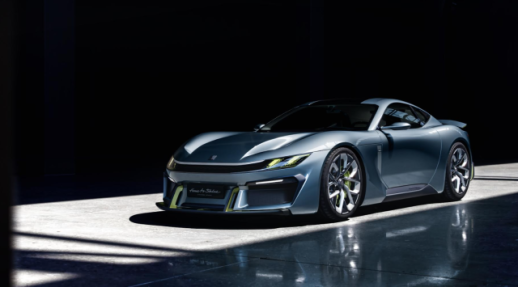 Hyundai’s Ioniq V Takes on China’s EV Battery and Energy-Tech Surge "When AI is combined with electric vehicles, the car chooses and manages energy on its own, so cost-effectiveness (efficiency) improves beyond imagination. That aligns with the Chinese government’s push for extreme energy efficiency. The era of a 4-minute full charge and 2,500 kilometers (1,553 miles) per charge has already arrived. There is no inconvenience that overwhelming value can’t solve," said an official at a Chinese company identified only as Company A. This year’s Beijing motor show looked less like a traditional auto exhibition and more like a massive energy expo. Among about 1,400 vehicles spread across an area the size of 53 soccer fields, crowds did not linger at supercars. They gathered instead at battery demonstrations: BYD showing a charge to 70% in five minutes inside a minus-35 Celsius (minus-31 Fahrenheit) icebox, and CATL promoting its third-generation battery technology with full charging in the six-minute range. China’s auto industry, once dismissed as a copycat, has become a center of innovation that global automakers study as it tightens its grip on energy-related competitiveness, the article said. Behind the rapid shift is China’s detailed strategy to foster so-called new energy vehicles. In the past, Beijing pushed electrification with subsidies, tax benefits and infrastructure support, along with strict license-plate rules. More recently, the government has shifted from acting as a market “guardian” to a tougher manager encouraging survival of the fittest. China is now cutting EV subsidies that helped fuel growth and is moving to weed out weaker players. Automakers, fighting to survive, are releasing new models every six months, cutting prices and pushing technology to the limit. Last year, the average operating profit margin for China’s auto industry fell to a record low of 4%. Still, companies that endured the pressure, including BYD and Geely Automobile Group, have emerged as “star” firms able to compete in any environment, the article said. For South Korea’s auto industry, China has become a harsh lesson. Hyundai Motor and Kia’s market share, once above 10%, has plunged, the article said, arguing the setback should now be used to find a new path. Hyundai’s Ioniq V, unveiled at the show, was described as a product of that reassessment. Hyundai dropped its insistence on using only its own platform and adopted one jointly developed with Beijing Automotive Group. It also integrated technology from CATL for batteries, Momenta for autonomous driving and ByteDance for infotainment. The localization approach was summed up as: borrow technology, but not brand value. The article said Hyundai will need a fundamentally different strategy in China than in South Korea. Chinese consumers increasingly view cars less as durable goods to keep for more than a decade and more like software devices updated every six months. Without sharply shortening development cycles and accelerating the shift to software-defined vehicles, the article warned, a reputation for hardware could erode quickly. It also urged Korean automakers to move beyond a closed ecosystem centered on domestic suppliers and strengthen open innovation by partnering flexibly with advanced global IT and battery companies, similar to how Mercedes-Benz, BMW and Volkswagen have worked with Chinese startups under an “In China, For China” approach. Hyundai Motor Group Vice Chairman Jang Jae-hoon said the company would “learn a lot and grow” in China. The article said technology proven in China — the world’s largest market and one of its most competitive — has become a strong credential for global success, and expressed hope that the Ioniq V can break through in China and expand beyond it. 2026-04-27 17:52:51
 -
 Delisting Tender Offers Rise in South Korea, but First-Round Successes Hit Zero This Year Tender offers aimed at delisting are increasing, but the share that closes successfully is falling. After revisions to the Commercial Act strengthened minority shareholder rights, the decision-making process has become more demanding, and second and third tender offers are becoming more common. According to the financial investment industry on the 27th, global private equity firm EQT acquired an additional 1,213,466 common shares through a second tender offer for Douzone Bizon conducted from March 27 to April 22. Excluding treasury shares, EQT secured a 94.0% stake including preferred shares, putting the company on track for delisting. Other companies have also struggled to complete tender offers this year. Roswell carried out two rounds of a delisting tender offer but failed to reach its target stake. Eco Marketing extended its bid to a third round after participation remained insufficient following a second offer. E-Mart secured 66.45% in the first tender offer for Shinsegae Food, but its push for a comprehensive share swap merger was slowed after the Financial Supervisory Service issued two correction orders. Taken together, the industry has seen virtually no cases this year in which a delisting tender offer succeeded in a single round. Data from the Financial Supervisory Service’s electronic disclosure system show the annual number of tender offers, based on tender offer filings, rose from 10 in 2010 to a record 26 in 2024, then 21 in 2025. Of 12 tender offers involving KOSPI- and KOSDAQ-listed companies this year, nine were aimed at delisting. Even as demand for delisting grows, completing these deals is becoming harder. Companies have stronger incentives to delist to reduce disclosure and internal control burdens and to gain greater management flexibility. But after the rule changes, price reviews by special committees and the collection of minority shareholder views have effectively become required steps, adding complexity. Eco Marketing and Douzone Bizon said special committees led by outside directors reviewed the fairness of the tender offer price and minority shareholder protections and issued favorable opinions, reflecting the Justice Ministry’s “Guidelines on Directors’ Codes of Conduct” distributed in February. At the same time, shareholders’ expectations have risen, widening the standoff over delisting bids. With more activist investors and stronger demands for shareholder returns, more investors are refusing to tender when they judge the offer price to be low relative to corporate value. The industry expects the trend to continue. “In the past, tender offers were relatively easy to complete if a certain level of premium was offered, but recently minority shareholders have increasingly judged prices by factoring in corporate value and even a control premium,” a financial investment industry official said. “Tender offers aimed at delisting will likely keep increasing, but the share that actually closes could remain limited.” * This article has been translated by AI. 2026-04-27 17:51:39
 -
 Busan mayoral candidate Jeong I-han hit by thrown drink during campaign; party condemns attack Jeong I-han, the Reform Party’s candidate for mayor of Busan, was struck by a drink thrown from a vehicle while campaigning on the 27th, the party said. According to the Reform Party, Jeong was greeting commuters and asking for support in Busan’s Geumjeong District when a car approached. The driver threw a drink at him and shouted an insult to the effect of, “How can a kid that young run for mayor?” Jeong was born in 1988. Startled, Jeong lost his balance and fell, hitting his head on the ground and briefly losing consciousness. He was taken to a hospital, regained consciousness and remains hospitalized with concussion symptoms. The Reform Party denounced the incident as “terror against democracy.” Party leader Lee Jun-seok told reporters after a meeting of the party’s top council at the National Assembly that people may choose not to support a candidate, but “committing terror is extremely immature behavior.” The party said attempts to resolve political differences through physical force must not be tolerated, adding it would not yield to any effort to suppress “a young candidate’s courageous challenge” through violence and hatred. It urged police to swiftly and thoroughly investigate without leaving any doubts, identify the attacker and hold the person strictly accountable, and take all necessary steps to prevent a repeat. Police are reviewing witness statements and nearby CCTV footage to determine what happened.* This article has been translated by AI. 2026-04-27 17:50:45
 -
 Lotte Tour Development Revamps Jeju Dream Tower Food Court With Budget-Friendly Menu With dining costs rising, a five-star hotel in Jeju is betting on sharply lower prices. Lotte Tour Development has overhauled its food court at the Jeju Dream Tower integrated resort, rolling out a menu that starts with bakery items priced in the 1,000-won range and tteokbokki in the 4,000-won range. Lotte Tour Development said on 27 it reopened the renovated “Dream Food Court” on the third floor of Grand Hyatt Jeju inside the Jeju Dream Tower integrated resort. The renovation rebrands the former “Popup Plaza,” aiming to offer premium dishes cooked by five-star hotel chefs at prices comparable to street food. The venue kept its existing cafe and juice bar and added three new counters — Korean Fried, Korean Rice & Noodle, and a bunsik snack shop — to broaden choices. ◆ Five-star chefs, street-level prices Prices have been cut significantly. Popular Korean street-food staples such as gimbap and tteokbokki are priced in the 4,000- to 5,000-won range. Dishes including spicy pork rice bowls, kimchi fried rice and noodle items are kept under 10,000 won. Fried chicken is available in the 13,000-won range. The company said it is strengthening its lineup of reasonably priced Korean food to draw not only hotel guests but also walk-in visitors. ◆ Open 7 a.m. to 10 p.m. Hours have also been extended. The food court will operate from 7 a.m. to 10 p.m., covering breakfast through late-night snacks. A “Morning Bakery Selection” runs from 7 a.m. to 11 a.m., selling freshly baked croissants and salt bread in the 1,000-won range, targeting customers looking for a cheaper alternative to a breakfast buffet. Health-focused items such as salads, wellness juices and yogurt are also offered for under 8,000 won. All items are available for takeout through an “All day Grab & Go” service. Customers can pack sandwiches or bibimbap for outings to Jeju’s oreum hills or beaches, or bring chicken and fried items back to their rooms. “In a time when eating-out costs have become a burden, we raised both value and satisfaction so anyone can enjoy premium dishes prepared by five-star hotel chefs without 부담,” a company official said. “We will provide a wide range of dining experiences tailored to travel schedules and tastes.” Jeju Dream Tower, described by the company as a landmark for Jeju tourism, has 1,600 all-suite rooms and 14 food-and-beverage outlets staffed by global star chefs.* This article has been translated by AI. 2026-04-27 17:45:30