

“Samsung Electronics is not just a company; it is an asset of the national community.”
Industry Minister Kim Jeong-gwan’s remark captures the stakes in the labor dispute now unfolding at Samsung Electronics. While the conflict appears to center on wages and performance bonuses, it also touches on South Korea’s core industrial competitiveness and its future. Treating it as a routine labor negotiation, he suggested, understates its broader impact.
Samsung Electronics is a private company, but it also functions as a pillar of the South Korean economy. A wide network of suppliers is tied to its semiconductor business, and public assets — including the National Pension Service — are deeply intertwined. Millions of small shareholders also have a direct interest in the company’s performance. In that structure, Samsung’s gains are difficult to frame as belonging to any single group. At the same time, workers’ rights cannot be curtailed; the issue is how those rights are exercised and the ripple effects.
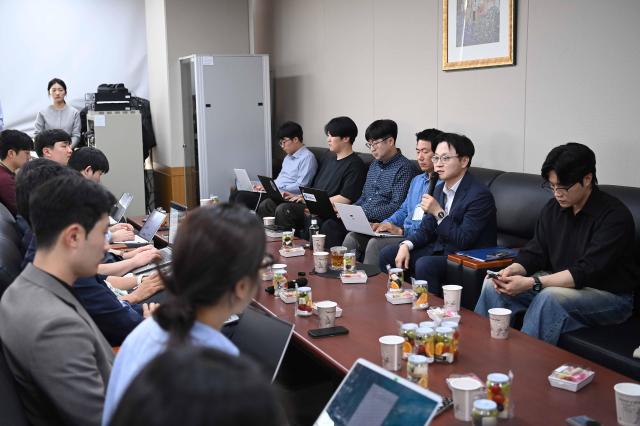
Kim underscored the nature of the semiconductor business. “Semiconductors are not an industry where you make a profit once and you’re done,” he said. The sector requires sustained, large-scale investment, and today’s profits must feed tomorrow’s capital spending and research and development. If that link breaks, competitiveness can erode quickly. In semiconductors, current results and future preparation cannot be separated.
The union’s proposed approach to performance bonuses has become a point of contention in that context. A distribution formula tied to operating profit can reflect short-term results clearly, but it also carries the risk of sharp swings as the business cycle turns. The semiconductor industry is known for pronounced booms and downturns. Designing a fixed distribution structure around performance in a particular period could later weigh on investment plans. The dispute, the article argues, is not over the idea of bonuses but over their size and structure.
Sharing gains is necessary, it said, because corporate performance is built on employees’ efforts. But standards should not be locked to short-term profit alone. A system that reflects medium- and long-term performance is needed, taking into account value created after investment, cash flow and capital efficiency. With transparent and predictable criteria, conflict can ease and trust can be rebuilt.
The realities of global semiconductor competition have already been demonstrated, the article said. U.S. chipmaker Intel and Japan’s semiconductor industry once led the world but lost competitiveness after falling behind in investment timing and strategic decisions. The lesson is not about labor disputes, it said, but that once a country or company slips in investment and strategy, recovery is difficult. South Korea’s semiconductor sector faces a similar environment, with gaps hard to maintain and setbacks hard to reverse.
Both labor and management must confront that reality, it said. Workers have a rightful share, but it should be designed within limits that do not damage future competitiveness. The company, in turn, must present compensation standards that are reasonable and persuasive. If trust collapses, conflict is likely to repeat.
The government’s role also matters, the article said. Market autonomy is a basic principle, but when an issue can affect an entire industry, officials may need to set direction and standards. Kim’s comments were framed as a reminder of principles rather than direct intervention — a question of how to balance current profits with future investment. If that balance fails, both the company and the industry risk losing sustainability.
Samsung Electronics sits at the center of South Korea’s industrial ecosystem, and its decisions affect suppliers, employment and investment. For that reason, the article said, the current dispute requires extra caution and should be judged through the lens of long-term competitiveness, not short-term interests.
The solution is balance, it concluded: share performance while preparing for the future. If either side dominates, sustainability will be shaken. Kim’s warning, it said, points to that risk, and what is needed now is restraint and responsible choices rather than confrontation.
* This article has been translated by AI.
Copyright ⓒ Aju Press All rights reserved.