
Journalist

Lee Hugh
=
-
 Dongsuh Foods’ Maxim Plant in Seoul Unveils Spring Makeover and Lavender Latte Maxim Plant, a landmark coffee venue in Seoul’s Hannam-dong operated by Dongsuh Foods, has refreshed its look for spring with a purple-themed design and a seasonal menu. The company has positioned the site as a coffee culture space, rotating interiors and offerings by season. Dongsuh Foods said on the 27th that Maxim Plant, which opened in April 2018, has logged about 1.55 million cumulative visitors, supported by seasonal staging, specialty coffee and hands-on content. This spring’s concept is “a brief, complete rest with a cup of coffee.” The area in front of the first-floor folding doors has been set up as a flower-shop-style photo zone, while green plants above the central counter add a fresh feel. The seasonal drink is a lavender latte, made with spring-blend espresso and lavender syrup. The company said it balances grape-like notes and acidity with the softness of milk, leaving a fragrant, sweet finish. On the third floor, the brewing lounge is running a “Synesthesia Coffee” program. Visitors use a tablet to choose flavor, acidity and roast level, receive a tailored bean recommendation, and are provided matching poetry and music. Customers can listen on a headset at dedicated seats while drinking their coffee. Maxim Plant also offers a basic class on coffee fundamentals and programs that let visitors try roasting and extraction. To mark the venue’s eighth anniversary, Dongsuh Foods plans a members-only 1+1 promotion for its popular blend beans “Deep Dive” and “Golden Sky.” A Dongsuh Foods official said the spring season combines lavender-based drinks and a brighter setting to help visitors take a break in the city, adding that the company will continue to introduce differentiated menus and content.* This article has been translated by AI. 2026-04-27 16:18:19
 -
 HD Construction Equipment Q1 2026 Operating Profit Jumps 88.3% to 190.7 Billion Won HD Construction Equipment said in a regulatory filing on the 27th that it posted first-quarter 2026 revenue of 2.3049 trillion won and operating profit of 190.7 billion won. Revenue rose 22.1% from a year earlier and operating profit climbed 88.3%. The company attributed the revenue gain to a broad recovery in global demand for construction equipment and faster growth in industrial and defense engine sales. Operating profit also increased sharply as profitability improved in the construction equipment business and the engine unit delivered steady earnings. The results come after HD Hyundai Construction Equipment and HD Hyundai Infracore launched an integrated company on Jan. 1, with the firm saying “one-team” synergies have begun to show as the market rebounds. HD Construction Equipment said its eight-region sales structure helped it respond quickly in the market with the Hyundai and Develon brands. It also cited companywide coordination across production, sales, purchasing and research and development to strengthen cost competitiveness. The company said integrated assembly and delivery centers in Europe and North America cut delivery times by 30% and reduced costs by 20%, while its China manufacturing base was consolidated from a dual Jiangsu-Yantai setup into Yantai to improve efficiency. By business, construction equipment revenue rose 26.9% to 1.9275 trillion won. Operating profit was 148.6 billion won, for an operating margin of 7.7%. The engine business posted revenue of 336.1 billion won, up 10% on higher industrial engine sales and steady growth in defense engine revenue. Operating profit increased 8% to 47.3 billion won, and the operating margin was 14.1%. An HD Construction Equipment official said the company will continue to expand construction equipment sales while diversifying profit sources, including engines and the aftermarket business.* This article has been translated by AI. 2026-04-27 16:17:15
 -
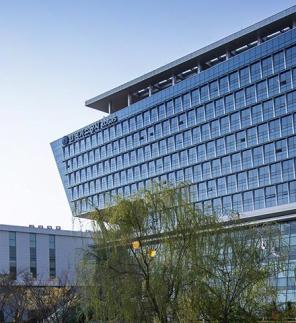 One in Four South Korean Public Agencies Faces Leadership Vacuum as Appointments Stall About one in four public institutions in South Korea is operating with a vacant top post or in a transition period after a term has ended, according to government data. The prolonged delays are drawing concern that policy execution could weaken, particularly at agencies responsible for industry and energy, as geopolitical risks in the Middle East and domestic and external economic strains such as a weak currency and high inflation intensify. As of Monday, the public institution management information system ALIO showed that 35 of 342 state-run enterprises, quasi-government agencies and other public institutions had no chief executive, or 10.2%. Another 31 institutions, or 9.1%, were being led by their outgoing heads on an acting basis because successors had not been appointed even after terms expired. An additional 17 institutions, or 5%, were set to see their leaders’ terms end in the first half of this year. In total, roughly 25% were either in a leadership vacuum or approaching a changeover. Several agencies tied to industry and energy policy remain without permanent leadership. Korea South-East Power, the Korea Power Exchange and the Korea Institute for Advancement of Technology Evaluation and Planning have vacant top posts. At Korea Gas Corp., KEPCO KPS and KEPCO MCS, incumbent chiefs are continuing in their roles after their terms ended because appointments have been delayed. Korea Gas Corp. is a prominent case. President Choi Yeon-hye is still performing her duties after her term expired because a successor has not been named. The company narrowed applicants to five candidates through a recruitment process in November, but it moved to reopen the search after union opposition and a determination of disqualification by the supervising Ministry of Trade, Industry and Energy. Korea Gas Corp. planned to close applications for president candidates at 6 p.m. Monday, but with the selection process typically taking about three months, an appointment within the first half of the year appears unlikely. At KEPCO KPS, President Kim Hong-yeon, who took office in June 2021 for a three-year term, has remained in place for nearly two years after his term ended because a successor has not been chosen. The company’s board recently sought to reorganize its executive recommendation committee, but all related agenda items were voted down during internal discussions, further delaying follow-up work, according to reports. In the industrial sector, the Korea Institute for Advancement of Technology Evaluation and Planning entered an acting-leadership system after its previous head, Jeon Yun-jong, recently moved to lead the Korea Institute for Advancement of Technology. The schedule for recruiting a successor remains unclear. The Energy Economics Institute and the Korea Radioactive Waste Agency are among institutions whose leaders’ terms are also set to expire in the first half of the year. In political circles, some expect delayed appointments to accelerate only after the June local elections. Others have raised concern that top posts could again be used as a tool for post-election patronage. Experts warned that extended leadership gaps could weaken policy responsiveness as uncertainty grows at home and abroad. An industry official said, “It is highly likely that the delayed appointments will be wrapped up sequentially only after the local elections,” adding, “With many pending issues piling up, the selection process should be sped up.”* This article has been translated by AI. 2026-04-27 16:16:15
 -
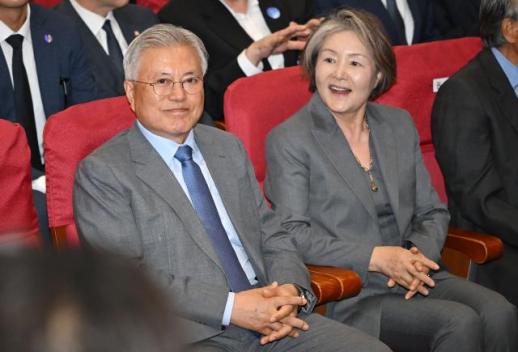 Moon Urges Kim Jong Un to Meet Boldly With Trump as Panmunjom Declaration Turns 8 Former President Moon Jae-in urged North Korean leader Kim Jong Un to “boldly sit down” with U.S. President Donald Trump, saying dialogue remains the quickest and safest way to break the current stalemate. Moon made the remarks in a commemorative speech on April 27 at the National Assembly Members’ Office Building during an event marking the eighth anniversary of the April 27 Panmunjom Declaration, hosted by the Democratic Government Korean Peninsula Peace Inheritance and Development Council and the Ministry of Unification. “True security cannot be guaranteed by building up military power and raising higher walls of isolation and severance,” Moon said. He said he hoped that, as eight years ago, improved inter-Korean ties could again serve as a bridge to U.S.-North Korea talks. “Inter-Korean dialogue will be the fastest and safest breakthrough to resolve the current deadlock,” he said. Moon also called on Trump to show “his unique decisiveness and wisdom” to bring North Korea back to the negotiating table. “Establishing peace on the Korean Peninsula is an especially difficult and arduous journey,” Moon said. But he argued that if the two Koreas overcome those challenges and build a “model of coexistence and peace” on the peninsula, it could become a major milestone for repairing a fractured world order. Moon said “the role of the Lee Jae-myung government is clear,” urging it to strengthen and carry forward past achievements while wisely overcoming earlier limits by starting a new “peace relay.” He said he “sincerely hopes” the stalled peace process will be restarted so the Korean Peninsula can become a place of sustainable peaceful coexistence and prosperity rather than confrontation. On April 27, 2018, Moon and Kim adopted the “Panmunjom Declaration for Peace, Prosperity and Unification of the Korean Peninsula” at an inter-Korean summit in Panmunjom, centered on improving inter-Korean relations and building a peace regime. * This article has been translated by AI. 2026-04-27 16:14:14
 -
 Daeryuk & Aju, Lin Begin Merger Process, Signaling Shake-Up in Midtier Law Firms Daeryuk & Aju and Lin have begun formal steps toward a merger, a move that could accelerate a reshuffle among South Korea’s midtier law firms. If completed, the combined firm would jump into the top tier by both revenue and headcount. According to the legal community on the 27th, the firms plan to sign a memorandum of understanding on the 29th at Daeryuk & Aju’s main conference room in Donghun Tower in Yeoksam-dong, Seoul’s Gangnam district. The agreement would bring into the open merger talks that have been underway behind the scenes and start full integration procedures. The MOU follows more than a month of working-level discussions. The firms have been in talks since last month, and an MOU had initially been expected by late March before the schedule was adjusted. By scale, the merger would be significant. Based on National Tax Service value-added tax filings, Daeryuk & Aju reported 102.7 billion won in revenue last year and Lin reported 41.0 billion won. Combined, that would total 143.7 billion won, exceeding Jipyong, which ranks eighth by revenue. Headcount would also rise. As of last year, Daeryuk & Aju had 247 lawyers and Lin had 137, for a combined 384 — more than HwaWoo’s 369. Industry observers describe the deal as largely complementary. Daeryuk & Aju is known for litigation and overseas work, while Lin has grown quickly in corporate advisory services and mergers and acquisitions. The combination is widely seen as likely to strengthen competitiveness. Lin’s role has drawn attention because it recently reset its merger strategy. Lin previously pursued a merger with Barun and reached detailed negotiations, but the deal fell through over issues including organizational culture and conflicts of interest. Lin then sought a new partner, and talks with Daeryuk & Aju gained momentum. A Lin official said trust remains central in the legal market and added, “As a midtier firm, we judged there are limits to survival and growth, so we decided to pursue a merger.” Daeryuk & Aju has expanded through mergers before. After the 2009 integration of “Daeryuk” and “Aju,” it settled into the top 10 and has recently broadened into growth areas such as international work and major industrial-accident cases. Lin, founded in 2017 by lawyers largely from Kim & Chang, has rapidly built its presence in the corporate advisory market. Analysts said the push could signal broader consolidation among midtier firms as competition with large firms intensifies and as firms seek scale and combined expertise. If the merger is finalized, it could alter competition not only among midtier firms such as Jipyong and Barun but also with higher-ranked firms, with the possibility of additional mergers or strategic alliances. * This article has been translated by AI. 2026-04-27 16:09:30
 -
 South Korea to Launch Farm Energy Transition Task Force; NH Reform Plan Due in June Song Mi-ryeong, South Korea’s minister of agriculture, food and rural affairs, said April 27 the government will launch an agriculture and rural “energy transition” task force this week to prepare for a prolonged war in the Middle East. She also underscored the need for reform at NongHyup, citing survey results showing broad support for a government-led overhaul. Speaking at a briefing for reporters at the government complex in Sejong, Song said that if the conflict continues, “leaving the energy issue unattended or responding only with the existing fossil-fuel system” could threaten the country’s food security. She said agricultural waste could be converted into energy through solid-fuel production and biogas, and then used as “meaningful fertilizer,” turning what is discarded into a resource. She added that farmland could also become a key asset because solar panels can be installed there. On NongHyup reform, Song said the ministry has continued to gather views in the field amid criticism that input was insufficient. She said a second reform package, including measures to revitalize its economic businesses, will be announced in June, and that needed legislation will be processed quickly. A Korea Rural Economic Institute survey released that day found 94.5% of cooperative members and 95.1% of the general public supported the need for NongHyup reform. The most common reason cited was the need to eradicate misconduct by executives, including the chairman and local cooperative heads. Addressing opposition, Song said she was aware of concerns that direct elections by members could strengthen the central chairman’s authority and that expanded government oversight could undermine autonomy. She said giving members voting rights while expanding government supervisory authority would help NongHyup secure democratic legitimacy while correcting problems. On worries about farm input supplies due to the Middle East war, Song said the latest assessment showed the country has secured enough raw materials for urea to avoid disruptions in fertilizer supply through the end of August. She said raw materials for plastic film have been secured through June, and the government is working to increase supply to some areas facing shortages. Song also said there has been some misunderstanding about the recent jump in rice prices. She said that compared with other prices over the past 20 years, the rise in rice prices has not been large, and that balancing producers and consumers is important. Rice is currently about 62,000 won per 20 kilograms, about 15% higher than a year earlier. On rising egg and broiler chicken prices, Song pointed to increased imports of hatching eggs as a response. She said livestock infectious diseases have affected not only laying hens but also broilers, raising concerns ahead of Chobok, and that imports are being expanded in anticipation of higher broiler demand during Chobok and Jungbok. 2026-04-27 16:08:36
 -
 Korea’s Discount Policies Shift Costs to Insurers and Card Issuers As policy-driven benefits expand — including a vehicle five-day rotation discount rider and broader gasoline discounts — insurers and credit card companies are facing rising costs. While the discounts are billed as support for household finances, critics say the structure repeatedly leaves financial firms to absorb the expense. According to financial authorities on the 27th, the five-day rotation rider offers private auto insurance customers a 2% annual premium discount. Drivers limit use of their cars on designated weekdays based on license plate numbers, then receive a refund at policy expiration for the period they complied. For an annual premium of 700,000 won, the refund is about 14,000 won. Insurers, not the government, pay for the discount. Because the program is policy-driven, participation is effectively unavoidable for insurers, and the burden grows as more customers enroll. The industry warns the effect of premium hikes implemented earlier this year could be offset, or turn into added costs. Signs of weakening profitability are also emerging. The first-quarter auto insurance loss ratio at major nonlife insurers — Samsung Fire & Marine Insurance, Hyundai Marine & Fire Insurance, DB Insurance and KB Insurance — rose to 85.9%, up 3.4 percentage points from a year earlier. Auto insurance is estimated to have posted a deficit of about 130 billion won over the same period. Additional costs tied to operating the rider are another variable. Insurers say they must build and manage systems to verify whether customers drove on restricted days and assign staff to run them, while disputes and complaints over driving records are also possible. Some in the industry have raised the possibility that insurers may need to pay automakers separately to obtain driving data. Limits of similar policies have surfaced before. A “weekday driving discount rider” introduced around 2008 offered a higher discount rate, but was widely seen as a failure due to low enrollment. Credit card companies face a similar squeeze. In line with the government’s inflation response, issuers have expanded gasoline discounts, but card companies are bearing much of the cost. Unlike general co-branded cards, they have less ability to split expenses with merchants, pushing up marketing costs. Profit pressure is intensifying as issuers add fee waivers, cashback and points on top of fuel discounts. Some gasoline discount cards could end up in a “reverse margin” structure, where losses grow as more cards are issued. With higher bond yields raising funding costs, broader discounts add to the strain. The burden goes beyond the discount itself. Card companies also shoulder added expenses for system overhauls, staffing and building infrastructure to link benefits to prices. Market response has also fallen short. One card company said new issuance of its gasoline discount card rose by less than 10% from the previous month even after benefits were expanded, suggesting the bigger discounts are not generating enough demand amid weak consumption. An industry official said, “We agree with the goal of stabilizing people’s livelihoods, but the cost burden is accumulating,” adding, “With funding rates rising as well, management pressure is growing.”* This article has been translated by AI. 2026-04-27 16:07:23
 -
 South Korea Science Ministry, Google DeepMind Sign MOU for Joint AI Research and Talent Training South Korea’s Ministry of Science and ICT said it has signed an agreement with Google DeepMind to build a cooperation framework for the government’s “K-Moonshot” initiative and the responsible use of artificial intelligence. The ministry said it signed a memorandum of understanding, or MOU, with Google DeepMind on Sunday at the Four Seasons Hotel in Seoul. The partnership centers on joint AI research, talent development and expanding the adoption of responsible AI. Google DeepMind is the company behind the Go-playing AI AlphaGo. It is also a global AI research organization that developed AlphaFold, demonstrating AI’s potential in science and technology. The ministry noted that CEO Demis Hassabis won the Nobel Prize in Chemistry in 2024 for solving the long-standing challenge of predicting protein structures. The ministry said the agreement was signed at a symbolic moment marking the 10th anniversary of the AlphaGo matches, aiming to turn a decade of AI achievements into momentum for science and technology innovation. Under the MOU, the two sides plan to seek practical cooperation across technology, infrastructure and researcher exchanges. They said they will work together in areas including life sciences, weather and climate, and “AI scientists.” They also plan to expand joint research and researcher exchanges around the National Science AI Research Center, which is scheduled to begin operations in May. Cooperation is expected to include developing and validating AI models and tools, using scientific data, and exploring collaboration centered on an AI bio-innovation research hub. The ministry said it will look for internship opportunities so top AI talent can experience Google DeepMind’s research environment. Google, it said, will establish an AI campus in South Korea and expand cooperation with academia, researchers and startups. The AI campus is expected to serve as a base for AI-driven science and technology cooperation with Google DeepMind linked to “K-Moonshot.” The two sides also agreed to cooperate on AI safety and governance. They plan joint research on safety frameworks and safeguards for AI models to support responsible development of AI technology. They also said they will hold discussions, in connection with an AI Safety Institute, on building safety frameworks and testing methodologies. Bae Kyung-hoon, deputy prime minister and minister of science and ICT, said the MOU will be “a key opportunity” for the two sides to work together to accelerate AI innovation in science and technology centered on “K-Moonshot,” while spreading safe and responsible AI research and best practices. Hassabis said Google DeepMind will contribute as a partner in building safeguards to help AI advance responsibly. * This article has been translated by AI. 2026-04-27 16:06:21
 -
 K-Musical Industry Urges Overhaul of Outdated Standard Contracts to Protect New Creators "Too many young people don’t know how much they can earn before a premiere, how long it will take, or what they’ll be responsible for. We’re still using a standard contract from more than 10 years ago, and there aren’t even specific amounts or average rates," writer Han Jeong-seok said. At the second meeting of the Musical Theater Subcommittee of the Arts and Culture Policy Advisory Committee on April 27 at the National Museum of Modern and Contemporary Art, Seoul, participants repeatedly said revising standard contracts is urgent for the sustained growth of K-musicals. Culture, Sports and Tourism Minister Choi Hwi-young and musical-theater experts discussed ways to strengthen the industry, including improving standard contracts, building dedicated space for original productions, developing talent and supporting overseas expansion. Han criticized what he called a “black-box” contracting environment that he said has become a barrier to entry. He said webtoons, screenplays and films have standard rates for new creators, allowing them to plan their lives, but musical theater does not. He added that creators often sign first because it is hard to judge whether terms are fair, only to realize later the deal was unfavorable. Producers also voiced concern. Lee Seong-hoon, CEO of Show Note, again stressed the need to update the standard contract, saying the musical industry has changed rapidly while a contract drafted 10 years ago is still treated as the standard. He said the very concept of “standard” needs to be strengthened. Choi asked detailed questions about conditions in the field, including whether rates vary widely and whether they differ sharply by work, individual or production company. He said it is necessary to build a solid ecosystem. "When people decide to invest their lives, youth and talent, and when they challenge a dream, uncertainty and unpredictability are not signs of a healthy ecosystem," Choi said. "It seems important to help talented people enter the musical-theater field. I will gather opinions and consider what the government can do to help." Participants also raised the need to expand infrastructure for original premiere musicals, described as seeds for the industry’s future. They proposed using sites such as the Seogye-dong complex cultural space under development or idle land at the Danginri power plant to create a dedicated theater for original premieres. Choi said it is true that premiere productions have difficulty renting theaters and promised active support so more original premieres can be staged.* This article has been translated by AI. 2026-04-27 16:04:47
 -
 Insurers urge reforms to dementia trusts as aging fuels need to manage 'dementia money' As South Korea’s population ages and dementia cases rise, calls are growing to better manage patients’ assets — often referred to as “dementia money.” Experts and insurers say reforms to the trust system and a larger private-sector role in insurance and long-term care are needed to protect assets in a more structured way. According to the Ministry of Health and Welfare on the 27th, the dementia prevalence rate among people 65 and older is about 9.25%, and it exceeds 20% among those 85 and older. Dementia is increasingly viewed not only as a medical condition but as a social risk that can affect nearly every part of life for patients and their families. As a result, there is a growing recognition that dementia-related assets should be managed systematically to help pay for care and stabilize household finances. Specialists point to wider use of trusts as a key solution. They say the scope of assets eligible for trusts should be expanded, and standards and sales rules for managed trusts should be revised to ensure stable oversight of assets held by older adults with dementia. While such assets can include deposits, real estate, insurance and pensions, the range of property that can be placed in trust remains limited. Critics say public and private pensions and insurance claim rights — major sources of retirement income and care costs — should also be included. Access is also limited. Because dementia trusts are classified as financial investment products, enrollment procedures can be complex, and there is a lack of sales infrastructure. A uniform fee structure is also cited as an area for improvement. The industry also points to a structure centered on wealthy clients and narrow sales channels. Some have proposed easing qualification requirements for investment solicitation agents so insurance agents can recommend dementia trusts. Supporters say agents, who have frequent contact with older adults, could also help expand coverage by linking trusts with dementia insurance. A life insurance industry official said, “If efforts to expand dementia insurance and improve the trust system move forward together, it will be possible to manage the assets of older adults with dementia more safely and systematically.” 2026-04-27 15:57:19