
Journalist

Lee Hugh
=
-
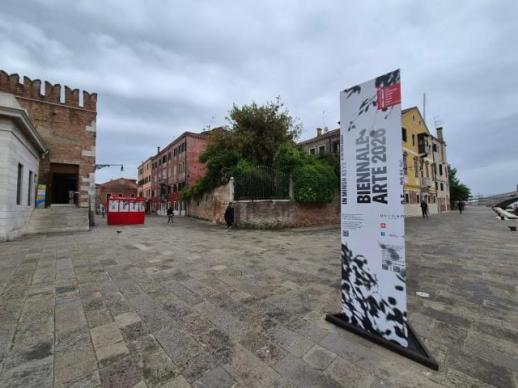 2026 Venice Biennale Opens With Koyo Kouoh’s ‘In Minor Keys’ ‘Art world Olympics’ set to open The Venice Biennale, often called the “Olympics of the art world,” will run from May 9 through Nov. 22, with preview days May 6-8. The world’s oldest art biennale is held every two years. Events span the Giardini and Arsenale, as well as venues across Venice and nearby islands. The international exhibition curated by the late Koyo Kouoh will feature 111 artists and teams. Yo-E Ryou is the only invited Korean artist; Korean diaspora artists including Michael Joo and Gala Porras-Kim are also on the list. The Biennale consists of the international exhibition, titled “In Minor Keys,” and national pavilion shows. More than 100 national pavilions will operate, including 30 permanent pavilions in the Giardini. Qatar, newly added to the permanent pavilions, will exhibit in a tent-like structure on its future building site because construction is not yet complete. Dozens of nonpermanent pavilions — including those of China, India, Argentina, Mexico, Saudi Arabia and Turkey — will be spread across the city. The main exhibition will be staged simultaneously at the Giardini and the Arsenale. Seven countries — Guinea, Equatorial Guinea, Nauru, Qatar, Sierra Leone, Somalia and Vietnam — are participating for the first time. El Salvador is also making its debut with its own venue. Who was the curator? The artistic director of the 61st Venice Biennale was Koyo Kouoh (1967-2025). Born in Cameroon and raised in Zurich, she was appointed in late 2024 as the first African-born woman to lead the Biennale. She served as executive director and chief curator of Zeitz Museum of Contemporary Art Africa (Zeitz MOCAA) from 2019. She died suddenly in May 2025 at age 57, shortly before the opening. Organizers said it was the first time in Biennale history that an artistic director died before the exhibition opened, and decided to proceed as planned. A five-member curatorial team she assembled is carrying out her vision. In Minor Keys The theme, “In Minor Keys,” draws on the musical concept of the minor key. Kouoh urged audiences to “listen to the frequency of the minor key,” writing that amid “uneasy noise and confusion” sweeping the world, music continues — “songs of those who make beauty in tragedy, melodies of those who rise again from ruins, and harmonies of those trying to heal wounds and the world.” The framing signals a shift away from spectacle toward slower, deeper looking, presenting art as a space for reflection, recovery and connection. The main exhibition will avoid rigid sections, linking more than 110 participating artists through loose relationships shaped by different places and contexts, expanding what it calls a “relational geography.” It will unfold around overlapping motifs including Shrines, Procession, Schools, Rest and Performances. Women and performance Women artists are especially prominent. Britain’s pavilion features Lubaina Himid, a Black woman who won the Turner Prize in 2017, while France’s pavilion includes Yto Barrada. Women artists also stand out in pavilions including Austria, Estonia, Finland, Germany, Ireland, Iceland, Cyprus and Denmark. Performance is emphasized in several national presentations, including those of South Korea, Austria, Belgium and the Netherlands. Awards likely moved to November after jury resigns The Biennale’s prizes include the Golden Lion awards (for national pavilions, best artist and lifetime achievement), as well as the Silver Lion and special mentions. The awards ceremony is typically held at the opening. This year, however, all jurors resigned as a group, making it likely the ceremony will be held at the November closing. Reports said the selection process may also shift from a jury decision to a visitor vote. Five jurors, including Solange Oliveira Farkas, were reported to have clashed with organizers over Russia’s and Israel’s participation. The jurors had previously said that, to defend human rights, they would exclude from judging any national pavilion from a country led by a leader indicted by the International Criminal Court for crimes against humanity. Russian President Vladimir Putin is the subject of an ICC arrest warrant over alleged war crimes related to the invasion of Ukraine. For Israeli Prime Minister Benjamin Netanyahu, the ICC prosecutor has sought an arrest warrant over allegations related to Gaza; reports said that because it remained at the request stage, whether Israel would be excluded could depend on the jurors’ judgment. War-related disputes spread across pavilions Russia did not participate in the 2022 and 2024 Venice Biennale after its invasion of Ukraine, but will return in 2026. Russia opened a permanent pavilion in the Giardini in 1914. It is expected to open only during the preview and then close afterward amid opposition from the European Union. During the 2024 preview, Israel’s pavilion was voluntarily closed by artist Ruth Patir and curators, citing the situation in Gaza. Afterward, Israel’s government was reported to have added a contract condition in the artist selection process stating the pavilion cannot be closed. This year, with its Giardini pavilion closed for renovations, Israel will exhibit at the Arsenale. Iran notified organizers it will not attend. South Africa’s pavilion will be empty for the first time in 15 years. The government canceled its participation in January, saying Gabrielle Goliath’s work “Elegy” could “cause division.” The piece mourns victims including Palestinian poet Hiba Abu Nada, who died in an Israeli airstrike in October 2023. The work will be shown at Chiesa di Sant’Antonin, a church built in the 7th century in Venice’s Castello district. Australia’s pavilion drew controversy over Lebanese Australian artist Khaled Sabsabi’s 2007 work “You,” which includes footage of a Hezbollah leader’s speech. Participation by Sabsabi and curator Michael Dagostino was canceled, then later reinstated after backlash from the art community. The United States faced fallout after the Trump administration changed Biennale support conditions, dropping equity-related standards and emphasizing “promoting American values” and the “ability to demonstrate American exceptionalism.” Some selected artists refused to participate. Alma Allen will ultimately lead the U.S. pavilion. Korea Pavilion and Korean artists The Korea Pavilion theme is “Liberation Space: Fortress and Nest.” It revisits the “liberation space” period from 1945 to 1948 — the transition after Japanese colonial rule as a new state was sought — and extends it as an ongoing question, re-sensing and carrying it forward in aesthetic terms. Curator Choi Bitna said at a March news conference that she focused on 1995, when the Korea Pavilion was established. “That was when the Gwangju Biennale first opened and the Korea National University of Arts was founded. Demolition of the former Japanese Government-General building also began. It led into the start of a civilian government. It was a moment of transition,” she said. Artists Choi Go-eun and Cho Hyeri will present a sculptural installation and a durational practice titled “Meridian” and “Bearing,” respectively. Fellows will include creators and activists from cultural and social fields, including novelist Han Kang. The Korea Pavilion is also pursuing a collaboration with the Japan Pavilion, the first such cooperation between the two. Korean artist Yo-E Ryou was invited to the main exhibition. Gala Porras-Kim will carry out a joint project with the Victoria and Albert Museum. Artist Choi Jeong-hwa will participate as a collaborator in the Japan Pavilion, and artist Cho Kuk-hyun was invited to the Tanzania Pavilion. Artist Hong Eunju will take part in the Taiwan Pavilion opening performance. Exhibitions involving Lee Ufan, Yoon Song-yi, Shim Moon-seup and Lotus Kang are also planned. 2026-05-05 18:09:51
 -
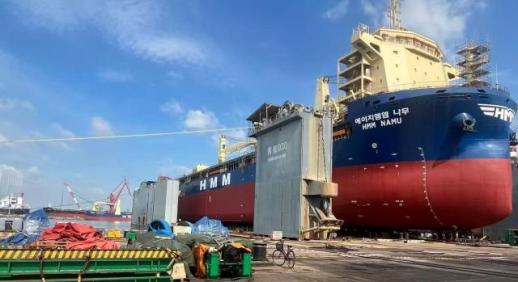 South Korea on alert after fire on HMM cargo ship near Strait of Hormuz raises attack fears A fire aboard a South Korean cargo ship in the Strait of Hormuz has prompted concerns it may have been hit in the Middle East conflict, leading the Lee Jae-myung government and the shipping industry to activate emergency response measures. The cause has not been determined, but officials and the operator said they would respond cautiously, mindful of diplomatic implications, as the possibility of an attack involving an Iranian mine or suicide drone has been raised. According to the government and HMM on Monday, an unexplained fire broke out about 8:40 p.m. Sunday (Korea time) on the HMM NAMU while it was anchored in waters near the United Arab Emirates. The blaze was extinguished about four hours later, around midnight Monday. The ship had six South Korean crew members and 18 foreign crew members aboard, and no casualties were reported. South Korea’s Ministry of Oceans and Fisheries and HMM said the vessel will be towed to the nearby port of Dubai for an investigation into the cause. HMM deployed a contracted tugboat for the operation. The presidential office, the Foreign Ministry and the oceans ministry have been cautious in discussing the cause, noting the fire occurred after the start of a U.S. “Liberation Project” operation to rescue ships trapped in the Strait of Hormuz. With armed clashes underway, officials said they must be careful in assigning responsibility given the potential impact on diplomatic relations. The government said it is communicating in real time with the shipping company and the vessel while weighing follow-up steps. The presidential office held a meeting chaired by presidential chief of staff Kang Hoon-sik to discuss a response. The Foreign Ministry urgently convened a meeting of its Overseas Nationals Protection Countermeasures Headquarters, chaired by Second Vice Foreign Minister Kim Jina, with seven diplomatic missions in the Middle East. The oceans ministry held emergency situation review meetings on May 4 and 5 chaired by Oceans Minister Hwang Jong-woo. HMM said it switched to an emergency posture immediately after the fire and is focusing on assessing the situation and preparing follow-up measures through its integrated ship operations center in Busan, which can monitor vessels in real time. Shipping experts said a routine engine-room fire appears less likely. Crew members reported hearing an unexplained “thump” at the time of the incident, followed by a fire on the port side of the engine room. They also noted the ship is a new vessel launched in September last year, making age-related equipment issues less likely. Some have cautiously raised the possibility the ship struck a mine laid by Iran or was hit by an Iranian suicide drone such as a Shahed. Mines have been used in the past to indiscriminately block the Strait of Hormuz rather than target a specific country’s ships, while a suicide drone attack would more likely imply Iran recognized the vessel as South Korean, they said. The government’s response could vary depending on what weapon, if any, caused the external impact. U.S. President Donald Trump, in a post on his social media platform Truth Social, accused Iran of being behind the incident, saying Iran had fired multiple times at ships from unrelated countries, including a South Korean cargo ship, during vessel movements linked to the “Liberation Project.” As of Monday, South Korean officials said 123 South Korean sailors and 37 South Korean sailors on foreign-flagged ships were believed to be inside the Strait of Hormuz. Domestic shipping companies, including HMM, have begun moving vessels toward what they described as a safer area near Qatar. The incident is expected to intensify demands by crew members who have remained in the strait for an extended period to disembark. A ministry official said, “We will safely bring back to Korea those who exercise their right to request disembarkation, giving them priority.”* This article has been translated by AI. 2026-05-05 18:07:22
 -
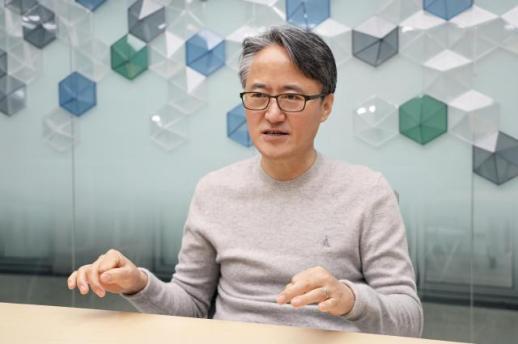 H Energy CEO says AI platform is key to meeting RE100 pressure in South Korea "Apple has declared it will make its entire supply chain carbon-neutral by 2030. If you can’t prove RE100, supply contracts get cut. This won’t be just a big-company issue — it will become a survival requirement for the entire supply chain," Ham Il-han, CEO of H Energy, said in an interview with Aju Business on May 5. Ham pointed to the company’s solution, "SolarShare Baro," a corporate platform that lets businesses buy electricity directly to meet RE100 goals. Using a company’s rooftop, H Energy installs and operates a solar power facility, allowing the business to receive power without upfront investment and at about 28% less than Korea Electric Power Corp. rates, he said. "In South Korea, where dependence on energy imports exceeds 90%, sunlight and wind are the only means of self-reliance," Ham said. He argued that instead of waiting decades for transmission lines needed for large power plants, the fastest approach is producing and using electricity on-site from corporate rooftops — a local production-and-consumption model. Ham also said technology can address structural bottlenecks in South Korea’s renewable energy market. He founded H Energy after leading energy projects for 17 years at LG CNS, aiming to use an artificial intelligence platform to streamline a market he described as fragmented across design, construction and operations. "In the coming era of renewable energy, the ability to integrate distributed resources into data and forecast with AI will become national competitiveness," Ham said. He added that H Energy’s goal is to change how energy capital is owned and distributed so returns circulate within local communities. Founded in 2018, H Energy operates multiple renewable energy platforms using data and AI. In addition to SolarShare Baro, it runs SolarOnCare, an asset management platform for solar power plants; Mohat, a cooperative-based renewable energy investment platform; and SolarShare, a rooftop solar leasing platform, the company said. Ham said the company’s ambitions extend beyond South Korea, with a long-term goal of exporting a "K-energy platform" to global markets, using Japan as a base and expanding to Southeast Asia and beyond. "No matter who installs solar panels or what power plants are built, our role is to build a platform that ensures those resources are operated properly," Ham said. "Changing the ownership and distribution structure of energy capital — that is why H Energy started, and it will not change."* This article has been translated by AI. 2026-05-05 18:05:59
 -
 South Korea to Launch Fifth-Generation Indemnity Health Insurance With Lower Premiums Financial authorities will launch fifth-generation indemnity health insurance on Tuesday, cutting premiums while reshaping coverage. The key change is stronger protection for serious illnesses and reduced benefits for nonsevere, noncovered services. Analysts say the shift could be seen by consumers as a cut in benefits, slowing early adoption. The Financial Services Commission said Monday it is overhauling the product structure so coverage better matches standard medical costs covered by the national health system and treatment for serious diseases. At the same time, it plans to curb excessive care by scaling back nonsevere coverage. Regulators estimate premiums will be about 30% lower than fourth-generation plans and more than 50% lower than first- and second-generation plans. Authorities expect the overhaul to ease worsening loss ratios, a structural problem in the indemnity insurance market. They also announced incentives for first- and second-generation policyholders, including an optional discount rider and a contract-switching discount. Starting in November, the contract-switching program will cover 50% of fifth-generation premiums for three years. Even so, many in the market doubt the new plans will take hold quickly. Consumers are likely to focus on the perception of reduced coverage. First- and second-generation policies, often structured to run until age 80 or 100, can be kept long-term and generally offer broader benefits, limiting the incentive to move to new products. Insurers also point to the fourth-generation rollout, when even a 50% discount for one year led to only single-digit switching rates among first- through third-generation policyholders, dampening expectations for the fifth generation. According to the General Insurance Association of Korea, the risk loss ratios by generation as of the end of last year at nine nonlife insurers launching fifth-generation plans Tuesday — Meritz Fire & Marine Insurance, Hanwha General Insurance, Lotte Insurance, Heungkuk Fire & Marine Insurance, Samsung Fire & Marine Insurance, Hyundai Marine & Fire Insurance, KB Insurance, DB Insurance and NongHyup Property & Casualty Insurance — were 118.6% for first-generation policies (simple average), 114.8% for second-generation, 138.4% for third-generation and 153.8% for fourth-generation. Jeon Hyeon-uk, a team leader at the Financial Supervisory Service’s Insurance Product Dispute Division 2, said there are concerns the fifth generation could follow a similar path because fourth-generation loss ratios are high. But he said the fifth generation sets a 50% copayment rate for nonsevere, noncovered services, which could restrain use. “We expect the loss ratio to improve compared with the fourth generation,” he said. An insurance industry official said regulators appeared to try to differentiate the fifth generation after the weak performance of the fourth. Still, the official said the key will be how many first- and second-generation policyholders switch, and early switching is likely to be limited because the switching discount begins in November. The official added that because the new structure distinguishes between severe and nonsevere cases, inquiries are expected to rise for now over whether it is better to keep existing coverage or switch. * This article has been translated by AI. 2026-05-05 18:05:22
 -
 Samsung Electronics Faces Growing Divide Between Chip and Device Units as Union Rift Deepens Samsung Electronics is seeing an increasingly stark performance gap between its semiconductor business (DS) and its device business (DX), and the divide is now spilling into open friction inside its labor groups. According to industry officials on May 5, Samsung’s first-quarter results showed the DS division posting more than 53 trillion won in operating profit, accounting for most of the company’s earnings. The DX division, which covers mobile phones, TVs and home appliances, posted about 3 trillion won over the same period. DS operating margins were well above 60%, while DX margins were in the single digits. Some in the industry are even raising the possibility that DX could post an annual loss, and analysts say restructuring has already begun in parts of the home-appliance business. That imbalance has become a direct backdrop to labor tensions. A joint struggle committee led by an umbrella union has demanded that Samsung pay 15% of DS operating profit as performance bonuses and has signaled the possibility of a strike. That would amount to several hundred million won per person, a level some outsiders view as excessive. Amid the dispute, the Donghaeng union, made up largely of DX workers, formally withdrew from the joint committee on May 4. The union cited DS-centered agenda-setting and a lack of internal communication as reasons for leaving. Some observers say the split reflects more than a tactical disagreement, arguing that outsized compensation demands — raised as DS workers view the division’s results as their own achievement — have widened cracks across the organization. They also say a DS-driven labor campaign does not match the reality facing DX employees under restructuring pressure. Shin Je-yoon, chairman of Samsung Electronics’ board, recently posted a message on the company’s internal bulletin board urging the sides to close ranks. “For the semiconductor business, a foundational national industry, timing and customer trust are key,” he wrote, warning that development or production disruptions and missed delivery dates could “undermine fundamental competitiveness,” drive customers to rivals and erode market leadership. He added that it was time for employees to unite and resolve issues through “sincere dialogue.” There are also reports that some global customers are stepping up checks on delivery stability risks and monitoring the possibility of internal production disruptions. Many in the industry view the situation as more than a wage dispute, saying it reflects structural change and conflicting interests between business divisions. As long as DS continues to post strong results, the case for bigger bonuses may persist, but from a companywide perspective it could weaken internal cohesion. Experts say the semiconductor business now faces the need to manage internal conflict risks alongside external competition. An industry official said the DS union’s bonus push has spread beyond concerns about competitiveness to broader internal conflict, creating a crisis that could damage the strength of the Samsung brand.* This article has been translated by AI. 2026-05-05 18:04:09
 -
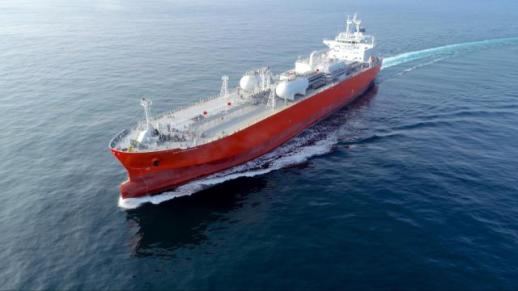 South Korea’s Big 3 Shipbuilders Win $1.1B in Energy Vessel Orders in One Day South Korea’s three major shipbuilders won about 1.5 trillion won ($1.1 billion) in combined orders within a day, reflecting a broader mix of vessel types and customers, industry officials said. Analysts said the deals point to growth beyond ship orders into a wider market for energy transport and storage infrastructure. According to the industry on May 5, HD Korea Shipbuilding & Offshore Engineering, Hanwha Ocean and Samsung Heavy Industries each secured orders a day earlier from shipowners in different regions for energy-related vessels. HD Korea Shipbuilding & Offshore Engineering won an order from KSS Shipping for three very large gas carriers, or VLGCs, worth about 500 billion won. VLGCs, which transport LPG, are seen as a steady-demand segment as global gas trade expands. Hanwha Ocean secured an order worth about 500 billion won from an Africa-based shipowner for three very large ammonia carriers, or VLACs. Ammonia is drawing attention as a next-generation carbon-free fuel, and demand for transport is expected to grow. Samsung Heavy Industries signed a contract worth about 480 billion won with an Asia-based shipowner to build one floating storage and regasification unit, or FSRU. An FSRU stores LNG and converts it back into gas for supply, serving as an offshore terminal that can be built faster than an onshore terminal. It is also widely used as a tool to respond to power supply needs. The latest orders are notable not only for the range of vessel types but also because customers now include Africa, a sign that energy demand is spreading more broadly across regions rather than concentrating on specific fuels or markets, the industry said. With power demand rising alongside the spread of artificial intelligence data centers, demand for LNG-based power generation is increasing, while transport demand for other fuels such as LPG and ammonia is also growing. As a result, shipbuilders are expanding from transport vessels into parts of offshore storage and supply facilities. Clarksons Research said its newbuilding price index, a benchmark for ship prices, has recently climbed above 180 and continues to rise. The trend suggests a seller’s market is becoming entrenched as shipbuilders, backed by solid order backlogs, focus on high value-added vessels. The high per-ship prices in the latest deals have fueled assessments that the three shipbuilders are moving into a phase of higher-quality growth centered on energy-related vessels. “Domestic shipbuilders are widening their order portfolios around high value-added ships,” an industry official said. “After selective ordering strategies were reflected in strong results, we expect the trend of improving profitability to continue.”* This article has been translated by AI. 2026-05-05 18:03:17
 -
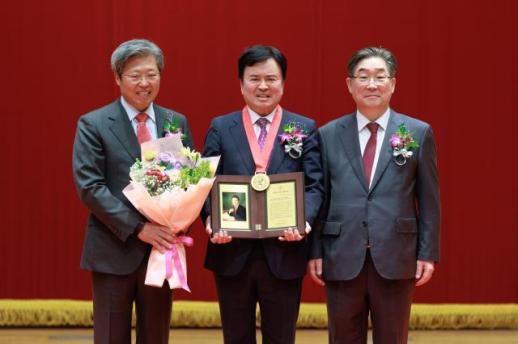 Aju News Corporation Chairman Kwak Young-kil receives Korea University Alumni Award SEOUL, May 05 (AJP) - Aju News Corporation Chairman Kwak Young-kil received the Proud Korea University Alumni Award on Tuesday, using the platform to advocate for a transition to spirit-centered artificial intelligence to ensure human control over technology. The award recognizes the contributions Kwak has made to South Korean media and his philosophical approach to the intersection of humanities and technology. His speech at the ceremony defined a new vision for artificial intelligence governance, emphasizing that spiritual values must guide technological advancement. Korea University President Kim Dong-won presented the award during a ceremony marking the 121st anniversary of the institution at the Inchon Memorial Hall in Seoul. Samyang International Chairman Huh Kwang-soo and Ace Bed Chief Executive Officer Ahn Sung-ho were also honored with the alumni award for their contributions to society and the university. University officials cited the career-long dedication of Kwak to reporting truth and his pioneering spirit. They noted his affection for his alma mater and his commitment to nurturing future scholars as key reasons for his selection. Kwak, who graduated from the Department of English Language and Literature in 1974, said the most important lesson he learned was a humanities mindset rather than just language. He described his academic background as a door to spirituality that transcends linguistic boundaries. The chairman emphasized that the core driving force of the current era must be spirituality. He noted that while he focused on human-centered artificial intelligence a decade ago, the rapid evolution of technology now necessitates a shift toward spirit-centered systems. If spirituality cannot govern artificial intelligence, humans will inevitably be dominated by technology, Kwak told the audience. He added that the essence of this spirituality aligns with the university's core values of liberty, justice, and truth. As a media executive, Kwak highlighted his efforts to promote South Korean industries, including the defense sector, through multilingual news systems. He expressed a desire for Korea University to serve as a lamp for humanity in the age of artificial intelligence. During the ceremony, KNet Investment Partners Chief Executive Officer Kim Dae-young and Eugene Investment and Securities Chief Executive Officer Yoo Chang-su also received the Social Service and Development Contribution Award. 2026-05-05 17:46:37
 -
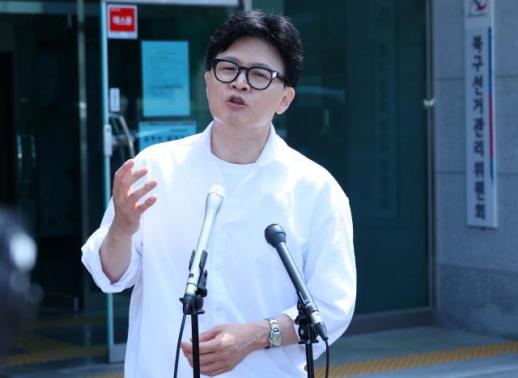 Special Prosecutor Bars Han Dong-hoon From Leaving South Korea in Probe of Alleged North Korea Remittance Case Manipulation A second comprehensive special prosecutor team led by Special Prosecutor Kwon Chang-young has barred Han Dong-hoon, former leader of the People Power Party, from leaving the country after he was accused in connection with allegations that an investigation into remittances to North Korea was manipulated. The team said on the 6th that it imposed a travel ban on Han. A special prosecutor official said the restriction followed the filing of a complaint naming Han as an accused party in a case alleging presidential office interference in a Suwon District Prosecutors Office investigation. According to the Justice Ministry’s Korea Immigration Service, Han has been under a travel ban from the 13th of last month through the 12th of this month due to the ongoing investigation. Han disclosed the travel ban on Facebook and said, “Last year, the Chae Sang-byeong special prosecutor imposed a travel ban on me for an absurd reason and then closed the case without even questioning me. This special prosecutor is repeating the same excessive move.” He added, “The Democratic Party couldn’t even call me as a witness for a parliamentary probe aimed at canceling Lee Jae-myung’s indictment, yet the party and political special prosecutors keep putting on a show. Again, I say, ‘Go ahead and try.’ But there must be no election interference.” Earlier, the civic group Judicial Justice Action filed a complaint with the special prosecutor team on the 7th of last month against seven people, including Han, former President Yoon Suk Yeol, former Prosecutor General Lee Won-seok, former Suwon District Prosecutors Office chief Hong Seung-wook, former second deputy chief prosecutor Kim Young-il, former Criminal Division 6 chief Kim Young-nam, and prosecutor Park Sang-yong. The group alleged abuse of authority and obstruction of rights, and inducing perjury, among other charges. The group said the complaint was based on claims that a “typical fabricated investigation aimed at eliminating a political rival” was carried out to tie Democratic Party leader Lee Jae-myung — described as a leading presidential contender who lost the 20th presidential election by 0.7 percentage points — to the case. The special prosecutor team received the Ssangbangwool remittances-to-North-Korea case from a human rights inspection task force at the Seoul High Prosecutors Office in early last month. It has since pursued the probe under the name “alleged presidential office interference in the Suwon District Prosecutors Office investigation.”* This article has been translated by AI. 2026-05-05 17:34:34
 -
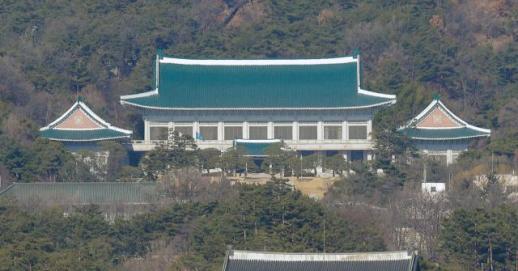 South Korea reviews Hormuz mission after Trump demands military support SEOUL, May 05 (AJP) - The South Korean presidential office Blue House announced Tuesday it is reviewing military participation in a United States-led maritime operation following an explosion on a South Korean cargo ship. The move indicates a shift in Seoul's policy as it evaluates international maritime security against its own domestic legal requirements and peninsula defense needs. The HMM NAMU, a vessel operated by the flagship carrier HMM, suffered an explosion and fire at 8:40 p.m. (1140 GMT) on Monday near the United Arab Emirates. All 24 crew members, including six South Korean nationals, are confirmed safe, but the ship remains inoperable and requires towing to a nearby port for a forensic inspection. The Blue House said that the government is considering the military proposal while accounting for the defense posture of the Korean Peninsula and domestic legal procedures. Officials emphasized that the safety of international shipping lanes and the freedom of navigation are core principles that must be protected under international law. Seoul is currently "noting" the recent public comments made by Donald Trump, who claimed on Truth Social that Iran was responsible for the blast and urged South Korea to join a mission called Project Freedom. The presidential office confirmed that it is maintaining close communication with Washington regarding the stable use of major sea lanes in the region. The government is also coordinating with relevant nations to conduct a thorough investigation into the cause of the explosion and fire. Officials stated that the safety of South Korean citizens and vessels remains the primary focus while the technical origins of the incident are determined. The Blue House stated it will implement corresponding follow-up measures as soon as the results of the investigation are confirmed. 2026-05-05 17:30:03
 -
 Samsung TV Unit Faces Cost Pressures as Panel Prices Jump Nearly 36% in Two Years Samsung Electronics is moving to reshape its TV business, with a sharper focus on improving its cost structure and streamlining operations as profitability remains under pressure from higher input and shipping costs. On May 5, Samsung said it expects it will be difficult to secure strong results and profitability in the TV market this year due to rising raw material prices. The company expects second-quarter demand to grow as major sports events such as the World Cup increase, but it sees overall TV demand remaining largely stagnant this year. A central challenge is the cost of display panels. As panel prices continue to rise, Samsung’s production costs have climbed. According to the company’s business report, Samsung’s spending on display panel purchases rose to 7.9606 trillion won in 2025 from 5.8624 trillion won in 2023, a 35.8% increase in two years. Logistics costs are also rising. With the war in the Middle East dragging on, ocean freight rates have increased, adding to global supply chain cost pressures. Because TVs are bulky and must be shipped worldwide, higher freight costs can directly squeeze margins. Organizational efficiency and cost cuts are expected to be key tasks under President Lee Won-jin. Samsung is seen pursuing a shift from a hardware-centered business toward platforms and services while reducing unnecessary expenses. On the product side, Samsung is pursuing a two-track strategy. In the mid- to low-priced segment, it aims to maintain market share while competing with Chinese brands. In the premium segment, it is expected to focus on advanced markets such as the United States and Europe, centered on organic light-emitting diode (OLED) TVs and ultra-large models. Samsung has recently strengthened its premium lineup by expanding its Micro RGB offerings and has also released new Mini LED models as it seeks to broaden choices and boost share in the mass market. However, Chinese companies such as TCL and Hisense are rapidly improving their technological capabilities, prompting concerns that hardware differentiation alone may not be enough. The key, analysts say, will be how much Samsung can widen gaps in platforms and artificial intelligence. If Samsung strengthens service competitiveness by combining its Tizen OS TV operating system with content and AI features, it could open a new path for growth in its TV business. Kim Won-woo, a vice president in Samsung’s Visual Display Business, said on a recent second-quarter earnings conference call that the company would further solidify its No. 1 position in the global TV market through differentiated product marketing and proactive business responses. He said Samsung will "successfully introduce new models that change the competitive landscape, centered on Micro RGB, OLED and Mini LED, and maximize the launch effect."* This article has been translated by AI. 2026-05-05 17:28:45