
Journalist

Lee Hugh
=
-
 Banks Lift South Korea Growth Forecasts After Q1 Surge, but Potential Growth Seen Sliding Global investment banks have been raising their forecasts for South Korea’s growth after a surprise first-quarter jump, but economists warn the country’s underlying growth capacity continues to weaken, with potential growth projected to fall into the mid-1% range next year. According to government-related sources on April 26, major investment banks recently revised up their outlooks for South Korea’s growth. JPMorgan lifted its forecast to 3.0% from 2.2%, an increase of 0.8 percentage points, and Citi raised its estimate by 0.7 points to 2.9%. Both are well above the government’s 2.0% growth target presented early this year. The upgrades largely reflect the first-quarter “surprise” result. The Bank of Korea said on April 23 that real gross domestic product grew 1.7% from the previous quarter. It was the strongest quarterly growth since the third quarter of 2020, when the economy expanded 2.2%, marking the highest level in five years and six months. Some analysts cautioned the surge may prove temporary. They pointed to base effects after last year’s unusually weak growth, combined with a stronger semiconductor cycle and currency-related factors. Measures of the economy’s fundamentals, however, show a weakening trend. The Organization for Economic Cooperation and Development projects South Korea’s potential growth rate will fall to 1.71% this year from 1.92% last year, a decline of 0.21 percentage points, and then slip further to 1.57% next year. Potential growth refers to the maximum pace an economy can sustain without stoking inflation while fully using labor and capital. South Korea’s potential growth has been declining since 2012, when it was 3.63%, and fell below 2% for the first time last year. If the trend continues, it would extend the decline to 15 consecutive years through next year. Analysts attribute the slide to structural factors including low birthrates and rapid aging that reduce labor and capital inputs, along with slower productivity gains. They say a short-term growth surprise is unlikely to reverse the trend, and some have raised concerns about a growth model heavily reliant on semiconductors. Jeon Gyu-yeon, an analyst at Hana Securities, said the jump reflects the semiconductor upturn but also that negative effects from the war in the Middle East have not yet been fully felt. “With weaker consumer sentiment and higher raw material prices, private consumption and construction investment are likely to slow,” Jeon said. He added that after the Strait of Hormuz is reopened, a surge in crude oil imports could sharply weaken the contribution from net exports. * This article has been translated by AI. 2026-04-26 16:21:48
 -
 U.S. Leaders, World Heads Condemn Shooting Targeting President Trump, Reject Political Violence News of a shooting targeting President Donald Trump drew rare, unified condemnation of violence from U.S. political leaders and major world heads of government. House Speaker Mike Johnson, a Republican who was at the scene, thanked law enforcement and emergency responders for moving quickly to bring the situation under control and said he was praying for the country. House Majority Leader Steve Scalise, also a Republican, said violence “can never be tolerated” in the United States. House Democratic Leader Hakeem Jeffries wrote on X that he appreciated law enforcement’s swift response to protect people from the shooting at the White House Correspondents’ Association dinner, adding that violence and chaos in the United States “must end.” California Gov. Gavin Newsom, who has traded barbs with Trump, said he was relieved everyone at the dinner was safe and that violence is unacceptable. Leaders of key countries who have sparred with Trump over major issues including tariffs since the launch of his second term last year also sent messages of relief and sympathy. Canadian Prime Minister Mark Carney wrote on social media that political violence cannot be tolerated in any democracy and offered condolences to those shaken by the “shocking incident.” Mexican President Claudia Sheinbaum said she was glad Trump and his wife were safe and said violence must never be a means to an end. South Korean President Lee Jae-myung wrote on X on the 26th that he was relieved Trump and his wife, as well as everyone at the scene, were safe, and offered “deep condolences” to the American people. Lee said political violence is a grave threat that undermines the foundations of democracy and can never be justified for any reason, adding that the South Korean government firmly opposes all forms of violence and extremism that damage democracy and the rule of law. Japanese Prime Minister Sanae Takaichi also wrote on social media that she was glad Trump was safe despite the “terrible shooting,” and said violence can never be tolerated anywhere in the world. Foreign media also focused on what they described as repeated assassination attempts against Trump dating back to his presidential campaign. Bloomberg called the shooting the latest example of political violence that has “engulfed” the United States, citing the Jan. 6, 2021, attack on the U.S. Capitol and an arson attack at the Pennsylvania governor’s residence. Bloomberg also noted that during a 2024 campaign stop in Pennsylvania, a bullet grazed Trump’s ear, and said he has previously been a target of assassination attempts. Axios, a U.S. online outlet, highlighted an assassination attempt during Trump’s first presidential campaign in 2016 and said no modern president has faced such threats. The New York Times raised questions about security in connection with the repeated attempts. It reported there were no metal detectors at the hotel entrance and that the security perimeter was set closer to the stage, urging steps to strengthen protective measures. 2026-04-26 16:12:17
 -
 Trump Says Suspect Acted Alone in Shooting at White House Correspondents Dinner, Doubts Iran Link President Donald Trump said April 25 that investigators appear to believe a suspect acted alone in a shooting at the White House Correspondents’ Association dinner venue, and he said he did not think Iran was involved. According to The Associated Press and other outlets, Trump told a White House news conference he initially thought the sound was “a tray falling.” He said it was loud and seemed to come from some distance away. Trump said the suspect rushed from about 50 yards (about 45 meters) away and that Secret Service agents responded immediately. He said one agent was shot but survived because he was wearing “a very good bulletproof vest.” Trump said he was evacuating after hearing gunfire while attending the dinner that evening at the Washington Hilton hotel in Washington. No attendees were reported wounded, and the suspect was arrested at the scene. Trump identified the suspect as Cole Thomas Allen, 31, and said, “They seem to think it was a lone wolf. I do, too.” He described Allen as someone with “very serious mental problems” and said authorities searched his apartment. Asked about a possible Iran connection, Trump said, “I don’t think so,” adding, “But you don’t know. We’re going to learn a lot.” The article noted Trump’s approval rating has been very low amid a recent rise in oil prices tied to the Iran war. An AP-NORC poll released April 21, based on interviews April 16-20 with 2,596 U.S. adults and a margin of error of plus or minus 2.6 percentage points, put his approval at 33%, the lowest of his second term. Trump also spoke about political violence, saying participating in politics in the United States comes with a price. “Political violence is happening all over the world,” he said, adding it was hard to imagine a more dangerous job. “No country is free” of it, he said. He urged Americans to “resolve conflicts peacefully” in response to the incident. CBS News, citing multiple sources, reported Allen told law enforcement after his arrest that he had intended to shoot at Trump administration officials. Trump again argued the incident underscored the need to build a White House ballroom. “I didn’t want to say it, but this is why we need the facilities we’re planning at the White House,” he said, calling it a larger and safer space. He said it would be safe from drone attacks and protected by bulletproof glass, and that the Secret Service and the military were requesting it. He said there had been calls for a ballroom for 150 years, but “today is a little different,” adding that security now must be at a level “nobody has ever experienced before.” Trump also said assassination attempts target “the most influential person,” and praised his record, saying the United States had become “the hottest country” in the world after years of being mocked. He said the shooting would not stop him from winning the war with Iran. Appearing with Trump, Acting Attorney General Todd Blanche said the suspect would soon be charged, including on firearms-related counts. 2026-04-26 15:54:53
 -
 Justice Ministry Probes Incheon Textile Plant After Reported Assault on Bangladeshi Worker The Justice Ministry said it has conducted an on-site inspection of a textile manufacturer in Incheon after a reported assault on a foreign worker and will consider administrative sanctions. According to the ministry, police received a report on April 24 that a Korean employee assaulted a Bangladeshi national at a textile plant in Gajwa-dong, Seo-gu, Incheon. The ministry’s Immigration and Foreign Policy Headquarters said its task force for protecting migrants’ rights visited the site with the Incheon Immigration Office and interviewed the victim. The headquarters said it will soon review possible measures based on the extent of any legal violations by the employer, including restrictions on employing foreign nationals and limits on proposals to invite foreign workers. It also plans to discuss support for the victim through the Foreigners’ Human Rights Protection and Rights Promotion Council, a public-private review body. The ministry said it will provide integrated counseling through its Crime Victim One-Stop Solution Center, psychological support through a Smile Center, and financial assistance such as living expenses, along with legal support. Video released by a media outlet showed the Korean employee grabbing the worker by the head, shouting insults and slapping him in front of other workers, allegedly because the worker had left the dormitory. Justice Minister Jeong Seong-ho said foreign workers “must be equally protected under the rule of law in the Republic of Korea.” He pledged to provide all possible support to the victim and to strengthen prevention and response systems so foreign workers can work with dignity without human rights abuses. * This article has been translated by AI. 2026-04-26 15:54:05
 -
 South Korea’s Lee Condemns Shooting at White House Correspondents’ Dinner South Korean President Lee Jae-myung on Saturday condemned a shooting at the White House Correspondents’ Association dinner in Washington, calling political violence “a serious threat that undermines the foundations of democracy” and saying it can never be justified for any reason. In a post on X, Lee said he was “shocked” by the violence at the dinner, a gathering meant to reaffirm communication with the press and freedom of expression. He said he was relieved to hear that President Donald Trump and his wife, along with others at the scene, were reported safe and unhurt, and he offered condolences to the American people. Lee said the South Korean government firmly opposes all forms of violence and extremism that damage the values of democracy and the rule of law. He posted the message in both Korean and English. According to foreign media reports, a gunman on Friday local time fired at Secret Service agents while trying to breach security at the WHCA dinner at the Washington Hilton hotel. After gunshots were heard, Trump and other key attendees evacuated. No injuries were reported, and the suspect was arrested at the scene and remains in custody. * This article has been translated by AI. 2026-04-26 15:51:56
 -
 Badminton to End 21-Point Scoring, Adopt 15-Point Games Starting in 2027 Badminton will scrap its more than two-decade-old 21-point scoring system and shift to 15-point games. The Badminton World Federation (BWF) said it approved the new format, known as "15 points, best-of-three games" (3x15), at its annual general meeting on April 25 (local time) in Horsens, Denmark. The proposal passed after securing the required two-thirds majority. The current 21-point system, introduced in 2006, will be replaced starting in January 2027. Under the new rules, the first player or pair to reach 15 points wins each game. With fewer points per game, several rules will change. If the score reaches 14-14, the side that first opens a two-point lead wins the game. To limit extended deuce play, a cap will be set so a game cannot go beyond 21 points. The BWF also set new standards for breaks and court changes. In each game, a break of up to 60 seconds will be allowed when the leading side first reaches 8 points. In the deciding third game, players will change ends when one side first reaches 8 points. BWF President Patama Leeswadtrakul said the new system would deliver "more exciting and competitive" matches and could offer players potential benefits, including recovery. She said it would bring high-pressure moments earlier and create more dramatic finishes, increasing fan engagement. With the new format taking effect in 2027, strategies are expected to shift. Cutting each game from 21 points to 15 increases the cost of early mistakes, and more aggressive tactics from the start are likely. The Badminton Korea Association is expected to closely analyze how the change will affect national team strategy and support players as they adapt to the new system.* This article has been translated by AI. 2026-04-26 15:51:15
 -
 Korean Won’s Real Value Hits 17-Year Low as Middle East War Lifts Oil, FX Rates The won’s real value fell last month to its lowest level since the global financial crisis, pressured by a Middle East war that pushed up both the exchange rate and energy prices. According to the Bank for International Settlements on April 26, South Korea’s real effective exchange rate (REER) index stood at 85.44 (2020=100) at the end of March, down 1.57 points from a month earlier. It was the lowest reading in 17 years, since March 2009 (79.31). The REER measures a currency’s external purchasing power, reflecting not only the nominal exchange rate but also price levels and the currencies of major trading partners. A reading above 100 indicates overvaluation versus the base year, while below 100 suggests undervaluation. After staying above 100 from October 2020 through July the following year, the index hovered in the mid-90s amid a strong dollar and weaker Asian currencies. It slipped into the low 90s following the December 2024 martial law episode and then moved sideways. As the won-dollar rate jumped in October last year, the index fell into the 80s and has remained below 90 for six straight months through last month. Among 64 economies tracked by the BIS, South Korea’s REER last month was the third-lowest, after Japan (66.33) and Norway (72.7). The Japanese yen also fell to its weakest level since Japan adopted a floating exchange rate system in 1973. The latest decline was attributed to a combination of higher oil prices and a sharp rise in the exchange rate linked to the Middle East war. The won-dollar rate rose 6.3% last month based on weekly closing prices, briefly topping 1,500 won per dollar for the first time since the financial crisis. A surge in energy prices also lifted import costs, eroding the won’s real purchasing power. The Bank of Korea said the import price index for March (in won terms, preliminary) rose 16.1% from the previous month to 169.38, from 145.88. It marked the steepest monthly increase since January 1998 (17.8%), 28 years and two months earlier. With the United States and Iran entering a ceasefire, the exchange rate’s rise has eased somewhat this month. Still, the won has remained elevated around 1,470 to 1,480 per dollar amid ongoing geopolitical uncertainty and high oil prices. Kim Yu-mi, a researcher at Kiwoom Securities, said recent trading has shown a clear pattern: when risks ease, the dollar weakens and the exchange rate falls, but when anxiety returns, upward pressure intensifies. She added that the exchange rate’s direction will likely be determined by the relative investment appeal of domestic assets compared with those in the United States. If dollar weakness continues through the third quarter, she said, stronger preference for Korean assets could increase foreign inflows while slowing overseas investment by residents, adding downward pressure on the exchange rate.* This article has been translated by AI. 2026-04-26 15:48:21
 -
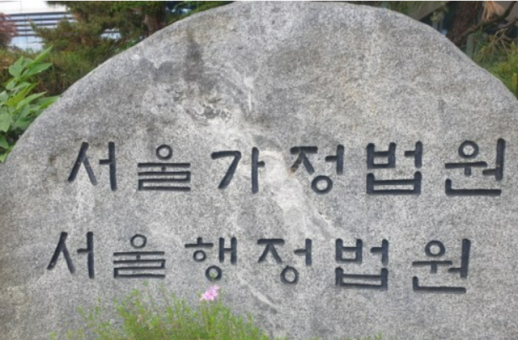 Court Upholds Tax on Ericsson Network Software Sales as Royalty Income A Seoul court has ruled that software for telecommunications network equipment bought from a foreign corporation and sold in South Korea is not a “product” but technical know-how, making it lawful to tax the payments as royalty income. According to the legal community on the 26th, the Seoul Administrative Court’s Administrative Division 6, led by Presiding Judge Na Jin-i, ruled against Ericsson Korea Partners in its lawsuit seeking to overturn a corporate tax assessment imposed by the head of the Yeoksam Tax Office. Ericsson Korea Partners, whose shareholders include Sweden-based telecom equipment maker Ericsson and LG Electronics, has purchased wireless network equipment and related software for 3G, LTE and 5G from Ericsson AB (EAB), an Ericsson Group entity, and sold them to South Korean telecom operators. Based on an audit completed in August 2021, the Seoul Regional Tax Office treated the software sales and distribution payments Ericsson Korea Partners made to EAB from 2016 through that year as “royalty income” and notified the company of tax using the 10% withholding cap. Ericsson Korea Partners sued, arguing the software should be classified as a “product” and the payments to EAB as “business income” for goods purchases. Business income paid to a foreign corporation without a permanent establishment in South Korea is not subject to domestic taxation. The court disagreed, finding the transactions amounted to introducing “know-how or technology,” not importing a general product, and said taxing the payments as royalty income was appropriate. “The software at issue is the result of accumulated technology, experience and information,” the panel said, citing the time and technical capability required to develop and supply telecom equipment, the dominance of the global market by a small number of firms, and the fact that the equipment cannot operate without the software. The court also said the software requires substantial technical expertise and training to use, and that Ericsson Korea Partners is responsible for maintenance, management and error correction, making it difficult to view the software as a widely usable, off-the-shelf product.* This article has been translated by AI. 2026-04-26 15:40:49
 -
 How to File South Korea’s May Comprehensive Income Tax Return, and Who Must File May is South Korea’s annual filing and payment period for comprehensive income tax. Individuals with comprehensive income in 2025 must file and pay from May 1 to June 1, 2026. Comprehensive income tax combines interest, dividends, business income, wages, pensions and other income. Even salaried workers may need to file if they also earned side income such as freelance pay, financial income or rental income. Those who may need to file include workers who received wages from two or more employers last year but did not complete a combined year-end tax settlement, employees who left a job midyear and did not complete year-end settlement, and the self-employed and freelancers with business income. Other income such as one-time lecture fees or manuscript fees must be reported if the annual amount exceeds 3 million won. Financial income can also trigger a filing requirement. If annual financial income, including interest and dividends, exceeds 20 million won, a comprehensive income tax return is required. Private pension income may require a choice between comprehensive taxation and separate taxation depending on whether it exceeds 15 million won a year. In general, people with only wage income who completed year-end settlement through their employer do not have to file. Also excluded are insurance solicitors, door-to-door salespeople and contract delivery sellers whose prior-year revenue was under 75 million won and who have no other income, if their affiliated company completed year-end settlement. Taxpayers with only retirement income and business income subject to year-end settlement, only tax-exempt or separately taxed income, or other income of 3 million won or less who choose separate taxation also are not required to file a final return. Returns can be filed through the National Tax Service’s Hometax website or its mobile app, Sontax. During the May filing period, Hometax provides a dedicated filing screen and, after login, guides users to a tailored process based on their filing type. For taxpayers eligible for the agency’s pre-filled “Modu Chaeum” service, the process is simpler. They can review the pre-calculated tax due or refund based on income data held by the tax agency and submit the return. Eligible taxpayers can also file by phone through an automated response system, and the agency provides instructions for phone filing with its notices. If tax is due after filing, payment can be made through Hometax or Sontax by bank transfer, credit card or simple payment services. Taxpayers can also transfer to a designated virtual account or print a payment slip and pay at a financial institution. Failing to file or pay by the deadline may result in penalties, including for nonfiling and late payment. The National Tax Service said taxpayers must file on time if they have income subject to reporting, even if they did not receive a filing notice. The comprehensive income tax return is used to settle multiple types of income earned in the previous year. Taxpayers with income beyond wages — including midyear job changes, side work, financial income or rental income — should confirm whether they must file during the May period. 2026-04-26 15:36:47
 -
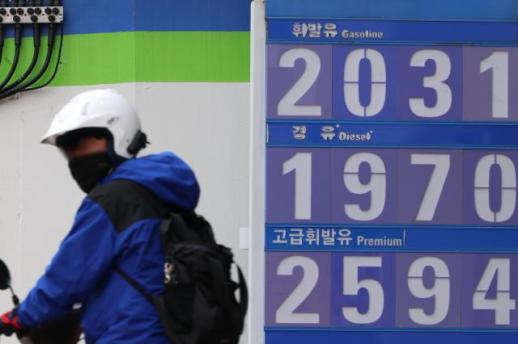 As Up to 6 Trillion Won in Fuel-Price Relief Nears, Financial Firms Keep Marketing Quiet High fuel-price relief payments are set to be distributed soon, but marketing across South Korea’s financial sector is quieter than in past years. Banks and card issuers are posting application instructions, yet few are offering customer promotions, citing concerns that marketing costs would deepen losses under a low-fee structure. Financial firms are using their websites and mobile apps to explain how to apply and outline the schedule ahead of the first round of applications, the industry said April 26. The first round begins with vulnerable groups, and eligibility expands from May 18 to the bottom 70% of income earners. Payments will range from 100,000 won to 600,000 won per person. Recipients can choose to receive the money through local gift certificates, credit or debit cards, or prepaid cards. Applications can be submitted through card company websites and apps, as well as automated phone systems. Spending will be limited to merchants with annual sales of 3 billion won or less, and use at big-box retailers, department stores and online shopping malls will be restricted. The financial industry expects many recipients to choose the card option again. With about 70% of last year’s consumer coupons delivered via credit and debit cards, the volume of card payments this time is estimated to reach as much as 6 trillion won. Even so, beyond basic guidance, customer acquisition events remain scarce. Only a few card issuers, including KB Kookmin Card and Shinhan Card, have launched promotions, while most have limited their efforts to application notices. The same is true for the four major banks—KB Kookmin, Shinhan, Hana and Woori—as well as online banks such as Toss, Kakao and K Bank. That contrasts with last year, when card companies ran a joint campaign and spent about 2.5 billion won on marketing, including distributing consumer coupons to a total of 310,000 people. This time, similar industrywide efforts have largely not materialized. Industry officials point to thin margins. Because spending is concentrated at small merchants, card fees are expected to remain in the 0.4% to 1.45% range. With added server operations and system-building costs, turning a profit is difficult. During the 2020 emergency relief program, card companies posted losses of about 8 billion won, the report said. A card industry official said some sectors, including gas stations, already face low fee rates, and that costs can rise further once card benefits such as discounts and reward points are included. “Relief payments are structurally a business where it is hard to expect profitability,” the official said. * This article has been translated by AI. 2026-04-26 15:34:33