
Journalist

Lee Hugh
=
-
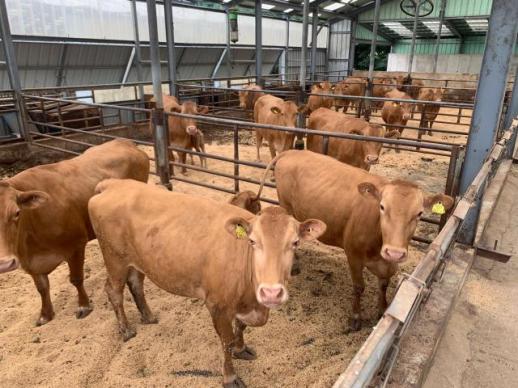 South Korea’s Q1 Livestock Herds Fall; Broiler Chickens Rise Major livestock numbers in South Korea fell in the first quarter of 2026, with broiler chickens the only category to increase, according to a government survey released Thursday. The National Data Center said its “2026 first-quarter livestock trends survey” showed that as of March 1, the combined number of Korean native cattle and beef cattle totaled 3,218,000, down 4.9% from a year earlier. With fewer breeding cows, the number of animals under 1 year old fell 6.9%, those aged 1 to 2 years fell 3.2%, and those 2 years and older fell 4.7%. Dairy cattle totaled 371,000, down 1.7%. With fewer breeding dairy cows, animals under 1 year old fell 5.4% and those 2 years and older fell 1.8%. The pig herd stood at 10,716,000, down 0.7%. Pigs aged 2 to under 4 months fell 3.0%, while some other age groups were little changed, resulting in a mild overall decline. Laying hens totaled 77,747,000, down 0.3%. The agency cited culling tied to outbreaks of highly pathogenic avian influenza, with birds 6 months and older down 5.5%. Duck numbers dropped 15.9% to 5,294,000, as fewer meat ducklings were placed, sharply reducing overall production. By contrast, broiler chickens rose 2.7% to 96,463,000 as chick placements increased. Broilers were up 3.0%, and samgye chickens rose 3.4%, the survey said. 2026-04-24 12:04:26
 -
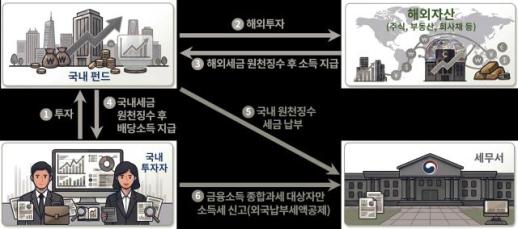 Korea Launches First Tax Credit for Overseas Fund Investors; Must Claim in May Filing 올해부터 펀드를 통한 해외투자에 대한 세액공제 제도가 처음 시행되면서, 해당 투자자는 5월 종합소득세 신고 시 공제 신청 여부를 확인해야 한다. The National Tax Service said on 24일 that a new tax preference for overseas investments made through funds applies for the first time to income attributable to 2025. The measure is intended to encourage overseas investing and diversification. Individuals who invest in qualifying overseas-investment funds may claim a tax credit when filing their comprehensive income tax return. The program is designed to reduce tax burdens at the investment stage and support Korean investors expanding into foreign assets. The agency noted that it is structured as a tax credit, not an income deduction, meaning it reduces calculated tax directly and can provide a larger practical benefit for the same amount. Eligibility is limited. It applies to residents whose combined annual interest and dividend income exceeds 20 million won and who invest in foreign assets through certain products, including: domestically listed ETFs tracking the S&P 500 or Nasdaq 100; domestically listed overseas real estate REIT ETFs; and overseas bond-type public funds established in Korea. The credit is available only when taxable income such as dividends or interest is generated and tax is actually paid overseas. Investors can claim the credit only if they report the fund’s dividend or interest income under comprehensive taxation. It does not apply when a taxpayer has only financial income that is finalized under separate taxation. Investors can confirm with their financial institution or fund manager whether their fund qualifies. The credit applies within a set limit to part of the investment amount and is deducted directly from calculated tax. Not all invested amounts qualify because the cap and other requirements are fixed. The credit is not applied automatically. Taxpayers must select and claim it when filing their comprehensive income tax return. Even if some data provided by financial institutions appears in the Hometax simplified service, investors must verify eligibility and the amount themselves. With the program in its first year, the agency warned that credits could be missed if taxpayers are unaware. The National Tax Service said it will strengthen guidance during the filing period and provide materials to help taxpayers determine eligibility in advance. * This article has been translated by AI. 2026-04-24 12:03:20
 -
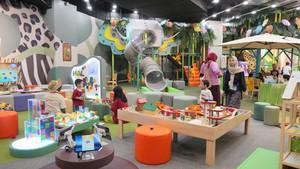 Aeon Fantasy Opens Kidzooona Safari Indoor Playground in Surabaya, Indonesia Aeon Fantasy, an operator of amusement facilities, has opened a large indoor playground called Kidzooona Safari in Surabaya, East Java, Indonesia's second-largest city. It is the company's fifth location in Indonesia under this business format. The site opened at Pakuwon Mall Surabaya, a major commercial complex in western Surabaya. The store covers 1,169 square meters. Membership pricing starts at 100,000 rupiah (about 920 yen) for one hour on weekdays. Miki Kawashima, president of Aeon Fantasy Indonesia, said the facility is located in a restaurant area, so the company introduced hourly short-stay rates to make it easy to visit before or after meals. Kidzooona Safari launched as a new format in April 2024 with its first Indonesian location in Cibubur, West Java, on the outskirts of the capital. In Indonesia, it has also expanded to Balikpapan in East Kalimantan, Bandung in West Java and Makassar in South Sulawesi. Overseas, it operates in Thailand and Malaysia. Including the newly opened Kidzooona Safari, Aeon Fantasy Indonesia now operates 62 facilities in total.* This article has been translated by AI. 2026-04-24 12:00:16
 -
 Bloomberg Hosts ‘Invest in Asia’ Forum in Seoul, Spotlighting China’s Financial Markets 블룸버그는 서울에서 중국 금융시장과 아시아 투자 전략을 주제로 한 포럼을 열고 글로벌 자본과의 연결 확대를 모색했다. 블룸버그는 최근 서울에서 ‘인베스트 인 아시아: 중국을 조명하다(Invest in Asia: China Spotlight)’ 포럼을 개최했다고 밝혔다. 행사에는 한중 양국 정부 관계자와 금융시장 전문가들이 참석해 중국 금융시장 개방 흐름과 투자 기회, 양국 간 금융 협력 가능성 등을 논의했다. 이번 포럼에는 다이빙 주한 중국대사가 기조연설자로 나섰으며, 한국은행, 중국외환거래센터, 채권통 등 주요 기관과 자산운용사, 증권사 관계자들이 참석했다. 다이빙 대사는 연설에서 중국이 기술 혁신을 바탕으로 고품질 성장 전략을 추진하고 있으며 금융시장 개방을 계속 확대하고 있다고 말했다. 그는 외국인 투자자 접근성을 높이기 위한 제도 개선과 함께, 한국을 포함한 글로벌 투자자들에게 더 안정적이고 투명한 투자 환경을 제공하겠다는 방침을 강조했다. 중국은 최근 수년간 외국인 투자 규제를 단계적으로 완화해 왔다. 채권시장에서는 ‘채권통(Bond Connect)’과 ‘중국은행간채권시장(CIBM) 직접투자’ 제도를 통해 해외 투자자 참여가 확대됐고, 주식시장에서는 ‘후강퉁·선강퉁’ 제도로 교차 거래가 가능해졌다. 이에 따라 글로벌 자산운용사들의 위안화 자산 편입 비중도 점진적으로 늘고 있다. 왕다하이 블룸버그 대중화권 총괄은 글로벌 시장 변동성이 커지는 가운데 중국 시장의 분산투자 대상지로서 중요성이 높아지고 있다고 진단했다. 그는 블룸버그가 금융 데이터와 지수 서비스를 통해 글로벌 투자자의 중국 시장 접근성을 높이는 역할을 지속해 왔다고 말했다. 세션에서는 한국은행 외자운용원의 김영욱 팀장이 위안화 채권 투자 경험을 공유했다. 한국은행은 외환보유액 운용 과정에서 일부를 위안화 자산에 투자하고 있으며, 이는 외환 포트폴리오 다변화 전략의 일환으로 평가된다고 블룸버그는 전했다. 이어 국태해통증권 관계자는 중국 금융시장의 구조 변화와 정책 방향을 설명했다. 패널 토론에는 중국공상은행, 중국은행(홍콩), KB자산운용, NH투자증권, 한화자산운용 등 주요 기관 전문가들이 참여해 해외 투자자의 중국 채권·주식·외환시장 참여 확대 현황과 멀티에셋 투자 전략을 논의했다. 참석자들은 금리 변동성과 지정학적 리스크가 커지는 환경에서 국가별 자산 분산 전략의 중요성이 부각되고 있다고 봤다. 중국 시장은 세계 2위 규모의 경제와 방대한 채권시장을 기반으로 관심이 이어지고 있으며, 일부 글로벌 지수에 중국 채권이 편입되면서 기관 자금 유입도 지속되고 있다고 블룸버그는 전했다. 참석자들은 중국이 금융시장 개방 정책을 이어갈 경우 글로벌 투자 포트폴리오에서 중국 자산의 전략적 비중이 커질 가능성이 크다는 데 의견을 같이했다. 다만 시장 변동성과 정책 리스크를 고려한 장기적 접근이 필요하다는 점도 함께 언급됐다. 블룸버그의 ‘인베스트 인 아시아’ 포럼은 아시아·태평양 시장 투자 정보를 공유하고 글로벌 투자자와 현지 시장을 연결하는 행사로, 주요 금융 허브 도시를 순회하며 열리고 있다.* This article has been translated by AI. 2026-04-24 11:51:58
 -
 Acecook Vietnam Breaks Ground on Ho Chi Minh City R&D Center Vietnam’s largest instant-noodle maker, Acecook Vietnam, held a groundbreaking ceremony on the 20th in Ho Chi Minh City for a research and development center. The company said it aims to strengthen its R&D system to develop more health-oriented products and speed up global expansion. The center will be built in the Tan Binh Industrial Park. The site covers more than 7,000 square meters, with completion planned for 2027. Guided by its philosophy of “creating the value of food culture from Vietnam to the world,” the company will focus on developing new products beyond instant noodles, researching technologies to meet health-focused demand, and conducting basic food-chemistry research. Acecook Vietnam described the project as a key investment in its shift toward becoming a “comprehensive food company.” It said it plans to pursue broad-based research without limiting itself to specific fields.* This article has been translated by AI. 2026-04-24 11:51:15
 -
 Youth Foundation Expands Finance Job Mentoring With Working Professionals The Youth Foundation said it is strengthening job support for young people seeking work in finance by running a mentoring program focused on specific roles. The foundation said it held its “Youth Working-Professional Job Mentoring” sessions on April 14 and 15 and again on April 23 via the Zoom video platform. Assistant manager- and manager-level finance employees served as mentors, offering guidance on job preparation, understanding day-to-day work and even consultations related to changing jobs. The April program, themed on the financial industry, was divided by role, including information and communications technology, universal banker and investment banking tracks. About 100 young people took part. Sessions covered job overviews, hiring preparation strategies, workplace case studies and how to respond to job changes tied to the shift to artificial intelligence. Counseling was tailored using questions submitted in advance. Working professionals from KB Kookmin Bank participated as a talent donation, the foundation said. With digital transformation and the expansion of non-face-to-face services, demand is rising for workers with ICT skills and data analysis capabilities, increasing the need for practical, workplace-based advice. Participants said they valued hearing concrete accounts of mentors’ work experience, industry trends and how tasks flow by role. As finance hiring places greater weight on role-specific expertise, access to information through networks of working professionals is increasingly important in job preparation. Over the past two years, the foundation said it has run the mentoring program 32 times, with about 600 participants. A post-program survey showed an average satisfaction score of 4.68 out of 5. Starting this year, the foundation expanded operations by shifting from every other month to a regular monthly schedule and extending each session from two hours to three. It also plans to add in-person mentoring alongside online sessions to broaden access. An in-person mentoring program focused on culture and the arts is scheduled for next month, the foundation said, citing growing demand for new roles across planning, production and distribution as the culture and content industry shifts toward platform-centered structures. Chairman Oh Chang-seok said sharing working professionals’ experiences provides practical help as young people explore careers and prepare for jobs. “We will continue to expand job training and mentoring opportunities based on public-private cooperation,” he said.* This article has been translated by AI. 2026-04-24 11:48:20
 -
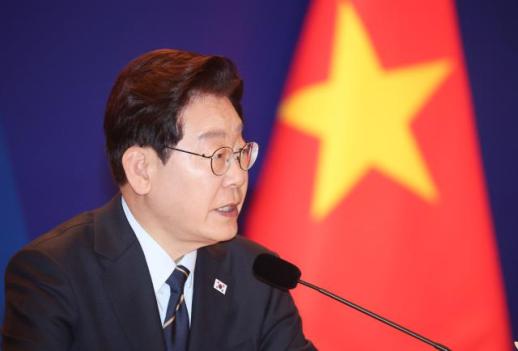 President Lee Calls Daejang-dong Coverage ‘Fabricated,’ Urges Korea Newspaper Award Revocation President Lee Jae-myung on April 24 called for revoking a Korea Newspaper Award given for reporting three years ago on the Daejang-dong development allegations, saying the work was not fact-finding but “massive fabrication.” Lee, on a state visit to Vietnam, wrote on X that the award jury said it honored the coverage because it “consistently uncovered powerful facts” in reporting on the Daejang-dong issue. He argued that the reporting “created” a reference to “that person, Lee Jae-myung” that was not in the Daejang-dong recordings, and claimed it helped defeat the Democratic Party’s presidential candidate in the last election and “changed the course of Korean history.” Lee said the country “moved backward,” people suffered “tremendous pain,” and the fallout continues. He said the outlet should return the award, apologize and correct the report, adding that there must never again be an attempt to change history through election manipulation by state power agencies and the media. The Korea Newspaper Association previously selected the DongA Ilbo legal affairs team’s “Daejang-dong development and illegal campaign funds allegations” as the 2023 winner in the news reporting category. The jury said at the time that the series “consistently uncovered powerful facts” in covering the Daejang-dong issue.* This article has been translated by AI. 2026-04-24 11:45:17
 -
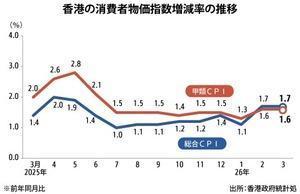 Hong Kong’s March CPI Rises 1.7% Year Over Year, Unchanged From February Hong Kong’s Census and Statistics Department said on April 23 that the Composite Consumer Price Index rose 1.7% in March 2026 from a year earlier, unchanged from the previous month. By category, other services posted the largest increase, up 4.6%. Electricity, gas and water and transport rose 3.9%, other goods 2.8%, alcoholic drinks and tobacco 2.1%, and rents — including private and public housing — 1.0%. Food, including dining out, increased 0.9%. Durable goods fell 2.2%, while clothing and footwear slipped 0.7%. The A-type CPI, which covers lower- and middle-income households that make up about half the population and have average monthly spending of 6,500 to 27,999 Hong Kong dollars (about 132,500 to 570,700 yen), rose 1.6% from a year earlier, also unchanged from the previous month. For January through March, the Composite CPI rose 1.6% from the same period a year earlier. Underlying inflation for the period was 1.4%. A government spokesman said March inflation was slightly faster, noting it exceeded the average monthly increase of 1.5% in January and February after adjusting for the timing difference of the Lunar New Year holiday (Feb. 17 in 2026). The spokesman said the pickup remained mild and was mainly driven by a sharp rise in international oil prices amid heightened tensions in the Middle East. The spokesman also said elevated oil prices are expected to affect prices of related goods and services in the CPI in the short term.* This article has been translated by AI. 2026-04-24 11:42:16
 -
 Korea Climate Ministry Renews UNFCCC Deal for Greenhouse Gas Expert Training The Ministry of Climate, Energy and Environment said it will renew a memorandum of understanding with the U.N. Framework Convention on Climate Change secretariat to cooperate on an international greenhouse gas expert training program. UNFCCC Deputy Executive Secretary Noura Hamladji and Vice Minister Lee Ho-hyeon will sign the renewal. The agreement was first signed in 2017, renewed once in 2021 and will be renewed again this year. The extension will continue the education partnership through December 2031, adding five years. Korea’s Greenhouse Gas Inventory and Research Center has operated the International Greenhouse Gas Expert Training Program since 2011 to help officials and experts from developing countries strengthen their ability to compile greenhouse gas statistics. After establishing a joint planning and operating system with the UNFCCC secretariat in 2017, the program produced a total of 498 graduates through 2025. The center designs the curriculum, with training focused on reporting tools used in practice, including Intergovernmental Panel on Climate Change software and tools for reporting under the Enhanced Transparency Framework. Instructors include experts from international organizations such as the UNFCCC secretariat, the IPCC and the U.N. Food and Agriculture Organization. About 30 participants are selected each year, and demand has continued to rise. Last year, the program drew 18 applicants for each slot. This year’s course will be held in person at Sejong University in Seoul from Aug. 31 to Sept. 18. Choi Min-ji, head of the center, said the renewal reflects international recognition of 15 years of cooperation on greenhouse gas training for developing countries. “Greenhouse gas estimation is the starting point for responding to the climate crisis, so we will actively support the program so it can provide practical help to developing countries,” Choi said.* This article has been translated by AI. 2026-04-24 11:33:16
 -
 Review: Fighting Worthlessness Through Relentless Attention to Life’s Senses “The candidates who received the autobiographies he wrote for them said they were pleased with the past he had added and imagined, and some even copied lines directly into campaign materials.” In Lee Ki-ho’s novel “Suin,” Park Su-yeong lives with relentless drive. A skilled ghostwriter, he produces autobiographies for numerous politicians. After debuting four years earlier by winning a novel contest, Park cannot write a second book. Instead, he survives by becoming what the novel portrays as an exceptionally capable ghostwriter — and, it suggests, a copywriter adept at political messaging. When he finally retreats to a remote mountain village in Gangwon Province to write again, South Korea is hit by two nuclear power plant explosions that leak radiation. U.N.-dispatched investigators then assess individuals and plan relocations around the world based on jobs and qualifications. Asked what he does, Park answers in a shrinking voice: “A ... a novelist.” Even after turning out more than 1,000 pages a month as a professional ghostwriter and crafting polished language to elevate politicians, he defines himself, in the end, as a novelist. “Why does my life have to please you?” In the drama “Everyone Is Fighting Their Own Worthlessness,” Hwang Dong-man is a film director — or, more precisely, an aspiring one. He has not officially debuted. For 20 years, he has carried around a script titled “We’ll Make the Weather for You,” trying to break in, without success. As his attempts fail, Hwang also works relentlessly. He teaches screenwriting at an academy, takes part-time catering jobs and joins a clinical trial as a subject for an “Emotion Watch” test. At the academy, some students sincerely “admire” him. He lectures with forceful talk, and his daily routine includes watching films and delivering harsh critiques — suggesting real talent as a critic. Still, because he cannot give up on directing, he lives under the label of “unemployed in his 40s.” Proving you are not worthless through digging and bingeing To prove he is a novelist, Park stands before the Gwanghwamun Kyobo Book Centre, sealed off with 25 meters of concrete to block radiation. Inside are unsold copies of his novel. To retrieve them, he begins hacking at the barrier with a pickax. After days of repeated “digging,” he learns the grain of the concrete, how to use less force and how to move with sharper efficiency. Only after reaching a point where he can no longer tell whether he is wielding the pickax or the pickax is wielding him — and realizing the work is not so different from writing — does he receive approval to relocate overseas. About 30 centimeters of wall remain. The tunnel he has carved becomes proof that he is a novelist. In other words, the tunnel is his novel. How, then, does Hwang prove he is a director — that he exists at all? He fights his sense of worthlessness by lashing out at members of an “Eight-Person Club,” friends from childhood when he was “nobody” and they were close. By insisting, again and again, that he is not worthless, he struggles to prove his own presence. At times, Hwang seems less focused on becoming a director than on “not disappearing by even 1 gram from this world.” When Byeon Eun-a — the first person to read his script seriously — delivers a blunt critique, saying the protagonist “has no power,” Hwang cannot respond and instead binges on food. Keeping the senses open against worthlessness The works suggest that unmet value does not come from worldly success, but from keeping the five senses open in each moment. Park’s “digging” does that, and so do Hwang’s bingeing, his barbed remarks and his persistence. Hwang talks constantly, reliably provokes the Eight-Person Club, keeps pushing his script, eats regular meals, listens to music and watches films at home every day. Even as she tears into his writing, Byeon says, “Director, you’re someone with a thousand doors open,” recognizing his heightened awareness. “Suin” and “Everyone Is Fighting Their Own Worthlessness” point to value in staying open to experience — feeling and responding to each moment, and meeting life with steady effort. The message is that even someone poor, dismissed or seemingly ordinary can still shine. Those who can see that shine may “admire” it — or envy it. The drama suggests that Byeon, who closed off her senses to avoid being hurt, decides to experience Hwang. It also suggests that Park Gyeong-se, a film director in the Eight-Person Club who has released five films, especially hates Hwang because he recognizes something real in him. 2026-04-24 11:27:32