
Journalist

Lee Hugh
=
-
 DeepSeek Plans First Fundraising Led by China’s ‘Big Fund,’ Valuation Seen at $45B China’s AI startup DeepSeek, which drew global attention last year with what was dubbed the “DeepSeek shock,” is planning its first fundraising round led by a major state-backed semiconductor fund, the Financial Times reported. The FT, citing four people familiar with the talks, said negotiations are being led by China’s largest state-owned semiconductor investment vehicle, the China Integrated Circuit Industry Investment Fund, known as the “Big Fund.” DeepSeek’s valuation, which was about $20 billion just weeks ago, is expected to rise to about $45 billion (about 65.38 trillion won) after the funding, the report said, as investor interest has surged. China tech giant Tencent is also discussing joining the round, though the final list of investors has not been set. DeepSeek gained worldwide notice in January last year after releasing its open-source large language model R1. The company said at the time the model was trained with far fewer computing resources than models from U.S. rivals such as OpenAI. The FT said investors are betting on DeepSeek’s technical potential even though the company has not moved aggressively to commercialize its technology. Founder Liang Wenfeng may also put personal money into the round, the report said. Company materials show Liang controls a total of 89.5% of DeepSeek through his personal stake and related companies. If the Big Fund invests, it would bolster DeepSeek’s standing as a leading developer of advanced AI models in China and could add momentum to efforts to build a domestic ecosystem combining Chinese AI models and software with semiconductors. The Big Fund was created to support China’s push for semiconductor self-reliance in response to U.S. technology controls. In raising its third fund in 2024, it collected $47 billion from China’s finance ministry, local governments and state-owned banks, with a focus on investing in semiconductor equipment and materials. The fund has backed key Chinese chipmakers including foundry SMIC and memory chip producer YMTC, but it has not publicly invested in a Chinese large language model company. DeepSeek has said its recently released V4 model was optimized to run on Huawei’s AI chips. With U.S. restrictions on advanced chip exports to China continuing, the reported investment is being seen as part of a broader push to speed up development of a homegrown AI-and-semiconductor ecosystem. Separately, OpenAI, Anthropic and SpaceX are also reported to be preparing initial public offerings this year, a move expected to intensify competition among global tech companies to raise capital. * This article has been translated by AI. 2026-05-06 17:55:47
 -
 K-Culture Boosts Korea’s Cross-Border E-Commerce as Platforms Expand Overseas Sales As the market for selling South Korean products directly to overseas consumers grows, e-commerce companies are rapidly adjusting strategy. The focus is shifting away from serving Korean shoppers’ overseas direct purchases toward targeting foreign buyers with competitive K-beauty, fashion and other content-driven products. According to the National Data Center on Tuesday, online overseas direct sales totaled 3.02 trillion won last year, up 16.4% from a year earlier. In the first quarter of this year, such sales by domestic businesses rose 24.4% from the same period a year earlier to 1.06 trillion won, returning to the 1 trillion won range for the first time in 4 1/2 years since the third quarter of 2021 (1.0428 trillion won). By country, China led with 376.3 billion won, followed by Japan with 255.2 billion won and the United States with 252.1 billion won. By product category, cosmetics ranked first at 633.6 billion won, followed by records, videos and musical instruments at 108.3 billion won, and clothing and fashion-related goods at 93.8 billion won. Overseas direct purchases by Korean consumers, however, totaled 1.9789 trillion won over the same period, up just 1.2%. China accounted for the largest share at 1.2276 trillion won. Clothing and fashion led at 787.2 billion won, followed by food and beverages at 415.7 billion won, and household and auto supplies at 197.1 billion won. The trend is being read as a sign that global demand for Korean products is rebounding quickly alongside the spread of K-culture. E-commerce companies are moving to expand overseas direct sales. 11st will end operations of its existing “Amazon Global Store” on June 30 and reorganize its business around overseas direct sales. Starting in mid-June, it will open a dedicated 11st section on JD.com’s cross-border platform, “JD Worldwide.” When an order is placed, sellers will deliver products to 11st’s logistics center, while 11st will support the rest of the operations. Gmarket is targeting the market through Lazada, Alibaba Group’s Southeast Asia platform. After initially linking more than 7,000 sellers and 1.2 million products, sales through Lazada in March rose about 150% from two months earlier. Gmarket plans to increase the number of Lazada-linked products to 2.5 times the early-year level within this year and expand beyond Southeast Asia into West Asia and Europe. Cooperation between logistics companies and platforms is also increasing. Hanjin has partnered with live commerce platform Grip to target Japan’s overseas direct sales market. The strategy centers on combining its logistics infrastructure with local influencers to build a content-based sales model, aiming to strengthen the path from “content to purchase.” Fashion and beauty platforms are also joining the competition. Musinsa introduced a “global review” feature on its global store so overseas customers can post reviews directly, addressing information gaps seen as a limitation in overseas direct sales. KakaoStyle began a pilot operation in France of “Piona,” a separate K-beauty-focused overseas direct sales platform, in a renewed push into Europe about two years after withdrawing its “Zigzag Global” service. “In the past, overseas direct purchases were centered on price competitiveness, but overseas direct sales hinge on brand and content competitiveness,” an industry official said. “As global demand based on K-culture expands structurally, competition among platforms for leadership in overseas direct sales will intensify.”* This article has been translated by AI. 2026-05-06 17:54:46
 -
 KRX Marks 30 Years of Derivatives, Plans New Products Including Crypto and Carbon Korea’s derivatives market marked its 30th anniversary with a ceremony reviewing past growth and outlining plans to expand products and upgrade trading infrastructure. The Korea Exchange said it will broaden offerings to include new products such as crypto-asset- and emissions-permit-related derivatives, while strengthening risk controls and price discovery to boost global competitiveness. The Korea Exchange held the anniversary event May 6 at the Lotte Hotel in Busan, drawing about 200 people from the government, the National Assembly, the city of Busan, related institutions and the financial investment industry. The domestic derivatives market began with the listing of KOSPI 200 futures on May 3, 1996. The event was also aimed at highlighting the market’s role in Busan, a financial hub. Derivatives are contracts based on future prices and are a core part of capital-market infrastructure, serving both risk management and price discovery. Companies and investors use futures and options to hedge risks tied to interest rates, exchange rates and stock prices, supporting more efficient allocation of resources. After the 1996 launch, the market expanded rapidly. In 2001, it ranked No. 1 globally by trading volume and held the top spot through 2011. Access has also widened through steps including a night futures market linked to the Chicago Mercantile Exchange in 2009 and, more recently, the introduction of its own night market. Today, products tied to stock indexes, individual stocks, interest rates and currencies trade in Korea’s derivatives market, which the exchange described as a leading market in Asia. Foreign investors account for about 68% of participation, while retail investors have stabilized at around 20%. In opening remarks, Korea Exchange Chairman Jeong Eun-bo said the derivatives market has continued to grow as Korea’s capital markets seek to move beyond the “Korea discount” toward a global premium. He said the exchange will do its part to strengthen Busan’s global competitiveness and support the local economy by attracting international derivatives conferences and helping develop financial talent in the city. Ahn Chang-guk, a standing commissioner of the Financial Services Commission, said in congratulatory remarks that the derivatives market has improved stability and efficiency through risk management, liquidity provision and price discovery despite shocks including the foreign exchange crisis, the global financial crisis and the COVID-19 pandemic. He said product innovation, stronger market surveillance and a sound investment culture are important to enhancing global competitiveness, adding that the government will stay in close communication with the market and play its necessary role. Looking ahead, the Korea Exchange said it will expand its product lineup and upgrade trading infrastructure. It plans to introduce “zero-day options” by diversifying weekly option expirations based on the KOSPI 200 and KOSDAQ 150, and to gradually increase the number of single-stock futures and options available. The exchange also plans to develop green finance products such as emissions-permit futures and, subject to regulatory improvements, to pursue crypto-asset-based derivatives. To support market stability, it said it will strengthen volatility-mitigation tools and market surveillance systems, and will consider a longer-term shift to a 24-hour trading system. To broaden the investor base at home and abroad, it said it will step up joint marketing and education programs and pursue investor outreach in major global cities. An exchange official said the market’s growth from a single futures product 30 years ago to a global market was made possible by participants’ trust and involvement. The official said the exchange will focus not only on expanding volume but also on building a sound market that earns investors’ confidence. * This article has been translated by AI. 2026-05-06 17:49:46
 -
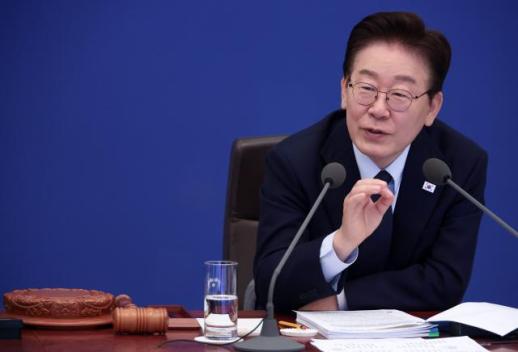 Lee Says Nonfarmers Should Not Be Allowed to Own Farmland President Lee Jae-myung said the government should strengthen enforcement so that people who do not farm cannot own farmland. Lee made the remarks at a Cabinet meeting he chaired at Cheong Wa Dae on May 6 after receiving a report from Agriculture, Food and Rural Affairs Minister Song Mi-ryeong on a plan for a full survey of farmland. He said the Constitution and the Farmland Act clearly intend that those who do not actually farm should not hold farmland. Lee instructed officials to build a system that uses artificial intelligence to analyze satellite images to identify land that is not being farmed, and to expand and make better use of rewards for reporting violations. He said it is “almost impossible” for public officials to find idle farmland one by one. Lee added that when he was mayor of Seongnam, he checked the issue and found that, legally and institutionally, it was difficult to issue actual sale orders and that people could be exempted if they merely appeared to comply, while there were not enough investigators. “So I actually gave up,” he said, adding that this likely encouraged speculation. He also criticized the rule that when a duty to dispose of farmland arises because it is not cultivated, the obligation disappears if the owner corrects the problem within three years. “If you do nothing for two years and farm in the third year, you’re exempt, aren’t you?” he said, calling it a system that is “there in name only.” In a closed session, the Cabinet also deliberated and approved 38 bills for promulgation, 12 presidential decrees and one general agenda item, in addition to discussions and ministry reports. A total of 26 items were laws tied to state policy tasks, including promulgation of partial amendments to the Act on Special Cases Concerning Confiscation and Recovery of Corrupt Property, the Special Act on Support for Victims of Jeonse Fraud and Housing Stability, and the Act on Management of Real Estate Development Projects. Lee also ordered a review of strong steps targeting hoarding of medical products such as syringes, including immediately confiscating the stockpiled goods. He called for effective measures to encourage private reporting, including sharply raising whistleblower rewards to 30% of recovered funds, and asked officials to consider introducing an administrative fine system. Separately, Lee praised Prime Minister Kim Min-seok, who is serving as the governmentwide control tower, saying the number of deaths by suicide has declined for five straight months since the new government took office, senior presidential spokesperson Kang Yu-jeong said in a written briefing. Lee also noted that the suicide prevention hotline 109 receives about 350,000 counseling calls a year but has only about 100 counselors. “Given the nation’s fiscal capacity and the Republic of Korea’s historic standing, it doesn’t make sense that calls go unanswered because there isn’t enough money or staff,” he said. He instructed officials to find ways to raise the response rate, whether by securing private support or through a supplementary budget. * This article has been translated by AI. 2026-05-06 17:48:24
 -
 Com2uS Unveils Cinematic Teaser for Aiberton’s New MMORPG “Zeus: God of Arrogance” Com2uS on Tuesday launched a teaser site for “Zeus: God of Arrogance,” a massively multiplayer online role-playing game, or MMORPG, being developed by Aiberton. The site features the slogan, “The greatest myth, allowed for everyone,” along with a roughly 28-second cinematic clip. Com2uS said the slogan reflects the game’s aim of letting anyone prove their existence in their own way. The video shows a colossal statue collapsing, a village engulfed in flames, a despairing crowd and Zeus looking down, offering a compressed look at a world in ruin and the game’s tone. “Zeus: God of Arrogance” is based on the Greek myth of Zeus, but it does not follow the original stories directly, instead reinterpreting them. The game is set in a world fractured by Zeus’ arrogance, where candidates to become “vessels of the gods” navigate upheaval tied to Pandora’s box, the 12 Titans and the revival of Cronos. Aiberton is developing the title with a third-quarter launch target. Com2uS said the teaser site marks the start of a full marketing push. The company previously made a strategic investment in Aiberton at its founding and signed a publishing agreement for the new title. Aiberton was founded in February 2024 by CEO Kim Dae-hwan, who previously held roles at Nexon including head of a new development division. Kim also served as head of overseas development for Nexon’s MapleStory and as CEO of Nexon Red. From 2019, he led Nexon’s new development division and oversaw global hits including “Prasia War” and “Dave the Diver.” Com2uS said it expects the game to perform well globally by combining its publishing capabilities with Aiberton’s development strength aimed at the international market. A Com2uS official said the company will gradually release information on the game’s world, key content and service details through the teaser site and official channels.* This article has been translated by AI. 2026-05-06 17:43:09
 -
 Anthropic to Visit South Korea Next Week for AI Safety Talks With Science Minister Anthropic is set to meet with the South Korean government to discuss artificial intelligence safety and security issues, including its AI model “Mythos.” Industry sources said May 6 that Michael Sellitto, Anthropic’s head of global policy, will visit South Korea next week and plans to meet with Bae Kyung-hoon, deputy prime minister and minister of science and ICT. A ministry official said, “We are coordinating a meeting next week between Deputy Prime Minister Bae and Anthropic.” Sellitto is an AI policy and security specialist who previously served as cyber policy director at the U.S. White House National Security Council. At Anthropic, he oversees global policy and external relations. Mythos is expected to be a key topic. The model highlights AI-based cybersecurity and vulnerability detection capabilities. Anthropic on April 7 officially unveiled the Claude-based model, previously known by the codename “Capybara,” under the name Mythos. The company said that during seven weeks of testing, Mythos autonomously found more than 2,000 previously undisclosed software vulnerabilities, or zero-days, across major operating systems and browser environments. In Mozilla’s Firefox browser, it identified 271 vulnerabilities. Of those, it was reported to have generated exploit code for 181. Bae previously met with Anthropic CEO Dario Amodei in February at the “2026 India AI Impact Summit” held in India. * This article has been translated by AI. 2026-05-06 17:42:14
 -
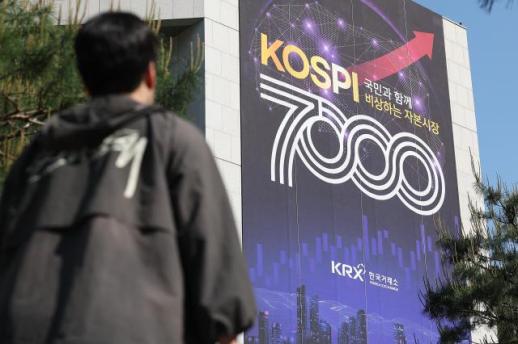 KOSPI flies over yet another milestone on single chip engine SEOUL, May 06 (AJP) - South Korea’s stock benchmark powered through energy shocks and inflation fears to race past one four-digit milestone after another and outperform the S&P 500, though the rally is increasingly raising concerns over overheating and heavy dependence on a single engine: semiconductors. The KOSPI closed at 7,384.56 on Wednesday, up 6.45 percent, blasting through another psychological threshold without the usual consolidation period. The rally remained highly selective, with declining stocks overwhelming gainers 679 to 200. Momentum again rested disproportionately on chip giants Samsung Electronics and SK hynix, which now account for more than 43 percent of the KOSPI’s total weighting. Samsung Electronics closed at 266,000 won, up nearly 390 percent from a year earlier and joining the exclusive $1 trillion market-cap club. SK hynix has soared 761 percent to 1,601,000 won from 186,000 won on May 2 last year. “AI ecosystems need balanced development across infrastructure, models and services, but South Korea remains heavily concentrated on the hardware side,” said Lee Seong-yeob, a professor at Korea University’s Graduate School of Technology Management. Lee said decades of industrial policy helped cement South Korea’s global semiconductor competitiveness, but the heavy concentration has left other sectors lagging behind, complicating efforts to build a sustainable AI ecosystem. The rally has been underpinned by explosive earnings from a prolonged semiconductor supercycle. Samsung Electronics’ semiconductor division posted a nearly 48-fold jump in operating profit to 53.7 trillion won from a year earlier. SK hynix also reported a 405.5 percent jump in first-quarter operating profit from a year earlier. According to the Korea Exchange, foreign investors purchased a net 3.134 trillion won worth of shares on the main bourse Wednesday, surpassing the previous daily record of 3.126 trillion won set on Oct. 2 last year. The KOSPI has surged 188.5 percent since May last year, marking a sharp turnaround from early 2025, when political turmoil and U.S. reciprocal tariffs triggered nine consecutive months of foreign selling. Government efforts to narrow the so-called “Korea discount” later helped restore investor confidence. Despite the blistering rally and a surge in retail trading accounts, the KOSPI’s price-to-book ratio of 2.12 remains well below the S&P 500’s 5.44, even after the Korean benchmark closed above the U.S. index’s 7,259.22 finish Tuesday. Sustainability questions linger. Samsung Electronics faces pressure from rising material costs and the prospect of a labor union strike over profit-sharing disputes. Data flag deeper vulnerability. Outstanding margin loans on the benchmark KOSPI and the tech-heavy KOSDAQ reached 35.84 trillion won ($25.8 billion) as of Monday, after briefly surpassing the 36 trillion-won mark for the first time on April 29. The sharp rebound in retail leverage suggests that so-called “FOMO” money — investors fearful of missing out on the market’s relentless surge — is flooding back into equities through borrowed funds after briefly retreating during the U.S.-Israel-Iran conflict shock. Cash waiting on the sidelines has also ballooned. Investor deposit balances stood at 124.84 trillion won as of Monday, after nearing 130 trillion won late last month, underscoring the scale of speculative liquidity chasing the rally. At the same time, shorting bets are climbing to unprecedented levels, reflecting simmering unease over whether the rally can sustain its pace. Outstanding short-selling positions on the KOSPI reached a record 20.1 trillion won on April 29, the first time the figure has crossed the 20 trillion-won threshold. Short selling involves borrowing and selling shares in anticipation of buying them back later at lower prices. Stock lending balances — often viewed as ammunition for future short-selling — also surged to 174.8 trillion won as of Monday, up roughly 25 trillion won from a month earlier, all pointing to a momentum-driven gold rush vulnerable to a sharp unwind once sentiment reverses. 2026-05-06 17:41:33
 -
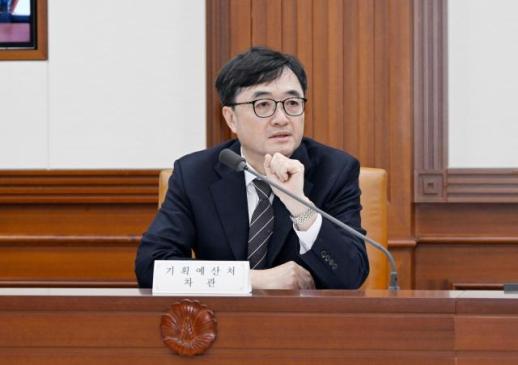 South Korea Budget Vice Minister Lim Ki-geun Meets Gates Foundation to Expand ODA Cooperation The Ministry of Planning and Budget and the Bill & Melinda Gates Foundation are moving to broaden cooperation in official development assistance, agreeing that faster digital change requires tapping private-sector capacity to create new value. Vice Minister Lim Ki-geun met on the 6th with Joe Cerrell, the foundation’s managing director for external relations, to discuss ways to improve the effectiveness of international development cooperation. The meeting followed Bill Gates’ visit to South Korea in August last year. During that trip, Gates met with President Lee Jae-myung to discuss global health and ODA cooperation. Gates said South Korea is among the few countries to have transitioned from an aid recipient to a donor, and urged it to continue supporting efforts to improve the global health environment. Lim praised the foundation’s results in global health and sustainable development. He said its approach of using its funding to draw in private capital and technology helps boost the effectiveness of development assistance. Cerrell said he highly values South Korea’s rise from an ODA recipient to a donor and expressed hope that the government will increase ODA support to show stronger leadership. Lim responded that the focus should be on strategic use of resources and spreading measurable results. “Through cooperation among diverse development partners, including the public and private sectors, we can create new added value,” he said, adding that in the digital and artificial intelligence era, private innovation in technology and networks should be used to the fullest. Lim and Cerrell also reviewed the outcomes and significance of global cooperation projects between South Korea and the foundation, including the International Health Technology Research Fund (RIGHT Foundation). They agreed on the need to identify promising cooperation projects in other areas as well. The ministry said it will work with ODA lead agencies, including the Foreign Ministry, to review the full process from budget execution to performance management and reflect the results in drafting the next budget proposal. * This article has been translated by AI. 2026-05-06 17:34:01
 -
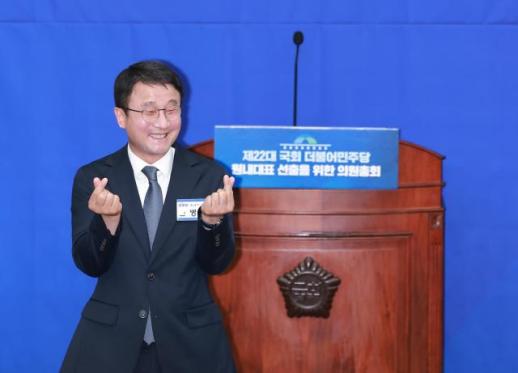 Han Byung-do reelected as DP floor leader SEOUL, May 6 (AJP) - Three-term lawmaker Han Byung-do was reelected floor leader of the ruling Democratic Party (DP) on Wednesday, becoming the first in the party to win a second consecutive term in the post. Han, who was the sole candidate in the race, won by a majority in a vote that combined ballots from both lawmakers and party members. The exact vote tally was not disclosed under the party's internal election rules. Despite some debate within the party over how to proceed when there is only one candidate, the party decided to hold the vote. DP leader Chung Cheong-rae described Han as "a leader with a gentle personality, flexibility in leadership, and strong attention to detail." Ahead of the vote, Han pledged to support the current administration's agenda with decisive leadership and to work closely with fellow lawmakers on legislative priorities, pushing them through parliament by year's end. Assuming the post in January after then-floor leader Kim Byeong-gi abruptly stepped down amid various allegations, Han has been credited with stabilizing the party over the past four months before resigning on April 21 to run again. 2026-05-06 17:29:01
 -
 Shinhan Financial Says It Blocked $800,000 in Voice Phishing Losses in Two Weeks Using Linked FDS Shinhan Financial Group said Tuesday it prevented about 800 million won ($800,000) in customer losses within two weeks of launching its “one-stop joint response service” against voice phishing. The service is the first in South Korea’s financial industry to link fraud detection system (FDS) information across group affiliates, Shinhan said. It shares suspicious transaction data in real time among key units — banking, card, securities and insurance — to detect and respond to voice phishing early. The Financial Services Commission designated the program as an innovative financial service in September last year. Since full operations began April 10, Shinhan said it analyzed 1,111 suspicious cases over about two weeks and detected 41 abnormal transactions. Under the Financial Holding Company Act, sharing customer information among affiliates has been limited to internal management purposes, creating institutional constraints on real-time linkage of abnormal-transaction data for voice phishing prevention, the group said. Shinhan said it addressed those limits by integrating FDS operations that had been run separately by each company, allowing consolidated analysis of transaction flows across affiliates. Shinhan said it plans to strengthen industrywide safeguards by linking the service with the financial authorities’ AI-based voice phishing information-sharing and analysis platform, ASAP. A Shinhan official said the initiative is significant because it removes institutional barriers in fraud prevention and improves customer asset protection through group-level cooperation. The official said Shinhan will continue working with financial authorities and the broader financial sector to help build a safer financial environment. 2026-05-06 17:28:28