
Journalist

Lee Hugh
=
-
 South Korea’s Youth Future Savings Plan to Offer Tax-Free Interest Up to 75 Million Won in Salary The South Korean government has finalized key details of its planned “Youth Future Savings Plan,” expanding the income threshold for benefits to 75 million won in annual salary and adopting a three-tier support structure that differs from the existing Youth Leap Account. On April 23, the Financial Services Commission said it shared the product structure and eligibility standards at a pre-launch review meeting held the previous day. The plan is a three-year, flexible installment savings product for people ages 19 to 34. Participants can deposit up to 500,000 won a month, with the government providing matching contributions depending on income and eligibility. Compared with the Youth Leap Account, the new plan simplifies support from five tiers to three. Enrollment will also shift from year-round sign-ups to recruitment twice a year, in June and December, making timing more important for applicants. Benefits will vary by total annual salary. The government raised the upper income limit from 60 million won under the Youth Leap Account to 75 million won. For those earning more than 60 million won and up to 75 million won, there will be no government contribution, but interest earned will be tax-free. For those earning 60 million won or less, the standard plan adds a government contribution equal to 6% of monthly deposits. If a participant deposits the 500,000 won monthly maximum, that equals 30,000 won a month, or 1.08 million won over three years, with interest also accruing on the contribution. A preferred plan applies to participants who meet additional requirements, such as employment at small and medium-sized enterprises. If conditions are met, including total annual salary of 36 million won or less, the contribution can rise to as much as 12% of monthly deposits. At the 500,000 won monthly maximum, that would be 60,000 won a month, or 2.16 million won over three years. Assuming a 6% interest rate, the commission said depositing 500,000 won a month for three years would build assets of about 20.8 million won under the standard plan and about 21.9 million won under the preferred plan, including government contributions and interest, on principal of 18 million won. The interest rate has not been set; the commission said it expects details to emerge around late May after selecting participating financial institutions. The maturity period is three years, shortened from five years under the Youth Leap Account. The product will be run as a flexible installment savings plan with a monthly cap of 500,000 won. Work-related conditions are included. Preferred-plan participants employed at small and medium-sized firms must remain on the job for a specified period before maturity to keep benefits, and job changes will be allowed no more than twice during the subscription period. The age rule will be partially eased. While the basic eligibility is ages 19 to 34, people who turned 35 in the gap between the end of the Youth Leap Account and the launch of the new product will be allowed to enroll as an exception. Military service time will be excluded when calculating age eligibility. Current Youth Leap Account holders will be allowed to switch to the Youth Future Savings Plan only during the first recruitment period in June. In that case, even if the existing account is closed early under a special termination process, government contributions and tax benefits will be maintained. Enrollment will be handled online through bank apps. Eligibility will be reviewed through electronic links with the National Tax Service and other systems, without requiring applicants to submit separate documents. 2026-04-23 15:25:05
 -
 Lee Jae-myung housing policy faces doubts as permits fall and non-apartment supply dries up With the Lee Jae-myung government nearing its first anniversary, questions are growing over whether its core real estate approach — expanding housing supply — can deliver results. Critics say the supply structure itself is weakening, with private-sector permits cut roughly in half and construction of non-apartment housing such as multi-family and multiplex homes effectively halted. Democratic Party lawmaker Lee Yeon-hee held a forum at the National Assembly Members’ Office Building on the 23rd titled “Normalizing Real Estate, Asking a New Path to Housing Stability,” saying there is a need to assess the government’s real estate and housing policies over the past year and set a new direction to stabilize housing. Lee said real estate policy is a top task for every administration and that expanding supply is central in a volatile market. She said addressing supply shortages from the previous administration is the starting point for market stability. Lee added that the government’s plan to supply 1.35 million homes will take time to show results, with visible effects expected in the middle to later part of its term. At the forum, Kwon Dae-jung, a chair professor at Hansung University, said the 1.35 million-home plan lacks realism. He said supply in Seoul amounts to only about 27,000 households, and noted that a previously presented plan to supply 300,000 homes has, in some cases, not even reached the presale stage for nearly 10 years. “The biggest problem is the absence of a short-term supply policy,” he said. Kwon called for a more flexible approach, including revitalizing the non-apartment market and exempting small homes below a certain size from regulations. On regulations for owners of multiple homes, Kwon said applying the same rules to “livelihood” multi-home owners has limits. He called for easing financial regulations for young people and those without homes, and for more selective regulation. He also urged expanding supply models such as rent-to-own arrangements. Byun Chang-heum, a former minister of land, infrastructure and transport, said the housing market is showing both a “supply cliff” and regional imbalance, underscoring the need for a policy shift. Byun said private-sector permits fell from 623,000 homes in 2016 to about 304,000 in 2025, and that supply of non-apartment housing such as multi-family and multiplex homes has effectively stopped. He said Korea Land and Housing Corp., known as LH, is partially filling the gap but not enough. Byun said home prices in Seoul have surged while provincial areas remain sluggish, widening asset gaps and a sense of relative deprivation. He also pointed to limits in existing supply methods. Securing unused land has reached its limits due to complaints and practical constraints, he said, while redevelopment and reconstruction produce limited net increases and leave unresolved issues over resettling original residents. He added that development gains are structured to concentrate on buyers of newly sold units. As alternatives, Byun proposed deregulation and institutional changes. He called for easing floor-area ratio and building rules to enable mid-rise, high-density development, and for designating areas near transit hubs as “housing supply promotion zones” with incentives. He also urged better use of semi-industrial zones and looser standards for multi-family and multiplex housing. Byun said units secured through floor-area incentives should be used to encourage resettlement of original residents, and that a supply model with both public and private participation is needed. He said expanding supply should be pursued alongside inclusiveness and regional balance. 2026-04-23 15:15:48
 -
 KB Financial Highlights Social Value Gains; Shinhan Unveils Expanded Shareholder Returns Plan KB Financial Group and Shinhan Financial Group are stepping up efforts on shareholder returns and inclusive finance. KB Financial said April 23 it created 828.6 billion won in social value in the inclusive finance sector in the first quarter. By category, it reported 348.1 billion won tied to support for young people, small and midsize companies and self-employed small businesses, and balanced regional development, and 349.0 billion won related to public livelihood and safety. The group said the results reflect support for household stability and sustainable corporate growth through core financial services, along with social contribution programs that expanded needed local infrastructure. KB Financial said it will further refine its return framework this year after posting cumulative social value of 2.414 trillion won through the third quarter of last year. A KB Financial official said the group will use the measurement results to review the effectiveness of its social contribution programs and strengthen a sustainable support system so the value created spreads across local communities. Shinhan Financial on April 23 announced "Shinhan Value-Up 2.0" and said it will adopt an "uncapped shareholder return ratio" linked to return on equity and growth. Under the plan, the shareholder return ratio would rise without a cap as the group grows. In July 2024, Shinhan Financial said it aimed to achieve by 2027 a 50% shareholder return ratio, 10% ROE, and the purchase and retirement of at least 50 million shares. It said the shareholder return ratio reached 50.2% last year, meeting the target early. With its share retirement plan moving ahead and the price-to-book ratio normalizing, the group said it is now setting the new goal of an uncapped shareholder return ratio. Shinhan Financial also said it will reallocate capital among group affiliates based on return on capital to strengthen nonbank competitiveness on the back of stable bank earnings. It said it plans to raise ROE by linking that approach to groupwide performance measurement, evaluation and compensation systems. The group said it will begin tax-exempt dividends for three years starting with this year-end dividend, and use remaining resources to continue its plan to buy back and retire at least 50 million shares. It also said it will maintain equal quarterly dividends and target annual growth of at least 10% in dividends per share. Shinhan Financial said it approved a first-quarter dividend of 740 won per share and is proceeding with a planned 700 billion won share buyback scheduled through July. A Shinhan Financial official said the plan is significant because it builds a sustainable structure in which group growth and shareholder returns reinforce each other, adding that the company will seek to increase shareholder value through higher ROE and a predictable shareholder return framework. * This article has been translated by AI. 2026-04-23 15:12:53
 -
 Shinhan Investment posts 288.4 billion won Q1 net profit on stock market boom Brokerages have begun reporting first-quarter results, and Shinhan Investment was among the first, posting a sharp jump in profit as a stock market rally lifted trading activity. Other securities firms are also expected to report strong gains. Shinhan Investment said Thursday its first-quarter net profit rose 167.4% from a year earlier to 288.4 billion won. Operating profit climbed 228.5% to 386.4 billion won. Operating revenue increased 90.2% to 701.5 billion won, while operating expenses rose 25.4% to 315.1 billion won, highlighting improved profitability. By revenue source, fee income totaled 407.4 billion won, the largest share. Brokerage commissions accounted for 293.5 billion won, followed by financial product fees of 28.3 billion won and investment banking fees of 42.6 billion won. Product management income came to 162.3 billion won, and net interest income was 131.7 billion won. Profitability indicators also improved, with return on assets at 1.97% and return on equity at 20.00%. The company attributed the gains to higher trading value amid the market upswing. “Along with an increase in stock brokerage commissions, profit and loss from product management improved,” a Shinhan Investment official said, adding that results strengthened broadly across business lines including brokerage, investment banking and financial products. 2026-04-23 15:12:06
 -
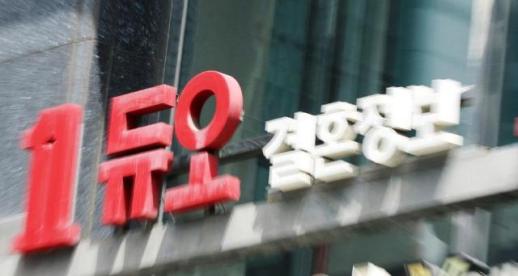 Matchmaking firm Duo slapped with fines for massive data breach SEOUL, April 23 (AJP) - Matchmaking firm Duo was slapped with heavy fines over a massive data leak affecting nearly 430,000 users, a state-run privacy watchdog said on Thursday. The Personal Information Protection Commission imposed about 1.2 billion won (US$810,000) in penalties and fines on the company after a Duo employee's computer was hacked in January last year, exposing sensitive personal information of some 427,464 paid members. The leaked information included names, contact details, resident registration numbers, and passwords, along with personal data such as height, weight, and marriage history. The commission ordered Duo to take immediate steps to correct its lax database management and illegal practices after investigators found that it lacked even basic security measures such as systems to block access after repeated login attempts, making it easy for hackers to gain access to its database. It also used an outdated encryption method that was vulnerable to cyberattacks. The probe also revealed violations in how the company gathered and stored personal data, as it routinely collected sensitive personal information such as resident registration numbers and failed to destroy about 300,000 records of its former members that had been kept beyond the five-year retention period, increasing the scale of the breach. The commission added Duo took 72 hours to report the breach without a valid reason, despite recognizing the leak. "We humbly accept the commission's decision and will do our best to prevent a recurrence and further harm," said a Duo staffer. 2026-04-23 15:11:03
 -
 Teacher Says AI Platform Turned Static Slides Into Student-Led Classroom Discussion South Korea introduced a requirement in the 2022 revised national curriculum for 34 class sessions of information education in elementary schools. But specific teaching methods and materials are still largely left to teachers. Oh Yuna, a teacher at Hongneung Elementary School in Seoul, said she has been filling that gap with a platform called Sooup AI ("Lesson AI") from startup Redbrick. Oh, who has received a minister of education commendation for work in strengthening teachers’ digital capabilities, said she has seen clear changes in how classes run. She spoke about those changes in an interview. ■ From static slides to discussion… "It takes one click" "Lesson AI" lets teachers upload existing PPT or PDF materials. The system analyzes them and automatically converts them into student-participation activities such as quizzes, discussion prompts and question-based tasks. Oh said it reduces preparation time and also helps teachers adjust lessons on the spot. "Most materials teachers have are PPTs or PDFs, and Lesson AI creates activity materials for students based on those lesson plans," she said. "Because the AI automatically builds activities like quizzes or discussions, the burden of making new materials drops a lot." During class, she said, it can function like an assistant. "When I’m teaching and want to reinforce a concept, Lesson AI generates that content right away," Oh said. "Being able to expand existing materials instantly is very useful." She also cited its ability to analyze individual learning data and provide immediate feedback, especially in subjects where student gaps are wide. Oh said the most visible change has been student participation. "A child who usually wouldn’t write an opinion in a textbook will actively type their thoughts in a discussion using digital devices," she said. "It seems speaking and expressing yourself in writing work differently for kids." She added that what matters is not just who speaks up, but "how much they are actually thinking." Using Lesson AI, she said, teachers can check multiple students’ thought processes in real time, drawing out a different kind of cognitive engagement than in traditional classes. She said students’ reactions have been positive, with comments like, "Let’s do this again," after class. "You can see kids trying to participate more actively through the tool," she said. Oh said the technology has also changed how teachers use their time. "Before, I had to spend a lot of time analyzing the curriculum and preparing materials, but now the AI takes over part of that process," she said. "That lets me use the time I gain to understand children’s characteristics and the classroom atmosphere more deeply." She said students, too, are beginning to set their own learning direction as real-time data helps them see their level more objectively. Addressing concerns from some parents about overreliance on devices, Oh said use is limited. "We don’t use devices for the entire class, only at necessary moments," she said. "Because activities are balanced — research, organizing opinions and presenting — situations where kids get overly absorbed in devices actually decrease." ■ Data resets each school year… "A condition for real personalized education" Oh said there are still limits in public education. "In AI education, accumulating data is very important, but right now the structure doesn’t carry data over when students move up a grade," she said. "It’s not easy because of privacy or system issues, but data has to accumulate for true personalized education to be possible." She said the most important factor is still teachers’ ability to design lessons. "No matter how many tools there are, if you don’t have the ability to use them for the children in your class, it’s hard to sustain," Oh said. "This is an opportunity to look back at the classroom and place technology appropriately where it’s needed."* This article has been translated by AI. 2026-04-23 15:10:34
 -
 Hong Kong Confirms First Locally Acquired Dengue Fever Case This Year Hong Kong’s Centre for Health Protection said on April 21 it had confirmed the city’s first locally acquired dengue fever case this year and will work with relevant government departments on measures to prevent further infections. The patient is a 21-year-old man. He developed fever, headache, muscle pain and a rash on April 12 and sought diagnosis and treatment on April 16 at a public hospital in Tai Po, in the New Territories. A blood test returned a positive result for the dengue virus, and his condition was reported as stable. Investigators said the man lives in a housing estate in Tai Po and had been working on a road construction project on Lantau Island. He reported no travel outside Hong Kong during the incubation period from March 29 to April 9 and said he was bitten by mosquitoes near the work site. Dengue is transmitted by mosquitoes including the Aedes aegypti. The health protection center said rising temperatures and humidity make it easier for mosquitoes to breed and urged residents to take steps to prevent mosquito infestations.* This article has been translated by AI. 2026-04-23 15:09:51
 -
 Korea SMEs Agency to Hire 102 in First Half, Using Blind Recruitment Korea SMEs Agency to hire 102 in first half, using blind recruitment The Korea SMEs and Startups Agency said April 23 it will hire 102 people in the first half of 2026, including full-time employees and youth interns. The full-time intake totals 60 positions: 42 in administration and 18 in technical roles. For equity hiring, 12 positions will be filled through a limited competition for veterans. Five candidates with professional licenses, including lawyers and certified public accountants, will be selected through a separate process. The selection process includes document screening, a written test — the National Competency Standards-based basic skills exam and a major-knowledge test — followed by first- and second-round interviews. Final hires are scheduled to start work in July. The agency said the recruitment will be conducted as NCS-based “blind hiring,” with no restrictions on education, hometown or age. It said it plans to expand equity hiring for veterans and people with disabilities and continue recruiting regional talent in line with the government’s balanced regional growth policy. Chairman Kang Seok-jin said he hopes “many talented people with strong capabilities and a spirit of challenge” will apply and grow alongside small and venture businesses, which he called the backbone of the economy. TIPA named an “excellent” public data provider for seventh straight year The Korea Technology and Information Promotion Agency for SMEs said April 23 it was named an “excellent institution” for the seventh consecutive year in the Interior and Safety Ministry’s “2025 Public Data Provision Operations Assessment.” The assessment covers 685 organizations nationwide — including central government agencies, local governments and public institutions — and evaluates three areas: data opening and use, quality, and management systems. TIPA said it received high marks for establishing a data quality management system that supports artificial intelligence use and for providing user-centered public data services. TIPA President Kim Young-shin said the agency is working to proactively open high-demand, high-value public data in step with policy changes in the AI era and to make it easier for the public to use data. Kyungdong Navien launches “Navien Air Crew” supporters with chef Edward Lee Kyungdong Navien said April 23 it held a launch ceremony for its “Navien Air Crew” at Atelier 8 Studio. The company described Navien Air Crew as its official brand supporters group, tasked through December with content-creation missions and participation in offline events to promote the value of clean indoor air. The launch event brought together 24 members selected from applicants in a process with a 22-to-1 competition ratio. The program included brand and product introductions, an explanation of Kyungdong Navien’s integrated air quality management solution, activity guidelines and recreation. All participants received welcome gifts — including a boiler backpack, T-shirt, apron and key ring — and took part in a lucky draw for additional prizes. Chef Edward Lee, the company’s advertising model, attended and held a cooking show. The company said it collected stories in advance from the group about moments when they felt they needed “a breath of fresh air,” selected four, and set aside time for conversation with Lee. He then cooked and presented a fusion Korean dish he developed — a bulgogi cheeseburger with wedge fries — as food to lift the mood. A company official said the group’s activities will help convey the importance of integrated air quality management and promote the value of comfortable air in daily life. JobKorea issues AX hiring report, citing growth in outbound recruiting JobKorea said April 23 it published an “AX Hiring Report” for corporate human resources managers. The report covers how AI is being used in hiring and how it is perceived, along with strategic directions tied to changes in the 2026 hiring environment. JobKorea said it was produced based on the company’s own corporate survey and an analysis of hiring data. JobKorea said it sees this year’s hiring environment shaped by two trends: expanded always-on recruiting and continued budget constraints. It said hiring timelines have grown longer while resources remain limited, pushing companies to seek more efficient ways to secure talent. The company also pointed to the spread of “outbound recruiting,” in which employers approach job seekers first with offers. Based on JobKorea platform data, it said this approach rose 44% over the past three years. It said the shift is changing hiring operations so AI handles repetitive tasks while recruiters focus on judging fit and persuading candidates. A JobKorea official said that as outbound recruiting expands, AI use is “not a choice but a necessity” because companies must search for and manage more candidates with limited resources, adding that support is needed so recruiters can reduce repetitive work and focus on key decisions and communication.* This article has been translated by AI. 2026-04-23 15:06:25
 -
 KT Board Drops Advance Approval Requirement for Restructuring KT said Thursday its board revised parts of its board rules at an April regular meeting held shortly after the shareholders meeting, moving to tighten corporate governance. The key change removes a provision requiring the board’s advance approval for organizational restructuring. The revision aims to streamline decision-making on personnel and restructuring. Previously, the CEO had to obtain prior board approval to appoint or dismiss division head-level executives or to carry out a reorganization. That requirement was deleted. The board also eased the restructuring requirement from “advance reporting” to “reporting,” a move KT said would speed management decisions. The board also codified how it will respond when an outside director is suspected of violating company rules. Until a judicial ruling is finalized, the director would be restricted from attending board and committee meetings and from participating in deliberations, and would be advised not to exercise voting rights. KT said the changes are intended to strengthen the CEO’s accountability while allowing the board to focus more on its core role of checks and oversight. Board Chairman Kim Yong-heon said the revisions are meant to improve the rationality and transparency of board operations and clarify the roles of the CEO and the board. “We will continue improving the system in line with the launch of a new CEO leadership,” he said.* This article has been translated by AI. 2026-04-23 15:03:02
 -
 Gender Equality Ministry Seeks Local Governments for Public Sanitary Pad Pilot The Ministry of Gender Equality and Family said Wednesday it is accepting applications through May 21 from about 10 basic local governments to run a pilot program providing free “public sanitary pads” for use when needed. The pilot, to be operated this year, is designed to ensure that anyone can access sanitary pads at the moment they are needed, reflecting that the products are essential items used repeatedly over long periods. The ministry will hold a briefing for local governments on April 30 and accept applications through May 21. It plans to select participating localities in early June, considering factors such as population and regional characteristics, and to launch the program in phases starting in July. Under the plan, sanitary pad dispensers will be installed at major public facilities, including community centers, public libraries, cultural centers, welfare centers, public health centers, family centers and youth centers, for free use when needed. Pads stocked in the dispensers will be products that meet Ministry of Food and Drug Safety standards. In high-traffic locations, the ministry plans to install machines that can hold larger quantities and automatically tally usage to support efficient operations and a stable supply. Minister Won Min-kyung said the pilot will “strengthen women’s health rights and create an environment where anyone can freely use sanitary pads in emergencies,” adding that the ministry will work with local governments to implement the program without disruption.* This article has been translated by AI. 2026-04-23 15:02:31