
Journalist

Lee Hugh
=
-
 NH Financial Group’s 100-Year Life Research Institute Targets Retirement Planning As South Korea moves deeper into a super-aged society, competition in finance is shifting. Wealth management, once centered on high-yield products and affluent clients, is increasingly focused on planning for 30 to 40 years after retirement. With pensions, inheritance, housing and medical costs now requiring integrated management, firms are competing less on returns and more on retirement-planning capability. NH Financial Group has moved early. In 2011, it established the 100-Year Life Research Institute under NH Investment & Securities and built the “100-year life” brand. The institute helped frame retirement not as a social exit but as managing a second chapter of life, putting “100-year life” ahead of the term “retirement.” The institute has grown beyond research into a core unit shaping the group’s pension and wealth-management strategy, while also serving as a hub linking affiliates. Combined with the group’s customer base in rural areas and among older adults, it has become a key part of NH’s differentiation. A field-based approach is another strength. The institute visits local agricultural cooperatives and underserved areas to provide lifetime asset-management education, extending programs into rural communities nationwide. It also regularly publishes retirement planning materials for office workers and asset-management reports tailored to rural households. Backed by a nationwide branch network, NH can deliver retirement content to older customers even at the township level, a system competitors find difficult to replicate. Recently, the institute has focused on “pension withdrawal strategy,” arguing that in retirement the order and timing of withdrawals matter more than saving. How people manage the national pension, retirement pension, personal pension and other financial assets can change after-tax income and how long assets last, making tax-saving simulations an important part of retirement planning. Kim Dong-ik, head of the 100-Year Life Research Institute, often stresses that “pensions are not only about saving, but about the science of withdrawals.” Its education platform is also expanding. The “100-Year Life University,” jointly run with Seoul National University’s Center for Senior Retirement Planning Support, has produced more than 1,500 graduates. The institute is widening its reach through programs such as “Life University on the Road” and “Noble Class,” expanding beyond financial education into consulting for major life transitions. * This article has been translated by AI. 2026-04-23 11:06:06
 -
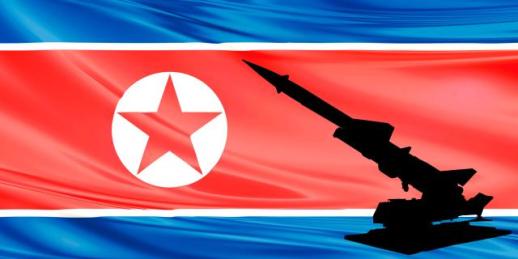 Pyongyang labels Japanese drone units a threat as military tensions rise SEOUL, April 23 (AJP) - Pyongyang slammed on Thursday Japan’s move to establish dedicated drone units within its Ground Self-Defense Force, calling the restructuring a "reckless" step toward reviving the country’s past imperial ambitions. State media reported that the modernization of Tokyo’s unmanned capabilities, paired with its recent acquisition of long-range strike weapons, has pushed the region into a dangerous new phase of military escalation. The criticism comes as the Japanese Ministry of Defense prepares to launch specialized departments this month focused on the research and deployment of combat drones, according to reporting by the Yomiuri Shimbun. For Pyongyang, these technical upgrades are not merely defensive adjustments but are evidence that Japan is abandoning its post-war pacifist stance in favor of a "pre-emptive strike" doctrine aimed at its neighbors, including South Korea and the broader region. The commentary released by the Korean Central News Agency pointed to a string of recent Japanese military expansions, including the procurement of American Tomahawk cruise missiles. It specifically highlighted the deployment of Type 12 surface-to-ship missiles in Kumamoto and high-speed glide weapons in Shizuoka. These systems, which allow Japan to strike targets from outside an enemy’s firing range, are being characterized by North Korean officials as the tools of a "war chariot" accelerating toward overseas aggression. While Tokyo has maintained that its military buildup is a necessary response to the shifting security landscape in East Asia, North Korea argued that the 1,000-kilometer range of Japan’s new missile variants far exceeds what is required for "minimum necessary" self-defense. The state media report urged the international community to stay alert, claiming that the integration of these high-tech offensive assets is stoking the "war fever" of Japanese militarism. Japanese Defense Minister Shinjiro Koizumi has stated that the lessons from the war in Ukraine, where drone technology has rapidly evolved, make it essential for Japan to adopt new methods of combat. Japan currently plans to spend roughly 5 trillion yen (approximately 33 billion dollars) on standoff defense capabilities through 2027, according to the Japanese government’s 2022 Defense Buildup Program. 2026-04-23 11:05:42
 -
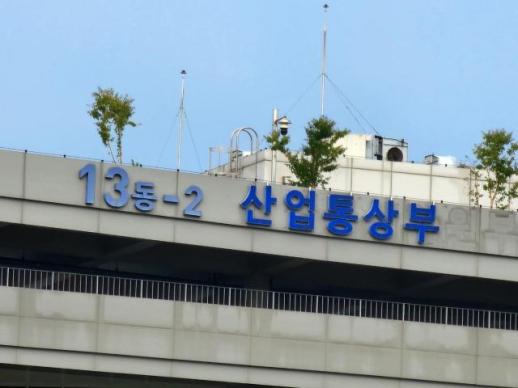 South Korea to Speed Development of Next-Generation Power Semiconductors as AI Drives Demand As artificial intelligence spreads and demand surges for data centers, electric vehicles and next-generation power grids, the South Korean government is accelerating efforts to foster a next-generation power semiconductor industry. The Ministry of Trade, Industry and Energy said it held a "Next-Generation Power Semiconductor Forum" on April 23 at the EL Tower in Seoul’s Seocho district, attended by officials from related ministries and experts from industry, academia and research institutes. The ministry said it presented progress on its "road map to foster the next-generation power semiconductor industry." The road map follows the "Semiconductor Industry Strategy for the AI Era" announced in December last year. The ministry said it has prepared the plan over about four months since launching a task force last year. At the forum, participants reviewed interim progress and discussed directions for large-scale research and development and plans to build a southern-region power semiconductor innovation belt. Power semiconductors convert, distribute and control supplied electricity to fit the needs of different devices. They are considered key components for electric vehicles, defense systems, high-voltage direct current transmission (HVDC) and data centers. Demand is rising quickly for products based on silicon carbide (SiC) and gallium nitride (GaN), which perform better than conventional silicon in high-temperature, high-voltage and high-frequency environments. The government said it will pursue a mid- to long-term plan spanning next-generation technology development, demonstration and mass-production infrastructure, and workforce training to secure core technologies and stabilize supply chains. The ministry said it is planning large, integrated R&D that goes beyond piecemeal support, linking demand companies in areas such as EVs, defense, power grids and data centers to full-cycle efforts from materials and devices to modules, systems and demonstration. It also plans to build regional infrastructure centered on key hubs. The ministry said it will upgrade public fab infrastructure in the power semiconductor specialized complex in Busan and support the use of demonstration data secured at existing public infrastructure in places such as Pohang and Naju so it can be applied in private companies’ mass-production processes. To train key talent within the southern-region innovation belt, the ministry said it will connect regional hub universities and develop practice-focused curricula using local demonstration infrastructure, aiming to create a foundation for regions and industry to grow together. Choi Woo-hyuk, director general for advanced industry policy, said, "As the reshaping of the global supply chain surrounding power semiconductors accelerates, we will push compound semiconductors as a key development task and, together with related ministries, build an ecosystem to foster the power semiconductor industry centered on the 'southern-region power semiconductor innovation belt.'"* This article has been translated by AI. 2026-04-23 11:05:21
 -
 South Korea cites chip boom, policy support for Q1 GDP surge; warns Q2 slowdown likely The government said Thursday that South Korea’s stronger-than-expected first-quarter gross domestic product growth reflected a combination of a semiconductor-led upswing, policy support and a swift response to the Middle East war. It cautioned, however, that a second-quarter slowdown is likely as base effects fade and war-related risks intensify. The Bank of Korea said real GDP grew 1.7% in the first quarter from the previous quarter, a preliminary estimate. That was well above the central bank’s February forecast of 0.9%. A Finance and Economy Ministry official said the first-quarter figure was the highest since the third quarter of 2020 and that growth momentum that had been building since the second half of last year accelerated further in the first quarter. The government pointed to a recovery in exports led by semiconductors and the impact of policy measures as key drivers. The official said improved conditions in semiconductors and other IT sectors outperformed earlier expectations, boosting exports and equipment investment. He added that measures including a supplementary budget passed last July, stronger electric-vehicle subsidies and policies to invigorate capital markets helped support a rebound in domestic demand. The official also highlighted a private-sector-led pattern. Private consumption rose 0.5% from the previous quarter. Equipment investment climbed 4.8% on semiconductor equipment spending and increased purchases of corporate vehicles and aircraft. Construction investment rose 2.8% on more groundbreaking for semiconductor plants and higher housing supply. Exports increased 5.1%, supported by strong semiconductor shipments and more foreign tourists. The government assessed the Middle East war’s impact as limited in the first quarter. The official said the war began in late February, leaving little time for effects to be reflected, and that steps such as an oil price cap helped prevent a sharp pullback in consumption. He said early indicators, including March credit card approvals, also showed a solid trend. From the second quarter, he said, conditions could change. The official said quarter-on-quarter growth would likely be adjusted lower as base effects from the strong first quarter combine with tighter supplies of construction materials and higher oil prices as the war’s impact is more fully reflected. He said the semiconductor upturn and government policies could provide some cushion, but uncertainty remains high. On the full-year outlook, the official said the government has set a goal of 2% growth this year, but that the annual path needs closer monitoring given rising external uncertainty, including how the Middle East situation develops. The government said it will seek to limit downside risks by quickly executing the supplementary budget and preparing additional measures to support consumption. The official said more than 85% of supplementary budget projects will be executed in the first half, alongside Middle East-related response steps to ease negative effects. He added that the government also plans to speed up work on structural reforms and longer-term growth strategies. * This article has been translated by AI. 2026-04-23 11:04:33
 -
 Korea Standards Agency Launches 7th Product Safety Creators Program The Ministry of Trade, Industry and Energy's Korean Agency for Technology and Standards said Thursday that its seventh group of Product Safety Creators has officially launched. The agency held a kickoff ceremony for the 2026 Product Safety Creators at the ENA Suite Hotel in Seoul's Jung District. The participatory program, made up of high school and university students, is designed to deliver product safety information in an easy, approachable way. Participants plan and produce content and spread it through social media and other channels. The seventh cohort includes 30 students selected nationwide. They will produce promotional content on product safety, share information on hazardous products and take part in efforts to expand a safety culture in daily life. The agency said it expects the creators to help raise awareness and encourage safer consumer practices by using digital formats such as videos, card news and short-form content. The group will be active for about seven months. The government plans to honor top participants at a Product Safety Day ceremony, awarding a total of 16 prizes, including two Minister of Trade, Industry and Energy awards and four awards from the head of the Korean Agency for Technology and Standards. KATS Administrator Kim Dae-ja said he hopes trust built through the creators' content will lead to safer choices and action, adding that the agency will continue to strengthen public outreach on product safety policies. * This article has been translated by AI. 2026-04-23 11:03:53
 -
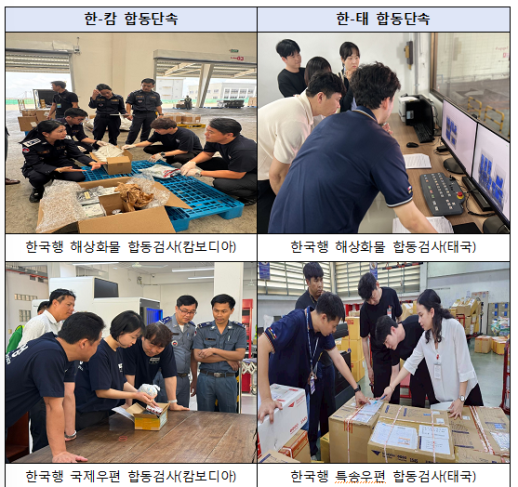 Korea Customs Seizes 657 kg of Drugs From Thailand and Cambodia, Blocking 1.81 Million Doses Customs authorities blocked an attempted smuggling of drugs into South Korea in the first quarter that they said amounted to enough for about 1.81 million people to take at once. The Korea Customs Service said April 23 that it seized a total of 657 kilograms (1,449 pounds) of narcotics from January through March through joint anti-smuggling operations with customs authorities in Thailand and Cambodia. The seizures covered 32 cases involving methamphetamine, marijuana, yaba and etomidate, among other drugs, it said. By country, the agency said its fifth joint operation with Thailand, dubbed TRIDENT, resulted in 28 cases and about 651 kilograms seized, the largest haul in the operation’s history. Since the first Thailand operation in 2022, cumulative seizures linked to Thailand have reached 184 cases totaling 1,036.9 kilograms, which the agency estimated at about 13.22 million doses. Average monthly case counts have been in double digits in every operation except the first in 2022, when the average was 8.8 cases, it said. The agency also reported results from cooperation with Cambodia, saying it had worked closely with Cambodian customs since last year to prevent traffickers from shifting routes. In the first joint operation between the two sides, called LIONSTONE, authorities blocked four cases totaling 5.7 kilograms, including methamphetamine and etomidate shipments from Cambodia. The Korea Customs Service said it will conduct coordinated investigations with partner countries to track supply chains tied to the seized cases. It also plans joint analysis of trafficking routes, concealment methods and overseas sender information obtained during the operations to strengthen border screening systems and keep year-round cooperation channels running. KCS Commissioner Lee Myeong-gu said cooperation frameworks are now in place with countries around the Golden Triangle, a major drug-producing region. “Through airtight controls, we will ensure not a single grain of drugs crosses South Korea’s border and completely eradicate drug smuggling,” he said.* This article has been translated by AI. 2026-04-23 11:03:00
 -
 Samsung Electro-Mechanics Steps Up Push for AI Data Centers, CEO Says Components Drive System Edge Samsung Electro-Mechanics said April 23 it is hosting its overseas customer event, the 2026 SEMCO Component College (SCC), in Busan. First held in 2004, SCC is the company’s annual global customer outreach program. This year’s event, themed “The Core of AI Future,” is aimed at highlighting the importance and competitiveness of key components for the AI era and strengthening cooperation with customers. The company said 160 overseas customers and about 300 participants are attending, its largest turnout to date, spanning areas including AI servers, networks, power, next-generation optical communications, IT, automotive electronics, humanoids and aerospace. Seminar sessions cover requirements for high-reliability, high-voltage MLCCs as autonomous driving and electric vehicles expand; component technology shifts tied to the growth of AI servers and data centers; and component adoption trends in AI-based IT devices. The program also includes hands-on training based on product analysis and explanations of how components operate within circuits. In the exhibition area, Samsung Electro-Mechanics showcased products including high-capacitance MLCCs used in automotive SoCs, high-reliability MLCCs for powertrains, MLCCs for AI servers and networks, and ultra-thin power inductors. CEO Jang Deok-hyeon, who attended the event, said, “In the AI era, component performance and reliability determine the competitiveness of the overall system.” He added, “As the world’s only company able to supply the core component solutions essential for AI data centers, we will support our customers’ success.”* This article has been translated by AI. 2026-04-23 11:00:50
 -
 WithLike Selected for LIPS II Program to Expand IP-Based K-Food Overseas A brand-commerce company that builds products around content intellectual property has been selected for a government-backed support program, expanding its platform for growth. WithLike said it was finally selected for the 2026 Innovative Small Business Investment-Linked Support Program (LIPS II) run by the Small Enterprise and Market Service. The program, operated by an agency under the Ministry of SMEs and Startups, supports commercialization by selecting small businesses that have attracted private investment and show growth potential and market viability. LIPS II links funding needed for expansion, including product development, brand upgrades and overseas entry. The ministry has broadened a model that combines private investment with policy funding to help small businesses scale up, and has recently included more content- and brand-based companies among key targets. WithLike was selected based on a business model that uses content IP from influencers and chefs, the company said. It has worked with Heebab, Jeong Ji-seon and Myeong Hyeon-man to plan and distribute K-food products such as ready-to-eat meals, meal kits and ramen. The food industry has increasingly adopted “IP commerce” strategies that pair well-known figures’ recognition with their content reach. The company has also posted results overseas. WithLike placed products in H Mart, an Asian grocery distribution channel in the United States, and ran local promotions to secure sales performance. H Mart, which has grown on demand for Korean and other Asian foods in North America, is often used by South Korean food companies as a foothold for overseas expansion. Demand for K-food has been rising globally, led by ramen and ready-to-eat meals. According to the Ministry of Agriculture, Food and Rural Affairs and other sources, South Korea’s food exports have steadily shifted toward a higher share of processed foods, with ready-to-eat meals and ramen established as major export items. As a result, more small and midsize food companies are attempting overseas expansion by combining content and branding. WithLike said it plans to use the selection to broaden its product lineup, strengthen brand competitiveness and expand overseas distribution. The company said it will continue to build differentiated product-planning capabilities through its IP-based collaboration model. A company official said the selection reflects recognition of the growth potential of its business structure combining content IP and food, adding that WithLike plans to accelerate product development and expansion in global markets.* This article has been translated by AI. 2026-04-23 10:53:27
 -
 Unregulated Fight Videos Spread Online in South Korea, Reaching Teens In the 1999 U.S. film “Fight Club,” the first rule is not to talk about it. In today’s South Korean version, that taboo has collapsed. Violence is no longer confined to the shadows; it is filmed, distributed and monetized as content. Fight videos are spreading quickly on social media and streaming platforms such as YouTube and Telegram. Blurring the line between sport and violence, the genre draws millions of views and has become a form of mass entertainment — echoing the voyeuristic consumption of violence depicted in Netflix’s “Squid Game.” At the center is so-called “yacha rule,” an informal fighting format presented as consensual. Promoted as a “raw, real fight,” it has spread rapidly. One video titled “Real fight between construction workers in their 20s #yacharule” has surpassed 12 million views. The footage shows two shirtless men trading punches as a crowd watches, evoking a modern-day coliseum. The name is believed to come from “yacha,” a predatory being in Buddhist folklore. Unlike mixed martial arts or boxing, there is little protective gear and few rules; the main restriction is a ban on eye-gouging. Viewers cite that unfiltered “realism” as the appeal. The market is sizable. Related YouTube channels have logged more than 180 million cumulative views, and individual videos often reach the millions. Given the advertising model, violence itself functions as a revenue stream. The concern is how far it is spilling into everyday life. Some creators, claiming “teaching a lesson,” seek out specific people, fight them and livestream it. More alarming is the spread into teen spaces. One Telegram channel was reported to buy and distribute real assault videos involving minors, paying providers from 5,000 won to 50,000 won. Many clips show victims bleeding or losing consciousness. Viewers are not just observers. Through comments, donations and sharing, they participate, and some videos are paired with gambling ads. A violence-centered “ecosystem” is taking shape. Experts link the trend to human instincts. Rosie Dirt, a professor of psychology at the University of North Carolina, said people are naturally drawn to threat and conflict, and violent stimuli grab attention quickly and hold it. As that “safe danger” experience is reinforced online, she said, people’s sensitivity to violence can dull over time. Social learning also plays a role. Under psychologist Albert Bandura’s theory, if repeated behavior is shown being rewarded, it can come to be seen as normal. The more fights are packaged as happening under “agreed rules,” the more likely viewers are to justify violence, experts say. Dirt said sustained exposure to violent media can lead to desensitization, reduced emotional response and gradual shifts in what people see as socially acceptable aggression. When such content is rewarded with visibility and attention online, she said, imitation or performative violence can increase. The University of North Carolina’s Rosa Lee introduced “socialization effects” — the tendency to become more like one’s group, environment and consumed content — and “selection effects,” in which people with violent tendencies consume more violent content or choose like-minded friends. Lee said when those psychological tendencies combine with social media algorithms, a nontraditional form of socialization can occur, allowing violent content to shape thinking and behavior. She said the interview request reminded her of decadeslong debates over the effects of violent TV shows, films and video games. In 2021, 13-year-old Olly Stephens in the United Kingdom was stabbed to death by peers. He went to a park after being lured by a girl he knew and was ambushed by two boys. The attack was later found to have been planned amid conflict and message exchanges on social media. The British daily The Times said the case was not only a personal tragedy but also an example of rising teen knife crime and the influence of the online environment. It said teen knife-related deaths in the U.K. have risen sharply in recent years, driven in part by social media. The victim’s parents have since campaigned for stronger social media regulation and youth protections, and experts have said online conditions and access to weapons must be addressed together. The Washington Post also analyzed the impact of graphic video on young people after the killing of Charlie Kirk in Utah in September 2025, when footage of his death spread rapidly on social media and reached children and teens. The video circulated quickly on major platforms including TikTok, Instagram and YouTube, and some students shared or watched it at school. Parents said they were shocked their children saw the images without warning. Some teens responded that it was “shocking but important” or “just weird,” raising concerns about desensitization. The Post said the spread was tied to algorithmic systems that prioritize sensational, attention-grabbing content. Platforms tried to remove the video or apply age limits, but altered versions kept appearing, making control difficult. Parental controls also failed to work effectively. Experts called for stronger regulation and urged parents to talk with children and respond actively. Legal judgment is clear, experts say. Seong Jung-tak, a professor at Kyungpook National University Law School, said yacha rule is unlikely to receive a legal pass even if there was “consent.” Assault causing injury is not a crime that can be dropped solely at the victim’s request, he said, meaning investigations and punishment can proceed even if the victim signs an agreement saying they do not want the attacker punished. Seong cited a Supreme Court ruling that when a victim’s consent violates social norms, illegality is not removed. Legal responsibility may extend beyond the fighters. Watching or distributing yacha rule content can also be punished under the Criminal Act, the Information and Communications Network Act and the Juvenile Protection Act. As Rome’s Colosseum showed, violence has long been part of entertainment. But the current shift is different in kind: the boundary between reality and performance is fading, and audiences are moving from passive consumers to active participants. As violence-as-content spreads, calls are growing for debate over how to regulate it — and how to build stronger protections for minors. 2026-04-23 10:52:19
 -
 Study Warns Lawyer Oversupply Is Driving Fee Competition and Eroding Service Quality A study has found that a rapid increase in the number of lawyers in South Korea could intensify competition for clients, lowering the quality of legal services and weakening professional ethics. The Korean Bar Association on Thursday released its analysis of how expanding the supply of lawyers affects service quality, based on a report it recently received from the Korean Society for Quality Management titled “A Korean Model for Legal Workforce Supply and Demand in the AI Era.” The society said in the report that the quality of professional services depends on the absolute amount of time providers devote to a matter and on professional ethics, but that excessive competition damages both. It added that maintaining expertise and ethical standards requires a stable working environment. The number of registered lawyers in South Korea surged to 38,235 this year from 14,534 in 2012. Over the same period, the number of first-trial cases filed fell about 30%, to 740,000 from 1.05 million. The lawyer-retention rate is about 20%, and the rate for privately retained counsel in criminal trials is about 30%, the report said. With the median income at 30 million won under a situation in which lawyers handle an average of one case a month, the report said it is difficult to expect sustained improvements in service quality and predicted competition for clients will intensify. It said lawyers seeking to maintain income may cut the time spent on each case, leading to weaker legal services and a leveling down of courtroom advocacy. The report also cited disciplinary data from the past five years, saying most cases involved violations of advertising rules (303), conduct unbecoming (192) and breaches of the duty of diligence (89). It described the figures as warning signs that market oversaturation is threatening the profession’s ability to police itself and that improving service quality is urgent. In a comparison with major countries, the report said South Korea’s lawyer output was unusually high. From 2021 to 2024, Japan averaged 867 newly registered lawyers a year, while South Korea — with less than half Japan’s population — averaged 1,772, more than four times as many per capita, it said. Korean Bar Association President Kim Jeong-uk said the findings align with what the association is seeing on the ground, including concerns about young lawyers’ livelihoods and weakening ethical awareness. “When the number of lawyers goes beyond saturation, service quality levels down, and the costs of advertising competition are passed on to consumers,” Kim said. “In the end, it becomes a national loss as young lawyers whose minimum right to make a living is threatened are exposed to the temptation of illegal and unlawful conduct.” Kim added that fewer job postings each year and a sharp rise in disciplinary cases are negative signals of oversupply. He said South Korea produces more than twice as many lawyers each year as Japan, which has 2.5 times South Korea’s population, making the per-capita output about five times higher. Considering related legal occupations as well, he said, South Korea is in an unusually saturated state for legal personnel. The association said it will use the academic findings to press for a broad review of lawyer workforce policy, urging a shift away from simple supply expansion toward an approach based on empirical data.* This article has been translated by AI. 2026-04-23 10:51:07