
Journalist

Lee Hugh
=
-
 Democratic Party’s Cheon Jun-ho vows to pass livelihood bills in plenary session Cheon Jun-ho, acting floor leader of the Democratic Party, said April 23 that the party will convene a plenary session and move to pass pending livelihood-related bills to support the Lee Jae-myung government’s state affairs agenda. He also vowed to pursue the truth behind what he called fabricated indictments by prosecutors during the Yoon Suk Yeol administration. Speaking at a party policy coordination meeting at the National Assembly on Thursday morning, Cheon said, “With the domestic and international situation severe, the Democratic Party will do its utmost to firmly support the Lee Jae-myung government’s governance and respond without disruption to livelihood issues.” He said the plenary session scheduled for Thursday afternoon would handle “state tasks and urgent livelihood bills.” Cheon said more than 240 bills have been placed on the plenary agenda and called on the People Power Party to cooperate. “Delaying passage without any particular reason is a dereliction of duty by the National Assembly,” he said, urging lawmakers to take a broad view in processing bills “for the national interest and people’s livelihoods,” adding there were no specific issues currently driving partisan confrontation. Cheon also said hearings held by a National Assembly special committee investigating allegations of fabricated indictments by what he called the “political prosecution” under the Yoon administration had laid bare the reality of such cases. “The reality of seven major fabricated indictments carried out by Yoon Suk Yeol’s political prosecution has been revealed,” Cheon said. He claimed Yoon’s goal was “only one: removing Lee Jae-myung and erasing the Moon Jae-in administration.” Cheon singled out the Ssangbangwool North Korea remittance case, saying it was “beyond fabrication, at the level of fiction.” He said an audio recording involving Prosecutor Park Sang-yong showed it was a fabricated indictment in which prosecutors “intervened on all fronts.” Cheon alleged that prosecutors “covered it up” despite receiving a report from the Financial Supervisory Service on suspected wrongdoing by the Ssangbangwool Group, and that the result was a “stitched-together” investigation that gave Kim Seong-tae a pass while indicting Lee and people around him. He also described the case involving alleged manipulation of real estate statistics under the Moon government as a “targeted investigation” hastily put together 28 days before a general election. He called the case involving the fatal shooting of a South Korean public official in the West Sea a political retaliation case, saying it took only 43 days to move from the incident to a complaint being filed. Cheon said the special committee would continue tracking the allegations through an on-site inspection Thursday of the Financial Supervisory Service and the Board of Audit and Inspection, and through a comprehensive hearing scheduled for April 28.* This article has been translated by AI. 2026-04-23 10:08:06
 -
 South Korea watchdog, industry group move to curb misleading investment ads South Korea’s financial watchdog is moving to tighten oversight of investment advertising as some promotions use misleading phrases such as “steady like monthly rent” — which can be read as guaranteeing profits — or “targeting 15% annual returns,” which highlights unrealized performance. The Financial Supervisory Service said it has begun a broad overhaul of advertising rules with the Korea Financial Investment Association to block false or exaggerated ads by financial investment firms and strengthen investor protection. The FSS and the association said on the 23rd they launched an “advertising system improvement” task force with financial investment companies and held a kickoff meeting. The group includes industry participants such as securities firms and asset managers, as well as the Korea Financial Consumer Protection Foundation, to discuss changes from a consumer-protection perspective. As stock investing by individual and institutional investors has expanded, the capital market has grown quickly and marketing competition among financial investment firms has intensified. Net stock buying by individual investors swung from 19.2 trillion won in net selling last year to 26.5 trillion won in net buying through the first quarter of this year. Regulators said some firms, amid the competition, have omitted essential information such as fees and risks or used exaggerated claims like “guaranteed profits” and “highest returns.” They also pointed to the rise of ads on social media and YouTube, including promotions using so-called “finfluencers,” and said existing rules have limits in managing them. The task force will focus on expanding the scope of ads subject to prior review, improving review procedures and strengthening internal controls at firms. Discussions include reinforcing the association-led pre-screening function and improving oversight of companies’ own advertising channels. The FSS and the association said they plan to gather views broadly from the industry and financial consumers and finalize measures in the third quarter of this year. “Financial investment company advertising should provide accurate information that helps investors make rational decisions,” said Seo Jae-wan, senior deputy governor of the FSS. “False and exaggerated advertising can undermine trust in the capital market,” he said, calling for active industry participation and stronger internal controls. 2026-04-23 10:07:10
 -
 Seoul Reviews Three Development Plans for Guro, Jungnang and Gangdong Areas Seoul is moving to update city planning rules to improve housing conditions and expand housing supply, placing three urban development items on the agenda for areas in Guro, Jungnang and Gangdong districts. The city said it reviewed the three proposals at its seventh joint City Planning and Architecture Committee meeting held the previous day. In Guro District, the committee discussed changes to the district unit plan and a detailed development plan for a special planning zone covering 5,623 square meters near 108-1, Gung-dong. The plan is tied to Korea Land and Housing Corp.’s purchase-and-lease public rental housing program. It keeps the site classified as a second-class general residential area (seven-story standard) while increasing development intensity. The floor-area ratio is set at 280%, with building height capped at 40 meters, and construction is planned from one basement level to 13 stories above ground. In Jungnang District, the committee reviewed designation of a district unit planning area and a detailed development plan for 2,870.5 square meters near 360-1, Mangu-dong, to advance a co-living housing project. The site was upgraded from a third-class general residential area to a semi-residential area, and a city-designated intercity bus terminal facility was removed. The changes allow mixed-use development combining housing and commercial functions, which the city expects will help increase housing supply in the urban core. In Gangdong District, the committee reviewed revisions to the district unit planning area and plan for 388,485 square meters near 451, Seongnae-dong, along the Gangdong-daero corridor. Discussions included the maximum development scale, permitted building uses, floor-area ratio and height limits, as well as creating one new special planning zone. Seoul said the changes are intended to guide more systematic development and reshape the area’s spatial structure along Gangdong-daero.* This article has been translated by AI. 2026-04-23 10:06:44
 -
 Foreigners Net Buy 8.5 Trillion Won in Korean Treasuries After WGBI Inclusion Foreign inflows have picked up since South Korea began its inclusion in the World Government Bond Index, helping stabilize domestic financial markets, the government said. Officials cautioned, however, that external risks remain, including uncertainty tied to the war in the Middle East. The Ministry of Finance and Economy said Thursday it held the fourth meeting of its “WGBI standing monitoring and investment promotion task force” on Tuesday at the Government Complex Seoul. Related agencies reviewed capital-flow trends before and after the index inclusion. From the start of WGBI inclusion through Monday, foreigners’ net purchases of Korean Treasury bonds totaled 8.5 trillion won on a trade basis and 6.4 trillion won on a settlement basis, the ministry said. Inflows from Japan were somewhat limited, but funds from existing investors have continued to come in. The ministry said smoother foreign inflows since the April start of WGBI inclusion have contributed to market stability, including declines in Korean Treasury yields. With larger inflows expected next month, it said, authorities should prepare carefully. Hwang Sun-gwan, director general for government bonds, said, “With uncertainty from the war in the Middle East and risks from major countries’ monetary policies still present, we must thoroughly manage external risks and concentrate all capabilities so there is no disruption to foreign inflows.” He added that major large investors he met during last week’s investor relations meetings in Japan “fully trust” the government’s commitment to capital-market advancement. He said the task force’s role is to identify foreign investors’ difficulties and resolve them jointly to make Korea a more attractive place to invest. The government said it shared with relevant agencies the concerns raised during the Japan meetings and agreed to discuss improvement measures together. The ministry said it will continue to regularly monitor foreign inflows through the task force and maintain investor outreach to communicate with investors and address issues proactively.* This article has been translated by AI. 2026-04-23 10:05:58
 -
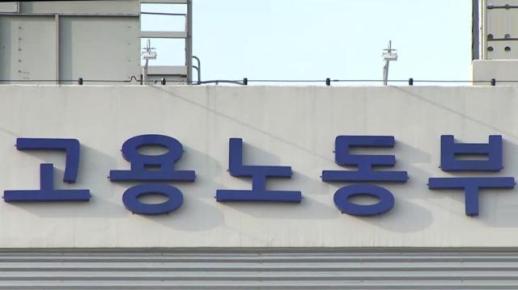 South Korea Launches 19.6 Billion Won Program to Build Local Social Economy Ecosystems The government is launching a large-scale support program with local governments to foster social enterprises as key players in solving regional problems, including youth employment and gaps in care services. A total of 19.6 billion won will be invested this year. The Ministry of Employment and Labor announced the plan at a launch ceremony for the “Social Solidarity Economy Local Ecosystem Revitalization Project” held Thursday morning at COEX Magok in Seoul. The project shifts away from simple, stand-alone support for individual social enterprises. Instead, it aims to build a social solidarity economy ecosystem in which social enterprises, local governments and other regional partners work together to address local challenges. The ministry said the goal is to help communities define their own problems and create a foundation to solve them with social enterprises and other actors. This year’s program will focus on two areas: labor integration and integrated care. Local governments will identify core tasks suited to local conditions, and social solidarity economy companies will participate in building tailored solutions. The ministry said it expects the effort to help social enterprises take root more stably in their communities while advancing both problem-solving and sustainable growth. In January, the ministry opened a call for proposals for non-capital regions. It selected 11 local governments as suitable models: North Gyeongsang Province, Daegu, Gwangju, North Chungcheong Province, Ulsan, Jeju, North Jeolla Province, South Gyeongsang Province, Busan, South Chungcheong Province and South Jeolla Province. A total of 19.6 billion won will be投入 to address community problems, including 13.7 billion won in national funding and 5.9 billion won from local governments. At the ceremony, Daegu, North Gyeongsang Province and Gwangju presented representative project models. Daegu plans a model to support re-entry into the labor market for at-risk youth and young people vulnerable to unemployment, along with building a transitional home and community-based care system for patients after hospital discharge. North Gyeongsang Province will run a model offering industry-specific job adaptation and employment linkage support for young people who graduated from vocational high schools but remain unemployed, and it will operate an integrated neighborhood care program based at senior centers. Gwangju plans to support young people’s entry into society through digital job-based programs and provide tailored care services for people in care blind spots, including unregistered children. Kwon Jin-ho, director general for Integrated Employment Policy at the ministry, said social solidarity economy companies are “key players” in solving community problems based on expertise and innovation built up in the field. He said the ministry will actively support efforts to create an ecosystem in which such companies work with relevant local institutions to solve problems locally and grow together. * This article has been translated by AI. 2026-04-23 10:05:10
 -
 Taiwan Actor Wang Ta-lu Sentenced to 6 Months for Illegal Use of Personal Data Taiwanese actor Wang Ta-lu, once dubbed an “icon of first love,” was sentenced in a first trial to prison for illegally obtaining and using personal information. Taiwan’s Central News Agency and other outlets reported that the New Taipei District Court on Tuesday sentenced Wang and his girlfriend to six months in prison each. Under Taiwan law, the sentence can be commuted by paying a fine. In the same case, Liu Ju-lung, a police official, was sentenced to one year and four months for charges related to false documents. A friend of Wang, identified only by the surname Yu, and a member of an organized crime group were each sentenced to three months in prison. The case stemmed from a military service issue. Prosecutors searched Wang’s home in February 2025, and he was released on bail the same day after paying 150,000 New Taiwan dollars. Authorities said then that Wang had already passed the age limit for deferring service and was scheduled to enlist on March 13, 2025. He later began a one-year alternative service term as planned. In June that year, the investigation widened to a broader draft-broker ring. Prosecutors indicted 28 people, including Wang, saying he paid 3.6 million New Taiwan dollars to Chen Chih-ming, identified as the ringleader, in an attempt to evade service. Prosecutors also said Wang handed over his ID card and national health insurance card so another person could receive hospital treatment in his place, then arranged to have the documents reissued by making it appear they had been lost. Wang’s draft-evasion trial has proceeded separately from Tuesday’s six-month sentence. In court in November 2025, Wang bowed his head and called it a “mistake committed out of ignorance.” Prosecutors sought a one-year prison term on document-related charges. The personal data case involved two tracks. First, prosecutors said Wang sought to look up Chen’s personal information after losing contact with him. They said Wang, through an acquaintance, approached Liu, then a police official, who accessed the police database under a false pretext, retrieved Chen’s personal data and passed it outside. Liu argued in court it was “sent by mistake,” but the court rejected the claim. Second, prosecutors said Wang’s girlfriend claimed she had been swindled out of more than 4 million New Taiwan dollars by a man identified only by the surname Pan during her earlier live-commerce work. Prosecutors said Wang, his girlfriend and Yu created a WeChat chat room in November 2024 to discuss how to recover the money. Investigators said an organized crime figure became involved and obtained and provided personal information — including addresses and phone numbers — for Pan and people around him. During the trial, Wang and his girlfriend denied the charges, saying they did not directly order anyone to retrieve personal data. The court found both guilty of violating the Personal Data Protection Act and sentenced each to six months in prison. Wang’s side said through his lawyer after the ruling that he plans to appeal. Wang debuted as an advertising model in 2008 and became a star with the 2015 film “Our Times.” He visited South Korea in 2019 to promote the release of the film “Fall in Love at First Kiss.”* This article has been translated by AI. 2026-04-23 10:04:03
 -
 SK hynix says memory oversupply fears are overblown; Yongin fab on track SK hynix said Thursday it sees limited risk of a repeat of past memory oversupply, citing a shared focus by customers and suppliers on improving long-term visibility for demand and supply. In a question-and-answer session during its first-quarter earnings conference call, the company said memory demand remains solid and that it expects this year’s investment to rise sharply from last year to prepare future infrastructure and secure key equipment to meet demand. “Specifically, construction of the Yongin cluster fab to secure mid- to long-term production capacity is moving quickly,” the company said. It added that after Phase 1, which is scheduled to be completed early next year, it plans to invest in stages to finish through Phase 6.* This article has been translated by AI. 2026-04-23 10:03:25
 -
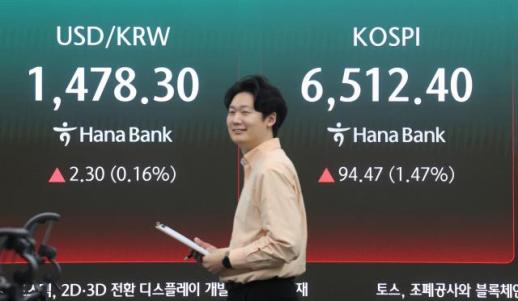 South Korean Won Slips as Oil Prices Rise, Dollar Firms; USD/KRW Near 1,479 The won edged lower against the U.S. dollar. As of 9:50 a.m. on April 23 in Seoul’s foreign exchange market, the won was trading at 1,478.6 per dollar. It opened 2.0 won weaker at 1,478.0. The move was attributed to a firmer dollar amid rising global oil prices. Overnight, crude climbed after reports that Iran’s Islamic Revolutionary Guard Corps seized vessels attempting to pass through the Strait of Hormuz. On April 22 (local time), Brent crude futures for June delivery settled at $101.91 a barrel, up 3.5% from the previous session. U.S. West Texas Intermediate for June delivery ended at $92.96 a barrel, up 3.7%. U.S. stocks rose after U.S. President Donald Trump extended a ceasefire in the Iran war shortly before it was set to expire. The Dow Jones Industrial Average closed up 340.65 points, or 0.69%, at 49,490.03. The S&P 500 gained 73.89 points, or 1.05%, to 7,137.90, and the Nasdaq Composite rose 397.60 points, or 1.64%, to 24,657.57. The S&P 500 and Nasdaq ended at record highs. Min Kyeong-won, an economist at Woori Bank, said the exchange rate is expected to trade around the upper 1,470s, as “dollar strength pressure from higher oil prices remains, while selling near the dollar’s highs offsets it.”* This article has been translated by AI. 2026-04-23 10:01:15
 -
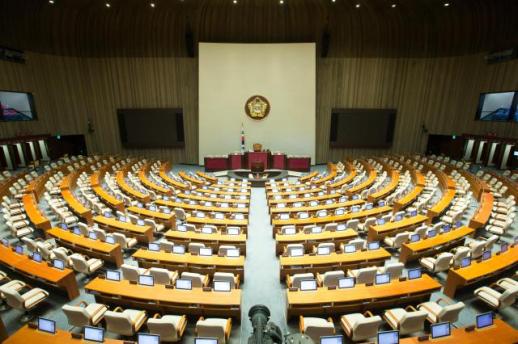 Legal Troubles and Nomination Fights Distort Elections, Editorial Says As elections near, politics should offer voters a plan for the future — how to revive local economies, create jobs for young people, and address structural challenges such as low birthrates and an aging society. Voters go to the polls to choose a better life. Yet campaigns repeatedly veer off course. Policy and vision get pushed aside as nomination disputes, trial schedules, criminal-record controversies and intraparty conflict dominate the headlines, making elections look less like a democratic festival than a contest of legal liabilities. Recently, across both ruling and opposition parties, questions about candidates’ past records, court histories and ethics have surfaced one after another during nomination processes for by-elections and local elections. Party leaders and local organizations have clashed over whether certain figures should run, and protests — including hunger strikes and public criticism — have followed disputes over primary results. For some candidates, legal controversy becomes a campaign-long label. Others make opponents’ legal problems a central line of attack. While the public wants a forward-looking agenda, politics often seems more practiced at relitigating the past. A party nomination is not merely an internal personnel decision. It is a letter of recommendation to the public — a political pledge that a candidate can be trusted with legislative and administrative authority and budget oversight. Parties therefore must scrutinize not only expertise but also respect for the law, ethics and community reputation. If vetting is loosened simply because a candidate seems electable, a party is effectively abandoning its public responsibility. A deeper problem is that the standard applied to the law shifts by political camp. When an ally is investigated, it is called political persecution; when an opponent faces the same, it is framed as justice. A party may excuse its own candidate’s criminal record as a past mistake while treating an opponent’s flaws as disqualifying. Political advantage, not legal principle, comes first. Repeated selective appeals to the rule of law ultimately leave the public trusting neither side. The presumption of innocence must be respected; allegations should not be treated as fact before a trial ends. But that principle does not amount to political immunity. Candidates for public office are held to higher ethical standards than private citizens and have a duty to explain themselves to the public regardless of court outcomes. At the same time, a climate that delivers political death sentences based on suspicion alone should also be avoided. Investigative and judicial authorities also bear responsibility. It is unhealthy that, every election season, the pace of investigations, timing of indictments and court schedules become targets of political interpretation. Law enforcement should proceed only on evidence and procedure. Once agencies are suspected of being swayed by political calendars, their authority and credibility are damaged. The law should be a safeguard for democracy, not a political weapon. Internal party democracy must also function. When candidates join primaries but refuse to accept results — turning to street protests, hunger strikes and public denunciations — it only exhausts voters. Parties that cannot follow their own rules have little credibility when they speak of governing. Factional clashes and principle-free strategic nominations, repeated each cycle, are a major driver of public disgust with politics. Voters, too, weaken politics when they adopt an “anything goes if it’s our side” attitude. Elections are not pep rallies; they are the process of choosing officials with public responsibilities. Competence and vision should be weighed alongside ethics and respect for the law. A vote is not a shield for a faction but the power to shape a community’s future. Elections determine who holds power, but the rule of law is the order that sustains the state. Power can change hands, but the authority of the law must not be shaken. When politics tries to stand above the law, democracy is reduced to a competition for privilege. This election, the contest should be remembered not for legal risk and nomination turmoil but for principles and accountability — starting with the simplest one: no one is above the law. 2026-04-23 10:00:20
 -
 SK hynix: HBM4 to Ship on Customer Timelines as Demand Outstrips Capacity SK hynix said Thursday that high-bandwidth memory, or HBM, is a business where overall competitiveness depends not only on performance such as speed and power efficiency, but also on quality, yield and supply stability. In a question-and-answer session during its first-quarter earnings conference call, the company said it has worked closely with major customers from the early stages on HBM4, building development and supply systems in advance. It said it is preparing to supply products that meet performance requirements in time for each customer’s mass-production schedule. SK hynix said it aims to extend its lead into the next generation, citing competitiveness and customer trust it has maintained since HBM2 in cost, yield and performance. The company said it is strengthening its technology leadership in next-generation products including HBM4. On demand, SK hynix said customer demand over the next three years already far exceeds its supply capacity. The company said it is supplying as much as possible within limited capacity, but both HBM and conventional DRAM supplies remain tight. It said it is continuing to optimize allocation across products, considering balanced growth of the AI industry ecosystem rather than short-term revenue expansion. It added it will keep strengthening market leadership centered on HBM3E and HBM4.* This article has been translated by AI. 2026-04-23 09:57:58