
Journalist

Lee Hugh
=
-
 U.S. Blocks at Least 3 Iranian Tankers in Asian Waters, Raising Maritime Tensions The U.S. military has blocked at least three additional Iranian-flagged oil tankers in Asian waters in recent days, according to reports. Reuters, citing shipping and security sources, reported on April 22 (local time) that U.S. forces detained at least three Iranian-flagged tankers near waters off India, Malaysia and Sri Lanka and directed other vessels operating in the area to change course. Sources and the ship-tracking platform MarineTraffic said one of the intercepted vessels, the Iranian-flagged tanker Deep Sea, was carrying a partial load of crude and was last seen off Malaysia a week earlier. Another Iranian-flagged ship, Sevin, last spotted off Malaysia a month ago, was also among those blocked. It was carrying about 65% of its capacity of up to 1 million barrels. The Iranian-flagged tanker Dorena, fully loaded with 2 million barrels of crude, was reported to have had its movements controlled by U.S. forces after it was confirmed off India’s southern coast three days earlier. U.S. Central Command said on X that Dorena is being escorted by a U.S. Navy destroyer in the Indian Ocean after attempting to violate the blockade measures. CENTCOM also said it has ordered a total of 29 ships to turn back or return to port since it began blocking vessels traveling to and from Iranian ports. Shipping sources said the Iranian-flagged Derya, last seen on April 17 in waters off western India, may also have been blocked. The ship was reported to have failed to unload cargo in India before a U.S. sanctions waiver for purchases of Iranian crude expired on April 19. The United States is conducting what it calls a counter-blockade operation to pressure Iran’s economy in response to Iran’s blockade of the Strait of Hormuz, intercepting ships traveling to and from Iranian ports. The U.S. military previously said it secured an Iranian cargo ship after firing naval guns at it in the Gulf of Oman near the entrance to the Strait of Hormuz on April 19. It also detained additional sanctioned vessels linked to Iran in the U.S. Indo-Pacific Command area of responsibility ahead of a second ceasefire negotiation. After the second ceasefire talks collapsed and President Donald Trump extended the ceasefire, Iran has also stepped up its use of force to block the Strait of Hormuz. Iran’s Islamic Revolutionary Guard Corps said it detained three ships that tried to transit the strait without Iran’s permission.* This article has been translated by AI. 2026-04-23 09:57:17
 -
 SK Hynix says it can build 100 trillion won in net cash while boosting shareholder returns SK Hynix outlined its financial strategy and approach to supply agreements during its 2026 first-quarter earnings conference calls held on April 22 and 23. The company said that given its profit-generating capacity, which it described as having risen to a record-high level, it can pursue both stronger financial health and expanded shareholder returns. It said it aims to secure financial soundness with net cash of more than 100 trillion won while increasing shareholder payouts. SK Hynix said it will actively consider a range of shareholder-return measures, including dividends as well as share buybacks and cancellations, and will prepare a detailed execution plan within the year. It added that it will continue strengthening its financial position so it can sustain long-term, strategic investments under any market conditions. The company also pointed to changes in contract structures amid supply constraints. It said prolonged memory supply shortages have led to a sharp increase in customer requests to secure mid- to long-term volumes. It said it is reviewing long-term supply agreements, or LTAs, with more varied structures than in the past, but current supply limits make it difficult to meet all customer demand. SK Hynix said that if LTAs become firmly established, demand visibility would improve and investment efficiency based on profitability would also strengthen. It added that such agreements could help ease the memory industry’s recurring volatility and serve as a catalyst to lift market assessments to the next level.* This article has been translated by AI. 2026-04-23 09:55:39
 -
 PPP’s Jang says probe backfired on Lee, exposing North Korea cash claims and Daejang-dong case Jang Dong-hyeok, leader of the People Power Party, said April 23 that hearings by a National Assembly special committee investigating alleged “fabricated prosecutions” had backfired on President Lee Jae-myung. Speaking at a party leadership meeting at the Assembly, Jang said the hearings had brought to light what he called the substance of allegations involving Lee, including claims tied to sending money to North Korea and the Daejang-dong case. Jang accused Democratic Party lawmakers of trying to force testimony, saying they labeled statements as perjury when they did not get the answers they wanted, shouted over witnesses and cut them off. He added that, in their view, a hearing was “successful” when Democrats shouted and interrupted. He also criticized calls for a special counsel, saying it would mean turning a defendant’s case over to a special prosecutor appointed by the defendant, Lee. Jang called it a “self-appointed special counsel” aimed at canceling the prosecution. Jang said Kim Yong, described as a close aide to the president, had been sentenced to five years in prison through the second trial on bribery charges and was pressuring the Democratic Party over nominations. He also criticized Jeon Jae-su, the Democratic Party’s candidate for mayor of Busan, alleging he took bribes tied to the Unification Church, and said it reflected arrogance that winning office would allow him to hold out like Lee. Jang further said the Organization for Economic Cooperation and Development had issued what he called a warning to the Lee administration over “destruction of the judiciary.” He said the government was courting international embarrassment to keep Lee out of prison, and asked whether the Democratic Party would now claim the OECD was siding with prosecutors. He said the public was tired of trying to stop the Democratic Party and told it to do as it pleased, warning that “the people’s judgment” would lead to Lee’s trial resuming and Democratic Party lawmakers holding caucus meetings in a detention center. Jang earlier shared a Facebook post April 22 linking to a report saying an OECD-affiliated anti-corruption body had been confirmed to have sent South Korea a letter requesting that it share a draft bill aimed at abolishing the Supreme Prosecutors’ Office and creating a Major Crimes Investigation Agency.* This article has been translated by AI. 2026-04-23 09:54:52
 -
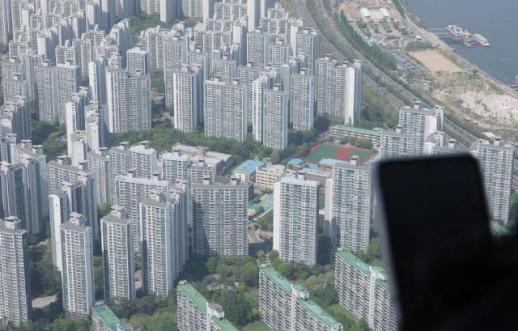 More homeowners in Seoul opt to pass down properties to avoid heavier taxes SEOUL, April 23 (AJP) - More people opted to pass down their apartments, condominiums, and other multi-unit housing properties to family members last month instead of selling them, with such transfers reaching their highest monthly level in over three years and three months. According to Supreme Court registry data, some 1,387 such transactions were made in Seoul last month, up 53.6 percent from 903 the previous month and the highest level since December 2022 when the figure reached 2,384. Seoul's affluent southern district of Gangnam saw the most gifts at 86, followed by nearby Songpa and Nowon in northern Seoul with 82 each, while another upscale district of Seocho had 81. In particular, Nowon stood out among other districts. Many redevelopment projects are planned for the area, which likely prompted some owners there to gift their homes to their children rather than sell now, betting on the area's future value. The increase in such 'living inheritances' appears to be attributed to owners of multiple homes, who are reluctant to sell their properties for fear of heavier taxes amid possible further hikes. Concerns have spread after the government hinted at a series of tougher real estate-related measures in February including heavier taxes on multiple homeowners and there have also been ongoing debates over whether to scrap tax breaks for long-term single-home owners. Amid the government's such efforts to rein in real estate prices, apartment prices in Gangnam have weakened recently, encouraging some owners to transfer their homes to their children to reduce taxes, as gift taxes on housing properties are calculated based on market value at the time of transfer. A shortage of rental homes including housing leases known as "jeonse," in which tenants pay a lump-sum deposit to occupy a home for a certain term, also appeared to be another factor, as some families may be seeking to secure housing for their children's future by transferring homes to them. 2026-04-23 09:54:07
 -
 SK hynix Hits Record High After Q1 Earnings Surprise SK hynix shares rose sharply in intraday trading after the company posted a surprise first-quarter profit on surging demand tied to artificial intelligence chips. According to the Korea Exchange, SK hynix was trading at 1.26 million won as of 9:44 a.m. Thursday, up 3.03% from the previous session. Earlier, it climbed 3.6% to 1.267 million won, setting a fresh record high. The move followed an earnings beat. SK hynix said its first-quarter operating profit on a consolidated basis totaled 37.6103 trillion won, up 405% from a year earlier. Revenue rose 198% to 52.5763 trillion won, well above market expectations. FnGuide’s consensus had projected revenue of 50.1046 trillion won and operating profit of 34.8753 trillion won. The company also surpassed its previous quarterly records set in the fourth quarter of last year, when it posted revenue of 32.8270 trillion won and operating profit of 19.1700 trillion won. Its operating margin reached 72%, up from 58% the prior quarter, marking a record high. The results were driven mainly by a surge in demand for high-bandwidth memory, or HBM, as investment in AI servers expanded. Some analysts said the broader memory chip market is entering a “supercycle” as global big tech companies increase data center spending. Samsung Electronics, another major player in semiconductors, earlier reported preliminary first-quarter results of 133 trillion won in revenue and 57.2 trillion won in operating profit, underscoring strong conditions across South Korea’s chip sector. Samsung shares also touched a record high of 228,000 won early Thursday.* This article has been translated by AI. 2026-04-23 09:51:37
 -
 Chong Kun Dang Health Expands Home Shopping Sales of Lacto-Fit Max 19 Probiotics Chong Kun Dang Health is expanding its reach to consumers through home shopping channels, led by a new premium probiotic product. The company said it has been selling its newly launched probiotic, Lacto-Fit Max 19, on home shopping since earlier this month. It said the broadcasts have helped raise awareness of the product and have continued to draw consumer interest. In South Korea’s health functional food market, home shopping is often used as an early distribution channel for key items such as probiotics and red ginseng, particularly among middle-aged and older consumers. After the broadcasts, attention also turned to the product’s design. The company said some consumers have used terms such as “colon probiotics” and “adhesive probiotics” to emphasize survival through the digestive tract and delivery to the intestines. The company noted those are not official functional names but consumer-coined expressions. Lacto-Fit Max 19 contains 19 probiotic strains, including Bifidobacterium lactis HN019, known as the HN019 strain. The company said HN019 is a widely used strain that has been studied in connection with improving the intestinal environment. South Korea’s Ministry of Food and Drug Safety defines probiotics as a health functional food ingredient recognized for functions such as helping beneficial bacteria grow, suppressing harmful bacteria and supporting smoother bowel movements. The company said the product applies a strain design that considers the intestinal environment from the duodenum to the colon. Compared with its existing product, Lacto-Fit Core Max, it increased the guaranteed bacteria count by about 167% and applied processing technology aimed at improving bacterial survival. It also said it used moisture-absorbing film packaging to reduce losses from humidity and temperature changes and to improve storage stability. The company said the probiotics market has been shifting away from simple competition over bacterial counts toward emphasizing strain variety, survivability and delivery technology. The Korea Health Functional Food Association has said South Korea’s health functional food market has continued to grow, with probiotics and red ginseng among the major categories. Chong Kun Dang Health has operated a range of probiotic products under its Lacto-Fit brand for different age groups. The company said the new product is intended to strengthen its premium lineup and broaden consumer choice. “Even after the broadcast, inquiries about the product’s composition and functionality have continued,” a company official said. “We are seeing a gradual increase in understanding of the product’s features, including its strain design and the environment for colonization.”* This article has been translated by AI. 2026-04-23 09:50:49
 -
 Kia Unveils Vision Meta Turismo at Milan Design Week Kia said Thursday it showcased its “Opposites United” design philosophy and its latest creative direction at the 2026 Milan Design Week, which opened April 20 in Italy. Now in its 64th year, Milan Design Week is a leading global design event spanning architecture, fashion, automobiles and IT, offering a snapshot of cultural and design trends. Kia staged two exhibitions under the theme “resonance of opposing concepts,” pairing an artwork show focused on inward reflection with an EV concept-car display centered on outward projection. The artwork exhibition, “Journey of Reflection,” featured three spaces with direct participation by Kia designers. The “Cultural Pioneer” space used shifting flows of light to symbolize how diverse ideas come together to form and advance a culture. The “Creative Adventurer” space was designed to react and change with visitors’ footsteps, underscoring the value of challenges experienced through bold action. The “Relentless Innovator” space used a calm setting defined by ceiling light and balance to convey that tranquility can be an inner pause before a bigger leap forward. The EV concept-car exhibition, “Journey of Projection,” was held at the Salone dei Tessuti complex cultural venue. Kia presented six EV concept vehicles, including the Vision Meta Turismo, unveiled for the first time on the global stage, and early concept models tied to the development of the EV2, EV3, EV4, EV5 and EV9. First revealed at Kia’s 80th anniversary event late last year, the Vision Meta Turismo features geometric forms and a refined silhouette, which the company said points to its future mobility vision. “‘Resonance of opposing concepts’ is more than an exhibition theme — it is a milestone in our journey,” said Karim Habib, Kia’s vice president in charge of global design. “It reflects our promise to build a better future through curiosity and continuous innovation.”* This article has been translated by AI. 2026-04-23 09:50:06
 -
 BTS’ RM Accused of Smoking and Littering in No-Smoking Areas in Tokyo BTS leader RM (Kim Nam-joon, 31) has been accused of smoking in designated no-smoking areas in Japan and improperly discarding cigarette butts. Japan’s weekly magazine Shukan Bunshun reported on April 22 that RM was seen several times smoking in no-smoking areas while drinking with acquaintances around Tokyo’s Shibuya district. According to the report, RM visited Japan for the “BTS Arirang World Tour” and spent time in Shibuya’s nightlife area, moving between izakayas and bars. The outlet said it captured him leaving a bar and smoking on the street, and published more than 20 related photos. Japan has many areas where smoking is prohibited even outdoors, with designated smoking rooms or smoking spots provided separately. The magazine alleged RM repeatedly smoked not only on the street but also in places marked with no-smoking signs, including building corridors, and threw cigarette butts on the ground. A security guard at the scene was quoted as saying, “He threw the cigarette butt he smoked on the street,” adding that the guard personally warned him. After the report, some fans criticized RM for not following basic rules in public places, saying the issue was not smoking itself but where it occurred. As of now, neither HYBE nor RM has issued an official statement. BTS held two sold-out “Arirang” world tour shows at Tokyo Dome on April 17-18, drawing a total of 110,000 attendees over the two days. 2026-04-23 09:49:33
 -
 NH NongHyup Property & Casualty Invests in Disability Employment Workplace OLMO NH NongHyup Property & Casualty Insurance has invested in a standard workplace for people with disabilities as it moves to strengthen its ESG management. The insurer said Thursday it made an equity investment in OLMO, a standard workplace for people with disabilities, to expand employment and advance social value. OLMO is a culture and arts-focused workplace that hires artists with disabilities and provides professional training and creative space. It operates hubs in areas including Ilsan, Bucheon and Hanam, contributing to job creation for people with disabilities. NH NongHyup Property & Casualty invested in OLMO Incheon. The investment is a shared-growth model combining an equity stake with cooperation in workplace operations. It aims to provide artists with disabilities a stable environment to create and a foundation for professional independence. CEO Song Chun-su said the investment is meant to go beyond providing jobs by building a base that allows artists with disabilities to continue their work. He said the company will continue support to advance social value. NongHyup Federation and its affiliates have been expanding social contribution programs — including support for rural communities, environmental protection, and assistance for people with disabilities and multicultural families — as they strengthen ESG management.* This article has been translated by AI. 2026-04-23 09:46:05
 -
 KOSPI Opens Higher, Breaks Above 6,500 as Samsung Electronics and SK Hynix Rally South Korean stocks opened higher for a fourth straight session. The benchmark KOSPI briefly climbed above 6,500 soon after the open, extending its run of record highs to a third day, led by gains in chip heavyweights Samsung Electronics and SK Hynix. According to the Korea Exchange, the KOSPI was up 121.87 points, or 1.90%, at 6,539.80 as of 9:28 a.m. It opened up 70.90 points, or 1.10%, at 6,488.83 and then added to gains. The index crossed 6,500 around 9:01 a.m. and continued to rise on institutional buying. Han Ji-young, an analyst at Kiwoom Securities, said the market was likely to be supported by fresh record highs in U.S. stocks led by key sectors such as artificial intelligence and semiconductors, along with expectations for first-quarter results from domestic market leaders. She said attention would focus on the direction of semiconductor shares. Overnight, all three major U.S. indexes closed higher. The Dow Jones Industrial Average rose 340.65 points, or 0.69%, to 49,490.03. The S&P 500 gained 73.89 points, or 1.05%, to 7,137.90, and the Nasdaq advanced 397.603 points, or 1.64%, to 24,657.567. Investor sentiment improved after U.S. President Donald Trump said he would extend a ceasefire, citing divisions inside Iran, the report said. In the main market, individuals were net sellers of 781.2 billion won, while foreigners and institutions were net buyers of 233.3 billion won and 594.6 billion won, respectively. Among top market-cap stocks, Samsung Electronics rose 4.60%, SK Hynix gained 3.35%, Hyundai Motor added 0.18%, SK Square climbed 4.86%, Doosan Enerbility advanced 5.35% and Samsung Biologics edged up 0.06%. LG Energy Solution fell 3.72%, Hanwha Aerospace slipped 0.42% and HD Hyundai Heavy Industries dropped 3.90%. Samsung Electronics was trading at 227,750 won as of 9:35 a.m., up 10,250 won, or 4.71%, from the previous session, setting a record high. The tech-heavy KOSDAQ was down 5.30 points, or 0.45%, at 1,175.82 at the same time. It opened up 7.98 points, or 0.68%, at 1,189.10 but turned lower on foreign selling. In the KOSDAQ market, foreigners and institutions were net sellers of 161.8 billion won and 78.4 billion won, while individuals were net buyers of 249.7 billion won. Among top KOSDAQ stocks, EcoPro fell 2.25%, EcoPro BM lost 2.29%, Samchundang Pharm dropped 4.84% and HLB slid 1.32%. Rainbow Robotics rose 2.18%, Lino Industrial gained 3.41% and ABL Bio added 0.93%.* This article has been translated by AI. 2026-04-23 09:42:53