
Journalist

Lee Hugh
=
-
 Tesla Q1 Revenue Misses Estimates; Profit, Free Cash Flow Beat as AI Spending Rises Tesla said first-quarter revenue fell short of market expectations, while operating profit and free cash flow came in stronger than forecast. With its core electric-vehicle business still slowing, the company said it plans to expand investment in artificial intelligence, self-driving technology, robots and semiconductors. In its first-quarter report released Tuesday local time, Tesla posted revenue of $22.39 billion, below the market estimate of $22.6 billion. Operating profit was $941 million, with an operating margin of 4.2%. Free cash flow totaled $1.44 billion, remaining positive. Earlier sales results had disappointed. Tesla delivered 358,023 vehicles in the first quarter, up 6.3% from a year earlier but below Wall Street expectations. Reuters reported that the end of tax incentives and intensifying competition in lower-priced EVs have weighed on demand. After the earnings release, attention shifted to Tesla’s spending plans. The company raised its 2026 capital-expenditure outlook to more than $25 billion and said initial production of its self-driving taxi, the “Cybercab,” will begin this year. As the EV business slows, Tesla pointed to energy storage as a growth driver. Tesla also warned that as large-scale investment centered on AI and robotics accelerates, free cash flow could turn negative again over the remainder of the year. The company is also moving to expand its robotaxi business. It said the service, launched last year in Austin, Texas, has recently been extended to Dallas and Houston, and that it is preparing to expand to five additional cities in Arizona, Florida and Nevada.* This article has been translated by AI. 2026-04-23 09:11:59
 -
 NH Investment & Securities Raises KEPCO E&C Target on Expected Large Nuclear Orders NH Investment & Securities on April 23 raised its target price for KEPCO E&C to 240,000 won from 220,000 won, citing expectations that the company will win more large nuclear power plant orders in the United States and Europe. It maintained its “buy” rating. Analyst Lee Min-jae said investment in large nuclear plants is becoming more visible, led by the United States, and KEPCO E&C is expected to benefit as AP1000-based projects expand. He said that if “Team Korea” participates, the company is likely to secure orders centered on comprehensive design services, strengthening earnings growth momentum. Lee said the key basis for the higher target price was an upward revision to the assumed order price for 10 large U.S. reactors. He added that, within a cooperation structure with Westinghouse, KEPCO E&C is likely to take on stable design work. He also said Europe is showing a clearer move to expand nuclear adoption after geopolitical risks, and that additional order momentum is expected as more countries choose the AP1000. Lee said that if “Team Korea” wins more orders across the Middle East, Europe and South Korea, and projects in additional countries materialize, the company’s order backlog could exceed forecasts. Over the medium to long term, he said, valuation could be reassessed as the nuclear market grows.* This article has been translated by AI. 2026-04-23 09:11:16
 -
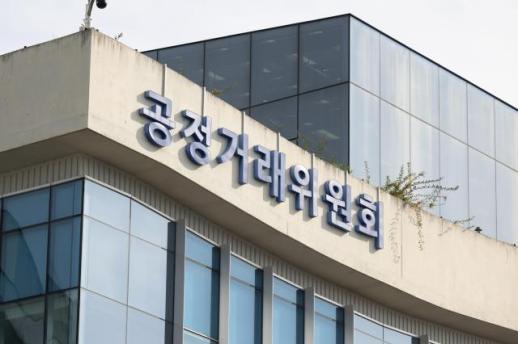 South Korea to Double Fines for Repeat Cartels, Cut Leniency for Self-Reporters The South Korean government said it will toughen penalties for repeat price-fixing, imposing a 100% surcharge increase even for a single repeat offense within 10 years. It also plans to scale back leniency for companies that self-report when collusion recurs within 10 years. The Fair Trade Commission announced the measures on 23 at a meeting of the interagency task force on special management of consumer prices at the Government Complex Seoul. The government said repeated collusion by major businesses, including in sugar, has continued, and that stronger economic sanctions are needed to deter repeat offenders. Under the plan, the FTC will raise the surcharge add-on for repeat violations. Currently, surcharges are increased by 10% to 80% depending on the number of violations over the past five years. The new rule would apply a 100% increase for one repeat offense within 10 years. For self-reporters, the FTC plans to strip immunity or reductions when repeat collusion occurs within five years, and to cut the reduction in half when it occurs within 10 years. The government also plans corrective steps aimed at preventing recurrence, including requiring companies to build and operate internal monitoring systems such as a compliance program and to report price changes to the FTC for a set period. It said it is also considering an "executive removal order" system that would allow the FTC to demand the dismissal or suspension of executives at companies involved in collusion. To make damages claims easier, the government said it will revise litigation rules to expand the current class-action system — which now allows only requests to stop illegal conduct — to include claims for damages from major violations such as collusion. In cartel damages suits, it plans to require the FTC to submit relevant materials when a court requests documents needed to prove illegality or the amount of damages. Market access restrictions would also be tightened for repeat offenders. For industries that require registration or permits under individual laws, the government plans to introduce measures such as canceling registrations or permits or suspending business operations. It said it will expand approaches already used under laws such as the Framework Act on the Construction Industry to major sectors where collusion is frequent. Limits on participation in public procurement would be strengthened as well. The FTC plans to revise the demerit-point system so it must request that the Public Procurement Service restrict repeat offenders from bidding. It also plans to increase restriction periods by six months each for ringleaders and for other participants. An FTC official said the government concluded that sanctions for repeat collusion should be strengthened to the level of pushing offenders out of the market to "completely break the chain" of collusion. The official said the FTC plans to move ahead with the measures this year in consultation with relevant ministries. * This article has been translated by AI. 2026-04-23 09:10:27
 -
 Tata Daewoo Mobility Unveils Hi-Ssen Medium-Duty Truck to Target Urban Logistics Niche 타타대우모빌리티가 중형 상용 트럭 신차를 투입하며 도심형 물류 시장 공략에 나섰다. 대형 모델보다 가격 부담을 낮추면서도 적재 성능과 기동성을 함께 확보해 실수요를 겨냥했다. 타타대우모빌리티는 22일 전북 군산에서 신차 발표회를 열고 중형 트럭 하이쎈을 공개했다. 2024년 선보인 전기 중형 트럭 기쎈에 이어 나온 하이쎈은 시장에서 드문 중형급 모델로, 기존 준중형·대형 라인업이 충분히 포섭하지 못한 ‘틈새 시장’을 겨냥했다. 준중형 트럭 플랫폼을 활용하면서도 5t 규모의 적재 중량을 갖췄다. 임중우 타타대우모빌리티 상품기획팀장(상무)은 “중형 시장에서 보조축 미장착 수요가 전체의 32%에 달한다”며 “중단거리 수송과 도심 작업형 특장차에 적합한 성능과 가격을 구현하는 데 개발 철학을 뒀다”고 말했다. 내연기관 트럭인 하이쎈은 중형 최적화에 초점을 맞춘 전략 모델이다. 회사는 전통적인 대형 트럭 이미지보다 실용성을 강조하며 최고 효율(H), 높은(H) 기동력, 다양한(H) 특장을 내세운 ‘3-HIGH’ 콘셉트를 적용했다고 설명했다. 중형급 대비 325mm 낮춘 컴팩트한 캡을 적용해 도심 운행에 맞췄고, 환경차·냉동탑차·덤프 등 특장차 확장성을 고려한 구조 설계를 반영했다. 하이쎈은 중형급 최초로 LED 헤드램프를 기본 적용했다. 실내는 기쎈의 형태를 계승해 승용차 수준의 환경을 구현했다고 회사는 밝혔다. 전축에는 TLS 서스펜션을 적용해 프레임 강도를 확보하는 동시에 경량화 설계로 주행 안정성과 연비 효율을 높였다고 설명했다. 좁은 도심과 골목길, 특장 작업 환경에서의 기동성도 고려했다. 타타대우모빌리티는 하이쎈 출시로 대형 트럭 ‘맥쎈’, 중형 트럭 ‘구쎈’, 준중형 트럭 ‘더쎈’으로 이어지는 쎈(XEN) 라인업을 구축해 전 세그먼트를 아우르는 체계를 완성했다고 밝혔다. 회사는 차세대 수소내연기관(H₂ICE)과 자율주행 기술 개발도 병행하며 친환경·스마트 모빌리티 기업으로의 전환을 추진하고 있다고 덧붙였다. 이어진 타타대우모빌리티 군산 공장 견학에선 하이쎈과 더쎈 생산을 담당하는 LD숍을 찾았다. 이곳에서는 캡과 샤시 조립부터 최종 품질 검사까지 완성차 생산의 마지막 단계를 수행한다. 시간당 약 1.25대 수준의 생산 능력을 갖췄다. LD 공정은 의장 라인과 샤시 라인을 중심으로 구성되며 총 15개 공정을 통해 차량이 완성된다. 의장 라인과 샤시 라인은 각각 6개 공정으로 이뤄진다. 발표 이후에는 시험 양산 중인 전기 중형차 ‘기쎈’에 대한 질의가 이어졌다. 회사는 기쎈의 양산 준비는 마친 상태라고 설명했지만, 상용 트럭 보조금 정책의 직접적인 영향을 받고 있다고 밝혔다. 김태성 타타대우모빌리티 사장은 “정부와 지자체가 지급하는 보조금이 차량 규격 대비 낮아 생산 금액을 맞추기 어렵다”면서도 “올해 말 생산 라인을 가동해 내년에 판매하고, 현재 무공해차 판정을 받지 못한 수소 내연기차 또한 국제 규격에 맞춰 (정부의) 긍정적인 반응을 이끌어 내겠다”고 말했다.* This article has been translated by AI. 2026-04-23 09:09:25
 -
 Dormitory Cram Schools Gain Traction Among Repeat CSAT Test-Takers in South Korea As more students in South Korea try again for college admission, demand is rising for dormitory-style private academies that combine study support with day-to-day supervision. With repeat preparation requiring long-term focus, analysts say a controlled living-and-learning environment can become a key factor in test scores. According to the Education Ministry and the Korea Institute for Curriculum and Evaluation, graduates have consistently made up about 20% of College Scholastic Ability Test takers in recent years. As competition intensifies and preference for top-tier universities continues, a steady number of students are choosing to repeat the exam or retake it after enrolling elsewhere. In that context, dormitory academies are drawing attention because they can reduce outside distractions compared with commuting programs. They typically restrict smartphone use, enforce regular wake-up and bedtime schedules, and require supervised self-study hours. Megastudy Boarding Academy’s comprehensive campus said it is recruiting additional students to fill openings in its regular program, which begins on the 27th. The program targets students preparing to retake the CSAT and is designed to maintain a consistent study routine alongside structured 생활 management. Admissions experts cite sustainable study routines, a distraction-free setting and systematic oversight as major factors in successful repeat preparation. They say maintaining a steady workload over a long period matters more for score gains than short bursts of performance. In many successful top-tier admissions cases, daily study time and adherence to a routine are cited as key variables. Study management is also shifting away from lecture-only formats toward more individualized support, including analysis of weak subjects, weekly and monthly progress checks, and counseling-based study planning. Some dormitory academies have introduced systems that review students’ study patterns using learning data analysis. Megastudy Boarding Academy’s comprehensive campus said it operates schedules that link regular classes with self-study while running a parallel 생활 management system to improve consistency. It said it focuses on maintaining study rhythm through daily schedule oversight beyond class hours and through counseling programs. To prevent common problems in repeat preparation — including slumps and disrupted daily rhythms — it also runs a management system that combines regular counseling with 생활 checkups. The academy said it applies close supervision that reflects each student’s study situation and psychological condition. An education industry official said, “In repeat preparation, not only study ability but also keeping a consistent daily pattern directly affects scores,” adding, “It is important to reduce the impact of the outside environment and create conditions that allow students to focus on studying.”* This article has been translated by AI. 2026-04-23 09:08:19
 -
 South Korea to Expand LPG Butane Fuel Tax Cut to 25% Starting Next Month The government will expand fuel tax cuts on liquefied petroleum gas (LPG) butane used mainly by lower-income households, anticipating that international LPG price swings tied to the Middle East war will be more fully reflected starting next month. Deputy Prime Minister and Minister of the Ministry of Finance and Economy Koo Yun-cheol announced the plan on the 23rd at a meeting of the interagency task force on special management of cost-of-living prices, releasing a set of measures for items under special monitoring. The government has operated a public suggestion channel since February to gather views on price pressures. It received 117 proposals, with respondents citing food, energy and housing as the biggest burdens, in that order. Reflecting those suggestions, the government said it is implementing steps including tougher penalties for unfair pricing. Starting next month, it will widen fuel tax cuts for LPG expected to rise in price. The tax cut on butane, widely used by lower-income households for small trucks and other vehicles, will increase to 25% from 10%. The government expects savings of 31 won per liter. The cut will run from the first day of next month through June 30. After international oil prices rose following the Middle East war and gasoline prices topped 2,000 won per liter, the government said it has tempered price increases since last month’s 13th by introducing a maximum price system for petroleum products and expanding fuel tax cuts. A fourth maximum price, scheduled to be announced on the 24th, will be set by considering international oil trends along with market impact and the public’s burden, it said. The government also moved to stabilize prices for key food items. It will provide 32 billion won in discounts for agricultural, livestock and fisheries products through June, and will strengthen efforts to curb grocery costs through tariff-rate quotas and import diversification. It will apply tariff-rate quotas to 22 food inputs, including processed egg products, coffee and cocoa beans, and will encourage alternative packaging by easing packaging-material regulations. It plans to wrap up collusion cases involving eggs, flour and starch syrup in the first half of this year. For raw materials and consumer goods with supply concerns, including naphtha and urea and urea solution, the government said it is responding with measures such as bans on hoarding and emergency supply-demand adjustments. Naphtha prices remain elevated compared with levels before the Middle East war, it said. The government has secured 2.1 million tons of naphtha from Oman and Saudi Arabia and will begin bringing it in sequentially from the end of this month. Urea and urea-solution inventories remain relatively stable, but retail prices for vehicle urea solution have edged up, the government said. To address urea shortages at some companies, it will preemptively release public stockpiles and pursue a program to support the price gap for vehicle urea. The government also issued a notice banning hoarding of syringes after finished-product shipment prices jumped 20% due to supply concerns and higher raw material costs. It formed 35 inspection teams to check for hoarding and other violations and to stabilize distribution, it said. Measures were also announced for service items such as private academy fees and telecom bills. Authorities found 2,763 cases of overcharging, including excessive tuition and other fees, and imposed a total of 1.04 billion won in fines. The government said it will create a new penalty to recover unjust gains and raise whistleblower rewards tenfold. Household telecom burdens are easing overall, but some users limit usage due to concerns about extra charges after using up included data or voice minutes, the government said. It will include a bill-protection option in all data plans and provide additional voice and text allowances for those 65 and older. With jet fuel prices surging due to the Middle East war, fuel surcharges on domestic and international routes have risen at South Korean airlines, the government said. To prevent airline difficulties from being passed on to consumers, it will seek to defer financial-improvement measures and also pursue deferrals for airport facility-use fees and slot recoveries. 2026-04-23 09:07:22
 -
 LG Uplus Tops 1 Million USIM Updates and Free Replacements; Replacement Rate at 5.9% LG Uplus said April 23 that the number of USIM updates and replacements provided to all customers has surpassed 1 million. The company has been rolling out USIM updates and free replacements in phases since April 13. From April 13 to 22, it recorded 427,385 USIM updates and 581,094 USIM replacements, for a total of 1,008,479 cases. The cumulative replacement rate stood at 5.9%. LG Uplus said it has combined online guidance through text messages and its U+one app, a reservation-based system and on-site support to reduce customer inconvenience. It is also expanding a “visiting service” for customers who have difficulty going to stores. On-site support is being provided at senior welfare centers in urban areas including Seoul’s Jung and Dobong districts, Busan and Pyeongtaek in Gyeonggi Province. The company said it visited the Boeun County Senior and Disabled Welfare Center in North Chungcheong Province on April 21 and the Nowon Center for the Blind in Seoul on April 22 to help with USIM replacements. LG Uplus said customers eligible for a USIM update can complete the process online, while those who need a replacement can receive service at stores after making a reservation. “We will continue to provide responsible support through online guidance, stores and visiting services so customers can take the necessary steps without inconvenience,” said Lee Jae-won, vice president and head of LG Uplus’ consumer division.* This article has been translated by AI. 2026-04-23 09:06:37
 -
 Naver to auto-disable comments on articles with high toxic content rates SEOUL, April 23 (AJP) - South Korea's dominant internet portal Naver announced it will automatically disable comment sections on news articles where its artificial intelligence moderation system detects an unusually high volume of malicious posts, in the latest effort by the company to clean up its online commentary environment. Starting Thursday, Naver's AI-based detection system will scan articles across all news sections — including politics and elections — and shut down commenting when abuse levels breach a set threshold. The AI detection system Naver introduced in 2019 was the first in the domestic internet industry, continuously upgraded to flag negative expressions such as profanity, sexual, and violent language. The company said a further upgrade to the AI model is planned for later in April. "Naver has been working to make the comments section a space for healthy communication, and we will continue to listen to diverse opinions to respond to rapidly evolving forms of malicious commentary," said Kim Su-hyang, a leader at Naver. The move builds on a restriction Naver imposed last month, suspending comments beneath articles in its politics and election sections ahead of the June local elections. The company has also separately rolled out a "memorial comment" feature since February, allowing users to post condolences with a single click on articles covering disasters, accidents and deaths. About 23 media organizations have adopted the memorial comment function to date, and articles featuring it have drawn about six times more comments relative to page views compared with other articles from the same outlets, Naver said. 2026-04-23 09:03:23
 -
 Column: Koo Kwang-mo’s OLED Bet at LG Display Signals a Strategic Shift Corporate decisions are recorded in numbers, but their meaning is shaped by people. LG Display’s decision to make an additional investment of more than 1 trillion won in OLED infrastructure reflects a strategic call closely associated with LG Group Chairman Koo Kwang-mo. The move is not simply an expansion of facilities, but a statement about what kind of competition LG intends to pursue. For years, the display industry’s winning formula was LCD: make more and sell cheaper. Companies raced to expand capacity, and scale itself was an advantage. That structure did not last. As Chinese firms entered with even larger output, prices fell quickly and the market became a contest of speed and volume. Companies with weaker cost structures struggled, and even the technology built up by South Korean firms proved less decisive when prices collapsed. That left two choices: stay in a price war to the end, or move to a different game. Koo chose the latter. The strategy of scaling back LCD and shifting the center of gravity to OLED was not just a business pivot, but an attempt to change the basis of competition. The more-than-1 trillion won investment underscores that direction. OLED operates under different rules. Where LCD competition centered on how cheaply panels could be produced, OLED competition centers on how reliably they can be made. The process is complex, defect rates can be high, and maintaining consistent quality is difficult. As a result, the key factors become technology, manufacturing capability and relationships with customers, rather than price alone. OLED, too, is likely to face intensifying competition over time, and Chinese rivals have already begun to close in. That makes the question reasonable: Will OLED eventually follow the same path as LCD? The difference, the column argues, lies in speed and structure. LCD was a technology that could be copied quickly. OLED competitiveness depends on accumulated experience and data; having similar equipment does not guarantee the same quality. Customer dynamics also differ. In premium TV and smartphone markets, suppliers are not easily replaced once they are in the supply chain, because quality and stability must be proven. Lower prices alone do not automatically trigger a switch. This so-called lock-in effect means OLED competition is closer to an ecosystem contest than a simple product race. Against that backdrop, the investment invites a familiar question: How is putting more than 1 trillion won into facilities different from the expansion-driven playbook of past conglomerates? The column says the distinction is purpose. Earlier investments aimed to produce more. This investment is framed as maintaining the conditions needed to avoid falling behind — not expanding market share, but protecting the standards of competition. The relationship between equipment and technology is central. Facility spending does not automatically create a technology gap, but without facilities, technology cannot be sustained. In OLED, production itself is a form of learning: the more that is made, the more stable the process becomes, defect rates fall and quality improves. The data and know-how accumulated through that cycle become competitiveness. In that sense, equipment investment is less about creating technology than about building the environment in which it can be maintained. The choice is not without risk. OLED demand is sensitive to economic swings and shifts in consumer appetite. If demand for premium products weakens, the burden of investment grows. Rival advances are another variable. Continuing large-scale investment under those conditions carries clear downside. Still, the column argues Koo’s rationale is straightforward: companies must choose between two risks — falling behind by changing nothing, or failing after choosing change. LG chose the latter, opting for an uncertain technology contest over the more predictable strain of price competition. The approach also reflects Koo’s emphasis since taking office on focus and prioritization: cutting back areas with weaker competitiveness and concentrating resources on fields with future potential. Rather than trying to lead in every category, the strategy is to concentrate on areas where the company can win. The OLED investment extends that strategy and serves as a test. The company must show it can maintain a technology edge, secure a stable customer base and keep improving production efficiency. The investment is an offensive move, but the underlying structure must also function defensively, the column says. The outcome will be decided over time. At this stage, the column concludes, it is not possible to declare success or predict failure. But it argues that choosing change is harder than standing still — and that taking the harder path can open new possibilities. Koo’s OLED bet, the column says, is an attempt not merely to expand capacity but to change how the company competes. If it succeeds, it could offer a broader example of where South Korean manufacturing should head.* This article has been translated by AI. 2026-04-23 09:02:30
 -
 Column: KB Financial’s Yang Jong-hee and the debate over tougher rules for CEO renewals The simplest way to judge a financial company is its report card: how much it earned, how much it returned to shareholders and how much its value rose. By that measure, the debate over whether KB Financial Group Chairman Yang Jong-hee should get another term can look settled. KB has posted record results, its shareholder return rate is among the industry’s highest, and its market capitalization has nearly tripled from the roughly 20 trillion won level when he took office. In market terms, that is the case for a “proven manager.” Still, the argument has not ended because finance is not just another private business. Problems at a major bank can spread to companies, households and the broader economy. That is why the sector is judged by two yardsticks: markets focus on results, while policymakers focus on process, including whether risks were properly controlled. The dispute over Yang’s renewal sits at that collision point. One symbol of that clash is the so-called “67% rule,” a proposal to require a special resolution rather than a simple majority to approve a chairman’s renewal. A special resolution requires support from at least two-thirds of shareholders present and attendance by a minimum share of total outstanding stock. On its face, it raises the bar, leading many to assume renewals would become harder. In practice, the dynamic can cut the other way. The higher the voting threshold, the more cautious investors can become. Rather than back an untested alternative, they may concentrate votes on a known quantity. That can narrow choices and give an incumbent CEO a structural advantage. With performance as a clear argument, the incentive to pick a new option can weaken, making the “67% rule” a paradoxical tool. That pattern has already appeared in South Korea’s financial sector. Jin Ok-dong and Lim Jong-ryong won renewals with high approval rates, well above a special-resolution level. Even as rules tightened, outcomes did not change much: votes again clustered around incumbents with verified results. Yang now faces a similar landscape. So why would regulators push stricter standards? The answer lies in past experience. South Korea has seen the risks of chasing performance alone. The early-2000s credit card crisis showed how short-term competition for results can become systemic risk. Card companies expanded credit aggressively and grew quickly, but internal controls and risk management failed to keep pace. The numbers looked strong, but the structure was fragile. Large-scale bad loans followed, and the costs were borne broadly by society. Overseas examples are starker. Lehman Brothers grew on strong profits but collapsed under excessive leverage and risky assets. Wells Fargo posted steady results for years, but later faced a major scandal after practices emerged in which accounts were opened without customer consent. The lesson was that strong performance does not, by itself, validate how a company is run. Those cases help explain regulators’ view: not because KB has caused a problem, but because the goal is to block future risks. In finance, the cost of responding after a crisis is too high, so preventive controls are emphasized. Corporate governance is central to that approach, including who leads the company and how power is checked. Yang’s position is therefore more complex than a simple performance story. He has met the market’s demand for results, but he is also being tested against policy-driven standards. KB’s shareholder base includes a high proportion of foreign investors, a structure that can favor performance-based evaluation. But foreign investors are not a single bloc. Their goals and criteria differ, and voting advisory firms and policy signals can shift sentiment quickly. That is why it is difficult to say, “Good results guarantee renewal.” Ultimately, the issue goes beyond one chairman. It is about who controls financial companies, and by what standards: market judgment, or policy intervention. The answer is not one or the other. In finance, both must operate at the same time. Stability comes when market assessment and institutional checks reinforce each other. The way forward, then, is to connect performance and governance rather than set them against each other. That requires transparency in the selection process, with candidate pools and evaluation standards clearly disclosed. It also requires a board that is independent in practice, not just on paper, and a shared baseline between market expectations and policy signals to avoid distorted decision-making. If those conditions are met, Yang’s renewal could be seen as more than a personnel decision, a case that cleared both performance and governance tests. If not, the debate will persist, and questions about governance will remain regardless of the outcome. The lesson from past crises at home and abroad is clear: performance alone is not enough, but control alone is not an answer, either. Results are a starting point; governance is the verification. Leadership is complete only after passing both. That is the final test facing Yang now: whether he can move beyond market approval and also clear institutional scrutiny. The answer will be read as a signal not only about one renewal, but about the direction of South Korea’s financial sector.* This article has been translated by AI. 2026-04-23 09:01:12