
Journalist

Lee Hugh
=
-
 Asian markets retreat as Trump's extension of ceasefire with Iran casts fresh uncertainty SEOUL, April 22 (AJP) - Asian markets mostly fell on Wednesday morning as lingering uncertainty over the prolonged conflict in the Middle East weighed on investor sentiment, after U.S. President Donald Trump extended a ceasefire with Iran indefinitely. Overnight, all three major U.S. indices closed lower. The S&P 500 fell 0.63 percent to 7,064.01, while the Nasdaq Composite dropped 0.59 percent to 24,259.96 and the Dow Jones Industrial Average declined 0.59 percent to 49,149.38. In Seoul, the benchmark KOSPI earlier broke above the 6,400 level to hit a fresh record high, driven by strong gains in chipmakers and growing expectations of a supercycle, as improving export data reinforced confidence in the sector's earnings outlook. Investor flows showed a clear divergence. Retail investors were heavy buyers with 671.1 billion won ($454.1 million), while foreign investors sold 336.0 billion won and institutions followed with 287.4 billion won, suggesting that the decline was driven by sustained selling from foreign and institutional investors. But underlying sentiment remained relatively resilient, supported by continued optimism around the semiconductor cycle. Energy-related shares also provided selective support, as elevated oil prices fueled expectations of a rebound in battery-related industries. Oil prices, however, edged lower, with both Brent crude and U.S. West Texas Intermediate futures slipping about 0.4 percent, as the extension of the ceasefire eased immediate supply disruption concerns despite lingering geopolitical uncertainty. However, escalating uncertainty surrounding the Middle East conflict has pushed the market into a more volatile phase, with the benchmark index struggling to establish a clear direction after hitting record highs. Large-cap stocks were broadly weaker. Samsung Electronics fell 1.3 percent to 216,250 won, while SK hynix declined 2.0 percent to 1,200,000 won. LG Energy Solution slipped 0.3 percent to 476,500 won. Automakers also traded lower, with Hyundai Motor down 2.8 percent at 531,000 won and Kia falling 1.4 percent to 157,800 won. SK Square dropped 2.9 percent, while Doosan Enerbility declined 2.9 percent. Gains were limited. Samsung Biologics rose 0.2 percent to 1,591,000 won, while Hanwha Aerospace advanced 1.9 percent to 1,417,000 won. The tech-heavy KOSDAQ also moved lower, falling 1.5 percent to 1,160.96 as of 10:30 a.m. Retail investors bought 257.0 billion won worth of shares on the KOSDAQ, while foreign and institutional investors sold 51.7 billion won and 166.8 billion won, respectively. Currency markets showed modest movement. The Korean won traded at 1,477.8 per dollar, up 0.3 percent against the greenback. Elsewhere in Asia, Japan's Nikkei 225 rose 0.2 percent to 59,423.0, while Hong Kong's Hang Seng Index fell 0.9 percent to 26,251.6. China’s Shanghai Composite Index edged down 0.2 percent to 4,075.9. 2026-04-22 11:27:20
 -
 SK Intellix wins two Red Dot Design Awards for 2026 product design SK Intellix has won two top prizes at the Red Dot Design Award 2026, one of the world’s three major design awards, the company said. SK Intellix said it received two Winner awards in the product design category at the Red Dot Design Award 2026 ceremony held in Germany on the 22nd. The Red Dot Design Award is widely regarded as one of the world’s top three design competitions, along with Germany’s iF and the United States’ IDEA. The wins came in both kitchen appliances and robotics. In the kitchen appliance category, the SK Magic TwoWater water purifier was recognized for combining functionality — providing both mineral water and pure water — with a minimalist exterior design. The company said the product had also received the top “Grand Gold” grade at a water-taste evaluation, and the Red Dot award further validated both its technology and design. In the robotics category, the wellness robot NAMUHX A1 won a Winner award. The company said the product combines autonomous air purification with voice conversation, based on agentic AI technology. Its rounded, soft design, inspired by the traditional Korean moon jar, was praised for emphasizing an emotional appeal as a “daily companion,” rather than a conventional appliance. An SK Intellix official said the awards showed global recognition of the company’s design capabilities across both its health platform brand SK Magic and its wellness robotics brand NAMUHX. “We will combine AI technology and design to move forward as a ‘global AI wellness platform’ company,” the official said.* This article has been translated by AI. 2026-04-22 11:20:54
 -
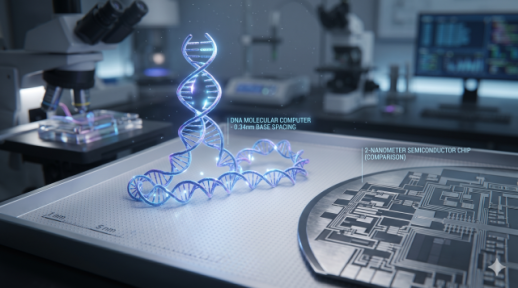 S. Korean researchers develop DNA molecular computer smaller than two nanometer semiconductors SEOUL, April 22 (AJP) - A research team in South Korea has developed a molecular computer using DNA that is smaller than current two-nanometer semiconductors and can perform calculations while simultaneously storing information. Professor Choi Young-jae and his team at the Korea Advanced Institute of Science and Technology created a bio-transistor that operates at a scale of 0.34 nanometers, which corresponds to the distance between DNA bases, the research institute said Wednesday. Existing molecular DNA circuits have previously been used for simple tasks such as detecting the presence of cancer-related substances. However, these circuits were limited because they were consumable and could not be used again after a single reaction. The new bio-memory circuit overcomes this limitation by allowing for continuous information processing. The researchers designed the DNA molecules to change their arrangement by binding or separating based on input signals, and the molecules maintain that state to store the result. As semiconductor manufacturing reaches the two-nanometer level, the industry is approaching the physical limits of silicon-based technology. This has led to increased interest in molecular computing, which uses the natural properties of DNA to process information at a much smaller scale. DNA is a candidate for high-density information processing because its bases are spaced only 0.34 nanometers apart. By using complementary base pairing, researchers can design specific reactions to occur with high precision. The bio-transistor developed by the team allows for real-time calculation without the need for a separate reset process. This mimics the function of traditional silicon transistors, which control and amplify electrical signals to process and store data in modern electronics. Professor Choi Young-jae said, "This research marks a significant step forward in the realization of molecular computers using DNA." He noted that the development could suggest new directions for the fields of bio-computing and medical technology as a whole. The study included Professor Lim Seong-sun and researchers Kim Tae-hun, Jeong Sang-eun, and Kim Si-on from the KAIST Graduate School of Engineering Biology. They collaborated with Kim Woo-jin and Shim Jun-ho from the Gwangju Institute of Science and Technology (GIST). The research findings were published in the international journal Science Advances on April 1, 2026. (Reference Information) Journal/Source: Science Advances Title: Reset-free DNA logic circuits for real-time input processing and memory Link/DOI: https://science.org/doi/10.1126/sciadv.aeb1699 2026-04-22 11:19:52
 -
 Pharos iBio Presents Next-Gen Cancer Drug Data at AACR, Targets Global Market AI-driven drug developer Pharos iBio disclosed new research on next-generation cancer candidates at the American Association for Cancer Research meeting in San Diego, the company said. It said the presentations focused on overcoming drug resistance and expanding combination-therapy strategies, a major trend in global drug development. Pharos iBio said it presented three posters on April 20 (local time) at AACR, highlighting results from its core pipeline programs. The company released combination-study findings for PHI-101, also known as “lasmotinib,” an FLT3 inhibitor in development. The study used five approved or investigational menin inhibitors, including Johnson & Johnson’s “bleximenib” and Syndax’s “revumenib.” Pharos iBio said lasmotinib showed anti-cancer synergy when given in combination. When combined with bleximenib, tumor growth inhibition (TGI) remained at 82% to 89% two weeks after dosing was stopped, it said. The company also introduced PHI-601, a next-generation menin inhibitor, as a new strategy for treating acute myeloid leukemia. PHI-601 is being developed to reduce the menin protein itself through a targeted protein degradation (TPD)-based mechanism, it said. In preclinical research on PHI-501, a BRAF inhibitor, the company said anti-cancer effects improved when combined with immune checkpoint inhibitors. It said it observed potential for the candidate as a combination asset by modulating immune responses. Nam Gi-yeop, head of new drug development at Pharos iBio, said the company would “strengthen competitiveness as a combination-strategy partner in the global oncology market” based on its differentiated R&D capabilities.* This article has been translated by AI. 2026-04-22 11:15:17
 -
 LG Electronics Expands B2B Advanced Materials Business With PuroTec LG Electronics is expanding its B2B business with its functional advanced material, LG PuroTec, aiming to broaden its footprint beyond a home-appliance-centered portfolio into the industrial materials market. The company said it is showcasing LG PuroTec at Chinaplas 2026, an industrial materials exhibition being held in Shanghai for four days starting April 21. Chinaplas is one of the world’s three major industrial materials trade shows, drawing about 4,000 companies from roughly 150 countries. LG Electronics set up its largest booth ever and highlighted applications of PuroTec across industries. The company said use cases now extend from appliances such as washing machines, refrigerators and air conditioners to building materials, functional apparel, hygiene products and food packaging. PuroTec is a powder made by crushing glass blended with functional ingredients. When added in small amounts to plastics, paint or rubber, it provides antibacterial and anti-mold effects that help curb odors, contamination and discoloration caused by microorganisms. LG Electronics said the material is designed for high compatibility, minimizing interference with various base materials and additives, making it suitable for a wide range of industries. The company also operated a dedicated consultation area for B2B customers, offering tailored proposals. LG Electronics said visitors showed strong interest in its ability to maintain existing material properties even in products such as transparent and flame-retardant plastics. LG Electronics is increasing investment in advanced materials as a new growth engine. Since ramping up the business in 2023, revenue has more than doubled each year, the company said. It is also expanding production capacity. LG Electronics operates a facility at its Changwon Smart Park in South Gyeongsang Province with annual capacity of 4,500 tons, and is building a second glass-powder production base in Hai Phong, Vietnam, targeting operations within this year. The company said it has secured about 420 patents related to glass powder and has passed antibacterial-agent regulations needed to enter European and U.S. markets. It is also working with international testing and certification bodies to obtain global certifications for antibacterial performance. Beyond PuroTec, LG Electronics said it is developing additional glass-powder-based materials, including “Marine Glass,” used for marine ecosystem restoration, and “Mineral Wash,” which enables washing without detergent. “Based on functional materials including PuroTec, we will rapidly expand our advanced materials business to meet customer needs across industries,” an LG Electronics official said.* This article has been translated by AI. 2026-04-22 11:09:59
 -
 Trump says Iran doesn’t want to close Strait of Hormuz, hints U.S. blockade will continue U.S. President Donald Trump said Iran does not want to close the Strait of Hormuz, arguing Tehran wants it open to keep earning revenue. In a post Monday on his Truth Social platform, Trump said Iran “wants the Strait of Hormuz open” to make $500 million a day. He said Iran would lose that income if the strait were shut. Trump added that Iran’s claims it wants to close the strait are “only” to save face because he is “completely blockading” it. The remarks were seen as pointing to Iran’s move to reclose the strait a day after saying last week it would reopen it, citing a U.S. maritime blockade. Trump also wrote that “a few days ago” people told him Iran wanted to open the strait immediately, but said no deal with Iran could be reached “unless we destroy the rest of the country, including their leadership.” His comments were interpreted as signaling the United States will keep its maritime blockade and continue counter-blockade measures around the strait. The United States has imposed a maritime blockade since April 13 in response to Iran’s closure of the Strait of Hormuz, blocking all ship traffic to and from Iranian ports. U.S. Central Command said Sunday that 27 vessels had turned back since the blockade began. Trump on Monday also unilaterally declared another extension of a ceasefire with Iran, while saying the maritime blockade and military readiness posture would remain in place. Iran’s state broadcaster said it would not recognize the ceasefire extension, leaving uncertainty over whether the truce will hold and whether talks will resume.* This article has been translated by AI. 2026-04-22 11:09:15
 -
 Film Review: 'Jjanggu' Revives a 'The Wind' Character 16 Years Later "It feels romantic. The lighting, the temperature, the humidity ..." a cast member said on a variety show. The point was that place, weather and even how you feel can add up to a mood. Movies are no different. A viewer’s emotions and experiences can become the yardstick for judging a film. In that spirit, "Choi Family Review" introduces films through the writer’s own perspective, in a more relaxed, everyday tone. <Editor’s note> Some films do not end when the theater lights come up. Lines and expressions linger, replaying in the memories of people who lived through that time. The 2009 film 'The Wind' was one of them. Its box-office numbers did not tell the whole story, but it later gained the label of an "unofficial 10 million" hit through IPTV and VOD, becoming a phenomenon. 'Jjanggu' (directed by Jung Woo and Oh Seong-ho) expands that world and brings back a figure from those memories 16 years later. Rather than leaning only on nostalgia, it looks straight at the harsh reality of youth that can feel stuck in place. After taking off his school uniform and moving to Seoul, Jjanggu does not find a breakthrough but a long, grinding stretch of endurance. The film’s engine is the reality of young people who cannot give up on their dreams, yet must get through today and line up again for tomorrow. In 2010, Jjanggu (played by Jung Woo), a young man from Busan, heads to Seoul on a single hope: to become an actor. He cannot even pay the electric bill and gets by on a bowl of ramen, but in front of friends back home he mixes in Seoul slang and puts on a show of confidence. Living with his younger roommate, Kkangnaengi (Jo Beom-gyu), Jjanggu bounces from audition to audition, where life is not a spotlight but a cycle of rejection and trying again. As with 'The Wind,' Jung Woo’s autobiographical story anchors 'Jjanggu.' The sense of peeking into a page of his youth is reinforced through audition scenes tied to major works that shaped his career, adding a sharper feeling of reality. That is why Jung Woo is often described as the film’s identity. Viewers are positioned like longtime friends watching Jjanggu’s struggle up close, laughing and hurting with him as they sink into his inner life. Jung Woo’s performance does not simply recreate a character; it lays out, plainly, both the brightest and most humiliating parts of his past, forging a strong bond with the audience. Though the story flows around Jung Woo, its energy is completed by the people around Jjanggu. The back-and-forth among Jjanggu, Jjangjae (Shin Seung-ho) and Kkangnaengi is the film’s strongest draw. These are recognizable, everyday characters who add momentum while sharpening the texture of Busan as a place. The film leans on the sense that it is showing real Busan people, not a polished imitation, along with views from around the city. The actors’ raw performances, paired with Busan’s night air, pull viewers quickly into the period’s atmosphere. The handling of female characters, however, leaves room for criticism. Minhee (Jung Soo-jung), who is paired with Jjanggu in a romance, is drawn in a familiar "male fantasy" mold, and the way the relationship unfolds can feel out of step with today’s sensibilities. Because the film is strongest when it focuses on Jjanggu’s pursuit of acting, his day-to-day struggle and his lived-in rhythm with friends, it raises the question of whether more weight there would have helped. Even so, 'Jjanggu' remains funny, bittersweet and, in the end, intense, because the characters’ sincerity is embedded throughout and ultimately persuades the viewer. Echoing a line in the film — "It’s darkest before dawn" — it aims to accompany those moving through their own dark tunnel, offering presence rather than easy comfort. Following behind Jjanggu like someone watching a best friend’s growing pains, viewers may find themselves looking back on their own past seasons. The film opens April 22. Running time is 95 minutes, and it is rated for ages 15 and up.* This article has been translated by AI. 2026-04-22 11:06:53
 -
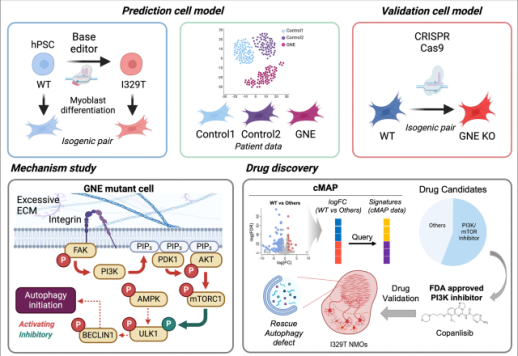 Sookmyung Women's University researchers identify potential treatment for rare muscle disease SEOUL, April 22 (AJP) - A research team led by Professor Kim Ju-mee at Sookmyung Women's University's Division of Pharmacy has identified a new pathological mechanism for GNE myopathy, a rare muscle disorder, and proposed a potential treatment strategy. By analyzing the genetic pathways of the disease, the team discovered that an existing drug approved by the U.S. Food and Drug Administration could be repurposed to restore cellular functions that are impaired by the condition, the university said Wednesday. UDP-GlcNAc 2-epimerase/N-acetylmannosamine kinase (GNE) myopathy is a rare genetic disease caused by mutations in the GNE gene, which leads to a decrease in the synthesis of sialic acid. This deficiency results in progressive muscle weakness throughout the body, and the condition currently lacks a fundamental cure. The research team used human pluripotent stem cell-derived muscle models to conduct a transcriptome analysis. Through this process, they confirmed that dysfunction in autophagy—the body's natural process of cleaning out damaged cells—is a primary driver of the disease's progression. Specifically, the study revealed that an excessive production of the extracellular matrix abnormally activates the PI3K-AKT-mTORC1 signaling pathway. This activation inhibits ULK1, a factor necessary for initiating autophagy, effectively blocking the cell's ability to maintain itself. Using a drug screening technique based on these genetic findings, the researchers identified Copanlisib as a strong candidate for treatment. Copanlisib, which is already an FDA-approved PI3K inhibitor, was found to suppress the abnormal signaling and restore ULK1 activity, thereby normalizing the autophagy process in the diseased cells. These results were further validated using human stem cell-derived neuromuscular organoid models. The study was conducted as a joint effort with a research team led by Professor Cha Hyuk-jin from Seoul National University (SNU). "This research is significant because it goes beyond identifying the fundamental molecular mechanism of the disease to suggest a treatment strategy using an already approved drug," Professor Kim Ju-mee said. "In particular, the use of drug repositioning for rare diseases greatly increases the possibility of clinical application." The findings were published in the April 2026 issue of Experimental & Molecular Medicine, a leading international journal in the field of molecular medicine. ◆Experimental & Molecular Medicine (Impact Factor 12.9, JCR top 4.1%) ◆Title: Defective autophagy in GNE myopathy is rescued by inhibition of noncanonical Akt–mTORC1 activation across multiple isogenic models ◆Link/DOI: https://bit.ly/4cXXoOP 2026-04-22 11:06:03
 -
 Fed Chair Nominee Kevin Warsh Denies Being Trump’s ‘Puppet’ as Independence Concerns Persist Kevin Warsh, President Donald Trump’s pick to lead the Federal Reserve, told senators he is not the president’s “puppet,” but investors remain uneasy as Trump continues to publicly demand interest rate cuts. Warsh said at an April 21 Senate Banking Committee confirmation hearing that Trump had not asked him to promise a rate cut at any specific time. “I have not received such a request, and I would not have made such a promise,” he said. Asked by Republican Sen. John Kennedy whether he would become someone’s “human puppet,” Warsh replied, “Absolutely not.” The Washington Post and AFP reported that Warsh repeatedly called the Fed’s independence in monetary policy “essential.” Trump, however, kept up the pressure. Reuters reported that in a CNBC interview just before the hearing, Trump said he would be disappointed if Warsh did not cut rates soon after Senate confirmation. The AP reported that Trump has continued to argue the current rate level, in the mid-3% range, should be lowered to 1%. Democratic Sen. Elizabeth Warren accused Warsh of being Trump’s “sock puppet,” citing what she described as Trump’s rhetoric targeting Fed Chair Jerome Powell and an effort to remove Fed Gov. Lisa Cook. With politics appearing to intrude on central bank personnel and policy, concerns have grown that market anxiety could worsen. Warsh also drew criticism for not clearly distancing himself from Trump on several issues. Reuters reported that he avoided direct answers about an investigation involving Powell, the attempt to dismiss Cook and questions related to the 2020 election results. Bloomberg reported that while Warsh pledged independence, he did not directly address the current level of interest rates. Questions have also surfaced about whether Warsh’s policy stance has shifted. AFP described him as a leading inflation-focused hawk during his time as a Fed governor around the 2008 financial crisis. More recently, he has argued that artificial intelligence could lift productivity, a view that can support lower rates. Warsh’s finances have become another flashpoint. The Washington Post and AP reported he holds more than $100 million in assets and did not fully detail some private equity and unlisted investments, drawing sharp questioning at the hearing. Warsh said he would divest within 90 days if confirmed, but Warren said the disclosures still make it difficult to assess potential conflicts of interest. The confirmation timeline remains uncertain. Reuters and the Washington Post reported that Republican Sen. Thom Tillis has maintained he will block any Fed nominations until the matter involving Powell is resolved. Powell’s term as chair ends on May 15, but if confirmation is delayed, debate could intensify over a leadership gap. The article also noted that even if Powell steps down as chair, he can keep his remaining term as a Fed governor through January 2028, adding to the uncertainty.* This article has been translated by AI. 2026-04-22 11:05:39
 -
 Korean Air First-Class Seat Complaint Highlights Gap Between Price and Comfort Comedian-turned-dentist Kim Young-sam’s complaint about a first-class seat has renewed attention on how passengers judge premium airline products — and how expectations can differ from what travelers feel in the cabin. Kim wrote on social media on the 21st, posting a photo from a flight to the United States: “How am I supposed to go all the way to the U.S. in a place this cramped? Even my high school study room was bigger.” He added, “Korean Air first class!” and “Burning miles!” Passengers can voice dissatisfaction with a service they used, regardless of ticket price or cabin class. On long-haul routes, first class is marketed as more than a seat, with customers expecting rest and a more private space. A traveler’s sense of tightness — or a gap between expectation and reality — can be a personal experience. According to Korean Air’s website, the Boeing 777-300ER Kosmo Suites 2.0 first-class seat has a pitch of 211 centimeters, a bed length of 203 centimeters and a width of 61 centimeters. The A380-800 first-class seat is listed with a 211-centimeter pitch, a 201-centimeter bed length and a 67-centimeter width. On paper, those measurements are far larger than economy seating. Some criticism of certain Korean Air first-class products has surfaced in reviews. One Mile at a Time, an airline review outlet, said Korean Air’s A380 first class “feels dated,” citing shortcomings such as the entertainment system. The review said the A380 product is less competitive compared with newer global first-class offerings. Another review of Korean Air’s 747-8 Kosmo Suites 2.0 described the seat as “spacious and private” overall, while noting a width of about 24 inches. That is wide compared with standard seating, but suggests limits when measured against the newest first-class suites offered by major airlines. In user comments, complaints often focused less on absolute size than on how the space feels. One Reddit user wrote that Korean Air’s first-class seat was only slightly larger than business class, was not as comfortable as expected, and had a noticeable step in “bed mode.” By specifications alone, Kim’s description of “cramped” appears exaggerated. Still, on long-haul flights, perceived comfort can be shaped by storage space, openness, aisle access, privacy, window-side layout and cabin fixture placement. First-class customers often expect a self-contained space for many hours, not simply a larger chair — and disappointment can follow when the experience falls short. The aircraft type and seat configuration Kim used cannot be confirmed from his post alone. His remarks appear to reflect a clash between premium-service expectations and what a customer feels in practice, rather than a verified defect in a specific seat. Premium cabins are sold as high-value products, differentiated by larger seats, meals, lounges and dedicated service. As a result, customer evaluations can directly affect competitiveness. At the same time, travelers who pay more — or redeem miles for a top-tier seat — often apply stricter standards.* This article has been translated by AI. 2026-04-22 11:04:36