
Journalist

Lee Hugh
=
-
 Seowon Tokeon Upgraded to BBB- Credit Rating on Smart Construction, Safety Push Seowon Tokeon has received a BBB- corporate credit rating from NICE Information Service. The rating sits at the lower end of investment-grade and is typically assigned to companies viewed as having a certain level of financial stability and debt-repayment capacity. Founded in 1991, Seowon Tokeon is a specialty contractor focused on reinforced-concrete work and structural frames for apartment housing. Despite the project-by-project nature of construction orders, the company has built long-term, site-based experience that evaluators said supports stable schedule control and quality assurance. Its relatively steady performance in meeting deadlines and managing safety, key measures in South Korea’s construction industry, also appeared to factor into the assessment. Across the sector, digital transformation has emerged as a priority as companies respond to an aging workforce and persistent safety risks. Seowon Tokeon is pursuing a smart-construction system under its “Vision 2030” plan and formed a Future Strategy task force in January 2026 to verify technology applications at job sites. Industry observers say more mid-sized and smaller builders, with less capacity for large-scale technology investment than major firms, are opting for phased rollouts centered on field deployment. The company has set AI-based safety management and data-driven site operations as key goals, aligning with the Transport Ministry’s push to expand smart construction. The government has been promoting wider use of smart safety equipment and data-based management systems to reduce job-site accidents, and adoption of such technologies is widely seen as likely to become a factor in future competitiveness assessments. Seowon Tokeon is also working with Sungkyunkwan University to develop AI-based safety technology. It is testing systems such as worker-route risk detection and video-based safety monitoring. At the Gwacheon G-town site, a research AI CCTV system has been installed to collect work-environment data, which is being used to refine safety standards and training materials. Use of AI video analytics at construction sites has been increasing, including systems that automatically detect whether workers are wearing protective gear or entering restricted areas. Some large builders have moved beyond pilot programs to broader deployment, and Seowon Tokeon is moving to adopt similar tools. The company’s rating also marks an upgrade. Seowon Tokeon said it rose one notch from the previous year to BBB-. In general, credit upgrades are interpreted as reflecting a combination of improved profitability, a stronger order backlog and a more stable financial structure. Because construction is closely tied to the real estate cycle, evaluators also weigh whether a company has a business base that can withstand shifts in external conditions. The company said preparations for smart construction, along with its construction capabilities, were reflected in the evaluation. It said it plans to continue operations in a way that secures both safety and efficiency, focusing on technologies proven at job sites. Credit-rating industry officials note that while the BBB range is considered investment-grade, it is also viewed as more vulnerable to performance swings during economic downturns. They said maintaining profitability and managing financial stability will be key to any further upgrades. * This article has been translated by AI. 2026-04-22 10:27:29
 -
 Iran’s Leadership Faces Test as U.S. Talks Expose Internal Divisions Iran’s leadership is facing a new test as differences emerge over negotiations with the United States to end the war, according to an analysis. The AP reported Monday that Iran has kept its system running without a power vacuum since the death of Supreme Leader Ayatollah Ali Khamenei, but the coming talks with Washington could expose internal fractures. Khamenei long managed competing power blocs and kept tight, centralized control. Now, with civilian politicians and the Islamic Revolutionary Guard Corps’ military leadership among multiple centers of power, it is unclear who ultimately drives decisions. After Khamenei’s death, his son, Ayatollah Mojtaba Khamenei, was named as a successor, but his role remains uncertain. He has not appeared publicly since reports said he was wounded in an airstrike. In this environment, the Supreme National Security Council is widely seen as the current hub of power. It includes senior civilian and military figures, and Parliament Speaker Mohammad Bagher Qalibaf has taken a leading public role in steering talks with the United States. The council brings together reform-minded President Masoud Pezeshkian alongside hard-line conservatives and military officials, mixing competing interests. Analysts say the layered structure has helped the system endure. Ali Vaez, Iran project director at the International Crisis Group, said, “The leadership was able to survive thanks to overlapping centers of power,” adding that “factionalism is embedded in the DNA of this (Iranian) system.” AP said the same structure could become a source of conflict as negotiations advance. Iranian leaders believe they hold an advantage after blocking the Strait of Hormuz, but U.S. maritime interdiction and economic sanctions are fueling economic damage and anxiety at home. Iran also saw protests late last year calling for the government’s overthrow. In that context, any agreement with the West, including sanctions relief, is expected to be a key factor in maintaining internal control. Vaez said the government may find it more realistic to make concessions to the West for survival than to make concessions to its own people. Recent confusion over the Strait of Hormuz has been cited as a case that exposed internal disagreement. Foreign Minister Abbas Araghchi announced a plan to reopen the waterway, but military authorities later reversed that position, raising questions about policy coordination. Qalibaf has dismissed claims of divisions and said the leadership is maintaining a single line in its negotiating strategy. Still, analysts say the risk of internal splits remains as talks move forward. AP reported that Qalibaf is emerging as a figure who could broker interests among factions. A former IRGC general and former national police chief, he is seen as able to bridge competing camps. He showed a pragmatic streak as Tehran’s mayor and has support not only among conservatives but also among reformist and centrist groups, making him a key player in managing internal differences during negotiations. He has also maintained close ties to the Khamenei family and has strong links to the newly ascendant IRGC leadership. Those connections could help him secure domestic backing across conservative, military, reformist and centrist circles as Iran seeks an agreement with the United States, AP said. 2026-04-22 10:24:28
 -
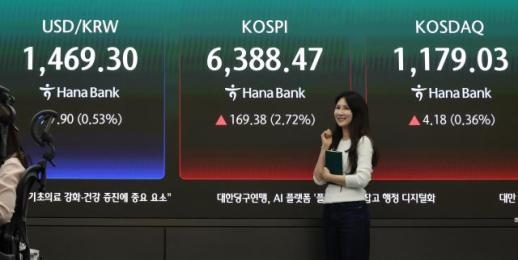 KOSPI hits record high on hopes before Iran announces to skip ceasefire talk SEOUL, April 22 (AJP) - The South Korean stock market opened sharply higher on Wednesday, with the benchmark KOSPI hitting a fresh record, before quickly surrendering gains as geopolitical uncertainty weighed on sentiment. The KOSPI rose to a record 6,401.97 at the open, extending early momentum, but failed to sustain the upward trajectory and slipped to around 6,366.5 in early trading. After climbing at the market open at 9:00 a.m., the index began to pull back around 9:02 a.m., reflecting a swift shift in investor positioning. The market briefly rebounded at around 9:09 a.m., only to turn lower again by 9:13 a.m., highlighting heightened trading session's volatility. The pullback came as investors grew cautious over geopolitical developments, after reports that Iran’s negotiation team had declined to participate in a second round of ceasefire talks with the United States via mediator Pakistan. Market direction was also shaped by diverging investor flows. Retail investors were heavy buyers of 424.4 billion won ($287.4 million), while foreign investors sold 176.1 billion won and institutions offloaded 241.3 billion won, indicating that early gains lacked support from key institutional participants. Large-cap stocks moved broadly lower in line with the market’s retreat. Shares of SK hynix fell 1.4 percent to 1,207,000 won, while Hyundai Motor declined 1.3 percent to 539,000 won. SK Square dropped 2.5 percent to 700,000 won, and Doosan Enerbility slipped 1 percent to 114,600 won. Biopharmaceutical heavyweight Samsung Biologics edged down 0.5 percent to 1,580,000 won, while Kia declined 0.9 percent to 158,600 won. 2026-04-22 10:24:11
 -
 Special Counsel Seizes Yoon Hee-geun Work PC in Probe of Alleged Unification Church Gambling Cover-Up A special counsel team led by Kwon Chang-young has widened its probe into allegations that police covered up suspected overseas gambling by senior figures of the Unification Church, moving its focus up to the top ranks of the police. According to legal officials on April 22, the team secured a work computer previously used by Yoon Hee-geun during searches a day earlier of the National Police Agency, the Gangwon Provincial Police Agency and the Chuncheon Police Station. Yoon was the agency’s deputy commissioner general in June 2022, when police obtained the gambling tip. The special counsel is investigating why police did not open a formal investigation despite receiving information that Unification Church leader Han Hak-ja and other senior officials gambled about 60 billion won from 2008 to 2011 at casinos in Las Vegas. Investigators have also found indications the information was leaked outside the police. The team is looking into whether the case was effectively blunted after the information was passed to political circles. Reports said the probe is also examining alleged involvement by People Power Party lawmaker Kwon Seong-dong. Kwon has been indicted on charges of receiving 100 million won in illegal political funds from the Unification Church. He was sentenced to two years in prison in the first trial, and an appeal is under way. In a separate case, a court partly recognized that Kwon received investigation-related information tied to the Unification Church. Investigators are analyzing data from Yoon’s seized computer to determine whether he was involved in any effort to block the investigation. Although the search warrant reportedly did not specify a suspect, the inquiry is expanding toward senior police leadership. The investigative scope also includes possible links to Jeon Seong-bae, known as "Geonjin Beopsa." After a text message surfaced in which Jeon referred to Yoon’s personnel matter as something "worked on in advance," the special counsel is treating it as a possible clue to motives for personnel or investigative interference. The case was previously handled by a special counsel team known as the Kim Keon-hee special counsel (the Min Joong-ki team) before being transferred to the comprehensive special counsel. That earlier team indicted suspects on charges including instructing destruction of evidence, alleging the Unification Church received investigative information in advance and ordered deletion of accounting records. A court dismissed the indictment, saying it was not within the special counsel law’s scope. After reviewing materials obtained from police, the comprehensive special counsel team plans to summon related figures for questioning in sequence. What began as a gambling allegation is now spreading to police and political circles, and potentially to the top of the police hierarchy. * This article has been translated by AI. 2026-04-22 10:18:45
 -
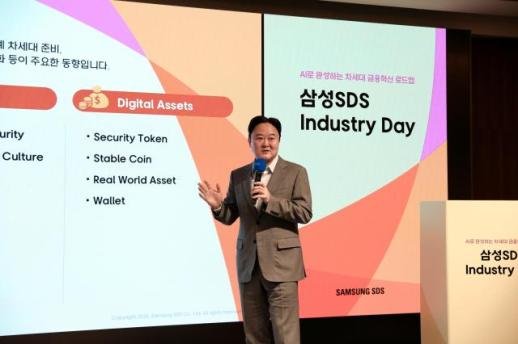 Samsung SDS touts AI coding agents to speed digital transformation in finance Samsung SDS on April 22 outlined a strategy to accelerate digital transformation in the financial sector by applying generative artificial intelligence across IT work, from coding automation to modernizing legacy systems. The company held an “Industry Day” seminar for financial clients, presenting its approach and case studies using generative AI and AI agents. Industry Day is a series that invites customers from key sectors — including finance, the public sector, manufacturing and retail, and defense — to share core solutions and real-world deployments. Samsung SDS said the session was organized as financial firms move faster to adopt AI, and it offered an execution plan aimed at advancing both business automation and IT system upgrades. The company said it has recently won projects including Woori Bank’s “AI agent banking” initiative and a mid- to long-term IT infrastructure optimization program. About 150 IT managers and decision-makers from banks, insurers and securities firms attended the event. In a keynote address, Lee Ji-hwan, head of the financial consulting team and a managing director, presented AI capabilities applicable to finance and described innovation cases, proposing a digital transformation strategy tailored to financial environments. Presentations also covered the next-generation insurance system NFC (NexFinance Core) 2.0, development automation using AI code agents, AI-based modernization of financial code, data platform buildout plans, and a collaboration model using the company’s Global Development Center, or GDC. Samsung SDS highlighted a code modernization case in which it used AI agents to convert a domestic securities firm’s C-language system to Java, positioning the approach as a way to address legacy upgrades that have been delayed by high costs and shortages of specialized staff. The company said its AI agent platform, FabriX, automates such code conversion to support system modernization. It also emphasized its GDC collaboration model, which it said operates about 5,000 personnel across China, Vietnam and India, as a way to ease IT staffing constraints and speed digital transformation. Samsung SDS said it plans to expand the series by industry — including manufacturing and distribution and services — following a public-sector seminar held in March, and to continue sharing AI-driven innovation strategies. “This seminar is a place to share AI innovation directions and execution cases that can be applied across the financial industry,” said Hwang Su-yeong, executive vice president in charge of financial services at Samsung SDS. “We will continue to support the financial industry’s digital transformation based on our technology and experience.”* This article has been translated by AI. 2026-04-22 10:16:39
 -
 USFK commander says THAAD remains on Korean Peninsula, urges caution on wartime control transfer U.S. Forces Korea Commander Gen. Xavier Brunson said the Terminal High Altitude Area Defense system, known as THAAD, remains on the Korean Peninsula, seeking to ease concerns that deterrence against North Korea has weakened after reports that some THAAD assets were moved to the Middle East. According to Reuters, Brunson told a U.S. Senate Armed Services Committee hearing on April 21 local time that "we have not moved any THAAD systems" and that THAAD "is still on the peninsula." He said the military is preparing for a forward movement of munitions and noted that it has previously forward-deployed the radar. Brunson said some equipment has not yet returned, but the THAAD system itself has not been relocated. Brunson also said the process of repositioning equipment at Osan Air Base to prepare for munitions movement contributed to confusion. He indicated the controversy grew after details of certain assets and munitions operations became public, not because a battery was withdrawn. On the transfer of wartime operational control, Brunson reaffirmed a conditions-based approach, saying the decision should be guided by the combined defense posture, operational capability and the security environment rather than political judgment or a set timetable. On the future posture of U.S. forces in South Korea, he said capability matters more than troop numbers, emphasizing what forces can actually be deployed and operated over the size of the force alone.* This article has been translated by AI. 2026-04-22 10:15:54
 -
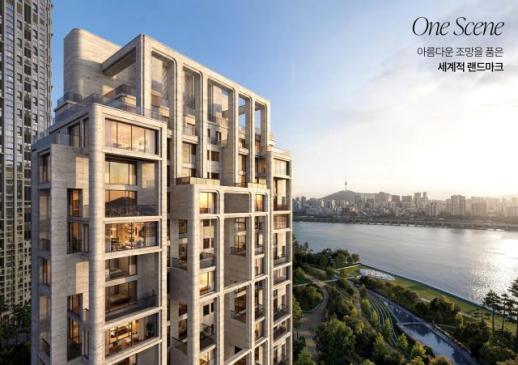 Hyundai E&C Unveils 'ONE City' Plan for Apgujeong District 3 Redevelopment Hyundai Engineering & Construction, selected as the preferred bidder for the Apgujeong District 3 redevelopment project, on 22 unveiled its blueprint dubbed “ONE City.” Apgujeong District 3 is a reconstruction project covering Hyundai Apartments Phases 1-7 and 10, 13 and 14, as well as Daelim Villat. The plan calls for rebuilding 3,934 households into a complex of up to 65 stories with 5,175 households. Under its “OWN THE ONE” vision, Hyundai E&C presented an urban housing model built around five core values: landmark design, community, robotics, landscaping and residential services. Global architecture firms RAMSA and Morphosis are participating in the design. Hyundai E&C said all units would feature terraces and three-sided open windows to secure views of the Han River and the city, along with a 3-meter coffered ceiling to enhance a sense of openness. The community plan centers on “Club Apgujeong,” designed to connect the complex. Walking, exercise, relaxation and cultural functions are arranged to link indoor and outdoor spaces. A circular layout called “The Circle One” combines indoor landscaping, community facilities and mobility options. For future technology, the company plans to introduce an unmanned shuttle based on demand-responsive transport, along with smart parking, contactless delivery robots and safety management systems. Landscaping is designed as a multi-level green structure linked to the Han River, expanding urban green space through courtyards and private gardens. Global landscape designers GPB and Greenwise are taking part, Hyundai E&C said. Residential design includes a customizable “Canvas Unit,” as well as a hotel-style drop-off zone, separated circulation routes and health care services, the company said. An Hyundai E&C official said the plan “presents a new housing model that combines design, technology and residential services based on the value of Apgujeong Hyundai,” adding the company would “continue to strengthen its competitiveness for the project.”* This article has been translated by AI. 2026-04-22 10:13:27
 -
 ‘The Man Who Lives With the King’ Tops 16.6 Million Viewers, Eyes Korean Box Office Record 한국 영화사에 또 하나의 분수령이 세워졌다. 영화 ‘왕과 사는 남자’가 관객 수 1,660만을 돌파하며 역대 한국 영화 2위에 올라섰다. 매출액에서는 사실상 최고 기록을 갈아치웠다. 이 성과는 단순한 흥행 수치를 넘어, 관객이 어떤 가치와 감정에 반응하는지 보여주는 사례로도 읽힌다. 영화 흥행은 이제 오락 소비에 그치지 않는다. 관객이 무엇을 보러 모이고, 무엇에 분노하고 눈물을 흘리는지에는 그 사회의 정서와 기준이 반영된다. ‘왕과 사는 남자’의 흥행은 한국인이 무엇을 그리워하고 무엇을 갈망하는지 비추는 작품으로 평가된다. 영화의 중심은 권력의 승자가 아니라, 패배했지만 정통성을 지닌 인물에 대한 연민과 존중이다. 조선의 어린 왕 단종은 혈통과 명분에서는 왕이었으나 권력에서는 패배한 존재로 그려진다. 반면 숙부 세조는 결단과 정치적 수완으로 권력을 장악한 인물이다. 역사적 사실만 놓고 보면 세조는 성공한 군주로 볼 수 있지만, 영화는 그를 영웅으로 내세우지 않고 관객의 시선을 무너진 단종에게로 돌린다. 기사에서는 이를 한국인의 정서로 설명한다. 단순한 승자보다 ‘정당한 자’에 마음을 두고, 힘으로 얻은 권력보다 도리와 명분을 중시한다는 것이다. 영화는 왕위 찬탈을 정치 사건으로만 다루지 않고, 그것이 인간 관계의 윤리를 어떻게 무너뜨리는지에 초점을 맞춘다. 숙부가 조카를 몰아내고, 왕이 왕을 죽음으로 내모는 과정에서 관객은 권력 투쟁을 넘어 ‘인륜과 천륜의 붕괴’를 목격하게 된다고 글은 전한다. 유교적 가치로는 ‘인의예지신’의 붕괴로 표현된다. 인(사랑), 의(마땅함), 예(질서), 지(판단), 신(신뢰)이 무너질 때 공동체가 흔들린다는 설명이다. 글은 영화가 이 근본 질서가 깨지는 순간을 집요하게 파고들며, 관객이 슬픔과 분노를 동시에 느끼는 지점이 흥행의 핵심이라고 짚었다. 글은 또 다른 흥행작 ‘명량’을 함께 거론한다. ‘명량’은 외세의 침략 앞에서 나라를 지켜낸 이순신 장군의 이야기로, 충과 효, 애민과 애족의 정서를 담았다고 설명한다. ‘왕과 사는 남자’가 내부의 윤리 붕괴를 다룬다면, ‘명량’은 외부의 위협 속에서 공동체를 지켜낸 정신을 그린다는 대비다. 두 영화는 서로 다른 결말처럼 보이지만, 글은 하나의 축으로 연결된다고 본다. 하나는 무너진 도리를 애도하는 비극이고, 다른 하나는 지켜낸 도리를 확인하는 승리다. 공통점은 인간이 지켜야 할 기본 질서, 즉 ‘사람다움’에 대한 이야기라는 것이다. 글은 한국인의 정서가 부당하게 무너진 것에 슬퍼하고, 정당하게 지켜낸 것에 감동하는 두 축 사이에서 형성된다고 덧붙였다. 더 나아가 글은 이 정서가 ‘홍익인간’ 이념과 맞닿아 있다고 설명한다. 인간과 사회, 자연의 조화를 지향하는 철학이며, 하늘·땅·인간이 하나로 이어진다는 ‘천지인’ 관념이 바탕에 흐른다는 해석이다. ‘왕과 사는 남자’의 비극은 그 조화가 깨지는 순간으로, 권력이 도리를 압도하고 관계의 윤리가 붕괴되는 장면이 관객에게 단순한 이야기 이상의 상실감을 준다고 했다. 반대로 ‘명량’은 무너진 질서를 다시 세우는 이야기로 제시된다. 글은 이순신이 개인의 영달이 아니라 백성과 나라를 위해 싸웠고, 그 충과 효, 백성을 향한 마음이 홍익인간 정신의 구현으로 읽힌다고 적었다. ‘왕과 사는 남자’의 마지막은 화려한 결말 대신 자연으로 돌아간다. 영월 청룡포의 강물과 바람, 산과 하늘의 고요 속에서 단종의 최후가 또렷해지고, 권좌는 빼앗겼지만 인간의 도리는 끝내 빼앗기지 않았다는 메시지가 강조된다고 글은 전한다. 글은 그 슬픔이 미움이 아니라 연민으로, 분노가 아니라 성찰로 남는다고 덧붙였다. ‘명량’에서도 전투가 끝난 뒤의 바다를 통해 고요가 그려진다. 글은 이순신이 승리했지만 기뻐하지 않고, 싸움의 목적이 적을 무너뜨리는 것이 아니라 공동체를 지키는 데 있었다고 설명한다. 마지막 장면의 바다는 전쟁이 끝난 뒤에도 인간을 품고, 그 위에 선 이순신은 한 개인이 아니라 충과 효, 사람을 향한 마음을 상징하는 존재로 제시된다고 했다. 글은 두 영화의 결말이 결국 하나로 이어진다고 정리한다. 하나는 무너진 인간다움에 대한 침묵의 애도이고, 다른 하나는 지켜낸 인간다움에 대한 확인이다. 결론은 분명하다. “힘은 사라지지만, 도리는 남는다. 그리고 그 도리를 향한 마음, 그것이 곧 인간이며 역사다.” * This article has been translated by AI. 2026-04-22 10:12:18
 -
 Comedian Kim Mi-ryeo Shares Candid Details of 13-Year Marriage to Jung Sung-yoon Comedian Kim Mi-ryeo has shared details of her 13-year marriage to actor Jung Sung-yoon. On the 21st, the YouTube channel “Rolling Thunder” posted an episode of “New Woman” titled “Spicy talk from strong women who failed to keep it PG.” In the video, Kim described her husband as “still full of energy,” adding, “I’ve cooled off a bit, but he still seems to like it. Even if I just touch him, he reacts.” She said they sleep in separate rooms but added that intimacy is not limited to the bed, saying he “usually aims for the kitchen,” prompting a startled reaction from Lee Sun-min. Kim also recalled how the couple first met. She said they greeted each other by chance at a radio show retreat and then spent about six months in an undefined stage of getting to know each other. “At some point, his eyes changed,” she said, adding that they had no physical contact during that period. She said there was a gathering on Dec. 23 when Jung offered to take her home and kissed her in front of her house, which she described as the moment they effectively began dating. She added that they met again the next day, Christmas Eve, for a party at her home, and joked that “everything we’d held back for six months” came out that night. Kim and Jung married in 2013 after about two years of dating. They had their first daughter a year later and their second child, a son, in 2018, and live as a family of four. The article said Jung, who had been active as an actor in commercials, dramas and films before marriage, later reduced his work to focus on childcare and housework, while Kim expanded her broadcasting activities. When Lee Kyung-sil asked whether Jung feels stressed about Kim being the family’s main earner, Kim said she regularly reassures him: “You’re the man I love, and because you’re here, I can work this hard and raise our kids healthy.” She said he understands their situation, trusts her and is considerate. “Even if I were born again, I’d want to marry this man,” she said. * This article has been translated by AI. 2026-04-22 10:10:58
 -
 Trade Chief Yeo Calls for Stronger South Korea-Japan Supply Chain Cooperation As the second Trump administration in the United States strengthens trade policy centered on economic security, a call is growing for South Korea and Japan to respond jointly to the reshaping of supply chains for critical minerals and advanced industries. The proposal urges the two countries to identify joint projects using overseas resource development and multilateral cooperation platforms to secure industrial competitiveness amid global supply chain shifts. The Korea Economic Research Institute, affiliated with the Federation of Korean Industries, said the message was shared at the “Korea-Japan New Economic Cooperation Seminar in an Era of Compound Crises,” held on 22 at the Keidanren Kaikan international conference hall with the Keidanren Institute of Policy and Management. Organizers said the seminar was convened to seek new directions for bilateral economic cooperation amid a rapidly changing global economy. Yeo Han-koo, South Korea’s trade minister, said in a keynote speech on “Directions for Korea-Japan Economic and Trade Cooperation” that the two countries face “shared challenges and uncertainty.” With instability in the Middle East continuing and U.S.-China strategic competition intensifying, he said, flexible solidarity is needed among countries that share values and interests. Yeo said supply chain cooperation should be built on the Korea-Japan Supply Chain Partnership Arrangement, including responses to disruptions and joint exploration and investment in critical minerals. He also emphasized cooperation through multilateral platforms such as the Forum for Geo-strategic Resource Cooperation and the International Energy Agency. South Korea and Japan have focused on strengthening cooperation in advanced industries such as semiconductors and stabilizing supply chains for rare earths and other materials. South Korea is pursuing three supply chain laws and a comprehensive rare earths plan, while Japan is conducting domestic rare earth exploration and development under its economic security law. Yeo said the two countries should strengthen mutual stockpiling and swap cooperation for oil and gas to enable rapid joint responses if a supply crisis occurs. He said South Korea has the world’s largest storage infrastructure, while Japan operates surplus volumes beyond domestic demand, creating potential synergies. In March, on the sidelines of the Indo-Pacific Energy Security Ministerial Meeting, Korea Gas Corp. and Japan’s largest LNG company, JERA, signed an agreement on LNG supply and demand cooperation and pledged to pursue measures including LNG swaps. Ahn Sung-bae, vice president of the Korea Institute for International Economic Policy, said the two countries should expand joint projects in third countries, including mining development and infrastructure investment. He said South Korea and Japan already have experience cooperating on resource development projects involving nickel, copper and iron ore. Ahn added that coordination is important because the multilateral Agreement on Critical Minerals could influence future price mechanisms, investment standards and supply chain rules. Ahn said it is urgent for South Korea and Japan to reduce dependence on specific countries for key minerals such as lithium, graphite and rare earths. He said both are exposed to supply chain risks because dependence is high at the refining and processing stages, and called for diversification centered on strategic industries including critical minerals, semiconductors and energy. Kuno Arata, a professor at Asia University, said the top priority is reducing reliance on specific countries in strategic industries such as semiconductors, batteries and critical minerals, and building a system that allows joint responses in a crisis. He called for more practical cooperation mechanisms, including information sharing, joint procurement and production cooperation. Lee Hyuk, South Korea’s ambassador to Japan, said in congratulatory remarks that the establishment of shuttle diplomacy between the two countries’ leaders is driving deeper cooperation across a wide range of areas, including trade and investment, economic security, advanced technology, supply chain stability and the shaping of international rules. He said the key is ensuring those diplomatic gains translate into economic results felt on the ground. * This article has been translated by AI. 2026-04-22 10:10:00