
Journalist

Lee Hugh
=
-
 Yuyu Pharma Launches Prune-Based Probiotic Powder Sticks Yuyu Pharma said Tuesday it has launched “Janganehwaje Prunebiotics,” a probiotic product in powder stick form. The product combines prunes with four types of bifidobacteria and contains 100 million CFU of probiotics per stick, the company said. It is designed to be taken once a day, one stick at a time. Yuyu Pharma said it also includes six additional ingredients intended to support beneficial bacteria growth, including fructooligosaccharides, chicory dietary fiber and butyric acid bacteria. The company said it uses a synbiotic design that combines probiotics and prebiotics, and that the powder-stick format can be an option for consumers who have difficulty taking tablets or capsules. Woo Seung-pyo, head of Yuyu Pharma’s e-commerce division, said the product applies “easy-cut” packaging technology and offers a convenient way to help manage gut health.* This article has been translated by AI. 2026-04-21 17:40:38
 -
 Herbalife Korea Launches Limited-Edition 2026 Family Month Gift Sets Herbalife Korea said Tuesday it has launched a limited run of its “2026 Family Month Gift Set,” aimed at helping customers express appreciation to loved ones ahead of Family Month. The company said the sets reflect seasonal demand as outdoor activity increases in spring, with options focused on energy support, weight management and skin care. The packaging features a bright design intended for gifting. The flagship “Premium Triple Health Drink Gift Set” targets people who want help managing energy in busy daily routines. It includes 10 bottles of the “Triple Health Drink,” made with propolis, royal jelly and agaricus, for convenient energy support. The “NEW 7-Day Challenge Gift Set” includes the meal-replacement “Formula 1 Healthy Meal” in cookies-and-cream flavor, an “Herbal Beverage,” and a LocknLock Classic Mixer Shaker. The company said it is designed for people who prioritize routines such as balanced nutrition and hydration. Herbalife also introduced the “Firming and Moisturizing Inner-Outer Set,” combining inner beauty products and skin care. It includes collagen beauty powder, body lotion and cream, targeting spring demand for moisture and firmness care. Separately, the company is offering a gift box set that can hold “Formula 1 Healthy Meal,” expanding gift options. Jeong Seung-uk, CEO of Herbalife Korea, said Family Month is “an opportunity to share your feelings with the people who matter,” adding that he hopes the sets will help customers share everyday health with loved ones.* This article has been translated by AI. 2026-04-21 17:39:18
 -
 HiteJinro’s Premium Scotch ‘King Charles’ Rolls Out Nationwide at GS25 Convenience Stores HiteJinro’s British premium Scotch whisky brand ‘King Charles,’ which the company imports and distributes, is now available at neighborhood convenience stores. The company confirmed the product’s rollout to GS25 stores nationwide alongside a full package redesign, aiming to capture demand for what it calls “everyday premium whisky” through short-distance shopping channels. According to the liquor industry on the 21st, HiteJinro began selling ‘King Charles Blended Scotch Whisky’ this month at all GS25 locations nationwide. The move significantly expands distribution beyond liquor specialty shops to more than 10,000 convenience stores, widening consumer access. Timed with the convenience-store launch, the brand also refreshed its bottle design to reinforce its identity. To more clearly reflect the brand’s origin story honoring King Charles II—credited with leading a revival of British culture and the arts in the 17th century—the crown logo on the front label was changed to a more upscale, hand-drawn style. A silver-and-white Roman numeral “II” was applied consistently to the front and the cap, with gold accents added across the design. King Charles, for which HiteJinro has handled domestic distribution exclusively since November 2023, is made by blending selected premium malt spirits from Scotland’s Speyside and Highland regions with Lowland grain whisky in what the company describes as an optimal ratio. The product has also received international recognition, winning gold medals at the Global Scotch Whisky Masters in 2023 and 2025, and a gold badge at the International Spirits Challenge in 2024. “People who enjoy drinking at home and want to experience a premium blended whisky at a reasonable price will find it a top choice,” said Kwon Gwang-jo, HiteJinro’s premium area head.* This article has been translated by AI. 2026-04-21 17:38:32
 -
 LG Chem Launches Eutropin EcoPen 48 Growth Hormone Injector to Ease Self-Injection LG Chem said Tuesday it has launched Eutropin EcoPen 48, a replaceable-cartridge injector set for its Eutropin growth hormone, along with the dedicated injection solution, Eutropin Cartridge Injection 48IU. Unlike an all-in-one product, the EcoPen is designed for repeated use by swapping in a dedicated cartridge. Working with Switzerland-based Ypsomed, LG Chem applied a spring-driven, semi-automatic injection system to reduce the force needed to press by hand and make self-injection easier, the company said. The company also used metal materials to improve durability and added functions to set doses based on remaining volume and to check remaining volume in real time. The product uses a 48IU cartridge. LG Chem said it is the highest-capacity growth hormone product launched in South Korea, a feature intended to reduce replacement frequency and improve convenience. Kim Seong-ho, head of LG Chem's Specialty-Care business division, said the company has conducted an observational study of Eutropin in Korean children since 2012. "We will systematically build real-world data and present optimal treatment options," he said.* This article has been translated by AI. 2026-04-21 17:37:51
 -
 Philippine Airlines Limits Carry-On Power Banks to Two Per Passenger Philippine Airlines (PAL) said on the 17th that it is limiting carry-on power banks to two per passenger, in line with the latest guidance from the International Civil Aviation Organization (ICAO). The airline said power banks are prohibited in checked baggage and may not be stored in overhead bins. Passengers must keep them on their person or place them in the seat pocket or under the seat in front of them. PAL set a maximum capacity of 100 watt-hours (Wh) and said the capacity must be clearly shown on the device label for it to be allowed on board. To prevent short circuits, the airline also requires each power bank to be individually packed, such as by covering the terminals or placing it in an accessory case, plastic bag or protective pouch. Charging a power bank itself during a flight is strictly prohibited. Using a power bank to charge electronic devices is allowed, but not while the aircraft is taxiing or during takeoff and landing. 2026-04-21 17:37:23
 -
 Kwangmyung Electric’s Control Shifts to Newly Formed Firm as Delisting Risk Looms ◆Aju Economy Top News ▷-KB Securities said the agentic AI market is expected to grow from $7.5 billion in 2025 to $199.0 billion in 2034, implying 44% average annual growth. -The firm said wider adoption of agentic AI signals a shift beyond conventional generative AI, from training-centered computing to inference-centered computing, which it expects to structurally lift demand for memory semiconductors. -From 2026, inference servers are expected to account for more than half of AI infrastructure, driving a surge in memory demand centered on server DRAM and enterprise SSDs, it said. -As AI evolves into a physical AI stage, including humanoids and autonomous driving, demand for high-performance, low-power memory is expected to jump on the need for real-time data processing, the report said. -KB Securities said memory makers including Samsung Electronics and SK hynix are likely to stand out as key beneficiaries of AI industry growth. ◆Major filings after the close (20th) ▷Hyundai Engineering & Construction selected as preferred bidder for Apgujeong District 3 reconstruction project ▷POSCO Holdings decides to acquire a stake in an Indian mining company worth 160.9 billion won ▷SCM Life Science to be suspended from trading from the 23rd due to a share consolidation ▷Purit decides on new facility investment worth 35.0 billion won ▷ENCell signs a 600 million won contract to manufacture and supply advanced biopharmaceuticals ▷YAS signs a supply contract with a Chinese company for deposition equipment for mass display production ◆Fund flows (as of the 17th, excluding ETFs) ▷Domestic equity funds: -11.3 billion won ▷Overseas equity funds: -32.0 billion won ◆Key events today (21st) ▷Germany: ZEW Economic Sentiment Index ▷United States: Retail sales (March), pending home sales (March)* This article has been translated by AI. 2026-04-21 17:36:48
 -
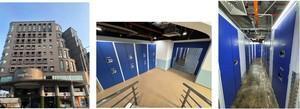 Mitsuuroko Unit Opens New Lock+Store Facility in Kuala Lumpur Mitsuuroko Group Holdings of Japan said on the 20th that its consolidated subsidiary LOCK and STORE Glenmarie (LSGM), which operates a rental storage business in Malaysia, has opened a new facility in Ampang, Kuala Lumpur. It is the brand’s fourth site in the country. The new facility, Lock+Store Ampang, has about 6,000 square feet (about 557 square meters) of net leasable area. The company said it will offer air-conditioned storage units to meet rising demand in the surrounding area. LSGM also operates facilities in Petaling Jaya and the Glenmarie district of Shah Alam in Selangor state, as well as Sri Hartamas in Kuala Lumpur. 2026-04-21 17:35:41
 -
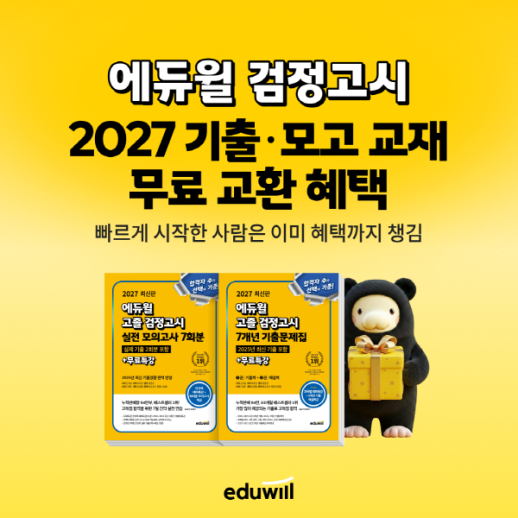 Eduwill Launches Early-Bird Promotion for GED Exam Prep Courses Eduwill said Tuesday it will run a “GED Early-Bird Promotion” through the end of this month for students preparing for the exam over the long term. The company said the promotion is designed to help first-time test-takers choose online lectures and secure the latest study materials at the same time. Customers who buy eligible courses during the period will receive a free exchange benefit for two 2027 new-edition books that include analysis of the latest past exam questions and full-length practice tests. The offer applies to Eduwill’s flagship “GED All Pass” and “Lifetime Pass” courses. Eduwill said the programs provide a step-by-step curriculum, from basic theory to key summaries and past-question analysis. An Eduwill official said passing the GED requires analyzing the latest past questions and building test-day readiness through practice exams. * This article has been translated by AI. 2026-04-21 17:35:00
 -
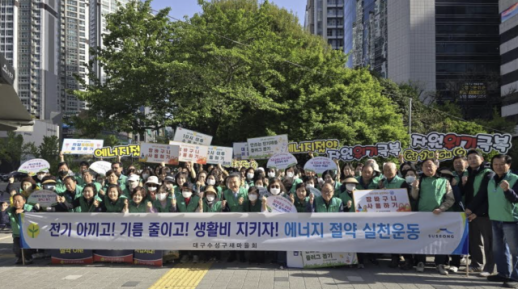 Suseong District Saemaul Association Holds Energy-Saving Campaign in Daegu Daegu’s Suseong District Saemaul Association held an “energy-saving practice campaign” on the 21st near Beomeo Intersection to respond to emergency economic conditions and encourage a culture of conserving energy. Organizers said the campaign was aimed at highlighting the importance of saving energy in daily life and encouraging voluntary participation by residents as difficult conditions persist amid high prices and high fuel costs. About 130 Saemaul members from neighborhood chapters took part, promoting the effort to commuters during the morning rush. Using banners and handouts listing energy-saving guidelines, participants stressed that small daily steps can add up and sought to spread a conservation-minded 분위기 across the community. Saemaul Association President Yoon Jong-hyeon said, “When small actions come together, they can create big change,” adding that he hopes the campaign leads more residents to take part in saving energy. He said the group will continue to pursue practical activities with the local community.* This article has been translated by AI. 2026-04-21 17:34:30
 -
 KOSPI zooms to land on new high, unbothered by Gulf truce deadline SEOUL, April 21 (AJP) — The KOSPI ended as a winner amid broadly positive Asian trade Tuesday, breaking post-war highs on a renewed chip rally ahead of SK hynix’s earnings report later this week. The benchmark KOSPI rose 2.7 percent to close at 6,388.47, a new record closing high, amid a tight tug-of-war between institutional buying and retail profit-taking. Foreign investors led the advance, purchasing a net 1.33 trillion won ($905 million), while institutions added 737.1 billion won. Retail investors sold a net 1.92 trillion won, taking profits into the rally. Gainers outnumbered losers 457 to 410, underscoring the uneven breadth behind the index’s record run. Chipmakers drove the momentum. Samsung Electronics rose 2.1 percent to 219,000 won, while SK hynix climbed 5 percent to 1,224,000 won after briefly touching an intraday high of 1,228,000 won before trimming gains ahead of its Thursday earnings release. Battery-related shares posted outsized gains, with LG Energy Solution surging 11.4 percent to 478,000 won as sector-wide buying intensified. Hyundai Motor also advanced 3.6 percent to 546,000 won, supporting the broader index. By sector, electric equipment jumped 11.8 percent, electronic equipment and devices rose 8.6 percent, and paper and wood products gained 8.1 percent, with secondary battery and lithium-related themes leading momentum. Not all sectors participated in the rally. Samsung Biologics slipped 1.1 percent to 1,588,000 won, while Hanwha Aerospace fell 2.4 percent to 1,391,000 won. Shares of HYBE declined 2.4 percent to 249,000 won after reports that Chairman Bang Si-hyuk faces a potential arrest over alleged misconduct tied to the firm’s IPO, weighing on investor sentiment. The tech-heavy KOSDAQ also closed higher, rising 0.4 percent to 1,179.03, though gains were more modest compared with the main board. Individuals bought a net 500.8 billion won, while foreigners and institutions sold 349.4 billion won and 121 billion won, respectively. Battery-related names led gains on the secondary board, with EcoPro rising 5.2 percent to 163,700 won and EcoPro BM advancing 5 percent to 220,500 won. Among other stocks, Leeno Industrial gained 1.6 percent to 118,500 won, while Rainbow Robotics fell 1.2 percent to 601,000 won. Regional markets were broadly positive. Japan’s Nikkei 225 rose 0.9 percent to 59,345.8, led by semiconductor shares following overnight strength in the Philadelphia Semiconductor Index. Hong Kong’s Hang Seng added 0.4 percent to 26,456.8, while China’s Shanghai Composite edged down 0.03 percent to 4,080.7. The Korean won finished little changed at 1,472.30 per dollar. Market volatility increased, with the CBOE Volatility Index rising 8 percent to 18.87. Oil prices declined as expectations for renewed U.S.-Iran negotiations eased supply concerns. Brent crude fell 0.7 percent to $94.79 per barrel, while West Texas Intermediate dropped 0.9 percent to $86.60. 2026-04-21 17:27:16