
Journalist

Lee Hugh
=
-
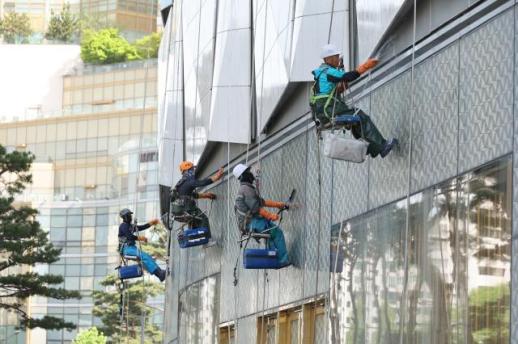 Spring cleaning meets yellow dust SEOUL, April 21 (AJP) -Suspended high above the streets of Seoul, maintenance crews descend glass façades with ropes and squeegees, wiping away a season’s worth of dust and pollution. As fine particulate levels spike, building exteriors—windows, panels, and ledges—require frequent washing, turning the skyline into a vertical cleaning stage. 2026-04-21 17:26:58
 -
 TWICE's Sana shows off summer look ahead of season SEOUL, April 21 (AJP) - TWICE member Sana attended the fashion brand 'Polo Play Bag' pop-up store opening event at Lotte World Mall in Jamsil, Seoul, on Tuesday. She showcased a refreshing summer fashion look in a white dress with a sky blue cardigan worn as a shoulder shawl, accented with a cobalt blue bag. 2026-04-21 17:21:18
 -
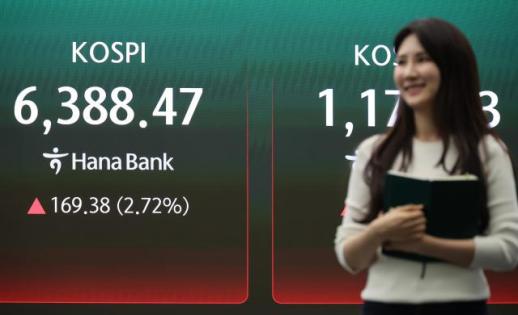 KOSPI hits new high amid hopes for US-Iran talks SEOUL, April 21 (AJP) - South Korea's stock market rebounded on Tuesday, setting a new record after about two months, amid hopes of looming talks between the United States and Iran. The country's benchmark KOSPI surged 2.72 percent to close at a record high of 6,388.47, breaking its previous closing record of 6,307.27 set on Feb. 26, just ahead of U.S.-led airstrikes on Iran that that pushed the already volatile Middle East into further turmoil. The junior KOSDAQ also edged up 0.36 percent to close at 1,179.03. 2026-04-21 17:13:11
 -
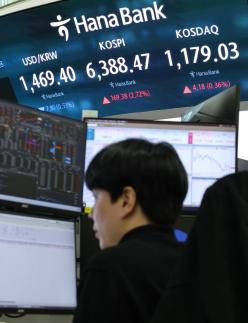 Roller-coaster KOSPI turns into a playground for high-frequency traders SEOUL, April 21 (AJP) — South Korea’s stock market is back on a roller-coaster ride, with sharp swings raising concerns that high-frequency trading (HFT) and weak oversight are amplifying volatility and feeding unfair practices. The KOSPI rally, which had pushed past the 6,000 level, was abruptly halted by the late-February outbreak of war, sending the market into a steep downturn. The index has since rebounded and is again heading toward new highs, underscoring the intensity of recent market swings. Such volatility has drawn in day traders and algorithm-driven players. According to data submitted to the office of Democratic Party lawmaker Kim Seung-won by the financial watchdog earlier this month, more than 2,200 high-frequency trading accounts were registered with the Korea Exchange in February alone. The transaction value from these accounts reached nearly 4,000 trillion won ($2.72 trillion), accounting for approximately 60 percent of total trading value that month. High-frequency trading refers to algorithm-based transactions executed in seconds or milliseconds. While it is credited with providing market liquidity, it is also blamed for amplifying volatility. “Electronic trading platforms can facilitate the growth of HFT firms, with a potential negative impact on the resilience of liquidity,” the International Monetary Fund noted in a recent report. The proportion of HFT in Korea is not unusually high compared with global peers. In the United States, such trading accounts for up to 70 percent of activity on Nasdaq, while Japan’s Nikkei 225 shows a similar level to Korea at 50 to 60 percent. Major European markets also see HFT volumes reaching up to 50 percent. The key difference lies in oversight. In the United States, the Securities and Exchange Commission and Financial Industry Regulatory Authority directly supervise HFT activity. Japan’s Financial Services Agency requires high-speed traders to register directly, a system also adopted in major European markets. In Korea, supervisory authority rests with the exchange itself. Because the Korea Exchange also profits from transaction fees generated by these accounts, critics argue the system is akin to “leaving the fish with the cat.” The Financial Services Commission and Financial Supervisory Service have also faced criticism, as specific regulations governing HFT remain lacking and investigations typically begin only after incidents occur. Meanwhile, suspected cases of unfair trading are on the rise. According to data provided to Rep. Kim by the exchange on Sunday, major domestic brokerage firms issued more than 12,000 regulatory actions against users from January to March this year — the highest level since the fourth quarter of 2021, when excess liquidity fueled a market-wide surge. Among these, 1,299 cases resulted in the most severe sanction — “refusal of entrustment,” or a suspension of trading. On average, about 20 accounts were frozen daily. Most cases involved “spoofing” — placing large orders with no intent to execute — or “wash sales,” in which simultaneous buying and selling creates a false impression of market activity. “It is true that unfair trading tends to be concentrated early in the year when capital flows in,” an official from the Financial Supervisory Service said. “However, the scale and frequency of these cases are unprecedented.” The Korean market has already exhibited significantly higher volatility than other major economies. Following the blockade of the Strait of Hormuz, the Korean stock market plunged about 19 percent over March 3–4, compared with declines of only 3 to 4 percent in Japan’s Nikkei and Taiwan’s TAIEX during the same period. The subsequent recovery was equally sharp. From March 4 to April 20, the KOSPI surged more than 25 percent, while the Nikkei rose about 9 percent. Reflecting this trend, the KOSPI Volatility Index stood at 50.32 as of April 20, more than double its level a year earlier. At the height of the sell-off on March 4, the index spiked to 80. As of Tuesday, the KOSPI closed at a record high of 6,388.47, up 2.72 percent. While the rally has outpaced gains in the Nikkei (0.9 percent) and TAIEX (1.7 percent), the market remains vulnerable to sharper declines in future downturns. 2026-04-21 17:06:53
 -
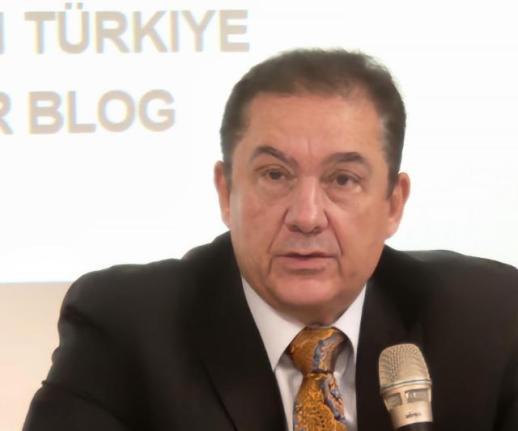 Ankara anchors S. Korean industrial future as Middle East war chokes global supply SEOUL, April 21 (AJP) - The assembly lines in South Korea's southern industrial city of Ulsan and the semiconductor hubs of Gyeonggi, south of Seoul, are facing a systemic threat as a full-scale conflict between Iran, the United States, and Israel has effectively paralyzed the primary energy lanes of the world since the end of February. With the Strait of Hormuz blocked and the flow of Middle Eastern crude to South Korea curtailed, the Embassy of Türkiye in the Republic of Korea convened a strategic press briefing on Tuesday to present a mandatory land-based alternative. The session, led by Ambassador Murat Tamer, Commercial Counsellor Özlem Üntez, and Communications Counsellor Sercan Doğan, detailed a shift toward the "Middle Corridor" as a vital path for Seoul to bypass the current maritime chokehold. Ambassador Tamer framed the crisis as a definitive breaking point for the global order, noting that the disruption in the Persian Gulf has exposed the extreme fragility of the world economy. "Today, the international environment we face is manifesting in ways that transcend traditional concepts of crisis," Tamer said, pointing to the price pressures and supply chain failures that have followed the outbreak of hostilities. He argued that the industrial model of South Korea, which relies on secured maritime access, requires an immediate pivot toward the established energy and logistics network of Türkiye. The briefing focused on the capacity of Ankara to serve as a "security reference point" through its vast pipeline infrastructure. Tamer highlighted the TANAP and TurkStream networks, which handle 30 billion and 31.5 billion cubic meters of gas respectively, as stabilized gateways to Mediterranean and European markets. During a subsequent discussion on the interdependence of the two nations, Tamer observed that any break in the flow of goods would be devastating for both parties. "The miracle of Korea is to find the technology, invent technology, tantalize that technology, and insert that technology in the production line," Tamer said. He warned that "any interruption in this supply chain will hurt Korea, will hurt Turkiye, will hurt world." Commercial Counsellor Özlem Üntez provided the economic architecture for this industrial realignment. "Türkiye has a large and dynamic economy in the region and the global world," Üntez said, noting that GDP growth reached 3.6 percent in 2025. She emphasized that the young population of 86 million and the Customs Union with the European Union provide South Korean firms a duty-free entry point into a market of 450 million consumers. "Thanks to the Customs Union with the EU, we can sell our products without any limitation, any tariff, any barrier to the EU countries," she added. The structural shift includes a push for South Korean foreign direct investment to balance a trade relationship where Seoul holds a significant surplus. In 2025, South Korea exported 9.11 billion dollars to Turkiye while importing only 2 billion dollars in return. Üntez highlighted the potential for deeper cooperation in defense and green energy, noting that the nation is a major "exporter country in terms of unmanned aerial vehicles". A centerpiece of this long-term strategy remains the Sinop nuclear power plant project, which Tamer described as a "100-year partnership" involving KEPCO. Negotiations for the plant, involving 15 years of construction and 80 years of operation, have continued following the visit of President Lee Jae Myung to Ankara in November 2025. Tamer maintained that such projects are essential to "patch our wounds" inflicted by the current war. "This war in the Middle East is going to wound us, it's going to hurt us, but we have to patch our wounds so that those wounds will not leave a permanent scar on ourselves," he said. 2026-04-21 17:04:37
 -
 ‘Wild Thing’ Releases ‘Love Is’ Music Video for Film’s Fictional Co-Ed Group Triangle The film ‘Wild Thing’ has released the track and music video for ‘Love Is,’ the signature song of the fictional co-ed group Triangle featured in the movie. ‘Wild Thing’ is a comedy about Triangle, a three-member co-ed dance group that once dominated the music scene but disbanded overnight after an unexpected incident. The story follows the group as it takes on a reckless challenge to seize a comeback opportunity that arrives 20 years later. ‘Love Is’ is Triangle’s debut and 대표 song in the film, offering an early look at the movie’s tone and the group’s identity. The song was released at noon on the 21st across major South Korean music platforms including Genie, Melon, Flo, Bugs and Vibe, as well as YouTube and global services such as Spotify and Apple Music. It is a dance-pop track that updates the bright, hopeful feel of late-1990s to early-2000s dance music with a polished, modern sound. Composer Shim Eun-ji, known for work including TWICE’s ‘KNOCK KNOCK’ and ‘YES or YES’ and collaborations with SHINee, IU and ITZY, took part in the project. The song pairs an upbeat sound with lyrics about the excitement of love and a catchy chorus, aiming to capture Triangle’s fresh energy. The music video leans into a period look, using a 4:3 aspect ratio, retro framing, a stylized filter and eye-lighting effects to recreate the visual language of older music videos. Restrained camera movement further emphasizes an analog feel. The visual concept assigns each character a distinct accent color against a white background: Hyun-woo in red, Do-mi in green and Sang-gu in blue, matching wardrobe and set tones for a simple, direct impression. The performance is built around a trendy intro with tightly divided beats and easy-to-follow moves choreographed by Yang Uk. The video also highlights Hyun-woo’s b-boying, Sang-gu’s forceful rap and Do-mi’s steady presence, underscoring the group’s on-screen teamwork. After the video’s release, online comments included: “I can’t believe Kang Dong-won is showing such precise dancing,” “Eom Tae-goo shows a completely different side,” “They really captured the vibe of that era,” “The song is better than expected,” and “Why are they taking this so seriously?” Some viewers said the mix of retro and modern elements is boosting immersion in the film. ‘Wild Thing’ is set to meet audiences on June 3.* This article has been translated by AI. 2026-04-21 16:57:54
 -
 Cho Kwang-han Drops Out of PPP Gyeonggi Governor Primary, Backs Lee Seong-bae Cho Kwang-han, a People Power Party supreme council member who had been running for the party’s nomination for Gyeonggi governor, announced Tuesday that he is ending his bid and backing Lee Seong-bae, a former announcer. The move sets up a three-way primary contest among Supreme Council member Yang Hyang-ja, former lawmaker Ham Jin-gyu and Lee. Cho told a news conference at the National Assembly that he would step down as a candidate in the party’s Gyeonggi governor primary. “For the party’s victory alone, I will return to where I need to be,” he said. Cho said he believes Lee will win the primary and “make a miracle” in the general election, adding that he is confident Gyeonggi will “make a leap to a younger province” under a “youth governor.” Cho called Lee “the only candidate who can defeat” Democratic Party candidate Choo Mi-ae. He said he will serve as Lee’s campaign chief. Lee also held a news conference at the National Assembly on Tuesday to formally declare his run for governor. He said he would be a governor who communicates residents’ voices into provincial policy and proposed a “three axes, five priorities” strategy. Lee’s three development axes include: a semiconductor and artificial intelligence cluster centered on Pangyo, Yongin, Icheon, Hwaseong and Pyeongtaek; a SMART automobile cluster centered on Hwaseong, Pyeongtaek, Siheung, Gimpo and Pangyo; and a bio-medical cluster centered on Goyang, Paju, Uijeongbu, Yangju and Namyangju. He listed jobs, housing, education, transportation and culture as five priorities and said he would build living conditions based on a “15-minute living zone” concept. The People Power Party plans to hold two primary debates, then conduct voting over two days starting April 30, before announcing its final nominee on May 2.* This article has been translated by AI. 2026-04-21 16:57:02
 -
 Korea-India summit pivots steel, shipbuilding toward new growth axis amid China pressure SEOUL, April 21 (AJP) - South Korea’s steel and shipbuilding industries, long squeezed by China’s dominance, are turning to India as a new anchor for growth, with Seoul and New Delhi moving to lock in deeper industrial cooperation at the highest level. During the first Korean presidential visit to India in nearly eight years, President Lee Jae Myung and Prime Minister Narendra Modi agreed to elevate bilateral ties into an industry-wide partnership built on joint ventures and strategic coordination. Modi pledged to establish a dedicated “Korea desk” within the Prime Minister’s Office to oversee projects and fast-track execution, while Lee offered a reciprocal mechanism in Seoul to accelerate implementation. Kim Yong-beom, presidential chief of policy, said Modi acknowledged concerns raised by Korean firms over regulatory unpredictability and pledged to meet business leaders directly to address them. The Indian leader identified shipbuilding, artificial intelligence, semiconductors and clean energy as core sectors for cooperation over the next decade, framing the partnership as a combination of “India’s scale with Korea’s speed.” The summit was followed by a Korea-India business forum that drew around 600 corporate leaders, laying groundwork toward a shared goal of expanding bilateral trade to $50 billion by 2030. The shift comes at a critical juncture for Korea’s steel sector, which has faced declining profitability amid intensifying competition from China. Attention is centered on a 10 trillion won ($6.8 billion) joint investment by POSCO Holdings and India’s JSW Steel to build an integrated steel mill in Odisha, with completion targeted for 2031. The project marks POSCO’s renewed push into India after four failed attempts since its initial entry plan in 2004, highlighting both the opportunity and the execution risks in the market. China’s weight in global steel continues to loom large. The country accounted for more than half of global crude steel output in 2025, producing roughly 960 million tons out of 1.8 billion tons worldwide, keeping downward pressure on prices despite a domestic slowdown. The pricing gap is particularly acute in thick steel plates — a key shipbuilding input accounting for 20 to 30 percent of vessel costs — where Chinese products are about 200,000 won per ton cheaper than Korean equivalents. At the same time, external pressures are mounting. The United States has launched a Section 301 probe into structural overcapacity, while existing Section 232 tariffs on steel and autos continue to weigh on exports. Europe has also tightened safeguard measures, cutting duty-free quotas and raising tariffs to shield its domestic industry. Against this backdrop, India is emerging as a rare growth market. Now the world’s second-largest steel producer and consumer, it is seeing demand surge on the back of aggressive infrastructure expansion, with consumption and production both posting double-digit growth. New Delhi is also pushing to scale up shipbuilding under its “Maritime Amrit Kaal Vision 2047,” with plans for new shipyards across multiple states. Tamil Nadu has moved early, courting Korean investment and selecting HD Hyundai as a key partner for a potential new yard. HD Hyundai, through its shipbuilding arm, has already signed a memorandum of understanding with India’s Sagarmala Development Company to explore joint shipyard development, with Thoothukudi emerging as a leading candidate site. The diverging outlook across industries, however, underscores the complexity of the pivot. While steelmakers stand to benefit from rising Indian demand and investment opportunities, shipbuilders face margin pressure from rising plate costs, particularly as anti-dumping measures lift input prices. “Such cost pressures could undermine competitiveness, especially against Chinese shipbuilders that rely on lower-priced domestic steel,” an industry official said, warning of a widening gap between steel producers and shipyards. The Korea-India push, in that sense, is not just a search for growth — but a strategic recalibration as Korean industry navigates between China’s scale, Western trade barriers and the rising promise of India. 2026-04-21 16:57:01
 -
 Hyundai Motor's Q1 earnings to reflect tariff and war costs SEOUL, April 21 (AJP) - Hyundai Motor is expected to post a sharp drop in first-quarter earnings, as rising tariff burdens, war-related disruptions and currency-driven costs squeeze margins despite relatively resilient global demand. According to data compiled by FnGuide, the automaker’s operating profit is forecast at 2.4 trillion to 2.6 trillion won, down 38 to 50 percent from a year earlier. The company is set to report results on Thursday. The downgrade reflects intensifying cost pressures toward the end of the quarter, including higher tariffs, rising raw material prices and increased warranty provisions, which have become more expensive amid a sharp weakening of the Korean won against the U.S. dollar. Eugene Investment & Securities is among the more cautious, projecting operating profit at 2.46 trillion won. Revenue, however, is expected to remain broadly stable at around 45 trillion won, slightly up from 44.4 trillion won a year earlier. The key swing factor lies in the United States, where tariff-related expenses alone are estimated at around 1 trillion won for the quarter, according to DS Investment & Securities. The anticipated earnings miss appears largely cost-driven rather than demand-led. Global wholesale volumes are projected to have declined by about 3 percent year-on-year, suggesting underlying demand has held up relatively well. Regional performance has been mixed. U.S. shipments were broadly flat at around 243,000 units, reflecting steady demand, while Europe recorded an 8 percent decline. The Middle East saw a steeper 30 percent drop following the outbreak of war, highlighting the growing impact of geopolitical shocks on volume. Product mix trends have also diverged. Hybrid vehicle sales rose about 28 percent year-on-year, supporting revenue, while battery electric vehicle volumes fell 7 percent, limiting margin recovery. Brokerages expect earnings to bottom out in the second quarter before rebounding in the second half, supported by new model launches and a more favorable product mix. 2026-04-21 16:52:56
 -
 South Korea Sees Crypto-Related Complaints Surge More Than 1,000%, Regulator Says Crypto-related complaints surged more than 1,000% in a year, driving an overall rise in financial complaints as exchange-related dissatisfaction grew alongside an investment boom. According to the Financial Supervisory Service report, “2025 Trends in Financial Complaints and Financial Counseling,” released on the 21st, crypto-related complaints totaled 4,491 last year, up 1,014.4% from the previous year. The jump was a key factor behind growth in complaints in the financial investment sector. Financial investment complaints rose 65.4% to 14,944 over the same period. Crypto complaints accounted for 30.1% of all financial investment complaints, emerging as a major category. Most crypto complaints involved exchanges, including failure to deliver promised benefits from promotional events and inconvenience using systems and services. The FSS said dissatisfaction built quickly as investor protection systems remained relatively weak. Overall financial complaints also increased. Total complaints last year rose 10.4% to 128,419. By sector, insurance complaints climbed. Nonlife insurance complaints increased 19.6% to 48,281, and life insurance complaints rose 12.0% to 14,656. Disputes over how insurance payouts are calculated and paid, and whether exclusions apply, were cited as key drivers. Banking complaints fell 10.2% to 21,596, but complaints tied to voice phishing jumped more than 125%, reflecting growing inconvenience during responses to financial fraud incidents. The volume of cases handled also rose. Financial complaints processed last year increased 17.0% to 127,809, and the average processing time lengthened by 5.1 days to 46.6 days. The acceptance rate edged up to 41.3%. The acceptance rate for dispute-related complaints rose sharply to 54.7%, which the FSS said strengthened relief for 피해 victims. * This article has been translated by AI. 2026-04-21 16:48:30