
Journalist

Lee Hugh
=
-
 Gijang Anchovy Festival Marks 30th Anniversary at Daebyeon Port April 24-26 Busan’s Gijang County said it will hold the 30th Gijang Anchovy Festival from April 24 to 26 at and around Daebyeon Port in Gijang-eup. County officials said this year’s event, marking the festival’s 30th anniversary, will feature expanded programs for visitors. Gijang’s spring anchovies are known locally for their high calcium content and, during peak season, their higher fat content and tender texture. A free raw-anchovy tasting will run throughout the three-day festival, and visitors will also be able to buy fresh anchovies at relatively low prices during the abundant catch period. Performances and hands-on events are scheduled across the venue. On April 24, Jeong Seo-ju and Cheon Rok-dam will open the festival with congratulatory performances. On April 25, Son Bin-a, Chae Yun and Choi Ji-ye will take the stage. On April 26, Mister Pang, Kim Su-hee and Jang Ha-on will close out the event. After the Gijang Anchovy Song Festival finals on April 26, a “Taegun Singing Contest,” hosted by MC Park-gun and Na Tae-ju, is planned. Family-oriented programs include a fishing-boat ride experience, catching live fish by hand, a “Silver Joy” anchovy-themed performance, and an offshore fireworks show. To ease congestion, the county said it will run a free shuttle bus on April 25 and 26 from 9 a.m. to 5 p.m. between the second parking lot at Gijang Station on the Donghae Line and the Mu-yang Village roundabout. Choi Il-cheon, chairman of the Gijang Anchovy Festival Promotion Committee, said organizers have prepared food and attractions “with more substance than ever,” and invited visitors to share in the festival and make special memories in Gijang during the spring season.* This article has been translated by AI. 2026-04-21 16:27:04
 -
 Acting Jeonbuk Education Superintendent Visits Basic Skills Lead School in Namwon Yoo Jeong-gi, acting superintendent of education for Jeonbuk Special Self-Governing Province, visited Namwon Elementary School on the 21st to review how the province’s “basic skills lead school” program is being carried out in classrooms. The Jeonbuk Office of Education said it expanded the number of basic skills lead schools to 369 this year — about half of all schools — from 99 last year, aiming to prevent learning gaps early and reduce disparities in education. Namwon Elementary, now in its fourth year as a lead school, has built a classroom culture designed to keep all students engaged through a “one classroom, two teachers” model in which a specialist teacher and the homeroom teacher co-teach lessons. The school reported that after three years of operating as a lead school, achievement among students needing learning support improved significantly, including in math. After observing a third-grade co-taught class, Yoo held a meeting with Principal Ahn Jung-man and teachers to hear requests from the field, including the stable placement of specialist teachers and support for running lead schools. “The Namwon Elementary co-teaching model is an excellent example of how classroom-centered accountability in education can be put into practice at schools,” Yoo said. He added that the office would provide administrative and financial support so no student is left behind in learning, including expanding lead schools to 60% of all schools next year. Senior officials hold integrity policy forum, focus on upgrading Jeonbuk-style model The Jeonbuk Special Self-Governing Province Office of Education held a “senior officials integrity policy forum” on the 20th at its headquarters, with Yoo and about 50 executives attending, including heads of education support offices from 14 cities and counties. The office said the forum was held to seek strategies to improve integrity by analyzing areas vulnerable to corruption, based on results from an integrity-level assessment conducted in February. Participants discussed ways to ensure fairness on issues that can hurt public trust, including illegal donations tied to school sports teams and suspected collusion in construction and contracting. They also discussed factors that can undermine internal confidence, such as unfair personnel decisions, authoritarian abuse of power, and distrust in reporting systems. The forum presented action steps to raise integrity, including establishing an everyday culture of integrity, building cooperative networks by corruption-vulnerable area, and expanding a joint integrity governance framework involving the public and private sectors and labor. The office said senior officials’ leadership by example and building a field-centered system for implementation were emphasized as key tasks. It said it plans to use the forum as a starting point to further develop a Jeonbuk-style integrity model for clean education administration.* This article has been translated by AI. 2026-04-21 16:22:19
 -
 Rents Surge in Seoul’s Nowon-Dobong-Gangbuk as 1 Million Won Leases Jump As ultra-high monthly rents expand, prices are also rising sharply in Seoul’s outer districts, according to an analysis of new apartment lease contracts. In the so-called “Nowon-Dobong-Gangbuk” area — long seen as a last affordable option for working-class residents — the share of contracts with monthly rent of 1 million won or more jumped over the past year, adding to concerns that housing costs are reaching a breaking point. An analysis of new monthly-rent contracts for Seoul apartments signed from January through Tuesday, using the Transport Ministry’s public real-transaction price system, found a steep upswing in outer-district rents. In Nowon, Dobong and Gangbuk districts, the shift toward higher monthly rents was pronounced in small- and mid-sized apartments. Of 2,322 new monthly-rent contracts in the area this year, 671 — or 28.9% — were for 1 million won or more a month. A year earlier, 543 of 2,431 contracts, or 22.3%, were at that level, meaning the share rose 6.6 percentage points. Across Seoul, higher monthly rents also became more common. Of 18,733 new monthly-rent apartment contracts this year, 6,020 — 32.1% — were for 1.5 million won or more, up 3.4 percentage points from 28.7% a year earlier. The Korea Real Estate Board said Seoul’s average apartment monthly rent stood at 1.515 million won as of February, up 12.5% from a year earlier. In the market, critics say tighter financial rules are pushing renters into expensive monthly leases. With loan restrictions last year lowering the jeonse loan limit for one-home owners to 200 million won and applying stricter debt service ratio rules, tenants with limited ability to raise large deposits have flowed into the monthly-rent market. A real estate agent in Gangbuk said tenants often cannot cover the gap even after borrowing the maximum for a jeonse deposit, leaving them to look for listings with monthly rent above 1 million won. The agent said monthly-rent deals overtaking jeonse in working-class neighborhoods shows how difficult it has become to hold on in the jeonse market. Supply constraints are also lifting rents, the report said. With all of Seoul designated as a land transaction permit zone, so-called gap investment has been blocked, and tighter owner-occupancy requirements have kept would-be rental units off the market. According to the real estate big-data platform Asil, Seoul had 14,649 apartment monthly-rent listings as of Tuesday, down 31.4% from the start of the year. With fewer listings available, some landlords have increasingly passed tax burdens onto tenants through higher rents. KB Real Estate’s monthly rent price index, which rose gradually through June 2024, has climbed more steeply since last year, reaching 133.99 in March. Nam Hyeok-woo, a researcher at Woori Bank’s real estate research center, said monthly rents remain strong because supply in the rental market is limited and new supply in non-apartment markets has fallen to its lowest level. 2026-04-21 16:21:02
 -
 Ultra-High Monthly Rents Surge in Seoul as Wealthy Rent Instead of Buy Seoul’s average apartment rent has entered the 1.5 million won-a-month range for the first time, and the market for ultra-high monthly rents is expanding quickly this year, led by wealthy tenants. As the tax burden tied to owning expensive homes grows, more affluent households are opting to pay steep rents rather than buy, signaling a shift toward “occupying” prime housing without ownership. According to transaction data from the Ministry of Land, Infrastructure and Transport, Seoul recorded 64 lease contracts with monthly rent of 10 million won or more from the start of this year through April 21, up 16.4% from 55 a year earlier. The move upmarket is becoming clearer. New monthly-rent deals above 10 million won totaled 56, more than 33% higher than the same period last year (42). Contracts above 15 million won reached 23, up 35% from a year earlier. Analysts say rents in the 10 million won range, once largely limited to large units in Seoul’s Gangnam area or ultra-luxury villas, are taking a bigger share as rent levels rise across the city. This year, an Acro Seoul Forest unit (198 square meters) was leased with a 500 million won deposit and 29 million won in monthly rent. Deals in the 20 million won range also continued, including Poses Hannam River (27 million won) and Aper Hannam River (25 million won). Higher-end rents are also spreading beyond the very top of the market. In the broader category of contracts with monthly rent of 2 million won or more, the share has been rising not only in Seoul’s three Gangnam districts — Gangnam, Seocho and Songpa — but also in the “Ma-Yong-Seong” area of Mapo, Yongsan and Seongdong. Of 3,744 new apartment monthly-rent contracts in the three Gangnam districts this year, 1,644 — or 43.9% — were for 2 million won or more, up 4.4 percentage points from 39.5% a year earlier. In Seongdong, 367 of 806 contracts, or 45.5%, were 2 million won or more, higher than the Gangnam-district share. In Yongsan, 239 of 523 contracts, or 45.7%, were in that bracket, up 3.2 percentage points from a year earlier. Mapo’s share was lower at 29.3% — 270 of 921 contracts — but still up from 25.3% last year. Experts attribute the expansion of high-end monthly rents to heavier taxation on multi-homeowners and tighter requirements tied to owner occupancy. With acquisition taxes and comprehensive real estate holding taxes adding to the cost of ownership, they say some wealthy households see it as advantageous to keep liquidity and pay high rent to live in top neighborhoods rather than tie up assets in property. They also point to a clearer “tax pass-through” trend: As holding-tax burdens rise due to higher official assessed values and interest-rate increases, some landlords are converting lump-sum deposit leases into monthly-rent contracts or raising rents to shift costs to tenants. Experts say the rental market is being pushed upward overall, with wealthy tenants choosing ultra-high rents for risk management, while less affluent renters seeking apartments instead of villas run into limited supply and financing constraints and are driven toward higher monthly payments. Park Won-gap, chief real estate expert at KB Kookmin Bank, said perceptions are changing, particularly among active seniors. “For wealthy people, owning a home has become a risk,” he said. “Paying a high monthly rent to maintain housing quality is emerging as a reasonable alternative, and that is expanding the high-end monthly-rent market.” 2026-04-21 16:19:47
 -
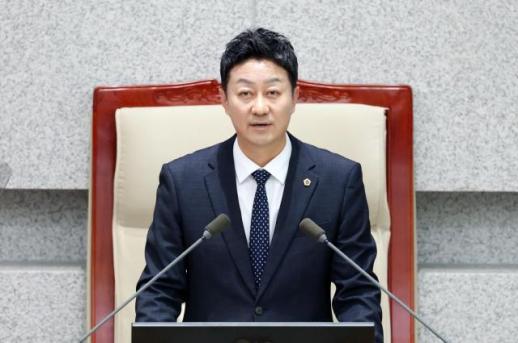 Gyeonggi Provincial Council Speaker Kim Jin-kyung Opens 389th Special Session GYEONGGI, South Korea — Gyeonggi Provincial Council Speaker Kim Jin-kyung said April 21 that the council should take an active role in responding to the crisis facing residents’ livelihoods, calling it a time to make decisions based on people’s day-to-day needs and to act responsibly. In opening remarks at the council’s 389th special session plenary meeting, Kim, a Democratic Party lawmaker representing Siheung 3, said that while spring has arrived, the livelihood economy residents feel “remains cold and heavy.” He said compounded difficulties triggered by the war in the Middle East are affecting residents’ lives. “Rising energy prices are adding to household costs, and higher interest rates and inflation are narrowing choices for ordinary people,” Kim said. “What we need now is a clear standard — livelihoods — and action.” He urged smooth deliberations during the session on a supplementary budget proposal. Kim said the supplementary budget is “not simply a fiscal reinforcement,” but “a defensive line” to protect livelihoods. He called for council members to work together so it leads to practical support, including protection for vulnerable groups, aid for small business owners and recovery of local economies. Saying the council is “in the middle of change,” Kim stressed that cooperation should come before competition and that bipartisan collaboration is a duty, not a choice. He also urged the executive branch to refine policies during the crisis, saying the council and the administration cannot move separately. To residents, Kim said he understands the hardship is not light and pledged to make residents’ lives the council’s standard, starting with the most vulnerable and ensuring needed support reaches the right places. Kim said he would do his utmost to ensure the special session results in a council that responds to the crisis and fulfills its responsibilities.* This article has been translated by AI. 2026-04-21 16:18:56
 -
 NH Investment & Securities’ Standard OCIO Wrap Grows as Volatility Drives Demand Market volatility driven by external uncertainty, along with a shift of funds into equities, is fueling rapid growth in standardized OCIO (outsourced chief investment officer) products designed for individual investors and small and midsize companies. The products are also seen as helping improve the profit structure of OCIO businesses, long criticized for low profitability. As of April 21, the financial investment industry said NH Investment & Securities’ standardized OCIO product, the “NH Columbus EMP Wrap,” had 370 billion won in assets under management at the end of the first quarter. That was up 100 billion won from 270 billion won at the end of last year. With the product at about 100 billion won at the end of 2024, the pace of inflows has accelerated, the industry said. The increase was attributed to rising demand from small and midsize corporate clients seeking to track stock-market returns during an upswing, and from individual investors looking for volatility management. Returns have also stood out. The product has gained 5.3% since the start of the year. Since its 2019 launch, it has posted an average annual return of about 10% over seven years. The average return over the past three years was 15%, and the past one-year return was 21.15%, helped by base effects after volatility widened last year amid tariff-related issues. OCIO services typically provide customized asset-allocation management for large institutions such as pension funds. The NH Columbus EMP Wrap standardizes that approach into a model portfolio so it can be used by small and midsize companies and individual investors. Demand has grown as an alternative for companies that fall short of the minimum subscription for customized OCIO, about 50 billion won. Individuals can subscribe with at least 30 million won. The standardized format is seen as attractive because it lowers entry barriers and allows flexible inflows and outflows. With no fixed contract term, liquidity management is easier. Investors can also use the same model portfolios applied to large institutional clients without building a separate asset-allocation strategy. Unlike mutual fund-style OCIO products offered by asset managers, the wrap structure is managed by account, allowing responses tailored to each client’s tax and accounting schedules. Industry participants described it as combining the pooled-management advantages of funds with the customized oversight of discretionary accounts. Standardized products still account for only about 10% of NH Investment & Securities’ total OCIO assets under management excluding large funds, which stand at 3.7 trillion won. But they have contributed more on profitability, the industry said. With standardized OCIO assets rising about 100 billion won so far this year, the firm’s overall OCIO fee rate increased to about 17 basis points from 11 basis points at the end of last year, partially offsetting the low-fee structure of traditional OCIO operations. NH Investment & Securities expanded its standardized OCIO lineup in February by launching “NH Columbus Income.” The product allocates assets mainly to bonds and alternative investments, excluding the equity portion, targeting corporate investors wary of volatility. An industry official said more companies that previously relied on deposits or short-term financial products are moving into risk assets to boost returns, and demand to keep pace is flowing into customized OCIO offerings. 2026-04-21 16:14:55
 -
 Anseong Mayor Kim Bo-ra Says Speed Matters as City Drafts 18 Billion Won Emergency Budget Gyeonggi Province’s Anseong city has drafted an emergency 18 billion won supplementary budget to ease residents’ financial strain from high fuel prices, inflation and the prolonged Middle East war. The city submitted the proposal to the Anseong City Council on April 20 in line with the central government’s measures to stabilize livelihoods. The one-time budget focuses on urgent issues tied to the war’s spillover effects and is expected to be put to a final vote at the council’s 239th extraordinary session on April 28 after prior consultations and schedule coordination. The centerpiece is 14.9 billion won in high fuel price relief payments. The city plans to begin paying up to 550,000 won per household starting April 27 to basic livelihood recipients, near-poor households and households in the bottom 70% by income. The plan also includes 600 million won for K-Pass rebate support to respond to the fuel-price shock, encourage public transit use and improve mobility. Another 900 million won was set aside to hire temporary workers for a special farmland survey aimed at creating public-sector jobs. To help residents and small businesses hit by high prices, the budget includes 500 million won for a special credit guarantee program for small merchants and 1 billion won to support issuance of local currency to boost consumption. Mayor Kim Bo-ra said on social media on April 20 that she had approved the 18 billion won emergency budget, adding that the city had prepared a plan tailored to local needs and aimed at rapid execution after the government announced its own supplementary budget. “Speed matters with a supplementary budget,” Kim said. “The city is operating a task force team with the goal of starting the first round of applications and payments for relief funds from April 27. We will execute it quickly so it provides real help to residents who are struggling.” The city said it will begin spending as soon as the council approves the budget and will focus its administrative resources on ensuring there are no disruptions in applications and payments. An Anseong city official said the emergency budget was designed to prioritize stable daily life for residents and support the local economy, adding that the city will push detailed policies and swift execution to help overcome the current crisis.* This article has been translated by AI. 2026-04-21 16:14:06
 -
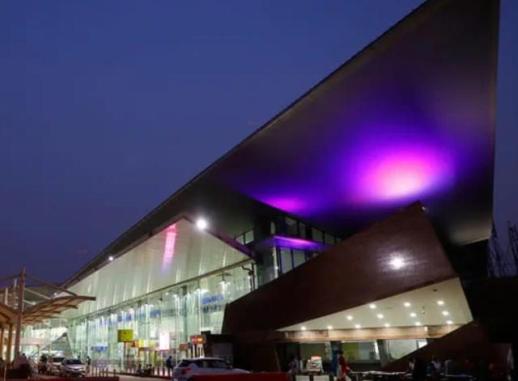 Adani Enterprises sets up three airport-city units for hotels and real estate Adani Enterprises, a core company of India’s Adani Group, said on April 18 that its wholly owned unit Adani Airport City has set up three subsidiaries to handle hotel and real estate development. Effective April 6, it established Adani Navi Mumbai Airport City, Adani Guwahati Airport City and Adani Ahmedabad Airport City. Each has paid-in capital of 1 million rupees (about 1.7 million yen). The companies plan to pursue real estate business using owned or leased properties, real estate construction, and hotel operations that include restaurants, banquet halls and business hubs. The Adani Group operates airports through its Adani Airport Holdings (AAHL). AAHL won operating rights for six airports in India and took over those concessions in fiscal 2020/21 (April 2020 to March 2021) and fiscal 2021/22. AAHL also acquired more than a 70% stake in Mumbai International Airport Ltd. (MIAL), which operates Chhatrapati Shivaji Maharaj International Airport (CSMIA), also known as Mumbai airport, from infrastructure conglomerate GVK Group and others. It also holds management control of Navi Mumbai International Airport Ltd. (NMIAL), a MIAL unit that operates Navi Mumbai International Airport (NMIA). 2026-04-21 16:13:25
 -
 South Jeolla Province to Revamp Seedling Production for Climate-Resilient Forests South Jeolla Province said it held a meeting April 21 at its Forest Research Institute in Naju to discuss a structural overhaul of how it develops forest resources, including tree species selection and seedling production, in response to climate change. The meeting was aimed at preparing for shifting forest growing conditions, rising forest disasters and changes in forest-creation patterns linked to climate change. Eighteen people attended, including officials from the province and its cities and counties, forest research institutions and seedling producers. Participants focused on expanding climate-adapted species, meeting demand for large-tree plantings, and improving the seedling production and supply system. The province said it plans to move away from conifer-centered forest creation by expanding climate-adapted species such as warm-temperate broadleaf trees and nectar-producing trees, and by introducing tailored species suited to local climate conditions. It said the goal is to build forests more resilient to disasters such as wildfires while strengthening ecological stability and public benefits. The Forest Research Institute presented recommendations for key warm-temperate broadleaf and nectar-producing species based on matching species to suitable sites. The province said it plans to secure seed sources for species including inamu, aweenamu and odongnamu within this year and then build out a full-scale seedling production system. The province said nectar-producing trees are a key resource for protecting both the beekeeping industry and forest ecosystems because they provide food not only for honeybees but also for a range of forest insects. It said it will actively secure major nectar-producing species. It also said demand is rising for large-tree plantings to secure carbon absorption earlier, improve scenery and support species conversion as part of efforts to control pine wilt disease. To address supply-demand imbalances, the province said it will improve seedling-age standards and diversify specifications. For seedling production, which the province called critical to long-term forest planning, it said it will build a systematic supply system based on mid- to long-term supply-and-demand forecasts. It also plans to gradually establish an integrated forest resource management system linking seedling production, forest creation and follow-up management to improve policy effectiveness. Kang Sin-hui, head of the province’s Forest Resources Division, said rapid changes in forest conditions driven by climate change require a fundamental shift in forest-creation methods and nursery policy. “Based on field input and scientific data, we will actively push sustainable forest resource development and strengthen the competitiveness of the forestry sector,” Kang said. * This article has been translated by AI. 2026-04-21 16:12:47
 -
 Cho Kuk Innovation Party’s Park Hong-ryul launches Mokpo mayoral bid, vows local political reform Park Hong-ryul, a preliminary candidate for Mokpo mayor from the Cho Kuk Innovation Party, held a news conference on 21 and formally confirmed his entry into the June 3 local elections, pledging to serve as a “steppingstone for reform in local politics.” In a statement, Park said citizens and party members had backed him to face the Democratic Party candidate in the general election. He thanked voters for choosing him, saying he would stand up to what he called the Democratic Party’s heavy-handed politics in Mokpo and help open an era of local government led by citizens. Park also urged primary rival Park Yong-an to join forces, calling for unity to break what he described as the Democratic Party’s stronghold. He said local politics in Yeongnam and Honam had been dominated by the Democratic Party and the People Power Party, arguing the system should move toward a genuine multiparty structure that reflects public opinion. Park said he would win the election, make Mokpo a base for political innovation and restore the city’s standing as a leading center of Honam politics. Park said his party and the Democratic Party share some goals, including prosecutorial reform, but criticized the Democratic Party for, in his words, repaying Honam residents’ support with “lineups” tied to nominations. “It is time for alert citizens to discipline monopolistic political power,” he said. Park pointed to his experience in city administration as an advantage. He said that during his time in office in the 6th and 8th elected administrations, Mokpo boosted tourism competitiveness by installing a marine cable car. He also said the city restarted the long-delayed Imseong District development project through an agreement with the Korea Land and Housing Corp., and improved the monopoly structure of city bus routes, resolving wage arrears and service suspensions. As a key pledge for the 9th elected administration, Park proposed building a Mokpo-style renewable energy convergence national industrial complex on 550,000 pyeong around Gohado, attracting 100 companies and creating 10,000 jobs. Park said he would make Mokpo “a happy city from cradle to old age” and a city with abundant jobs for young people. He asked for support, saying he would overcome what he called the Democratic Party’s high barrier and open a new era for Mokpo. The news conference was seen as signaling potential shifts in the local political landscape ahead of the June 3 elections and was expected to affect the Mokpo mayoral race.* This article has been translated by AI. 2026-04-21 16:10:19