
Journalist

Lee Hugh
=
-
 People Power Party Picks Kim Gi-ha as Donghae Mayor Candidate Kim Gi-ha, 66, has been confirmed as the People Power Party’s candidate for mayor of Donghae. The party’s Gangwon Special Self-Governing Province chapter nomination committee announced the final primary results on the 21st at a meeting in Chuncheon and approved Kim’s nomination. Candidates and other officials attended as the results were released. Kim won the final primary against Choi Jae-seok, who had advanced from the preliminary round, and will run as the party’s nominee in the Donghae mayoral race in the ninth nationwide local elections on June 3. With the nomination settled, Kim is expected to begin campaigning in earnest for the general election. 2026-04-21 15:40:00
 -
 Solo Bids Rise in Seoul Redevelopment as Builders Target Only Prime Projects Rising construction costs and weaker profitability are pushing South Korean builders to pursue “selective bidding” rather than aggressive head-to-head competition, reshaping Seoul’s redevelopment market around solo bids. In that shift, DL E&C has effectively secured the first builder’s role in the Mokdong reconstruction market by emerging as the only bidder for the Mokdong New Town Complex 6 project, seen as the fastest-moving among the area’s major rebuilds. According to the redevelopment industry on the 21st, DL E&C was the sole participant in the second round of bidding to select a contractor for the reconstruction of Mokdong New Town Complex 6 in Seoul’s Yangcheon district. The bid closed at 2 p.m. With no rival bidder again after the first round on April 10, the project has effectively moved toward a negotiated contract. Under the Urban and Residential Environment Improvement Act, if only one company bids in a second round, the association may choose the contractor through a negotiated deal. The Mokdong Complex 6 association is expected to sign a contract with DL E&C after a general meeting in late June. Complex 6 is considered the quickest-moving of Mokdong’s 14 complexes and is viewed as the starting point for a large-scale reconstruction program totaling 26,000 households and about 30 trillion won in project costs. This year’s Seoul redevelopment market is expected to reach a record scale as major projects move to select contractors, but analysts say the trend is shifting away from the intense bidding wars of the past and toward solo bids. Recent projects have followed that pattern. Samsung C&T was selected after submitting the only bid for the Daechi Ssangyong 1 reconstruction project in Seoul’s Gangnam district on April 11. POSCO E&C also secured the Singil Station-area redevelopment project as the sole bidder. Other projects decided through solo bids include Songpa Hanyang 2 reconstruction (GS Engineering & Construction), Singil District 1 public redevelopment (Hyundai Engineering & Construction), and Geumho District 21 redevelopment (Lotte Engineering & Construction). The shift is widely attributed to a combination of higher construction costs and heavier financing burdens. With rising materials and labor costs driving up budgets, builders also face project financing (PF) pressure and the risk of unsold units, making profitability harder to predict. Companies also factor in the expense of design proposals, financing terms and marketing, which can erode margins as competition intensifies. As a result, builders are increasingly concentrating on projects where returns appear more secure rather than pursuing contracts at any cost. GS E&C has won the Songpa Hanyang 2 and Gaepo Wooseong 6 reconstruction projects this year and is seeking additional contracts, including Seongsu Strategic Redevelopment Zone District 1 and Seocho Jinheung Apartments. Hyundai E&C has also identified Apgujeong Districts 3 and 5, Mokdong reconstruction complexes, and the Seobinggo Shindonga Apartments in Yongsan district as core targets. “We are working to win only key projects,” a Hyundai E&C official said. Lotte E&C is focusing its efforts on winning Seongsu District 4 while reviewing participation centered on projects it sees as strong, including sites in Mokdong and Macheon in Songpa district. “From the bidding stage through presales and move-ins, we are pursuing selective bidding focused on places where projects can proceed stably,” a Lotte E&C official said. DL E&C is also watching major sites including Apgujeong District 5, Mokdong Complex 6, Seongsu District 2 and Yeouido. “We are maintaining a selective bidding approach centered on profitability,” a DL E&C official said. Competition, however, has not disappeared everywhere. In high-profile areas such as Apgujeong, Yeouido, Mokdong and Seongsu, major builders are still expected to compete. In a recent bid to select a contractor for Apgujeong District 5 reconstruction, the process was halted after an employee of a construction company was caught taking unauthorized photos of bid documents, highlighting risks tied to overheated competition. The association’s work has since been reorganized and normalized. Overall, this year’s bidding is expected to show “low-intensity competition” dominated by solo bids, while “selective showdowns” continue in a handful of prime districts. Lee Tae-hee, a doctor, said the increase in Seoul redevelopment volume has reduced the need for loss-leading competition and that offering overly aggressive terms can become a sunk-cost burden. He added that in symbolic projects such as Apgujeong, companies believe being shut out could narrow their standing in the market. 2026-04-21 15:39:03
 -
 CU Stores Hit by Delivery Strike as Kimbap, Lunch Boxes Vanish and Sales Slide “Dozens of customers ask for kimbap or lunch boxes every day. When the shelves are empty, they don’t buy anything else and just leave. Why do only franchise owners have to bleed because headquarters and drivers are fighting?” A CU convenience store near a middle school in Goyang, Gyeonggi Province, was quieter than usual on Monday afternoon. Students who came looking for triangle kimbap turned away empty-handed, and the store owner sighed as he spoke. CU franchisees say they are facing mounting losses as a strike and blockades by the Cargo Truckers Solidarity CU branch, affiliated with the Korean Confederation of Trade Unions, have effectively halted deliveries of ready-to-eat foods, a key sales driver. The dispute has also raised broader concerns in the convenience store industry after a fatal accident involving a replacement truck during a rally near a logistics center. Industry officials said the KCTU held a rally Monday in front of BGF Retail’s headquarters in Seoul’s Gangnam district, blaming the company and the government and vowing an all-out fight. The truckers’ union has been on an all-out strike since April 5, demanding better treatment for delivery drivers and blocking major logistics centers. From April 17, it also blocked a plant in Jincheon, North Chungcheong Province, that produces 150,000 ready-to-eat items a day. The disruption has hit more than 3,000 CU stores nationwide. BGF Retail began operating an alternative logistics system and resumed ready-to-eat deliveries to some stores in the Seoul metropolitan area from Monday morning, but many outlets are still struggling with shortages, the industry said. On Sunday, during a rally in front of CU’s Jinju logistics center, union members trying to stop trucks from leaving collided with a cargo truck, leaving one person dead and two injured. A BGF Retail official said the company offered “deep condolences” and was working to resolve the situation. BGF Retail has said it has no reason to negotiate directly because delivery drivers sign individual contracts with outside transport companies. The union, citing the revised so-called Yellow Envelope Act, is demanding direct talks with BGF Retail as the principal company it says effectively controls the work. Franchise owners say they are bearing the brunt. Ready-to-eat foods draw customers and drive add-on purchases, they said. The CU Franchise Owners Association said some stores have seen daily sales fall an average of 20% to 30% due to out-of-stocks, amounting to losses of 500,000 to 600,000 won per store each day. Kim Mi-yeon, head of the CU Franchise Owners Association, said “about 30% of store sales have already disappeared” because of shortages and delayed deliveries. “Where in the Yellow Envelope Act does it say unrelated small business owners can be harmed?” she said. Kim has been holding a one-person protest in front of the National Assembly calling for the strike to end. Industry watchers said they are closely monitoring the risk of a prolonged dispute and a domino effect. If CU, the market leader, recognizes employer responsibility and enters direct talks, it could ripple through logistics networks across other convenience stores, supermarkets and e-commerce, an industry official said. “The moment BGF backs down, strikes could spread like wildfire, so the entire sector is holding its breath,” the official said. 2026-04-21 15:38:02
 -
 Seoul Mayor Oh Se-hoon Blames Regulations for Slowing Redevelopment, Pledges Reforms Oh Se-hoon, mayor of Seoul, said regulations are a key reason reconstruction and redevelopment projects have slowed, and he called for expanding private-sector-led housing supply and speeding institutional reforms. He said the city will reflect on-the-ground feedback to revitalize urban renewal projects. The Seoul Metropolitan Government said Oh met Tuesday morning at City Hall with officials from the Seoul metropolitan area reconstruction and redevelopment association to discuss ways to improve project feasibility and move redevelopment forward more quickly. Fifteen people attended, including Oh; Lee Jong-han, the association’s vice chairman; association members; and Seoul city officials in charge of redevelopment policy. The association represents members of reconstruction and redevelopment cooperatives and works on proposals to improve urban renewal rules, policy recommendations and information sharing. Oh said the challenge of housing supply “must not remain just a slogan,” adding that Seoul, “even amid a one-sided regulatory environment,” has designated more than 300 redevelopment zones citywide totaling 440,000 homes through its “Shintong Planning” initiative, under what he called a firm principle of private-sector supply. He criticized the central government’s housing policy direction, saying various regulations have slowed projects, weakened the housing ladder for ordinary people and brought reconstruction and redevelopment to a halt. Oh said the city will take the group’s requests seriously, quickly implement what it can change immediately, and pursue alternatives to issues requiring broader institutional reform. The association asked the city to: establish guidelines on relocating religious facilities within redevelopment promotion districts; set standards for commercial property in management and disposition plans; and create communication channels with stakeholders. Oh said he agreed with the proposals and would directly urge the government to revise relevant laws while working through close consultations to create a more transparent environment for redevelopment projects. 2026-04-21 15:37:10
 -
 Seoul mayoral rivals build campaign teams ahead of June 3 local elections With both major parties having chosen their final candidates for Seoul mayor ahead of the June 3 local elections, attention is turning to the campaign committees expected to drive the race. Democratic Party candidate Jung Won-oh, selected earlier as the party’s nominee, has moved quickly to assemble a large committee heavy with sitting lawmakers and has begun public campaigning. People Power Party candidate Oh Se-hoon has said he will also move fast to build his team. Jung on Monday visited the Seoul National Cemetery in Dongjak District with about 40 aides in his first official outing since launching his campaign committee. Among those attending were Rep. Lee In-young, a five-term lawmaker from Seoul and a standing co-chair of the committee, along with Reps. Park Joo-min and Jeon Hyun-hee, who had competed against Jung in the party race. Other key figures from the committee formed the previous day also joined, including co-chairs Han Jeong-ae, Nam In-soon, Jin Sun-mi, Ko Min-jung and Kim Young-ho. Jung’s committee totals more than 50 members, including 27 sitting lawmakers. Jung reiterated his push for party unity, saying he built a lawmaker-centered committee to strengthen his team. “The candidates in the party primary have experience in state affairs and in the National Assembly, and they have experience in party leadership,” he told reporters after the visit. “I invited them to help fill in what I need to build one team.” Oh, by contrast, has made few public moves since appointing Rep. Park Soo-min and former lawmaker Yoon Hee-sook as co-chairs on Saturday. Still, Oh has said he plans to ask key party figures, including sitting lawmakers from Seoul, to join as he accelerates preparations. Speaking on KBS radio’s “Jeonggyeok Sisa” on Monday, Oh said, “We should of course bring in sitting lawmakers. We will of course bring in Supreme Council member Shin Dong-wook as well.” Referring to Jung’s lineup, he added, “Even if we can’t match a ‘mammoth’ committee, we are planning around people who can work practically.” Oh’s camp told Aju Business Daily by phone that the overall structure has not yet been finalized, but said it is making full preparations to recruit lawmakers in Seoul and that sitting lawmakers could join.* This article has been translated by AI. 2026-04-21 15:34:38
 -
 Iran Calls U.S. Seizure of Iranian Cargo Ship Piracy, Demands Crew Release Iran sharply criticized the United States for seizing an Iranian-flagged cargo ship and demanded the crew’s release. According to Iran’s semiofficial Tasnim News Agency, the Iranian Foreign Ministry said in a statement on the 21st that the operation was carried out while threatening the ship’s sailors and crew and their families. It called the seizure “piracy” and “terrorism,” and said it was another clear violation of a ceasefire agreement reached on April 8, 2026 (Iranian calendar year 1405, Farvardin 19), describing it as an attack on Iran. The ministry warned of “very dangerous consequences” from what it called an illegal and criminal act, and again demanded the immediate release of the ship, its crew and sailors, and their families. It said Iran would “use all capabilities” to defend its interests and national security and to protect the rights and dignity of the Iranian people, adding that if regional conditions worsen further, the United States would bear full responsibility. U.S. authorities, however, said the Tusca attempted to violate a maritime blockade of the Strait of Hormuz and was seized after repeated warnings over six hours. President Donald Trump said on the 19th on Truth Social that the U.S. Navy guided-missile destroyer Spruance intercepted the Tusca in the Gulf of Oman and issued a lawful order to stop, but Iranian sailors did not comply, and the U.S. Navy damaged the engine room to halt the ship. Iran warned of retaliation immediately after the seizure and later claimed it carried out drone attacks against some U.S. military vessels. With the two sides offering conflicting accounts, the incident could become an issue ahead of a second round of U.S.-Iran talks on ending the war, the report said. U.S. Central Command posted photos of the seized ship on X on the 21st. The images show black smoke rising from a large container ship and a U.S. warship operating nearby. Central Command said U.S. Marines boarded and seized the vessel and that U.S. forces are monitoring it in the Arabian Sea while the cargo is searched. 2026-04-21 15:33:49
 -
 South Korea to Start High Fuel Price Relief Payments April 27; Interior Ministry Checks Local Readiness The Ministry of the Interior and Safety said April 21 that it inspected payment preparations by cities, counties and districts nationwide ahead of the start of high fuel price relief payments on April 27 and urged smooth execution. The program will provide 100,000 to 250,000 won per person to the bottom 70% by income. Vulnerable groups can receive up to 600,000 won. The ministry held a meeting chaired by Vice Minister Kim Min-jae with deputy heads of 226 local governments to review the full application and payment process. It asked local governments to forecast demand for offline payment methods such as prepaid cards and paper local gift certificates, secure sufficient supplies, and ensure card designs do not reveal whether a recipient is in a vulnerable group. The ministry also urged local community service centers to actively run “visit application” services for residents with limited mobility, including older adults and people with disabilities, to prevent gaps in coverage. It said centers should coordinate with welfare departments when needed to identify eligible residents in advance and make proactive visits. To prevent improper distribution and use — including cashing out benefits through private transactions or using another merchant’s name — the ministry called on local governments to operate reporting centers for fraudulent distribution and strengthen monitoring. It also asked centers to set up waiting areas for applicants and to train staff in advance on standards for handling objections so residents do not face unnecessary inconvenience during applications and payments. Relief payments will be issued first from April 27 to May 8 to basic livelihood security recipients, near-poverty households and single-parent families. A second payment period will run from May 18 to July 3 for those who missed the first period and for the remaining 70% of the public covered by the program. “The role of cities, counties and districts, and of local community service centers, is critical because they are the closest point of contact with the public,” Kim said. “We will work closely with local governments to carefully check preparations and ensure there are no blind spots.”* This article has been translated by AI. 2026-04-21 15:32:59
 -
 Credit Finance Association Starts Search for Next Chair as Candidate Field Shifts The Credit Finance Association has begun the process of selecting its next chair, seven months after the term of Chair Jeong Wan-gyu ended, prompting a reshuffling of potential candidates. With profitability squeezed by merchant fee regulations and pressure to expand new businesses, the card industry says it needs a leader who understands the sector and can communicate effectively with regulators. According to the financial sector on the 21st, the association plans to hold a meeting later this month with its 15 board member companies to discuss forming a chair nomination committee. The association aims to complete the committee’s formation by early next month and then launch a full recruitment process. Because the selection typically takes about six weeks from recruiting candidates to appointment, the next chair is expected to be chosen in June. However, if the candidate is a public official, the timeline could slip to July due to a required public service ethics review. The association has remained under an acting leadership structure for more than seven months as the appointment has been delayed since Jeong’s term ended. As the nomination committee comes into view, the candidate field is also shifting. Among private-sector contenders, Woo Sang-hyun, a vice president at BC Card, and Kim Sang-bong, a professor of economics at Hansung University, have been confirmed as intending to run. Woo has worked at BC Card as well as Hyundai Card and Hyundai Capital, and also has experience at the Ministry of Finance and Economy and the Financial Services Commission, giving him both public- and private-sector credentials. He is reported to have retired from BC Card at the end of last month. Kim has served for more than six years as an adviser to the association and has worked at Shinhan Card, and is seen as having strong industry knowledge. He also signaled his intention to run last year. He plans to begin campaign preparations in early next month, promoting a plan to diversify revenue through overseas expansion and increased investment. Among government-linked candidates, Seo Tae-jong, a head of the Korea Banking Institute, and Kim Geun-ik, a head of the Korea Exchange’s Market Surveillance Committee, have been mentioned, but no notable moves have been detected since late last year. Industry officials say a government-linked appointment is again seen as likely. Of the six chairs appointed since 2010, only one, Kim Deok-su, came from the private sector. Kim previously served as CEO of KB Kookmin Card. A card industry official said, “We need someone who can strongly represent card companies’ positions while maintaining a smooth relationship with regulators,” adding, “We need someone who communicates well with the authorities.” 2026-04-21 15:32:04
 -
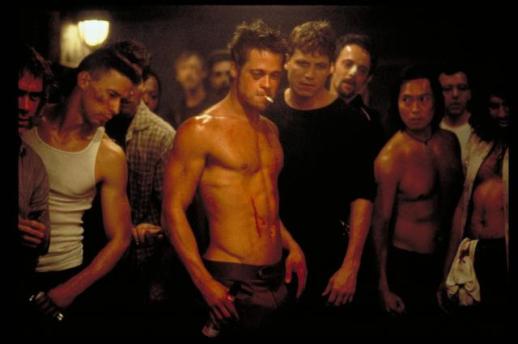 "Fight Club" goes digital in Korea, dragging teenage violence into the spotlight SEOUL, April 21 (AJP) - In the 1999 American cult classic Fight Club, members of an underground brawling group follow one defining rule: never talk about it. In today’s viral digital landscape in South Korea, violence is no longer hidden — it is performed, filmed and monetized in plain sight. Across YouTube, Telegram and livestreaming platforms, a burgeoning genre of “fight content” is blurring the line between sport and exploitation, drawing millions of viewers and echoing the voyeuristic brutality of the Netflix hit Squid Game. A video titled “Real Fight Among Guys in Their 20s Working Construction #Yacharule,” which has racked up over 12 million views, shows two shirtless men trading punches, surrounded by roughly ten onlookers. Someone films the scene. At the call of “Fight!”, the two exchange punches before quickly grappling on the ground. One man, pinned underneath, takes a direct blow to the nose. Blood pours over his face and chest. He loses. The winner beams at the camera: “I’m not trying to brag, but I’ve never even trained at a gym.” Channels like this follow the so-called “Yacha Rule,” a format of semi-staged or raw combat named after the Yaksha — a predatory spirit in Buddhist mythology. Unlike regulated MMA or boxing, Yacha fights operate in a legal and safety vacuum. With minimal protection and few rules beyond banning eye-gouging, their appeal lies in a curated sense of visceral “authenticity.” The scale is already significant. One YouTube channel dedicated to such content has amassed more than 180 million cumulative views, while short clips routinely draw millions. A single one-minute video recently surpassed 4.4 million views, translating into substantial advertising revenue under standard monetization models. What began with trained or semi-trained participants is now spilling into everyday life. Some creators stage retaliatory fights under the banner of “teaching a lesson,” livestreaming confrontations against perceived wrongdoers. More troubling is its seepage into youth culture. A Telegram channel reportedly purchased and distributed footage of real assaults involving minors, paying informants between 5,000 and 50,000 won ($3.4 to $34) depending on severity. With roughly 1,000 uploaded clips and thousands of subscribers, many videos show victims bleeding or losing consciousness — erasing any meaningful line between documentation and exploitation. Viewers are not passive. They comment, cheer and engage, while advertisements — including gambling — appear alongside the clips, pointing to a broader monetization ecosystem built on violence. “Humans are neurologically attuned to threat and conflict,” said Rosie Dutt, a professor of psychology and neuroscience at the University of North Carolina at Chapel Hill. “Violent or high-stakes stimuli capture attention more quickly and hold it longer than neutral content,” activating both fear-processing systems and reward pathways. This creates what researchers describe as a “safe danger” experience — intense yet detached. Social learning compounds the effect. Drawing on Albert Bandura’s theory, observing behavior that appears structured or rewarded can normalize it. When fights are framed as consensual or rule-based, viewers may disengage morally, perceiving the violence as legitimate rather than harmful. Over time, repeated exposure may not directly increase violent behavior, but it can dull emotional responses and normalize aggression. The digital environment amplifies this dynamic. Online anonymity reduces accountability, encouraging engagement with extreme content — a phenomenon widely known as the online disinhibition effect. Yet the legal reality is far less ambiguous. “The presence of consent does not automatically eliminate criminal liability,” said Sung Joong Tak, a law professor at Kyungpook National University. Courts have consistently held that consent is invalid when it violates social norms, particularly in unregulated and high-risk physical confrontations. Under South Korean law, causing bodily harm is punishable by imprisonment or fines, and prosecution does not hinge on whether the victim presses charges. Even if participants agree beforehand — or reconcile afterward — legal responsibility remains. The implications extend beyond participants. Organizers, promoters and those filming or distributing the content may face charges for aiding and abetting violence. If betting is involved, gambling laws apply; if minors are exposed, youth protection statutes come into force. What appears to be a consensual “sport” can quickly trigger a cascade of criminal violations. The broader shift is cultural. Violence has long been part of entertainment — from ancient gladiator arenas to modern action films. But the Yacha Rule signals something different: the erosion of distance between performer and audience, fiction and reality. In Squid Game, participants enter deadly contests while unseen spectators consume their suffering as spectacle. In today’s digital ecosystem, the audience is no longer unseen — it is active, engaged and central to the system. For regulators, the challenge is acute: balancing freedom of expression with the need to curb harmful content. Enforcement is equally complex, particularly when distribution spans encrypted platforms and decentralized networks. 2026-04-21 15:26:05
 -
 Donghae to Inspect No-Smoking Areas, Tobacco Retailers as Law Expands Definition of Tobacco Donghae City Health Center said it will conduct joint inspections of no-smoking areas and tobacco retailers following revisions to the Tobacco Business Act. The inspections are intended to confirm on-the-ground compliance as the law, taking effect April 24, expands the definition of tobacco from “tobacco leaves” to products made using tobacco or nicotine as a raw material. The checks will run from April 24 to May 15, including daytime and nighttime patrols. Inspectors will crack down on smoking in no-smoking zones and verify compliance with standards for tobacco vending machines, as well as advertising rules inside tobacco retail shops. Under the revision, all tobacco use is banned in no-smoking areas regardless of type, including cigarettes, heated tobacco products, liquid e-cigarettes and synthetic nicotine products. Violations are subject to fines, the health center said. The health center said it will also publicize the expanded definition and related rule changes to reduce confusion. Hong Jong-ran, head of the Health Policy Division, said the broader definition brings synthetic nicotine products—previously in a regulatory blind spot—under the same rules. She urged residents and business operators to cooperate in observing no-smoking zones and sales standards. Donghae City Council opens 360th extraordinary session to review 14 ordinance bills Donghae City Council on Monday held the first plenary meeting of its 360th extraordinary session and began deliberations on 14 agenda items, including four ordinances proposed by council members and a city-submitted “Basic Ordinance on Artificial Intelligence.” Min Gwi-hee proposed revisions to the city’s mental health promotion ordinance to establish a basis for securing public hospital beds in advance and quickly linking services for emergency hospitalization of people with mental illness. Min also proposed revising rules on overseas official travel by council members to restrict end-of-term trips criticized as junkets, aiming to strengthen accountability and ethics. Lee Dong-ho proposed an ordinance to support nighttime tourism as part of a shift toward longer-stay travel policies, and said facilities that allow pets should be expanded in connection with the planned Mangsang auto camping site. Ahn Seong-jun proposed revising an ordinance on the transfer and inheritance of individual taxi transport businesses, extending the reporting period for inheriting a private taxi license from 90 days to 180 days to ease burdens on bereaved families. Lee Chang-su welcomed the reopening of the rail crossing at Hapyeong Beach following consultations with relevant agencies, and called on the city administration to respond actively in developing plans to keep and use Mukho Station. Jeong Dong-su said the city should step up publicity to minimize negative perceptions over higher fees at the Mureung Byeolyucheonji site. He also urged improvements to tourism infrastructure, including reviewing the introduction of a dedicated lift for the luge to improve equipment handling and visitor movement. The council said it will focus its review on ordinances tied to local issues and policies residents can feel in daily life. Yangyang wildfire fully contained in about 2 hours; no casualties A wildfire that broke out Monday morning in Nonhwa-ri, Seo-myeon, Yangyang County, was contained without major damage after a rapid initial response and coordination among civilian, government and military teams, the county said. The fire started around 7:43 a.m. in the area of Mountain Lot No. 159 in Nonhwa-ri, for reasons not immediately known. With winds of about 7 meters per second, officials said there was a risk it could spread into a large wildfire. Authorities dispatched five firefighting helicopters and 35 pieces of equipment, and mobilized 134 personnel: 20 county officials, 51 firefighters, eight police officers, eight members of a special wildfire unit and 47 from a disaster response team, the county said. Because the fire was confirmed near Jeongdaun Maeul, a social welfare facility, an emergency evacuation was carried out. A total of 113 people—73 residents with severe disabilities and 40 staff members—were moved safely to the Yangyang County Multipurpose Gymnasium. The county provided emergency supplies including 150 blankets and 150 bottles of water, along with temporary relief kits and diapers. The main blaze was brought under control at 9:05 a.m., about 1 hour and 20 minutes after the fire began, and the fire was fully extinguished after remaining embers were cleared by 10:20 a.m., the county said. A county official said the quick response and close coordination prevented casualties. Officials are focusing on monitoring for flare-ups and will investigate the cause and damage after the situation is closed out. Samcheok Maengbang Canola Flower Festival closes after 17 days, drawing 260,000 visitors Samcheok’s signature spring event, the Samcheok Maengbang Canola Flower Festival, ended successfully after running for 17 days from April 3 to 19 in the area of Sangmaengbang-ri, Geundeok-myeon, in Gangwon Province. Held under the theme “Maengbang, Blooming Into Spring,” the festival went ahead despite difficult conditions after last year’s unusually long autumn rainy season damaged canola seeding areas. The city and the festival organizing committee carried out replanting using potted seedlings and created circular flower beds with a variety of flowers in damaged sections, turning the setback into a new attraction. The newly introduced “Samcheokdongja” character, paired with the canola flower scenery, helped boost the festival atmosphere, organizers said. Organizers counted about 260,000 visitors, with roughly 60% coming from outside the area. Direct consumer spending was estimated at about 9.4 billion won, and the broader local economic ripple effect, including production inducement, was estimated at about 14 billion won. Local food stalls and agricultural specialty markets operated during the festival, alongside performances and hands-on programs, which organizers said improved visitor satisfaction and supported local businesses. A Samcheok city official said the festival concluded successfully thanks to the efforts of residents and organizers despite challenging conditions, and pledged continued improvements so it can remain a leading spring festival for the region. * This article has been translated by AI. 2026-04-21 15:25:54