
Journalist

Lee Hugh
=
-
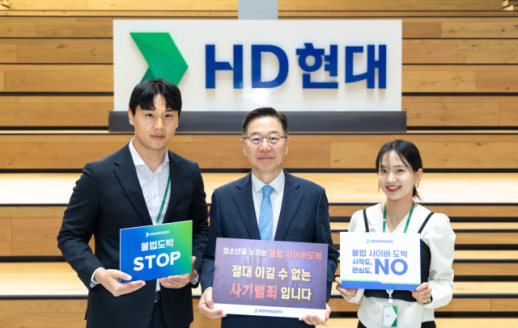 HD Hyundai Oilbank CEO Song Myung-joon Joins Campaign to Prevent Illegal Youth Gambling Song Myung-joon, CEO of HD Hyundai Oilbank, has joined a campaign aimed at preventing illegal gambling among teenagers. HD Hyundai Oilbank said Tuesday that Song took part in a youth cyber gambling prevention campaign Monday with employees at HD Hyundai Global R&D Center (GRC) in Pangyo, Seongnam. The online “Youth Gambling Eradication Relay Campaign,” launched by the Seoul Metropolitan Police Agency, seeks to warn of the dangers of illegal cyber gambling targeting teenagers and to curb its spread. Participants post a photo with the message, “Illegal cyber gambling targeting teenagers is a fraudulent crime you can never beat,” and nominate the next participant. Song joined after being nominated by Kim Sung-hwan, CEO of Korea Investment & Securities, and named Park Yong-geun, CEO of EY Hanyoung, as the next participant. “Youth gambling is an important challenge our society must solve together,” Song said. “We will do our part to help create an environment where the next generation can grow up healthy, free from the temptation of illegal gambling.” 2026-04-21 15:20:47
 -
 Apple Names John Ternus as Next CEO as Tim Cook Moves to Chairman Role Apple has chosen John Ternus to succeed Tim Cook as CEO. Cook, who has led the company since 2011 after succeeding Steve Jobs, will step down as CEO on Sept. 1 and move to board chairman. Ternus is Apple’s senior vice president in charge of hardware engineering. Apple said the move follows a long-term succession plan. According to Apple and Reuters on April 20 local time, Ternus joined Apple’s product design team in 2001, became vice president of hardware engineering in 2013 and was promoted to senior vice president in 2021. He has overseen development across Apple’s core lineup, including the iPhone, iPad, Mac, Apple Watch and AirPods. He studied mechanical engineering at the University of Pennsylvania and previously worked as a mechanical engineer at Virtual Research Systems. The appointment is widely seen as an internal succession that preserves Apple’s operating approach. Bloomberg last month identified Ternus as a leading contender to succeed Cook. Apple highlighted Cook’s record. The company said its market value rose during his tenure to $4 trillion from about $350 billion, and annual revenue increased to more than $416 billion in fiscal 2025 from $108 billion in fiscal 2011. The number of countries operating Apple Stores more than doubled, and active devices topped 2.5 billion. Cook expanded Apple beyond an iPhone-centered business into a platform company spanning services, semiconductors and wearables. Wall Street’s reaction was largely muted. Rick Meckler, a partner at Cherry Lane Investments, told Reuters that “Cook has done an amazing job,” adding that he is expected to keep playing a role in major strategy as chairman. Jacob Bourne of eMarketer said the plan for Cook to remain CEO through September before moving to chairman should provide investors some reassurance. Still, Apple faces a tougher environment as Ternus takes over. While the company remains highly profitable with strong brand loyalty, it is seen as trailing rivals such as OpenAI and Google in artificial intelligence. In Ternus’ first year, Apple is expected to face simultaneous demands to revamp Siri, refresh the iPhone lineup and strengthen AI features. Reuters described the choice as a signal that Apple intends to maintain its consumer-hardware identity even as AI competition intensifies. Bourne said Ternus’ hardware engineering background “shows that Apple’s commitment to consumer hardware isn’t going away.” Even so, AI is likely to be the defining test of Ternus’ leadership. Reuters noted Apple is dealing with delays in its Siri overhaul and controversy over reliance on outside AI. Early judgments are expected to hinge on how smoothly Apple integrates AI into the iPhone, Mac and wearables, and whether it can build a stronger presence in AI platforms beyond its hardware strengths. The stock reaction was limited. Reuters reported Apple shares fell less than 1% in after-hours trading following the announcement. In regular U.S. trading on April 20, the stock closed up 1.04% at $273.05. 2026-04-21 15:19:49
 -
 Democratic Party Floor Leader Han Byung-do Signals Bid for Second Term as He Resigns Democratic Party floor leader Han Byung-do said April 21 he would step down, citing the need to take responsibility for a packed agenda, while signaling he plans to seek another term. Han told a news conference at the National Assembly that it was his 101st day in office. “I’ve done a lot, but there is still a lot to do,” he said. He said the party must “dig into the truth” behind what he called “fabricated indictments” by the “Yoon Suk Yeol political prosecution,” and speed up livelihood-related legislation in response to the Middle East crisis. Han also pointed to what he called a rare chance for constitutional revision, saying the party would focus its efforts on passing a constitutional amendment bill at the May 7 plenary session. He said he would also complete legislation tied to major state tasks to support stable governance and the success of the “Lee Jae-myung government.” On the allocation of National Assembly committee chairmanships, Han said he had previously raised the possibility of an 18-0 split after seeing the People Power Party delay passage of a special law on investment in the United States. He said he was alarmed that the party used the operation of a special committee on U.S. investment as a political tool even when national interests were at stake. “There is a tradition in the National Assembly of the ruling and opposition parties respecting each other in dividing committees, but the premise is doing the work,” Han said. If the People Power Party uses even public-interest issues for political fights, he warned, the principle behind committee-sharing “has no meaning,” suggesting a one-sided allocation could be possible if the party obstructs state affairs or creates committees that do not function. Han took office in January after then-floor leader Kim Byung-ki resigned amid controversies. With his term set to end in May, Han announced his resignation in advance to run in the next floor leader election. Under the Democratic Party system in place since the 19th National Assembly, no floor leader has won a second term. If Han wins, he would be the first. Potential rivals mentioned include lawmakers Park Jeong and Baek Hye-ryeon, who faced him in a by-election, and Seo Young-kyo, who previously competed against Kim. The election is scheduled for May 6.* This article has been translated by AI. 2026-04-21 15:18:56
 -
 South Korea’s Democratic Party Starts Leadership Races as Floor Leader Han Byung-do Resigns South Korea’s Democratic Party has begun the process of selecting its next floor leader and a nominee for National Assembly speaker for the second half of the year after the party’s steering committee on April 20 transferred authority to form election management committees to the party’s supreme council. Floor leader Han Byung-do, who had signaled he may seek a second term, said April 21 he will step down. The choices are expected to shape how the Assembly is run in the second half of the year. Han told a news conference at the National Assembly that he was resigning “to fulfill my responsibility amid a pileup of pending issues,” adding, “In the 101 days since taking office, we have done a lot, but there is still much to do.” Han took office in January after Kim Byung-ki resigned amid controversies, and his term is set to end in May. The article said Han’s resignation was a preemptive move tied to a bid for another term. Han said that if he wins another term, he will move faster on legislation related to a special counsel probe into what he called “political prosecutors’ fabricated indictments” involving Yoon Suk Yeol, and on bills aimed at responding to an economic crisis stemming from the Middle East. He also pledged to pass a constitutional amendment bill in a plenary session on May 7 and to complete legislation for state policy tasks by December. The article said there has been no case of a Democratic Party floor leader winning a second term since the 19th National Assembly. Still, it said Han’s chances are being discussed because he took office through a by-election, served a short term and led the caucus without major internal conflict. Possible rivals mentioned include lawmakers Park Jung and Baek Hye-ryun, who faced Han in the by-election, and Seo Young-kyo, who competed with Kim for the post. The next floor leader will have authority over the makeup of standing committees for the second half of the year. The Democratic Party has warned it could allocate committee chairmanships 18-0, arguing that bill processing has been delayed in committees chaired by the People Power Party. Han again said such a sweep could be possible if the People Power Party moves to obstruct state affairs, raising the prospect of a sharp shift in interparty dynamics depending on the new floor leader’s approach. The selection of a new Assembly speaker could also trigger broader changes in how parliament operates. The article said possible successors to Speaker Woo Won-shik include six-term lawmaker Cho Jung-sik and five-term lawmakers Kim Tae-nyeon and Park Ji-won. Under the process described in the article, the Democratic Party, as the largest party, recommends a candidate through an internal primary, and the speaker is then elected in a plenary session by secret ballot with support from a majority of sitting lawmakers. The speaker holds key powers, including putting items on the plenary agenda and coordinating the legislative schedule, and the article said the intensity of partisan confrontation could hinge on the new speaker’s orientation. The Democratic Party plans to hold its primary to choose the next floor leader on May 6 and its primary to pick a speaker nominee on May 13, then bring the selections to a plenary session. The party hopes to elect the speaker on May 20, but the People Power Party wants to delay it until after the June 3 local elections, leaving the schedule subject to talks. 2026-04-21 15:16:50
 -
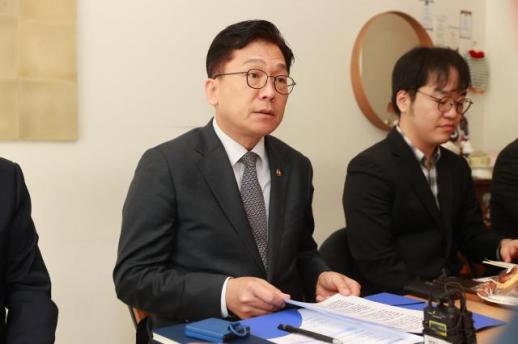 South Korea Moves to Aid Cafes Hit by Rising Coffee Bean and Packaging Costs The South Korean government has begun preparing support measures for cafe owners facing a management crunch as the Middle East war drives up the cost of supplies. The Ministry of SMEs and Startups on the 21st held an emergency meeting with the National Cafe Owners Cooperative to assess business conditions for small cafe operators strained by a weak won and higher oil prices, and to hear on-the-ground concerns. Cafe owners said costs have risen as prices for plastic cups, vinyl and other packaging materials increased amid a spike in oil prices and difficulties securing naphtha. With instability in the Middle East pushing up oil and raw material prices, naphtha’s monthly average price last month rose more than 67% from the previous month, per ton. Coffee beans, a key input, have also climbed. Data from the Korea Agro-Fisheries & Food Trade Corp.’s food industry statistics system showed Arabica beans traded in March at $6,768.12 per ton, up about 9.19% from the February average. The ministry and the cooperative shared details on price hikes and delivery conditions for items such as plastic cups and vinyl, and discussed possible support steps for small business owners affected by the war. They also reviewed proposals to help cafes shift from plastic to alternative materials and to ease the cost burden on small operators during that transition. The meeting marked the government’s third industry-specific support effort, following similar sessions with bakeries and the broader food service sector. The ministry has previously raised the issue of surging plastic container prices with relevant agencies during talks with the Korea Foodservice Industry Association. Second Vice Minister Lee Byeong-gwon said, “We have listened to a range of difficulties faced by small business owners through meetings with bakeries and the food service industry, but coming to the field, the impact feels even greater.” Lee also said the government would actively seek cooperation with rules it announced on the 15th on banning hoarding and allowing emergency supply-demand adjustments for petrochemical product feedstocks. The rules bar hoarding of seven basic fractions produced from naphtha: ethylene, propylene, butadiene, benzene, toluene, xylene and other fractions. “If instability in the supply of packaging containers occurs, we will closely monitor conditions with relevant ministries, including by designating additional items as needed,” Lee said. 2026-04-21 15:15:55
 -
 Busan Mayor Park Hyung-joon says rival’s attacks on Han Dong-hoon help his poll numbers Busan Mayor Park Hyung-joon said Monday that criticism of Han Dong-hoon by Jeon Jae-soo, the Democratic Party’s Busan mayoral candidate, is helping Park’s own support. Park, the People Power Party’s candidate for Busan mayor, told reporters at the National Assembly’s communications center that Jeon’s repeated attacks on Han’s possible run in a by-election in Busan’s Buk-gu Gap district were “not bad” for Park’s rise in the polls. A poll released the previous day showed Park and Jeon in a tight race within the margin of error. It was the first time the two major-party candidates were shown in a close contest since their nominations were finalized. In the survey by Hankook Research, commissioned by KBS Busan, 1,000 Busan residents ages 18 and older were polled April 17-19. Jeon led with 40% support, while Park had 34%, a gap within the margin of error of plus or minus 3.1 percentage points. Asked about talk of coordinating with Han, Park said once a local election campaign committee is formed, it will “fully discuss” the best approach to win. He added that he has not contacted or met Han. Park also said the narrowing gap reflected what he called missteps by the Lee Jae-myung administration. “The current administration keeps deceiving Busan citizens,” Park said, citing the failure of a special law for a global hub city, the stalled relocation of the Korea Development Bank, and delays in converting Baptist Hospital into a public hospital. Park said public sentiment in Busan “cannot improve” under those conditions and warned that if issues such as the public hospital plan are not resolved properly this time, Busan residents will become even angrier.* This article has been translated by AI. 2026-04-21 15:15:17
 -
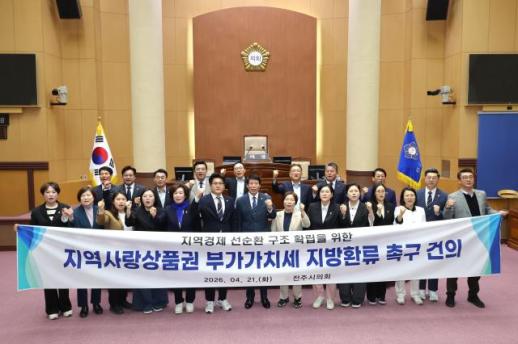 Jeonju City Council urges VAT revenue from local gift certificates be returned to municipalities Jeonju City Council in North Jeolla Province urged the government to return to local governments a portion of the value-added tax generated by the issuance and use of local gift certificates, saying it would strengthen the financial independence of municipalities. The council adopted a resolution at the second plenary session of its 429th extraordinary meeting on the 21st. The measure, proposed by council member Kim Se-hyeok (proportional representative), called for a system to return VAT tied to local gift certificates to the municipalities where the spending occurs. Kim said local gift certificates have become “a key tool” for boosting small merchants’ sales and supporting local economies, but that “structural imbalances and fairness issues between regions” have been raised. He said local governments shoulder significant costs, including subsidies for discounted sales and operating expenses, while VAT generated by certificate use “is fully allocated as a national tax.” He also said the way financial support is distributed — based on issuance volume and population — creates equity problems by favoring some municipalities with higher fiscal capacity. In the resolution, the council called for: △a制度 to return a set share of VAT generated by local gift certificate use to the relevant municipality; △reasonable, fair return standards that reflect local fiscal conditions; and △comprehensive policies to expand fiscal decentralization. Call to streamline procedures for installing traffic safety facilities The council also said it adopted a separate resolution at the same session, proposed by council member Kim Dong-heon (Samcheon 1·2·3, Hyoja 1-dong), seeking improvements to procedures for installing traffic safety facilities and related equipment. Kim said current law requires local governments to obtain a review each time from a police station’s traffic safety deliberation committee before installing such facilities. He said even simple, low-impact installations requested through public complaints are delayed by review schedules, and that largely paperwork-based procedures do not adequately reflect conditions on the ground. He said cutting unnecessary administrative steps and shifting to a practical, field-centered system is urgent to resolve complaints faster and improve the efficiency of budget execution. Key proposals include: △revising relevant laws and enforcement rules to simplify reviews, ease bottlenecks and expand local autonomy; and △creating a fast-track system for areas requiring rapid safety measures. The council said the adopted resolutions will be sent to the Cheong Wa Dae, the Prime Minister’s Office, the Ministry of the Interior and Safety, the National Police Agency, and the National Assembly’s Public Administration and Security Committee.* This article has been translated by AI. 2026-04-21 15:12:48
 -
 South Korea to stop labeling stepchildren on resident registration records In South Korea, family relationships shown on resident registration certificates and extracts will no longer distinguish between “child” and “spouse’s child,” with both listed simply as household members. The Ministry of the Interior and Safety said a partial revision to the Enforcement Decree of the Resident Registration Act was reviewed and approved at a Cabinet meeting on the 21st. The ministry said the changes are aimed at better protecting personal information for remarried families and others, reflecting diverse family structures more evenly, and improving administrative convenience for foreign residents. Under the revision, anyone considered family under the Civil Act — except the head of household’s spouse — will be labeled “household member,” while others will be labeled “cohabitant.” The listing order will also change so the head of household’s spouse’s lineal ascendants and descendants are placed at the same rank, replacing the previous practice in which a “spouse’s child” was listed after a “child.” Rules for recording foreign residents’ names will also be updated. Previously, resident registration records used only Roman-letter names, while family relationship registers used only Hangul, creating difficulties in confirming identity. Going forward, resident registration records will show names in both Hangul and Roman letters to improve accuracy and convenience when using administrative and financial services. In addition, applications to correct or change entries in resident registration records — previously limited to the foreign resident — will be expanded to allow the head of household or household members to apply. The ministry said it will work with local governments to strengthen guidance and publicity to reduce confusion during implementation. The revision will take effect Oct. 29 after computer systems are updated. Interior Minister Yoon Ho-jung said the revision is expected to provide stronger protection for sensitive personal information for remarried families and move administrative services toward greater inclusion of diverse family forms. 2026-04-21 15:09:35
 -
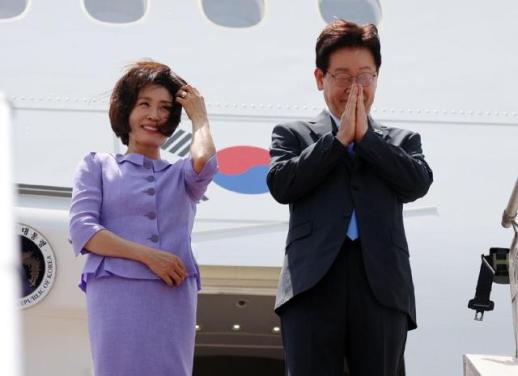 Lee heads to Hanoi after wrapping up visit to India SEOUL, April 21 (AJP) - President Lee Jae Myung is heading to Hanoi on Tuesday, after wrapping up his trip to India earlier in the week. Lee is scheduled to hold talks on Wednesday with Vietnamese President Tô Lâm, who also serves as general secretary of the Communist Party. Lee's trip is a reciprocal visit, coming about eight months after Lâm visited Seoul in August last year. As the first leg of his itinerary in Viet Nam, Lee will meet with South Koreans living there. He will then visit Vietnamese revolutionary leader Ho Chi Minh's mausoleum to lay a wreath before having a summit with Lâm later in the day, followed by a joint press statement and a state banquet. Lee will also meet with Vietnamese Prime Minister Le Minh Hung and have lunch with National Assembly chairman Tran Thanh Man the following day, before attending a forum with business leaders from both countries to discuss ways to expand trade and investment. Before returning home on Friday, Lee will tour the UNESCO World Heritage site of the Imperial Citadel of Thang Long. 2026-04-21 15:07:53
 -
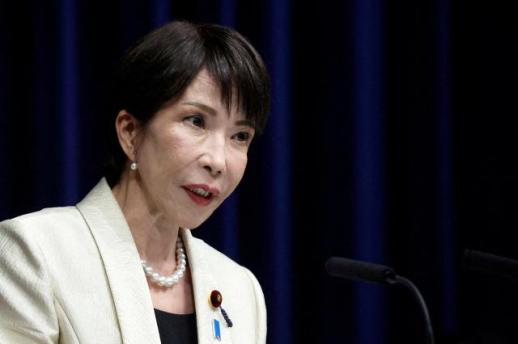 South Korea Voices Regret Over Japanese Prime Minister’s Yasukuni Shrine Offering South Korea’s Foreign Ministry on 21 expressed deep regret after Japanese Prime Minister Sanae Takaichi sent an offering to the Yasukuni Shrine’s autumn festival in Tokyo, where Class-A war criminals from the Pacific War are enshrined. In a spokesperson’s statement, the ministry said the South Korean government was “deeply disappointed and regretful” that “responsible Japanese leaders” again made offerings or visited the shrine, which it said glorifies Japan’s past wars of aggression and enshrines war criminals. The ministry urged Japan’s leaders to “face history” and to show “humble reflection and sincere remorse” over the past through their actions, adding that this is an important foundation for building a future-oriented South Korea-Japan relationship based on mutual trust. Takaichi made the offering to the shrine on 21. Other Cabinet ministers and key politicians from the ruling coalition also made offerings or visited, the ministry said.* This article has been translated by AI. 2026-04-21 15:05:14