
Journalist

Lee Hugh
=
-
 Seoul to Develop Chang-dong as K-Entertainment Hub Around 28,000-Seat Seoul Arena An area around Chang-dong in Seoul’s Dobong district will be redeveloped into a global cultural hub and a cluster for the culture and entertainment industry, centered on the 28,000-seat Seoul Arena set to open in the first half of next year. Seoul Mayor Oh Se-hoon announced the plan at a news briefing at City Hall on April 21. The city aims to draw domestic and overseas visitors to boost the local economy and create jobs by fostering the entertainment industry, positioning Chang-dong as an economic anchor for northeastern Seoul. “Chang-dong, long seen as the outskirts of Seoul, will be reborn as a stage the world comes to — ‘K-Enter Town, Chang-dong,’” Oh said. “It will be a new engine driving Seoul’s next growth and a starting point for urban competitiveness that brings vitality to northern Seoul.” The city said the project will build Chang-dong into a place where performances run year-round, where concerts expand into industry and jobs, and where events translate into tourism and spending. Officials said they expect economic effects in the trillions of won, extending beyond ticket sales to lodging, transportation, dining and shopping. Chang-dong is to be promoted as a “Live Stage” city, with global concerts and exhibitions throughout the year. The city plans to host more than 100 performances annually at Seoul Arena, each drawing about 30,000 people. It also plans to introduce a live-broadcast system, dubbed “Connective Live,” so people outside the venue can watch and share performances in real time. Oh said the arena’s opening could bring about 2.7 million global tourists to Chang-dong each year, calling it a key driver for Seoul’s push toward an era of 30 million foreign tourists. The city also plans programs and performances linked to cultural sites in northern Seoul, including the Dongdaemun Design Plaza and the “Dongdaemun K-pop Street,” to spread the project’s impact across the broader northeastern area. Events tied to Seoul’s seasonal Spring Festival are also planned to coincide with the arena’s opening. Nearby facilities — including the Seoul Museum of Photography, the Seoul Robot and AI Science Museum, and cultural spaces under the elevated structure near Chang-dong Station — are to run exhibitions and hands-on programs on an ongoing basis. A “multi-purpose cultural convention” facility inside the arena complex is planned to host music awards, album showcases and fan meetings. To encourage spending, the city plans K-culture-themed retail facilities within the district. Working with the privately developed Chang-dong station complex, it plans to support shopping tied to K-fashion and K-beauty, including merchandise. A K-food specialty market is planned for the site of an NH Hanaro Mart. For underused land near Chang-dong Station and aging commercial areas, the city plans incentives including floor-area ratios of up to 1,300% to bring in commercial uses, tourist accommodations and office space. The city also plans to attract and nurture culture and entertainment companies. A public-run support facility for popular music will provide assistance for music content production and distribution, targeting smaller agencies and other high-potential firms. Startup space is also planned at the Chang-dong Aurne startup center and the Seed Cube Chang-dong cultural industry complex. Across the Jungnang Stream in the Sanggye area, the city said it will also seek culture-industry tenants for the Seoul Digital Bio City (S-DBC) under development, allowing performance and entertainment firms alongside bio-related businesses to strengthen links between Chang-dong and Sanggye. To help visitors handle lodging, leisure and dining within the district, the city plans to expand infrastructure under a “Live City” concept. It plans to add 700 hotel rooms and promote urban homestay businesses using nearby housing. Chang-dong Station is also expected to add “Seoul Arena Station” or “K-Enter Town Station” as an additional name to improve access and brand recognition. The city put the total budget for the “K-Enter Town, Chang-dong” project at 2.7 trillion won. It said 2 trillion won in private and public capital had been invested through last year, and it plans an additional 700 billion won starting this year. “The essence of growth and change in northern Seoul, including K-Enter Town, Chang-dong, is improving the quality of life for residents in northern Seoul as well as Seoul’s urban competitiveness,” Oh said. He pledged strong support until the area’s potential becomes competitiveness and change leads to a real narrowing of gaps. 2026-04-21 14:06:48
 -
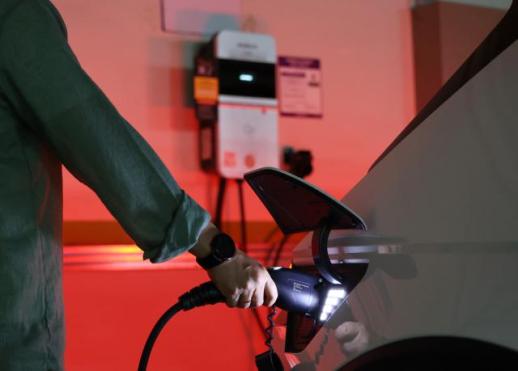 South Korea EV Registrations Top 1 Million as 2026 New Sales Pass 100,000 South Korea’s new electric-vehicle registrations have topped 100,000 this year, pushing cumulative EV registrations above 1 million. The Ministry of Climate, Energy and Environment said Tuesday that new EV registrations surpassed 100,000 on April 14. The pace is faster than in previous years. In 2025, when EV adoption was highest for the year at 220,919 vehicles, new registrations crossed 100,000 in the second week of July. In 2024, with 146,902 vehicles, the milestone came in the second week of September. Cumulative EV registrations exceeded 1 million on April 15. As of April 17, the total stood at 1,004,727. Through March, EVs accounted for 83,533 of 415,746 new vehicles, or 20.1%. The EV share slipped slightly from 9.2% in 2023 to 8.9% in 2024, but rose to 13.0% in 2025. The ministry attributed the increase to a wider range of new models, price discount competition among automakers, expanded subsidies including government support for switching from internal-combustion vehicles, and early implementation of rollout programs. Some observers also cited higher oil prices linked to the recent Middle East situation. The government recently secured additional supplementary-budget funding for EV purchase subsidies covering 20,000 passenger cars and 9,000 trucks. That brings this year’s planned subsidy volumes to 280,000 passenger cars, 45,000 trucks and 3,800 buses. With a growing number of local governments running out of first-half subsidy allocations, the government plans to urge municipalities with remaining second-half volumes to move up their public notices. The municipalities planning to do so number 81 for passenger cars and 75 for trucks. The government also said it will allow local governments that need additional budget allocations to pay subsidies first using national funds. Minister Kim Seong-hwan said, “This year will be recorded as a historic year that opens the era of 1 million electric vehicles,” adding that the government will pursue “effective and swift measures” so the public does not face inconvenience in using EVs. 2026-04-21 14:06:06
 -
 KOSPI Jumps More Than 2% to Top 6,370 on Foreign and Institutional Buying South Korea’s KOSPI surged more than 2% in intraday trading, breaking past its previous high. Shares rose, led by semiconductors, on expectations for the upcoming earnings season despite concerns about volatility tied to the Middle East. According to the Korea Exchange, the KOSPI was up 150.91 points, or 2.43%, at 6,370.00 as of 1:48 p.m. The index opened up 83.45 points, or 1.34%, at 6,302.54 and extended gains on foreign buying. In the main market, foreigners and institutions were net buyers of 1.2823 trillion won and 631.3 billion won, respectively, while individuals were net sellers of 1.8002 trillion won. Among large-cap stocks, Samsung Electronics rose 1.86% and SK hynix gained 4.55%. Hyundai Motor added 2.66%, LG Energy Solution jumped 9.91% and SK Square rose 1.00%. Samsung Biologics slipped 0.37% and Hanwha Aerospace fell 2.25%. The KOSDAQ was down 1.21 points, or 0.10%, at 1,173.64 at the same time. The index opened up 11.38 points, or 0.97%, at 1,186.23, but turned lower as foreigners and institutions sold. In the KOSDAQ market, individuals were net buyers of 552.1 billion won, while foreigners and institutions were net sellers of 395.7 billion won and 98.8 billion won, respectively. Among top KOSDAQ shares, Alteogen fell 0.54%, Rainbow Robotics dropped 1.64%, Samchundang Pharm slid 0.21%, ABL Bio lost 2.87% and Kolon TissueGene sank 6.21%. EcoPro rose 3.98%, EcoPro BM gained 4.29% and Lino Industrial added 0.34%. 2026-04-21 14:00:19
 -
 Samchundang Pharm penalized for disclosure lapse, raising concerns for biotech trust Samchundang Pharm, a KOSDAQ-listed company, has been designated an unfaithful disclosure firm. The Korea Exchange’s KOSDAQ Market Division imposed five penalty points, citing a failure to carry out fair disclosure of “forecasts or predictions regarding business performance.” Its cumulative penalty points over the past year now total five. The exchange finalized the sanction after a notice last month and a review by a disclosure committee that included outside experts. While the case appears to be a single company’s disclosure violation, it underscores a broader issue for the pharmaceutical and biotech sector, where disclosures are not a routine formality. Information such as research and development results, clinical progress, the possibility of technology exports and sales outlooks can directly affect corporate value and share prices. Because investors cannot easily evaluate products themselves, they rely on disclosures to judge a company’s prospects; when disclosures falter, the market’s basis for judgment weakens. Biotech is also an industry where expectations and uncertainty coexist, with future earnings that have not yet materialized reflected in current valuations. That structure demands stricter information sharing. Even small wording choices, schedule changes or shifts in the tone of guidance can influence investment decisions. In that context, neglecting fair-disclosure obligations is likely to be seen as more than a simple mistake. The concern grows when such cases recur. The damage does not stop with one company, the editorial said, warning that Korea’s broader biotech sector can come under suspicion that statements run ahead of disclosures. Overseas investors may apply a discount to Korean biotech firms, and retail investors may lose confidence in the sector, hurting even stronger companies. The five-point penalty is a warning, but sanctions alone are not enough, it said. Companies need internal controls that place disclosure under top management responsibility, with R&D, investor relations, and legal and finance functions working to review material information promptly and deliver it to the market under consistent standards. Regulators, it added, should not rely only on after-the-fact punishment. It called for tighter disclosure guidelines reflecting the characteristics of the pharmaceutical and biotech industries and for clearer standards on what predictive disclosures may include and what responsibilities follow. The goal, it said, should be a system that prevents violations born of confusion while holding firms strictly accountable when rules are knowingly broken. As Korea’s biotech industry pushes into global markets, technology alone is not enough, the editorial said. Capital-market trust must keep pace, and a culture of stating numbers and facts accurately is essential for laboratory achievements to be recognized by the market. The Samchundang Pharm case, it said, is a reminder to return to those basics.* This article has been translated by AI. 2026-04-21 13:57:16
 -
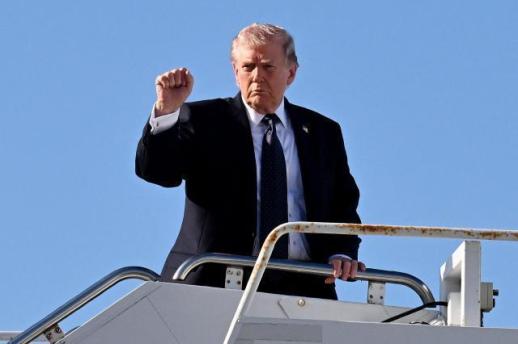 Trump Revives ‘Midnight Hammer,’ Says Iran Nuclear Program Won’t Be Easy to Rebuild President Donald Trump has again pointed to last year’s U.S. airstrike operation against Iran, dubbed “Midnight Hammer,” reiterating his claim that Iran’s nuclear program will not be easily rebuilt. In a post Sunday on his Truth Social account, Trump said the operation “completely and totally destroyed” Iran’s nuclear-related targets and that recovering buried nuclear material “will require a long and difficult process.” He also criticized CNN and other outlets, saying they were diminishing the achievements of U.S. pilots. “Midnight Hammer” was the name of a U.S. operation last June that struck three Iranian nuclear sites. The U.S. military deployed more than 125 aircraft, including seven B-2 stealth bombers, and dropped 14 massive bunker-buster bombs targeting Fordo, Natanz and Isfahan. The U.S. military said it combined deception flights and indirect approaches to hit the targets. Iran’s military was reported to have been largely unable to respond to the U.S. aircraft. Assessments of the damage have differed. Trump and Defense Secretary Pete Hegseth used language suggesting near-total destruction, while Joint Chiefs Chairman Dan Caine said all three sites suffered “extremely severe damage and destruction” but stopped short of saying Iran’s nuclear capability had been eliminated. Trump’s post came as it remains unclear whether follow-up talks between the United States and Iran will materialize. Trump has argued that any new nuclear deal with Iran would be better than the 2015 Joint Comprehensive Plan of Action, but it is still uncertain how negotiations might be concluded in the near term. 2026-04-21 13:55:07
 -
 Seoul Mayor Oh Se-hoon says Jang Dong-hyuk is a liability, urges broader conservative appeal Seoul Mayor Oh Se-hoon said Tuesday that candidates heading into the election want the party to take a unified approach, arguing that it will help to embrace both conservatives and centrists. Oh made the remarks on KBS radio's "Jeongyeok Sisa," saying he could not avoid noting that party leader Jang Dong-hyuk has become a burden for candidates. Oh pointed to Jang's reported instruction to look into lawmaker Jin Jong-oh after Jin said he would support Han Dong-hoon, who has declared his bid in a by-election. Oh said the party must show through actions and words that it has sincerely reflected since the declaration of martial law and will work to ensure it never happens again. On Jang's 8-day, 10-night trip to the United States, Oh said the party leadership has entered a phase with little to do, but added that candidates are under intense pressure day by day and have not been told how the trip would help in the local elections or what meetings and talks took place. Oh said the outlook for the June 3 local elections is unfavorable because the People Power Party's approval ratings are low. Still, he said he could benefit from an incumbency advantage, citing results over the past five years including a lower unemployment rate, a higher ranking in city competitiveness and improved air quality. After Democratic Party Seoul mayoral candidate Jung Won-oh said his campaign would set up an "Oh Se-hoon 10-year judgment headquarters" to evaluate the city administration, Oh said Seoul has done a lot while managing its finances carefully and has instead reduced debt. "I'd welcome them taking a close look and judging," he said. Oh also criticized Jung, saying he would be unable to oppose the president even on matters that would harm Seoul residents. Oh added that a Seoul mayoral candidate should state a position on the long-term holding deduction tied to real estate capital gains tax, but said Jung has remained silent.* This article has been translated by AI. 2026-04-21 13:54:21
 -
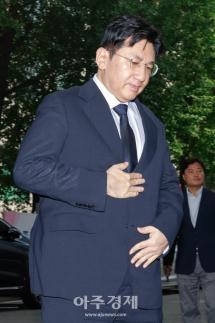 Police Seek Arrest Warrant for HYBE Chairman Bang Si-hyuk on Fraudulent Trading Allegations Police have applied for an arrest warrant for HYBE Chairman Bang Si-hyuk over allegations that he misled investors ahead of the company’s initial public offering and induced them to sell their stakes. The Seoul Metropolitan Police Agency’s financial crimes unit said April 21 it requested the warrant on suspicion of fraudulent unfair trading. The move came about five months after police questioned Bang in mid-November. Bang is accused of telling HYBE investors in 2019 that there were no plans to list the company, then having them sell shares to a specific private equity fund before proceeding with the IPO. Police believe Bang had previously signed a nonpublic agreement to receive 30% of the fund’s post-listing sale profits, and that he gained nearly 200 billion won in illicit profits. Under South Korea’s Capital Markets Act, it is illegal to obtain financial gain by providing false information or using improper schemes involving financial investment products, including unlisted shares. If the violation yields profits of 5 billion won or more, the penalty can be life imprisonment or at least five years in prison. Police said they began investigating after receiving a tip in late 2024. They raided the Korea Exchange and HYBE in June and July last year and barred Bang from leaving the country. As the probe dragged on, his public activities were also reported to have been constrained. More recently, the U.S. Embassy in Seoul was reported to have sent a letter to the National Police Agency seeking cooperation for Bang’s visit to the United States, citing BTS world tour-related matters. Bang’s side says the company complied with relevant laws and regulations during the listing process and that there is no legal issue. * This article has been translated by AI. 2026-04-21 13:51:16
 -
 Labor Ministry: Casualties at Cargo Truckers Rally Go Beyond Yellow Envelope Law South Korea’s Labor Ministry said the casualties at a Cargo Truckers Solidarity rally should not be framed as an issue limited to the so-called Yellow Envelope Law, which revises Articles 2 and 3 of the Trade Union and Labor Relations Adjustment Act. In an explanatory note released April 21 in response to reports linking the incident to the law, the ministry said it "expresses very deep regret" over the injuries and death. It said the case "goes beyond" disputes over prime contractor-subcontractor bargaining under the revised Article 2, which is based on "substantial and specific" control. The ministry said the root problem was the lack of a structure allowing people in relatively vulnerable positions — including small business owners and individual proprietors — to organize and demand dialogue. It added it was regrettable that the conflict was not resolved through talks and instead worsened. The ministry said it will work with relevant agencies to find ways for small merchants and self-employed people to communicate with stakeholders to protect their rights. The comments were seen as signaling a preference for creating a separate channel for talks rather than applying the Yellow Envelope Law by treating Cargo Truckers Solidarity members as small business owners or individual proprietors. The incident occurred about 10:32 a.m. April 20 at the CU logistics center in Jinju, South Gyeongsang Province, where a 2.5-ton delivery truck collided with members of the CU branch of the Korean Public Service and Transport Workers’ Union, an affiliate of the Korean Confederation of Trade Unions. One person was killed and two others suffered serious to moderate injuries. Cargo Truckers Solidarity has urged BGF Retail, the prime contractor, to join joint bargaining as an employer, arguing working conditions are effectively determined by the company. BGF has said it has no direct duty to bargain because convenience store logistics operate through a multilayer contract structure running from BGF Logis to logistics centers, transport firms and drivers. The government has maintained that direct mediation is difficult because Cargo Truckers Solidarity is not an officially recognized union but an extra-legal group formed by individual business operators. 2026-04-21 13:49:57
 -
 Gwangmyeong Launches ‘Future-Ready’ Library Policy Focused on Daily Life Gwangmyeong, a city in Gyeonggi Province, said it will move ahead with a “future-ready library policy” aimed at linking reading, learning, creation and community engagement in residents’ daily lives. Kim Myeong-ok, head of the city’s Lifelong Learning Projects Headquarters, outlined the plan at a policy briefing at City Hall on the 21st. The policy centers on expanding public libraries beyond places to view materials, repositioning them as neighborhood-based cultural hubs where people can stay, rest, learn and create. “The key is building Gwangmyeong’s own system that shows, in a comprehensive way, how libraries support growth and connection in citizens’ lives,” Kim said. As part of the effort, the city plans a broad redesign to make library spaces more welcoming for longer visits. Haan Library will be rebuilt as a complex cultural space combining hands-on areas — including reading-camp activities, an art workshop, shared transcription sessions, a sound relaxation room and a game zone — with a cafe-style community area. Gwangmyeong Library will be converted into a community space with a shared area for young adults and a digital creativity space for teenagers. Cheolsan Library will strengthen citizen-participation creation functions centered on an arts-based creative space called “Siseon.” Yeonseo Library will be improved into an open, neighborhood living-room style space for discussion, learning and communication, Kim said. The city will also expand specialized programs by library. Haan Library will focus on digital education based on gaming, VR and AR. Soha Library will center on creative writing programs. Chungyeon Library will run children’s English reading programs. Gwangmyeong Library will strengthen makerspace-based digital and entrepreneurship education. Cheolsan Library will add arts creation and video production functions, and Yeonseo Library will operate programs built around reading communities. Kim said the city will also promote a “2026 Gwangmyeong Citizens Read One Book Together” initiative to broaden participation in reading culture. In addition, the city plans to run a book publishing support project so residents can take part in planning, writing and publishing, aiming to build a local creation ecosystem. To support local bookstores, the city said it is operating a 10% cashback program for book purchases. Residents who buy books at local bookstores using local currency can receive a partial refund. The city said it is also expanding public libraries and operating eight smart libraries to provide a neighborhood-based reading environment available 24 hours a day. “Libraries are changing into public cultural platforms that support learning and rest, creation and communication close to citizens’ lives,” Kim said. “We will build a reading-culture city where books and people are connected.”* This article has been translated by AI. 2026-04-21 13:49:12
 -
 Changwon to Host Concert, Bullfighting Tournament and Museum Exhibition Starting Late April Changwon Special City will roll out a series of cultural events for residents starting in late April, including a community concert, a traditional folk competition and a museum exhibition. Changwon will hold the “Uichang-dong Community Harmony Concert” at 7 p.m. on April 24 in the parking lot of the Changwon City Livestock Cooperative. The concert was planned to mark the 100th anniversary of the children’s song “Hometown Spring” and to share with residents the historical significance of Uichang-dong, where the song was created. The program begins at 6:40 p.m. with a pre-show by the Uichang-dong resident program team “Gogo Janggu.” The main concert will feature the Changwon Municipal Choir performing “Hometown Spring,” followed by singer Kim Eun-ju, fusion band A-PLUS, local singer Bae Jin-a and popular singer Na Sang-do.24th Changwon National Folk Bullfighting Tournament Opens April 29 The “24th Changwon National Folk Bullfighting Tournament” will be held April 29 through May 3 at a temporary arena in the Magumsan hot-spring district in Buk-myeon, Uichang-gu. A total of 200 bulls from nine cities and counties nationwide will compete, including 20 from Changwon. The tournament will be run in a bracket format across three weight classes — Baekdu, Hangang and Taebaek — with total prize money of 55.2 million won. Organizers said stricter animal-welfare rules will apply this year, including tougher horn-management standards and a match time limit of up to 40 minutes. An opening ceremony is scheduled for 2 p.m. on May 2, with congratulatory performances, a prize drawing and a mobile livestock-products sales vehicle among side events. An indoor exhibition is also planned. The Changwon Municipal Masan Museum will present its first-half 2026 special exhibition, “We Are Blossoming Flowers of Joseon,” from April 28 to Aug. 30 in the first-floor special exhibition gallery. The exhibition highlights the history of “Daejayu Kindergarten,” which opened in 1927 and worked to preserve the Korean language and culture. Organized in three sections, it traces the period from the opening of Masanpo Port in 1899 through the Japanese colonial era, focusing on efforts to find hope through education despite harsh repression. Key items include a seal stamp used by Monk Guha, a 1924 map titled “Joseon Map, Southern Section,” and the 15th Daejayu Kindergarten graduation album published in 1942. The museum will also run a participatory program in which visitors write messages to help complete a large Taegeukgi, the national flag of South Korea.* This article has been translated by AI. 2026-04-21 13:48:19