
Journalist

Lee Hugh
=
-
 South Korea to Allow Single-Stock Leveraged ETFs, With Listings Expected in May South Korea will introduce high-risk exchange-traded funds that concentrate on a single stock, expanding investor choice by easing product-structure limits that were tighter than in overseas markets. Regulators said investor-protection measures will be strengthened at the same time. The Financial Services Commission said April 21 that the Cabinet approved an amendment to the Enforcement Decree of the Financial Investment Services and Capital Markets Act allowing single-stock leveraged ETFs. The amendment will be promulgated and take effect April 28, and after related rules are updated, single-stock leveraged ETFs are expected to be listed in the domestic market as early as May 22. The change allows the launch of single-stock-based ETFs and exchange-traded notes, which had not been permitted. Under previous diversification requirements, the weight of any one stock was capped at 30%, but the limit will be expanded to 100%, enabling products that effectively invest in a single name. The cap on risk-assessed exposure tied to price moves will also be allowed up to 200% of total assets, making it possible to design leveraged and inverse products of up to about plus or minus two times. Single-stock ETFs based on major domestic shares with sufficient market capitalization, trading volume and derivatives-market stability — including Samsung Electronics and SK hynix — are expected to be introduced first. The revision also lays groundwork for a wider range of strategy products, including covered-call ETFs. Separately, through revisions to Korea Exchange rules, if an underlying stock is suspended from trading or delisted, the related ETF or ETN will also be suspended or delisted. The FSC said the overhaul is intended to narrow regulatory gaps with overseas-listed ETFs, curb capital outflows and strengthen the competitiveness of South Korea’s ETF market. Single-stock ETFs are already traded in markets including the United States and Hong Kong, and South Korean investors have been investing in such products abroad. Citing the higher risks, financial authorities said investor safeguards will be significantly reinforced. For single-stock leveraged and inverse products, investors will be required to complete an additional hour of advanced training on top of the existing one-hour pre-education requirement. The program will include a pre-assessment and tools such as quizzes and checklists to test understanding of leverage effects, negative compounding effects and tracking-difference risks. Authorities will also apply a 10 million won minimum deposit requirement to both domestically and overseas-listed products, and require product names to clearly state the structure, using terms such as “single-stock” and “leveraged/inverse” rather than simply “ETF.” An FSC official said, “Single-stock leveraged ETF products, unlike general products, have unique price structures and risk factors,” and urged investors to pay close attention to leverage and negative compounding effects and to invest responsibly within their ability to absorb losses. 2026-04-21 11:36:08
 -
 Budget Office, Finance Ministry Review Conditions for 2027 Budget, Keep Expansionary Fiscal Stance The government plans to maintain an expansionary fiscal stance as external economic uncertainty grows, including the war in the Middle East, to cushion spillover effects on the real economy. Officials also agreed that sustained, proactive fiscal policy will be important to address structural challenges such as an industrial shift driven by artificial intelligence and demographic change. The Ministry of Planning and Budget and the Ministry of Finance and Economy on 21 held a meeting at the Government Complex Sejong to review overall conditions for drafting the 2027 budget. The session brought together bureau and division directors in charge of budget, taxation, the national treasury and macroeconomic policy to assess domestic and global economic trends and fiscal conditions and to explore directions for fiscal management in 2027 amid widening uncertainty, including the Middle East conflict. Participants focused on how external shocks could affect trade, inflation, corporate management and household finances. They shared the view that energy shocks such as high oil prices could weigh on the economy into next year, underscoring the need for a continued fiscal role. They also agreed on the importance of sustainable, proactive fiscal policy in responding to structural issues including AI-driven industrial change, demographic shifts, regional decline, polarization and carbon neutrality. They also reviewed revenue conditions for next year, focusing on trends in major tax bases such as corporate performance, asset markets and private consumption. With uncertainty rising, they agreed that more precise revenue forecasting is essential and said they would actively use the revenue forecasting committee established this year to maintain close communication. To strengthen accountability and effectiveness in fiscal management, officials discussed tightening links between budget drafting and the settlement of accounts. Under the current schedule, the settlement process for the previous year is completed after September, when the government finishes drafting its budget proposal, making it difficult to reflect findings such as weak performance or poor execution in the next budget. They agreed to continue in-depth discussions on ways to strengthen feedback between settlement and budgeting, including shortening the settlement timeline so identified institutional fixes and execution problems can be systematically incorporated during budget preparation. Participants reaffirmed the need for close coordination between the two ministries across budget, tax, treasury and macroeconomic policy. Park Chang-hwan, the budget chief review officer at the planning and budget ministry, said, "When economic uncertainty is high, revenue and spending, countercyclical responses and support for structural reform must work together, so a standing cooperation system is more important than anything else." Going forward, the two ministries plan to frequently share their assessments of the economic outlook and revenue conditions and to maintain close coordination in major policy processes, including drafting the 2027 budget proposal and preparing the medium-term fiscal management plan. 2026-04-21 11:34:28
 -
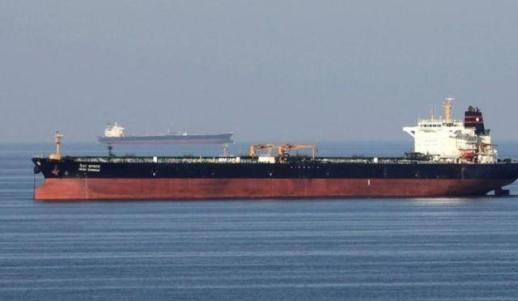 South Korea Says Kuwait Force Majeure to Have Limited Impact; Russian Oil Imports Unlikely The government said Kuwait’s declaration of force majeure on crude oil and petroleum product exports is unlikely to have a major impact on South Korea, and it sees little chance of bringing in additional Russian crude or petrochemical products despite a temporary easing of U.S. sanctions. Yang Gi-uk, director general for industrial resources and security at the Ministry of Trade, Industry and Energy, said at a Middle East war response task force briefing on the 21st that some domestic refiners under contract had been notified of Kuwait’s move. “With the Strait of Hormuz blocked since the Middle East war, force majeure will not affect us,” Yang said. Kuwait Petroleum Corp., the state-run oil company, sent letters to counterparties on the 16th notifying them it was invoking a force majeure clause. The company said the blockade of the Strait of Hormuz has prevented tankers from entering and leaving the Persian Gulf, making it difficult to meet scheduled deliveries on time. Yang said the declaration appeared tied to contract procedures as April loading dates were ending, rather than damage to refining facilities. He added that if the strait remains blocked, Kuwait could declare force majeure again for subsequent volumes. Officials also played down the likelihood of additional imports of Russian crude and petrochemical products following U.S. sanctions relief. The United States on the 17th (local time) extended a further one-month easing of sanctions related to exports of Russian crude and petroleum products. While any related transactions must be completed within a month, refiners and others have secured 70 million barrels of alternative supplies through the end of May. Yang said some risk had been reduced by the U.S. move, but “EU risk remains.” He said interest is low because domestic vessels often rely on EU insurers, creating additional exposure. On additional naphtha imports, Yang said companies are reviewing volumes based on experience from last month’s sanctions easing, but are also seeking alternative supplies. “We do not see companies rushing in as if their survival depends on it,” he said. Regarding the fourth round of the oil products price cap set to take effect at midnight on the 24th, Yang said it was an emergency measure chosen amid unstable global oil prices. He said the government is preparing to make decisions by weighing household economic conditions, the fiscal burden, demand reduction and consumption patterns by fuel type. The ministry said Japan’s gasoline prices are 23.8% lower than South Korea’s and diesel prices are 28.3% lower. In the United States, gasoline prices are 20.8% lower, but diesel prices are 8.7% higher. Yang said Japan is believed to be deploying subsidies on a massive scale, while the United States has seen larger price increases than South Korea. He said South Korea should assess whether other countries are suppressing prices through caps by reviewing overseas cases. Asked about speculation that gasoline prices could rise more sharply to manage demand, Yang said gasoline and diesel consumption are moving differently and it is difficult to discuss price increases or cuts now. He said a decision would be made after considering various views. On a Malta-flagged tanker that recently exited the Strait of Hormuz and is heading to South Korea, Yang said it was not among the seven tankers in the Persian Gulf previously announced by the ministry. He said it had been excluded because the government judged the likelihood of receiving the cargo to be low, calling it “a highly exceptional situation.” 2026-04-21 11:33:19
 -
 South Korea posts record exports in April as semiconductor shipments soar SEOUL, April 21 (AJP) - South Korea's exports jumped sharply in the first 20 days of this month, driven largely by strong global demand for semiconductors, according to figures released by the Korea Customs Service on Tuesday. Outbound shipments surged to US$50.4 billion between April 1 and 20, up 49.4 percent from a year earlier, the highest level ever recorded for the period and surpassing the previous record of $36.4 billion in 2022. Imports also increased 17.7 percent during the same period to $39.9 billion, resulting in a trade surplus of $10.4 billion. The surge was largely attributed to exports of semiconductor chips, with shipments soaring 182.5 percent to $18.3 billion. Exports of computers and related equipment rose even more sharply, jumping nearly 400 percent to $2.2 billion. Exports of petroleum-related goods also increased 48.4 percent to $3.2 billion. However, not all industries performed well, as exports of automobiles fell 14.1 percent to $3.1 billion and auto parts dropped 8.8 percent to $1.1 billion. Overseas shipments increased overall, with Viet Nam up 79.2 percent, followed by Taiwan (77.1 percent), China (70.9 percent), the U.S. (51.7 percent), and the European Union (10.5 percent). Imports of crude oil rose 13.1 percent to $4.8 billion, marking a third consecutive monthly increase after $4.3 billion in January, $4.4 billion in February, and $4.6 billion in March, reflecting rising global oil prices due to the prolonged conflict in the Middle East. 2026-04-21 11:21:16
 -
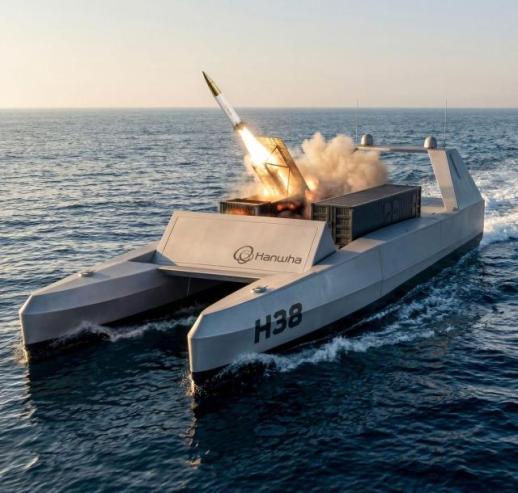 Hanwha partners US firm to build unmanned surface vessels for Pentagon SEOUL, April 21 (AJP) - Hanwha Group has partnered with U.S.-based Magnet Defense to jointly develop and produce unmanned surface vessels (USVs) for the U.S. military, the company said. Hanwha Defense USA announced on Monday that it signed a strategic partnership with Magnet Defense at the 2026 Sea-Air-Space exposition held in National Harbor, Maryland. The agreement covers multiple projects, including the joint construction of a 38-meter medium unmanned surface vessel (MUSV) known as the H38. Under the partnership, the H38 will be developed based on Magnet Defense’s flagship M48 model, incorporating Hanwha’s advanced technologies. The M48, the basis for the joint development, has one of the longest operational ranges among USVs in service at 17,000 nautical miles. The vessel has undergone extensive real-world validation, completing a total of 32,000 nautical miles of operations, including a round-trip voyage from Miami to American Samoa in 2024, a transit through the Panama Canal and navigation in extreme weather conditions rated at Sea State 9. Mark Bell, CEO of Magnet Defense, said the combination of Hanwha’s advanced missile systems and Magnet Defense’s USV design and manufacturing capabilities would generate strong synergies. Michael Coulter, CEO of Hanwha Defense USA, said, “Hanwha is committed to deploying highly capable and lethal unmanned surface vessels to support U.S. forces and allies in times of conflict,” adding, “We will integrate Hanwha’s manufacturing capabilities and advanced robotics technologies with Magnet Defense’s proven autonomous navigation systems.” The partnership comes as the U.S. Navy has signaled its intent to acquire unmanned surface vessels to meet evolving operational requirements. The two sides also agreed to cooperate on AI-based robotic shipyards and artificial intelligence software development. 2026-04-21 11:17:25
 -
 Yuhan, Huino Begin Commercial Rollout of AI Telemetry System MemoCue Yuhan Corp. said Tuesday it has begun commercializing an artificial intelligence telemetry solution, MemoCue, with digital health care company Huino. The system will be supplied to H Plus Yangji Hospital and applied to about 100 beds in key departments where cardiac monitoring is essential, the company said. MemoCue analyzes hospitalized patients’ electrocardiogram data in real time to detect abnormal signs early and support clinicians’ decisions. It is designed to extend monitoring beyond intensive care units to general wards. Yuhan said the system can use a hospital’s existing communications infrastructure without installing a separate network gateway, reducing the burden of adoption. The solution includes a wearable ECG device, the Memo Patch M, designed with patient convenience and safety in mind. It uses a defibrillation protection circuit that delivers more than 99% of treatment energy to the patient and can resume measurement within five seconds after a shock, the company said. The product received U.S. Food and Drug Administration 510(k) clearance last year and earned the top electrical safety rating under the international medical device safety standard IEC 60601-1, known as “Type CF Defib-proof.” A Yuhan official said the company expects the system to help hospitalized patients recover by enabling accurate alerts and rapid response. 2026-04-21 11:12:19
 -
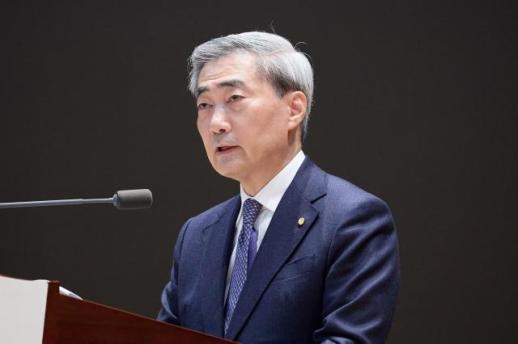 New Bank of Korea chief stresses "discretion" as oil shock weighs prices and growth SEOUL, April 21 (AJP) —New Bank of Korea Governor Shin Hyun-song underlined “discretion” and “flexibility” in steering monetary policy as Middle East-driven supply disruptions stoke inflation while weighing on growth. “Upward pressure on prices and downward pressure on the economy have simultaneously increased due to rising international oil prices following the Middle East conflict,” Shin said in his inauguration address Tuesday, as he began his four-year term. He pledged to enhance the “efficacy” of monetary policy through a reassessment of policy firepower and closer coordination with the government where needed, while also vowing to strengthen communication with markets. “We are going through a seismic transitional phase, with an AI-driven technological shift compounded by geopolitical conflicts,” he said. Domestically, Shin pointed to structural headwinds including demographic decline, widening income disparities, and growth constrained by housing instability and elevated household debt. “In today’s financial markets, the boundaries between banking and non-banking, as well as domestic and international sectors, are rapidly blurring,” he said. “It has become difficult to fully identify and respond to risks using existing frameworks alone.” He called for stronger early-warning systems by making more active use of market price indicators and improving visibility into the non-banking sector — a move seen as targeting regulatory arbitrage, with card loans approaching 43 trillion won ($29.2 billion). On foreign exchange policy, Shin signaled continuity. “Together with the government, we will promote 24-hour foreign exchange market operations and establish an offshore won settlement system,” he said, echoing plans set out by predecessor Rhee Chang-yong, who had pledged to introduce round-the-clock trading by July. On digital finance, Shin said the central bank would expand the use of a central bank digital currency (CBDC). “We will enhance the utility of CBDCs and deposit tokens through the second phase of ‘Project Hangang,’” he said, adding that international cooperation would be key to raising the won’s status in the evolving digital payments ecosystem. Shin also reaffirmed the importance of structural reform — a core theme under Rhee — calling it “an important part of monetary policy operations.” He takes office with the won still under pressure, as the dollar hovers near levels last seen after the global financial crisis. The currency was trading at 1,472.4 per dollar, retreating from around 1,520 won before the two-week truce between the United States and Iran. 2026-04-21 11:03:46
 -
 Hanwha Aerospace Raises Stake in KAI as LIG-LS Consortium Emerges as Dark Horse Korea Aerospace Industries’ long-discussed privatization is drawing renewed attention as potential bidders position themselves for a possible takeover of the country’s only aircraft manufacturer. According to the industry on the 22nd, Hanwha Aerospace said in its business report that it holds 4,864,000 KAI common shares, a 4.41% stake. Including the 0.58% held by affiliate Hanwha Systems, Hanwha Group’s combined stake totals 4.99%, making it KAI’s fourth-largest shareholder. Industry watchers view the share purchase as a preliminary move toward a bid. If Hanwha Aerospace were to acquire KAI, it could build a vertically integrated defense aerospace chain spanning aircraft engines, radar, artificial intelligence-based combat systems and airframe integration, potentially shortening development timelines and cutting costs. LIG Nex1 has also been mentioned as a contender. It was recently reported to have formed a task force to review participation in a KAI acquisition. Analysts say combining LIG Nex1’s strengths in guided weapons such as the Cheongung system, along with radar and communications equipment, with KAI’s systems-integration capabilities could generate significant synergy. If LIG Nex1 enters the race, a joint consortium with LS Group is also being discussed. The two companies, often described as part of the broader LG family, have maintained business ties even after corporate separation. LS Group’s defense affiliate LS Mtron is seen as globally competitive in tracked systems used in tanks, armored vehicles and self-propelled artillery. A combination of LIG Nex1’s precision-strike technology, LS Mtron’s mobility-component expertise and KAI’s systems integration could support integrated weapons systems across ground and air domains. KAI is listed, but the Export-Import Bank of Korea (26.41%) and the National Pension Service (8.20%) are its first- and second-largest shareholders. If a takeover contest accelerates, key variables are expected to include industrial competitiveness, financing capacity and the government’s stance. The industry estimates KAI’s fair value at about 5.8 trillion to 6.2 trillion won, reflecting the value of the top shareholder’s stake and a 20% to 30% control premium on the current share price. As of last year, Hanwha Aerospace’s cash and cash equivalents totaled 12.6692 trillion won, its highest level on record, giving it an advantage in funding, according to the industry. LIG Nex1 is viewed as weaker on liquidity but stronger on technological fit and market diversification. The government is also said to be concerned that if Hanwha adds airframe integration capabilities, it could dominate more than 50% of the defense market. President Lee Jae-myung has said, “It would be problematic if the defense ecosystem becomes monopolized by a specific company.” Hyundai Motor Group and Korean Air have also been cited as possible bidders. Hyundai Motor Group was a founding member of KAI in 1999 and once held a 10% stake, but in 2016 Hyundai Motor Chairman Chung Eui-sun sold the shares, saying the group would focus on its core auto business. With defense affiliate Hyundai Rotem and recent moves into urban air mobility, interest in aerospace has been rising. Korean Air previously pursued KAI acquisitions in 2003 and 2009, but both attempts fell through. Industry officials say privatization should be accelerated to strengthen KAI’s export competitiveness, arguing that modern warfare is shifting toward AI, drones and space operations and that KAI will struggle without stronger software capabilities. “If Hanwha acquires KAI, strong vertical integration and cost reductions could create a Korean version of Lockheed Martin,” one industry official said. “If LIG Nex1 and LS acquire it, they could form a two-pillar structure with Hanwha and foster a healthier market ecosystem.”* This article has been translated by AI. 2026-04-21 10:55:23
 -
 Lee urges shift from Seoul-centric tourism as 80% of foreign visitors cluster in capital President Lee Jae-myung said on the 24th that South Korea must move beyond an imbalance in which 80% of foreign tourists concentrate in Seoul, calling for a major shift toward locally led, region-centered tourism. Speaking at a Cabinet meeting he chaired at Cheong Wa Dae, Lee said that, boosted by the global boom in “K-culture,” the number of overseas visitors last year came close to 19 million, setting a new all-time high. He added that foreigner spending at duty-free shops and department stores surged during the Lunar New Year holiday period. Lee said the trend should be used as a springboard for a qualitative leap in the tourism industry. Pointing to the heavy concentration of visitors in the greater Seoul area, he urged officials to focus policy efforts on developing region-tailored tourism products and addressing long-standing inconveniences across transportation, lodging, shopping and payments. He also called for rooting out “anachronistic practices” such as price gouging and excessive street solicitation. Lee asked for active cooperation and communication among the central and local governments, as well as the private and public sectors, to build what he called a “K-tourism powerhouse” created by the entire country.* This article has been translated by AI. 2026-04-21 10:54:27
 -
 South Korea to Auction 18 Trillion Won in Treasury Bonds in February; Issue 10 Trillion Won in Fiscal Bills The Ministry of Finance and Economy said on the 29th it will issue about 18 trillion won in Treasury bonds next month through competitive auctions open to primary dealers and other participants. The February auction plan is up 2 trillion won from January’s 16 trillion won. Planned issuance by maturity is: 3.1 trillion won in 2-year notes, 3.1 trillion won in 3-year notes, 3.0 trillion won in 5-year notes, 2.6 trillion won in 10-year notes, 500 billion won in 20-year bonds, 4.7 trillion won in 30-year bonds, 900 billion won in 50-year bonds and 100 billion won in inflation-linked Treasury bonds. Primary dealers and individual investors may purchase set amounts on a noncompetitive basis at the auction’s winning yield for each maturity. To support liquidity in the Treasury market, the ministry will also conduct a swap of about 500 billion won between off-the-run 10-year, 20-year and 30-year issues and the 30-year benchmark issue. The government uses short-term fiscal bills — which must be repaid within the fiscal year — and temporary borrowing from the Bank of Korea to cover brief funding gaps caused by timing mismatches between revenue and spending. In February, it plans to issue 10 trillion won in fiscal bills to support smooth budget execution. Fiscal bills will be sold through competitive auctions to 32 institutions, including Monetary Stabilization Bond auction participants, Treasury primary dealers, preliminary primary dealers and institutions that manage Treasury funds. The ministry also plans to issue 1.2 trillion won in one-year, won-denominated foreign exchange stabilization bonds through competitive auctions involving the same 32 institutions, including primary dealers, preliminary primary dealers and eligible Monetary Stabilization Bond auction participants.* This article has been translated by AI. 2026-04-21 10:54:00