
Journalist

Lee Hugh
=
-
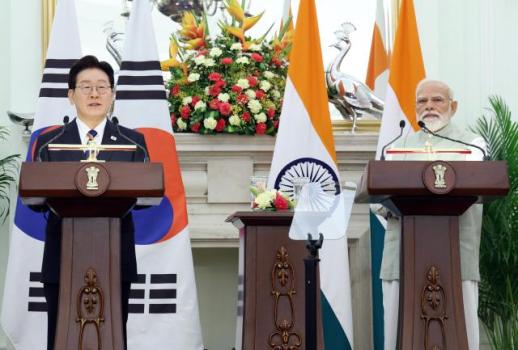 Lee, Indian PM Modi agree to upgrade CEPA, target $50 bln trade SEOUL, April 20 (AJP) - President Lee Jae Myung and Indian Prime Minister Narendra Modi agreed Monday to continue negotiations to upgrade their bilateral trade pact with the aim to double two-way trade to $50 billion by 2030. At a summit held during Lee’s state visit to India, the two leaders announced they would resume talks on upgrading the Comprehensive Economic Partnership Agreement (CEPA) in May, seeking to modernize the framework in response to evolving supply chain and trade conditions. “We agreed to speed up the negotiations to upgrade our CEPA to create more favorable trade and investment conditions and better respond to the changing trade environment,” Lee said during a joint press statement. Modi also emphasized strengthening economic cooperation. “We have set a target to take bilateral trade to $50 billion by 2030,” Modi said, adding that the two sides would work to upgrade the trade agreement and expand economic ties. The leaders agreed to broaden cooperation across strategic sectors including shipbuilding, finance, artificial intelligence and defense, while also strengthening cultural and people-to-people exchanges. “We have agreed to expand cooperation in strategic industries such as shipbuilding, finance, AI and defense, and promote cultural and people-to-people exchanges,” Lee said. As part of efforts to institutionalize economic cooperation, the two countries agreed to establish an “Industrial Cooperation Committee,” their first ministerial-level platform dedicated to economic collaboration. Lee said the body would help strengthen cooperation not only in trade and investment but also in strategic areas such as critical minerals, nuclear energy and clean energy. The two sides also signed a memorandum of understanding on port cooperation, establishing a framework that covers port infrastructure development and personnel exchanges. “In the field of shipbuilding, we aim to bring together the outstanding technology of Korean businesses and the policy support of India’s central and local governments so that Korean companies can seek new opportunities in the Indian market,” Lee said. “In the field of finance, cooperation between financial authorities will serve as a foundation for Korean financial institutions to enter India,” he added. The two countries will expand cultural cooperation, including the establishment of a “Korea Center” in Mumbai, which is expected to serve as a hub where K-pop and Bollywood intersect. The leaders also exchanged views on regional and global issues, including the situation in the Middle East and on the Korean Peninsula. “We agreed that restoring stability and peace in the Middle East is crucial to global security and the economy,” Lee said. He also briefed Modi on Seoul’s efforts to build peace on the Korean Peninsula and expressed hope that India would continue to play a constructive role in the region. 2026-04-20 18:32:07
 -
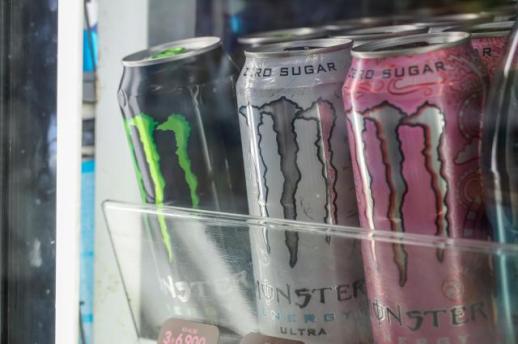 In Korean classrooms, caffeine is the new nicotine SEOUL, April 20 (AJP) - South Korea’s notoriously competitive school system is nothing new. What is more unsettling is this: for many teenagers, caffeine may now pose a greater risk than nicotine. High school senior Yoo Seung-ho drinks two cans of Monster Energy a day — which he considers moderate. “Some of my classmates drink up to five,” he said. Among Korean teenagers, energy drinks have become almost synonymous with studying. “My nephew drinks one or two energy drinks a day,” said Kim S.Y., in her 50s, as she waited outside a library on a rainy afternoon. “These days, kids seem to consume more energy drinks than coffee. They say they’re stronger.” The surge is also visible in the market. Energy drinks generated roughly $2 billion in sales last year — approaching one-third the size of South Korea’s carbonated soft drink market, estimated at $5 billion to $5.5 billion. Yet caffeine dependence may be only the visible layer of a deeper problem. Experts warn that reliance on high-caffeine drinks is increasingly overlapping with the non-medical use of prescription drugs — particularly attention-deficit/hyperactivity disorder (ADHD) medication — to boost concentration. “Strengthening insurance coverage rules or restricting prescriptions can be effective,” said Han Euna, a professor of health economics and pharmaceutical health services research at Yonsei University. She compared the situation to phentermine, an appetite-suppressant drug, where misuse declined significantly after tighter guidelines were introduced. Data suggest the scale of caffeine consumption is already widespread. A 2026 report by the National Youth Policy Institute found that 61.2 percent of teenagers consume high-caffeine beverages at least once a month, with more than half citing the need to stay awake while studying. The pattern becomes more concerning among frequent users. According to the Korea Disease Control and Prevention Agency’s 2025 Youth Health Behavior Survey, 21.9 percent of male students and 21.2 percent of female students reported consuming such drinks at least three times a week. Health authorities recommend a maximum daily caffeine intake of 2.5 milligrams per kilogram of body weight for adolescents — roughly 150 milligrams for a 60-kilogram individual. A single can of an energy drink typically contains 60 to 100 milligrams, meaning that multiple cans can quickly exceed safe limits. “Caffeine can provide a temporary boost in alertness, but over time the body builds tolerance, requiring higher doses to achieve the same effect,” said Yu Yun-mi, a professor in the Department of Pharmacy at Yonsei University. “It disrupts REM sleep and lowers overall sleep quality.” Excessive intake may also trigger gastrointestinal issues such as gastritis and acid reflux at an early age, raising the risk of ulcers later in life. In more severe cases, it can lead to anxiety and cardiac arrhythmias. The concern deepens when looking beyond caffeine. An National Youth Policy Institute survey of 3,384 middle and high school students found that 5.2 percent had used substances — including ADHD medication, appetite suppressants, sleeping pills and anti-anxiety drugs — for non-medical purposes. That exceeds the 4.2 percent who reported ever smoking. Among those, 24.4 percent said they had used ADHD medication in the past six months, followed by appetite suppressants (20 percent) and both sleeping pills and anti-anxiety drugs (13.3 percent each). For some, use is not occasional. Among students who had taken ADHD medication in the past six months, 23.1 percent reported using it more than 20 times a month. A commonly prescribed ADHD drug, Methylphenidate, stimulates the central nervous system but can cause side effects including insomnia, irritability, appetite loss and abdominal pain. As perceptions spread that such drugs enhance concentration, usage appears to be shifting from experimentation to deliberate academic performance enhancement — a trend experts link directly to the pressures of South Korea’s college entrance system. Yu warned that using ADHD medication without proper diagnosis is particularly dangerous. “Such drugs are intended for patients with clinically diagnosed conditions and carry significant side effects,” she said. “When used by individuals without ADHD, the risks are even greater.” Prolonged use may suppress growth and increase blood pressure and heart rate. Combined with high caffeine intake, the risks can intensify further. Amid rising concerns, the Ministry of Food and Drug Safety said in May 2025 that it would expand a system requiring doctors to check a patient’s prescription history before prescribing certain medications. The measure was extended to include methylphenidate from June 27, 2025. 2026-04-20 18:04:23
 -
 Samsung Biologics Makes Debut at AACR, Targeting Early-Stage Oncology Clients Samsung Biologics is taking part for the first time in the American Association for Cancer Research (AACR), one of the world’s largest cancer conferences. With AACR focused on preclinical and early clinical-stage research, the company aims to promote its contract research, development and manufacturing (CRDMO) capabilities and win clients in the early phases of drug development. According to the industry on April 20, AACR is considered one of the world’s three major cancer meetings, along with the American Society of Clinical Oncology (ASCO) and the European Society for Medical Oncology (ESMO). This year’s event is expected to draw more than 22,000 cancer researchers and pharmaceutical and biotech industry participants from about 140 countries. The meeting runs April 17-22 (local time) at the San Diego Convention Center in California. Samsung Biologics said it is seeking to secure early-stage customers by starting collaboration when demand is high for contract research (CRO) and contract development (CDO), then carrying projects through to commercial production — an approach it described as an “early lock-in” strategy. Jung Hyung-nam, vice president and head of Samsung Biologics’ Bio Research Center, said the company will “provide CRO and CDO services from the early development stage of innovative new drugs and establish ourselves as a trusted partner in drug development.” At AACR, Samsung Biologics has prepared a promotional booth as well as oral and poster presentations. On April 21, Alexis Santana, organoid sales director, will present on “Samsung Organoid: Enhancing Clinical Relevance in Anticancer Drug Development,” outlining how organoid services with high patient similarity could improve the success rate of drug development. The company will also present posters featuring data showing that Samsung Organoid reproduces patients’ genetic characteristics and drug responses and demonstrates a high correlation with clinical outcomes, along with a separate poster on the therapeutic and manufacturing efficiency of its bispecific antibody platform, S-DUAL.* This article has been translated by AI. 2026-04-20 17:49:34
 -
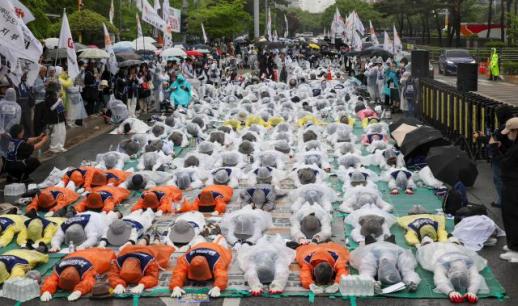 Rally in Seoul raises awareness for people with disabilities SEOUL, April 20 (AJP) - A nationwide association of parents of children with disabilities held a rally in front of the National Assembly in Yeouido, Seoul on Monday. The rally was held to mark the day for the physically challenged, observed annually on April 20 since 1981, to raise awareness of people with disabilities and better protect their rights. At the rally, participants held a procession that included taking three steps and one bow, a Buddhist practice of prostration that is also considered a form of peaceful protest. Monday's rally follows similar processions held in about 17 provincial cities since late last month, which led to meaningful outcomes including government pledges to take full responsibility for people with disabilities through increased state support and to investigate care facilities for any cases of abuse and harassment. 2026-04-20 17:48:04
 -
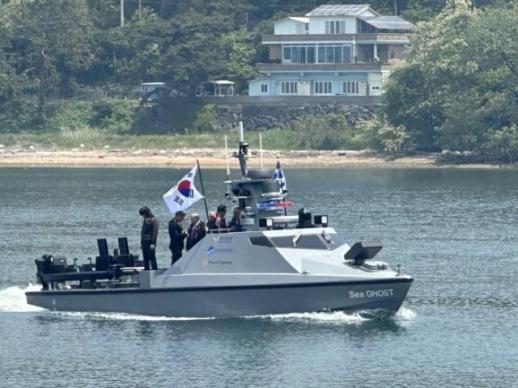 Seoul pushes fleet of war robots but who's in charge over them unclear SEOUL, April 20 (AJP) - Unmanned systems are rapidly reshaping modern warfare, from the battlefields of Ukraine to the Gulf, and South Korea is accelerating its push toward autonomous combat capabilities under its “Army Tiger 4.0” modernization drive. The initiative reflects a broader shift across the military, as the Army, Navy and Air Force each move to build their own unmanned fleets. But a central question remains unresolved: who commands this expanding ecosystem of robots across land, sea and air. Under Army Tiger 4.0, the future battlefield envisions “non-bleeding” robots moving first, with human soldiers positioned one step back. Unmanned ground vehicles (UGVs) and drones are designed to scout, transport supplies and even fight on the front line. A multipurpose UGV — with Hanwha Aerospace and Hyundai Rotem competing for selection as early as June — is a key pillar of the plan. Progress so far had been limited. In a 2023 study, defense scholars Kim Dong-beom and Kim Ho-sung said autonomous efforts were still at the “demonstration and limited experimentation” stage and that “widespread fielding across multiple echelons has yet to be achieved.” They added that turning Army Tiger 4.0 into routine practice “will require long-term force restructuring, sustained investment and iterative validation through exercises,” rather than one-off trials. Structural issues compound the challenge. Jung Yeon-bong of the Institute for National Security Strategy pointed to “the absence of a real control tower,” as well as a continued reliance on “platform-by-platform procurement” and service-centric development. A separate study by Baek Seoung-jin and Bae Hack-young of the Korea Association of Defense Industry Studies found that systems are still being developed in “separate stovepipes,” leaving doctrine and training “several steps behind the speed of technological change.” Navy: toward a “ghost fleet” At sea, the Navy is pursuing a similar transformation through its “Sea GHOST” program — a hybrid force combining crewed warships with unmanned surface vessels (USVs), underwater drones and aerial systems. These systems are designed to take on high-risk missions such as mine clearance, surveillance and tracking enemy vessels. The long-term vision includes a “mothership” capable of controlling multiple unmanned platforms and eventually a dedicated unmanned command. Development, however, remains fragmented. Different programs use incompatible software and data systems, making it difficult to operate them as a unified fleet — a recurring problem across services. Companies including LIG Nex1, Hanwha Systems and HD Hyundai Heavy Industries are racing to develop combat-ready USVs, with deployment targeted in the 2030s. Air Force: manned fighters with unmanned wingmen In the air, the South Korean Air Force is placing unmanned systems at the core of future combat operations. The concept pairs manned jets such as the KF-21 Boramae with “loyal wingmen” — unmanned aircraft that can perform reconnaissance, electronic warfare and strike support. The government is developing a “Korean-style MUM-T” architecture to enable this integration, targeting an open framework by 2028. But the gap between concept and deployment remains significant. Researchers at the Korea Research Institute for Defense Technology Planning and Advancement said current programs are still “in the phase of technology verification and concept demonstration.” They warned that large-scale exercises combining manned and unmanned aircraft under realistic electronic-warfare conditions “have been very limited so far.” A further constraint is operational: without secure communications networks — including beyond-5G links and low-Earth-orbit satellite relays — “AI-driven MUM-T and CJADC2 cannot function as intended in real war,” one defense expert said. Across all domains, the same problem emerges — fragmentation. Experts say South Korea lacks a unified command structure to coordinate unmanned systems development across the services. The result is parallel programs rather than an integrated force. The experience of the Drone Operations Command underscores the issue. Established in 2023, it faced criticism for overlapping roles and limited effectiveness, leading to restructuring in early 2026 rather than expansion. Some analysts argue that South Korea needs a smaller, joint unmanned task force capable of rapid experimentation — closer to models seen in Ukraine and the United States, where frontline units quickly adapt and scale technologies based on battlefield feedback. 2026-04-20 17:45:15
 -
 Hyundai Bioscience Wins South Korea Approval for Prostate Cancer Trial Change; Other Pharma-Bio Updates Hyundai Bioscience wins MFDS approval for prostate cancer trial change Hyundai Bioscience said April 20 that South Korea’s Ministry of Food and Drug Safety has given final approval to a revised investigational new drug plan for a combination-therapy clinical trial in prostate cancer using its broad-based “environment normalization” agent, Penetrium. The company said it will submit related documents on April 21 to the Institutional Review Board at Seoul National University Hospital, then hold a site initiation visit in mid-May before starting patient enrollment and dosing. The trial is examining whether reduced drug response can stem not only from cancer-cell mutations but also from a physical barrier in the tumor microenvironment that can create what it calls “pseudo-resistance,” in which drugs fail to reach the tumor and the lack of response is mistaken for tumor evolution. The newly approved change adds an AR-V7 genetic-variant test at the patient screening stage. Patients with “true resistance” (AR-V7 positive), in which the receptor itself is altered and the drug does not work, will be excluded. The study will instead select patients with “pseudo-resistance” (AR-V7 negative) and treat them with a combination of enzalutamide and Penetrium. The company said that if the trial produces successful interim results, prostate cancer patients could potentially continue benefiting from existing targeted therapies without moving to chemotherapy that can involve severe side effects. Huons Group joins Gyeonggi Community Chest of Korea’s major-donor program Huons Group said April 20 it held a donation ceremony after joining the Gyeonggi branch of the Community Chest of Korea’s “Sharing Prestigious Company” program. Attendees included Song Soo-young, CEO of Huons Global and Huons; Kang Min-jong, CEO of Humedix; and Kwon In-wook, chairman of the Gyeonggi Community Chest of Korea, the company said. The program is a network of corporate donors that have contributed at least 100 million won. Huons Group said three of its companies decided to join together to continue donations, following ongoing community support, medical volunteer work and scholarship programs. The donations will be used through the Gyeonggi Community Chest of Korea to support living and medical expenses for low-income households and to improve educational environments, the company said. GC Green Cross MS wins EU CE-IVDR certification for GGP-100 glucose meter GC Green Cross MS said April 20 that its new blood glucose monitoring system, the GC Fit (model GGP-100), has received certification under the European Union’s In Vitro Diagnostic Medical Devices Regulation, known as CE-IVDR. CE-IVDR tightens performance and safety requirements compared with the previous CE-IVDD framework and is required for entry into the EU market, the company said. GC Green Cross MS said the GGP-100 met the strengthened standards despite being classified as a high-risk Class C product, demonstrating safety and performance. The company said the certification also secures EU-level performance and safety coverage for its full lineup of blood glucose meters, including existing products. The company said the approval enables EU market entry about two months earlier than planned. It also said it plans to expand exports by obtaining CE-IVDR certification for an optical hemoglobin measurement product. Jaseng Korean Medicine Hospital backs Bucheon FC 1995 youth teams with training gear Jaseng Medical Foundation said April 20 it held a handover ceremony to provide soccer equipment for Bucheon FC 1995 youth teams. The foundation said the support is intended to help create a stable training environment for young players aspiring to become national team members. About 100 players will receive uniforms, soccer cleats and balls, among other items, worth about 5 million won. Jaseng Healthcare also sponsored health functional foods, it said. The foundation said it plans to continue support under the aim of encouraging the youth teams’ efforts, while monitoring training conditions and considering additional measures such as medical support. Bucheon Jaseng Korean Medicine Hospital has provided medical support to Bucheon FC 1995 under a partnership spanning 17 years, and has participated as the club’s main sponsor since last year.* This article has been translated by AI. 2026-04-20 17:45:00
 -
 Asian stocks close higher amid cautious optimism over possible fresh US-Iran talks SEOUL, April 20 (AJP) - Asian stock markets closed higher on Monday as investors bet on optimism ahead of another round of ceasefire negotiations between the U.S. and Iran, lifting overall market sentiment despite lingering tensions in the Middle East. Despite conflicting reports of impending talks in Islamabad, Pakistan, with Iran denying any plans to negotiate, the benchmark KOSPI in Seoul gained 0.44 percent to close at 6,219.09, while the tech-heavy KOSDAQ rose 0.41 percent to finish at 1,174.85. Samsung Electronics fell 0.69 percent to close at 214,500 won, while SK Hynix jumped 3.37 percent to 1,166,000 won. LG Energy Solution climbed 2.63 percent to 429,000 won, and Doosan Enerbility rose 2.30 percent to 111,000 won. HD Hyundai Heavy Industries added 1.95 percent to 524,000 won. Samsung SDI surged 4.87 percent to 538,000 won after signing a multi-year agreement with Mercedes-Benz to supply batteries for next-generation electric vehicles. But auto-related shares declined, with Hyundai Motor falling 2.04 percent to 527,000 won and Kia dropping 1.13 percent to 157,400 won. Entertainment stocks all moved lower. HYBE fell 2.86 percent to 255,000 won, JYP Entertainment declined 1.42 percent to 62,300 won, SM Entertainment slipped 1.80 percent to 93,000 won, and YG Entertainment dropped 2.68 percent to 54,400 won. In Tokyo, the Nikkei 225 rose 0.60 percent to close at 58,824.89, while China's Shanghai Composite gained 0.76 percent to end at 4,082.13. 2026-04-20 17:26:34
 -
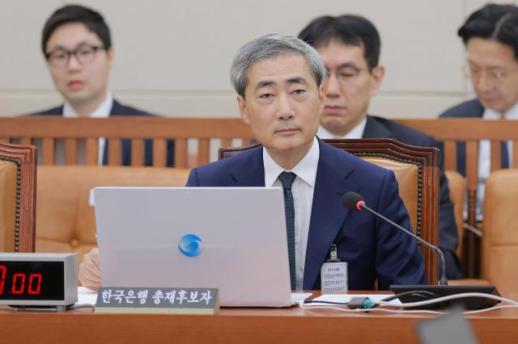 BOK's new chief to start work Tues after last-minute confirmation SEOUL, April 20 (AJP) — South Korea’s incoming central bank chief Shin Hyun-song is set to begin his term Tuesday under a cloud of unresolved personal controversies, after the National Assembly approved his confirmation report Monday following two earlier rejections. Shin marks the first nominee for the Bank of Korea governorship to fail to secure initial approval from the parliamentary Strategy and Finance Committee since confirmation hearings became mandatory in 2014. The former economist at the Bank for International Settlements faced intense scrutiny during his April 15 hearing over a range of personal matters, including family wealth, overseas asset holdings and alleged irregularities involving his children. Lawmakers raised concerns about his family’s substantial foreign-currency assets, an allegedly irregular transfer to Korea University, and questions surrounding his daughter’s failure to report her loss of Korean nationality, along with allegations of maintaining a so-called “paper residence.” “Approximately 93 percent of the nominee’s 4.6 billion won ($3.1 million) in financial assets are held in foreign currencies,” Rep. Park Dae-chul of the opposition People Power Party said, linking the issue to broader pressure on the Korean won from rising overseas investment. Rep. Chun Ha-ram of the Reform Party also pressed Shin over allegations that his daughter applied for residency using a canceled resident registration number after renouncing her Korean nationality. The committee had twice rejected Shin’s confirmation report on April 15 and April 17, citing delays in the submission of supporting documents. While the president can appoint a central bank governor without parliamentary consent, securing the committee’s endorsement is widely seen as critical to establishing political legitimacy at the outset of the term. By contrast, former Governor Lee Ju-yeol — the first to undergo the confirmation process — faced little resistance, with his reappointment smoothly approved in 2018. Shin’s immediate predecessor, Rhee Chang-yong, encountered some criticism over what was described as a “midnight appointment” and his long tenure abroad, but his confirmation proceeded without major controversy. President Lee Jae Myung is expected to electronically sign off Shin’s appointment during his state visit to India during the day to avoid a leadership vacuum at the central bank, as Rhee’s term ends Monday. 2026-04-20 17:09:28
 -
 Hyundai Motor protests to USTR Section 301 probe for potential double taxing SEOUL, April 20 (AJP) - South Korea's Hyundai Motor Group has lodged a complaint with U.S. trade authorities over potential double taxing, claiming additional duties under Section 301 could duplicate existing restrictions under other regulations. In its submission to U.S. Trade Representative Jamieson Greer, the automaker — which plans to invest $26 billion in the United States through 2028 — stressed its role in strengthening American supply-chain resilience as it “respectfully submits comments” on the Section 301 investigation into excess capacity and manufacturing sectors. Section 301 of the U.S. Trade Act of 1974 allows Washington to impose tariffs or other restrictions on imports from countries deemed to engage in unfair trade practices. The so-called “Super 301” provision — historically used to identify and respond to priority foreign trade barriers — has been associated with broader and more aggressive enforcement measures. In its filing, Hyundai said industries such as automobiles and steel, already subject to import curbs under Section 232 of the Trade Expansion Act of 1962, should not face additional tariffs under Section 301, citing the risk of redundant regulatory burdens. The company argued that imposing further duties on inputs and components already covered by existing measures would increase production costs at U.S.-based facilities without materially improving domestic manufacturing capacity, employment, or supply chain resilience. The submission is seen as reflecting broader group-level concerns, given Hyundai’s extensive U.S. exposure across automobiles, parts, steel, and construction. In a separate filing, the Korea Automobile & Mobility Association (KAMA) highlighted the long-term economic contributions of Korean automakers in the United States. The association said Hyundai Motor Group has invested more than $20 billion in the U.S. over the past four decades, supporting roughly 570,000 jobs. It added that the company plans to invest an additional $26 billion between 2025 and 2028, a move expected to create about 25,000 new jobs. KAMA also noted that South Korea’s annual auto production has remained in the range of 3.5 million to 4.2 million units over the past decade despite rising global demand, contributing to a decline in the country’s global production ranking from fifth in 2020 to seventh in 2024. 2026-04-20 17:09:04
 -
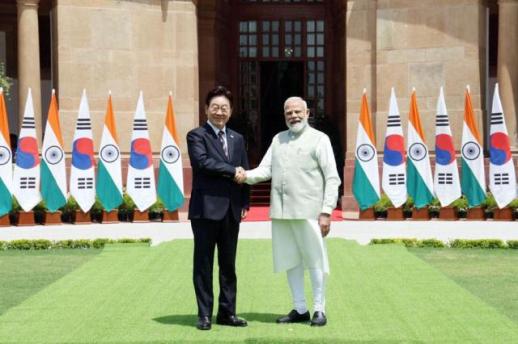 Lee set to deliver speech at business forum in India SEOUL, April 20 (AJP) - President Lee Jae Myung, who is on a state visit to India for a summit with Indian Prime Minister Narendra Modi on Monday, is set to attend a business forum later in the day to promote investment and cooperation between companies in the two countries. Lee is scheduled to deliver opening remarks at the forum, co-hosted by the two countries, where he is expected to emphasize stronger supply-chain cooperation. The forum, being held for the first time in eight years, is seen as a restart of bilateral economic cooperation. About 250 business leaders from South Korean conglomerates are attending including Samsung Electronics chairman Lee Jae-yong, Hyundai Motor Group chairman Chung Eui-sun, LG Group chairman Koo Kwang-mo, and HD Hyundai vice chairman Chung Ki-sun. About 350 participants from India including executives from the Sanmar Group and Essar Group, are also taking part, with discussions expected to accelerate cooperation between companies from the two countries. About two dozen memorandums of understanding (MOUs) in areas including shipbuilding, digital technology, and energy are expected to be signed. These include agreements between the Federation of Korean Industries and the Indian Chamber of Commerce as well as GS E&C's wind repowering project in India and cooperation on Naver's map services. One-on-one meetings in advanced industries, gaming, entertainment, and other areas are also planned to strengthen practical cooperation. 2026-04-20 16:57:52