
Journalist

Lee Hugh
=
-
 S. Korea hits the accelerator on nuclear pivot after Hormuz lesson SEOUL, April 20 (AJP) - Nuclear energy has become hot. It already was due to the exponential demand for electricity to power hyperscalers to train and deploy artificial intelligence. But it has got even hotter due to the Gulf war crisis. South Korea is the world’s fifth-largest energy importer by value and one of the four largest importers of LNG globally, regularly purchasing around 40 million tonnes per year. With virtually no domestic fossil fuel reserves, the country imports nearly 95% of its primary energy needs — a structural vulnerability that has driven decades of debate about energy security. Electricity demand has grown relentlessly to around 600 terawatt-hours annually, powered by energy-intensive industries from semiconductors to shipbuilding, making decarbonization both urgent and structurally difficult. Fuel self-sufficiency has become national priority after the Gulf war that disrupted the core waterway along the Iran coast responsible for one fifth of the world's oil and gas shipments, accelerating U-turn in states that chose phase-out over safety issue since the Fukushima meltdown from Germany to South Korea and Japan. For South Korea, heavily exposed to Gulf supply routes and entirely dependent on energy imports, the takeaway has been immediate: energy security cannot be left to geography. Under President Lee Jae Myung, that realization is translating into policy. The administration is moving toward renewed nuclear expansion as the phase-out trajectory of the Moon Jae-in era is effectively being overruled by necessity. “Nuclear, SMRs, and next-generation technologies must be accelerated alongside energy diversification and industrial transformation,” Lee said in an April 7 senior secretariat meeting, signaling that nuclear is no longer a transitional option but a core pillar of future growth. Nuclear currently supplies roughly one-third of South Korea’s electricity, anchoring an economy built on semiconductors, petrochemicals and advanced manufacturing, while demand is accelerating beyond legacy assumptions, powered by AI infrastructure and electrification. Renewables, contributing just over 10 percent, remain constrained by intermittency and land use, while LNG — accounting for roughly a quarter of supply — is increasingly vulnerable to shipping disruptions. In that equation, nuclear stands out as the only large-scale, low-carbon baseload energy source that can be generated domestically. In March 2026, Korea Hydro & Nuclear Power confirmed that four local governments — Ulju, Yeongdeok, Gyeongju and Gijang — submitted bids to host new nuclear facilities, including both large-scale reactors and the country’s first small modular reactor (SMR), with timelines extending into the late 2030s. A global reversal, not a local exception South Korea’s pivot is part of a broader, if understated, global reversal. In the aftermath of Fukushima, countries across Europe and Asia embraced nuclear phase-out policies. Today, many are retracing their steps. In Germany, debate has reopened over restarting recently shuttered reactors as energy costs rise. Italy is preparing for reintroduction after decades without nuclear power, while Switzerland has moved to lift restrictions on new construction. In Asia, Taiwan—once committed to a nuclear-free future—has begun steps toward restarting reactors to support its semiconductor-driven economy. Even the European Commission has acknowledged that sidelining nuclear may have been a strategic miscalculation, reflecting a broader recognition that decarbonization without baseload stability is incomplete. The driver is no longer just climate policy. It is geopolitics. The Gulf crisis has underscored how concentrated global energy risk has become. A handful of chokepoints — led by the Strait of Hormuz — can disrupt supply chains on which entire economies depend. Nuclear power offers insulation from that volatility. Once fueled, reactors can operate for extended periods without continuous imports. But that insulation comes with a paradox. South Korea imports 100 percent of its uranium and remains constrained under its nuclear cooperation framework with the United States, limiting enrichment and reprocessing. This creates a new layer of dependency—less visible than oil tankers, but equally strategic. As next-generation reactors such as SMRs move toward commercialization, that constraint is becoming more binding. Advanced designs increasingly rely on fuels such as high-assay low-enriched uranium (HALEU), requiring more complex enrichment capabilities and tighter supply chains. Seoul is now pushing to expand its role within that fuel cycle, with Washington signaling conditional openness under the existing bilateral framework, often referred to as the “123 Agreement.” What is emerging is not just a reactor buildout, but a negotiation over nuclear sovereignty. A key feature of South Korea’s strategy is its emphasis on SMRs. Smaller, modular and faster to deploy, they offer flexibility in siting and scalability for a grid increasingly shaped by decentralized, high-density demand such as data centers. More importantly, they represent an industrial opportunity. The United States, the United Kingdom, Canada and Japan are all investing heavily in next-generation reactors. South Korea, with its established reactor fleet and export track record, is positioning itself not only to deploy but to compete. Nuclear, in this sense, is becoming industrial policy. 2026-04-20 16:48:06
 -
 Oil tanker passing through Strait of Hormuz 'heading to discharge its cargo' in South Korea SEOUL, April 20 (AJP) - An oil tanker that passed through the Strait of Hormuz is expected to arrive in South Korean waters as early as next month, Reuters reported on Monday. The Malta-flagged Odessa is "heading to discharge its cargo at South Korean refiner Hyudai Oilbank after passing through the Strait of Hormuz," it said. "The Suezmax tanker, which can carry 1 million barrels of oil, had its AIS tracker switched off and re-appeared on April 17 near the United Arab Emirates' Fujairah port," it added, quoting data from maritime tracking provider Kpler and the London Stock Exchange (LSEG). Another tracking service, VesselFinder, also estimated that the Odessa, which was off the coast of India on Monday morning, is scheduled to arrive at a port in Daesan, South Chungcheong Province on May 8. The vessel, capable of carrying about 1 million barrels of oil, accounts for roughly half of South Korea's daily oil consumption, but it remains unknown what the tanker is carrying. Meanwhile, a South Korean oil tanker that passed through the Red Sea last week after receiving crude at Saudi Arabia's Yanbu port is continuing its voyage. That marked the first instance of transporting approximately 2 million barrels of oil through the Red Sea as an alternative route since the blockade of the strait, prompting the government to consider utilizing the Red Sea route as an alternative for oil shipments. According to industry sources, around five contracts have been signed so far between Saudi Arabia's state-owned oil company Aramco and South Korean refineries, with each tanker expected to carry roughly 2 million barrels of oil. But challenges remain, as a member of the Houthi militia recently mentioned the possibility of blocking the Bab al-Mandab Strait, a critical chokepoint connecting the Red Sea and the Gulf of Aden. 2026-04-20 16:31:13
 -
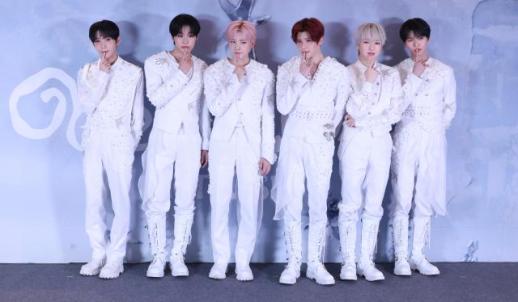 NCT WISH drops its first studio album SEOUL, April 20 (AJP) - K-pop boy group NCT WISH has dropped its first full-length album on Sunday after successfully wrapping up an encore concert in Seoul. According to SM Entertainment, NCT WISH releases its first studio album, Ode to Love, at 6 p.m. The 10-track album, featuring the lead single of the same name, brings together the group’s signature “fresh and neo” sound that it has built since debut. Ahead of the release, the group held its first solo concert encore show, NCT WISH 1st CONCERT TOUR INTO THE WISH : Our WISH ENCORE IN SEOUL, from April 17 to 19 at KSPO DOME. The concerts sold out all seats and drew enthusiastic responses from fans after premiering performances of the title track Ode to Love and B-side song Sticky. Having shown steady growth with each release since debut, NCT WISH is expected to showcase expanded capabilities in music, performance and teamwork through the new album. The group will also open a large-scale pop-up store at The Hyundai Seoul from April 21 to May 3 following the album launch. 2026-04-20 16:22:41
 -
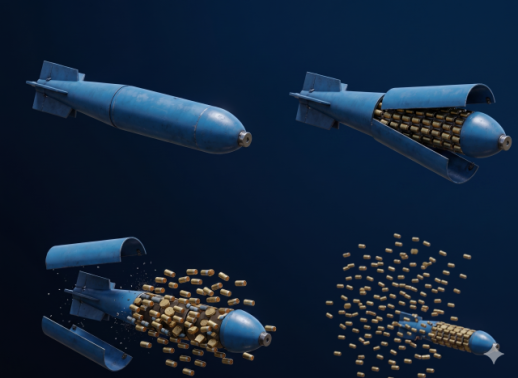 Pyongyang tests banned cluster missiles as Kim Jong-un asserts saturation capability SEOUL, April 20 (AJP) - In a bid to assert its ground-to-ground wide-area suppression capability, Pyongyang test-fired tactical ballistic missiles carrying cluster warheads on Sunday. The drill, reported by the Korean Central News Agency on Monday, involved weaponry banned by most of the international community due to its indiscriminate nature and lasting humanitarian risk. According to Pyongyang's state media, the Missile Administration of the Democratic People's Republic of Korea (DPRK) conducted the test to evaluate the lethality of the Hwasongpho-11 Ra, a surface-to-surface projectile designed to saturate targets with submunitions rather than a single explosion. North Korean leader Kim Jong-un oversaw the launches alongside senior officials. During the exercise, five missiles were fired toward an island target 136 kilometers (84.5 miles) away. The projectiles struck an area measuring between 12.5 to 13 hectares with high density, a footprint roughly equivalent to 18 soccer fields. The focus on cluster munitions follows recent developments in the Middle East, where Iranian cluster ballistic missiles successfully penetrated Israel's layered air defense network. According to reports from human rights groups and defense analysts, these missiles challenge even sophisticated systems like the Arrow-3 by releasing their payloads at altitudes between 7 and 10 kilometers. The timing of this disclosure suggests a deliberate effort to demonstrate tactical parity with modern battlefield trends. This transparency likely reflects a growing confidence in the weapon's ability to bypass regional defenses, mirroring recent tactical successes seen in the Middle East. By publicizing the results of a five-year development cycle, Pyongyang could be notifying South Korea that its existing interceptor systems may no longer guarantee protection against a saturated missile volley. This development marks a shift toward operational, battlefield-ready tactics, signaling that the regime has moved beyond strategic posturing to focus on high-density suppression of specific target areas. These munitions have been largely outlawed by international consensus because they disperse hundreds of small bomblets over vast areas, frequently failing to detonate upon impact. These unexploded submunitions effectively become landmines that kill and maim civilians, even decades after a conflict has concluded. This persistent threat led a majority of the world's nations to renounce their use under an international treaty established in 2007, though several major military powers such as the United States, Russia, China, South Korea, and North Korea remain outside the agreement. Despite the international outcry over such weaponry, the Korean Peninsula remains one of the world's primary hubs for cluster munition production and storage. South Korea is a major manufacturer of these weapons and maintains a stockpile that ranks among the largest in the world, trailing only the U.S., China, and Russia, according to data from the Landmine and Cluster Munition Monitor. South Korea has consistently declined to join international bans, maintaining that the munitions are a critical defensive necessity to counter the massive conventional forces and artillery that the North has concentrated along the border. A cluster bomb functions as a parent munition that opens in mid-air to scatter dozens or hundreds of smaller submunitions over a target zone. This mechanism is designed to destroy multiple targets simultaneously, such as infantry formations, unarmored vehicle convoys, or aircraft on a runway. Chang Do-young, the spokesperson for the South Korean Joint Chiefs of Staff, stated during a briefing that "related content was being closely monitored and detailed specifications are being analyzed in depth" and added that "North Korea's ballistic missile launch is a clear violation of UN Security Council resolutions, and it must immediately stop the continuous missile provocation acts that heighten tensions on the Korean Peninsula and actively participate in our government's efforts to establish peace." 2026-04-20 16:15:53
 -
 South Korean names missing from Forbes' AI 50 list SEOUL, April 20 (AJP) - No South Korean company made Forbes' list of the world's "most promising privately held" companies in the field of artificial intelligence (AI). According to the magazine's "AI 50" list, released last week, U.S. startups dominated the list, with only two from Sweden and one each from Canada and the U.K. No Asian companies were included with none from South Korea. The annual list of top AI companies, now in its eighth year, was compiled following an initial review of thousands of eligible startups. A panel of experts, scholars, and researchers evaluated each firm based on its "technical rigor, technical potential, and market competitiveness." "Juggernauts like OpenAI and Anthropic continue to be the largest companies on the list, attracting unprecedented sums of cash from marquee Silicon Valley venture capitalists and tech behemoths alike as they reportedly head towards blockbuster IPOs," the magazine said. "The two AI giants have accumulated a combined $242.6 billion in venture funding, about 80 percent of the total $305.6 billion that the companies on this year's AI 50 list have raised," it added. A long road lies ahead for South Korea, as the country remains absent from the list, despite the government's goal of becoming one of the world's top three AI powerhouses through a project to develop an independent AI foundation model. Industry insiders argue that South Korean startups must develop revenue models that extend beyond the domestic market and secure overseas investment to compete on the global stage, as the AI 50 list prioritizes business performance and fundraising as key indicators. 2026-04-20 15:29:08
 -
 K-pop identity and global expansion take center stage at Kookmin University special lecture SEOUL, April 20 (AJP) - Professor Lee Gyu-tag from George Mason University Korea examined the cultural evolution and future trajectory of K-pop during a guest lecture at Kookmin University on April 16. Speaking as the featured guest for the 663rd Thursday Special Lecture, Lee explored how the genre's identity has shifted from a local South Korean product to a global phenomenon, the prominent university said Monday. The lecture defined K-pop not merely as a broad term for all South Korean popular music, but as a specific cultural genre built upon a distinct production method and industrial structure. Professor Lee identified the "total management system"—integrating planning, production, and distribution alongside music, performance, and digital content—as a core element that evolved independently while being influenced by the division of labor models found in overseas music industries. The meaning of the "K" in K-pop is undergoing a transformation as the genre expands globally. While early efforts emphasized South Korean identity, Professor Lee analyzed how recent strategies have shifted toward the global market, citing the release of English-language songs and the inclusion of members from diverse nationalities, such as the trajectory seen with BTS. Professor Lee also noted that the term "K-pop" was first adopted abroad before being reintroduced to South Korea, helping to shape its current identity. He explained that the genre is unique because it is defined not only by its producers but also by the perceptions and evaluations of its international audience. The competitive strength of the genre lies in its business model, the way it builds relationships with fans, and the "maximalist" characteristics found in its performance and style. While citing experimental cases where the "K" is removed or groups consist of various nationalities, Professor Lee maintained that the South Korean production system and cultural context remain the central foundation. The lecture concluded with an assessment that the inherent ambiguity of K-pop could serve as a bridge for further expansion. Professor Lee emphasized the importance of understanding cultural context and pursuing balanced development for the industry moving forward. KMU has operated its Thursday Special Lecture as a regular course featuring external speakers for 30 years, marking the first and longest-running program of its kind among South Korean universities. Approximately 670 speakers from various fields have participated, including former President Roh Moo-hyun, Cardinal Stephen Kim Sou-hwan, author Rhyu Si-min, and film director Park Chan-wook. 2026-04-20 15:03:35
 -
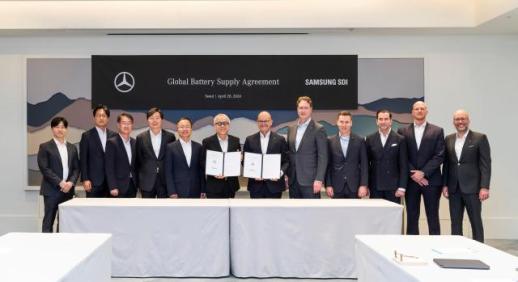 Samsung SDI strikes first battery supply deal with Mercedes-Benz SEOUL, April 20 (AJP) - Samsung SDI announced it has signed a multi-year contract to supply electric vehicle batteries to Mercedes-Benz, marking the Korean battery maker's first supply agreement with the German premium automaker. The deal, signed at the Andaz Seoul Gangnam hotel on Monday, will see Samsung SDI provide high-performance cells built with high-nickel NCM (nickel, cobalt, and manganese) cathode chemistry for Mercedes-Benz's next-generation electric vehicles. Samsung SDI CEO Choi Joo-sun and Mercedes-Benz Chairman Ola Kallenius were among senior executives from both companies who attended the signing ceremony. Under the agreement, the batteries will be fitted in upcoming compact and mid-size electric SUVs and coupe models as Mercedes-Benz seeks to sharpen its electrification lineup. The cells are designed to maximize driving range through high energy density while delivering long cycle life, high power output and Samsung SDI's proprietary safety solutions. "This partnership represents the union of the innovative DNA that both companies possess," a Samsung SDI spokesperson said said, adding that the contract was significant in securing battery orders aimed at leading the global EV market. The Mercedes-Benz deal marks Samsung SDI's return to the EV contract table after a string of energy storage deals, including a 1.5 trillion won ($1 billion) agreement in March to supply prismatic ESS batteries to a U.S. energy firm. The company has been pivoting aggressively toward the fast-growing North American storage market amid sluggish global EV demand, but the latest contract signals it is pursuing both fronts simultaneously. Samsung and Mercedes-Benz said they also plan to deepen strategic cooperation in next-generation battery development and future mobility technologies. Shares of Samsung SDI was trading at 540,000 won on 3:21 p.m., 5.26 percent higher than the day before. 2026-04-20 15:00:07
 -
 Horror film emerges as surprise box-office draw SEOUL, April 20 (AJP) - Horror film "Salmokji: Whispering Water" held onto the top spot at the domestic box office for a second consecutive week, driven by strong word of mouth among younger moviegoers. According to the Korean Film Council on Monday, Lee Sang-min's directorial debut feature attracted 472,109 moviegoers over the weekend, bringing its cumulative total to 1.46 million since its release earlier this month. It already surpassed its break-even point of 1 million moviegoers in just about ten days after its release on April 8, extending its unexpected box-office run. The 95-minute film revolves around a film crew that visits a reservoir where an unidentified figure has been spotted, only to encounter something hidden in the dark waters below. Word of mouth has spread online, with viewers taking to social media to share their views, fueling curiosity about the film. In particular, its open-ended conclusion has sparked heated debate over interpretations, prompting many to watch it again. 2026-04-20 14:14:02
 -
 Dongkook Life Science Wins EU CEP for Iopamidol API, Expands Contrast-Agent Supply Chain Dongkook Life Science said April 20 it has obtained a Certificate of Suitability, or CEP, for its iopamidol active pharmaceutical ingredient. A CEP is a quality certification for APIs issued by the European Directorate for the Quality of Medicines & HealthCare, or EDQM, and is a key requirement for entering the European pharmaceutical market. Iopamidol is a nonionic iodine-based contrast agent used in CT scans. The company said demand for diagnostic imaging is rising, and that securing quality at the API stage is closely tied to the competitiveness of finished drugs. Dongkook Life Science previously obtained approval from China’s National Medical Products Administration, or NMPA, for its gadobutrol API, an MRI contrast agent. In Japan, a manufacturer of a finished drug using the company’s gadobutrol API has cleared the Pharmaceuticals and Medical Devices Agency, or PMDA, approval process, securing a supply base. The company said this links Europe, China and Japan into a global supply chain for contrast agents. “We plan to increase the share of overseas sales by advancing quality and strengthening production capabilities,” a company official said. * This article has been translated by AI. 2026-04-20 14:00:46
 -
 HK inno.N, NextGen Bioscience to Co-Develop Idiopathic Pulmonary Fibrosis Drug Candidate NXC680 HK inno.N said on the 20th that it has signed a joint research and development agreement with NextGen Bioscience to co-develop NXC680, a drug candidate for idiopathic pulmonary fibrosis, or IPF. The companies said the deal is aimed at combining HK inno.N’s R&D capabilities with NextGen’s work on the candidate to move it into clinical development and explore global commercialization potential. Under the agreement, HK inno.N will handle optimization of the finished-drug formulation and run clinical trials, while NextGen will supply the active pharmaceutical ingredient and provide research data. The two companies plan to jointly conduct a Phase 1 clinical trial. NXC680 has shown potential to treat pulmonary fibrosis in nonclinical studies and has received orphan drug designation from the U.S. Food and Drug Administration. In South Korea, it has obtained approval for a Phase 1 investigational new drug application. Song Geun-seok, a vice president at HK inno.N, said the company will work to increase the value of competitive candidates in areas with high unmet medical needs and, over the mid to long term, strengthen its new-drug portfolio for the global market.* This article has been translated by AI. 2026-04-20 13:57:25