
Journalist

Lee Hugh
=
-
 Samsung Bioepis Presents Follow-Up Phase 3 Data on Osteoporosis Drug Ovodens in Europe Samsung Bioepis said Sunday it presented follow-up results from a Phase 3 study of its Prolia biosimilar, Ovodens (project name SB16), at the World Congress on Osteoporosis, Osteoarthritis and Musculoskeletal Diseases (WCO-IOF-ESCEO) in Prague, Czech Republic. The analysis was an exploratory subgroup review of the global Phase 3 SB16 trial. It examined 456 postmenopausal women with osteoporosis to assess whether disease characteristics such as age, body mass index and history of vertebral fractures affected the drug’s efficacy. Samsung Bioepis analyzed the percent change from baseline in bone mineral density of the lumbar spine, total hip and femoral neck at 12 months in patients included in the subgroup analysis for SB16 and the reference product. The company said the SB16 and reference-product subgroups showed consistent treatment effects, reaffirming biological similarity between the two products. Shin Dong-hoon, head of the Clinical Medicine Division at Samsung Bioepis, said the company confirmed Ovodens’ consistent treatment effect across diverse patient groups and would strengthen its capabilities to expand evidence-based prescribing of biologic medicines.* This article has been translated by AI. 2026-04-19 10:54:00
 -
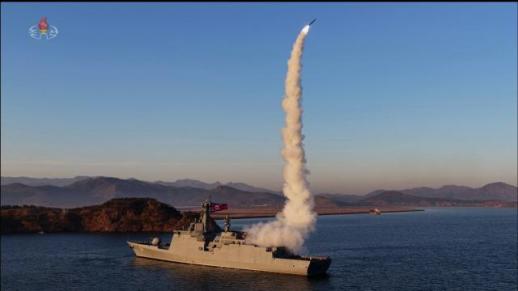 N. Korea fires ballistic missile toward East Sea, suspected as sub-linked launch *Updated with additional information SEOUL, April 19 (AJP) -North Korea fired multiple short-range ballistic missiles from its submarine hub of Sinpo early Sunday in its latest string of weapons tests over the last two months amid ongoing war in the Gulf, raising the possibility of a submarine-linked launch as Pyongyang advances its sea-based nuclear ambitions. The Joint Chiefs of Staff (JCS) said the launches were detected at around 6:10 a.m. from the Sinpo area, with the missiles flying about 140 kilometers. South Korean and U.S. intelligence authorities are conducting a detailed analysis of the missiles’ specifications and trajectory, with officials not ruling out a submarine-launched ballistic missile (SLBM) test, while noting the unusually short range. South Korea’s presidential office convened an emergency National Security Council (NSC) meeting shortly after the launch, led by National Security Adviser Kim Hyun-jong, to assess the situation and review response measures. Participants reaffirmed a firm joint defense posture with the United States and agreed to closely monitor further North Korean activity. “Our military is closely monitoring North Korea’s various movements under a robust South Korea-U.S. combined defense posture and maintains the capabilities and posture to respond to any provocation in an overwhelming manner,” the JCS said, adding that Seoul, Washington and Tokyo are sharing related intelligence. The firing comes 11 days after Pyongyang last launched ballistic missiles on April 8, when it conducted two tests in a single day. A day earlier, on April 7, the North fired another projectile that appeared to fail shortly after launch. Sunday’s launch is the seventh ballistic missile test by North Korea this year, following earlier firings on Jan. 4, Jan. 27 and March 14, according to military data. It follows a series of recent weapons developments, including claimed trials of cluster-munition warheads, electromagnetic systems and upgraded missile engines, pointing to a broad-based effort to enhance tactical and strategic capabilities. The provocations also fall in the background of heightened regional tensions and ahead of a planned visit by Donald Trump to China next month, where North Korea is expected to be a key topic in talks with Xi Jinping along with the Middle East crisis. North Korea’s submarine-based nuclear ambitions have drawn renewed scrutiny since December 2025, when leader Kim Jong Un inspected what state media described as the country’s first nuclear-powered ballistic missile submarine (SSBN). Estimated at over 8,000 tons, the platform would mark a major leap from the North’s aging, conventionally powered fleet and is believed capable of carrying multiple SLBMs, potentially from the Pukguksong-5 series. Analysts say such a system — if operational — would significantly strengthen Pyongyang’s second-strike capability by enabling more survivable, sea-based nuclear deployments. Sinpo, the site of Sunday’s launch, has long served as the hub of North Korea’s SLBM program, underscoring the strategic significance of the latest activity. 2026-04-19 07:41:24
 -
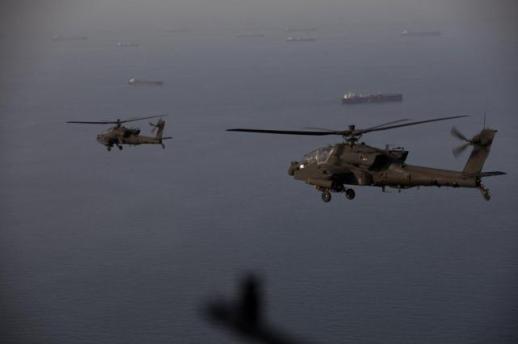 Seoul flags supply shift as Hormuz tensions flare again after brief reopening SEOUL, April 19 (AJP) -South Korea will push ahead with diversifying its energy supply chain as renewed instability in the Strait of Hormuz underscores persistent risks to global oil flows, even after a brief reopening of the key shipping route. The Gulf chokepoint slipped back into tension over the weekend, with Iran warning it would again restrict transit unless the United States lifts its blockade on Iranian ports, while Washington rejected the demand and signaled continued enforcement at sea. The conflicting positions quickly translated into operational risk. Multiple vessels reported coming under fire or being forced to turn back while attempting to pass through the strait, according to maritime authorities, highlighting the fragility of any reopening. The Strait of Hormuz carries roughly 20 percent of global oil supply and is a critical artery for South Korea, which depends on the route for a majority of its crude and naphtha imports. The latest disruption comes despite signs of diplomatic progress. Iran is reviewing new U.S. proposals for a potential deal, with talks expected to resume through third-party mediation, while a separate ceasefire between Israel and Hezbollah has reduced fighting in Lebanon. However, Iranian officials have made clear that maritime access remains conditional, linking freedom of navigation to the removal of U.S. sanctions. Donald Trump has rejected that position, saying Iran “cannot blackmail” the United States. Analysts say the result is a shift from outright closure risk to intermittent disruption, where limited attacks or threats raise shipping costs and insurance premiums without fully halting flows. For South Korea, the episode has reinforced the need to reduce reliance on Middle Eastern supply routes. In an interview with Yonhap News Agency, Trade, Industry and Energy Minister Kim Jung-kwan made clear that South Korea will press ahead with a structural overhaul of its energy supply chain, even if hostilities in the Gulf subside. “Even if the war ends, we will not stop diversifying crude imports away from the Middle East and expanding transport routes,” he said, underscoring that supply chain resilience — not cost efficiency — has become the government’s defining economic doctrine. The policy pivot reflects a hard lesson. Despite repeated Middle East crises, South Korea remained heavily reliant on the region, with 61 percent of crude oil and 54 percent of naphtha imports routed through Hormuz as of last year. The government has also stepped up monitoring of key feedstocks such as naphtha, where supply concerns have been amplified by precautionary stockpiling across the supply chain. Authorities expect market conditions to stabilize if disruptions remain limited through April, but warned that volatility could persist as long as tensions in the Gulf remain unresolved. The latest developments suggest that even when the Strait of Hormuz is technically open, access may no longer be predictable — a shift that is likely to keep energy markets and import-dependent economies on edge. 2026-04-19 07:32:11
 -
 Korea FDA Signs Deal With Hankook Vaccine to Stabilize Syringe Supply Chain The Ministry of Food and Drug Safety said Friday it signed a business agreement with Hankook Vaccine to stabilize the online supply chain for syringes. The ministry said the agreement is expected to help ensure a steady supply of syringes needed by online shopping malls and medical clinics. Hankook Vaccine has applied for special extended work hours — an exemption from the 52-hour workweek limit — to support online supply stability, enabling additional syringe production and securing more inventory, the ministry said. The ministry noted that it and the Ministry of Economy and Finance recently issued a notice banning hoarding and price-gouging of syringes and needles, but some online shopping sites are still reporting sold-out items. MFDS Commissioner Oh Yu-kyoung said syringes are an essential medical device that must be available for patient treatment. She said the ministry is providing active support to keep production on track, including dispatching staff to the top 10 manufacturers by output.* This article has been translated by AI. 2026-04-18 17:36:00
 -
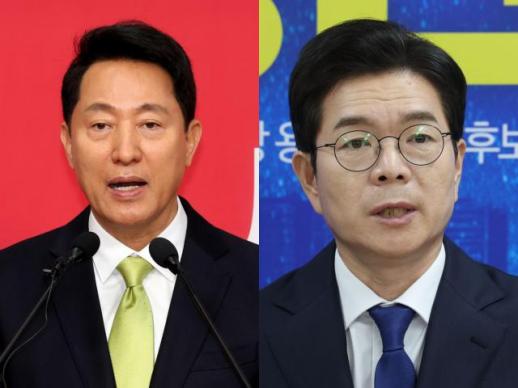 Seoul Mayor Oh to face DPK's Chung in June mayoral race SEOUL, April 18 (AJP) - Seoul Mayor Oh Se-hoon has been confirmed as the main opposition People Power Party’s candidate in the June 3 local elections, facing Chung Won-o of the ruling Democratic Party of Korea. The PPP’s nomination committee announced Saturday that Oh won the party’s primary, defeating Rep. Park Soo-min and former lawmaker Yoon Hee-sook. If elected, he would secure a third consecutive term since returning to office in 2021 and a fifth overall term as mayor. Oh said he would “solemnly accept” the mandate to safeguard Seoul and restore balance in the country, adding, “If I am elected, I will take it as a call to rebuild the opposition,” he said, vowing to push for political reform. Born in 1961, Oh entered politics by winning a parliamentary seat in Seoul’s Gangnam district in 2000. He later became Seoul mayor in 2006 and was re-elected in 2010, but resigned in 2011 after staking his position on a citywide vote over whether to provide free school lunches to all students or only to low‑income children. He returned in 2021 through a by-election and won another term in 2022. His rival, Chung, is a three-term district mayor who has been publicly praised by President Lee Jae Myung, earning him the nickname “Lee’s pick.” After Oh was chosen as the PPP’s candidate, Chung wrote on his social media account that he hoped the upcoming election would be “a fair competition based on policies and competence” in addressing citizens’ livelihoods and the future of Seoul. A poll released Friday by Gallup Korea showed a sharp divide in party support, with the DPK at 48 percent and the PPP at 19 percent. In the same survey of 1,000 adults conducted from April 14 to 16, 45 percent of respondents said they wanted more ruling party candidates to win the June 3 elections, while 28 percent preferred opposition candidates. 2026-04-18 16:45:27
 -
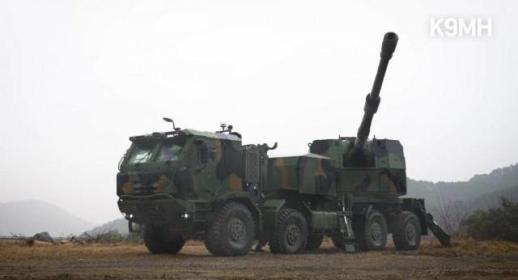 Hanwha's new K9 wheeled howitzer draws global attention after viral test video SEOUL, April 18 (AJP) - A test video of Hanwha Aerospace’s new wheeled self-propelled howitzer, the K9MH, has spread widely on social media, drawing attention to its performance. The U.S. Army is pursuing a major program to replace its current 155mm M777 towed howitzers with wheeled self-propelled systems. Hanwha’s U.S. unit, Hanwha Defense USA, said last month it had proposed the K9MH for the program. The company is also reviewing plans to produce the system in Alabama if selected, and is reportedly planning to invest about $1.3 billion to build an ammunition plant in Arkansas. The K9MH is based on Hanwha’s flagship K9 self-propelled howitzer platform. It mounts a fully automated K9 turret on an 8×8 chassis from Tatra Trucks, a widely used solution for wheeled artillery, reducing the crew to three. Compared with the tracked K9, it is seen as offering lower maintenance costs and greater strategic mobility. Although not from official sources, footage filmed at a test site in Changwon, South Korea, has circulated on overseas social media, showing live-fire exercises of the K9MH. The video includes ammunition loading and firing sequences, demonstrating a dual-feed system that transports projectiles and propellant charges via separate conveyors. The system showed a firing cycle of about 7.5 seconds, delivering nine rounds per minute. Ukrainian defense outlet Defense Express said the K9MH’s performance is comparable to Sweden’s Archer artillery system, one of the leading automated wheeled howitzers, which typically fires eight to nine rounds per minute with a loading cycle of around eight to nine seconds. It added that the K9MH could outperform Germany’s RCH 155 in terms of reload speed. However, the outlet noted that the Archer retains an advantage in deployment speed. The Archer takes about 23 seconds to fire its first round after stopping and 34 seconds to leave position, compared with roughly 20 seconds and 50 seconds, respectively, for the K9MH. The U.S. Army is expected to select candidates for the next phase of the program in July, with a final decision scheduled for the fourth quarter of 2027. Other contenders include Rheinmetall’s RCH 155, Elbit America’s Sigma, and BAE Systems’ Archer. 2026-04-18 15:19:07
 -
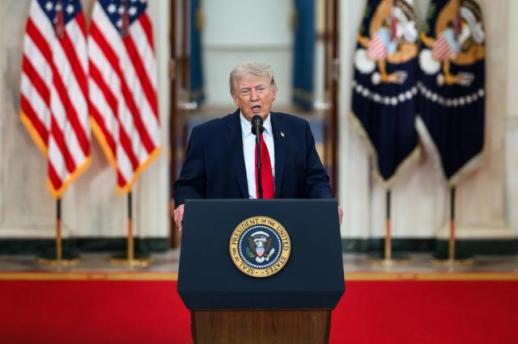 Trump warns of no ceasefire extension as U.S.-Iran talks set for April 20 SEOUL, April 18 (AJP) - U.S. President Donald Trump on Friday warned that the United States may not extend the ceasefire with Iran if no agreement is reached by April 22, stepping up pressure on Tehran. “Maybe I won’t extend it, but the blockade is going to remain. So you have a blockade, and unfortunately we’ll have to start dropping bombs again,” he said aboard Air Force One while returning to Washington from Phoenix, Arizona. The United States and Iran agreed to a two-week ceasefire proposal put forward by Pakistan on April 7, setting April 21 as the initial deadline for reaching a broader agreement. It remains unclear whether Trump’s reference to April 22 reflects an extension of the deadline or a misstatement. A second round of ceasefire talks between the United States and Iran is likely to be held on April 20 in Islamabad, Pakistan, U.S. officials said. Iranian officials also told CNN that their delegation is expected to arrive in Islamabad on April 19, with negotiations likely to take place the following day. Iran has also raised expectations for a deal by announcing that it would fully allow commercial shipping through the Strait of Hormuz following ceasefire declarations between Israel and Lebanon. However, major differences remain over key issues, including uranium enrichment and Iran’s nuclear program. The first round of talks collapsed after the two sides failed to narrow differences on enrichment. U.S. media reported that Washington had softened its earlier demand for a complete ban on uranium enrichment, instead proposing a 20-year suspension. Iran reportedly countered with a five-year proposal, preventing a breakthrough. Trump earlier said Iran had “agreed to everything,” including not possessing nuclear weapons, and would hand over what he described as “nuclear dust” buried underground following U.S. strikes involving B-2 bombers last June. But Iranian Foreign Ministry spokesperson Esmaeil Baghaei rejected the claim in an interview with state-run IRIB, saying Iran’s enriched uranium “will not be transferred anywhere.” 2026-04-18 13:09:59
 -
 Health authorities say current vaccines remain effective amid concerns over new COVID-19 variant SEOUL, April 18 (AJP) - The Korea Disease Control and Prevention Agency (KDCA) said Saturday that current COVID-19 vaccines remain effective against a new variant, urging the public not to overreact. The agency cited an assessment by the World Health Organization regarding the BA3.2 variant, noting that currently approved COVID-19 vaccines are “expected to continue providing protection against severe disease,” and adding that there is “no data indicating increased severity” associated with the variant. According to the KDCA, BA3 — a sublineage of the Omicron variant — briefly appeared in early 2022 before disappearing. Its subvariant, BA3.2, was first identified in South Africa in November 2024. The agency said that although the BA3.2 variant could contribute to a rise in cases domestically, it is continuing to closely monitor the situation. The COVID-19 positivity rate at local clinics rose to 6.3 percent in the 15th week (April 5–11), up from 4.7 percent a week earlier. During the same period, the BA3.2 variant accounted for 23.1 percent of cases, making it the third most prevalent strain. As of last month, PQ2 and NB1.8.1 led with 34.6 percent each, followed by BA3.2 at 23.1 percent and XFG at 3.8 percent. A KDCA official said, “The WHO has assessed that the BA3.2 variant does not significantly change disease severity, and current vaccines remain effective. Excessive concern is unnecessary at this stage.” The official, however, urged high-risk groups, including those aged 65 and older and immunocompromised individuals, to get vaccinated, with vaccinations available through June 30. 2026-04-18 10:36:17
 -
 President Lee signals South Korea role in safeguarding Hormuz shipping lanes SEOUL, April 18 (AJP) - President Lee Jae Myung on Friday said South Korea would make a “substantive contribution” to efforts to safeguard navigation in the Strait of Hormuz. Lee made the remarks during an international summit on maritime security in the strait, where leaders discussed coordinated efforts to restore safe passage through one of the world’s most critical energy chokepoints. According to the presidential office, Lee emphasized that disruptions in the strait — a vital artery for global supply chains — have shaken energy, financial, industrial and food security worldwide. He also raised concerns over the safety and well-being of seafarers, including South Korean nationals, who remain stranded amid ongoing instability. “South Korea is a key stakeholder, importing about 70 percent of its crude oil through the Strait of Hormuz,” Lee said, adding that Seoul would make “a substantive contribution” to ensuring freedom of navigation. Lee further said the government would actively explore ways to expand diplomatic and military cooperation in response to evolving conditions. The summit, attended by representatives from 49 countries, lasted about 90 minutes. While China and Japan also took part, they were represented by non-head-of-state officials. Among leaders participating virtually, Lee was the first to speak and delivered remarks lasting approximately four minutes and 40 seconds, slightly exceeding the allotted three-minute speaking time. Lee’s remarks come amid growing discussions over a potential multinational maritime mission, led by the United Kingdom and France, being prepared as a postwar, strictly defensive effort to safeguard shipping and restore freedom of navigation in the Strait of Hormuz. At a joint press conference, French President Emmanuel Macron said recent developments were “encouraging” for the transport of gas, fertilizers and other goods, while cautioning that risks remain. British Prime Minister Keir Starmer said, “More than a dozen countries have already offered to contribute assets” to help safeguard navigation in the strait. Momentum for international involvement may be building, as Iran earlier in the day announced it would fully reopen the waterway, raising expectations for progress in ceasefire negotiations. U.S. President Donald Trump welcomed the announcement, writing “THANK YOU!” on his social media platform Truth Social. However, he added that the naval blockade would remain “in full force and effect” until a deal with Iran is “100% complete.” 2026-04-18 09:35:10
 -
 Kookmin University professor develops framework to make image generation AI safer SEOUL, April 17 (AJP) - Professor Kim Min-gyu at Kookmin University (KMU) has developed a unified framework to ensure the safety of artificial intelligence models that generate images and videos. The research, which addresses issues like copyright protection and harmful content, has been selected for an oral presentation at the International Conference on Learning Representations (ICLR) 2026. Kookmin University (KMU) said Friday. Professor Kim Min-gyu worked as the lead author on the study alongside Professor Kim Young-heon and Professor Park Mi-jeong from the University of British Columbia (UBC). The project received support from the Institute for Information and Communications Technology Planning and Evaluation (IITP) and the Canadian Institute for Advanced Research (CIFAR). The research introduces a system called Safety-Guided Flow (SGF) to improve how AI models handle sensitive data and requests. This framework unifies existing safety techniques, proving that previous methods were specific cases of a broader mathematical concept known as maximum mean discrepancy potential. The team also identified what they call a critical time window in the AI generation process. Using control barrier function theory, they demonstrated that safety controls must be applied most strictly during the initial stages of image creation before being gradually phased out. Tests of the SGF system showed improved performance in defending against harmful content and preventing the AI from accidentally memorizing its training data. These improvements are seen as a foundation for making generative AI safer for commercial and public use in South Korea and abroad. "This research provides a new analytical framework that allows us to understand scattered safety research from a single, unified perspective," Professor Kim Min-gyu said. "In the future, it can be used as a core technology to ensure safety as diffusion and flow matching models are put into practical use in high-risk areas such as autonomous driving, medicine, and content creation." 2026-04-17 19:10:58