
Journalist

Lee Hugh
=
-
 Korea Heritage Service Finds Ramses II Name on Ramesseum Temple Pylon in Egypt The Korea Heritage Service and the Korea National University of Cultural Heritage said on 9 that they have made major academic findings during a restoration project at the pylon gate of the Ramesseum Temple in Luxor, Egypt, including the discovery of a cartouche bearing the name of Ramses II. The work is part of the Korea Heritage Service’s official development assistance project, titled “Capacity building for sustainable cultural heritage tourism resource development in Luxor, Egypt.” A cartouche is an oval enclosure used in ancient Egypt to set apart and emphasize a pharaoh’s name, which otherwise would be written in a line of hieroglyphs. The discovery was confirmed during an excavation survey on the north side of the pylon. Investigators also identified multiple layers spanning from the period when the pylon was built through modern times, securing materials that help reconstruct how the Ramesseum was built and altered over time. A French research team previously found a cartouche of Ramses II while excavating the temple’s innermost sanctuary, but this is the first time one has been discovered at the pylon, the agencies said. Hisham El Leithy, secretary-general of Egypt’s Supreme Council of Antiquities, said the newly found cartouche differs in form from those previously identified and is expected to provide an important clue for determining the construction sequence of structures within the Ramesseum. He also said researchers confirmed a carved stone element bearing a new place name that supports the extent of Ramses II’s territorial expansion. The Korea Heritage Service and the university said they also identified soil layers that could help estimate how stone was transported and how the structure was built, providing baseline data for restoring the pylon to its original form. A temporary protective shelter is now being installed, and once completed, dismantling and full-scale restoration of the pylon are expected to accelerate. * This article has been translated by AI. 2026-04-09 09:21:06
 -
 Isabelle Huppert, Lee Hye-young to read from Han Kang novel at Avignon Festival Nine South Korean performing arts works have been selected for the official “IN” program of the 80th Avignon Festival. The festival’s organizing committee said on April 8 (local time) that nine works by seven Korean companies will be presented in the official lineup at venues across Avignon, France, from July 4 to 25. It will be the first time Korean works have been officially invited since 1998’s “Désir d’Asie,” about 28 years ago. A staged reading based on Han Kang’s novel “I Do Not Bid Farewell” will be performed at the Cour d’Honneur of the Palais des Papes, one of the festival’s signature venues. The production is a joint project of the Avignon Festival and the Seoul Performing Arts Festival (SPAF) and features French actor Isabelle Huppert and South Korean actor Lee Hye-young. It is also scheduled to be presented at SPAF in October. Italian director Daria Deflorian’s new work, “The dolore terrible e l’amore,” also draws on “I Do Not Bid Farewell” and is set to premiere at the festival. Three works by playwright Gu Ja-ha, the first Asian recipient of the International Ibsen Award, will also be staged. They include “Cuckoo” and “A History of Korean Theater,” two parts of his Hamartia trilogy, and “Haribo Kimchi.” The works were previously shown at SPAF in 2023 and 2025, respectively. Other invited productions include the audience-participation piece “Material,” part of “Elephants Laugh” directed by Lee Jin-yeop; “Island Story” by Creative Vaki, directed by Lee Kyung-sung, set against the backdrop of the Jeju 4.3 incident; “1 Degree Celsius” by choreographer Heo Seong-im’s Heo Project on the climate crisis; “Gin: Yeonhui Deconstruction Project I” by Liquid Sound, directed by Lee In-bo, blending traditional performance with contemporary dance; and Lee Ja-ram’s “Snow, Snow, Snow,” a pansori adaptation of a Tolstoy short story. During the festival, Arts Management Support Center will host a tentative event titled “K-Stage Rendezvous” at the Cloître Saint-Louis, the festival’s main hub. More than 50 performing arts professionals, programmers and critics from around the world are expected to attend to explore collaboration, co-production and distribution opportunities with Korean artists. The center will also support participation in “Transmission Impossible,” a residency and training program for young artists, aimed at strengthening skills and expanding international exchange opportunities for the next generation, including university and graduate students in arts majors. Kim Jang-ho, head of the Arts Management Support Center, said the organization will “introduce the global potential of Korean arts through collaboration across genres, including literature and visual arts,” and will work to expand international distribution of Korean performing arts through platforms such as SPAF and the Seoul Art Market (PAMS). The festival also selected Korean as its guest language, the first time an Asian language has been chosen. * This article has been translated by AI. 2026-04-09 09:00:00
 -
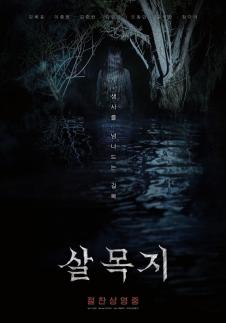 'Salmokji' Tops Box Office on Opening Day With Best Horror Debut Since 2021 The horror film ‘Salmokji’ opened at No. 1 at the box office on its first day in theaters, according to industry data. The film follows a production crew that heads to a reservoir for a reshoot after an unidentified figure appears on a road-view image, only to encounter something lurking in the dark, deep water. According to the Korean Film Council’s integrated ticketing network, ‘Salmokji’ drew 89,912 moviegoers on its opening day, April 8, bringing its cumulative audience to 116,825. The figure topped the same-day daily box office totals for ‘The Man Who Lives With the King’ and ‘Project Hail Mary.’ Its opening-day turnout was the strongest for a horror release since ‘The Medium’ in 2021, and it also surpassed the 76,003 opening-day audience reported for ‘Project Hail Mary.’ Audience response has remained positive, with ‘Salmokji’ posting a 91% score on CGV’s Egg Index, a rating based on verified viewers. ‘Salmokji’ is now playing in theaters nationwide.* This article has been translated by AI. 2026-04-09 08:54:15
 -
 Actress Seonu Yongyeo Says Cheongdam-dong Land Bought for 8 Million Won Is Now Worth 10 Billion Won Actress Seonu Yongyeo revisited the site of a home lot she once bought in Seoul’s Cheongdam-dong neighborhood. A video titled “Seonu Yongyeo’s Cheongdam building revealed for the first time, price up 1,000 times in 50 years” was posted Tuesday on the YouTube channel “Sunpung Seonu Yongyeo.” In the video, Seonu said she had lived in an apartment in Banpo before deciding she wanted to live on land and bought a house in Cheongdam-dong. She said the property was a 99-pyeong rectangular lot with a 27-pyeong house, but that her husband sold the entire parcel when the family moved to the United States. The land was purchased in the 1970s for 8 million won, but is now said to be worth about 10 billion won — about 1,250 times higher over roughly half a century. Seonu also recalled an episode from years ago when she tried to buy 2,200 pyeong of land near a court in Gangnam, and spoke about her connection with fellow actor Eom Aengran. “I’m fine. I’m rich,” she said. “My heart is rich, so there’s nothing to envy.”* This article has been translated by AI. 2026-04-09 08:39:43
 -
 Suwon Museum of Art Expands Accessible Viewing for Deaf and Blind Visitors Gyeonggi Province’s Suwon Museum of Art said Thursday it is running exhibition-viewing programs for deaf and visually impaired visitors as it pursues a “barrier-free museum that everyone can enjoy.” The museum has provided sign-language interpretation videos for exhibitions since 2020 and has produced braille leaflets for visually impaired visitors since 2023, it said. For its current collection exhibition, “Blanc Black Panorama,” the museum planned and produced sign-language interpretation videos. Starting this year, it will significantly increase the share of on-screen exhibition explanations in those videos, expanding them so not only deaf visitors but also the general public can follow artwork descriptions more comfortably and intuitively. The videos will be available from April 17 on the museum’s official YouTube channel and Naver TV. In June, the museum plans to offer an on-site sign-language tour for members of the Suwon branch of the Gyeonggi chapter of the Korean Association of the Deaf. For visitors with visual impairments, the museum has prepared audio guides and braille leaflets for use in the galleries. Director Nam Ki-min said the museum will further improve accessibility through a range of content development and facility upgrades aimed at a barrier-free museum for all residents.* This article has been translated by AI. 2026-04-09 08:39:15
 -
 Chipflation accelerates, Samsung device makers bump up price tags SEOUL, April 8 (AJP)-Samsung Electronics and other South Korean device makers are raising prices across smartphones, laptops and tablets as a sharp surge in memory costs — driven by artificial intelligence demand — squeezes margins and reshapes the consumer electronics market. Samsung this week lifted prices for key products including laptops and tablets, with some models rising by as much as 900,000 won ($600). The company also raised official prices of several smartphones months after launch — an unusual move that underscores the severity of component cost pressures. The top-end Galaxy Book6 Ultra with RTX 5070 rose from 4.93 million won to 5.83 million won, while the RTX 5060 model climbed from 4.63 million won to 5.53 million won — both up by 900,000 won. The models had already launched in January at prices significantly higher than their Galaxy Book5 predecessors, but were raised again as memory costs accelerated. Samsung also increased prices for the base Galaxy Book6 just a week after its release, lifting launch prices — originally set between 1.6 million won and 2.51 million won depending on specifications — by between 170,000 won and 880,000 won. Tablet prices were also adjusted upward. The Galaxy Tab S11 Ultra, along with mid-range and budget models in the FE and A series, saw increases ranging from 30,000 won to 150,000 won. The price bump-up came after the company which also produces memory along with devices estimated a record-breaking operating profit of 57 trillion won ($39 billion) for the first quarter due to the spike in chip value. The retail price hikes reflect a broader shift in the global memory market, where supply is increasingly being diverted away from consumer devices toward AI infrastructure. Samsung’s decision to raise prices on existing smartphone models highlights the scale of the pressure. Such post-launch price hikes are rare in the industry, where prices typically decline over time. The move suggests manufacturers are no longer able to absorb rising component costs. Other Korean electronics and appliance makers are also expected to follow, as memory inflation feeds into broader hardware pricing. Market tracker TrendForce expects conventional DRAM contract prices to rise 58 to 63 percent quarter on quarter in the second quarter, while NAND Flash prices are projected to jump 70 to 75 percent. “DRAM suppliers are reallocating capacity toward HBM and server applications, while overall supply remains tight,” TrendForce said. The price surge is being driven by an aggressive buildout of AI data centers, particularly in North America, where cloud providers are securing memory supply through long-term agreements. TrendForce noted that suppliers are prioritizing server-grade memory due to higher profitability, leaving less capacity for consumer-grade products. “Suppliers continue prioritizing server DRAM… while near-term supply remains tight,” it said, adding that meaningful capacity expansion is unlikely before late 2027. The shift is hitting Korean manufacturers directly. Memory accounts for roughly 20 percent of smartphone production costs, making devices highly sensitive to DRAM and NAND price swings. As supply tightens — particularly for lower-capacity chips used in consumer products — manufacturers are increasingly forced to pass costs on to consumers. TrendForce said major suppliers are gradually pulling back from the consumer DRAM segment, worsening shortages. Worse, the outlook points to continued upward pressure. In NAND, demand from AI servers and enterprise storage remains strong, while consumer demand is weakening under higher prices — a dynamic that reinforces supply tightness. TrendForce said enterprise SSD demand tied to generative AI is accelerating, with cloud providers willing to pay premiums to secure supply. The impact is expected to extend into upcoming product cycles. New flagship smartphones and foldables set for release later this year as result are likely to carry higher price tags. 2026-04-09 08:05:05
 -
 BTS Launches 'ARIRANG' World Tour in Goyang, Set for 85 Shows in 34 Cities BTS opens its new world tour, “ARIRANG,” on April 9 at the main stadium of Goyang Sports Complex in Gyeonggi Province. According to agency BIGHIT MUSIC, the group will perform in Goyang on April 9, 11 and 12, then head to Japan, the United States, Germany, France, Canada, Peru, Chile, Thailand and other stops, meeting fans across 34 cities in 85 shows. The tour is built around stadiums and large domes and will feature a 360-degree open stage designed to deepen audience immersion. Demand has remained strong. Forty-six shows, including dates in Goyang and Tokyo as well as North America and Europe, have already sold out. Global concert promoter Live Nation said about 2.4 million tickets have been sold for the 41 North American and European shows alone. BTS is expected to perform songs from its fifth full-length album, “ARIRANG,” along with earlier hits. The album has continued its run after topping the Billboard 200 main albums chart for a second straight week. Member Jimin wrote on the fan platform Weverse, urging fans to dress warmly and adding, “We’ll prepare hard.”* This article has been translated by AI. 2026-04-09 08:00:15
 -
 BTS’ Jung Kook Apologizes for Profanity During Live Broadcast BTS member Jung Kook has apologized for his behavior during a recent live broadcast. In a message posted early April 8 on the fan platform Weverse, Jung Kook said, “I should apologize to ARMY about a recent live.” He added, “If I think about whether I did something seriously wrong, honestly I’m not sure. I’m not a public official, and these are things people in this industry all say.” He said he realized fans may have felt uncomfortable because he had not shown that side of himself before, adding, “I want to say I’m sorry to our ARMY who felt uncomfortable, and I’ll hold back.” Jung Kook also said he did not want to say much to “people who are busy criticizing everything,” adding, “Thank you for your interest.” In February, Jung Kook drew controversy after making an obscene hand gesture and using profanity toward an acquaintance during a live broadcast. * This article has been translated by AI. 2026-04-09 07:57:15
 -
 OPINION: War without order and reason The war launched by the United States and Israel against Iran has entered its sixth week, with no clear end in sight. What began as a show of force has instead evolved into a grinding conflict, disrupting global energy flows, rattling markets and exposing the fragility of international order. Each morning, attention turns less to the battlefield than to Washington — to President Donald Trump’s shifting rhetoric, deadlines and threats. Policy, it seems, is being made in real time. This war should not have begun in the first place. It lacks a coherent rationale, let alone an exit strategy. Its origins appear tied as much to Israeli domestic politics and regional ambitions as to any immediate security necessity. For Trump, who once cast himself as a peacemaker and even a Nobel aspirant, the contradiction is stark. His presidency has instead coincided with the prolongation or expansion of conflicts from Ukraine to Gaza, Lebanon and now Iran. More troubling is the broader collapse of the postwar system. The institutions built after World War II to prevent large-scale violence — the United Nations, peacekeeping frameworks, even international courts — are increasingly sidelined. What remains is not a transition to a stable multipolar order, but a vacuum where power alone dictates outcomes. From Tehran, the war is framed differently. Iranian media call it “Trump’s war,” contrasting what they see as Iran’s historical continuity with what they portray as American impulsiveness. The comparison is not merely rhetorical. It reflects a deeper failure of understanding — a tendency in Washington to reduce a complex civilization into a strategic target. Yet Iran’s own system is far from blameless. Decades of economic mismanagement, political rigidity and concentration of power have left its society strained. Inflation has surged, real incomes have collapsed, and recent protests — spanning more than 100 cities — revealed a population under acute pressure. Many had hoped for reform or diplomatic relief. Instead, war has intervened. The human cost is mounting. Among the dead is Dr. Kamal Karaji, a veteran diplomat and architect of Iran’s nuclear negotiations, killed in an Israeli strike. He was not a symbol of confrontation, but of engagement — a figure who argued that Iran’s future lay in economic development, not nuclear armament. His death underscores a dangerous shift: the targeting of those who might have enabled diplomacy. That shift also deepens the central problem — trust. The United States withdrew from the 2015 nuclear agreement unilaterally. It launched strikes even as talks were underway. It issued ultimatums, then acted before deadlines expired. Under such conditions, negotiations become indistinguishable from coercion. Iran, for its part, is unlikely to capitulate. Its leadership structure is designed for continuity, with layers of succession and a political culture that frames loss as martyrdom. Even as senior figures are eliminated, replacements step in. The system bends, but does not break. The result is a conflict with no natural off-ramp. There are, in theory, areas for compromise — limits on nuclear development, calibrated missile constraints, managed access through the Strait of Hormuz. But these require a minimum level of credibility. Without it, even reasonable proposals become nonstarters. What is at stake now extends beyond Iran. It is the question of whether rules still matter in international relations — or whether the world is entering an era where power is exercised without constraint and justified after the fact. If cities like Rome or Vienna were subjected to similar bombardment, the global response would be immediate and unified. That it is not, in this case, speaks volumes. This is no longer just a regional war. It is a test of whether the idea of order itself still holds. *The author is a professor emeritus at the Department of Cultural Anthropology at Hanyang University. About the author ▷Hankuk University of Foreign Studies ▷Ph.D. in history, Istanbul University, Turkey ▷Emeritus professor, Department of Cultural Anthropology, Hanyang University ▷Secretary-general, Korea-Türkiye Friendship Association ▷Academic committee member (South Korea representative), Central Asian Studies Institute (UNESCO-IICAS) ▷Chair professor, Sungkonghoe University ▷Director, Institute of Islamic Culture Research ▷About 90 books published in South Korea and abroad 2026-04-09 07:24:57
 -
 Global Biosimilar Rules Ease, but Market Seen Consolidating Around Established Leaders Easing regulations for biosimilars is lowering barriers to entry, but competition is expected to tighten around established leaders rather than shift to newcomers, industry watchers say. As of April 8, major regulators including the U.S. Food and Drug Administration and the European Medicines Agency are revising standards to simplify biosimilar approvals, according to industry officials. The aim is to reduce the burden of large Phase 3 trials used to prove equivalence to original drugs and to rely more on analytical data such as pharmacokinetics (PK). Industry estimates put the impact at about a 25% cut in overall clinical costs and a development timeline shortened by one to two years. South Korea is moving in the same direction. The Ministry of Food and Drug Safety has already shortened review times for new biologics and biosimilars to 295 days from 406 days and plans to reduce them further to 240 days. Even so, lower regulatory hurdles are not expected to change who leads the market. Developing a biosimilar remains a high-difficulty business that can require up to $300 million per product and take more than five years. Regulatory easing may encourage more companies to try entering, but few have the production facilities, quality control systems and global approval experience needed at the same time. As entry becomes easier, the advantages of incumbent players may stand out more, the industry says. Jung Yi-su, an analyst at IBK Investment & Securities, said Celltrion and Samsung Bioepis are likely to be key beneficiaries in South Korea. He said Celltrion is moving quickly to revise Phase 3 trial plans in line with the regulatory changes, making it more likely to reflect the benefits of streamlined trials sooner. External conditions are also favorable for Celltrion, the report said. A policy for "2027 Medicare Advantage" issued by the U.S. Centers for Medicare & Medicaid Services includes higher insurer burdens and higher patient out-of-pocket costs. That could increase preference for biosimilars over high-priced drugs. If costs tied to intravenous (IV) administration are reflected, demand could also rise for subcutaneous (SC) formulations that patients can self-administer. Celltrion's "Zymfentra" was cited as a direct beneficiary. Celltrion plans to expand its biosimilar portfolio to 41 products by 2038 from 11 now. Key pipeline candidates include autoimmune disease treatments "CT-P53" and "CT-P55" and cancer treatment "CT-P51," all in Phase 3 trials. Samsung Bioepis is viewed as ahead in developing its Keytruda biosimilar, "SB27." It completed global clinical patient enrollment earlier than competitors, raising its chances of securing an early position, the report said. U.S. biosimilar market analysis cited in the report says first movers can generate, on average, 27% higher sales than later entrants. Keytruda patents are set to expire in the United States in 2028 and in Europe in 2031. Because clinician trust is critical, products that enter first may be able to expand share based on prescribing experience, the report said. Samsung Bioepis has already expanded its global footprint, commercializing 11 biosimilars in more than 40 countries, including the psoriasis treatment "Pyzchiva" and the paroxysmal nocturnal hemoglobinuria treatment "Epyscli." It is developing biosimilars for seven additional blockbuster drugs nearing patent expiry and plans to expand to 20 products by 2030. Industry officials said the regulatory shift could reshape the competitive landscape, not just expand the market. "As the clinical burden falls, more companies will try to enter the biosimilar market, but the market itself will be reorganized around existing leaders with experience and infrastructure," one industry official said. 2026-04-08 19:03:43