
Journalist

Lee Hugh
=
-
 Asian stocks edge up as markets brace for Trump's Iran deadline SEOUL, April 07 (AJP) - Asian equities ended mostly higher Tuesday, though gains were limited as investors held back ahead of U.S. President Donald Trump’s self-imposed nighttime deadline for Iran. South Korea’s benchmark KOSPI rose 0.82 percent to 5,494.78 after swinging between gains and losses through the session. The rebound was helped by renewed foreign buying following Samsung Electronics’ blockbuster first-quarter earnings, which placed it among the world’s four most profitable tech companies alongside Apple, Nvidia and Microsoft. Still, hopes for a diplomatic off-ramp faded as Iran showed no sign of yielding despite Trump’s sharpest warning yet, threatening to strike power plants and bridges unless Tehran complies by 8 p.m. U.S. Eastern Time. Reports of Israeli strikes on Iranian infrastructure added to concerns over broader regional escalation and possible energy supply disruptions. Oil prices climbed on those fears. Brent crude rose 1.37 percent and West Texas Intermediate gained 2.3 percent, while the CBOE Volatility Index rose to 24.17, underscoring growing market unease. Foreign investors led late-session buying in Seoul, purchasing a net 406.9 billion won ($270.4 million) worth of shares. Institutions and retail investors were net sellers, offloading 414.1 billion won and 342.6 billion won, respectively. The shift in flows helped the KOSPI recover from earlier weakness. Among major stocks, Samsung Electronics gained 1.8 percent to 196,500 won, while SK hynix climbed 3.4 percent to 916,000 won on continued strength in memory-chip prices. Defense shares also advanced, with Hanwha Aerospace jumping 6 percent amid rising geopolitical tensions. Battery makers were mixed. LG Energy Solution fell 1 percent to 408,500 won after posting a preliminary operating loss of 207.8 billion won, while other secondary battery stocks were comparatively resilient. Automakers edged lower, with Kia slipping 0.5 percent. The tech-heavy KOSDAQ fell 1.02 percent, reversing early gains as retail and institutional investors turned into heavy sellers. Biotech shares dragged on sentiment, with Sam Chun Dang Pharm plunging 16 percent. Global semiconductor sentiment remained firm, with the Philadelphia Semiconductor Index rising 1.2 percent to 7,916.1, reflecting continued optimism over AI-driven chip demand. Elsewhere in Asia, Japan’s Nikkei 225 ended little changed at 53,429.56, while China’s Shanghai Composite added 0.2 percent to 3,886.19. Hong Kong markets remained closed for an extended Easter holiday. The won traded at around 1,504.5 per dollar. 2026-04-07 17:36:32
 -
 Samsung vaults into global top tier as AI-driven memory boom turbocharges profits SEOUL, April 07 (AJP) - Its record-smashing first-quarter earnings that nearly matched the full-year income of its previous peak in 2018 place Samsung Electronics among the world’s top five big tech firms and suggest it could even challenge Nvidia in operating profit if the memory supercycle extends into next year. The company on Tuesday estimated its first-quarter operating profit at 57.2 trillion won ($38.0 billion), nearly tripling its previous quarterly high in the October–December period and surpassing its full-year 2025 income of 43.6 trillion won. Revenue reached 133 trillion won. The latest figures place Samsung alongside the world’s most dominant tech firms. Based on recent quarterly results, Apple leads with operating profit of $50.9 billion, followed by Nvidia with $44.3 billion and Microsoft with $38.3 billion. At current exchange rates, Samsung outperforms Google’s parent Alphabet, which reported quarterly operating profit of $35.93 billion. "Samsung is enjoying a dual effect in the memory market," said Lee Jong-hwan, a professor of system semiconductor engineering at Sangmyung University. "As the company shifted its production capacity toward High Bandwidth Memory (HBM), the supply of legacy DRAM naturally decreased, driving up prices significantly amid strong demand." Analysts projected that the bulk of first-quarter profit would come from semiconductors, or the Device Solutions (DS) division, even before the results overwhelmingly beat expectations. Daishin Securities had projected DS operating profit at 41.8 trillion won, out of a total estimated company profit of 45.2 trillion won. Kiwoom Securities offered a similar outlook, estimating the chip division’s profit at 41.3 trillion won. Meritz Securities presented the most bullish domestic forecast, expecting the DS unit to generate 48.9 trillion won in profit—driven by 50.3 trillion won from the memory sector alone—out of a total projected profit of 53.9 trillion won. Citi projected Samsung’s total operating profit to reach 51 trillion won in early April, a sharp increase from Goldman Sachs’ earlier estimate of 40.3 trillion won in March. The rush into high-bandwidth memory (HBM) to train AI systems and run hyperscale data centers has fueled demand across both premium and legacy chips, sending prices sharply higher and giving suppliers stronger pricing power in long-term contracts. DRAM contract prices soared 90 to 95 percent quarter-on-quarter in the first quarter, while NAND prices rose around 60 percent, according to TrendForce, which estimates 58 to 63 percent on-quarter gains in the second quarter and 70 to 75 percent for NAND flash. Samsung is the dominant supplier of both DRAM and NAND flash. "As global big tech companies seek to develop their own custom AI chips, TSMC’s limited capacity will inevitably lead to spillover orders for Samsung," Lee said. "As the only tech giant handling both memory and foundry businesses, Samsung is entering a phase where both sectors can expand simultaneously." Analysts emphasize that this surge is a direct result of explosive growth in AI infrastructure. "We assume that the year-on-year growth rate of capital expenditure by big tech companies will be revised upward to 92 percent, in which case DRAM demand growth this year will reach 20.3 percent," said Song Myung-sup, an analyst at iM Securities. This immense profitability provides a critical buffer for Samsung’s aggressive investment strategy, with capital expenditure projected to reach 114.3 trillion won by 2026. Even amid geopolitical tensions, the structural stability of the company’s core projects remains intact. "Considering the stability of payment collection for group captive projects, the actual risk of bad debt is limited," said Ryu Tae-hwan, an analyst at Eugene Investment & Securities. According to market consensus data from FnGuide, Samsung’s total annual operating profit for 2026 is projected to reach 227.3 trillion won. Some estimates have been revised upward following the first-quarter results. KB Securities projected Samsung’s operating profit at 327 trillion won this year and 488 trillion won in 2027, closely chasing Nvidia’s 357 trillion won and 485 trillion won, respectively, in the brokerage's estimate. Paled in comparison, Korea’s home appliance rival LG Electronics also reported stronger-than-expected first-quarter results, highlighting the resilience of the country’s tech sector. The company estimated operating profit at 1.67 trillion won ($1.24 billion), up 32.9 percent on-year and well above market consensus. Revenue rose 4.4 percent to a quarterly record of 23.73 trillion won, supported by demand for premium home appliances and steady growth in its vehicle components division. Both Samsung and LG will release finalized results later this month. Shares of Samsung Electronics closed Tuesday up 1.45 percent at 195,900 won on Tuesday. Cross-town memory rival SK hynix also saw strong gains, jumping 3.16 percent to finish at 914,000 won. 2026-04-07 17:31:09
 -
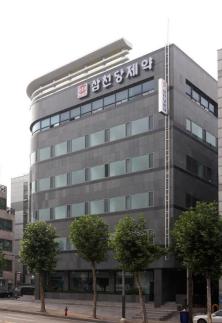 Another bio boom burst looms over KOSDAQ SEOUL, April 07 (AJP) - Boom-and-bust cycles have long defined Korea’s bio stocks, and the latest episode has unfolded around generic and specialty drugmaker Sam Chun Dang Pharm. Sam Chun Dang closed Tuesday at 519,000 won ($345), down 16.02 percent on the day. From its closing high of 1.184 million won on March 30, the stock has plunged more than 56 percent — a sharp reversal after an earlier surge of nearly 400 percent from around 270,000 won at the start of the year. At the center of the rise and fall is the company’s oral obesity treatment. Suspicions of market manipulation have intensified following reports that the majority shareholder filed to sell a significant stake, only to abruptly cancel the plan. The episode comes as the South Korean government’s ambitious “KOSDAQ 3,000” target continues to be weighed down by repeated collapses in speculative theme stocks. The surge in Sam Chun Dang’s shares began in late February, fueled by a string of announcements on exclusive licensing deals. On Feb. 26, the stock jumped nearly 30 percent to 757,000 won after the company disclosed a partnership with a European pharmaceutical firm for its GLP-1 diabetes and obesity treatment. GLP-1 drugs — such as Eli Lilly’s Mounjaro and Novo Nordisk’s Wegovy — are typically administered through weekly injections. Sam Chun Dang’s pitch was a more convenient pill-based alternative, a narrative that quickly captured market attention. But after the stock peaked on March 30, cracks began to appear. Questions emerged over the identity of its European and U.S. partners. Sentiment deteriorated further when it was revealed that the company had bypassed the official disclosure system (KIND), instead releasing earnings forecasts through press channels. At the same time, its R&D spending was found to be declining despite the high-profile project. Concerns deepened when it was disclosed that CEO Jeon In-seok had attempted to sell 250 billion won worth of shares on March 24. Jeon pushed back, threatening legal action against bloggers and analysts at iM Securities who raised doubts, and even presenting purported U.S. FDA approval documents at a press conference on Monday. The efforts, however, failed to restore investor confidence. On March 31, the Korea Exchange (KRX) designated Sam Chun Dang as a potential “unfaithful disclosure corporation.” If found to have acted intentionally in bad faith, the company could face penalty points that may ultimately trigger a delisting review. The fallout has rippled across the broader biotech sector. On March 31, as Sam Chun Dang plunged 30 percent and lost its position as the top KOSDAQ stock, Celltrion Pharm fell 3.9 percent to 54,800 won, while ABL Bio dropped 3.3 percent to 165,000 won. Both remained weak or flat in Tuesday’s morning session. The market’s sensitivity reflects a long memory. The most prominent case remains SillaJen, which soared from 10,000 won in 2016 to 160,000 won in 2018 on expectations for its liver cancer treatment Pexa-Vec, only to collapse 30 percent in a single day in August 2019 after Phase 3 trial failure and insider trading allegations. The shock dragged the entire KOSDAQ down 3.7 percent that day. Other names — including Helixmith, Kolon TissueGene and Shin Poong Pharm — have also seen sharp declines or delisting risks tied to overstated R&D claims or governance issues, leaving a lingering trust deficit in the sector. Market experts warn that such speculative swings remain a structural hurdle to President Lee Jae Myung’s goal of lifting the KOSDAQ to 3,000. “Bio stocks tend to surge on any sign of clinical success, especially with the global pharmaceutical market expected to reach $3 trillion by 2030,” said a securities researcher who requested anonymity due to concerns over potential litigation. “The success of Eli Lilly and Novo Nordisk has pushed expectations to extremes,” he added. Another industry official stressed that hitting the 3,000 mark will require more than momentum-driven rallies. “While the KOSPI is anchored by dependable heavyweights like Samsung Electronics and SK hynix, leadership on the KOSDAQ remains fluid and fragile,” he said. Indeed, the top spot on the KOSDAQ has already changed hands three times in the first quarter of 2026 alone — rotating among EcoPro, Alteogen, EcoPro BM and Sam Chun Dang Pharm. 2026-04-07 17:07:49
 -
 I tried outdoor yoga — it was freezing, but strangely refreshing SEOUL, April 07 (AJP) - The latest global trend to land in a traditional Korean setting — after BTS turned Gwanghwamun into a stage — is yoga. I had imagined something serene: quiet breathing, sun-drenched calm, flowers in bloom, and that cinematic kind of spring healing. So I signed up for an outdoor yoga session at Namsangol Hanok Village in downtown Seoul on Tuesday morning. Instead, I got windburn. A stubborn cold snap had dragged temperatures close to freezing, and a sharp gust cut through the courtyard, slapping faces and seeping straight through the mat. Within minutes, my fingers were stiff, my shoulders tense, and my optimism fading. Turnout reflected the weather. Only about 30 people showed up for “Seoul Yoga Connect 2026,” an annual event hosted by the Indian Embassy’s Swami Vivekananda Cultural Centre (SVCC) ahead of the International Day of Yoga on June 21. Still, we began. I wobbled into a cross-legged pose, palms facing upward on my knees, softly chanting “ah” to mark the start. The idea was calm. The reality was trying not to shiver. We leaned forward to stretch our backs and hamstrings, then stood to sway side to side, loosening stiff bodies under the pale morning sun. Lying flat on my back was the real test — the cold from the ground hit instantly. We moved through poses: bending legs, lifting hips toward the sky, then curling up to hold both legs while raising the chest. The instructor’s voice stayed calm and measured. My internal dialogue did not. The session, which began at 10:30 a.m., followed brief opening remarks and rolled into three consecutive classes led by instructors from SVCC, Viveka Yoga and the Korea Yoga Association. Gradually, something shifted. Breathing steadied. The wind, while still biting, felt less intrusive. Some participants closed their eyes as sunlight filled the courtyard, settling into a rhythm that seemed to ignore the temperature altogether. “Yoga is beneficial not only physically, but also mentally, spiritually and emotionally,” said Ashish Singh, an SVCC instructor. “It is not limited to posture or physical exercise. Yoga is a journey toward self-realization.” He explained that the focus on breathing helps guide participants toward a meditative state — the ultimate goal. For some, that journey has been long underway. “It has been almost 20 years since I started yoga,” said Moon Yeon-kyung, 62, who attends classes at the Indian Cultural Centre. “It is not just exercise. Yoga is special because it trains both the body and the mind.” “It has helped loosen tight muscles and clear my mind,” she added. By the end, I was still cold — but oddly refreshed. The United Nations adopted the International Day of Yoga in 2015 to recognize its benefits for physical and mental well-being. Since then, it has been marked worldwide with mass sessions and cultural programs. In South Korea, this year’s celebrations will begin on Jeju Island on June 7, followed by Busan on June 13 and Chuncheon on June 27. 2026-04-07 17:02:58
 -
 Actor Hyun Bin chosen as face of South Korea's spy agency SEOUL, April 7 (AJP) - Heartthrob actor Hyun Bin will take on the unlikely task of serving as the face of South Korea's National Intelligence Service (NIS), the spy agency said Tuesday. The NIS said the star has been appointed to carry out promotional activities to raise awareness of the agency's broader role in protecting the country from various security threats, rather than its traditional Cold War–era focus on tracking down North Korean spies, amid an evolving security environment. The appointment follows last month's revision of relevant laws by the National Assembly, which expanded the definition and scope of espionage to cover threats from all foreign countries, not just North Korea, reflecting growing concerns over sophisticated spying and intelligence threats from overseas. Hyun Bin, who played an NIS agent in his 2023 film "The Point Men," appears a natural fit for the role, bringing his on-screen experience into a real-world engagement with the agency. 2026-04-07 16:39:27
 -
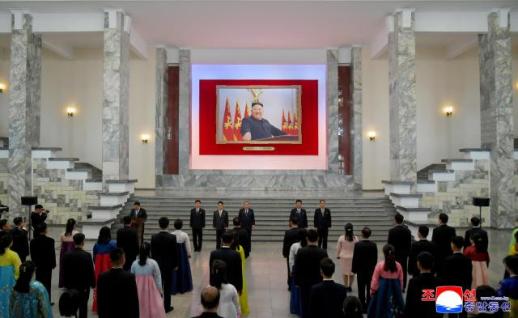 NK holds photo exhibition to mark 114th Anniversary of Kim Il-sung's birth PYONGYANG, April 07 (AJP) - A central photo exhibition commemorating the 114th anniversary of North Korean founder Kim Il-sung's birth (April 15) opened up to the public at the People's Palace of Culture in Pyongyang on April 6, the North's Korean Central News Agency (KCNA) reported on Monday. 2026-04-07 16:27:26
 -
 South Korea launches Global Sports Leadership program to train senior sports diplomacy talent The Ministry of Culture, Sports and Tourism said it will work with the Korea Sports Promotion Foundation to train a small annual cohort of senior-level talent in international sports, aiming to strengthen South Korea’s sports diplomacy. The ministry said on the 7th it has created a “Global Sports Leadership Program” and will recruit its first class of trainees from the 8th through the 30th. The initiative was designed to expand South Korea’s influence in international sports in line with its status as a leading athletic nation. The ministry said it plans to strategically develop senior talent in the field, citing the recent election of former national team bobsledder Won Yun-jong to the International Olympic Committee (IOC) Athletes’ Commission as momentum for the effort. Hankuk University of Foreign Studies was selected through an open competition to run the program. The new course targets future senior officials at major international bodies, including the IOC, the World Anti-Doping Agency (WADA) and international federations. The program will run for six months starting in June, combining overseas training with a four-stage curriculum: foundation, specialization, application and feedback. The foundation stage in June covers the Olympic Movement and international sports values. The specialization stage, from June to November, provides advanced training in sports organizations and industry, bidding to host events and administrative topics including artificial intelligence. The application stage includes simulated meetings and assignments, followed by a final evaluation and career planning in the feedback stage. A key component is overseas training in Lausanne, Switzerland, described as a hub of international sports. Trainees will visit the IOC headquarters as well as the International Basketball Federation (FIBA), World Archery (WA) and the International Academy of Sport Science and Technology (AISTS). The ministry said participants will complete joint projects on site and meet senior officials to build practical skills and expertise. The program also includes close support to strengthen global competencies, including language training. It will offer intensive English courses by level and a second-language French track, along with practical exercises such as mock international meetings, policy presentations and report writing. All language courses will be operated through the Hankuk University of Foreign Studies Language Education and Evaluation Center. Monthly one-on-one guidance with foreign instructors will also be provided. Applicants include sports administrators and athletes seeking senior posts in international sports organizations, as well as international referees and people from government and business. Evaluations will focus on sports-related experience and job fit. The ministry said it will give preference to former athletes, noting that about 40% of current IOC members are Olympians. It plans to fully cover tuition for Olympic and world championship medalists and provide half tuition support for Asian Games medalists. Applications will be accepted through the official website from the 8th through the 30th. Successful candidates will begin the program with an entrance ceremony on June 1. A ministry official said South Korea needs sports diplomacy capabilities that match the growing presence of its athletes on the international stage. “Through this program, we will systematically develop talent capable of making real decisions within international sports organizations and continue to produce international sports leaders like IOC Athletes’ Commission member Won Yun-jong, in a second and third generation,” the official said.* This article has been translated by AI. 2026-04-07 16:21:46
 -
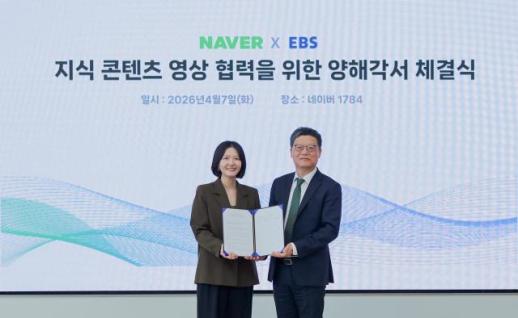 Naver partners with EBS to build trusted knowledge video content SEOUL, April 07 (AJP) - Naver and the Korea Educational Broadcasting System (EBS) signed a memorandum of understanding to jointly produce large-scale knowledge and educational video content, the companies said. Under the agreement, inked at Naver's headquarters on Tuesday in Seongnam, Gyeonggi Province, the two sides will co-produce content spanning health, finance and economics as well as material aligned with South Korea's elementary, middle and high school curricula. The partners plan to steadily expand a knowledge video archive by tapping into a broader range of topics. EBS is South Korea's public educational broadcaster, operating under guidance of the Ministry of Education with a mandate to provide nationwide learning resources across television, radio and digital platforms. The content will be distributed across Naver's search engine, home feed and online encyclopedia services, aiming to help users access more accurate and in-depth information throughout the portal's ecosystem. "High-quality data has emerged as a core competitive edge in the AI era, and the combination of Naver's AI technology and platform capabilities with EBS's proven content production expertise will drive the expansion of a trustworthy knowledge content ecosystem," Naver CEO Choi Soo-yeon said. EBS President Kim Yu-yeol called the agreement "a starting point for innovation that merges EBS's production know-how with Naver's AI technology." He added that, at a time of growing vigilance over AI hallucinations, the broadcaster would work to ensure its credible video content is properly utilized through Naver's AI services, contributing to a more reliable digital environment. 2026-04-07 16:09:54
 -
 Korean Film Directors Lee Joon-ik, Lee Byung-hun Move Into Short-Form Dramas Korean film directors are increasingly turning to short-form dramas, a format once seen largely as a proving ground for newcomers. After director Lee Byung-hun joined Lezhin Snack’s original series “The Baby’s Dad Is My Guy Friend” as planner and director, director Lee Joon-ik has also stepped into the space with “A Father’s Home-Cooked Meal.” Lezhin Snack said “A Father’s Home-Cooked Meal” wrapped filming March 24 and has moved into postproduction. Based on a webtoon of the same name by writer Gorita, the story follows a family after the wife, Soon-ae, can no longer cook following an accident. Her husband, Ha-eung, who has kept his distance from the kitchen his whole life, begins making home-cooked meals for the first time, and family relationships shift along the way. The company said the adaptation builds on the original’s emotional tone — using food to explore intergenerational ties — while deepening the narrative and character interpretations for the screen. Lee Joon-ik, known for films including “The King and the Clown,” “Dongju: The Portrait of a Poet” and “The Book of Fish,” is directing a short-form drama for the first time. His move from feature-length theatrical storytelling to a vertical frame and faster pacing has drawn industry attention. Lee said, “This is my first time trying a short-form drama. Within a vertical frame, you can clearly observe even the deepest corners of a character. I set it up so we don’t miss the good parts of the original, while allowing the story to gain depth.” The cast includes Jung Jin-young, Lee Jung-eun and Byun Yo-han. Jung plays Ha-eung, who takes responsibility for home cooking after his wife can no longer do it. Lee plays Soon-ae, who has long anchored the family table but suddenly forgets how to cook, disrupting everyday life. Byun plays their son, Myung-bok, who watches the changes up close. Their participation reflects a broader trend of lead-level actors joining short-form projects. The shift is not limited to Lee Joon-ik. Lee Byung-hun’s “The Baby’s Dad Is My Guy Friend” has continued to draw viewers since its release and has emerged as one of the platform’s notable hits, according to the report. The involvement of directors already recognized for commercial appeal and directing skill in film and television suggests the market mood around short formats is changing. Lezhin Snack said it is expanding production of “premium content” that delivers polished storytelling within the short-form format. The company described “A Father’s Home-Cooked Meal” as a project drawing expectations through its combination of source material, creators and cast — and as an example of its strategy to pursue both quality and broad appeal within a short runtime. The company’s upcoming slate also points to a widening range for short-form dramas. Beyond “A Father’s Home-Cooked Meal,” Lezhin Snack plans to roll out “Special Conditions of My Live-in Boyfriend,” “A Naughty Blind Date,” “Bad Kid Good Partner” and “Mujin: A Female Professor Seduces Her Student,” spanning family drama, romance, BL and revenge stories. “Mujin: A Female Professor Seduces Her Student” is directed by Kim Hwi, who made the films “The Neighbors” and “The Murder Case at Itaewon,” while “Bad Kid Good Partner” is directed by Kim Sun-bin, who has drawn attention in the independent film scene. With Lee Byung-hun followed by Lee Joon-ik moving into short-form drama directing, industry watchers are paying closer attention to how the format could reshape content strategies going forward.* This article has been translated by AI. 2026-04-07 16:09:14
 -
 Ryanghyun Ryangha’s Kim Ryangha Confirms Relationship With Model Kim Hee Kim Ryangha of the group Ryanghyun Ryangha has confirmed he is dating Kim Hee, a racing model and influencer. A video titled “Nago-mab: Did you blow the 2 billion won you made as Ryanghyun Ryangha?!” was posted Sunday on the YouTube channel “Byeongjin-ihyeong.” In the video, Kim said he and Kim Hee, who had been friends for a long time, recently became a couple. He said he works in online marketing and hosted a party for influencers and business people, where he ran into her again after a long time. “We clicked,” he said, adding that they agreed to meet on Pepero Day and that their relationship grew from friendship into romance. “We’re really on the same wavelength,” he said. Ryanghyun Ryangha debuted in 2000 as JYP’s first signed act and gained popularity with the hit song “I Didn’t Go to School.”* This article has been translated by AI. 2026-04-07 16:06:17