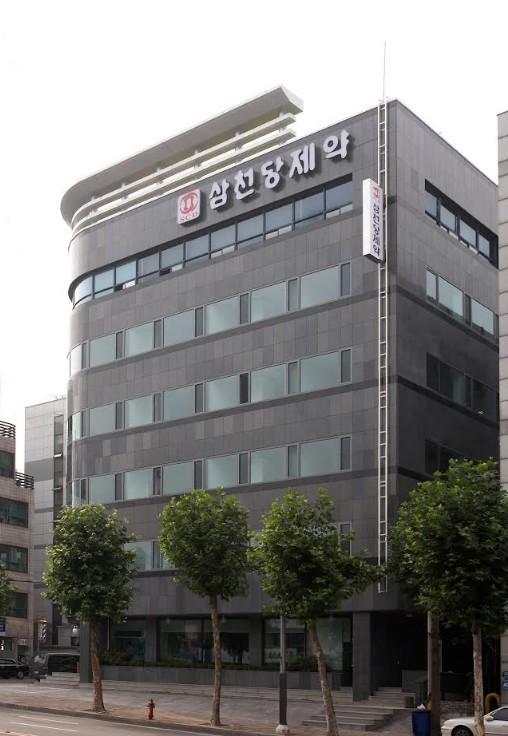
SEOUL, April 07 (AJP) - Boom-and-bust cycles have long defined Korea’s bio stocks, and the latest episode has unfolded around generic and specialty drugmaker Sam Chun Dang Pharm.
Sam Chun Dang closed Tuesday at 519,000 won ($345), down 16.02 percent on the day. From its closing high of 1.184 million won on March 30, the stock has plunged more than 56 percent — a sharp reversal after an earlier surge of nearly 400 percent from around 270,000 won at the start of the year.
At the center of the rise and fall is the company’s oral obesity treatment. Suspicions of market manipulation have intensified following reports that the majority shareholder filed to sell a significant stake, only to abruptly cancel the plan.
The episode comes as the South Korean government’s ambitious “KOSDAQ 3,000” target continues to be weighed down by repeated collapses in speculative theme stocks.
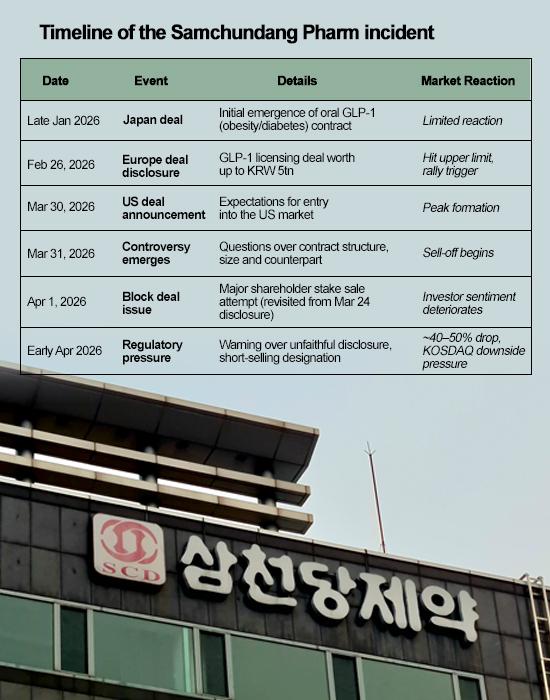
The surge in Sam Chun Dang’s shares began in late February, fueled by a string of announcements on exclusive licensing deals.
On Feb. 26, the stock jumped nearly 30 percent to 757,000 won after the company disclosed a partnership with a European pharmaceutical firm for its GLP-1 diabetes and obesity treatment.
GLP-1 drugs — such as Eli Lilly’s Mounjaro and Novo Nordisk’s Wegovy — are typically administered through weekly injections. Sam Chun Dang’s pitch was a more convenient pill-based alternative, a narrative that quickly captured market attention.
But after the stock peaked on March 30, cracks began to appear.
Questions emerged over the identity of its European and U.S. partners. Sentiment deteriorated further when it was revealed that the company had bypassed the official disclosure system (KIND), instead releasing earnings forecasts through press channels. At the same time, its R&D spending was found to be declining despite the high-profile project.
Concerns deepened when it was disclosed that CEO Jeon In-seok had attempted to sell 250 billion won worth of shares on March 24.
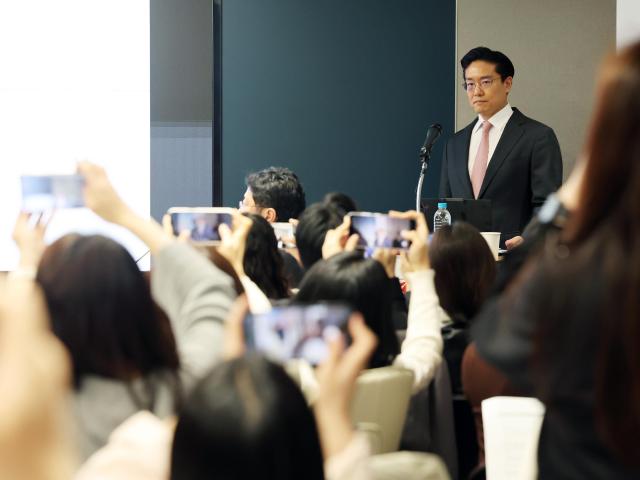
Jeon pushed back, threatening legal action against bloggers and analysts at iM Securities who raised doubts, and even presenting purported U.S. FDA approval documents at a press conference on Monday. The efforts, however, failed to restore investor confidence.
On March 31, the Korea Exchange (KRX) designated Sam Chun Dang as a potential “unfaithful disclosure corporation.” If found to have acted intentionally in bad faith, the company could face penalty points that may ultimately trigger a delisting review.
The fallout has rippled across the broader biotech sector.
On March 31, as Sam Chun Dang plunged 30 percent and lost its position as the top KOSDAQ stock, Celltrion Pharm fell 3.9 percent to 54,800 won, while ABL Bio dropped 3.3 percent to 165,000 won. Both remained weak or flat in Tuesday’s morning session.
The market’s sensitivity reflects a long memory.
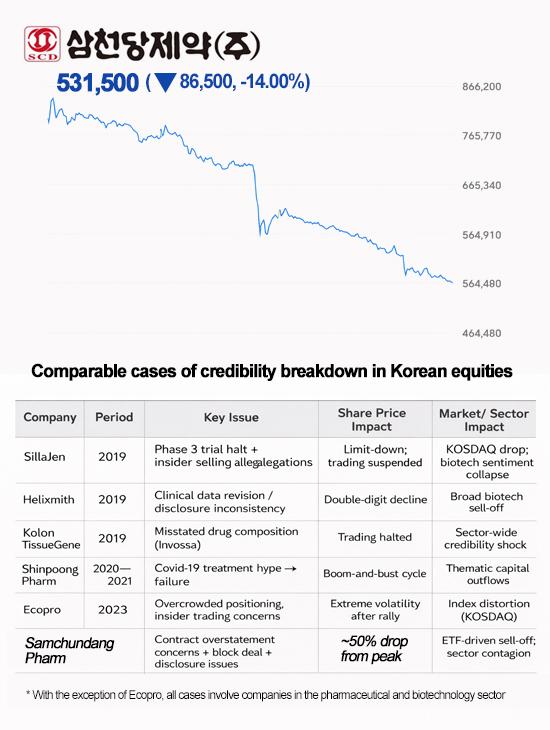
The most prominent case remains SillaJen, which soared from 10,000 won in 2016 to 160,000 won in 2018 on expectations for its liver cancer treatment Pexa-Vec, only to collapse 30 percent in a single day in August 2019 after Phase 3 trial failure and insider trading allegations. The shock dragged the entire KOSDAQ down 3.7 percent that day.
Other names — including Helixmith, Kolon TissueGene and Shin Poong Pharm — have also seen sharp declines or delisting risks tied to overstated R&D claims or governance issues, leaving a lingering trust deficit in the sector.
Market experts warn that such speculative swings remain a structural hurdle to President Lee Jae Myung’s goal of lifting the KOSDAQ to 3,000.
“Bio stocks tend to surge on any sign of clinical success, especially with the global pharmaceutical market expected to reach $3 trillion by 2030,” said a securities researcher who requested anonymity due to concerns over potential litigation.
“The success of Eli Lilly and Novo Nordisk has pushed expectations to extremes,” he added.
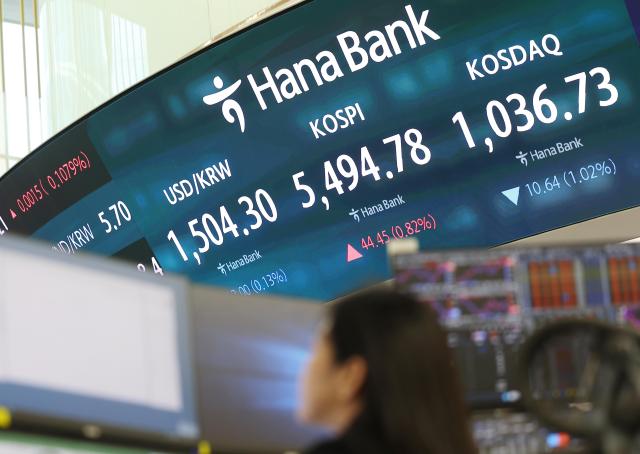
Another industry official stressed that hitting the 3,000 mark will require more than momentum-driven rallies.
“While the KOSPI is anchored by dependable heavyweights like Samsung Electronics and SK hynix, leadership on the KOSDAQ remains fluid and fragile,” he said.
Indeed, the top spot on the KOSDAQ has already changed hands three times in the first quarter of 2026 alone — rotating among EcoPro, Alteogen, EcoPro BM and Sam Chun Dang Pharm.
Copyright ⓒ Aju Press All rights reserved.