
Journalist

Lee Hugh
=
-
 SK Biopharm, Lotte Biologics, LG Chem, AriBio and GI Innovation Announce New Deals and Updates SK Biopharm signs pact with Seoul BioHub to mentor drug-development startups SK Biopharm said Thursday it selected two promising central nervous system startups through an open-innovation program with Seoul BioHub and held a signing ceremony. The program is designed to strengthen the R&D capabilities of Korean startups by sharing SK Biopharm’s experience across the full cycle of global new-drug development. The company said it is the first concrete outcome of an agreement the two sides signed in November. The selected companies are Novorex and ThreeBrooks Therapeutics, which are developing treatments for degenerative brain diseases including Parkinson’s and Alzheimer’s, SK Biopharm said. Over the next year, the startups will receive support from SK Biopharm researchers on proof-of-concept work, clinical-entry strategy and responses to global regulatory requirements, among other steps in drug development. The partners also plan to open a collaboration center inside Seoul BioHub to deepen day-to-day cooperation and to look for additional startups for potential partnerships. SK Biopharm said it will expand support so domestic biotech startups can build competitiveness that meets global standards, drawing on experience gained developing the epilepsy drug cenobamate, sold in the U.S. as Xcopri. Lotte Biologics, Yeonsu District hold tree-planting and wildfire-prevention campaign Lotte Biologics said Thursday it held a joint campaign with Incheon’s Yeonsu District Office ahead of Tree-Planting Day on April 5, planting 250 trees and promoting spring wildfire prevention to address the climate crisis and help preserve local ecosystems. The company said about 400 people participated, including district officials, residents and its employee volunteer group, LB:Heart, as part of its ESG vision to build a “sustainable bio ecosystem.” Participants planted about 250 cherry trees around a neighborhood park in the Yeonsu Advanced Industrial Cluster. They also promoted wildfire-prevention awareness among residents and carried out a cleanup around the park, the company said. A Lotte Biologics official said the company will continue environmentally friendly activities to respond to climate change, expand community-focused social contributions and work to foster a healthy industrial ecosystem where talented domestic bio workers can thrive. LG Chem signs exclusive deal to sell Mochida’s endometriosis drug Dinagest in Korea, Thailand LG Chem said Thursday it signed an exclusive sales agreement with Japan’s Mochida Pharmaceutical for Dinagest, an endometriosis treatment, covering South Korea and Thailand. Dinagest is an oral progestin containing dienogest and is widely used as a key drug for hormone-dependent women’s diseases, including endometriosis, the company said. LG Chem said Dinagest is the only product in Japan’s market for the same ingredient to have shown treatment benefits in clinical trials not only for endometriosis but also for adenomyosis and dysmenorrhea. It currently holds more than 80% market share in Japan, the company said. Based on the collaboration, LG Chem said it plans to apply next year for domestic sales approval and aims to improve access to treatment for women’s diseases by expanding the drug’s use. “This introduction of Dinagest is an important starting point for expanding our existing infertility business into a women’s health business,” said Kim Seong-ho, head of LG Chem’s Specialty-Care business division. He said the company will continue to identify and develop products that provide practical help for women’s health management across life stages. AriBio names Seong Su-hyeon as co-CEO AriBio said Wednesday it appointed Vice Chairman Seong Su-hyeon as its new co-CEO. The company said CEO Jeong Jae-jun will continue to oversee R&D, global clinical trials and commercialization, and completion of new-drug development and scientific results, while Seong will lead overall management, business strategy and fundraising. The company is approaching key milestones, including the end of global Phase 3 trials for its oral dementia treatment candidate AR1001 and the release of topline results, AriBio said. The company said the co-leadership structure will help create a more stable and stronger foundation for growth by closely linking research and management. Seong is a co-founder of AriBio. He served as CEO from 2010 to 2019 and later, as vice chairman, led fundraising and the buildout of research infrastructure, the company said. AriBio said he also led development of the dementia electroceutical “Herzion” based on research data on degenerative brain diseases including AR1001, and played a key role in launching business lines such as the hair-loss solution “Teloact,” functional cosmetics and health supplements. “I will do my best until the final moment to deliver the world’s first oral dementia treatment,” Seong said. GI Innovation to present Phase 1 data on immuno-oncology drug at ASCO GI Innovation said Thursday it will present Phase 1 data for its investigational immuno-oncology drug at an international conference. The company said Phase 1 data for GI-101A was selected for a rapid oral abstract presentation at ASCO 2026, the annual meeting of the American Society of Clinical Oncology. ASCO is a major forum for sharing the latest clinical data in oncology, where new drugs are assessed based on real patient data. The meeting will be held in Chicago from May 29 to June 3, local time, the company said. GI Innovation said it plans to present the Phase 1 results for GI-101A. “The selection of GI-101A for an oral presentation at ASCO reflects recognition of its clinical potential and academic value at a prestigious conference,” CEO Jang Myeong-ho said. He said the presentation will clearly lay out the clinical significance of GI-101A and its strategic value as a combination therapy.* This article has been translated by AI. 2026-04-03 15:33:00
 -
 Cheap drones reshape Iran war, raising risk of North Korea copycat SEOUL, April 03 (AJP) - Low-cost drones are rapidly redefining modern warfare in the Iran conflict, exposing a growing cost imbalance that could have direct implications for the Korean Peninsula. U.S. President Donald Trump has claimed Washington achieved most of its strategic objectives in the war, likening the 32-day campaign to major 20th-century conflicts. Yet the fighting has dragged on longer than expected, far from the swift outcome suggested in the early hours of the U.S.-Israeli strikes that killed Iran’s supreme leader, Ayatollah Ali Khamenei, on Feb. 28. What has sustained Iran’s resistance is not its nuclear capability, but drones — inexpensive, scalable and increasingly effective. Military analysts now describe the conflict as a “cost war,” in which cheap weapons are used to exhaust far more expensive defense systems. Iran’s Shahed drones, costing under $50,000, are forcing the U.S. and its allies to deploy interceptor missiles priced in the millions. Patriot interceptors cost roughly $4 million per unit, while Tomahawk cruise missiles exceed $2 million, underscoring the widening economic asymmetry. The trend has already been demonstrated in Ukraine, where low-cost interceptor drones have evolved rapidly — from speeds of 100 mph to over 220 mph within a year — and are now produced at scale, with output reaching as many as 2,000 units per day. One system, the “Sting” drone, costs around $2,000, a fraction of the estimated $20,000 price tag of the attack drones it targets. This widening cost gap raises a fundamental concern: even technologically superior forces risk being overwhelmed by sustained waves of inexpensive unmanned systems. The implications are particularly acute in the Strait of Hormuz, where tensions remain high. Analysts warn that the primary threat to oil tankers is not large naval engagements, but land-based anti-ship missiles and drone strikes. Securing maritime routes — and reopening the strait — has become central to any de-escalation scenario. Washington is already adapting. According to a Wall Street Journal report, the U.S. military has deployed a low-cost attack drone dubbed “Lucas,” developed by reverse-engineering Iran’s Shahed design. Costing between $10,000 and $55,000, the system marks a shift toward cheaper, mass-deployable strike capabilities. The drones were used in attacks on Iranian military targets, including drone production facilities and air defense nodes, contributing to an 83 percent drop in Iranian drone activity in the early phase of the war, according to U.S. officials. The deployment also marked the first use of one-way attack drones by the U.S. in this conflict. Originally designed for a potential confrontation with China, the Lucas system had been slated for Indo-Pacific deployment, with about 6,000 units ordered by the U.S. Marine Corps. The Iran war accelerated its operational debut. North Korea seen as potential beneficiary The spread of low-cost drone warfare is also raising concerns about North Korea, which could benefit from the evolving battlefield dynamics. Pyongyang has deepened military cooperation with Russia during the Ukraine war, gaining exposure to modern drone tactics. Analysts warn that as U.S. strikes degrade Iran’s domestic drone production, Tehran may seek offshore partners — with North Korea viewed as a plausible candidate. “The development and production of Shahed-type long-endurance suicide drones by North Korea appear highly likely,” said Jeon Kyung-joo and Kim Hong-seok of the Korea Institute for Defense Analyses. They added that North Korean forces have improved operational capabilities through battlefield experience alongside Russian troops. A Ukrainian field commander also warned that adversaries are using ongoing conflicts as testing grounds. “North Koreans are advancing with the knowledge and experience they are acquiring here,” said Captain Oleh Shyriaiev, noting that such lessons could later be applied on the Korean Peninsula. North Korea’s drone program dates back decades but remained limited to outdated reconnaissance systems. Its recent deployment to Russia, however, is seen as a turning point, potentially enabling it to absorb production know-how and scale up its capabilities. Implications for South Korea For South Korea, the rise of low-cost drone warfare exposes a structural vulnerability. Seoul’s air defense architecture is built around high-end systems such as PAC-3, Cheongung-II, THAAD and the forthcoming L-SAM. While effective against ballistic missiles, these systems are ill-suited to counter low-flying drones. “THAAD is optimized for high-altitude ballistic missile interception and is not designed to engage low-flying drones or cruise missiles,” said Jeong Kyung-woon of the Korea Association of Military Studies. If North Korea deploys drones at scale, South Korea could face the same cost dilemma seen in the Middle East — using multimillion-dollar interceptors against threats that cost a fraction of that amount. Analysts say this underscores the urgency for Seoul to expand counter-drone capabilities, including electronic warfare, directed-energy weapons and low-cost interception systems. As the Iran conflict demonstrates, the future of warfare may be defined less by technological superiority than by cost efficiency — a shift that could reshape security dynamics far beyond the Middle East. 2026-04-03 15:19:45
 -
 U.S. sets 15% tariff on Korean drugs, keeps biosimilars duty-free The Donald Trump administration has decided to impose a 100% tariff on pharmaceuticals not produced in the United States, while applying a separate 15% rate to South Korea. Biosimilars, a key Korean export, will remain duty-free. South Korea’s pharmaceutical and biotech industry said the decision eases uncertainty, but warned that companies still need global strategies as supply chains shift. President Donald Trump signed a proclamation on April 2 (local time) imposing a 100% tariff on pharmaceuticals not made in the United States. However, South Korea, Japan and Europe — which have separate trade agreements with the United States — will face a 15% rate, while the United Kingdom will be subject to 10%. Trump has repeatedly raised the prospect of drug tariffs since early this year, pressuring the industry. In August last year, he said rates could rise as high as 250%. Two months later, in October, he cited a 100% tariff, fueling uncertainty. The latest decision is seen in the industry as removing that tariff risk. Companies said generics and biosimilars were excluded from the tariff, and that Korean pharmaceuticals will receive treatment close to most-favored-nation status, giving them an edge over products from countries facing the full 100% rate. The Bioeconomy Research Center at the Korea Bio Association said the measure will impose a 15% tariff on Korean patented drugs that previously entered the U.S. duty-free, but the impact should be limited because biosimilars — a major export — will remain duty-free for at least one year. It added that contract development and manufacturing (CDMO) volumes produced in South Korea at the request of U.S. clients may be recognized as U.S.-made and potentially qualify for duty-free treatment, though final confirmation from the U.S. government is needed. Over the medium to long term, it said, diversification will be essential, including reshaping production and supply chains in the United States and expanding into non-U.S. markets. The U.S. government’s plan to reassess in one year the exclusions for generics, biosimilars and related raw materials could remain a burden, the industry said. A biotech industry official said companies were relieved after Trump’s tariff threats continued from last year, but added that firms must prepare thoroughly for the review in a year and pursue diversification as global supply chains are reorganized.* This article has been translated by AI. 2026-04-03 15:06:00
 -
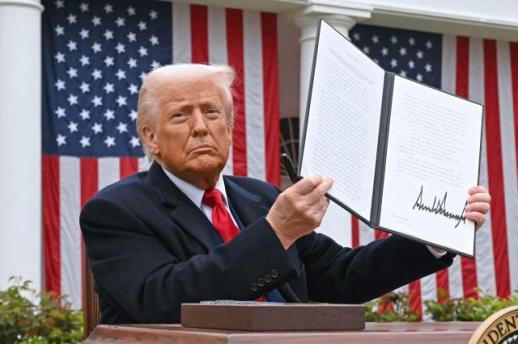 Washington expands metal tariffs as weight thresholds trigger new duties SEOUL, April 03 (AJP) - Washington upended the global household appliance market Thursday (local time) by imposing a flat 25 percent tariff on metal-intensive goods, a move that places South Korea’s leading exporters in a defensive crouch just as a separate pharmaceutical trade wall begins to rise. The new policy, anchored in a Section 232 national security justification, targets any finished product where steel, aluminum, or copper accounts for more than 15 percent of the total weight, a threshold that effectively encompasses the vast majority of premium refrigerators and washing machines exported from Seoul. The fallout is immediate for South Korean brands, which currently command a combined 35 percent share of the American home appliance market. By replacing a fragmented system of duties based on raw material value with a blunt 25 percent tax on the final retail price, the White House has fundamentally altered the math for high-end manufacturing. A flagship French-door refrigerator with a $3,000 price tag now faces a $750 import penalty, a cost that threatens to erase the competitive margins Samsung Electronics and LG Electronics have spent a decade securing. According to data from market research firm Trackline, LG Electronics currently holds a 24.3 percent share of the American refrigerator sector, a position now vulnerable to this sudden shift in trade costs. This pressure on consumer goods arrives alongside a parallel shock in the biotechnology sector. While the United States has moved to impose a 100 percent default tariff on patented pharmaceuticals to dismantle foreign medical dependencies, South Korea has managed to secure a preferential 15 percent rate. This narrow reprieve is the result of the bilateral trade agreement reached in July 2025, which designated South Korea as a trade deal country. However, the path to a zero percent tariff is strictly conditional; Seoul must agree to onshore production facilities and adopt Most Favored Nation pricing to fully escape the duty. For manufacturers in South Korea, the 15 percent weight threshold on appliances creates a technical dilemma that cannot be solved through simple logistics. Most modern laundry and kitchen units rely on steel chassis for durability, meaning that to avoid the 25 percent metal derivative tariff, companies would have to fundamentally redesign their product lines or move their entire assembly operations to American soil. While Samsung Electronics and LG Electronics already operate significant manufacturing plants in South Carolina and Tennessee, those facilities do not yet have the capacity to replace the high-volume imports arriving from overseas hubs. The 180-day grace period offered to smaller firms provides little comfort to these conglomerates, which must reconcile their global production schedules with a July 31 compliance deadline. The White House maintains that these measures are necessary to prevent what it describes as gamesmanship by foreign exporters who have historically underreported the value of metal components. By shifting to a weight-based calculation, Washington is attempting to close loopholes that allowed finished goods to bypass the broader steel and aluminum tariffs of previous years. This effectively forces South Korea to choose between maintaining its domestic industrial base and keeping its share of the American consumer market. The new tariff regime on metal derivatives and pharmaceutical products is scheduled to take official effect on April 6, 2026. 2026-04-03 15:03:50
 -
 Flautist Han Ji-hee to Release Debut Reinecke Album With Lang Lang, Royal Philharmonic Universal Music said Thursday that flutist Han Ji-hee will release her debut album, “Carl Reinecke: Works for Flute,” on April 24. The album features three works by Carl Reinecke. Han recorded the “Flute Concerto in D major” and the “Ballade in D minor for Flute and Orchestra” with the Royal Philharmonic Orchestra conducted by Vasily Petrenko. She also recorded the flute-and-piano sonata “Undine” with pianist Lang Lang. The album will be released on the Deutsche Grammophon label, and the first movement of “Undine” will be released in advance via streaming on April 3. Han said, “When I was 13, I fell in love with Reinecke’s music,” adding, “The flute concerto and ‘Undine’ were the most important repertoire of my student years. My master’s thesis was also on Reinecke’s flute concerto.” She said that while planning the repertoire for her first recording, she thought of those two works along with Reinecke’s final piece, the “Ballade,” leading to an album devoted entirely to his music. Lang Lang, who recorded with Han in Paris, said, “Han Ji-hee poured her whole heart into this challenging repertoire,” adding, “I’m very happy to be part of this wonderful project.” Han said the experience strengthened her resolve “more than ever” to introduce classical music, art and culture to people, especially young people today. “I believe helping them come to love this great art will be the most important work for me,” she said. Han is an artist with SM Entertainment’s classical and jazz label, SM Classics. She studied at the University of Music and Performing Arts Vienna and the Oberlin Conservatory of Music, and earned a doctoral degree from Seoul National University’s graduate school. She continues to perform actively as a member of the chamber ensemble PACE and as a soloist, and is scheduled to hold a concert marking the new release on April 29. 2026-04-03 14:36:18
 -
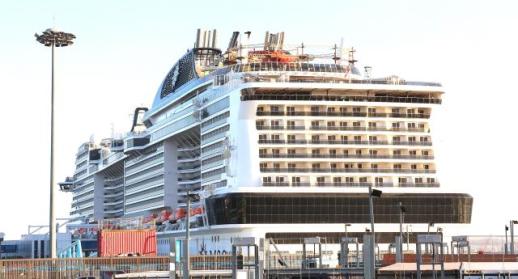 South Korea to allow in-city tax refunds for cruise tourists starting April 6 SEOUL, April 03 (AJP) - Cruise tourists visiting South Korea will be eligible for in-city tax refunds starting April 6, allowing them to reclaim value-added tax (VAT) and other domestic taxes on purchases made at downtown duty-free shops, the Korea Customs Service said Friday. Under South Korea’s tax refund program, foreign visitors can receive refunds on VAT and individual consumption tax included in purchases made at designated duty-free stores when goods are confirmed for export at departure. However, cruise passengers — who enter under a separate shore-excursion permit rather than standard immigration procedures — have faced difficulties using immediate or in-city refund services due to their short stay. The customs agency said it will link its vessel arrival reports and passenger manifest data to the refund system, allowing operators to verify eligibility for cruise tourists. With the number of cruise visitors expected to reach 2 million this year, the measure is expected to shorten waiting times for customs clearance and make tax refunds more convenient. Korea Customs Service Commissioner Lee Myung-koo said the change would allow cruise tourists to enjoy both shopping and tax refund benefits during their brief stay. He added that the agency will continue working with relevant authorities to further streamline refund procedures for foreign visitors. 2026-04-03 14:25:44
 -
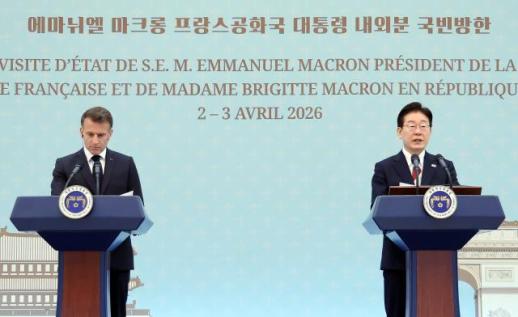 Korea, France summits to work on normalizing Hormuz SEOUL, April 03 (AJP) -South Korean President Lee Jae Myung and French President Emmanuel Macron agreed Friday to strengthen cooperation in securing maritime shipping lanes in the Strait of Hormuz, as disruptions from the Middle East war continue to threaten global energy supply. Speaking at a joint press statement following their summit at Cheong Wa Dae, Lee said the two leaders aligned on a coordinated response to the economic and energy fallout from the conflict. “President Macron and I agreed to share policy experience and strategies to jointly respond to the economic and energy crisis caused by the Middle East war, and to work together to reduce global economic uncertainty,” Lee said. The two sides also agreed to deepen cooperation in nuclear power and offshore wind to bolster energy security. On trade, Lee noted that bilateral exchanges reached a record $15 billion last year but stressed the need to expand further. “We cannot be satisfied with that,” he said, setting a target of $20 billion by 2030. He highlighted a $3.5 billion investment by French industrial gas company Air Liquide in South Korea last year and expressed hope that expanded investment in emerging industries would help double employment at firms with bilateral ties from about 40,000 to 80,000 over the next decade. The summit produced 14 agreements spanning advanced industries and cultural cooperation. Among them was a memorandum of understanding between Korea Hydro & Nuclear Power and French firms Orano and Framatome to strengthen cooperation in the global nuclear market and secure stable fuel supplies through closer integration of the nuclear fuel supply chain. Additional agreements covered artificial intelligence, semiconductors and offshore wind. The two countries also revised their working holiday program to raise the eligible age to 18–35 from 18–30, alongside a letter of intent on language assistant exchanges and an MOU on cultural heritage cooperation. Lee said the nuclear partnership would help ensure stable fuel supplies for South Korea while laying the groundwork for joint expansion into overseas nuclear projects. On the Korean Peninsula, Lee said France — a permanent member of the U.N. Security Council — has consistently supported Seoul’s policy approach, adding that both leaders “deeply agreed” peace on the peninsula is critical to global stability. He said he outlined South Korea’s efforts to resume inter-Korean dialogue and pursue peaceful coexistence, with Macron reaffirming France’s continued support for stability in the region. Macron also formally invited Lee to attend the Group of Seven summit in June in Evian, France. Lee said he expects France, as G7 chair, to lead efforts to address global economic imbalances and reform international partnerships, adding that South Korea will play a constructive role. Lee expressed hope for closer cooperation with France “for the next 140 years,” marking the long-standing bilateral relationship. 2026-04-03 13:55:07
 -
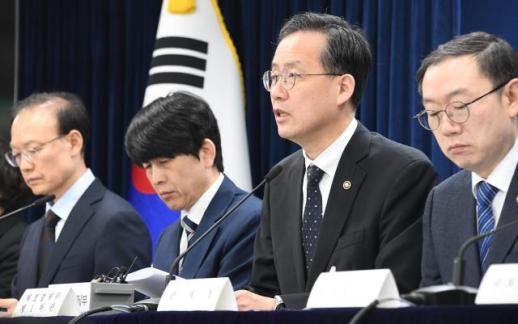 Seoul waives duties on freight surge to curb inflation spillover SEOUL, April 3 (AJP) — South Korea will waive customs duties on extraordinary freight cost increases for imports from the Middle East, as the crippling of the Strait of Hormuz threatens to spill into domestic prices and broader inflation. The emergency measure, announced Friday by the Ministry of Economy and Finance, allows companies to exclude surging shipping costs incurred from longer alternative routes when calculating import duties. The move comes as tanker freight rates on Middle East–China routes have soared 608 percent from a year earlier, with the chokepoint effectively sealed by Iranian forces. Customs duties are typically levied on the total value of imports, including freight. By excluding the recent spike in shipping costs, the government aims to ease the burden on importers and contain pass-through inflation. “U-turn cargo” — shipments originally destined for the Middle East but forced to return — will face minimal inspections, while key imports such as energy and raw materials will be granted pre-arrival clearance to ensure immediate domestic supply upon arrival. Administrative procedures for supply-sensitive items will also be streamlined. For raw materials used in paint and polyethylene (PE) resin, firms will be allowed to submit testing plans in place of full toxicity data, cutting approval timelines from more than three months to a fraction of that period. In the pharmaceutical and medical device sectors, a fast-track review system will prioritize essential items such as IV solutions, sanitary pads and injection needles. On-site Good Manufacturing Practice (GMP) inspections required for facility changes will be replaced with document-based reviews. To preempt shortages in daily necessities, quality inspections for items such as municipal trash bags will be reduced from 10 days to one. The 100 million won ($66,000) cap on direct purchases by local governments will also be temporarily lifted. For asphalt, where prices have climbed alongside crude oil, authorities will advise local governments to delay non-urgent road maintenance projects. In the case of automotive urea, the government will facilitate inter-company trading and may release public stockpiles if needed. Fertilizer-grade urea supply will be stabilized through the National Agricultural Cooperative Federation (Nonghyup). “Eight of the 13 measures will take effect immediately, with the remaining regulatory revisions to be completed within two weeks,” First Vice Finance Minister Lee Hyung-il said. “We will maintain these temporary exemptions until the emergency subsides, while closely monitoring for potential side effects.” 2026-04-03 13:29:28
 -
 HD Korea Shipbuilding issues $1.57 bn in exchangeable bonds, sparking valuation re-rating hopes SEOUL, April 03 (AJP) - HD Korea Shipbuilding & Offshore Engineering has launched a 2.37 trillion won ($1.57 billion) exchangeable bond issuance targeting shares of its flagship subsidiary HD Hyundai Heavy Industries, a move analysts say could dismantle the holding company discount that has long weighed on its stock. The company disclosed the EB issuance on March 31, later revising the total from an initially announced 3.03 trillion won. The bonds are exchangeable into a 4.3 percent stake in HD Hyundai Heavy Industries at a conversion price of 523,125 won per share, with exchange requests eligible from June 14. The offering crystallizes a plan first floated at a January management briefing, where executives acknowledged that HD Hyundai Heavy Industries' thin free float had become a bottleneck for unlocking shareholder value. "The company had announced it had no plans to sell its stake, but by issuing exchangeable bonds, it has effectively liquidated its HD Hyundai Heavy Industries holdings in a way that minimizes market shock," said Kim Yong-min, an analyst at Yuanta Securities. By opting for exchangeable bonds rather than a block deal, the shipbuilder chose to cushion the market from a sudden supply shock. Instead of offloading a large tranche of shares in one sweep, the structure allows a gradual expansion of circulating stock as bondholders exercise their conversion rights over time. For HD Korea Shipbuilding, monetizing a long-dormant subsidiary stake could serve as a springboard for valuation re-rating, with the parent's standalone net cash position projected to swell to nearly 5 trillion won. HD Hyundai Heavy Industries, by contrast, faces near-term headwinds on the supply side. EB investors are widely expected to engage in hedge trading — shorting the underlying shares to manage risk — which could exert downward pressure on the stock in the coming weeks. Market attention has now turned squarely to how the war chest will be deployed. Given that both companies already sit on ample liquidity, analysts view the fundraising as a preemptive move to finance large-scale strategic investments rather than a routine cash buffer. Potential targets include establishing a naval defense foothold in the United States and pursuing mergers and acquisitions in next-generation green maritime technology, particularly as Washington has signaled its desire to deepen cooperation with South Korean shipbuilders. No concrete spending plans have been finalized, however, leaving a degree of uncertainty. "This fundraising will give HD Korea Shipbuilding's overseas expansion and M&A pursuits significant momentum. It could serve as a catalyst for narrowing the valuation gap with rival shipbuilders," said Jeong Dong-ik, an analyst at KB Securities. As of 11:20 a.m. Friday, KOSPI-listed HD Korea Shipbuilding traded 7.42 percent up at 376,500 won per stock. 2026-04-03 11:22:44
 -
 Asian stocks rebound as Hormuz passage hopes ease war fears SEOUL, April 3 (AJP) — Asian markets continued to seesaw with each development in the Iran war, but moved higher in early Friday trading on rising hopes for the reopening of the Strait of Hormuz. Japan’s Nikkei 225 rose 1.08 percent to 53,029.41, while China’s Shanghai Composite Index edged up 0.21 percent to 3,927.59. Hong Kong’s Hang Seng Index was closed from Friday through April 6 for the Easter holiday. In Seoul, the benchmark KOSPI rebounded at the open after a sharp sell-off in the previous session, when geopolitical fears triggered a sidecar trading curb. As of 10:51 a.m., the index rose 2.71 percent to 5,376.08, while the tech-heavy KOSDAQ gained 1.02 percent to 1,067.08. In currency markets, the Korean won strengthened slightly against the U.S. dollar, with the exchange rate falling to 1,509.40 won from 1,519.7 in the previous session. Sentiment was supported by reports that Tehran is drafting a post-war maritime protocol with Oman to guarantee safe navigation through the Strait of Hormuz, potentially including transit fees instead of a full blockade. Overnight on Wall Street, major indexes ended mixed after recovering from early losses tied to war concerns. The Dow Jones Industrial Average fell 0.13 percent, while the S&P 500 rose 0.11 percent and the Nasdaq Composite gained 0.18 percent. The Philadelphia Semiconductor Index and the Russell 2000 also posted modest gains. Oil prices remained volatile. U.S. West Texas Intermediate briefly surged toward $114 per barrel following remarks by U.S. President Donald Trump, before paring gains on Iran-Oman negotiation headlines, reflecting persistent uncertainty over supply risks. Brent crude futures for June delivery settled at $109.03 per barrel, up 7.8 percent from the previous session. All major stocks in Seoul traded higher in early deals, with gains seen across sectors. Tech and chipmakers led advances, with Samsung Electronics rising 3.64 percent to 184,900 won and SK Hynix jumping 5.60 percent to 876,500 won. Autos and mobility stocks also traded higher, with Hyundai Motor up 2.04 percent at 475,000 won and Kia gaining 1.93 percent to 153,500 won. Hyundai Mobis rose 0.64 percent to 392,000 won. Energy and industrials advanced, as LG Energy Solution added 0.62 percent to 407,000 won, Hanwha Aerospace rose 1.20 percent to 1,434,000 won, Doosan Enerbility gained 2.88 percent to 96,300 won, and HD Hyundai Heavy Industries climbed 4.21 percent to 457,500 won. HD Hyundai Electric rose 1.81 percent to 898,000 won, while Hanwha Ocean advanced 1.84 percent to 121,500 won. Among biopharmaceutical stocks, Samsung Biologics climbed 0.44 percent to 1,592,000 won and Celltrion gained 0.61 percent to 197,900 won. Financials edged higher, with KB Financial Group rising 0.96 percent to 147,900 won, Shinhan Financial gaining 1.96 percent to 93,500 won, Samsung Life climbing 3.69 percent to 225,000 won, and Mirae Asset Securities advancing 3.73 percent to 63,900 won. Other large caps also moved higher, with Samsung C&T rising 1.52 percent to 268,000 won and SK Square gaining 2.56 percent to 481,500 won. The combination of overnight gains in U.S. tech shares, a firmer won and stronger futures points to a short-term technical rebound in Korean equities, though lingering geopolitical risks ahead of the weekend are likely to cap further upside. 2026-04-03 11:18:26