
Journalist

Lee Hugh
=
-
 Asian markets rally on ceasefire hopes, Seoul stocks surge over 8% SEOUL, April 1 (AJP) - Asian markets rose as ceasefire hopes strengthened after U.S. President Donald Trump signaled a potential de-escalation within weeks, while Iran indicated willingness to end the conflict provided attacks do not resume. Japan’s Nikkei 225 jumped 5.24 percent to trade at 53,739.68, marking its biggest gain of the year and the fourth-largest on record, as overseas investors bought on easing Middle East tensions. Semiconductor stocks led the rally, with Kioxia jumping 7.10 percent, Advantest rising 10.67 percent, and Tokyo Electron gaining 5.51 percent. Shares of SoftBank Group and Fujikura also rose more than 5 percent and 9 percent intraday, respectively. Hong Kong’s Hang Seng Index rose 2.22 percent to 25,339.45. China’s Shanghai Composite Index rose 1.46 percent to 3,948.55, and Taiwan’s TAIEX rose 4.58 percent to 33,174.82. South Korea’s benchmark KOSPI opened more than 5 percent higher, quickly reclaiming the 5,300 level and triggering a buy-side sidecar in early trade. Gains accelerated through the session, with the index closing at 5,478.70, up 8.44 percent — marking its strongest daily rise since last month. The rally was driven largely by a rebound in semiconductor shares, which had underperformed in recent sessions. Samsung Electronics jumped 13.4 percent, while SK hynix climbed 10.66 percent, lifting the broader index. The tech-heavy KOSDAQ also rose sharply, gaining 6.06 percent, to close at 1,116.18, reclaiming the 1,100 level in a single session. Buy-side sidecars were triggered in both markets during intraday trading. The Korean won strengthened sharply, with the dollar-won exchange rate falling 28.8 won to trade at 1,501.3. U.S. Treasury yields and the dollar fell, and risk assets including equities, gold and cryptocurrencies rose. Verbal intervention by authorities also helped strengthen the won. Oil prices retreated on rising ceasefire expectations, with West Texas Intermediate dropping more than 4 percent intraday to briefly break below $97 per barrel ahead of U.S. President Donald Trump’s scheduled address at 10 a.m. Thursday Korea time, fueling hopes of a breakthrough in negotiations. Domestic factors also supported the rally. South Korea’s inclusion in the FTSE World Government Bond Index (WGBI), effective Wednesday, raised expectations of $50 billion to $60 billion in inflows, putting downward pressure on yields and the currency. Autos and mobility stocks surged, with Hyundai Motor rising 9.54 percent to close at 488,000 won, Kia adding 6.96 percent and closing at 155,300 won, and Hyundai Mobis climbing 8.20 percent to 409,000 won. Financials also advanced, as KB Financial gained 4.51 percent to 148,300 won, Shinhan Financial rose 6.39 percent to 93,300 won, Mirae Asset Securities jumped 8.12 percent to 66,600 won, and Samsung Life Insurance increased 7.84 percent to 227,000 won. Industrial and defense-related stocks were strong, with Hanwha Aerospace up 6.73 percent to 1,333,000 won, Hanwha Ocean rising 5.66 percent to 127,000 won, Doosan Enerbility surging 8.50 percent to 99,600 won, and Samsung C&T gaining 7.69 percent to 273,000 won. Bio and platform shares posted moderate gains, with Samsung Biologics up 4.52 percent to 1,572,000 won, Celltrion rising 4.46 percent to 206,000 won, and Naver adding 4.22 percent to 210,000 won. Battery and electronics-related stocks also climbed, with LG Energy Solution up 3.17 percent to 407,000 won, Samsung SDI gaining 5.88 percent to 432,000 won, Samsung Electro-Mechanics jumping 9.08 percent to 444,500 won, and SK Square also advanced 7.40 percent to 501,000 won. HD Hyundai Heavy Industries was the only decliner, slipping 2.90 percent to 451,500 won. 2026-04-01 17:38:47
 -
 South Korea Requests Police Probe Into 186 Suspected KBO Ticket Scalping Posts The Ministry of Culture, Sports and Tourism said Tuesday it has asked police to investigate 186 online posts suspected of high-priced or large-volume scalping of tickets as the 2026 KBO League season opened and illegal resales increased. The ministry said its reporting and monitoring found about 16,000 posts related to scalping in recent weeks. Around the March 28-29 opening games, it detected transactions priced as high as 13 times face value. It also said it found multiple signs of organized activity, including accounts securing large blocks of seats for resale. Based on indicators such as bulk or adjacent-seat sales, excessive markups and repeated transactions by the same account, the ministry analyzed cases and referred them to the National Police Agency for investigation. The ministry said it considers scalping a serious illegal act that undermines fair access for fans. It said it is continuously monitoring online sales centered on the Korea Professional Sports Association’s “Online Ticket Scalping Report Center,” analyzing seat details, terms of sale, repeat-account activity, markup levels and duplicate postings across platforms to identify suspicious cases. To address the problem more broadly, the ministry said it is combining legal changes with on-the-ground measures. Under revisions to the National Sports Promotion Act — promulgated Feb. 27, 2026, and set to take effect Aug. 28 — all unfair ticket transactions are banned regardless of whether macros are used. The changes also allow penalties of up to 50 times the sales amount and introduce a reward system for reports, sharply increasing punishment levels. The ministry said a public-private consultative body on preventing ticket scalping for performances and sports was launched March 5 with the National Police Agency, the Fair Trade Commission, the pro sports association, the Korea Baseball Organization, ticketing services and secondhand trading platforms. It said the group is building cooperation on monitoring, information sharing and public outreach, while encouraging voluntary steps such as removing posts, restricting transactions and strengthening abnormal-transaction detection systems, alongside anti-scalping campaigns online and at stadiums. The KBO and clubs are also working with police to step up on-site crackdowns and are running ongoing messages through websites, stadium video boards and banners, the ministry said. Clubs are tightening controls by sanctioning improper use of season tickets and memberships and canceling tickets or restricting use when booking policies are violated. Culture Minister Choe Hwi-young said, “Scalping is not a simple transaction between individuals, but a clear illegal act that undermines fairness in the sports industry and infringes on the public’s right to attend.” He added, “With this revision to the National Sports Promotion Act, scalping is no longer something that is tolerated, but a serious violation subject to heavy penalties. Even before the law takes effect, we will respond proactively by mobilizing all available administrative and investigative tools.” Choe also said, “There are limits to what government enforcement alone can do, and a change in public awareness is essential,” urging the public to take part in efforts to eradicate scalping.* This article has been translated by AI. 2026-04-01 17:30:00
 -
 IVE's Jang Won-young turns heads in spring outing SEOUL, April 1 (AJP) - Jang Won-young, a member of K-pop sextet IVE, attended a promotional event for fashion brand ROLAROLA in central Seoul on Wednesday. In keeping with the French-inspired casual brand's appeal to young customers, Jang wore a white T-shirt with red embroidery, a cherry-blossom-colored cardigan tied around her waist, and a frilled lace skirt, completing her stylish look with heart-patterned fishnet stockings that awed visitors and other attendees. 2026-04-01 17:19:20
 -
 Investors are jittery, but analysts are buoyant behind Korean memory makers vs TurboQuant SEOUL, April 01 (AJP) - A new artificial intelligence data-compression technology from Google has hit Seoul’s main stock market as hard as Strait of Hormuz-related news, as it involves South Korea’s top memory chipmakers responsible for around 40 percent of not just the KOSPI but also the country’s exports. Since the unveiling of Google’s TurboQuant, a next-generation quantization algorithm, Samsung Electronics and SK hynix saw their shares tumble 4.7 percent and 6.2 percent, respectively, over a two-day period late last month. They staged a strong comeback Wednesday — Samsung Electronics up 12.5 percent and SK hynix up 10.4 percent. But Wednesday’s gains hinged on hopes for a war endgame, and any shifts in Washington or Tehran could quickly reverse sentiment. For the chipmakers, the drag came from a research paper published by Google on March 24 detailing the debut of a technology called TurboQuant. TurboQuant acts as a highly efficient “packing” mechanism for AI. Large language models (LLMs) like ChatGPT require vast amounts of temporary memory, known as the KV cache, to retain the context of long conversations. TurboQuant compresses this data without losing its core meaning, reducing the memory footprint to as little as one-sixth of conventional levels. Fearing this level of efficiency would drastically reduce the need for dynamic random-access memory (DRAM) and high-bandwidth memory (HBM) chips, investors aggressively dumped tech shares. “The impact will be massive,” said Kim Deok-kee, a professor of electronic engineering at Sejong University in Seoul. “If memory requirements are reduced to one-sixth, revenue will drop drastically. With Samsung, SK hynix, Micron and emerging Chinese players in the mix, this could quickly lead to a memory oversupply.” Kim warned that the current rush to expand capacity could backfire. “Companies are building multiple fabs based on current high demand, but in two to three years, this could result in massive oversupply and severe financial deficits,” he said. However, local brokerages strongly argue that this efficiency will actually lower the cost of running AI, thereby expanding overall usage, and are maintaining a robust outlook for South Korean chipmakers. “The technology simultaneously improves memory and computational efficiency, lowering AI utilization costs,” Jang Moon-young, an analyst at Hyundai Motor Securities, wrote in a recent note. “In the mid-to-long term, it is highly likely to lead to an expansion in memory demand through broader AI adoption and increased usage.” Kim Dong-won, head of research at KB Securities, said low-cost AI technologies like TurboQuant will “lower entry barriers and explosively expand overall AI demand.” “Despite geopolitical anxieties stemming from rising tensions in the Middle East, second-quarter memory chip orders are strengthening, exceeding previous estimates,” he said. Analysts also highlight the coming era of “physical AI,” such as robotics and autonomous driving, which will require massive data processing. In a report released Wednesday, Daol Investment & Securities analysts Koh Young-min and Kim Yeon-mi said the sell-off over TurboQuant was excessive. “The best thing this KV cache compression technology does is bring unrealistic demand down to a more realistic level,” they wrote. “The potential for future HBM demand growth remains ample.” 2026-04-01 17:13:40
 -
 Stock, FX, and debt in triple win in Seoul, but lasting strength hinges on Gulf SEOUL, April 1 (AJP) — South Korea's war-beleaguered capital markets roared back with all three assets — stocks, the won and bond prices — strengthening sharply Wednesday, helped by talk of a Gulf war endgame and a rush of foreign capital into the debt market on the first day of Korea’s inclusion in the World Government Bond Index. But since much of the rally hinges on Gulf developments, the sustainability of the gains remains in question. The dollar tumbled below 1,500 won Wednesday, a stunning retreat from above 1,530 in the previous session. Bond yields also retreated, showing a rare moment of strength, with the three-year government bond yield falling 17.7 basis points to around 3.38 percent and the 10-year yield dropping 19.1 basis points to 3.691 percent. The KOSPI ended 8.4 percent higher. While expectations of a war exit in the Gulf fueled equities, the primary boost to the currency and debt markets came from WGBI inclusion, while the passage of the "Exchange Rate Stability Act" played only a small supporting role. After a year’s delay, FTSE Russell, a subsidiary of the London Stock Exchange, finalized South Korea’s inclusion in the WGBI, with phased purchases of Korean government bonds set from April 1 to Nov. 8, 2026. Inclusion in the WGBI is often likened to a "blue-chip" certification for a country’s sovereign debt. At least 2 percent of the $2.5 trillion index — equivalent to roughly $50 billion — is expected to be allocated to Korean government bonds, triggering an influx of foreign capital. Unlike typical emerging market debt flows, WGBI-related funds are primarily "passive" capital aimed at long-term investment. While emerging market debt is often traded within months, WGBI funds tend to be held for several years, providing a stabilizing effect on the currency market. "Foreign financial institutions and primary dealers forecast an inflow of $50 billion to $60 billion following the WGBI inclusion, and we have confirmed capital inflows starting this week," wrote Goo Yun-cheol, Deputy Prime Minister and Minister of Economy and Finance, on his X account, echoing the optimistic outlook. Traders are not as optimistic. "While we saw strength today, it is still insufficient considering that bond yields have surged by 40 to 60 basis points this year alone," said a bond trader at a commercial bank on condition of anonymity. "Since the blockade of the Strait of Hormuz remains the dominant issue, we are treating the WGBI news as a short-term factor." Yoon Yeo-sam, a researcher at Meritz Securities, also noted that "macro uncertainties, such as delayed U.S. rate cuts and the exchange rate breaching the 1,500 level, are overshadowing the positive impact of the index inclusion." The so-called reshoring incentive as part of the FX Stability Act drew even more cynicism. Brokerages have been selling Reshoring Investment Accounts since March 23, offering various tax incentives for those who reinvest dollar-based assets into Korean ones. The accounts sold by 10 brokerages have so far drawn 400 billion won ($265 million), about 0.2 percent of the roughly $150 billion in U.S. stocks held by South Koreans. Investors scoffed at the limited incentives, with tax benefits capped at 50 million won. "After investing in U.S. stocks for over a decade, my balance is well into the hundreds of millions of won," said one investor. "Unless the tax benefits are significantly expanded for larger and longer-term investments, I have no reason to return." For others, there is little reason to cash out of U.S. dollar assets, as no tax benefit is enough to offset exchange losses. "I entered the U.S. market a year ago when the rate was around 1,300 won," said another investor. "With the rate now near 1,500, returning to the domestic market and then trying to re-enter U.S. stocks later would cost me more than 10 percent of my principal." Experts agree that RIAs will struggle to attract investors without addressing fundamental issues. "Asking investors to liquidate overseas assets and bring them back in won when the currency is undervalued essentially damages their expected returns," said Kang Hyun-joo, a senior research fellow at the Korea Capital Market Institute. "Unless currency stabilization comes first, the RIA will remain little more than a nominal policy." 2026-04-01 17:13:11
 -
 Golden homecoming for 'K-Pop Demon Hunters' creators after Oscar win SEOUL, April 01 (AJP) -Fresh off their Oscar triumph, the creators of Netflix’s animated hit K-Pop Demon Hunters returned to Seoul to a warm, almost cinematic homecoming. The press event, held at CGV Yongsan I’Park Mall, brought together director Maggie Kang, co-director Chris Appelhans, singer-songwriter EJAE and producers Lee Yoo-han, Kwak Joong-kyu and Nam Hee-dong — the team behind a film that has blurred the lines between K-pop spectacle and supernatural fantasy. On stage, the mood was part victory lap, part reflection. Clips from the film — neon-lit performances, shadowy demons and high-energy choreography — played behind the creators, echoing the hybrid world they built: one where K-pop idols double as guardians of humanity. The film has become one of Netflix’s standout global titles, drawing attention for its bold fusion of Korean pop culture and fantasy storytelling. That blend carried it through an award season sweep, culminating in wins for best animated feature and best original song at the 98th Academy Awards, alongside honors from the Annie Awards, Critics Choice Awards, Golden Globes and Grammys. Speaking at the event, Appelhans said Korean identity would remain central in a potential sequel. “The Koreanness is the soul of the film,” he said. “We will expand the story based on that.” The filmmakers also credited global audiences for contributing to the film’s success. 2026-04-01 17:11:41
 -
 Flying for South Koreans is now a luxury as fuel surcharge triples SEOUL, April 01 (AJP) - Flying out of South Korea is fast becoming a luxury, as airlines this month slapped on fuel surcharges up to three times higher, passing on the surge in jet fuel prices driven by Middle East conflicts. For long-haul routes to the United States and beyond, passengers now face up to 600,000 won ($398) in additional round-trip costs from fuel surcharges alone. With oil prices still climbing, further increases are expected as early as next month. Industry data released Wednesday showed April surcharges are based on the average MOPS benchmark for jet fuel in the Asia-Pacific region between Feb. 16 and March 15. Airlines price fuel into 33 tiers and reset surcharges monthly on the 16th. The average price during the period hit 326.71 cents per gallon, placing it at level 18 — a sharp jump from level 6 the previous month and the steepest monthly increase since the current system was introduced in 2016. Fuel surcharges are additional fees applied to airfares to offset rising fuel costs. Under South Korea’s distance-based system, airlines determine surcharges monthly, based on ticket issuance date rather than travel date. Korean Air raised its international fuel surcharge from 13,500 won to 99,000 won per one-way ticket in March to between 42,000 won and 303,000 won in April, depending on the route. For the longest routes — including flights from Incheon to New York, Chicago, Atlanta, Washington and Toronto — the surcharge rose to 303,000 won per one-way ticket, a 3.1-fold increase from last month. For round-trip tickets departing from South Korea, passengers could face up to 606,000 won in fuel surcharges, about 408,000 won higher than in March. Other carriers followed suit. Asiana Airlines raised its surcharge range from 14,600–78,600 won in March to 43,900–251,900 won this month. Cargo surcharges also rose sharply. Korean Air, which sets separate fuel surcharges for cargo, announced it would impose surcharges of 2,190 won per kilogram for long-haul routes, 2,060 won for mid-haul routes and 1,960 won for short-haul routes — more than four times higher than last month’s 450 to 510 won. Long-haul routes refer to International Air Transport Association Traffic Conference (TC) area 1 – the Americas, Caribbean, and Greenland – and area 2 (Europe, Africa, the Middle East, and West Asia. Mid-haul routes cover TC3 destinations such as Southeast Asia, while short-haul routes refer to cities within an average flight time of two hours from Korea, including Japan and parts of China. Further increases are expected as jet fuel prices continue to climb. Fuel surcharges for May will be determined based on the average Singapore jet fuel price between March 16 and April 15. As of March 31, the Asian jet fuel benchmark reached 522.08 cents per gallon — already exceeding the highest surcharge threshold of 470 cents, which corresponds to level 33. If the trend continues, May surcharges could reach the maximum level for the first time. In such a scenario, fuel surcharges on U.S. routes could rise from the current 300,000 won range to more than 500,000 won per one-way ticket, while short-haul routes could approach 100,000 won. Unlike liquefied natural gas (LNG), which is typically purchased through long-term contracts lasting 10 to 20 years, aviation fuel is largely sourced through mid- to short-term supply agreements with refiners, supplemented by financial hedging such as futures and options. After airlines suffered significant losses during past oil price downturns due to hedging contracts, many global carriers have reduced or discontinued long-term hedging. As a result, airlines are more directly exposed to fuel price volatility, leading to rapid adjustments in fuel surcharges. “It’s not as short-term as gas contracts, but we don’t hold as much fuel reserves as people might assume,” a Korean Air official said. “We do maintain some stock, but not enough to cover operations for months. While airlines try to hedge fuel costs and apply surcharges, they typically rely on shorter-term procurement rather than long-term reserves.” Airlines also face limits on how much of the rising fuel costs can be passed on to passengers. As fuel prices rise further, carriers may instead reduce flight operations to manage costs, industry sources said. A weaker Korean won is also contributing to rising surcharges. Fuel surcharges are calculated in U.S. dollars and converted to Korean won using the average exchange rate. The won-dollar exchange rate surpassed 1,501 won during intraday trading on Wednesday, approaching levels seen during the 2009 global financial crisis. 2026-04-01 17:05:51
 -
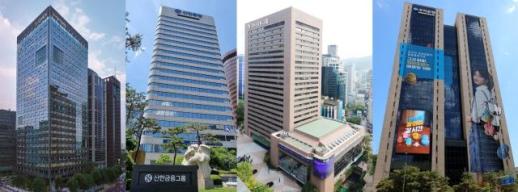 South Korea’s Big Four Financial Groups Seen Earning Over 5 Trillion Won in Q1; Woori Profit Up 30% South Korea’s four major financial holding companies — KB, Shinhan, Hana and Woori — are expected to post combined net profit of more than 5 trillion won in the first quarter, supported by steady interest income and a recovery in noninterest earnings. Woori Financial Group is projected to stand out, with profit expected to jump more than 30% as one-off costs fade. According to market estimates compiled by financial data firm FnGuide on Tuesday, the four groups’ combined first-quarter net profit consensus totals 5.1968 trillion won, up 5.4% from 4.9289 trillion won a year earlier. By group, KB Financial Group is expected to remain the top earner with 1.7124 trillion won, followed by Shinhan Financial Group at 1.5247 trillion won and Hana Financial Group at 1.1565 trillion won. While the top three are seen posting modest growth of 0% to the low 2% range, Woori is forecast to rise 30.2% to 803.2 billion won. Woori’s improvement is largely attributed to base effects. Large one-time expenses booked in the first quarter of last year — including costs tied to launching a securities unit and voluntary retirement programs — are no longer weighing on results, along with higher selling and administrative expenses linked to expanded digital investment. In the first quarter, Woori is also expected to record gains from selling part of its stake in K Bank and related gains tied to its remaining shares. Noninterest income is projected to rise more than 40%, helped by the acquisition of Tongyang Life Insurance and ABL Life Insurance and improved performance at Woori Investment & Securities. Across the sector, balanced growth in interest and noninterest income is seen supporting results. The groups are expected to have defended their net interest margins amid tighter household lending rules, while nonbank affiliates such as securities and insurance units contributed through higher fee income. Analysts also expect lower credit costs, as last year’s provisioning issues — including those tied to Hong Kong H-index-linked equity-linked securities and loan-to-value-related fines — have not resurfaced. Still, a weaker won is expected to be a headwind. The average weekly closing rate for the won against the U.S. dollar in the first quarter was 1,465 won, the highest level since the 1998 Asian financial crisis. A sharp rise in the exchange rate can lead to sizable foreign-exchange losses on foreign-currency assets, weighing on profitability. The market expects foreign-exchange translation losses ranging from tens of billions of won to around 100 billion won, depending on the company. The groups’ total shareholder return ratio for the first quarter is expected to settle in the 40% to 50% range. Under the government’s value-up policy, financial holding companies use capital above a 13% common equity Tier 1 ratio for shareholder returns. Woori’s CET1 ratio stood at 12.9% at the end of last year, but its total shareholder return ratio is expected to rise to about 45% to 46% this year as net profit surges. KB’s ratio is projected to exceed 55%. “Greater exchange-rate volatility could create temporary loss factors, but overall earnings capacity is being maintained,” a financial industry official said. “As provisioning pressure gradually eases and nonbank portfolios help offset results, financial holding companies’ performance this year is expected to remain stable without major swings.”* This article has been translated by AI. 2026-04-01 17:03:00
 -
 LE SSERAFIM’s First VR Concert ‘Invitation’ Opens First Ticket Sales at Lotte Cinema LE SSERAFIM has opened ticket sales for its first VR concert, “LE SSERAFIM VR CONCERT: INVITATION,” drawing attention as bookings began. The first round of ticket sales, exclusive to Lotte Cinema, started at 6 p.m. on the 31st through the company’s mobile app and website. The tickets cover screenings from April 15 to May 5, and heavy traffic followed immediately after sales opened, reflecting strong interest. “Invitation” unfolds in a storyline where reality and fantasy intersect. It begins with an encounter with LE SSERAFIM in an elevator, followed by a mysterious frame card that pulls the viewer into an unfamiliar world. The program includes “SPAGHETTI (feat. j-hope of BTS)” set against a food truck amid floating ingredients, “Come Over” in a city where murals come to life, and “ANTIFRAGILE” staged at the center of a strange planet. The concert is billed as having the largest set list ever for a VR concert. It also features stage outfits and styling designed specifically for VR, with viewing designed to minimize blind spots and deliver the members’ performances more vividly. In an ID video released on the day ticket sales opened, the members highlighted viewing points. LE SSERAFIM said, “With 12K ultra-high definition, it will be the closest to how we look in real life among all the videos you’ve seen so far,” adding, “Even if it feels too close, don’t run away and don’t feel pressured.” Promotional giveaways are also planned for attendees during the run. All viewers will receive one random photo card from five types, with some receiving a limited-quantity special photo card. First-week attendees will receive one random transparent photo card from five types, while second-week attendees will receive an official ticket, both on a first-come, first-served basis. “LE SSERAFIM VR CONCERT: INVITATION” will open exclusively at Lotte Cinema World Tower on April 15. * This article has been translated by AI. 2026-04-01 16:57:16
 -
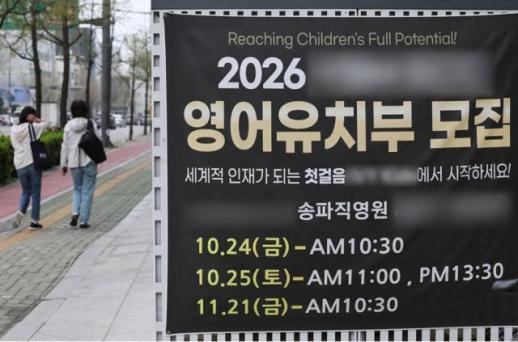 South Korea moves to rein in early private tutoring for toddlers SEOUL, April 1 (AJP) - A set of tightened rules will be implemented for kindergartens, nurseries, and private crammers to curb excessive courses for infants and preschoolers, the Ministry of Education said on Wednesday. According to the ministry, crammers would be barred from offering rote-style intensive classes for children under 36 months as early as the second half of next year, while lesson times for preschoolers would also be capped. The move comes amid growing criticism that the boom in early private tutoring, driven by South Korean parents' obsessive zeal to give their kids a head start, is actually hindering their cognitive development. Under its proposal, crammers would be prohibited from giving toddlers solely teacher-led instruction, often involving repetitive drills that require them to memorize rather than understand. For preschoolers aged three and older, similar classes would be limited to a maximum of three hours per day and 15 hours per week. Play-based classes that include practical activities and hands-on experiences will be allowed. As it may be difficult to clearly distinguish one class from another based on their format, the ministry said it will come up with detailed guidelines later. Separately, revisions to relevant laws banning level tests for infants are also being pursued, aiming to prevent crammers from conducting written or oral exams to assess children's levels for class placement or admission screenings. The ministry will also step up monitoring of illegal practices, offering rewards of up to 2 million won to those who report violations. "The early years of a child's life are crucial for building a strong foundation for their future. We will focus on protecting children's development and supporting their healthy growth," said Education Minister Choi Kyo-jin, adding that public education will be strengthened by expanding a wider range of after-school programs to reduce parents' reliance on private tutoring. 2026-04-01 16:52:41