
Journalist

Lee Hugh
=
-
 Kurly to Sell 33 Billion Won in New Shares to Naver, Raising Stake to 6.2% Retail tech company Kurly is moving to deepen its partnership with Naver. Kurly said in a regulatory filing on the 6th that it will carry out a third-party allotment paid-in capital increase for Naver. Kurly will issue 498,882 new common shares at 66,148 won per share. Naver will subscribe to all of the newly issued shares, Kurly said. The issue price was set by mutual agreement based on Kurly’s most recent fundraising round, the company said. Based on that, Kurly’s overall valuation is estimated at about 2.8 trillion won. After the capital increase is completed, Naver’s stake in Kurly will rise to 6.2%. Kurly said it plans to use the 33 billion won raised to support mid- to long-term growth, including expanding logistics infrastructure, a key to delivery competitiveness, and funding new businesses. Kurly and Naver signed a strategic partnership in April last year and have expanded cooperation, including opening the “KurlyN Mart” grocery section on the Naver Plus Store in September of the same year. Kurly Nextmile, Kurly’s logistics subsidiary, handles dawn delivery for products sold through Naver Smart Store and Brand Store, the company said. Kurly CEO Kim Seul-a said, “With this investment as a turning point, the two companies plan to further strengthen cooperation as strategic partners and achieve meaningful synergy and rapid growth.” Kurly said its consolidated revenue last year rose 7.8% from a year earlier to 2.3671 trillion won. Operating profit came to 13.1 billion won, swinging to a profit from an 18.3 billion won operating loss a year earlier. Gross merchandise value increased 13.5% to 3.5340 trillion won. The company attributed improved profitability to balanced growth in its core fresh food business and its Beauty Kurly cosmetics unit, as well as results from KurlyN Mart. Samsung Securities said KurlyN Mart’s monthly transaction volume has increased by more than 50% each month since launch. * This article has been translated by AI. 2026-05-06 16:39:16
 -
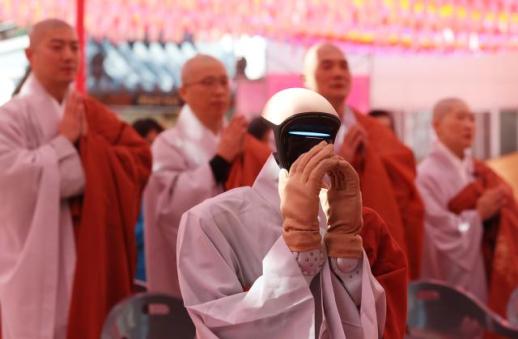 Robot Monk ‘Gabi’ Takes Buddhist Precepts at Seoul’s Jogyesa Temple "I will follow people well, not talk back, conserve energy and not overcharge." That was the pledge delivered by a humanoid robot monk named Gabi at a Buddhist Year 2570 (2026) "robot ordination ceremony" held May 6 in the courtyard in front of the main hall at Jogyesa Temple in Seoul. The remarks, which recast traditional Buddhist precepts through a robot’s perspective, drew a strong response from visitors, reflecting how artificial intelligence and advanced robotics are becoming new tools for outreach in religious circles. ◆ Gabi receives a Buddhist name, completes rites, and takes a ‘robot five precepts’ Gabi, a human-shaped humanoid robot, became the first in the Jogye Order to receive a Buddhist name — Gabi — and to complete the yeonbi rite. Instead of reciting standard doctrine, Gabi took what organizers called the "robot five precepts," blending the machine’s physical traits with Buddhist values. The promise to "follow people well and not talk back" was framed as humility and consideration for others. The vow to "not overcharge" likened battery charging to the teaching of curbing greed and being content with less. The message, organizers said, is that AI and robotics should be used with compassion, wisdom and responsibility. ◆ Religious groups embrace IT, with robots set to join lantern parade on May 16 Religious groups have been adopting advanced technology to broaden contact with younger people and international tourists. Recent examples include AI chatbots that recommend Buddhist sayings tailored to personal concerns and self-driving guide robots. Gabi is expected to appear next in central Seoul. The Jogye Order plans to have four robots that have received Buddhist names — including Gabi and fellow robots Seokja, Mohee and Nisa — take part in a large lantern parade scheduled for the evening of May 16 around the Jongno area. A Jogye Order official said, "In the AI era, even robots have become part of the community of monks and laypeople," adding, "We hope many citizens will join this lantern parade and, together with the robots, celebrate and offer prayers for Buddha’s Birthday." * This article has been translated by AI. 2026-05-06 16:37:15
 -
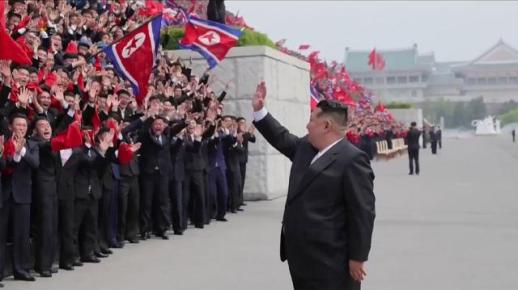 North Korea drops reunification references in revised constitution, consolidates leader's power SEOUL, May 6 (AJP) - North Korea has added a clause newly defining its territory and removed all references related to reunification with the South in its revised constitution, according to the Ministry of Unification here. In a press conference at the government complex in central Seoul on Wednesday, the ministry said North Korea has defined its territory as the land it shares borders with China and Russia to the north and South Korea to the south including its surrounding waters and airspace, instead of broadly describing the Korean Peninsula as a whole. Despite leader Kim Jong-un's earlier declaration of South Korea as a "main enemy" under his "two hostile states" policy in January 2024, in which he no longer considers the South as brethren to one day be reunified with, the revised constitution stopped short of labeling Seoul a "primary foe." But all references to reunification between the two Koreas, including terms like "peaceful reunification" and "national unity," have been eliminated from the constitution, effectively dropping the achievements of his grandfather and regime founder Kim Il-sung and his father Kim Jong-il. The constitution instead elevated the status and power of its current leader, designating Kim junior as "head of state" and placing him above the Supreme People's Assembly (SPA), the country's highest state organ, in the constitutional hierarchy. A new clause also grants him sole authority over the country's nuclear forces including the power to delegate that authority. It further stripped the SPA of its power to remove him from office, eliminating its nominal oversight role in state affairs. Notably, the constitution also dropped socialist welfare promises seen as unrealistic such as "free medical care" and "a country without taxes" as well as more aggressive ideological references including "imperialist aggressors" and "liberation from exploitation and oppression." In its list of those entitled to special state protection, which previously included "revolutionary fighters" and "honored veterans," it added "war heroes from overseas military operations," a phrase widely seen as referring to North Korean soldiers killed while assisting Russia in its war in Ukraine. Pundits say the latest revision appears to be intended to project the image of a "normal country." First adopted in September 1948, the constitution was amended five times before incorporating socialist ideologies in 1972, followed by about a dozen further amendments. 2026-05-06 16:34:08
 -
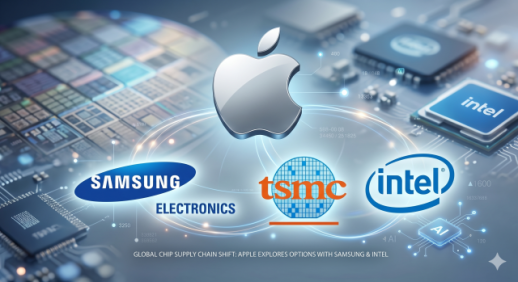 Apple weighs Samsung for chip supply as Samsung joins $1 trillion club SEOUL, May 06 (AJP) - Apple Inc. is reportedly exploring partnerships with Samsung Electronics and Intel to reduce its heavy reliance on Taiwan Semiconductor Manufacturing Co. (TSMC) for processor production, a shift that coincides with Samsung securing a new 4-nanometer artificial intelligence (AI) chip order from a U.S. firm. According to a recent report by Bloomberg, Apple is in early-stage discussions with Samsung and Intel to manufacture its core processors. The move is widely interpreted as an effort to restructure its critical component supply chain as the explosive growth of AI tightens global advanced chip capacity and geopolitical risks surrounding Taiwan persist. When asked about a new order, a Samsung Electronics spokesperson stated, "Nothing has been confirmed yet regarding this matter." Despite the lack of official confirmation, industry observers note that Apple has pressing reasons to seek alternatives. For over a decade, Apple has exclusively contracted TSMC to manufacture its custom-designed System-on-Chips (SoCs) for iPhones and Macs, utilizing TSMC's cutting-edge 3nm process for its latest devices. However, soaring demand for AI data centers and on-device AI has strained the supply of advanced nodes. Apple CEO Tim Cook recently acknowledged during an earnings call that the company's supply chain flexibility has diminished, highlighting chip shortages as a constraint on product growth. While the Apple partnership remains in the exploratory phase, Samsung's foundry division is actively capitalizing on the overflow demand in the AI sector. On Sunday, South Korean semiconductor design house ADTechnology (ADT) announced it had signed a turnkey contract worth approximately 40 billion won ($29.4 million) with a U.S.-based AI fabless company. Under the three-way collaboration model, the U.S. firm will lead the chip design, while ADT will manage development and production utilizing Samsung Foundry’s 4nm process. The project centers on high-performance computing (HPC) system-on-chip (SoC) chiplets for AI data centers. Although the contract size is relatively small, industry experts view it as a crucial testbed for Samsung to prove itself as a viable alternative to TSMC. With Samsung's 4nm production yields reportedly stabilizing near 80 percent, the company is targeting niche markets and fabless firms unable to secure production slots at TSMC. The global foundry market remains fiercely competitive as the AI boom drives an unprecedented need for manufacturing capacity. TSMC, which commands roughly 70 percent of the global market share compared to Samsung's 7 percent to 8 percent, is aggressively expanding its footprint. The Taiwanese giant recently resumed its Longtan Science Park expansion project for next-generation angstrom-level facilities and plans to increase its 2nm and 3nm wafer capacity by 20 percent by the end of the year. Meanwhile, Samsung Electronics indicated during its first-quarter earnings call that its advanced node facilities have reached maximum utilization. The tech giant noted it is in active discussions with multiple large AI and HPC clients regarding 2nm cooperation, signaling a continued push to close the gap with its Taiwanese rival. Shares of Samsung Electronics surged on Wednesday, closing at 267,000 won, up 14.84 percent, sending its market value to $1.075 trillion to make the company second Asian name after TSMC to be worth more than $1 trillion. On Wednesday's closing, Samsung Electronics ranks 11th in market cap. 2026-05-06 16:30:44
 -
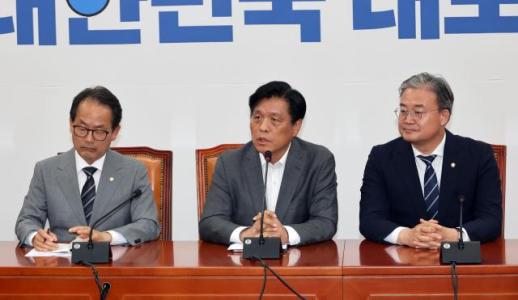 Democratic Party taps Kim Eui-kyeom, Park Jie-won for June 3 by-elections; one district still undecided The Democratic Party of Korea said May 6 it will nominate Kim Eui-kyeom and Supreme Council member Park Jie-won for the June 3 National Assembly by-elections in Gunsan-Gimje-Buan Gap and Eul in North Jeolla Province. The party also selected Lim Moon-young, vice chair of the National AI Strategy Committee, for Gwangju’s Gwangsan-eul district; former Oceans and Fisheries Vice Minister Kim Seong-beom for Seogwipo on Jeju Island; and Park Hyeong-ryong, head of the party’s Dalseong County chapter, for Dalseong County in Daegu. With those picks, all by-election districts have candidates set except Gongju-Buyeo-Cheongyang in South Chungcheong Province. Senior spokesperson Kang Jun-hyeon announced the nominations at the National Assembly, citing the party’s strategic nominations committee. “The party will do its best through the end so that the candidates announced today can earn the public’s choice,” he said. Kang said Kim is a Gunsan native who served as the first head of the Saemangeum Development Agency under the Lee Jae-myung government and “best understands” the Saemangeum project, a major local issue. He described Park as a lawyer who has applied his expertise to regional development, calling him “a son of North Jeolla” and “a son-in-law of Gimje.” Kang said Lim was born and raised in Gwangju and has overseen AI policy under the Lee Jae-myung government. He said Kim was born in Seogwipo, attended school there through high school and is “a top expert” in maritime and fisheries affairs after 30 years at the ministry. He added that Park has “quietly devoted” himself in Daegu, a difficult political area for the party, and said he is confident Park can win voters’ support. For Gongju-Buyeo-Cheongyang, the party said it needs more time after former Buyeo County Gov. Park Jeong-hyeon’s bid fell through. The National Election Commission on May 4 issued an authoritative interpretation that Park cannot run, citing a dispute over the deadline for resigning from public office. Party Secretary-General Cho Seung-rae said May 6 the party is considering former Kongju National University President Won Seong-su and a young lawyer. 2026-05-06 16:30:04
 -
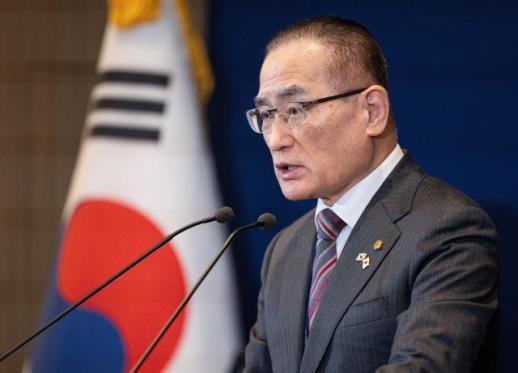 South Korea says it is unclear whether ship fire in Strait of Hormuz was an attack Wi Sung-lac, head of the Cheong Wa Dae National Security Office, said Tuesday that it was not clear a South Korean ship fire in the Strait of Hormuz was caused by an attack. Wi also said there was no longer a need to review participation in “Project Freedom,” a U.S. Trump administration effort to help commercial ships leave the Strait of Hormuz that was halted after two days. Speaking at a briefing at Cheong Wa Dae’s Chunchugwan press center, Wi described the situation involving a fire that broke out May 4 on the South Korean-flagged Namu, which had been anchored in the strait. “We had been reviewing the ‘maritime freedom initiative,’ and we were also going to review Project Freedom,” he said. The HMM Namu, which suffered an explosion and fire in the Strait of Hormuz, was reported to be awaiting towing. Cheong Wa Dae said the tow was expected to be completed between early morning and morning May 7, Korea time, but stressed the situation remained fluid. Wi said the possibility of an attack was raised early on and officials considered holding a working-level National Security Council meeting, but added that further review of information suggested an attack was “not that certain.” He said there was no flooding and the ship was not listing. He added that U.S. comments about participation appeared to assume the ship had been attacked, but said that point required further confirmation. * This article has been translated by AI. 2026-05-06 16:29:02
 -
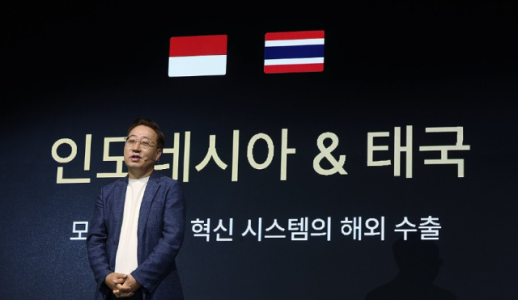 KakaoBank, Kakao Pay post record Q1 results as noninterest income grows KakaoBank and Kakao Pay posted record first-quarter results as they expanded noninterest businesses such as platform services and overseas investments. The shift is aimed at reducing earnings volatility tied to interest rates and policy changes, and at building finance platforms used in everyday life. KakaoBank said in a regulatory filing on the 6th that its first-quarter net profit rose 36.3% from a year earlier to 187.3 billion won, the highest on record. Noninterest income increased 7.5% to 302.9 billion won, accounting for 37% of operating revenue. The results reflect a strategy to diversify revenue beyond traditional loan-deposit margins, as tighter household lending oversight has limited banks’ ability to expand profits. KakaoBank has pursued initiatives including entry into Southeast Asia, a loan-comparison platform and an investment tab, seeking to grow beyond a basic banking app into an everyday “super app.” In the quarter, KakaoBank’s fee and platform revenue rose 4.1% to 80.8 billion won. Fee profit jumped 47% from a year earlier, supported in part by the investment-tab service that links asset viewing to execution. Overseas gains also contributed: KakaoBank recorded 93.3 billion won in nonoperating profit from valuation gains after Superbank, an Indonesian digital bank it invested in, went public. KakaoBank’s plan to pursue the acquisition of a capital company within the year is also seen as part of its diversification push, aimed at building a nonbank portfolio. Chief Financial Officer Kwon Tae-hoon said on an earnings conference call, “If we acquire a capital company, we can quickly improve profitability by lowering funding rates through an improved credit rating.” Kakao Pay is also shifting its focus from a payments-centered model toward a broader financial platform. On a consolidated basis, its first-quarter operating profit rose sevenfold from a year earlier to 32.2 billion won, a record, while revenue climbed 41.7% to 300.3 billion won. Financial services grew to nearly half of total revenue, as investment and insurance services expanded and reduced reliance on payment fees. Platform businesses such as advertising and telecom brokerage also grew, supporting a more diversified revenue mix. For longer-term growth, the company is targeting AI-based financial services. It plans to upgrade its in-house AI service, Pay i, and expand payment and remittance functions linked to Kakao’s AI ecosystem. 2026-05-06 16:27:48
 -
 Trump Halts Hormuz ‘Project Freedom’ After One Day as Iran Tightens Strait Controls U.S. President Donald Trump said he will temporarily halt “Project Freedom,” a U.S. operation to help ships exit the Strait of Hormuz, just a day after it began, citing the possibility of a final agreement with Iran. While Trump signaled a shift toward negotiations, he said the U.S. maritime blockade on Iran would remain in place, and Iran continued to reject U.S. demands, leaving the outlook uncertain. In a post Monday on Truth Social, Trump said Project Freedom would be paused “for a short period” to determine whether a deal can be “finally concluded and signed.” He said the decision reflected requests from Pakistan and other countries, what he called major U.S. military success against Iran, and “considerable progress” toward a complete agreement with Iranian representatives. Trump also said the maritime blockade on Iran would continue, maintaining the effort to cut off Iran’s funding by restricting oil exports. Bloomberg News noted it was unclear what progress Trump was referring to and that he did not provide details on any talks under way. Project Freedom had been presented as the next key step in the U.S. strategy toward Iran. The U.S. military said it supported two ships leaving the Strait of Hormuz the previous day and repelled multiple attacks by Iranian drones, missiles and irregular naval fast boats during the operation. Defense Secretary Pete Hegseth and Joint Chiefs Chairman Dan Caine said the Pentagon had deployed air-defense-capable guided-missile destroyers, more than 100 aircraft, 15,000 troops in the region, underwater platforms and various drone forces. Earlier Monday, Secretary of State Marco Rubio told reporters in the White House briefing room that “Operation Epic Fury is over. President Donald Trump has notified Congress,” adding, “That phase is over. We are now in Project Freedom.” He said the operation was needed because a closure of the Strait of Hormuz would hit the global economy, eventually affecting the U.S. economy, and could lead to similar disruptions in other international waterways if left unaddressed. Strait of Hormuz still not reopened Trump announced the pause only hours after senior U.S. officials described the military’s role in Project Freedom, adding to signs of confusion inside the U.S. government. New York Magazine criticized the episode, saying Trump should rename his Iran war “Project Chaos.” Bloomberg said Trump appeared to be signaling an intent to end the war, but that a deal to reopen the Strait of Hormuz remained distant. It reported that Iran last week, through mediator Pakistan, proposed discussing reopening the strait first and then moving to nuclear-related talks. Trump rejected that proposal, and the pause in Project Freedom further undercut prospects for reopening the waterway, the report said. Shipping company Hapag-Lloyd said in a statement that “nothing has changed” in the Strait of Hormuz and that passage remains impossible for its vessels. The BBC said what happens next is uncertain. Iran also maintained a negative stance toward U.S. calls for negotiations. Semi-official Fars News Agency reported that President Masoud Pezeshkian, in a phone call with Iraq’s prime minister-designate Ali al-Zaidi, said the problem is that the United States pursues a “maximum pressure” policy while expecting Iran to come to the table and ultimately yield to unilateral U.S. demands. “This is an impossible equation,” he said. Iran is also tightening control over the Strait of Hormuz. State-run Press TV reported that Iranian authorities have officially introduced new maritime rules requiring all ships transiting the strait to obtain prior passage permits. Under the rules, ships seeking to pass will receive guidance and transit regulations through an official Iranian email and must secure approval in advance. Trump had urged South Korea to take part in Project Freedom, but with the operation now paused, South Korea faces the need to weigh its next steps carefully. 2026-05-06 16:24:05
 -
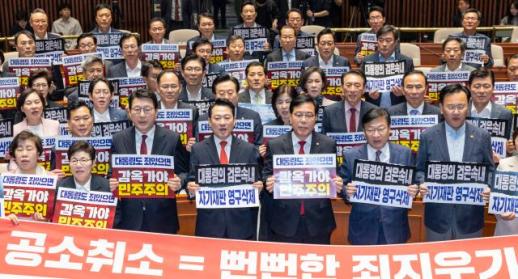 South Korea’s People Power Party rallies against proposed special counsel on dropped indictments The People Power Party on May 6 urged the Democratic Party to withdraw a proposed special counsel bill tied to canceling indictments, calling it a “special counsel law to erase the president’s trial.” Floor leader Song Eon-seok made the remarks at a rally at the National Assembly titled “Rally condemning a special counsel to erase President Lee Jae-myung’s crimes.” He said it would create “a world where a thief appoints the police and the police erase the thief’s trial,” calling it “the face of Lee Jae-myung’s Korea.” Song criticized what he described as a reversal of basic roles in the justice system, saying police should catch thieves, prosecutors should investigate them and judges should rule on their crimes. “The country is being run in a strange way,” he said. He said President Lee had described the indictment-cancellation special law as something that “must be done,” which Song claimed amounted to an order that Lee’s trial “must be eliminated by canceling the indictment.” Song also accused Lee of using presidential power to “erase all” of his criminal record, calling it a “dictatorial idea” and “tyranny.” Referring to Lee’s reported comment asking that timing and procedures be judged carefully, Song said Lee did not ask for a review of the substance. Song argued the message was that cancellation was mandatory, while the timing should be weighed because an election is approaching and public backlash is a concern. Song urged the government and ruling party to act immediately if they intend to proceed, adding that they should instead pledge openly in the upcoming local elections to cancel the indictment and “receive the people’s judgment.” Rep. Yoon Sang-hyeon, in a separate speech, said an unprecedented effort was underway to “launder” judicial decisions through legislation. He accused backers of the bill of trying to create the special counsel law “for Lee Jae-myung alone,” shake investigative agencies, pressure the court and “wash 12 criminal allegations completely not guilty.” Yoon called it unconstitutional and anti-state behavior that breaks the principle of a liberal democratic republic, describing it as a “self-exemption legislative coup” that would undermine the rule of law.* This article has been translated by AI. 2026-05-06 16:22:54
 -
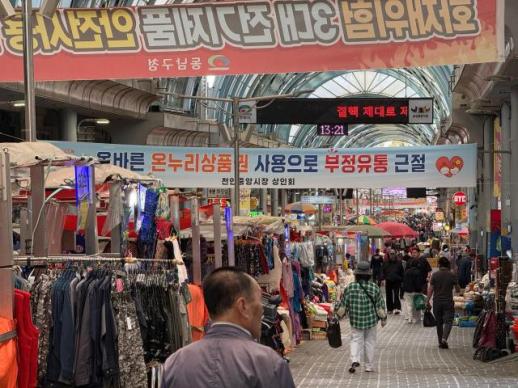 South Chungcheong Governor’s Race Tightens as Voters Split Between Kim Tae-heum and Park Soo-hyun "They’re both about the same, but we should still pick Kim Tae-heum for what he’s done for the province." "Park Soo-hyun is different from other lawmakers. I’m voting for him no matter what." In the Chungcheong region, long seen as a swing area in national elections, voters in South Chungcheong Province were split when Aju News spoke with residents on May 6 in places including Gongju and Cheonan. In Cheonan, more residents interviewed said they planned to vote for Gov. Kim Tae-heum, who is seeking re-election in the June 3 local elections. A 69-year-old taxi operator surnamed Choi praised Kim’s performance over the past four years but said he worried the Democratic Party could become too dominant nationwide. "Gov. Kim did a good job," he said. "I think I’m leaning toward him again." He added, "It feels like the whole country is turning blue. I hope the Democratic Party won’t conduct legislative activities too unilaterally." At Cheonan Central Market, Choi Seung-il, 87, said the two candidates were similar but gave Kim a slight edge. "Kim is ahead by one point," he said, adding he would back Kim again as he did in the previous election. Another market shopper, Kim Dong-wook, 73, said he opposed fiscal support policies such as livelihood support payments and fuel-linked subsidies being pursued by the Democratic Party government. "The Democratic Party has handed out too much money this time," he said. "If this continues, young people will have a hard time living." He said that led him to decide to vote for Kim. In Gongju, which was also Park Soo-hyun’s constituency, support among those interviewed leaned heavily toward Park, the Democratic Party’s candidate for governor. A worker in his 50s, surnamed Ko, said he planned to support Park and described it as a punitive vote against the People Power Party, which he accused of "insurrection" and wrongdoing. A voter in his 30s, surnamed Jang, said he would vote for Park because he supports the Democratic Party. In Gongju, some residents cited calls to punish the People Power Party over former President Yoon Suk Yeol’s martial law declaration, along with strong support for the Lee Jae-myung government. Ko said he voted for the People Power Party in the last local elections but would back the Democratic Party this time. "If the People Power Party, which shows no reflection over acts of insurrection, loses overwhelmingly, they’ll learn the people can be frightening," he said. He also praised the Lee government, citing what he called bold diplomacy with the United States, practical diplomacy including North Korea policy, and a third round of commercial law revisions that he said helped normalize the stock market. Jang also criticized what he called acts of insurrection that caused national turmoil. He said he liked the government’s "practical diplomacy" toward the United States and North Korea and said he expected reforms, including strong punishment for elites such as politicians and the media. Some residents also voiced doubts about Park’s prospects because of anti-Democratic Party sentiment. A 69-year-old taxi driver, Park Jong-young, said Gongju’s mood favored Park but added, "There’s a lot of backlash against the Democratic Party itself, so we don’t know what will happen." Still, he said, "Park is different from other lawmakers. I’m voting for him no matter what." Others said they would not support either candidate and might skip voting. A woman in her 60s who works at Cheonan’s Yeokjeon Market, surnamed Kim, said she had supported the People Power Party but was put off by what she called the recent conduct of party leader Jang Dong-hyeok. "This year I won’t vote," she said. She added that merchants want redevelopment and said she hoped any candidate would pledge it as a campaign promise. Across the province, residents commonly called for stronger industrial infrastructure, better jobs and expanded transportation networks. Ko said he hoped South Chungcheong would become more prosperous by attracting industries that fit local characteristics and by improving construction and transportation infrastructure. Jang said he wanted industrial investment and quality jobs for residents. Park said that, as someone in the transportation business, he hoped for expanded transport infrastructure. Park campaigned in person at Gongju Sanseong Market starting in the morning. Accompanied by Democratic Party candidates for mayor, provincial council and city council, he greeted merchants and shoppers one by one, shaking hands and saying, "I will definitely come back as governor." Some merchants and visitors responded, "Of course we’ll elect Park Soo-hyun as governor. Go, Park Soo-hyun!" Park said he visited the market because he plans to tour all cities in South Chungcheong as he begins full-scale campaigning, and he wanted his first stop to be Gongju because of his close ties to the city. He said he would work to address hardships raised by residents and merchants. * This article has been translated by AI. 2026-05-06 16:21:22