
Journalist

Lee Hugh
=
-
 BTS to Tour South America in October With 11 Shows in Five Cities BTS will launch a South American leg of its world tour in October, with 11 concerts across five cities, its agency said. According to the detailed schedule released on the 28th for the “World Tour ‘ARIRANG’ in Latin America,” the group will open in Bogota, Colombia, on Oct. 2-3, then play Lima, Peru, on Oct. 9-10; Santiago, Chile, on Oct. 16-17; Buenos Aires, Argentina, on Oct. 23-24; and Sao Paulo, Brazil, on Oct. 28 and Oct. 30-31. The agency said it will be the first time BTS visits Colombia, Peru and Argentina as a full group. The agency also said all 46 dates on BTS’ world tour — starting with an April 9 show at the main stadium of Goyang Sports Complex in Gyeonggi Province and continuing through Japan, North America and Europe — have sold out. * This article has been translated by AI. 2026-03-28 15:18:15
 -
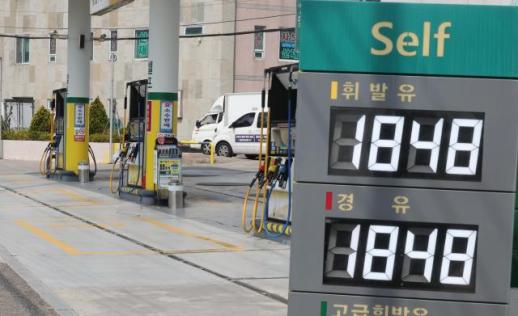 Fuel prices near 1,900 won in Seoul as price cap raised SEOUL, March 28 (AJP) - Fuel prices at gas stations across South Korea continued to rise for a second consecutive day after the government raised oil price caps. According to Opinet, the state-run fuel price information system, the nationwide average price of gasoline stood at 1,849.7 won ($1.23) per liter as of 9 a.m. on Saturday, up 10.9 won from the previous day. Diesel prices also climbed 9.6 won to 1,844.1 won per liter, extending the upward trend in fuel costs. The increase was particularly pronounced in Seoul. The average gasoline price in the capital surged 24.9 won in a single day to 1,890.5 won per liter, while diesel rose 18.6 won to 1,872.1 won. Prices had already jumped sharply on Friday, the first day of the price cap. The nationwide average gasoline price rose 19.4 won to 1,838.8 won, while diesel increased 18.8 won to 1,834.6 won. The government set the new price ceilings at 1,934 won per liter for regular gasoline, 1,923 won for diesel used in vehicles and ships, and 1,530 won for kerosene. The caps were raised by 210 won across all fuel types from the previous caps introduced in July. Market observers say the higher caps are feeding directly into retail prices at gas stations. When the earlier price cap was introduced in July, pump prices were about 100 won higher than refinery supply prices, raising the possibility that the nationwide average gasoline price could soon exceed 2,000 won per liter if the current trend continues. The record-high weekly average gasoline price nationwide was 2,137.7 won per liter, recorded in the fifth week of June 2022. Given the recent upward momentum and inflationary pressures, analysts say the record could be challenged again. 2026-03-28 14:32:19
 -
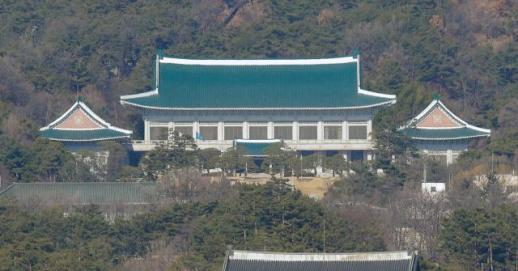 S. Korea considering participation after France invites Lee to June G7 summit SEOUL, March 28 (AJP) - South Korea is considering whether President Lee Jae Myung will attend the Group of Seven (G7) summit in June hosted by France, the presidential office said Friday. A presidential official said Seoul is “considering participation while taking into account diplomatic schedules and domestic and international circumstances.” “France conveyed its intention to invite South Korea to this year’s G7 summit during close consultations between the two sides,” the official said. France, which holds the rotating G7 presidency this year, plans to host the summit in Evian in June and has invited leaders from South Korea, India, Brazil and Kenya, according to local media reports including AFP, citing a statement from the French presidency released Thursday. The G7 comprises the United States, the United Kingdom, Germany, France, Italy, Japan and Canada, with the presidency rotating annually among member states. The chair country can invite non-member nations and international organizations to expanded sessions. South Korea has previously been invited to G7 meetings hosted by the United Kingdom in 2021, Japan in 2023 and Canada last year. French officials also said Paris had initially planned to invite China to the summit, but Beijing declined the invitation. France is expected to engage with China separately. France had planned to focus on global economic imbalances, but the Iran conflict could reshape the agenda, officials said, adding that the situation remained uncertain. It remains unclear whether U.S. President Donald Trump will attend the summit. Meanwhile, South Africa claimed it had been excluded from the summit due to U.S. pressure. Vincent Magwenya, spokesperson for South Africa’s presidency, said France had withdrawn an invitation following “sustained pressure.” Magwenya said South Africa would not attend the summit. Trump has criticized South Africa over its land expropriation law, calling it discriminatory against white farmers. He also skipped the G20 summit there last November and called for the country’s removal from the grouping. 2026-03-28 11:35:30
 -
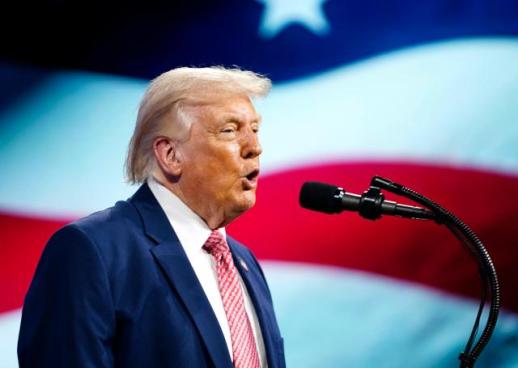 Trump hints at NATO split over Hormuz deployment, says 'Cuba could be next' SEOUL, March 28 (AJP) - U.S. President Donald Trump on Thursday suggested the possibility of withdrawing from NATO after criticizing member states for failing to send naval forces to the Strait of Hormuz, warning that future military action could target Cuba. Speaking at the Future Investment Initiative (FII) Institute hosted by Saudi Arabia’s sovereign wealth fund in Miami, Florida, Trump expressed frustration with NATO allies’ reluctance to respond to Washington’s call for military support in the Gulf. “Hundreds of protecting them and we would have always been there for them. But now based on their actions, I guess we don't have to be, do we?” Trump said. He specifically criticized European NATO allies for not deploying naval assets to the Strait of Hormuz, calling their decision “a terrible mistake.” The United States has been urging allies, including South Korea, Japan and European countries, since March 14 to dispatch naval forces to help secure shipping routes after Iran’s strategy of restricting transit through the Strait of Hormuz disrupted maritime traffic. However, no country has readily agreed to deploy forces, prompting Trump to escalate criticism of NATO allies and raise the prospect of distancing the United States from the alliance. NATO, formed in 1949, comprises 32 member states from North America and Europe. Its core principle of collective defense treats an attack on one member as an attack on all, and the alliance has long played a central role in deterring Russian threats in Europe. Trump has repeatedly criticized NATO members for what he describes as “free-riding” under the U.S. security umbrella, citing low defense spending by European allies. Trump’s criticism could also extend beyond Europe. Trump previously complained that despite the presence of tens of thousands of U.S. troops stationed in South Korea and Japan, Washington had received little support from those allies in the Iran conflict. Trump also suggested that Cuba could become the next target of U.S. military action after the Iran conflict ends. “I built this great military. I said you'll never have to use it. But sometimes you have to use it. And Cuba's next, by the way,” he said. The Trump administration has been increasing pressure on Cuba as part of its broader effort to expand U.S. influence in the Western Hemisphere. Following the removal of Venezuelan President Nicolás Maduro in January, Washington tightened restrictions on oil supplies to Cuba while negotiations led by Secretary of State Marco Rubio continue, U.S. officials have also kept open the possibility of military action. 2026-03-28 10:31:10
 -
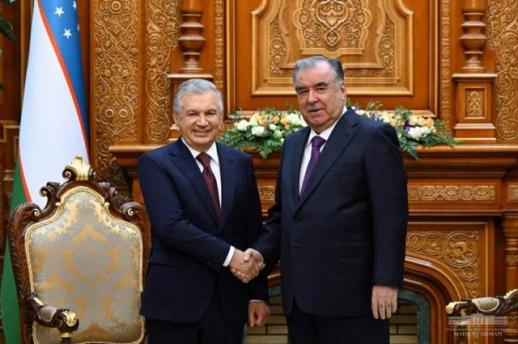 Uzbekistan and Tajikistan cement alliance during presidential summit SEOUL, March 27 (AJP) - The President of Uzbekistan, Shavkat Mirziyoyev, hosted President Emomali Rahmon of Tajikistan for a landmark state visit on March 26 and 27, 2026, marking a significant transition in regional diplomacy, the Embassy of Uzbekistan in Seoul said Friday. The visit featured the first meeting of the Supreme Interstate Council, a new high-level body designed to move the relationship beyond occasional cooperation and into a permanent, systemic alliance. During the talks, President Mirziyoyev and President Rahmon signed a Joint Statement on Deepening Strategic Partnership and Allied Relations. This agreement builds on the 2024 Treaty on Allied Relations and effectively signals that the two nations have moved past previous regional friction to focus on full-scale integration. The economic goals set during the summit are centered on doubling bilateral trade. After trade reached nearly 912 million dollars by the end of 2025, the leaders officially endorsed a roadmap to reach 2 billion dollars by 2030. To hit this target, the governments are fast-tracking the Oybek-Fotekhobod border trade zone and introducing digital "E-Permit" systems to reduce the bureaucracy that often slows down regional cargo transport. A highlight of the visit was a ceremony to launch 10 major joint projects. These include new textile plants in Tajikistan, furniture and leather factories, and expanded household appliance production. Within Uzbekistan, new facilities for dairy, fruit juice, and metal briquettes are being established in the Andijan, Fergana, and Surkhandarya regions. The visit also featured several cultural and symbolic milestones, including the opening of a new building for the Tajikistan Embassy in Tashkent and the naming of a street in the New Tashkent district after the city of Dushanbe. The leaders also attended a joint concert at the International Forums Palace, emphasizing the shared heritage of the two peoples. The two presidents discussed a five-year program to support the large diaspora communities living in both countries, focusing on education and scientific exchanges. A comprehensive roadmap has been commissioned to ensure that the industrial, energy, and security agreements reached this week are implemented over the next three years. 2026-03-27 22:46:40
 -
 South Korean Actor Lee Sang-bo Found Dead at 45; Agency Says It Is Checking Actor Lee Sang-bo has died, South Korean media reported. He was 45. The Hankook Ilbo reported on the 27th that Lee was found dead on the 26th. Police who responded after a report from his family are investigating the exact circumstances of his death, the newspaper said. His agency, Korea Management Group (KMG), told multiple media outlets it was checking the report. Born in 1981, Lee debuted in the 2006 KBS drama “The Invisible Man Choi Jang-soo.” He appeared in dramas including “Miss Monte-Cristo” and “Elegant Empire,” and in films including “Secretly, Greatly” and “Mephisto.” Lee drew public attention in 2022 after police detained him following a report of a man who appeared to be under the influence walking around in public. It was later found to be a misunderstanding linked to his taking prescribed antidepressants and anti-anxiety medication, according to the report. In media interviews at the time, Lee said he felt wronged but called the incident a turning point, adding that he wanted to be remembered for his acting. He signed an exclusive contract with his current agency earlier this year and had signaled plans for more active work. Reports also said all posts on the social media account he ran during his lifetime have been deleted. 2026-03-27 18:18:19
 -
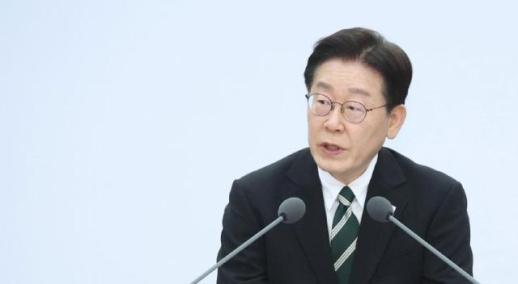 Lee's approval rating slightly dips to 65% but still remains high SEOUL, March 27 (AJP) - President Lee Jae Myung's approval rating fell slightly after reaching its highest level for three consecutive weeks, a poll showed on Friday. Pollster Gallup Korea surveyed 1,000 adults nationwide earlier this week and found that about 65 percent of respondents said Lee was doing well in his job, down 2 percentage points from the previous week. About 24 percent disapproved of his performance, while 10 percent remained undecided. The ruling Democratic Party (DP) remained steady at 46 percent, while the main opposition People Power Party (PPP) tumbled even further to 19 percent, down one percentage point from the previous week. The minor Reform Party and Rebuilding Korea Party garnered 3 percent and 2 percent of support, followed by the left-wing Progressive Party at 1 percent. The survey was conducted via automated phone responses from Tuesday to Thursday. 2026-03-27 17:39:48
 -
 Drugmakers Expand Portfolios Through Co-Promotion Deals Co-promotion deals between multinational drugmakers with branded medicines and South Korean companies with local sales networks are continuing, as partners combine strengths to speed market penetration and lift revenue. Industry officials said March 27 that co-promotion has long been used in South Korea’s pharmaceutical sector. Multinationals gain access to the domestic market, while local firms broaden their presence in specific therapeutic areas by selling established products. Huons said it entered the vaccine business after signing a domestic distribution and co-promotion agreement on March 25 with global drugmaker Sanofi for injectable vaccines. Starting next month, Huons will handle distribution and marketing for five vaccines, including the influenza vaccine Vaxigrip. The company plans to leverage its injectable-drug sales force and cold-chain capabilities, drawing on refrigerated distribution experience built through products such as the vitamin C injection Merit C and the immune-boosting adjunct injection Hudaxin. It recently set up a dedicated Vaccine Business Division to run the effort. Bukwang Pharmaceutical is also expanding, teaming with Servier to strengthen its cardiovascular portfolio. Under a strategic co-sales agreement covering seven products, including treatments for hypertension and angina, Servier will cover general hospitals and other facilities with 300 beds or more. The two companies will jointly cover medical institutions with 100 to 299 beds, while Bukwang will lead sales and marketing for facilities with fewer than 100 beds. Bukwang, which has focused on gastroenterology and endocrinology, has been widening its prescription-drug lineup, including by acquiring Korea Union Pharmaceutical earlier this year for its chronic-disease products. The Servier partnership is seen as part of that push into cardiovascular care. Hanmi Pharmaceutical has sought to deepen share in areas where it already has a strong sales base. Earlier this year, it signed a co-promotion deal with Ferring Pharmaceuticals Korea for the nocturia and enuresis treatments Minirin and Nocdurna. It also agreed with Handok Teva to distribute and sell Ajovy, a preventive migraine treatment, expanding into the neurology field. Co-promotion is valued for enabling faster sales growth and more efficient market access. But if sales fall short or profitability weakens, contract terms may be adjusted, leaving local companies with the task of turning near-term gains into stronger in-house competitiveness. Jung Yoon-taek, head of the Pharmaceutical Industry Strategy Research Institute, said the industry has long relied on collaboration built on specialization and efficiency. “By combining each company’s areas of expertise, co-promotion can raise both sales and profits at the same time,” he said. “That makes its importance likely to grow.”* This article has been translated by AI. 2026-03-27 17:24:00
 -
 Asian stocks drift lower as Iran conflict drags on, AI memory jitters weigh SEOUL, March 27 (AJP) - Asian equities ended the week on a subdued note as the Iran conflict stretched into a month-long standoff, while fresh concerns over AI-driven memory demand added another layer of uncertainty for investors. Brent crude rose 1.5 percent to $109.5 per barrel and West Texas Intermediate gained 0.9 percent to $95.3, keeping pressure on energy-importing economies already strained by prolonged geopolitical risks. Regional markets moved in mixed directions. Japan’s Nikkei 225 fell 0.4 percent to 53,373.1, while China’s Shanghai Composite rose 0.6 percent to 3,913.8. Hong Kong’s Hang Seng Index gained 0.7 percent to 25,023.6, supported by improving economic signals from China and expectations of further policy support. Global risk sentiment remained fragile. The Philadelphia Semiconductor Index tumbled 4.8 percent, while the VIX jumped 8.3 percent to 27.4, underscoring elevated volatility. In Seoul, the benchmark KOSPI slipped 0.4 percent to close at 5,438.9, recovering from early losses that briefly pushed the index toward the 5,200 level. Retail investors helped cushion the decline despite heavy foreign outflows. Foreign investors sold 3.88 trillion won ($2.58 billion), extending their selling streak, while institutions and retail investors bought 777.7 billion won and 2.71 trillion won, respectively. Foreigners have offloaded nearly 30 trillion won so far this month, including more than 10 trillion won this week alone, highlighting persistent external pressure on Korean assets. Chipmakers remained under strain. Samsung Electronics edged down 0.2 percent to 179,700 won, while SK hynix fell 1.2 percent to 922,000 won, as concerns grew over emerging AI compression technologies that could dampen future memory demand. The latest trigger came from Google’s unveiling of “TurboQuant,” a data compression algorithm designed to significantly reduce the working memory requirements of AI systems without sacrificing performance. If widely adopted, the technology could challenge the growth trajectory of high-bandwidth memory chips that have driven recent earnings momentum for Korean chipmakers. By contrast, autos and battery shares showed resilience. Hyundai Motor rose 1 percent to 495,000 won, while LG Energy Solution gained 2.6 percent to 394,500 won on expectations of expanding demand beyond electric vehicles, particularly in energy storage systems. Over the week, the KOSPI swung sharply, rising from 5,405.75 on March 23 to 5,642.21 on March 25 before retreating to 5,460.46 on March 26 and ending at 5,438.9 on Friday. The tech-heavy KOSDAQ rose 0.4 percent to 1,141.5, rebounding from earlier losses. Foreign investors sold 234 billion won, while institutions and retail investors bought 50.7 billion won and 170.0 billion won, respectively. Biotech stocks led gains, though Samchundang Pharm fell more than 4 percent after recent rallies, closing at 1,111,000 won. The Korean won weakened, with the dollar closing at 1,505.3 won after briefly breaching the 1,510 level intraday, reflecting sustained external pressures tied to oil prices and capital outflows. 2026-03-27 17:14:15
 -
 Korea Drug Regulator Eases Biosimilar Phase 3 Rules; Kolon Names New CEO MFDS releases guidance to ease biosimilar Phase 3 trial requirements, offers pre-review South Korea’s Ministry of Food and Drug Safety said March 27 that its National Institute of Food and Drug Safety Evaluation has released guidance outlining what to consider when deciding whether a biosimilar needs a Phase 3 comparative efficacy trial. The agency also said it will run a pre-review process to support faster biosimilar development. The guidance covers the theoretical basis for easing Phase 3 requirements, quality and clinical factors to weigh, and the procedures and documents needed to discuss a waiver. The ministry said it also plans to revise approval regulations to apply the eased requirements. It includes criteria under which a Phase 3 trial may not be required when sufficient similarity and safety to an already approved original drug are demonstrated based on quality data and Phase 1 results. The ministry said it will set up a pre-review system so biosimilar developers can consult on whether Phase 3 requirements can be eased for products under development. Kolon Life Science appoints Lee Han-kook as CEO Kolon Life Science said March 27 that it appointed Vice President Lee Han-kook as CEO at a shareholders meeting and board meeting held March 26. Born in 1973, Lee is a pharmaceutical and biotech industry professional with experience across the full process of developing and commercializing new drugs, generics and active pharmaceutical ingredients, from R&D and manufacturing to regulatory approvals and business development at home and abroad. He worked at Daewoong Pharmaceutical on synthetic research, overseas regulatory approvals, overseas business and building overseas research hubs, and later served as an executive in regulatory affairs at a biotech company in San Diego. He then moved to Kunwha Pharmaceutical, where he led the medical and R&D divisions and served as CEO. Lee said, “Based on Kolon Life Science’s strong bio and chemical capabilities, I will build renewed trust in the global biotech market and deliver visible results.” Gachon University Gil Medical Center holds free public lecture for Heart Failure Day Gachon University Gil Medical Center said March 27 that it held a “heart failure public lecture” on March 25 to mark the Korean Society of Heart Failure’s Heart Failure Day. Hosted by the hospital’s Heart Failure and Pulmonary Hypertension Center, the event aimed to explain heart failure, treatment, rehabilitation and overall management in an accessible way. Heart failure is a condition in which the heart’s function declines and it cannot supply enough blood. The hospital said patient numbers have steadily increased with population aging. Because early symptoms can be mistaken for simple fatigue or shortness of breath, early diagnosis and ongoing management are important. The lecture was chaired by cardiology professor Shin Ik-kyun and thoracic and cardiovascular surgery professor Park Cheol-hyeon, with specialists presenting by field. A question-and-answer session followed. Jaseng Medical Foundation donates 30 million won for children’s spine health program The Jaseng Medical Foundation said March 27 that it donated 30 million won on March 26 to the child welfare organization ChildFund Korea to support a children’s spine health initiative. The donation ceremony was held in a meeting room at ChildFund Korea’s office in Seoul’s Jung District, with officials from both organizations attending. The foundation said the funds will be used through September for about 600 children at 25 community child centers in the Seoul metropolitan area, including tailored stretching programs, instructor support, and providing InBody body composition tests and portable height-measuring devices. This year’s program is scheduled to run from July through September for 10 sessions, once a week. The foundation said it has worked with various organizations on the project since 2011. It began with eight institutions but has expanded to 25, more than tripling in scale, to support children’s spine health. In 2017, it received an excellence award for a program at the Seoul Social Contribution Awards.* This article has been translated by AI. 2026-03-27 17:09:00