
Journalist

Lee Hugh
=
-
 Why the Musical 'Billy Elliot' Still Resonates: Dreams, Love and Sacrifice “Rather than an optimistic message that ‘dreams come true,’ it’s a story about the process a person must go through to live as themselves.” (Lee Ji-young, domestic associate director) The musical “Billy Elliot” has remained popular 21 years after its premiere, drawing a cumulative global audience of 12 million. In South Korea, it returns for its fourth season, meeting audiences again after five years. What keeps the show enduring? Lee said at a press call on April 29 at Blue Square in Seoul’s Yongsan district that the work is “a struggle and determination to find myself against oppression,” adding that “most of the characters, not only Billy, show that.” The message is echoed by Mrs. Wilkinson, who teaches Billy ballet, and by Billy’s mother’s final words: It matters to know who you are, and to protect yourself. The number “Solidarity,” which crosscuts the miners’ strike with Billy learning ballet, makes that point most clearly. Lee called “Solidarity” — often cited as one of musical theater’s greatest 12 minutes — a scene that suggests the workers’ fight and Billy’s artistic drive share the same roots. Lee also said the child actors who play Billy trained “with blood, sweat and tears” for a year and a half, adding that their effort matches the character and gives the production a “documentary-like authenticity.” The journey toward finding oneself, the production argues, is sustained by love and sacrifice. The adults’ devotion to Billy heightens the emotional impact. Oh Min-young, domestic associate music director, said there is a saying that it takes a whole village to raise a child, and that the show carries a similar idea. As a child moves toward the future with a dream, Oh said, the adults “sacrifice themselves and send the child off with love,” and that spirit brings deep emotion. The process of staging “Billy Elliot,” the production team said, mirrors that theme: Completing the show requires growth and care from everyone involved. Actor Choi Jung-won, who plays Mrs. Wilkinson, said the children who play Billy can only take the stage at that age, making it a role that cannot simply be promised again. She said the adult cast, including herself, grows alongside the child actors during rehearsals and performances. Choi said she performs each show as if it were closing night. “Because of the Billys, I came to feel, ‘There’s a show today, but today could be the last,’” she said. As the cast shares that growth, Choi said, affection follows naturally. Saying she is “always falling in love” with the Billys, she added that she puts that feeling into the final line, “Never come back — start again there.” Choi said she hopes the children — who could become ballet dancers, actors or musicians — will find happiness on stage through the role, just as she does. “This stage is full of love,” she said. “Everyone is making this show with love, and at the center of that love are the child actors playing Billy.” The production runs at Blue Square’s Woori Bank Hall through July 26. * This article has been translated by AI. 2026-05-04 09:06:25
 -
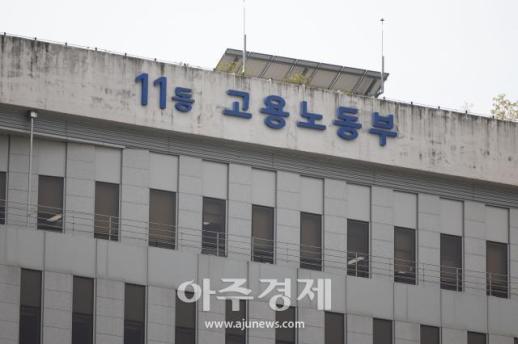 South Korea to Halve Review Period for Employment Crisis Areas, Special Support Industries The review period used to determine whether to designate employment crisis areas and special employment support industries will be cut in half, and the count of unemployment benefit applicants — a key indicator of labor market conditions — will be expanded to include day workers. The Ministry of Employment and Labor said May 4 it will improve the criteria for designating employment crisis areas and special employment support industries. The designation system is intended to support job stability by identifying regions and industries where employment conditions have sharply worsened. In the past, however, concerns have been raised that strict requirements made it difficult to detect crises in time. Labor Minister Kim Young-hoon said at an emergency employment and labor situation review meeting on April 13 that institutional requirements or procedures should not become obstacles that prevent needed support from reaching workers and companies facing real hardship. Kim also said that if current requirements do not reflect reality, the government should boldly overhaul the system, taking into account what he described as an “economic wartime situation.” He ordered officials to detect crises immediately and provide support in real time. Reflecting feedback from the field, the ministry said it will revise quantitative criteria. To speed responses to employment shocks, it will shorten the calculation period for quantitative requirements to six months from 12. It will also include day workers who left jobs due to company circumstances in the number of unemployment benefit applicants, to better reflect actual conditions. The ministry said that if sharp employment changes occur in regions and industries where a slowdown is feared, it will quickly designate them under the revised standards and provide necessary support. It also pledged to keep refining the system to closely monitor changes on the ground and respond preemptively.* This article has been translated by AI. 2026-05-04 09:04:40
 -
 Court Sentences Digital Sex Crime Ringleader to 11 Years in Case With 342 Victims A first-instance court has sentenced the leader of a digital sex-crime ring that sexually exploited and threatened 342 victims to 11 years in prison. The Seoul Central District Court found the so-called “Chameducation Group” ringleader guilty of organizing and operating a criminal group and of joint coercion, among other charges. The court also ordered completion of treatment programs for sexual violence and stalking and required registration of personal information. The court cited the organized, repeated and malicious nature of the crimes. Even so, many people question whether 11 years is a sufficiently severe punishment given the number of victims. The case was not an isolated personal offense. Prosecutors said the defendant lured victims by posting on social media with messages such as, “I’ll make humiliating composite photos of someone you know,” and “I’m a minor looking for paid dating if conditions are met.” After victims responded, the defendant allegedly threatened them, forced them to write nude “pledges” and apology statements, used some like members of the group and even disclosed personal information, according to the account. The case shows how online spaces can be used like a factory for coercion and sexual exploitation, starting with a few clicks but resulting in serious harm to human dignity. Digital sex crimes are especially dangerous because the damage does not end. Unlike offline crimes that stop when the incident ends, online sexual exploitation material and blackmail files can be copied, stored and remain at risk of redistribution. Victims can live with anxiety, fear and shame long after the case, and some see their jobs, schooling and family relationships collapse. A single offense can produce secondary and tertiary harm that lasts for years. Still, the justice system has not fully reflected the gravity of digital crimes, critics say. In a case involving hundreds of victims, long-term organized offending, threats, coercion and sexual exploitation, an 11-year sentence can feel far removed from public expectations. Courts, however, sentence within existing law and guidelines. The problem, critics argue, is that the guidelines have not kept pace with changing realities. Because crimes in digital spaces involve anonymity, rapid spread and persistence, the scope of harm can be far broader than in traditional offenses, and punishment should reflect that. After the 2020 “Nth Room” scandal, public outrage led to some legal tightening, including punishment for possessing or viewing illegal recordings and stronger regulation of sexual exploitation targeting children and adolescents. But similar crimes continue to appear in new forms. Methods have grown more sophisticated, including deepfakes, secret Telegram rooms, overseas servers and virtual-asset payments. If penalties and investigative systems do not keep up, the law risks becoming little more than a late warning to offenders. Three steps are needed, the editorial argues. First, sentencing guidelines for digital sexual exploitation should be comprehensively reviewed, with strict weight given to the number of victims, the scale of distribution, organization, repetition and whether minors were targeted. Second, investigators should significantly strengthen international cooperation and their ability to trace platforms, since servers and money flows are often outside national borders. Third, victim protection should be reinforced alongside punishment, including rapid support for takedowns, counseling, legal aid and blocking exposure of personal information. Digital crime is not a prank in a virtual space; it is a real-world offense that can destroy lives. If society’s message to offenders who hide behind keyboards and trample hundreds of victims is weak, similar crimes will be repeated. The law should not lag behind the times, and digital crimes, in particular, should be met with strict accountability. * This article has been translated by AI. 2026-05-04 09:03:19
 -
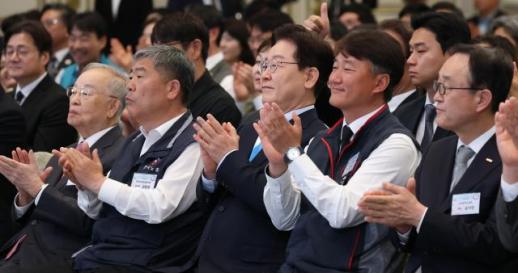 Lee Jae-myung’s approval rating slips to 59.5% after two-week decline, Realmeter says President Lee Jae-myung’s job approval fell for a second straight week, slipping back into the 50% range for the first time in eight weeks, a Realmeter survey showed. Party support also shifted slightly, narrowing the gap between the Democratic Party and the People Power Party. In a poll commissioned by Energy Economic News, Realmeter surveyed 2,006 voters nationwide age 18 and older over four days from the 27th to the 30th. Positive evaluations of Lee’s performance came to 59.5% (46.6% “very good” and 12.9% “good”), down 2.7 percentage points from the previous week. According to Realmeter’s results released on the 4th, negative evaluations stood at 35% (25.8% “very poor” and 9.2% “poor”), up 1.6 points. The gap between positive and negative ratings was 24.5 points, while 5.5% said they did not know. Realmeter said factors may include moves to pursue a special counsel probe over alleged manipulated indictments aimed at canceling Lee’s indictment. In a separate party-preference survey of 1,006 voters conducted over two days from the 29th to the 30th, support for the Democratic Party was 48.6%, falling back into the 40% range for the first time in four weeks. The People Power Party stood at 31.6%, staying in the low 30s for a sixth consecutive week. The gap narrowed to 17 points but remained outside the margin of error for a 13th straight week. Other parties were the Rebuilding Korea Party at 4%, the New Reform Party at 2.6% and the Progressive Party at 2.2%. The share of respondents with no party preference was 8.2%. Realmeter said rising pressure on household finances from high oil prices, a weak exchange rate and inflation combined with political uncertainty, including controversy over security-related remarks by Unification Minister Jeong Dong-young and labor-management disputes. It said defections were most noticeable among voters sensitive to living costs and among centrists, adding that instability outweighed policy achievements in driving negative views. The surveys were conducted by automated response (ARS) using randomly generated mobile phone numbers (100% wireless). The job-approval poll had a 4.6% response rate and a margin of error of plus or minus 2.2 percentage points at the 95% confidence level. The party-preference poll had a 4.6% response rate and a margin of error of plus or minus 3.1 points. More details are available on the website of the National Election Survey Deliberation Commission.* This article has been translated by AI. 2026-05-04 08:54:16
 -
 Trump Signals Doubts About Iran’s New Peace Proposal, Says It Would Be Hard to Accept U.S. President Donald Trump has voiced skepticism about a new peace proposal from Iran, effectively rejecting Tehran’s idea of ending the war and resolving issues tied to the Strait of Hormuz first while postponing nuclear talks. According to Reuters, Trump said on May 3 local time that he would review the proposal Iran recently delivered, but added, “It’s hard to imagine it being acceptable.” He also said Iran “has not yet paid a big enough price.” Reuters reported that Trump had earlier said he was not satisfied with the proposal and later said he would confirm the exact wording. The dispute centers on sequencing. Iran wants an end to the war and the lifting of a maritime blockade addressed first, with the nuclear issue discussed in a later phase. Reuters said the approach conflicts with Washington’s existing demand that Iran accept strong limits on its nuclear program before the war ends. The Associated Press also reported that Trump was doubtful the new proposal could be accepted. AP said Iran’s semi-official Tasnim and Fars news agencies reported that a 14-point proposal was delivered through Pakistan. Iranian media said the 14 points include a U.S. withdrawal of forces from the region, lifting the blockade, releasing frozen assets, compensation, sanctions relief, ending fronts including in Lebanon, and a new system for controlling passage through the Strait of Hormuz. Iran argued that delaying nuclear talks could make an agreement easier to reach.* This article has been translated by AI. 2026-05-04 08:45:59
 -
 LS Cable & System to Showcase Next-Generation Offshore Infrastructure Tech at OTC 2026 LS Cable & System said Sunday it will take part in OTC 2026, to be held in Houston from May 4-7 (local time), where it will showcase products for offshore infrastructure. OTC is a large exhibition where global offshore energy and plant companies present key technologies across subsea infrastructure. This year’s event, themed “Steering Offshore Energy Innovation Toward the Future,” is expected to bring together energy experts from more than 100 countries and more than 1,000 companies, the company said. LS Cable & System first joined OTC in 2009 as it moved into the market for specialized cables used in subsea and offshore plants, and it has participated every year since, it said. The company said it is accelerating efforts to secure market share with subsea cables and specialized offshore cables. Offshore cables require high durability and stable insulation because they can be exposed for long periods to harsh conditions such as ultraviolet light, salt, seawater and mud. It is also strengthening long-distance transmission capabilities with high-capacity power products, including 525-kilovolt high-voltage direct current, or HVDC, subsea cables and busducts. Working with LS Marine Solution, a subsea construction specialist, the company said it has built an integrated system covering design, production, installation and maintenance. “Offshore infrastructure depends on reliability in extreme environments, long-distance high-capacity transmission technology, and installation experience,” an LS Cable & System official said. “Based on our experience delivering global projects, we will expand orders in the North American market.”* This article has been translated by AI. 2026-05-04 08:45:14
 -
 Democratic Party’s Jeong Cheong-rae, candidate Ha Jung-woo apologize after child harassment backlash Jeong Cheong-rae, leader of the Democratic Party, and Ha Jung-woo, the party’s candidate in Busan’s Buk-gu Gap district, apologized after drawing criticism for urging a first-grade girl to call Ha “oppa,” a Korean term often used by younger females for an older male. The Democratic Party said May 3 that Jeong issued a statement saying he was “sorry to the child and the child’s parents, who may have been hurt as the child became the center of controversy” during a visit to Gupo Market. Ha also said that day that “the child became the center of controversy” while he was meeting residents, adding, “I offer my apologies to the child and the parents who may have been hurt. I will be more careful and meet residents with a low and humble attitude.” Jeong and Ha visited Gupo Market in Busan on the morning of May 3. Jeong asked the girl, “What grade are you in? This is Jung-woo oppa. Say ‘oppa.’” Ha echoed him by saying, “Oppa.” The People Power Party criticized the exchange as “child sexual harassment” and “child abuse.” Rep. Seong Il-jong wrote on Facebook, “Ha, at age 50, do you really want to hear an 8-year-old girl call you ‘oppa’ that badly?” adding, “As a father with a daughter, I can’t stay silent.” Ha was born in 1977. Seong also criticized Jeong, saying, “No matter how desperate you are for votes, can you really put a child through this?” He added that while Ha might lack experience as a political newcomer, it was “truly devastating” that Jeong, a four-term lawmaker and party leader, took part. Rep. Park Jeong-hoon, described as a close friend of independent candidate Han Dong-hoon, who has declared his run in Buk-gu Gap, said, “Telling an elementary school student to call a politician more than 40 years older ‘oppa’ is clear ‘child sexual harassment.’” Park added that while such behavior by the Democratic Party was “nothing new,” Ha was “just as pathetic” for laughing and joining in by saying “oppa.” * This article has been translated by AI. 2026-05-04 08:41:44
 -
 Shinhan Investment Raises DL E&C Target Price to 130,000 Won, Keeps Buy Rating Shinhan Investment said May 4 it raised its target price for DL E&C to 130,000 won from 120,000 won, citing profitability that outpaces peers and higher earnings estimates. It maintained its “buy” rating. Kim Seon-mi, an analyst at Shinhan Investment, said DL E&C’s first-quarter operating profit “far exceeded” the market consensus as profitability improved in its housing and plant businesses, despite a selective order-taking strategy. “A shift toward profitability over scale has been proven in results,” she said. Kim said the company posted strong margins without one-off gains, including a 20% gross profit margin in housing and 9.8% in the plant business, above the industry average. She added that earnings capacity is strengthening as DL Construction stabilizes. She said that despite an uncertain external environment, the company’s order backlog is high quality, improving visibility for future results, and that Shinhan raised its operating profit forecasts for 2026 and 2027. Kim said expanded orders centered on power infrastructure could support results in the near term, while new growth drivers such as small modular reactors, or SMRs, could add momentum over the medium to long term. She said upgraded earnings estimates should ease valuation pressure and help support the stock’s downside.* This article has been translated by AI. 2026-05-04 08:40:56
 -
 From Bobby to Pungsan Dogs: What ‘Pet Diplomacy’ Signals in Summit Politics When a dog shows up in political news, the mood changes. Summit outcomes and joint statements can feel remote, but a photo of a pet running across a lawn is instantly understood. That was the effect of the recent images President Lee Jae-myung shared of his dog, Bobby. The dog was shown running in clothes gifted by Indonesian President Prabowo Subianto — a scene that carried its own message, conveying emotion without words. Many people smiled and drew a simple conclusion: The leaders must be on good terms. That quick reaction captures the power of pet diplomacy. Even without knowing diplomatic jargon, the public can sense the temperature of a relationship. Pet diplomacy is not new. A widely known example is the Pungsan dogs Kim Jong Un gave to President Moon Jae-in. The two dogs were more than pets. Appearing amid tension in inter-Korean relations, they became a symbolic sign of “peace” and “trust.” People reacted first to the dogs themselves, and that emotion helped soften perceptions of the relationship. Similar scenes have played out abroad. President Vladimir Putin received an Akita dog from Japan and publicized it as a symbol of bilateral ties. In the United States, President Joe Biden’s dogs, Major and Champ, became familiar images of daily life at the White House. The article draws a distinction: Pets exchanged as gifts between leaders, such as Pungsan dogs or an Akita, function as diplomatic symbols, while a leader’s personal pets are closer to an extension of domestic political image-making. The former signals state-to-state relations; the latter highlights a politician’s approachability. Why pets? The reason is straightforward: They draw out basic human emotion. In South Korea, about 10 million people live with companion animals. Dogs are widely seen as family. Their presence lowers defenses and opens people up. Political messages can be doubted, but a dog’s expression is not. That makes pets a powerful soft tool in diplomacy. Still, the article argues, pet diplomacy does not change the essence of diplomacy. Relations between countries continue to be driven by interests and strategy. A single dog photo will not resolve trade disputes or reduce military tensions. Its value lies elsewhere: It can change the process, even if it cannot change the outcome. One of diplomacy’s hardest tasks is setting a tone that allows talks to begin. When the other side is seen as an enemy, dialogue stalls. Pets can ease that point of friction by creating a human connection, lowering tension and helping form the minimum trust needed to keep conversations going. In that sense, pets do not directly increase negotiating power, but they can help create conditions in which negotiation becomes possible. The article also warns that pet diplomacy overlaps with image politics. Warm scenes with cute dogs highlight the positive side of a relationship. The risk comes when imagery replaces substance. If images are used to obscure reality, diplomacy can be distorted. The standard, it says, should be clear: Emotion is a supporting tool and must not substitute for policy. Another practical issue is responsibility. Pets are living beings, not objects, and require care. The Pungsan dog case also drew controversy over breeding and management. The article notes that a creature introduced as a diplomatic symbol can, over time, become an administrative burden. Even so, the article says pet diplomacy is unlikely to disappear and may expand, because people respond more strongly to warm stories than to rigid diplomacy. For the approach to last, it argues, several conditions are needed: clear follow-up care systems, a firm distinction between diplomatic symbolism and personal image use, and balance so emotional staging does not replace policy. With those in place, pet diplomacy can become more than a one-off event and take hold as a strategy. Diplomacy, the article concludes, is changing. Where power and logic once dominated, emotion and imagery now operate alongside them. Everyday moments on social media have become as important as handshakes in meeting rooms, and the public often reacts more strongly to human moments than to official announcements. In that shift, dogs have become unexpected messengers, delivering signals faster and more widely than politicians’ words. A president’s pet, the article says, can serve as a key that opens diplomatic doors or a sign of how warm — or cold — a relationship is. And through that small presence, it adds, people increasingly read the biggest story of all: relations between nations. * This article has been translated by AI. 2026-05-04 08:39:20
 -
 Bitcoin Nears $80,000 as Middle East Tensions Ease Bitcoin was closing in on $80,000 on expectations that geopolitical risks in the Middle East may ease. Bitcoin was trading at $79,201 as of 8 a.m. on the 4th, up 0.44% from a day earlier, according to CoinMarketCap. The cryptocurrency had fallen as low as the $66,000 range amid a war between the United States and Iran, but has moved within a roughly $78,000 band over the past week. The latest gains appeared to reflect rising hopes for reduced tensions. Iran recently delivered a new ceasefire proposal to the United States through mediator Pakistan. The United States was reported to have sent its response via Pakistan. Some in the market expect the current trend to continue for now, while noting that because April’s rise was driven largely by futures trading, a price correction could emerge over the coming months. Major altcoins also edged higher. Ethereum, the No. 2 token by market value, rose 0.88% to $2,344. Ripple (XRP), ranked third, gained 0.29% to $1.39. Solana added 0.43% to $84. In South Korea, bitcoin was trading at 117.17 million won (about $79,334) on the won-based exchange Bithumb at the same time, up 0.47% from a day earlier. The so-called “kimchi premium,” in which domestic prices trade above overseas levels, stood at about 0.49%.* This article has been translated by AI. 2026-05-04 08:33:14