
Journalist

Lee Hugh
=
-
 South Korea’s Next-Generation Mid-Sized Satellite 2 Reaches Orbit After Falcon 9 Launch Next-Generation Mid-Sized Satellite 2, an Earth-observation satellite designed for land monitoring and disaster response, has successfully entered orbit and begun preparations for its mission. According to Yonhap News Agency on Saturday, the satellite was launched at 4 p.m. from Vandenberg Space Force Base in California aboard a SpaceX Falcon 9 rocket and was placed into orbit as planned. The Korea AeroSpace Administration said the satellite separated normally from the launch vehicle about 60 minutes after liftoff and made its first contact about 15 minutes later with the Svalbard ground station in Norway, confirming the spacecraft’s systems were in normal condition. The satellite will observe Earth from a sun-synchronous orbit at an altitude of about 498 kilometers. SpaceX also said the satellite separation and separation of additional payloads proceeded normally. Built on a standard 534-kilogram-class platform, the satellite has ground-imaging capability with 0.5-meter resolution in black-and-white and 2-meter resolution in color. Officials said key components of the satellite bus and payload were independently developed with domestic technology, improving technological self-reliance. Korea Aerospace Industries led the development. The satellite had been scheduled for launch in 2022 on a Russian rocket, but the timeline was delayed by about four years due to the Russia-Ukraine war before Saturday’s successful launch. The Korea AeroSpace Administration called the launch a milestone symbolizing a shift toward a private-sector-led space industry and said it strengthens the foundation for independently securing high-resolution land and disaster-monitoring data. The Ministry of Land, Infrastructure and Transport said simultaneous operation of Land Satellite 1 and 2 is expected to expand capabilities for geospatial information services. Oh Tae-seok, administrator of the Korea AeroSpace Administration, said, “The successful launch of Next-Generation Mid-Sized Satellite 2 is an important milestone that opens the era of a private-sector-led NewSpace.” He added that by mounting high-resolution black-and-white and color optical cameras on a 500-kilogram-class standard platform and independently securing ultra-precise imagery needed for land and disaster management on the Korean Peninsula, the launch “greatly strengthened” the localization of satellite technology and the industry’s competitiveness. Also aboard the rocket was BusanSat, a CubeSat developed with participation from the city of Busan, the Korea Astronomy and Space Science Institute and Nara Space Technology, among others.* This article has been translated by AI. 2026-05-03 19:18:27
 -
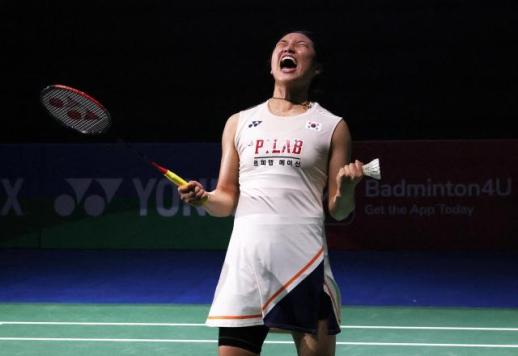 An Se-young routs Wang Zhiyi in Uber Cup final opener for 20th career win vs. rival South Korea’s women’s badminton team got off to a strong start in the Uber Cup final as its top singles player, An Se-young of Samsung Life Insurance, won the opening match. Yonhap reported that An, the world No. 1, defeated world No. 2 Wang Zhiyi of China 21-10, 21-13 in the first women’s singles match of the 2026 Uber Cup final in Horsens, Denmark, on Saturday (Korea time). An controlled the match throughout. Wang never drew level in either game. An jumped ahead 7-1 with a seven-point run early in the first game and led 11-2 at the interval, then closed it out 21-10 by varying pace with half smashes and tight net shots. The second game followed a similar pattern. An led 11-5 at the interval and briefly allowed Wang to close to 12-9 after three straight points, but she steadied, forced errors and finished on a net shot at 20-13. With the win, An improved to 20-5 all-time against Wang. Wang had snapped a losing streak against An in the All England Open final in March, but An has beaten her again, including in the Asian Championships final in April and now in this tournament, maintaining the one-sided rivalry. An has played the first singles match from the group stage through the quarterfinals, semifinals and final, winning every match without dropping a game. The Uber Cup, held every two years, is the women’s world team championship. Teams play five matches — three singles and two doubles — with the first to three wins taking the title. South Korea is seeking its third championship after winning in 2010 and 2022. After An, South Korea’s lineup is Lee So-hee (Incheon International Airport)-Jeong Na-eun (Hwasun County Office), Kim Ga-eun (Samsung Life Insurance), Baek Ha-na (Incheon International Airport)-Kim Hye-jeong (Samsung Life Insurance), and Sim Yu-jin (Incheon International Airport).* This article has been translated by AI. 2026-05-03 19:12:16
 -
 Rubio to Visit Rome and Vatican as Trump-Pope Tensions Test Ties U.S. Secretary of State Marco Rubio will visit Rome and the Vatican this week, a trip that comes amid a series of public clashes between President Donald Trump and Pope Leo XIV and will test whether the sides can ease tensions. Yonhap News, citing AFP and other foreign media, reported on May 3 (local time) that Rubio is scheduled to travel to Rome and the Vatican on May 7-8 for talks with Vatican Secretary of State Cardinal Pietro Parolin and Italian Foreign Minister Antonio Tajani. A meeting with Italian Defense Minister Guido Crosetto is also expected, the report said. The visit comes as strains between the United States and the Vatican have intensified. Since taking office, Pope Leo XIV has criticized the Trump administration’s immigration policy. After U.S. and Israeli military action against Iran in late February, he also issued a series of strong anti-war messages. In early April, the pope called Trump’s hard-line remarks on Iran “unacceptable,” stressing the need for peace and saying “no war can be justified.” Trump responded by publicly criticizing the pope, saying diplomatic and public security responses were inadequate. Italy has also been drawn into the dispute. Prime Minister Giorgia Meloni has maintained close ties with Trump but has shown differences over Iran. She said the U.S. and Israeli military action went beyond international law and expressed regret over Trump’s remarks aimed at the pope. Trump then escalated his criticism of Meloni, keeping the war of words going. Italian media have described Rubio’s visit as a “thaw” meeting.* This article has been translated by AI. 2026-05-03 19:06:15
 -
 Citi Cuts Samsung Electronics Target to 300,000 Won, Citing Union Strike Risk Global investment bank Citigroup slightly lowered its target price for Samsung Electronics, citing the potential cost burden from a possible union-wide strike. While near-term earnings risks have increased, Citi said the broader industry direction remains intact. According to Yonhap News Agency on Saturday, Citi analyst Peter Lee said in an April 30 report that he cut Samsung Electronics’ target price to 300,000 won from 320,000 won. He maintained a “buy” rating. The reduction was limited, but the report formally factored in labor-management risks. Lee said that if a strike materializes, provisions tied to performance pay could rise and weigh on results. He cited the strike’s intensity and duration as key variables that could expand costs. Reflecting that risk, he lowered his operating profit forecasts by 10% for this year and 11% for next year. He described the impact as largely one-time in nature, but said it could still pressure short-term profitability. He said Samsung Electronics remains a leading beneficiary of improving memory-market conditions, but warned that escalating labor tensions could make near-term earnings more volatile. With market expectations elevated, unexpected costs could also increase share-price swings, he added. Samsung Electronics’ union joint struggle headquarters has demanded performance pay equal to 15% of operating profit with no cap and has warned of a general strike from May 21 to June 7. Because the strike’s scale could change depending on negotiations, investors are watching the risk of a prolonged walkout and when related costs might be reflected. Hana Securities recently said uncertainty over operating profit estimates rose due to the bonus-related strike issue, contributing to relatively weak share performance. Even so, analysts said stronger memory demand tied to expanding artificial intelligence investment remains in place. With continued demand from data centers and high-performance computing, the upward trend in DRAM and NAND prices is expected to persist, and demand is forecast to outpace supply for some time. Many see the medium- to long-term upcycle as still solid. Separately, BNK Investment & Securities previously lowered its rating on SK hynix to “hold,” citing weaker profitability as the company increases the share of next-generation products such as HBM4. The firm said that even in an improving market, shifts in product mix and cost structures can lead to diverging results by company. * This article has been translated by AI. 2026-05-03 18:55:08
 -
 South Korea deploys CAS500-2 satellite in milestone for domestic space technology SEOUL, May 3 (AJP) — South Korea successfully launched its next-generation midsized Earth observation satellite on Sunday, marking a major step forward in the country’s push to strengthen homegrown space technology and private-sector satellite capabilities. The satellite, known as CAS500-2 or Next-Generation Mid-Sized Satellite No. 2, lifted off aboard SpaceX’s Falcon 9 rocket from Vandenberg Space Force Base in California at 4 p.m. Korea time Sunday, according to the Korea AeroSpace Administration (KASA). CAS500-2 separated from the launch vehicle about an hour after liftoff and later established its first communication with a ground station in Svalbard, Norway, confirming that onboard systems were operating normally. Developed primarily by Korea Aerospace Industries under South Korea’s next-generation satellite program, CAS500-2 is designed for high-precision Earth observation missions including land resource management, disaster monitoring and agricultural analysis. The satellite will orbit Earth at an altitude of about 498 kilometers in a sun-synchronous orbit. It is equipped with domestically developed optical imaging technology capable of identifying objects as small as 0.5 meters in black-and-white imagery and 2 meters in color imagery. KASA said the successful launch demonstrated a significant advancement in South Korea’s satellite independence, as key satellite body systems and payload components were developed using domestic technology. The satellite is expected to undergo about four months of initial operational testing before beginning full-scale missions later this year alongside CAS500-1, which was launched in 2021. The project was originally scheduled to launch aboard a Russian Soyuz rocket in 2022, but the plan was delayed for nearly four years following Russia’s invasion of Ukraine and the resulting disruption in the global launch market. SpaceX said the mission, dubbed “CAS500-2,” carried a total of 45 payloads for multiple international customers including KAI, Planet Labs and other commercial operators. The company also noted that the Falcon 9 first-stage booster used for the mission was making its 33rd flight before successfully landing at Landing Zone 4 at Vandenberg Space Force Base. “The successful launch of CAS500-2 is an important milestone opening the era of private-led New Space,” KASA Administrator Oh Tae-seok said in a statement. “By independently securing ultra-high-resolution imagery needed for land and disaster management on the Korean Peninsula, we have significantly strengthened the technological competitiveness of Korea’s satellite industry.” The Ministry of Land, Infrastructure and Transport, which will utilize the satellite’s imagery services, said the launch would improve the country’s ability to provide faster and more diverse geospatial information services through the combined operation of national satellites. The Falcon 9 mission also carried 44 additional payloads, including “BusanSat,” a cube satellite jointly developed by the city of Busan, the Korea Astronomy and Space Science Institute and Nara Space Technology. 2026-05-03 18:34:08
 -
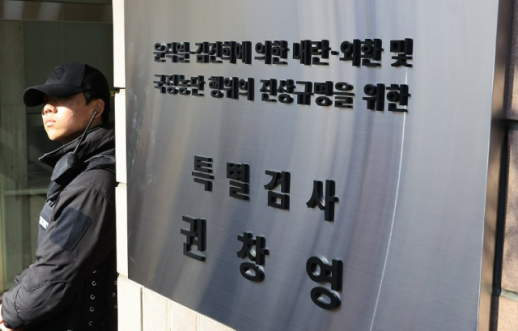 Special Counsel Investigator’s ‘Career-Building’ Post Sparks Fairness Concerns A lawyer-turned special investigator who joined the second comprehensive special counsel team led by Special Counsel Kwon Chang-young has drawn criticism after posting online that work at the office would help build investigative experience and sharpen expertise in criminal cases. On May 3, social media users circulated a post by the investigator, identified only as A, showing photos including an office nameplate bearing the investigator’s name, a stamped suspect statement record and a picture of A holding an appointment letter alongside Kwon. In the post, A wrote, “I’ve always stood on the suspect’s side, but for the first time in my life I’ve entered an investigative agency,” adding that gaining experience “from an investigator’s perspective” would “maximize” expertise in criminal cases. A also wrote that questioning a suspect as an investigator was “really hard,” saying it felt “about five times” harder than attending an interview as defense counsel. The post drew backlash as the comprehensive special counsel faces criticism for failing to produce clear results even as its first investigation deadline on the 25th approaches, while also grappling with staffing shortages. After the controversy, A’s post was deleted. A special counsel official said the team plans to discuss internally as early as the 4th whether the post was appropriate. Kim Chi-heon, the assistant special counsel serving as spokesperson, said in a notice that no official position has been set on the masked statement record being posted to social media and that the matter will be reviewed internally. The team has previously faced controversy, including Assistant Special Counsel Kim Ji-mi, who serves as public affairs officer, appearing on the progressive-leaning YouTube channel “Kim Eo-jun’s Humility Is Hard, News Factory,” and questions over Assistant Special Counsel Kwon Young-bin’s past work as a lawyer for a key reference witness. Some critics say the episode reflects a growing perception that participation in special counsel investigations is being treated less as a public duty and more as a way to build personal credentials. They warn that if the office is seen as a tool for resume-building, it could undermine the special counsel’s fairness and authority. * This article has been translated by AI. 2026-05-03 18:18:17
 -
 SME Tech Theft Hotline Gets 20 Complaints in First Month, Ministry Says The Ministry of SMEs and Startups said Saturday it has received 20 reports of technology-related disputes about a month after launching a hotline aimed at stamping out technology theft from small businesses. The “SME Technology Theft Eradication Hotline” officially launched April 26 as the first joint project of an interagency task force. When small firms file a report through the hotline, legal experts provide consultations to help craft a response strategy and connect the company to the agency best suited to the type of dispute. Of the 20 reports, eight have been forwarded to investigative authorities, nine are under expert consultation and interagency review, and three were withdrawn or rejected because they did not qualify as technology theft. The ministry said it is considering adding staff for the hotline at the ministry and the Large and Small Business and Agriculture and Fisheries Cooperation Foundation to speed processing. Over the past two years, the ministry received 20 complaints in 2024 and 16 in 2025 seeking administrative investigations into technology infringement. The ministry said compensation has been difficult because evidence is hard to secure and lawsuits can be lengthy and costly. The ministry said it is working with related agencies on measures to strengthen proof of harm, including a Korean-style discovery system, new authority to order submission of materials, evidence-building based on administrative investigations and tougher penalties. It said the Korean-style discovery system cleared the National Assembly in January, but some have said practical infrastructure must be built for it to take effect. SMEs and Startups Minister Han Seong-sook said the hotline was created so very small firms harmed by technology theft can report cases easily and receive free help from legal experts. “We will strengthen cooperation with the interagency task force and related ministries and expand the budget for technology protection to meet the high expectations and interest in the field,” Han said. Separately, the ministry said there were 299 technology infringement cases as of 2024, with average losses of 1.82 billion won per affected company. The National Police Agency said it arrested about 380 people in 179 cases last year related to technology leakage crimes.* This article has been translated by AI. 2026-05-03 18:11:58
 -
 Yoo Hyun-jo wins inaugural DB Women’s Championship for first victory of 2026 season "I’m going to put aside the impatience to win and just try to play golf in a fun, enjoyable way." Yoo won the inaugural DB Women’s Championship on Saturday at Rainbow Hills Country Club (par 72) in Eumseong, North Chungcheong province, on the Korea Ladies Professional Golf Association tour. She shot an even-par 72 in the final round with two birdies and two bogeys. Yoo finished at 7-under 281, edging Ko Ji-won, Kim Min-sol and Lee Da-yeon by one stroke. The tournament carried a total purse of 1.2 billion won, with 216 million won going to the winner. The 2024 KLPGA rookie of the year, Yoo won last year’s player of the year and low scoring titles. Saturday’s victory was her first of the 2026 season and her third career tour win, coming eight months after her win at the KB Financial Star Championship last September. "I’m so happy I could become the tournament’s first champion," Yoo said. "I had a tough time early this year. I think I’m even happier because I was able to recover quickly and win." Yoo entered the season with high expectations but struggled early, failing to contend in her first four starts and missing the cut at the Nexen-SaintNine Masters, which ended April 19. She found momentum at the Deokshin EPC Championship, which ended April 26, tying for third to rebuild confidence. Yoo said she felt pressure after last season’s success. "Because I did so well last year, I thought I could do even better this year," she said. "The pressure to do better grew, and I became afraid of making mistakes. That led to bad results. Starting with the last tournament, I tried to empty my mind a bit. I wanted to play golf happily as Yoo Hyun-jo before being a golfer. I think this win came from letting go of greed and impatience." She said the change helped her stay steady after mistakes. "I think not being impatient was the driving force behind the win," Yoo said. "When I made mistakes, I thought, ‘Winning isn’t something I can do just because I want it.’ I just tried to do my best where I was. Not forcing course strategy or getting greedy helped me win." Yoo said she is still aiming to lead the tour in wins this season, but without pressing for results. "This win will give a big boost to my hope of becoming the multiple-wins leader," she said. "That’s still the goal. But I won’t rush just to win. I plan to enjoy it and have fun, like I did this week." Ko, who led alone after each of the first three rounds, sought her first multiple-win season but lost two strokes Saturday and settled for second. Park Ju-young, described as a mother on tour, posted the day’s best round by cutting five strokes. She finished at 5-under 283, tied for fifth with Kim Soo-ji and Han Jin-seon. 2026-05-03 18:10:40
 -
 Profit-Linked Bonus Demands Spread Across South Korea’s Top Industries Labor disputes are flaring simultaneously at some of South Korea’s flagship companies, spanning semiconductors, autos, biotech and telecommunications, as unions push for bigger, profit-linked bonuses. The Samsung Electronics union has warned of a general strike while demanding the removal of a bonus cap and distribution of 15% of operating profit. The Samsung Biologics union began its first full-scale strike since the company’s founding on May 1. The Hyundai Motor union is seeking bonuses equal to 30% of net profit, and the LG Uplus union is also demanding 30% of operating profit, widening what has become a contest over “profit-linked bonuses” across industry. Unions argue that stronger results justify a larger share. But the demands are increasingly seen as going beyond routine pay bargaining, as signals emerge that could affect companies’ capacity to invest, production stability, supply-chain confidence, gaps between prime contractors and suppliers, and ultimately national industrial competitiveness. Some in the industry trace the current dynamic to SK hynix, where bonuses around 10% of operating profit have come to be treated as a benchmark. Once a higher ratio is set at one company, other unions find it harder to accept less, and negotiations can shift from productivity to symbolic one-upmanship — a dynamic often described as a “bonus chicken game.” The issue is not confined to individual companies. Since the implementation of the so-called Yellow Envelope Act, bargaining demands by subcontractor unions toward prime contractors have surged, with requests filed at multiple worksites — including Hanwha Ocean, POSCO and Hyundai Motor — from the first day of enforcement. As large-company unions raise profit-linked compensation standards, prime contractors’ cost burdens grow, increasing the likelihood that pressure is passed on through tighter supplier pricing or reduced investment. That, in turn, highlights a long-standing bottleneck in Korean industry: bargaining power rises for regular workers at big firms, while smaller suppliers, nonregular workers and subcontracted labor can face greater instability. As bonus payouts grow, companies may have less room to raise payments to partner firms, potentially widening wage gaps between large companies and small and midsize businesses. Critics warn that what appears to expand labor’s share could deepen the labor market’s dual structure. The industrial reality is unforgiving. Semiconductors, biotech and autos face global competition, heavy capital spending and pressure to shift technologies. If bonuses harden into an automatic fixed share of profits rather than rewards tied to productivity gains, management can become locked into short-term cash distribution while investment is pushed back. When unions seek to maximize payouts based on short-term performance, spending on research and development, facility expansion and new businesses — often the first sources of future growth — is more likely to be squeezed. The need now, the article argues, is not escalation but a reset of rules. Bonus systems should reflect more than a simple share of operating or net profit, incorporating investment execution, cash flow, industry cycles and future cost provisions. Before strikes and all-out confrontation, labor and management should institutionalize bonus formulas, upper and lower limits, and adjustment principles for downturns. It also calls for broader discussion of how compensation systems at major prime contractors ripple through suppliers and the wider industrial ecosystem. South Korea’s economy rests on exports, manufacturing and the competitiveness of advanced industries. The current bonus conflicts are both a dispute over labor’s fair share and a warning light that could erode the power of the country’s growth engine. Just as unions should weigh not only today’s profits but also tomorrow’s survival, companies should treat labor not simply as a cost but as a pillar of sustainable competitiveness. The article concludes that this is not a problem that ends with one side’s victory. It says negotiations should focus on sustainability — not a test of strength — so that sharing industrial gains does not damage the industry’s future. * This article has been translated by AI. 2026-05-03 18:03:46
 -
 Samsung Electronics Faces Q2 Cost Risks Despite Chip Boom, Union Bonus Talks and Strike Threat Samsung Electronics posted a first-quarter earnings surprise on the back of a semiconductor upcycle, but it could face major cost risks in the second quarter, including labor-management tensions, industry and financial sources said Saturday. Analysts warn that the union’s unusually large bonus demands and the possibility of a strike could significantly erode chip profits. Market consensus for Samsung’s second-quarter results calls for revenue of 174.4 trillion won and operating profit of 86.8 trillion won, according to the sources. Operating profit at the Device Solutions (DS) division, which runs the chip business, is estimated in the 80 trillion won range — about a 50% increase from the prior quarter’s 53.7 trillion won. How much of that improvement is realized may depend on the outcome of bonus negotiations, which could add costs in the trillions of won. The union is seeking to set aside 15% of annual operating profit for performance bonuses. With some forecasts putting Samsung’s full-year operating profit as high as 350 trillion won, accepting the proposal as-is would push bonus payouts above 50 trillion won. The company has indicated the impact could begin as soon as the second quarter. On an April 30 first-quarter conference call, Samsung said bonus provisions were not reflected in first-quarter results because talks were ongoing, adding that “depending on the outcome of negotiations, whether and how much is reflected could be decided as early as the second quarter.” Because bonus provisions are typically spread across quarters, a deal would likely require recognizing costs of several trillion won each quarter, potentially weighing on results through the second to fourth quarters even if operating profit hits a record. If talks fail, Samsung could face a different kind of cost shock. The union has warned it will launch an 18-day general strike starting May 21. If labor action halts semiconductor production lines, losses of at least 10 trillion won are expected, the report said. Due to the nature of chip manufacturing, even a brief power outage or stoppage can force the disposal of all wafers in process on the affected line. Industry officials also voiced concern that the dispute could undermine longer-term competitiveness as global rivalry intensifies and large-scale investment is needed to secure next-generation technologies such as high-bandwidth memory (HBM) and advanced foundry processes. Lee Jong-hwan, a professor of system semiconductor engineering at Sangmyung University, said the prospect of large strike-related costs is “regrettable” at a time when expectations are rising for a rebound in foundry competitiveness. He said such costs could crowd out research and development funding needed to strengthen the nation’s semiconductor capabilities and weaken long-term growth drivers. * This article has been translated by AI. 2026-05-03 18:03:17