
Journalist

Lee Hugh
=
-
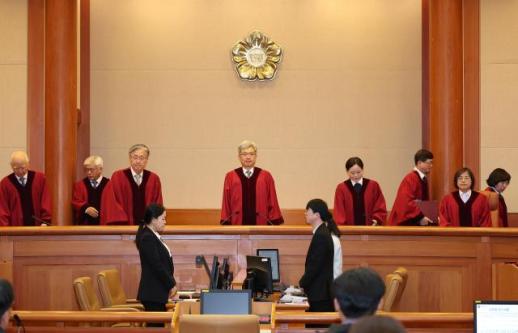 South Korea court upholds limits on Chinese characters in children’s registered names South Korea’s Constitutional Court has ruled that a provision limiting the Chinese characters that can be used when registering a child’s name at birth does not violate the Constitution. According to the legal community on Saturday, the court upheld the provision in Article 44(3) of the Family Relations Registration Act by a 5-4 vote, rejecting a constitutional complaint challenging the phrase “commonly used Chinese characters.” The petitioner, identified only as A, reported the birth of a daughter using the character “婡” (read as “rae,” meaning “pretty”) in the child’s name. But the official handling the filing recorded the name in the family register only in Hangul, saying the character was not included among “commonly used Chinese characters” under a Supreme Court rule issued pursuant to Article 44(3). A argued the provision infringed the right to choose a child’s name. Article 44(3) provides that a child’s name must be written in Hangul or in commonly used Chinese characters, and that the scope of such characters is set by Supreme Court rules. The court said there was no need to overturn its July 2016 precedent, which found a substantively similar provision constitutional and not in violation of the principle against excessive restrictions. The court said a child’s registered name is the basis for forming social relationships and should be recorded using characters that members of society can actually read and use. It also cited the vast number of Chinese characters and the unclear boundaries of their use, saying the range of “commonly used” characters must be defined in advance to register Chinese-character names in the computerized family-registration system. It noted that the Supreme Court has periodically expanded the list of Chinese characters permitted for personal names through rule revisions. Since the earlier precedent, the list has been revised three more times, increasing by more than 1,000 characters to 9,389, the court said. The court also said remedies exist, including registering newly added characters through a name-change process or a supplemental birth-registration procedure. Even if a noncommonly used character cannot be entered in official records, parents may still use their preferred character privately, it said, concluding the restriction on naming freedom is not severe. Justices Jeong Jeong-mi, Kim Bok-hyeong, Ma Eun-hyeok and Oh Young-jun dissented, saying the provision violates the principle against excessive restrictions and infringes the freedom to choose a child’s name. They said the abstract possibility that the list may be revised in the future does not resolve the current infringement, and that ordinary people cannot reasonably predict which characters will be deemed “commonly used” and selected for the approved list. A court official said the 5-4 decision was based on the view that the trend toward expanding the approved list and changes in the share of Chinese-character use do not weaken the need for limits, and that use of nonapproved characters remains allowed in the private sphere. * This article has been translated by AI. 2026-05-03 16:42:15
 -
 Nvidia’s Physical AI Push Lifts Shares of Asian Partners Including LG Electronics Nvidia’s expansion into robotics and autonomous systems — often described as “physical AI” — has helped lift shares of several Asian partners, Bloomberg News reported May 2. Bloomberg said shares of South Korea’s LG Electronics, Taiwan’s Nanya Technology, and China’s Huizhou Desay SV Automotive and Pateo Connect Technology rose on expectations of broader cooperation with Nvidia. LG Electronics closed at 140,900 won as of April 30, up 33% over the past month. On April 28, the stock jumped as much as 15% intraday after reports it was discussing linking its home robot to Nvidia’s platform. Nanya rose 10% on news of cooperation with Nvidia, Bloomberg said. Desay’s shares also advanced after it unveiled an intelligent driving solution with Nvidia, while Pateo gained on expectations of expanded collaboration. Bloomberg reported that about 90% of Nvidia’s production costs now go to Asian suppliers, up sharply from about 65% last year, as surging demand for AI chips increases reliance on Asian firms strong in manufacturing, assembly and key components. “Global tech companies like Nvidia inevitably will keep increasing their dependence on Asian supply chains,” said Vey-Sern Ling, managing director at Union Bancaire Privee. “Physical AI will be an additional growth driver on top of the already rapidly rising AI chip demand in Asia’s supply chain.” Cooperation expands into physical AI The recent cooperation trend is widening beyond semiconductors into physical AI. Nvidia has worked with SK hynix and Samsung Electronics to boost AI computing capacity, but it has recently broadened cooperation into robotics and autonomous driving. Madison Huang, a senior director and the eldest daughter of CEO Jensen Huang, visited LG Electronics’ headquarters in Seoul on April 28 and discussed cooperation in robotics, AI data centers and mobility with LG Electronics President Ryu Jae-cheol, according to the report. Bloomberg said Nvidia’s physical AI strategy is expanding applications across real-world industries, including robotics, autonomous systems and AI-driven manufacturing, while highlighting Asia as a core partner. Huang has previously described physical AI as the next growth phase after generative AI. Some analysts said the shift could support broader gains in Asian tech shares. “As AI demand expands and its applications broaden at the same time, more companies are getting opportunities to participate in the supply chain,” said Marvin Chen, a strategist at Bloomberg Intelligence. He said North Asian markets with a high weighting in technology could show relative strength. Large capital spending plans by U.S. big tech companies are also supporting the trend. Amazon, Microsoft and Alphabet each plan about $190 billion to $200 billion in capital expenditures this year, while Meta has raised investment to as much as $145 billion, Bloomberg said. Nvidia has become a key supplier, accounting for about half of Microsoft’s investment and about a quarter of Amazon’s, the report said. As a result, Asian companies including Foxconn and SK hynix have continued to benefit indirectly. “AI is creating new demand across semiconductors, components, servers and hardware infrastructure, bringing Asia’s structural strengths into sharper focus,” said Rajiv De Mello, a global macro portfolio manager at Gama Asset Management. “Asia already has the experience and supply chains to build advanced semiconductors and robots, giving it a favorable foundation for implementing physical AI.”* This article has been translated by AI. 2026-05-03 16:40:52
 -
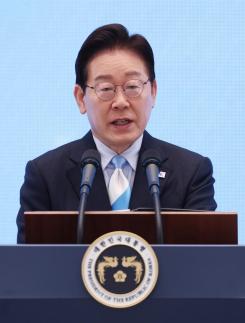 Blue House Watches June 3 Local Elections Closely as First National Test for Lee Government The Blue House is closely watching the outcome of the June 3 local elections while maintaining what it calls a core principle of political neutrality. The results are widely expected to be read as a verdict on the Lee Jae-myung government, with direct implications for its governing momentum. The June 3 vote is the administration’s first nationwide election since it took office in June last year. It also comes exactly one year after Lee’s inauguration, and it will be held alongside National Assembly by-elections in 14 districts. According to political circles on Saturday, three former Blue House aides are running in the 14 by-elections: Kim Nam-jun, a former spokesperson, in Incheon’s Gyeyang-eul; Ha Jung-woo, former senior secretary for AI Future Planning, in Busan’s Buk-gap; and Jeon Eun-su, a former spokesperson, nominated in South Chungcheong’s Asan-eul. In races for metropolitan and basic local government heads, Woo Sang-ho, former senior secretary for political affairs, is running for Gangwon governor, and Kim Byung-wook, former political affairs secretary, is running for Seongnam mayor. If the direction suggested by many polls and analysts holds, the election is expected to end in a one-sided victory for the Democratic Party, allowing Lee to further consolidate control as he enters his second year in office. Such a result could also be interpreted as voters giving the government passing marks for its risk management amid international uncertainty and supply-chain instability linked to the war in the Middle East. After the local elections, Lee is expected to move faster on plans to diversify energy supply chains and diplomatic cooperation, accelerate the energy transition, and push to become a leading country in areas including artificial intelligence and the defense industry. Lee’s job approval rating has recently remained in the mid-60s. A Gallup Korea poll released May 1 found 64% approved of his performance, down 3 percentage points from the previous survey. The poll, conducted April 28-30 among 1,002 adults nationwide, found 26% disapproved, up 1 point from the prior week, while 10% were undecided. Eom Gyeong-yeong, head of the Institute for the Spirit of the Times, said the mid-60s approval rating shows the public is giving the government a passing grade for its response to the Middle East war. He said a landslide win in the local elections would further boost the administration’s ability to govern. The Blue House has sought to project focus on governing, including responding to the Middle East war. Lee spent the weekend without a separate official schedule. He continued communicating on social media, however. Sharing a post by Financial Services Commission Chairman Lee Eok-won on X, formerly Twitter, Lee wrote, “It is acceptable not to repay illegal loans that exceed the legally permitted limit.” The message was interpreted as signaling a tougher response to illegal private lending, noting that loan contracts exceeding the legal limit are invalid and encouraging victims to report abuses. Lee Eok-won wrote on X on April 28 that a revised enforcement decree to the Loan Business Act, aimed at lowering barriers to reporting damage from illegal private lending, had passed a Cabinet meeting. He stressed that loan contracts with annual interest rates above 60% render both principal and interest invalid. The Gallup Korea survey was conducted through interviewer-led telephone polling using randomly generated mobile phone numbers. The margin of error was plus or minus 3.1 percentage points at a 95% confidence level, and the response rate was 13.3%. More details are available on the website of the National Election Survey Deliberation Commission. 2026-05-03 16:36:00
 -
 Iran Proposes 30-Day End to War in New Truce Offer; Trump Says Tehran Must Pay a Price As the United States and Iran continue behind-the-scenes contacts over a cease-fire, Iran has proposed a new truce plan to Washington that includes ending the war within 30 days, according to reports. President Donald Trump signaled dissatisfaction and suggested the U.S. could return to military action. AP and CNN reported on May 2, citing Iran’s semiofficial Tasnim News Agency and Iranian state TV, that Iran sent the United States a new cease-fire proposal through mediator Pakistan. The plan has 14 clauses. The proposal was described as Iran’s response to a nine-point U.S. cease-fire plan. Its central element is ending the war within 30 days, rather than a two-month cease-fire proposed by the United States, the reports said. The Iranian plan also includes security guarantees related to U.S. hostile acts, a U.S. troop withdrawal from areas around Iran, an end to a U.S. maritime blockade of Iran, the unfreezing of Iranian accounts and lifting of sanctions, an end to the Lebanon conflict, and a new mechanism for managing the Strait of Hormuz, according to the reports. Axios, citing two sources, reported that Iran’s proposal calls for a one-month negotiating period to discuss reopening the Strait of Hormuz, ending the U.S. maritime blockade and ending the Lebanon war, with nuclear talks to follow only after agreement is reached on those items. Kazem Gharibabadi, Iran’s deputy foreign minister, said the goal of the proposal is a “permanent halt” to the war. “The ball is now in the U.S. court to choose a diplomatic solution or continue confrontation,” he said. Trump: Iran must pay a price Trump responded skeptically. In a post on his social media platform Truth Social, he said the United States would soon review Iran’s proposal, but added that it was hard to imagine accepting it because Iran “has not yet paid enough of a price” for what it has done “to humanity and the world” over the past 47 years, a reference to Iran’s posture since the 1979 Islamic Revolution. Before boarding Air Force One at Palm Beach airport in Florida, Trump was asked whether he could resume attacks on Iran. “If they (Iran) act rude or do bad things,” he said, adding, “For now, we’ll watch. That could definitely happen.” He was reported to have received a new military plan on Iran from U.S. Central Command on April 30. Iran also warned of renewed fighting. Mohammad Jafar Asadi, deputy commander of the IRGC’s Khatam al-Anbiya Central Headquarters, told the semiofficial Fars News Agency that a U.S.-Iran clash could resume and said it was being proven that the United States does not keep “any promises or agreements.” The White House has said lobbyist Nick Stewart, who served as a State Department official during Trump’s first term, has joined the Iran negotiating team. CBS, citing officials, reported Stewart was recommended by Jared Kushner, Trump’s son-in-law and a member of the Iran negotiating team, and is known as a hard-liner who strongly supports military action against Iran. Separately, the State Department said on May 1 it fast-tracked approval of $8.6 billion (about 12.6533 trillion won) in arms sales to key regional partners including Israel, Qatar and the United Arab Emirates. The developments have kept tensions high, with both sides continuing to discuss a cease-fire while not ruling out a return to military confrontation. The United States has paused military operations since agreeing on April 8 to a two-week truce with Iran. In a letter to Congress on May 1 marking 60 days since notifying lawmakers about the Iran war, Trump said hostilities with Iran had “ended,” signaling that additional congressional approval would not be needed if the war was no longer continuing beyond the 60-day period. 2026-05-03 16:21:16
 -
 Homeplus Dropped From Shinhan Bank Employee Loan Program as Restructuring Drags On Homeplus, which is undergoing corporate restructuring, has been removed from Shinhan Bank’s list of companies eligible for its “Elite Loan,” a credit-loan product for employees of top-rated firms, industry sources said. The prolonged process is now affecting workers’ personal banking, beyond store operations and dealings with suppliers. According to the retail industry on the 3rd, Homeplus was recently dropped from the Elite Loan program. The product offers preferential loan limits and rates to employees at selected companies. As a result, Homeplus workers were told they may have difficulty extending existing loans under the same terms when their loans mature, the sources said. A Shinhan Bank official said employees were informed that extensions under the product would be difficult at maturity. The official added that being removed from the list does not mean the bank will demand immediate repayment or push borrowers to refinance right away. The bank can extend loans for up to three years, the official said, after which it guides customers to general credit-loan products. In the financial sector, the company’s drawn-out restructuring and delayed wage payments are seen as factors behind the change. Homeplus has delayed wage payments since December last year, and employees have not received last month’s pay. Although its controlling shareholder, MBK Partners, injected 100 billion won in emergency debtor-in-possession financing, most of it was used to cover unpaid wages and outstanding payments. One Homeplus employee said health insurance premiums have been unpaid since last year, making it hard even to get a loan, and repeated wage delays have fueled internal concerns that timely pay will remain difficult. The union, however, said securing funds to restore normal operations should come first, even if it means giving up wages. The Homeplus General Union said wages should be forgone to ensure the money is used entirely to normalize operations and supply goods, adding that all available resources — including workers’ wages, proceeds from the Homeplus Express sale and DIP funds — should be focused on restoring operations. Separately, the Seoul Bankruptcy Court extended the deadline to approve Homeplus’ rehabilitation plan by two months, from the 4th of this month to July 3. The court cited the pending main contract for the sale of Homeplus Express, the company’s supermarket business unit, to NS Shopping under Harim Group. An industry official said proceeds from the Express sale and whether additional operating funds can be secured will be key variables in the restructuring. * This article has been translated by AI. 2026-05-03 16:18:17
 -
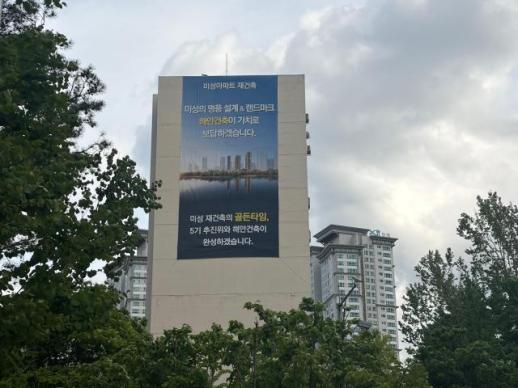 Builders Jockey for Contracts as Yeouido’s Transit-Linked Rebuilds Gain Speed Yeouido’s long-discussed apartment rebuilds are moving into a more active phase, and competition among major builders is intensifying around complexes with the shortest walks to subway stations. Industry officials said Sunday that key redevelopment sites across Yeouido are speeding up steps such as winning approval for maintenance plans and moving toward selecting contractors. At the redevelopment area visited April 29, the shift was visible on the ground. Miseong Apartments sits so close to Exit 6 of Yeouido Station that the entrance is within about a one-minute walk. Miseong began occupancy in 1978 and consists of five buildings, A through E, up to 12 stories (13 stories for Building A), with 577 households. It also includes one commercial building. After reconstruction, it is expected to become a complex of about 1,000 households. Expectations for improved transit access are also high, with the Sinansan Line and GTX-B line planned for the area. Around the complex, banners from major builders including Samsung C&T, Hyundai Engineering & Construction, DL E&C and GS Engineering & Construction were posted, signaling that bidding competition is already underway. The education environment is also cited as a strength. Seoul Yoonjung Elementary School and Yoonjung Middle School sit next to the complex, allowing students to commute by crossing a single signal. However, the close proximity to schools could make issues such as sunlight access a variable during the rebuilding process. Project preparations are also becoming more concrete. Miseong collected opinions from land and property owners late last year and selected Haean Architecture as its designer. A real estate agent near the site said Sunday, “Until recently, consent among owners in the five residential buildings exceeded 50%, and the commercial building has secured consent forms at about 22%.” The agent added, “Once consent reaches 70%, it can move to a general meeting to form an association and then apply for approval.” The agent said Samsung C&T was believed to be the contractor showing the most interest. Next door, Gwangjang Apartments is also undergoing redevelopment. From the complex, crossing a single road leads directly to Yeouido Hangang Park, and residents were seen walking dogs nearby. Gwangjang Apartments is an aging complex, 48 years after completion, located between Yeouido Station and Saetgang. Its combination of access to both the station and the Han River has made it a closely watched redevelopment site. The project is moving quickly. Seoul city on March 11 approved, with revisions, a decision plan for the redevelopment of Yeouido Gwangjang Apartments 38-1. With that, Gwangjang became the ninth Yeouido redevelopment site to finalize its maintenance plan. A central element of the plan is an upgrade in zoning. The site will be rezoned from a third-class general residential area to a general commercial area, applying a floor area ratio of 597%. It is slated to be rebuilt into a complex of 414 households, including 154 public housing units, in towers up to 52 stories. Yeouido’s redevelopment push is spreading beyond individual complexes. Of 15 complexes pursuing reconstruction in Yeouido, nine have passed maintenance plans, putting projects on a firmer track. Hanyang Apartments and Daegyo Apartments are moving fastest after completing approvals for project implementation. Gongjak Apartments has also stepped up activity after selecting a contractor. Sibom Apartments is pursuing a rebuild of up to 65 stories and is aiming to break ground in 2029. Contractor selections are expected to continue for some time. Gongjak Apartments selected Daewoo Engineering & Construction in December 2023, and Hyundai Engineering & Construction was finally chosen as Hanyang Apartments’ contractor in March 2024. Once all projects are completed, Yeouido is expected to be reshaped into a high-rise residential area of about 13,000 households. 2026-05-03 16:15:20
 -
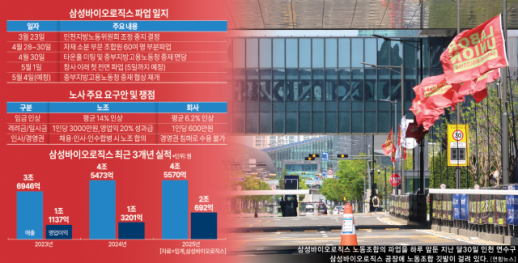 Samsung Biologics Strike Enters Third Day as Union Seeks Say on Hiring, M&A Samsung Biologics’ first full-scale strike since the company was founded in 2011 continued for a third day on Saturday, raising concerns about production disruptions and damage to customer confidence. The union is pressing for a major pay and bonus package and has also sought prior consent rights on key management matters such as hiring, personnel evaluations and mergers and acquisitions, prompting criticism that it is hardening its stance rather than seeking compromise. ◆5-day strike began May 1···Company estimates 640 billion won loss if it runs full term According to the Samsung Biologics branch of the Samsung Group National Union, the union began a full strike on May 1, Labor Day, and plans to continue through May 5. The union said about 2,800 of its roughly 4,000 members are taking part. It said the action is being carried out without separate rallies, including by using annual leave and refusing holiday work. The company estimates that if the strike continues for the planned five days, losses could total about 640 billion won. That is about half of Samsung Biologics’ first-quarter revenue of 1.2571 trillion won and exceeds its operating profit of 580.8 billion won for the same period. Labor and management are expected to return to the bargaining table on May 4 under mediation by the Jungbu Regional Office of Employment and Labor, but the gap remains wide. The union is seeking an average 14% wage increase, a 30 million won per-person incentive payment, and a bonus pool equal to 20% of operating profit. The company has offered a 6.2% wage increase and a one-time payment of 6 million won. The union is also reported to have included in its collective bargaining demands a clause requiring prior union consent for new hiring, personnel matters and M&A. The company has said it cannot accept provisions it views as directly tied to management rights. Human resources experts criticized the union’s proposal, saying hiring and adopting new technologies are essential strategies for corporate survival and that restricting them in the name of job security could weaken competitiveness. They added that authority and responsibility for management rest with executives. ◆Talks stalled···Union leadership’s negotiating posture also questioned Samsung Biologics and the union held 13 rounds of talks from December through March without reaching an agreement. With a full strike scheduled for May 1, the union also carried out surprise walkouts in some processes from April 28 to 30. The company said those actions halted a filling process, disrupted supplies of raw and packaging materials, and delayed production of key medicines including cancer drugs and HIV treatments, estimating losses of about 150 billion won over that period. A tripartite meeting hosted April 30 by the Jungbu office of the Employment and Labor Ministry also failed to narrow differences. The union chair was reported to have been absent due to overseas travel plans, drawing criticism from some quarters amid concerns over production disruptions and customer trust. Other union officials were also criticized after presenting, as a precondition, a demand that the company replace all of its bargaining representatives. In a statement issued the afternoon of May 1, the company said negotiations had been difficult because the union’s demands were not realistically acceptable, adding that issues directly tied to personnel authority and management rights were especially hard to bridge. Industry officials have warned that a prolonged strike could not only deepen production-related losses but also affect future global contract competition. Samsung Biologics posted annual revenue of 4.5570 trillion won and operating profit of 2.0692 trillion won last year, achieving more than 30% growth from the previous year. But in the contract manufacturing organization industry, where stable production capacity is a key competitive factor, an extended labor dispute could disrupt contract performance and new orders from global customers. A Samsung Biologics official criticized the union’s demands and strike tactics, urging it to stop what the company called unreasonable demands and coercive pressure to join the strike and to return to talks with a sense of responsibility. 2026-05-03 16:08:00
 -
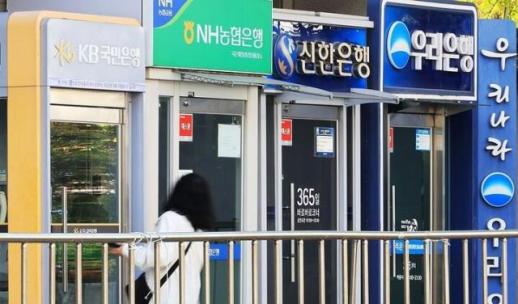 Big 4 Korean Financial Groups’ Uncollectible Loans Near 3 Trillion Won as SMEs Struggle High interest rates and a prolonged economic slowdown have made it harder for banks to recover loans, pushing the Big Four financial groups’ estimated losses to nearly 3 trillion won by the end of the first quarter. Fact books released on May 3 by KB, Shinhan, Hana and Woori showed estimated losses totaling 2.9963 trillion won in the first quarter. That was up 5.8% from a year earlier and 16.8% from the previous quarter, the highest on record. Banks classify loan quality into five categories based largely on delinquency: normal, precautionary, substandard, doubtful and estimated loss. “Estimated loss” refers to loans delinquent for more than 12 months and considered effectively unrecoverable. By group, Hana Financial Group posted the fastest increase, with estimated losses rising 30.3% from a year earlier to 503 billion won. KB Financial Group’s estimated losses climbed 27.2% to 807.2 billion won from 634.6 billion won a year earlier. Woori Financial Group’s rose 12.4% to 826 billion won from 735 billion won. Shinhan Financial Group was the only one to report a decline, down 20.1% to 860.1 billion won, as it managed troubled assets through write-offs and other measures. The surge in write-offs indicates weakening repayment capacity among borrowers. The average corporate delinquency rate at the five largest banks — KB, Shinhan, Hana, Woori and NH NongHyup — rose to 0.46% in the first quarter from 0.37% the previous quarter. The small- and medium-sized business delinquency rate increased to 0.57% from 0.49%. Delinquencies in industries tied to real estate have hit a 13-year high as a Middle East war has delayed a recovery in the property market. Nonperforming loans, a broader asset-quality measure that includes substandard and doubtful loans in addition to estimated losses, also jumped. NPLs at KB Kookmin, Shinhan, Hana and Woori banks totaled 5.0773 trillion won at the end of the first quarter, up 12% from the end of last year. Asset-quality pressure could intensify. The Ministry of SMEs and Startups said small businesses’ May outlook index, the Small Business Health Index, fell 3.2 points from the previous month to 77.6. A reading below 100 means more firms expect conditions to worsen than to improve. Banks said they plan to manage risk through steps including selling bad loans. A financial industry official said lenders are applying measures such as early credit assessments for vulnerable borrowers, screening high-risk borrowers and quickly restructuring loans to troubled companies. The official added that banks are also building real-time monitoring systems through overseas offices and setting aside additional reserves to prepare for possible further losses from overseas real estate investments. * This article has been translated by AI. 2026-05-03 16:04:52
 -
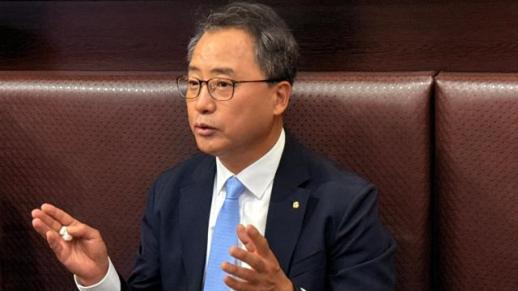 KFTC to Overhaul Operations for AI-Driven Payments, Launch Agent-Payment Pilot The Korea Financial Telecommunications & Clearings Institute said it will support the financial sector’s AI transformation while reshaping its own organization around AI and moving to verify technology for an AI agent-based payment platform. On May 3 (local time), the institute said it will build a companywide “AI agent” work environment so employees can use AI agents in day-to-day tasks to improve efficiency. An AI agent refers to an intelligent system that goes beyond providing information by interpreting a user’s intent, making judgments and handling complex tasks. The institute said it aims to embed the technology in its operations to develop next-generation payment services that minimize human intervention. To move faster on AI projects, it plans to establish new processes and accelerate a shift to an AI-centered organization, while significantly expanding programs to train AI specialists. Externally, the institute said it will help raise the overall level of AI transformation across the financial industry by quickly forming a tentative “financial sector AX alliance” with major financial firms to standardize finance-focused AI technologies and share best practices. It also plans a proof-of-concept for an “agent payment platform,” described as a key element of next-generation payment innovation. The technology would allow a conversational AI to handle the entire process — from product search to ordering and payment — in a single session without the consumer directly operating an app. The institute said it plans to begin the PoC within this year in cooperation with fintech partners. The institute also said it is expanding its footprint in global payments by continuing to broaden a cross-border QR payment service network with major Asian countries including Indonesia, India and Vietnam. By directly linking national clearing institutions, it expects cost savings of up to 2 percentage points per transaction compared with existing overseas payment methods, accelerating efforts to improve user benefits. Under existing overseas payment services, domestic payment providers settle with overseas merchants through double currency conversion — won to U.S. dollars, then dollars to local currency — resulting in overlapping exchange fees. The institute began two-way inbound and outbound QR payment services with Indonesia on April 1. It said the cross-border QR payment infrastructure will be operated as an open platform available to banks, card companies and fintech firms. Shinhan, Woori and Hana banks; Shinhan Card and KB Kookmin Card; and providers including GLN and Travel Wallet are expected to join within this year, and talks are also underway with major big tech companies. Cooperation in payment and settlement also strengthened following the president’s April trips to India and Vietnam. The institute signed a memorandum of understanding with India’s National Payments Corporation of India, or NPCI, and a service contract with Vietnam’s NAPAS, and said it will launch QR payment services with both countries within this year. The institute said it plans to keep expanding the network, focusing on Asian countries where QR payments are widely used, including Singapore and Thailand, to improve customer convenience and support overseas expansion by South Korean financial firms. Speaking at a meeting with accompanying reporters in Samarkand, Uzbekistan, where the 59th Asian Development Bank annual meeting was held, institute head Chae said, “We are pushing cross-border payment services with ambition.” He added, “In Southeast Asia and Central Asia, QR payments are far more common than cards, so we are promoting QR services centered on countries that many of our people travel to.” Chae said, “If pay companies provide QR services, they have to use overseas networks, so usage fees occur,” adding, “If it goes through the institute, those fees disappear.” 2026-05-03 16:03:19
 -
 Gold Prices Slide About 20%, Dragging Down Gold ETFs as Safe-Haven Appeal Wavers Gold, long seen as a key safe-haven asset, has fallen sharply in the wake of the war in the Middle East, drawing attention to shifting and potentially volatile money flows into gold-related exchange-traded funds. As gold weakens despite heightened geopolitical risk, analysts say investor sentiment appears to be changing. According to the Korea Exchange on May 3, as of April 30 the domestic gold price on the KRX Gold Market was 217,240 won per gram, the lowest level so far this month. That is about 20% below the record high set on Jan. 29, when the closing price reached 269,810 won. The decline has weighed on gold ETF prices. Based on April 30 closing prices, ACE KRX Physical Gold ended at 30,340 won, TIGER KRX Physical Gold at 14,430 won, and KODEX Gold Futures (H) at 25,935 won, with all showing a broadly weaker trend. The drop is clearer compared with about two weeks earlier. On April 13, ACE KRX Physical Gold closed at 31,605 won, TIGER KRX Physical Gold at 15,115 won, and KODEX Gold Futures (H) at 26,870 won, indicating that ETF prices fell alongside the recent pullback in gold. Even compared with the post-war low on March 23, the rebound has been limited. As of April 30, ACE KRX Physical Gold rose about 3.67% from 29,265 won to 30,340 won, while TIGER KRX Physical Gold gained 8.20% from 13,970 won to 14,430 won. Over the same period, KODEX Gold Futures (H) climbed 7.17% from 24,200 won to 25,935 won. Market participants have pointed to a stronger dollar and shifts in global liquidity as key factors behind the sharp fall in gold. They also say that even as tensions in the Middle East have intensified, demand for safe-haven assets has spread to other areas, weakening gold’s relative appeal. Experts are watching for wider short-term swings in gold and related ETFs. They say the next direction for gold will depend heavily on U.S. interest-rate policy and the dollar’s path, and that investors in gold ETFs should be mindful of near-term volatility while taking a longer-term view. Still, some see a strong chance that prices could resume an upward trend over the medium to long term, supported by safe-haven demand and expectations around monetary policy.* This article has been translated by AI. 2026-05-03 15:45:18