
Journalist

Lee Hugh
=
-
 Woori Bank Arranges $825 Million Refinancing for Ohio Gas Power Plant Woori Bank said it has completed a refinancing arrangement worth $825 million (about 1.1 trillion won) for a 950-megawatt gas-fired combined-cycle power plant in Trumbull County, Ohio, expanding its footprint in North American infrastructure finance. The bank said Sunday the refinancing was timed to the start of commercial operations at the plant. The project is jointly funded by Korea Southern Power Co., the Korea Overseas Infrastructure & Urban Development Corp. (KIND) and Siemens Energy. After the plant began full operations on April 15, Woori led the conversion of construction-stage loans into long-term facilities financing suited to the operating phase. Woori said it first provided financial support for the project in 2022, when it secured a lead role by raising $150 million from South Korean financial institutions. In the latest refinancing, it said it and KB Kookmin Bank jointly underwrote a total of $230 million in long-term facilities loans and a revolving credit line to be used for working capital. Lee Hae-yeon, deputy head of Woori Bank’s infrastructure finance department, said the deal supplied funding on schedule with the start of commercial operations and strengthened the bank’s position in the North American energy market. Lee said Woori will continue to seek high-quality global assets and support South Korean companies expanding overseas as a financial partner. 2026-05-03 10:09:15
 -
 Trump Says U.S. Could Resume Strikes on Iran if It Acts 'Rudely' President Donald Trump said the United States could resume military action against Iran if it behaves “rudely.” According to Axios and other foreign media, Trump made the remarks May 2 (local time) at Palm Beach airport in Florida before boarding his plane. Asked by reporters whether he could restart attacks on Iran, Trump said, “If they (Iran) act rudely or do something bad,” it could happen. “For now, we’ll watch,” he added, saying the possibility “certainly” exists. Trump was also reported to have received a briefing on April 30 from U.S. Central Command on a new military plan involving Iran. At the same time, with reports that Iran has proposed a new ceasefire plan to the United States, Trump appeared to be weighing both negotiations and military action. Earlier May 2, he wrote on his social media platform Truth Social that he would “soon” review “the proposal Iran just sent us.” He added that it was “hard to imagine” the plan would be accepted, saying Iran has not yet “paid enough” for what it has done “to humanity and the world” over the past 47 years. NPR and other outlets, citing Iran’s semiofficial Tasnim news agency and Iranian state television, reported that Iran delivered a 14-point ceasefire proposal to the U.S. side through Pakistan, a mediator. The report said the proposal was a response to a nine-point U.S. ceasefire plan. It calls for ending the war within 30 days, instead of a two-month ceasefire proposed by the United States. The reported terms also include guarantees related to U.S. hostile actions, the withdrawal of U.S. forces from areas around Iran, an end to a U.S. maritime blockade of Iran, the unfreezing of Iranian accounts and lifting of sanctions, an end to the conflict in Lebanon, and the creation of a new mechanism for managing the Strait of Hormuz. 2026-05-03 10:00:15
 -
 Labor Strains at Samsung Electronics, Samsung Biologics Raise Questions About Internal Cohesion Labor disputes erupting at Samsung Electronics, the world’s fourth-largest information technology company, and Samsung Biologics, the world’s largest contract development and manufacturing organization (CDMO) for biopharmaceuticals, are more than routine wage talks. They underscore structural tensions inside the Samsung group as it enters the early stage of the artificial intelligence era. While Samsung is viewed externally as a top-tier global company, internal interests and workplace order are increasingly diverging across divisions. Samsung Electronics posted a record first-quarter revenue of more than 57 trillion won, but profits are effectively concentrated in semiconductors. The Device Solutions (DS) division has led companywide results on the back of a boom in high-bandwidth memory (HBM) for AI data centers. By contrast, the Device eXperience (DX) division, which covers smartphones, TVs and home appliances, faces growing concerns about weakening profitability. The result is an uneven structure in which one side is booming while another is described as being at risk. That gap is spilling into internal labor tensions. A semiconductor-focused union has warned of a general strike, demanding the removal of caps on performance bonuses and compensation tied to operating profit. Employees in non-semiconductor units have also voiced rising frustration over perceived disparities, a sign that a shared sense of belonging is being tested by widening differences in how performance is rewarded. At Samsung Biologics, the situation is also serious. The company, which has the world’s largest production capacity, has entered its first strike since its founding. Because biopharmaceutical manufacturing is a continuous process involving living cells, any disruption can quickly translate into major losses. Global drugmakers place high value on stable supply, making internal conflict a direct risk to competitiveness in the sector. The article notes that demands for fair compensation are not, in themselves, the issue. The AI semiconductor boom would not be possible without engineers and production workers, and skilled labor on biomanufacturing lines is also a core competitive asset. Rewarding performance is a basic principle of a market economy. The deeper question, however, is less about “how much more” and more about “how to sustain Samsung as a single organization.” Samsung Electronics grew on an integrated model linking semiconductors, smartphones, appliances and components. During memory downturns, device businesses served as a buffer; now semiconductors are supporting the broader company. It was a structure built on enduring each other’s cycles. Now, as division-level interests become more fragmented, a “what we earn is ours” mindset is spreading. The article argues this is not unique to Samsung but a broader challenge for manufacturers in the AI era. Maintaining a wide lead cannot be achieved by one division alone; semiconductors and data, platforms and finished products, and biomanufacturing and supply chains must move together. Integrating an organization can be harder than advancing technology. The article points to global IT companies reshaping organizations during AI transitions, saying Microsoft has tightened links between its cloud and AI teams, and Nvidia has moved beyond being only a chipmaker toward becoming an AI ecosystem company. What is needed, it says, is not only bigger investment or slogans about technological dominance, but a management structure and organizational philosophy suited to the AI era. Strong semiconductor earnings do not mean Samsung can become a semiconductor-only company, and having the world’s largest bioproduction capacity does not automatically secure internal trust. Samsung, the article concludes, is at a crossroads. If it cannot integrate internal fractures despite having world-class manufacturing capabilities, today’s boom could plant the seeds of a future crisis. It calls for more precise profit-sharing, clearer solidarity across divisions, and labor-management relations that shift from confrontation to jointly designing long-term competitiveness. The real test, it argues, is beginning inside the company. 2026-05-03 09:54:20
 -
 Samsung's AI chip bonanza fuels bitter divide inside Korea's biggest company SEOUL, May 03 (AJP)-Inside Samsung Electronics, the celebration over record-breaking first-quarter earnings is rapidly turning into a battle over who deserves the spoils of the AI boom. The South Korean tech giant, now ranked among the world’s largest technology companies alongside Apple, Microsoft and Nvidia by market value and profit scale, posted an all-time quarterly operating profit of 57.2 trillion won ($41 billion) for the January-March period. But the numbers exposed an increasingly fractured company: the semiconductor division generated nearly all of the earnings windfall, while workers in smartphones, TVs and appliances braced for restructuring and possible layoffs. The widening imbalance has now spilled into open labor conflict. Samsung’s majority union, dominated by semiconductor workers in the Device Solutions (DS) division, is threatening a general strike while demanding uncapped bonuses equivalent to 15 percent of divisional operating profit. The union argues that engineers and production staff behind the company’s AI memory boom deserve unprecedented compensation after helping Samsung capitalize on soaring demand for high-bandwidth memory (HBM) chips used in AI data centers. Yet the aggressive push has triggered backlash from employees outside the semiconductor business, particularly in the Device eXperience (DX) division that oversees smartphones, TVs and home appliances. According to industry officials Sunday, requests to withdraw from the union have surged in recent days, with internal bulletin boards flooded with resignation posts and criticism that the labor group has effectively become a “chip workers’ union” rather than a companywide representative body. Daily withdrawal requests reportedly jumped from fewer than 100 to more than 1,000 at one point last week. The anger intensified after the union announced it would provide up to 3 million won in strike activity payments for staff participating more than 15 days in labor action, following an earlier decision to raise monthly union fees fivefold during collective bargaining. Non-chip employees accuse union leadership of using broader membership dues to finance a strike agenda centered almost entirely on semiconductor workers. “They only talk about DS bonuses while DX employees are worried about survival,” one employee wrote on an internal forum. The contrast between Samsung’s two core businesses has become increasingly stark under the AI-driven semiconductor supercycle. The DS division posted 53.7 trillion won in operating profit in the first quarter alone, nearly 50 times higher than a year earlier, driven by explosive demand for AI memory chips and continued price increases across the memory market. Industry estimates suggest DS operating margins reached roughly 66 percent, with memory profitability approaching 75 percent. Under the union’s proposal, some semiconductor employees could theoretically receive bonuses approaching 600 million won per person this year if Samsung’s annual earnings continue at the current pace. Meanwhile, the DX division generated only 3 trillion won in quarterly operating profit, down 36 percent from a year earlier despite the launch boost from the Galaxy S26 smartphone lineup. Profit margins in the consumer electronics business have collapsed to around 6 percent as rising semiconductor costs, weaker global demand and U.S. tariff pressures squeeze earnings. Some analysts are even warning that Samsung’s consumer electronics operation could slip into annual losses for the first time. The company has already begun shutting low-profit appliance production lines, outsourcing parts of manufacturing and conducting management reviews across domestic sales operations. Persistent speculation about partial withdrawals from China’s TV and appliance market has further fueled anxiety among DX employees. The labor dispute is now exposing a deeper structural issue inside Samsung: the company increasingly resembles two vastly different businesses operating under one corporate roof. One side is riding the global AI infrastructure boom and generating historic profits. The other is struggling with slowing demand, margin compression and fears of restructuring. Industry observers say the internal division carries broader implications for Samsung’s long-term cohesion. “For years, profits from smartphones and appliances helped sustain semiconductor investment during downturns,” an employee said, requesting anonymity. “Now the roles have reversed, but employees are questioning whether the rewards and burdens are being shared fairly.” Samsung management has so far resisted the union’s demand to remove bonus caps, partly out of concern that extreme compensation gaps could deepen resentment across divisions. But the conflict is becoming harder to contain as the semiconductor boom reshapes internal power dynamics inside South Korea’s most important company. Even within the chip division itself, tensions are reportedly intensifying between union members and non-members as the prospect of a walkout approaches. “People barely talk to each other anymore depending on whether they support the union,” another Samsung employee said. “Everyone says we are one company, but right now it doesn’t feel that way.” 2026-05-03 09:02:34
 -
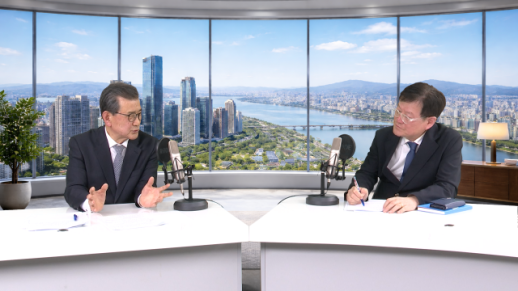 Lee Si-jong: Local election candidates should win on results, not vote-seeking “With the June 3 local elections about a month away, candidates should guard against excessive ambition and talk about their region’s future,” Lee Si-jong said. Voters will choose provincial governors, mayors and county chiefs, local council members and superintendents of education. The vote will shape local administrative priorities, budgets, industrial strategy, welfare and education for the next four years, he said. Lee, described in the interview as a former North Chungcheong Province governor, has served as an administrative official after passing the state civil service exam, as an appointed county chief and mayor of Chungju, as a three-term elected mayor of Chungju, as a two-term lawmaker and as a three-term governor. The article says he is 8-0 in elections. In the interview, Lee offered three points of advice to candidates. First: “Compete through work.” He said candidates should not “beg for votes” by constantly showing up in front of people, but instead work so that support “comes on its own.” Second: “Truth is the greatest weapon.” Third: “Beware excessive greed,” saying too much ambition can cloud judgment in administration and politics. As national politics increasingly spills into local races, Lee said candidates should answer practical questions: How will they create jobs? How will they keep young people from leaving? How will they fill gaps in medical care, education and transportation in rural areas and smaller cities? And what authority and financial resources should local governments have as the capital region grows and other areas face decline? Lee said local elections are not subcontracted contests for national politics, but a test of whether regions can design their own future. For local autonomy to work, he said, electing leaders is not enough; local governments need authority and funding, and regional voices must be reflected in national decision-making. He said he continues to advocate constitutional revision to create a bicameral legislature, including a regional-representative upper chamber. The following is a Q&A with Lee. “Local elections are not subcontracted contests for national politics” - The June 3 local elections are approaching. From your perspective, what do they mean? “Local elections are when residents choose the people who will work for their community. But in reality, local elections keep getting pulled by national politics. National partisan conflict comes down to the regions, and local candidates often lean on national slogans rather than local issues. I don’t think that fits the original meaning of local autonomy. Even after running many campaigns, what residents remember for a long time is not words but work. Whether I was mayor, a lawmaker or governor, my motto was always ‘compete through work.’ I thought that if you show up too often and look like you’re begging for votes, votes won’t come. Rather than begging, you should work hard so votes come on their own.” Lee said elections are less about a competition in publicity than about building trust. He said voters may notice a candidate’s national political stance, but more closely judge whether the candidate can change daily life — a road, a hospital, a school or an industrial complex can matter more than big rhetoric. He said “truth is the greatest weapon,” arguing that truth may be recognized late in politics but lasts. He said candidates who offer applause-friendly pledges without explaining funding and authority will be found out over time, while those who steadily explain feasible policies gain trust. “The reason for 8 wins in 8 elections was not begging for votes” - You won all eight elections you ran in. What is the key? “I wouldn’t call it a secret. Basically, I was able to go 8-0 because I received a lot of help from North Chungcheong residents, and I want to thank them. If I had to say, first was ‘compete through work.’ I always kept that motto as mayor, lawmaker and governor. I believed that if you appear often just to beg for votes, votes won’t come. It’s important to work so votes come on their own. Second is the belief that truth is the greatest weapon. It’s slow, but it lasts and can endure. Third is that excessive greed clouds judgment. Whether in administration or politics, if you want too much, your judgment can easily blur. I hope people avoid excessive greed.” Lee said that as election day nears, candidates tend to move more, speak louder and offer more promises, but he urged restraint. He said a responsible candidate can say what is possible and what is difficult right now. “In a crisis, a local leader must not avoid decisions” - As mayor of Chungju, you issued an evacuation order during a major flood and prevented large casualties. What standard should a local leader use? “That was the 1990 flood. Upstream of Chungju was Chungju Dam, and downstream was the regulating dam. The city was in between. It rained so much in Gangwon Province that water poured down. We didn’t know when the levee in the city might break. I asked the province, the central government and the Blue House, but no one could say when the levee would break or how many casualties there would be. After thinking alone, around 8 p.m. I judged that ‘if this goes wrong, there could be hundreds of casualties,’ so I issued an evacuation order. That was not common in administration at the time. We forcibly evacuated residents in five neighborhoods near the river. People protested and there was an uproar. But a couple of hours after the evacuation, the levee broke in several places. I think that if I hadn’t evacuated, the 피해 could have been more than 1,000, and there could have been hundreds of deaths. I still remember it vividly.” Lee said choosing a local leader means entrusting that person with decisions in emergencies, when lives and safety are at stake and waiting for instructions can be too slow. “Local autonomy holds elections locally, but the center holds the power and money” - You have served as both a lawmaker and a local government head. What is the biggest difference between national politics and local administration? “In a word, there is a top-down relationship, because the central government holds all authority and financial resources. Article 117 of the Constitution says local governments can enact self-governing regulations only within the scope of laws and regulations. Those include not only laws passed by the National Assembly but also presidential decrees, ministerial decrees, guidelines, rules and notices. So in practice, there isn’t much local governments can do on their own. Today’s local autonomy is that residents elect local government heads, but authority and funding are all in the center. The central government says it devolves authority, but it also often creates new laws that burden local governments. For example, when it enacted a law to foster regional universities, it put an obligation on local governments to support budgets for those universities. But local governments have almost no authority over them. It’s a structure where there is no authority but there is financial burden. The same happened when firefighters were converted into national civil servants. If they are national civil servants, it’s natural for the state to pay personnel costs, but the structure became one where local governments bear the costs. That makes local administration very difficult.” “My goal was to raise North Chungcheong from a perennial 2% to the 4% range” - During your 12 years as governor, you had major results in investment attraction and industrial development. What was your strategy? “I served as governor for 12 years starting in 2010, leading the province with the catchphrase ‘North Chungcheong, land of life and sun.’ Until 2009, North Chungcheong was a ‘perennial 2%,’ weak in many aspects such as the economy and population compared with the national total. So I set a goal of raising it from the 2% range to the 4% range. Over 12 years, we fostered bio, cosmetics, solar energy and semiconductors. As a result, over 12 years GRDP increased 70% compared with 2009, exports increased 300%, and investment attraction exceeded 100 trillion won. The province’s share of the national economy rose from 2.99% in 2009 to 3.7% in 2021. I see that as significant growth.” Lee also described the process of attracting Hanwha Q CELLS. He said the company demanded a written pledge that the governor would pay a 100 billion won penalty if permits and construction were not completed by the deadline. Lee said he signed and the plant was completed on time. “The Gangho axis is a national balanced-development strategy to stop regional decline” - One major policy during your tenure was the Gangho axis development strategy. Does it still matter? “It matters a lot. Korea has been developed around the Gyeongbu axis. The Gangho axis, linking Gangwon through Chungcheong to Honam, was largely undeveloped and lacked national projects, so it was left out. Expressways, high-speed rail and airports were concentrated on the Gyeongbu axis, but the Gangho axis lacked connections. It was too imbalanced. If the Gyeongbu axis accounts for about 80% in industry and the economy, the Gangho axis is about 20%. So I argued for Gangho axis development. We connected railways and expressways and, together with eight provinces and metropolitan cities, reflected it in the 4th National Balanced Development Plan. But for success, a special Gangho axis law is needed. It’s regrettable that it was not legislated when I stepped down.” “Give North Chungcheong a sea — logic is everything in persuading the central government” - Local development requires persuading the central government. What was hardest? “Persuading the central government is very difficult. The most important thing is to build a strong logic. For example, as governor I argued for building a marine science museum in Cheongju. People said, ‘What marine, in a province with no sea?’ I said, ‘Give North Chungcheong a sea. The province has the right to have a sea, and the state has the duty to give it a sea.’ My logic was that to develop maritime awareness, inland residents need maritime education even more than coastal residents. That’s how we attracted a 100 billion won marine science museum. The same with the Jungbu Inland Railway. I proposed a rail line from Seoul to Chungju, Mungyeong and Gimcheon. At first there was a lot of opposition — why build a railway when there aren’t big factories? But I presented logic such as restoring historic routes, and the railway eventually opened.” “One root cause of capital-region concentration is a population-based unicameral National Assembly” - Capital-region concentration and regional decline are key issues. Where do you see the root cause? “I see it as a vicious cycle: as population concentrates in the capital region, resources concentrate there, and as resources concentrate, population concentrates even more. There are many reasons, but I also see the population-based unicameral National Assembly as a big problem. In the first National Assembly, the capital region had 19.5% of lawmakers and non-capital regions had 80.5%. But as concentration continued, by the 22nd National Assembly the capital region increased greatly. Including proportional representation, you could say the number of capital-region lawmakers became larger than non-capital regions. Then it becomes very difficult for non-capital voices to be reflected in national affairs. For example, Seoul’s Gangnam District has three lawmakers, while North Chungcheong’s Goesan County could be seen as having about one-quarter of a lawmaker. Gangnam may have more people, but Goesan is much larger in area and has many administrative demands — floods, wildfires, wild boar control and crops. But if seats are set only by population, concentration worsens. That’s why the argument for a bicameral legislature centered on regions — an upper chamber — emerges.” “A regional-representative upper chamber is needed for local voices to reach the state” - You have recently emphasized restructuring the power system and creating a bicameral legislature with a regional-representative upper chamber. Why? “After stepping down as governor and working with the Constitutional Association, and having long experience as a provincial governor, I came to think that for the country — especially to prevent regional decline — a regional-representative upper chamber is absolutely necessary. It’s the concept of dispersing power. Today’s political conflict is almost at the level of war. The other side is seen as a complete enemy. No matter how much they fight, lawmakers’ terms are guaranteed. Impeachment of the president can be initiated in the National Assembly. Since the government was established in 1948, 10 of 13 presidents could be considered ‘unable to complete normally.’ Something is seriously wrong. Our Constitution has no means to moderate extreme conflict. There is no vote of no confidence and no dissolution of parliament. There is no structure like the United States, where the Senate coordinates between the president and the House. If impeachment is initiated, it goes to the Constitutional Court. In this structure, unless the power system is quickly reformed, there is no way to stop political conflict.” Lee said the core of reform is dispersing presidential power, dispersing National Assembly power and decentralizing central government power to local governments, with a regional-representative upper chamber as a common tool. “This is not about increasing lawmakers — it can be done with a fixed total” - People worry a bicameral system would mean more lawmakers. “I know that sentiment. That’s why I argue for keeping the total fixed. There are 300 lawmakers now, and you can divide those 300 into an upper and lower chamber. Or you can keep the total budget currently used for 300 lawmakers and divide it to include the upper chamber. If either the total number or the total budget is kept unchanged, I think there would be less resistance. People think Korea has many lawmakers, but per capita it’s not that many. Some say a small country doesn’t need a bicameral system, but Korea is not small by population and is a large economy. I don’t think that argument is right. If the ninth constitutional revision emphasized direct presidential elections, I hope the 10th revision will emphasize a bicameral National Assembly. I think it would be hopeful for the country’s future.” The article said Lee rejected suggestions that he was positioning himself to run for an upper-chamber seat, saying “not at all.” It said he explained he had spent about 51 years in public service — 23 years as an appointed official and 27 to 28 years as an elected official — and was advocating constitutional reform as a way to repay the country. “Politics is recognizing the reality of more and less, not right and wrong” - How do you define politics? “I don’t think politics is judging right and wrong. That’s a judge’s job. Politics is recognizing the reality of more and less. Compromise is fundamental. For example, I think it’s wrong for a winner with 60% to exercise 100% of power. A 60% winner should recognize some share for the 40% who lost — that is real democracy and compromise. Conversely, the 40% should first accept the result. If they don’t and keep raising issues, political chaos is inevitable. Even power obtained legally must recognize the 40% who lost. The spirit of compromise — mutually recognizing the reality of more and less — is what is most needed.” The article said Lee cited his experience at Cheongnamdae, where he brought together displays on past presidents and leaders of the provisional government, saying “painful history must also be recorded as history.” “A country with sound fundamentals, a strong foundation, and investment in the future” - What direction should South Korea take? “What I want to recommend to our people and politicians is to build a country with sound fundamentals. Fundamentals could be national identity, or order and a sense of community. We need a country with sound fundamentals. Second is a country with a strong foundation. In education, scholarship, science, industry and culture, things last when the foundation is strong. Third is a country that invests in the future. I hope it becomes a country that invests with a view to 10 years and 100 years ahead, not just the immediate moment. I hope politicians work so we become a country with sound fundamentals, a strong foundation and investment in the future.” In closing, the article said Lee’s advice to candidates can be summed up in three lines: “Compete through work,” “Truth is the greatest weapon,” and “Beware excessive greed.” It said voters should judge who understands local realities, can persuade the central government with clear logic, can make responsible decisions in disasters, and can govern for the whole community. The article described Lee as an administrator who has worked across central and local government and in both legislative and executive roles. It said that during his 12 years as governor he promoted the slogan “North Chungcheong, land of life and sun,” fostered bio, cosmetics, solar energy and semiconductor industries, and focused on investment attraction and economic growth. After leaving office, it said, he has advocated restructuring the power system — especially a regional-representative upper chamber and a bicameral National Assembly — to address regional decline and capital-region concentration. 2026-05-03 08:36:17
 -
 Kim Jong Un Tells Youth ‘Steel-Like Fighting Strength’ Is Source of National Pride Kim Jong Un, North Korea’s chairman of the State Affairs Commission, met with young people and urged them to play a larger role in advancing the state and strengthening loyalty to the system. According to Yonhap, the Korean Central News Agency reported May 3 that Kim met the previous day with participants in the 11th congress of the Socialist Patriotic Youth League, a youth organization affiliated with the ruling Workers’ Party, and posed for a commemorative photo. KCNA said Kim was accompanied by Workers’ Party Central Committee secretaries Kim Jae Ryong, Ri Il Hwan and Ju Chang Il, as well as Kim Song Gi, director of the Korean People’s Army General Political Bureau. Kim said “new and vast tasks of struggle” facing the party and the revolution require “more active advance and courageous roles” from young people, urging them to take part more actively in party work. He praised what he called youths’ heightened patriotism and revolutionary zeal, saying, “The noble spirit and steel-like fighting strength of our youth — found in no other country in the world — are a proud symbol of our national power.” The 11th congress, held for the first time in five years, took place in Pyongyang from April 28 to 30. KCNA described the meeting as an important step in making the youth league “an elite organization” and a “loyal vanguard” of the Workers’ Party. The youth league is one of the party’s four major mass organizations, along with the General Federation of Trade Unions, the Socialist Women’s Union and the Union of Agricultural Workers. After concluding the 9th party congress earlier this year, North Korea has been holding congresses of mass organizations, including leadership reshuffles, to reinvigorate them as it pursues goals under a new five-year plan.* This article has been translated by AI. 2026-05-03 08:24:15
 -
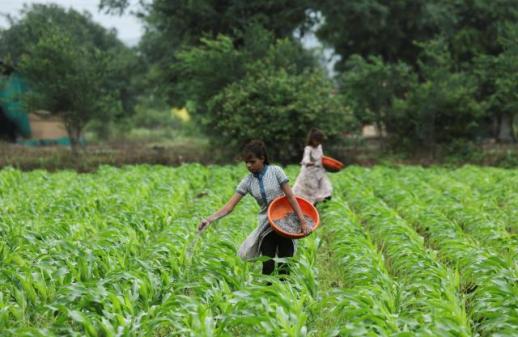 How the Iran conflict is building into Asia's economic crisis SEOUL, May 02 (AJP) - The U.S. congressional deadline to end an unauthorized combat operation has closed in, but President Donald Trump remains unmoved. In letters sent Friday to House Speaker Mike Johnson and Senate president pro tempore Chuck Grassley, Trump reiterated his administration's position that a cease-fire declared on April 7 had stopped the clock on the war — and that "Operation Economic Fury" is still squeezing Iran toward implosion through a naval blockade that has turned the Strait of Hormuz into a chokepoint for Iran's only meaningful export. Iran has not blinked. Brent crude is hovering near $120 a barrel — double its price at the end of December. Under the 1973 War Powers Resolution, presidents must end unauthorized combat operations after 60 days without congressional authorization, with a single 30-day extension permitted only to withdraw troops safely, not to extend fighting. The Trump administration's cease-fire argument remains legally contested. But for Asia's factories, central banks and households, the debate in Washington is almost beside the point. The economic war is already spreading. The toll falls hardest on a region structurally dependent on energy it does not produce. South Korea, Japan, China, India and most of Southeast Asia are not merely consumers of Middle Eastern oil and gas — they are processors. Energy becomes semiconductors, ships, steel, chemicals, pharmaceuticals, fertilizers, electricity and the logistics infrastructure that binds global supply chains together. When prices rise, the effect moves far beyond the pump. The Asian Development Bank has cut its Asia-Pacific growth forecast for this year from 5.1% to 4.7% and raised its 2026 inflation forecast from 3.6% to 5.2%. The World Bank projects energy prices will surge 24% this year — the highest since Russia's invasion of Ukraine. The United Nations Development Programme estimates the escalation could cost the region between $97 billion and $299 billion in lost output and push 8.8 million people into poverty. The inflation trajectory is the most immediately dangerous variable. A jump of that magnitude narrows central banks' room to support growth, raises debt-servicing burdens and forces governments to choose between protecting households and protecting public finances — a choice that, made badly, converts a price shock into a fiscal crisis. The region has absorbed energy shocks before. The oil crises of the 1970s reshaped industrial policy across Asia. The Gulf War jolted prices. Russia's invasion of Ukraine accelerated the renegotiation of liquefied natural gas contracts and strategic reserves. But each of those shocks arrived when the underlying conditions were more forgiving. This one has landed when Asia is already carrying high debt, elevated interest rates, post-pandemic fiscal pressure and slowing trade. What makes the current disruption structurally distinct is where it hits. Asian production networks are optimized for efficiency, not redundancy. More than half of the naphtha entering Asia by sea passes through the Middle East, feeding the petrochemical plants that supply plastics, fertilizers and pharmaceutical inputs across the region. Disruption at the Strait of Hormuz does not merely raise prices — it introduces uncertainty into systems built on precision timing. Uncertainty, in turn, is poison for capital expenditure and procurement planning. The Gulf is also a fertilizer artery, not just an energy one. Natural gas underpins the production of nitrogen fertilizer, and the region is a significant exporter of both. The United Nations has warned that as much as 45% of the world's seeds and fertilizers depend on Strait of Hormuz access. A prolonged disruption threatens not only current food prices but next year's harvests — a lagged catastrophe that will register in malnutrition and agricultural output long after the guns stop. The UNDP's most alarming scenario — six weeks of major supply disruption followed by eight months of elevated costs — would push 32.5 million people globally below the poverty line. In development economics, that is a projection. In human terms, it means children eating less, farmers planting less, clinics rationing power and households liquidating assets to survive a shock they had no hand in creating. G. Kent Fellows, an economist at the University of Calgary, notes that global crude inventories are "running down quickly" and that prices are likely to keep rising until supply and demand rebalance. Even if the Strait reopens, he cautions, prices will remain elevated while production capacity is rebuilt and inventories restocked. The short-term pressure has already begun reshaping trade relationships: Canada recently eliminated its 3% crude tariff on exports to South Korea, an early signal of the supply diversification that importing economies will pursue regardless of how the conflict ends. Aidan Hollis, also of Calgary, sees a longer-term demand reversal in the making. "While oil prices are elevated today," he says, "the long-term impact on oil prices is clearly negative: there will be massive destruction of demand for oil and natural gas as consumers and industry look for alternative sources of energy, including especially solar and wind.” Higher petrol prices, Fellows adds, will accelerate electric vehicle adoption — a structural shift that was already underway. For Zhiyuan Li, an economist at Fudan University, the deepest consequence of the war may be perceptual rather than material. "Trade, finance, energy, technology and logistics are no longer viewed simply as channels of efficiency and growth," he says. "They are increasingly viewed through the lens of security, vulnerability and strategic leverage." The danger, Li argues, is that governments draw the wrong lesson — that interdependence itself is the problem. His research suggests the opposite: greater bilateral trade raises the cost of military confrontation and can reduce both the likelihood and severity of interstate conflict. "Trade can be weaponized, but trade can also pacify," he says. "The task is not to abandon globalization, but to rebuild a global trade system that protects countries from coercion while preserving the peace-enhancing effects of economic exchange." The fiscal reckoning for governments is already taking shape. Policymakers face three basic choices: let prices pass through to consumers and absorb the political cost; subsidize broadly, cushioning households while straining budgets; or provide targeted, temporary support — economically superior but administratively demanding. The UNDP estimates that protecting the most vulnerable households across developing countries would cost roughly $6 billion, modest against the scale of potential output loss, but requiring coordination that stretched aid systems may struggle to deliver. The more durable fiscal risk is that governments repeat the errors of past shocks: universal fuel subsidies that create constituencies too politically entrenched to dismantle, emergency measures that become permanent, health and education spending quietly cut to fund price support. For high-debt developing economies, that path transforms a short-term energy crisis into a long-term development setback. The Iran war is a demonstration that modern conflict does not respect the boundaries of the battlefield. Missiles fall in the Middle East; the economic blast radius reaches South Korean petrochemical plants, Indian fertilizer importers, Thai factories and Myanmar fuel queues — and a poverty projection that will show up in educational attainment and labor productivity a decade from now. Asia-Pacific's integration into global energy and trade networks made it the engine of world growth. That same integration now makes it acutely vulnerable to a war on the other side of the world. The Trump administration may yet claim the clock has stopped. But the economic consequences are still moving. 2026-05-03 07:32:29
 -
 Pastor Jeon Kwang-hoon Holds Weekly Seoul Rally After Visiting Yoon; U.S. Warns on Hormuz Fees 'Yoon visit' Pastor Jeon Kwang-hoon holds weekly Gwanghwamun rally, says martial law possible On May 2, Pastor Jeon Kwang-hoon held a rally in central Seoul after visiting former President Yoon Suk Yeol, according to Yonhap News Agency. Jeon’s group, the Korea Restoration National Movement Headquarters, began the rally at 11:30 a.m. near the Dongwha Duty Free Shop in the Gwanghwamun area. About 6,000 people attended, based on an unofficial police estimate, waving South Korean and U.S. flags. From the stage, Jeon referred to his visit with Yoon. Jeon’s visit to Yoon at the Seoul Detention Center on April 30 had been reported earlier. “We have to make a decision. The preamble of the Constitution says to inherit the spirit of April 19,” Jeon said, arguing it means citizens should invoke a right to resist when the country is in turmoil. He added that “martial law is one of the president’s governing powers,” and said that if 10 million people gather in what he called “nonviolent armed” action, “we can rebuild the Republic of Korea.” Oh Se-hoon warns of Seoul real estate 'hell'; Jung Won-oh says Oh has been mayor Democratic Party Seoul mayoral candidate Jung Won-oh and People Power Party candidate Oh Se-hoon traded accusations May 2 over housing, as political sparring intensified a month ahead of the June 3 local elections. Speaking at a party rally at Seodaemun Cultural and Sports Center, Jung criticized Oh for, he said, staying silent “when Yoon Suk Yeol was ruining the country” and then attacking President Lee Jae-myung, whom Jung called a leader who “works well.” Jung said Oh should have spoken up “even once” when Yoon was “ruining the country.” Jung also pushed back on Oh’s recent claims that young people face “a monthly rent and deposit hell” and “a real estate hell” because of the current government. “Wasn’t the Seoul mayor you?” Jung said, arguing that after five years as mayor, Oh failed to increase housing supply and manage rental measures and is now blaming the government. Oh, for his part, said Seoul real estate would become “hell” if Jung is elected. U.S. warns shipping firms against paying Iran for Hormuz passage; Trump says, 'We are pirates' The U.S. government warned shipping companies that paying Iran fees to pass through the Strait of Hormuz could expose them to sanctions. According to Reuters and The Associated Press, the Treasury Department’s Office of Foreign Assets Control said in an advisory issued May 2 local time that it was warning of “the risk of sanctions” if companies pay the Iranian regime for safe passage or seek guarantees that they will not be attacked. Iran has promoted a detour route closer to its coast while pursuing passage charges, and the United States has moved to block Iran’s revenue for war funding through a maritime blockade, the report said. OFAC said prohibited payments could include not only cash but also digital assets, barter, informal swaps and in-kind payments. It also said attempts to route payments through Iranian embassies or disguise them as charitable donations are strictly banned. Jung Jin-suk nomination dispute deepens; People Power Party abruptly cancels ethics meeting Tensions are rising within the People Power Party over former National Assembly Deputy Speaker Jung Jin-suk’s application to seek the party nomination for a by-election in Gongju-Buyeo-Cheongyang, South Chungcheong Province. The party’s ethics committee abruptly canceled a meeting scheduled for May 2 that was to discuss Jung’s request to rejoin the party. Jung applied for reinstatement alongside his nomination bid. The committee had planned to review whether to grant an exception allowing a candidate under indictment to run. The report noted that exceptions were previously granted in similar cases involving Seoul mayoral candidate Oh Se-hoon and Daegu mayoral candidate Choo Kyung-ho, even while they were under investigation or indictment. That history had fueled expectations that Jung could receive the same treatment as he is being investigated over allegations of destroying evidence tied to a “martial law incident” involving the presidential office. With the meeting canceled, the nomination process has become less clear, the report said, and internal opposition has surfaced publicly. South Chungcheong gubernatorial candidate Kim Tae-heum issued a statement suggesting he could leave the party if Jung is nominated. BTS album 'ARIRANG' ranks No. 17 in U.K., No. 4 on Billboard 200; holds charts for sixth week BTS’ fifth full-length album, “ARIRANG,” stayed on the U.K. Official Charts Top 100 for a sixth straight week, according to Yonhap and other reports May 2. “ARIRANG” ranked No. 17 on the Official Albums Chart Top 100, down four spots from the previous week. The title track, “SWIM,” placed No. 41 on the Official Singles Chart Top 100, down seven. In the United States, “SWIM” fell 10 places to No. 22 on Billboard’s Hot 100. “ARIRANG” slipped three spots to No. 4 on the Billboard 200. Hybe described the album as reflecting BTS’ identity and universal emotions, combining traditional symbolism with a modern sensibility to highlight the group’s message.* This article has been translated by AI. 2026-05-02 22:03:19
 -
 South Korea’s Cho Hyun urges safe passage for ships in Strait of Hormuz in call with Iran South Korea’s Foreign Ministry said Foreign Minister Cho Hyun spoke by phone Friday with Iranian Foreign Minister Seyed Abbas Araghchi to discuss the situation in the Middle East. It was the third call between the two ministers since the U.S.-Iran war began Feb. 28. The ministry said the call was made at Iran’s request. The two exchanged views on regional developments. Araghchi outlined Iran’s position on talks between the United States and Iran. Cho said he hoped peace and stability would be restored quickly, noting that stability in the region affects global security and economic conditions. Cho also pointed to the continued presence of ships from South Korea and other countries still anchored in the Strait of Hormuz, and stressed the need to resume safe passage for all vessels, including South Korean ships. The two agreed to stay in close communication on related issues.* This article has been translated by AI. 2026-05-02 21:45:16
 -
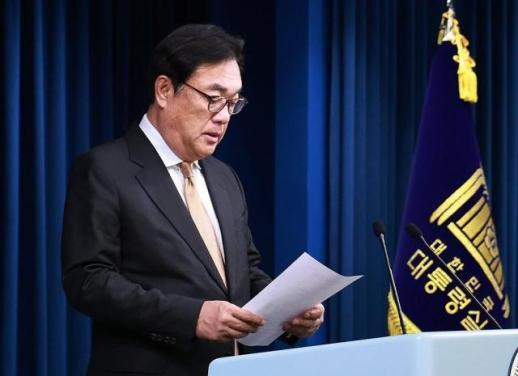 People Power Party Scraps Ethics Meeting as Jeong Jin-seok Nomination Dispute Grows The People Power Party is facing widening internal conflict over former National Assembly Deputy Speaker Jeong Jin-seok’s application to seek the party’s nomination in the Chungnam Gongju-Buyeo-Cheongyang by-election. The party’s ethics committee had planned to meet on May 2 to discuss Jeong’s request to rejoin the party, but abruptly canceled the session. Jeong applied for the nomination and also filed to be reinstated. The committee had been expected to review whether to grant an exception allowing a candidate under indictment to run. The committee has previously granted exceptions in similar cases even when candidates were under investigation or indicted, including Seoul Mayor Oh Se-hoon and Daegu mayoral candidate Choo Kyung-ho. That history fueled expectations that Jeong, who is being investigated over allegations of destroying evidence tied to the presidential office in connection with the “martial law incident,” could receive the same treatment. With the meeting canceled, party officials and observers said the nomination process has become more uncertain. Opposition inside the party also surfaced publicly. Kim Tae-heum, a candidate for South Chungcheong governor, issued a statement suggesting he could leave the party if Jeong is nominated. “Have we forgotten where we are after the miserable and bleak 1 year and 6 months since the Dec. 3 martial law?” Kim said, urging the leadership to listen to public sentiment. “If they act against the public conscience without restraint and reflection, I will have no choice but to leave.” Rep. Cho Eun-hee also called for reconsideration on social media, saying a nomination tied to “Yoon Again” would be like “setting fire again to a house where the lights have gone out.” She said that if the public turns away from the party at a time when it is fighting what she called the Lee Jae-myung administration’s “self-clearing” special counsel probe, “even the momentum to fight will disappear.” Jeong, however, questioned the procedural handling. “We agreed to proceed with the nomination committee process after the ethics committee’s decision, but the meeting didn’t happen, so it’s hard to accept,” he said. “They should at least give a chance for a primary.”* This article has been translated by AI. 2026-05-02 21:30:16