

“With the June 3 local elections about a month away, candidates should guard against excessive ambition and talk about their region’s future,” Lee Si-jong said.
Voters will choose provincial governors, mayors and county chiefs, local council members and superintendents of education. The vote will shape local administrative priorities, budgets, industrial strategy, welfare and education for the next four years, he said.
Lee, described in the interview as a former North Chungcheong Province governor, has served as an administrative official after passing the state civil service exam, as an appointed county chief and mayor of Chungju, as a three-term elected mayor of Chungju, as a two-term lawmaker and as a three-term governor. The article says he is 8-0 in elections.
In the interview, Lee offered three points of advice to candidates. First: “Compete through work.” He said candidates should not “beg for votes” by constantly showing up in front of people, but instead work so that support “comes on its own.” Second: “Truth is the greatest weapon.” Third: “Beware excessive greed,” saying too much ambition can cloud judgment in administration and politics.
As national politics increasingly spills into local races, Lee said candidates should answer practical questions: How will they create jobs? How will they keep young people from leaving? How will they fill gaps in medical care, education and transportation in rural areas and smaller cities? And what authority and financial resources should local governments have as the capital region grows and other areas face decline?
Lee said local elections are not subcontracted contests for national politics, but a test of whether regions can design their own future. For local autonomy to work, he said, electing leaders is not enough; local governments need authority and funding, and regional voices must be reflected in national decision-making. He said he continues to advocate constitutional revision to create a bicameral legislature, including a regional-representative upper chamber.
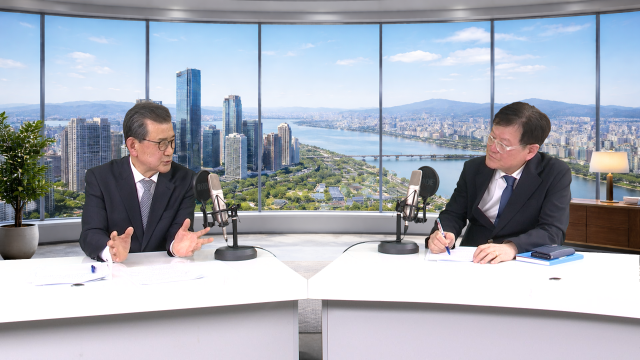
The following is a Q&A with Lee.
“Local elections are not subcontracted contests for national politics”
- The June 3 local elections are approaching. From your perspective, what do they mean?
“Local elections are when residents choose the people who will work for their community. But in reality, local elections keep getting pulled by national politics. National partisan conflict comes down to the regions, and local candidates often lean on national slogans rather than local issues. I don’t think that fits the original meaning of local autonomy.
Even after running many campaigns, what residents remember for a long time is not words but work. Whether I was mayor, a lawmaker or governor, my motto was always ‘compete through work.’ I thought that if you show up too often and look like you’re begging for votes, votes won’t come. Rather than begging, you should work hard so votes come on their own.”
Lee said elections are less about a competition in publicity than about building trust. He said voters may notice a candidate’s national political stance, but more closely judge whether the candidate can change daily life — a road, a hospital, a school or an industrial complex can matter more than big rhetoric.
He said “truth is the greatest weapon,” arguing that truth may be recognized late in politics but lasts. He said candidates who offer applause-friendly pledges without explaining funding and authority will be found out over time, while those who steadily explain feasible policies gain trust.
“The reason for 8 wins in 8 elections was not begging for votes”
- You won all eight elections you ran in. What is the key?
“I wouldn’t call it a secret. Basically, I was able to go 8-0 because I received a lot of help from North Chungcheong residents, and I want to thank them.
If I had to say, first was ‘compete through work.’ I always kept that motto as mayor, lawmaker and governor. I believed that if you appear often just to beg for votes, votes won’t come. It’s important to work so votes come on their own.
Second is the belief that truth is the greatest weapon. It’s slow, but it lasts and can endure. Third is that excessive greed clouds judgment. Whether in administration or politics, if you want too much, your judgment can easily blur. I hope people avoid excessive greed.”
Lee said that as election day nears, candidates tend to move more, speak louder and offer more promises, but he urged restraint. He said a responsible candidate can say what is possible and what is difficult right now.
“In a crisis, a local leader must not avoid decisions”
- As mayor of Chungju, you issued an evacuation order during a major flood and prevented large casualties. What standard should a local leader use?
“That was the 1990 flood. Upstream of Chungju was Chungju Dam, and downstream was the regulating dam. The city was in between. It rained so much in Gangwon Province that water poured down. We didn’t know when the levee in the city might break.
I asked the province, the central government and the Blue House, but no one could say when the levee would break or how many casualties there would be. After thinking alone, around 8 p.m. I judged that ‘if this goes wrong, there could be hundreds of casualties,’ so I issued an evacuation order. That was not common in administration at the time. We forcibly evacuated residents in five neighborhoods near the river. People protested and there was an uproar.
But a couple of hours after the evacuation, the levee broke in several places. I think that if I hadn’t evacuated, the 피해 could have been more than 1,000, and there could have been hundreds of deaths. I still remember it vividly.”
Lee said choosing a local leader means entrusting that person with decisions in emergencies, when lives and safety are at stake and waiting for instructions can be too slow.
“Local autonomy holds elections locally, but the center holds the power and money”
- You have served as both a lawmaker and a local government head. What is the biggest difference between national politics and local administration?
“In a word, there is a top-down relationship, because the central government holds all authority and financial resources. Article 117 of the Constitution says local governments can enact self-governing regulations only within the scope of laws and regulations. Those include not only laws passed by the National Assembly but also presidential decrees, ministerial decrees, guidelines, rules and notices. So in practice, there isn’t much local governments can do on their own.
Today’s local autonomy is that residents elect local government heads, but authority and funding are all in the center. The central government says it devolves authority, but it also often creates new laws that burden local governments.
For example, when it enacted a law to foster regional universities, it put an obligation on local governments to support budgets for those universities. But local governments have almost no authority over them. It’s a structure where there is no authority but there is financial burden. The same happened when firefighters were converted into national civil servants. If they are national civil servants, it’s natural for the state to pay personnel costs, but the structure became one where local governments bear the costs. That makes local administration very difficult.”
“My goal was to raise North Chungcheong from a perennial 2% to the 4% range”
- During your 12 years as governor, you had major results in investment attraction and industrial development. What was your strategy?
“I served as governor for 12 years starting in 2010, leading the province with the catchphrase ‘North Chungcheong, land of life and sun.’ Until 2009, North Chungcheong was a ‘perennial 2%,’ weak in many aspects such as the economy and population compared with the national total. So I set a goal of raising it from the 2% range to the 4% range.
Over 12 years, we fostered bio, cosmetics, solar energy and semiconductors. As a result, over 12 years GRDP increased 70% compared with 2009, exports increased 300%, and investment attraction exceeded 100 trillion won. The province’s share of the national economy rose from 2.99% in 2009 to 3.7% in 2021. I see that as significant growth.”
Lee also described the process of attracting Hanwha Q CELLS. He said the company demanded a written pledge that the governor would pay a 100 billion won penalty if permits and construction were not completed by the deadline. Lee said he signed and the plant was completed on time.
“The Gangho axis is a national balanced-development strategy to stop regional decline”
- One major policy during your tenure was the Gangho axis development strategy. Does it still matter?
“It matters a lot. Korea has been developed around the Gyeongbu axis. The Gangho axis, linking Gangwon through Chungcheong to Honam, was largely undeveloped and lacked national projects, so it was left out. Expressways, high-speed rail and airports were concentrated on the Gyeongbu axis, but the Gangho axis lacked connections.
It was too imbalanced. If the Gyeongbu axis accounts for about 80% in industry and the economy, the Gangho axis is about 20%. So I argued for Gangho axis development. We connected railways and expressways and, together with eight provinces and metropolitan cities, reflected it in the 4th National Balanced Development Plan. But for success, a special Gangho axis law is needed. It’s regrettable that it was not legislated when I stepped down.”
“Give North Chungcheong a sea — logic is everything in persuading the central government”
- Local development requires persuading the central government. What was hardest?
“Persuading the central government is very difficult. The most important thing is to build a strong logic.
For example, as governor I argued for building a marine science museum in Cheongju. People said, ‘What marine, in a province with no sea?’ I said, ‘Give North Chungcheong a sea. The province has the right to have a sea, and the state has the duty to give it a sea.’ My logic was that to develop maritime awareness, inland residents need maritime education even more than coastal residents. That’s how we attracted a 100 billion won marine science museum.
The same with the Jungbu Inland Railway. I proposed a rail line from Seoul to Chungju, Mungyeong and Gimcheon. At first there was a lot of opposition — why build a railway when there aren’t big factories? But I presented logic such as restoring historic routes, and the railway eventually opened.”
“One root cause of capital-region concentration is a population-based unicameral National Assembly”
- Capital-region concentration and regional decline are key issues. Where do you see the root cause?
“I see it as a vicious cycle: as population concentrates in the capital region, resources concentrate there, and as resources concentrate, population concentrates even more. There are many reasons, but I also see the population-based unicameral National Assembly as a big problem.
In the first National Assembly, the capital region had 19.5% of lawmakers and non-capital regions had 80.5%. But as concentration continued, by the 22nd National Assembly the capital region increased greatly. Including proportional representation, you could say the number of capital-region lawmakers became larger than non-capital regions. Then it becomes very difficult for non-capital voices to be reflected in national affairs.
For example, Seoul’s Gangnam District has three lawmakers, while North Chungcheong’s Goesan County could be seen as having about one-quarter of a lawmaker. Gangnam may have more people, but Goesan is much larger in area and has many administrative demands — floods, wildfires, wild boar control and crops. But if seats are set only by population, concentration worsens. That’s why the argument for a bicameral legislature centered on regions — an upper chamber — emerges.”
“A regional-representative upper chamber is needed for local voices to reach the state”
- You have recently emphasized restructuring the power system and creating a bicameral legislature with a regional-representative upper chamber. Why?
“After stepping down as governor and working with the Constitutional Association, and having long experience as a provincial governor, I came to think that for the country — especially to prevent regional decline — a regional-representative upper chamber is absolutely necessary. It’s the concept of dispersing power.
Today’s political conflict is almost at the level of war. The other side is seen as a complete enemy. No matter how much they fight, lawmakers’ terms are guaranteed. Impeachment of the president can be initiated in the National Assembly. Since the government was established in 1948, 10 of 13 presidents could be considered ‘unable to complete normally.’ Something is seriously wrong.
Our Constitution has no means to moderate extreme conflict. There is no vote of no confidence and no dissolution of parliament. There is no structure like the United States, where the Senate coordinates between the president and the House. If impeachment is initiated, it goes to the Constitutional Court. In this structure, unless the power system is quickly reformed, there is no way to stop political conflict.”
Lee said the core of reform is dispersing presidential power, dispersing National Assembly power and decentralizing central government power to local governments, with a regional-representative upper chamber as a common tool.
“This is not about increasing lawmakers — it can be done with a fixed total”
- People worry a bicameral system would mean more lawmakers.
“I know that sentiment. That’s why I argue for keeping the total fixed. There are 300 lawmakers now, and you can divide those 300 into an upper and lower chamber. Or you can keep the total budget currently used for 300 lawmakers and divide it to include the upper chamber. If either the total number or the total budget is kept unchanged, I think there would be less resistance.
People think Korea has many lawmakers, but per capita it’s not that many. Some say a small country doesn’t need a bicameral system, but Korea is not small by population and is a large economy. I don’t think that argument is right.
If the ninth constitutional revision emphasized direct presidential elections, I hope the 10th revision will emphasize a bicameral National Assembly. I think it would be hopeful for the country’s future.”
The article said Lee rejected suggestions that he was positioning himself to run for an upper-chamber seat, saying “not at all.” It said he explained he had spent about 51 years in public service — 23 years as an appointed official and 27 to 28 years as an elected official — and was advocating constitutional reform as a way to repay the country.
“Politics is recognizing the reality of more and less, not right and wrong”
- How do you define politics?
“I don’t think politics is judging right and wrong. That’s a judge’s job. Politics is recognizing the reality of more and less. Compromise is fundamental.
For example, I think it’s wrong for a winner with 60% to exercise 100% of power. A 60% winner should recognize some share for the 40% who lost — that is real democracy and compromise. Conversely, the 40% should first accept the result. If they don’t and keep raising issues, political chaos is inevitable.
Even power obtained legally must recognize the 40% who lost. The spirit of compromise — mutually recognizing the reality of more and less — is what is most needed.”
The article said Lee cited his experience at Cheongnamdae, where he brought together displays on past presidents and leaders of the provisional government, saying “painful history must also be recorded as history.”
“A country with sound fundamentals, a strong foundation, and investment in the future”
- What direction should South Korea take?
“What I want to recommend to our people and politicians is to build a country with sound fundamentals. Fundamentals could be national identity, or order and a sense of community. We need a country with sound fundamentals.
Second is a country with a strong foundation. In education, scholarship, science, industry and culture, things last when the foundation is strong. Third is a country that invests in the future. I hope it becomes a country that invests with a view to 10 years and 100 years ahead, not just the immediate moment. I hope politicians work so we become a country with sound fundamentals, a strong foundation and investment in the future.”
In closing, the article said Lee’s advice to candidates can be summed up in three lines: “Compete through work,” “Truth is the greatest weapon,” and “Beware excessive greed.” It said voters should judge who understands local realities, can persuade the central government with clear logic, can make responsible decisions in disasters, and can govern for the whole community.
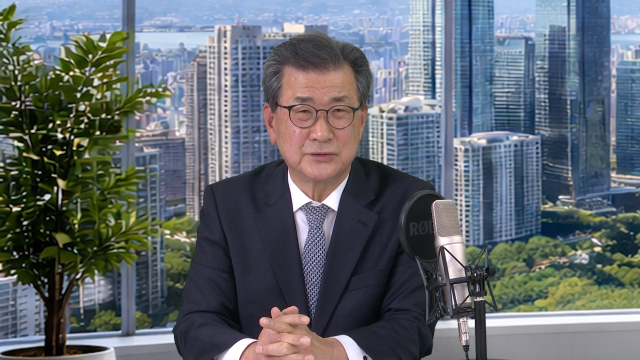
[Lee Si-jong, former North Chungcheong Province governor] The article described Lee as an administrator who has worked across central and local government and in both legislative and executive roles. It said that during his 12 years as governor he promoted the slogan “North Chungcheong, land of life and sun,” fostered bio, cosmetics, solar energy and semiconductor industries, and focused on investment attraction and economic growth. After leaving office, it said, he has advocated restructuring the power system — especially a regional-representative upper chamber and a bicameral National Assembly — to address regional decline and capital-region concentration.
* This article has been translated by AI.
Copyright ⓒ Aju Press All rights reserved.