
Journalist

RYU SO HYUN
2s0@ajunews.com
-
 Confusion Surrounds Vehicle 5-Day Discount Program Amid Regulatory Dispute The government’s initiative for a vehicle 5-day discount program has sparked a dispute between financial authorities and the insurance industry over legal responsibilities. While the Financial Services Commission (FSC) believes there are no violations of insurance law, insurers argue that they need an official confirmation stating the program is not illegal to avoid future regulatory risks. On May 21, the FSC communicated to insurers that the vehicle 5-day discount program does not require a non-action opinion. An FSC official stated, "Since the vehicle 5-day discount program is legally sound, there is no need for a non-action opinion." A non-action opinion is an official document issued by authorities confirming that a financial company will not face penalties for a proposed new business. Previously, Shin Jin-chang, the head of the FSC's office, indicated during the announcement of the discount program that if there were legislative uncertainties, the FSC would actively consider issuing a non-action opinion to ensure smooth implementation of the program. This statement had led the insurance industry to believe that the possibility of receiving such an opinion was open. The vehicle 5-day discount program offers a 2% discount on premiums to personal auto insurance policyholders who agree not to drive on specific weekdays. The government initiated this program to encourage energy conservation and respond to high fuel prices. Insurers planned to begin accepting applications in May, with a launch scheduled for the end of the month, retroactively applying discounts from April 1. However, concerns remain in the industry regarding the basis for rate calculations as the program's launch aligns with the policy timeline. Article 129 of the Insurance Business Act mandates that insurance rates must be based on objective and rational statistical data. Typically, creating a new program requires 2 to 3 months for risk analysis, rate review, policy adjustments, and system development. In this case, the program's features were presented before the rate calculations were completed. The industry fears that a lack of statistical evidence linking participation in the program to actual reductions in accident risk could lead to future disputes over rate adequacy. Additionally, the retroactive application from April 1 complicates verification of whether participants adhered to their non-driving commitments during that period. For these reasons, insurers are requesting an official document from the financial authorities stating they will not impose penalties. If deemed a violation of the law, insurers could face fines of up to 50% of the annual premium income from the affected policies. They argue that verbal assurances are insufficient. However, the financial authorities have reiterated their position, asking the industry to trust their judgment. An insurance industry representative stated, "While we understand the authorities believe there are no issues, the responsibility ultimately falls on the insurers if problems arise in the future. Given that political or policy shifts could lead to different interpretations of the same issue, at least some legal safeguards are necessary." As a result of the ongoing tug-of-war between the industry and authorities, the launch of the 5-day discount program may be delayed. Some insurers are considering postponing the retroactive application from April 1 or pushing the launch to June after completing rate calculations.* This article has been translated by AI. 2026-05-21 19:10:40
 -
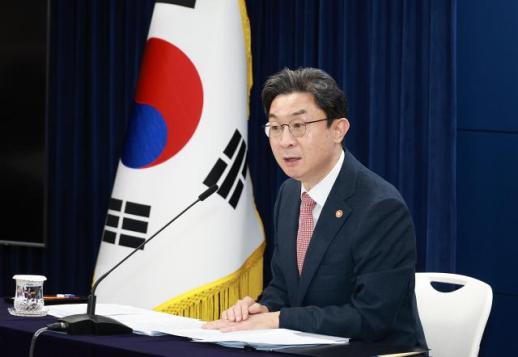 Korea's Financial Authority to Appoint Chief Inclusion Officer to Address Financial Exclusion The Financial Services Commission (FSC) is moving to designate Chief Inclusion Officers (CIFOs) within banks and financial institutions to address the issue of financial exclusion, which President Lee Jae-myung has described as a form of "predatory finance." The initiative aims to implement structural changes to remedy this problem. Additionally, to attract more foreign individual investors to the domestic stock market, the FSC plans to expand the scope of foreign integrated accounts to include exchange-traded funds (ETFs) and will hold a large-scale overseas investment briefing in September. During a press briefing on May 21, Lee Ok-yeon, chairman of the FSC, stated, "We need fundamental improvements to address the structural issues that create financial exclusion." He announced plans to establish a strategy promotion team for inclusive finance in June, which will consist of four divisions: general, policy for the underprivileged, financial industry, and credit infrastructure. The general division will focus on designating CIFOs within financial institutions to discuss ways to improve access to finance for low-income and vulnerable groups at the board and governance levels. The FSC is also considering measures such as providing immunity for employees actively engaged in inclusive finance, establishing a comprehensive evaluation system for inclusive finance, and linking evaluation results to financial institutions' incentives and compensation. Lee emphasized, "While we have focused on urgently rescuing marginalized groups pushed out of the formal financial system, it is now time to improve the very structures that lead to financial exclusion." Improvements to the credit evaluation system will also be discussed. The FSC has noted that the current credit evaluation system, which primarily relies on past delinquency and financial transaction history, fails to adequately assess individuals with limited financial transaction histories or those who have consistently repaid their debts. As a result, the FSC plans to rationally adjust the criteria for utilizing delinquency information and explore the introduction of credit growth accounts and alternative information centers that leverage non-financial data. Additional incentives to stimulate the stock market are also in the works. Specifically, to increase the influx of foreign individual investors into the domestic stock market, the FSC will expand the scope of foreign integrated accounts to include ETFs, which were previously limited to stocks. The large-scale overseas investment briefing, dubbed "Korea Premium Week," is set to take place throughout September. This event aims to systematically consolidate previously dispersed investment briefings into an international event representing the Korean capital market. * This article has been translated by AI. 2026-05-21 18:55:12
 -
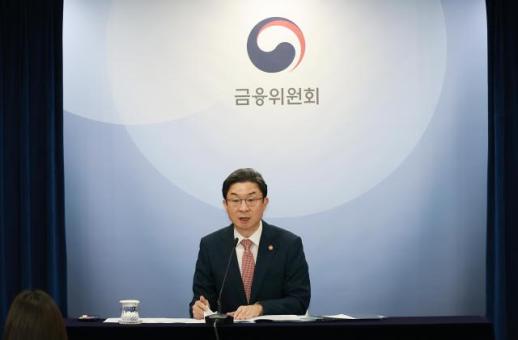 South Korea's Financial Authority Shifts Toward Inclusive Finance The Financial Services Commission (FSC) is set to implement a structural shift toward inclusive finance. This initiative follows President Lee Jae-myung's criticism of predatory lending practices and Policy Chief Kim Yong-beom's concerns regarding interest rate stratification and the exclusion of mid- and low-credit borrowers. The FSC has identified financial sector reform as a key priority for the second half of this year. To this end, Chairman Lee Ok-yeon proposed the 'Three-Tiered Inclusive Finance' model, aiming to address the systemic issues that push vulnerable borrowers into policy-backed microfinance and illegal lending. ◆ Lee Ok-yeon Proposes 'Three-Tiered Inclusive Finance' During a press briefing on May 21, Chairman Lee outlined the 'Three-Tiered Inclusive Finance' model. The first tier consists of formal financial institutions such as banks and savings banks, the second tier includes policy-backed microfinance, and the third tier offers alternative recovery financing for borrowers who cannot be accommodated by the existing financial system. He noted that the first tier has failed to adequately manage risk, resulting in mid- and low-credit borrowers being pushed into the second and third tiers. Lee explained that the role of financial institutions is to assess and manage risk, determining the future potential of borrowers. However, he pointed out that financial companies often gravitate toward the safest options, leading to a situation where vulnerable borrowers are not sufficiently absorbed by formal finance. This results in increased demand for policy-backed microfinance, which in turn cannot handle the overflow, forcing some borrowers into illegal lending. The second tier, policy-backed microfinance, and the third tier, recovery financing, serve as safety nets for borrowers excluded from formal finance. However, as demand from the first tier grows, policy-backed microfinance must operate on a large-scale, standardized basis, limiting its ability to manage individual cases. Lee emphasized the need for a long-term financial approach that utilizes relaxed funding sources, such as donations, rather than traditional bank deposit-based loans, focusing on the potential for recovery over five to ten years rather than the likelihood of default within one year. This movement by the financial authorities aligns with the concerns raised by the presidential office. President Lee Jae-myung recently stated, "Financial institutions are quasi-public entities, and inclusive finance is one of their obligations," urging action against predatory lending practices. Policy Chief Kim Yong-beom has also publicly addressed the limitations of the credit evaluation system and the issues of interest rate stratification and exclusion of mid- and low-credit borrowers. Amid the ongoing scrutiny of long-term debt collection practices, there is a growing recognition of the need to reform both conservative lending practices and the credit evaluation system within the financial sector. ◆ Expanding 'Korea Premium' In conjunction with the shift toward inclusive finance, Chairman Lee also outlined plans for capital market globalization. While efforts have previously focused on eliminating the 'Korea Discount' in domestic markets, the aim is now to attract foreign investment into the domestic stock market, transforming it into a 'Korea Premium.' Lee stated, "We will actively pursue the globalization of capital markets to facilitate the influx of global funds and high-quality assets," noting that while foreign individual investors are interested in purchasing Korean stocks, the existing mechanisms are insufficient to accommodate this demand. To facilitate this, the FSC plans to expand the scope of foreign integrated accounts from stocks to include exchange-traded funds (ETFs). The foreign integrated account system allows overseas investors to invest in the domestic stock market without needing to open separate accounts with domestic securities firms. Additionally, the government will host a large-scale overseas investor relations event named 'Korea Premium Week' in September, similar to Japan's 'Japan Week' and Taiwan's 'Taiwan Week.' This event aims to consolidate various overseas IR activities into a single international event representing the Korean capital market. The FSC is also accelerating efforts to improve capital market regulations. It is preparing to implement a ban on duplicate listings by July. To this end, two seminars will be held this month, and a draft of detailed regulations and guidelines will be released by the end of May or early June. Furthermore, the FSC reiterated plans to ease network separation regulations for financial companies that possess a certain level of security capabilities and are willing to enhance security using artificial intelligence (AI). There is also a possibility of completely lifting network separation regulations for financial companies with advanced security capabilities and AI integration.* This article has been translated by AI. 2026-05-21 18:49:55
 -
 Five Candidates Compete for Next Head of Credit Finance Association Five candidates have confirmed their applications for the position of the next president of the Credit Finance Association. The upcoming election is shaping up to be a competitive five-way race, with candidates from both the private sector and political circles entering the fray. According to the credit finance industry on May 20, the association's candidate recommendation committee closed applications for the next president at 6 p.m. the previous day. A total of five individuals have applied for the position. The known candidates include Lee Dong-cheol, former president of KB Kookmin Card; Park Kyung-hoon, former CEO of Woori Financial Capital; Kim Sang-bong, an economics professor at Hansung University; Yoon Chang-hwan, former chief secretary to the Speaker of the National Assembly; and Jang Do-jung, former policy advisor at the Ministry of Economy and Finance. Among the candidates, Park is being prominently mentioned as a strong contender from the private sector, while Yoon is seen as a significant figure from the political realm. Park, who previously served as CEO of Woori Financial Capital, has emerged as a dark horse in the application process. Yoon, who held the position of chief secretary to the Speaker of the National Assembly during the Moon Jae-in administration in 2018, brings political experience to the table. However, both candidates lack direct experience leading the card industry, which is a significant segment of the credit finance sector. Given the importance of card companies within the association, issues such as card fees, merchant regulations, and expansion of new business areas are expected to be critical factors in evaluating the next president's qualifications. In contrast, Lee Dong-cheol's background as the former head of KB Kookmin Card is considered a strong advantage. Kim Sang-bong, an expert in finance and economics, offers a unique perspective as an academic candidate.* This article has been translated by AI. 2026-05-21 03:36:59
 -
 National Growth Fund to Launch on May 22, No Principal Guarantee and Five-Year Lock-In The National Participation Growth Fund will be launched on May 22, with a total size of 6 trillion won. Sales may close early if the funds are exhausted. On May 19, the Financial Services Commission provided key information regarding the National Participation Growth Fund. The fund aims to raise 6 trillion won from the general public and will be available for purchase on a first-come, first-served basis through major banks and securities firms from May 22 to June 11. However, this is not a savings product where money is deposited monthly; instead, investors must pay the entire investment amount upfront and cannot redeem it for five years. As it does not guarantee the principal, potential investors should thoroughly understand the product's structure and risks before subscribing. Here are some key questions and answers regarding the National Participation Growth Fund: - When will it be available for purchase? "Sales will begin on May 22 and continue until June 11 for a total of three weeks. The total sales amount is 6 trillion won, and since it is first-come, first-served, sales may close early if the funds are exhausted." - Is there a separate allocation for low-income individuals? "Yes, 1.2 trillion won, or 20% of the total sales, is reserved for low-income individuals. This allocation will be available during the first two weeks, from May 22 to June 4. Any remaining low-income allocation not sold during this period will be available to the general public in the third week." - Can only low-income individuals subscribe during the first two weeks? "No, the entire allocation, including the low-income portion, will be available for purchase from the start. However, the 1.2 trillion won for low-income individuals will be managed separately." - What is the income threshold for low-income status? "The threshold is an annual earned income of 50 million won or less. If there are other sources of income, the total income must be 38 million won or less. This is consistent with the requirements for the low-income personal comprehensive asset management account, or ISA." - Where can individuals subscribe? "Subscriptions can be made at 10 banks and 15 securities firms. The banks include Kookmin, KB, Nonghyup, Shinhan, IM Bank, Woori, Hana, Gyeongnam, Gwangju, and Busan banks. The securities firms include KB, NH, Daishin, Meritz, Mirae Asset, Samsung, Shin Young, Shinhan Investment, IM, Woori Investment, Yuanta, Hana, Korea Investment, Hanwha Investment, and Kiwoom Securities, which offers online-only subscriptions." - What is the subscription limit? "The annual subscription limit per person is 100 million won. Under the Tax Benefits Restriction Act, a dedicated account can hold up to 200 million won over five years. For a general account, the limit is 30 million won per person. The minimum subscription amount varies by sales firm, ranging from 100,000 won to 1 million won." - What documents are needed to subscribe? "To receive tax benefits, a certificate of income verification for ISA subscription is required. This document can be obtained from the National Tax Service's Hometax, Government24, or local tax offices. The Financial Services Commission advises obtaining this document in advance for quick subscription after the product launch. If subscribing through a general account without tax benefits, no income verification certificate is needed." - Is it possible to invest a fixed amount monthly? "No, the National Participation Growth Fund is not a savings-type product. Investors must pay the entire investment amount in one lump sum at the time of subscription. Additionally, redemption is not possible for five years." - Is the principal guaranteed? "No, it is not guaranteed. The Financial Services Commission describes this product as a high-risk investment that does not guarantee the principal, classified as a first-grade product. Investors must be assessed as having a suitable investment profile to subscribe." - Does the government compensate for 20% of individual investment losses? "No, the government does not directly compensate for 20% of individual investments. The 6 trillion won in public investment will be managed across 10 sub-funds, with an additional 1.2 trillion won from the government and seed investments from fund managers. In the event of losses, the government and fund managers will absorb losses before the public investment. However, this does not mean that individual investors are guaranteed a 20% loss coverage." - What should investors be most cautious about before subscribing? "Since sales are on a first-come, first-served basis, early closure is possible. To receive tax benefits, income verification documents must be prepared. Most importantly, investors should be aware that the product is a high-risk investment with no redemption for five years and the potential for principal loss."* This article has been translated by AI. 2026-05-19 16:04:40
 -
 AXA Insurance Seeks New Revenue Stream in Rental Car Accident Handling As the burden of auto insurance policies accumulates, the profitability of insurance companies focused on auto coverage is being challenged. With pressures to lower premiums, rising repair costs, and delays in improving the treatment system for minor injuries, AXA Insurance is now seeking new revenue sources in the rental car accident handling market. According to the Financial Supervisory Service on May 19, AXA has recently reported a subsidiary business that provides and mediates accident reporting, investigation, and repair cost assessment services for rental car operators. When an accident occurs with a vehicle owned by a rental car company, AXA will handle everything from accident reporting to on-site investigation and assessment of repair costs, earning a commission for these services. This move is seen as an attempt to expand its accident handling capabilities, developed through its existing auto insurance compensation operations, into external services. AXA's actions are closely tied to the declining profitability of auto insurance. The company reported an operating loss of 39.986 billion won last year, marking a return to the red. Its net loss also reached 33.784 billion won. The audit report identified a decrease in auto insurance revenue as a major reason for the poor performance, with auto insurance revenue dropping by 45.938 billion won compared to the previous year. However, this issue is not unique to AXA. Auto insurance is heavily regulated, making premium adjustments subject to significant policy considerations. After lowering premiums for over four years, the industry raised them this year, while repair and treatment costs have continued to rise. Additionally, the introduction of the 'eight-week rule' to reduce excessive treatment for minor injuries has been indefinitely postponed, and policies like the vehicle five-part discount, which reduce premium income, are being pursued, further narrowing the profitability margins for insurers. The limitations of specialized auto insurance models are also evident in the case of Carrot Insurance. Carrot grew by promoting per-mile auto insurance but continued to incur losses since its inception, ultimately being absorbed by Hanwha General Insurance. Before the merger, Carrot recorded annual losses of around 60 billion won. Industry experts suggest that without being integrated into Hanwha, it would have been challenging for Carrot to continue operating independently due to its high dependency on auto insurance, which limits its ability to offset losses with other lines of business. Major insurance companies are also struggling with poor auto insurance performance. In the first quarter of this year, Samsung Fire & Marine, Hyundai Marine & Fire, DB Insurance, and KB Insurance collectively reported a deficit of 39.7 billion won in auto insurance. The loss ratio for auto insurance exceeded the breakeven point of 80%. Following last year's auto insurance losses that soared to around 700 billion won, the trend of deficits is likely to continue this year due to ongoing policy shifts. However, it remains to be seen whether AXA's new subsidiary business will lead to immediate profitability. An AXA representative stated, "We are still in the preparation stage," adding that "no specific timeline has been confirmed."* This article has been translated by AI. 2026-05-19 15:00:00
 -
 Caution Advised for Duplicate Enrollment in Health Insurance Plans The Financial Supervisory Service (FSS) issued a warning on May 19 regarding the risks associated with duplicate enrollment in group and individual health insurance plans, as well as travel health insurance. This advisory comes in response to a surge in consumer complaints about paying double premiums or misunderstanding coverage details. Consumers enrolled in workplace group health insurance can stop paying premiums for their existing individual health insurance plans. If they are enrolled in both individual and group health insurance, they can apply to their individual insurance provider to halt payments for overlapping coverage, but this is only possible after one year of enrollment in the individual plan. If a consumer's group health insurance ends due to retirement or other reasons, they must resume their individual health insurance within one month. Applications made within this timeframe will not require additional health assessments, regardless of current health status or claims history. However, if more than a month passes after the group insurance ends, resuming the individual plan may not be possible. For those who have switched from older health insurance plans to newer ones, there is a limited period during which they can revert to their previous contracts. If no claims have been made within six months of the switch, they can return to the original plan. If a claim has occurred, they can still revert within three months of the switch date. However, this option is available only once per policyholder, and a settlement of premium differences is required upon withdrawal. When enrolling in overseas travel health insurance, consumers should also exercise caution. If they already have domestic health insurance, they cannot receive duplicate compensation for domestic medical expenses, even if they enroll in travel insurance that covers these costs. Compensation will be proportionate to the actual medical expenses incurred, making it essential to verify the necessity of duplicate coverage.* This article has been translated by AI. 2026-05-19 13:01:16
 -
 Financial Supervisory Service Addresses AI Hacking and Leverage ETF Risks The Financial Supervisory Service (FSS) is intensifying its response to consumer risks associated with cyberattacks utilizing artificial intelligence (AI), the concentration of leverage exchange-traded funds (ETFs), and disorderly recruitment practices by corporate insurance agents (GAs). On May 18, FSS Chairman Lee Chan-jin presided over the second Consumer Risk Response Council, where key issues affecting financial consumers were discussed. This council serves as the highest-level advisory body within the FSS to proactively address potential consumer harm. The potential for cyberattacks using high-performance AI was a major topic of discussion. The FSS expressed concern that AI could quickly identify security vulnerabilities or facilitate simultaneous attacks, leading to significant consumer harm through disruptions in essential banking services. The agency plans to develop response strategies tailored to the characteristics of the financial sector in collaboration with relevant authorities and to enhance information security systems, including the use of generative AI for security purposes. In the insurance sector, issues related to incomplete sales and disorderly practices by GAs were highlighted. Some GAs may encourage unnecessary insurance purchases under the guise of tax, accounting, or labor consulting, or may even engage in illegal private financing. The FSS is considering regulatory reforms, including prohibiting GAs from simultaneously operating consulting services and establishing mutual regulations. In the capital markets, discussions were held regarding investor protection ahead of the launch of single-stock leverage ETFs on May 27. The FSS warned that excessive capital inflow into leverage and inverse ETFs could increase the risk of losses for individual investors and has decided to monitor trading trends and operational status closely. The agency also called for enhanced internal controls regarding securities firms' overseas stock events and investment advertisements. Illegal activities by financial influencers and investment advisors are also under scrutiny. The FSS plans to utilize an AI-based monitoring system to crack down on the provision of illegal investment information and suspicious trading activities on social media in real time. Inspections are being considered for advisory and management firms showing significant signs of illegal activity. Chairman Lee emphasized the need for vigilance regarding the risks and ripple effects associated with the convenience and efficiency of AI use. He stated, "We must respond with a high level of awareness to actions that encourage excessive debt investment and leverage investing, as well as to the disruptive activities of financial influencers and disorderly recruitment practices by GAs."* This article has been translated by AI. 2026-05-19 09:27:00
 -
 Doosan Expands Semiconductor Territory with Support from KDB and Woori Banks KDB Industrial Bank and Woori Bank will jointly arrange financing for Doosan Group's acquisition of SK Siltron. The funding is aimed at strengthening the national semiconductor supply chain, with the final amount currently under negotiation. According to financial sources on May 18, Doosan Group plans to sign a stock purchase agreement (SPA) with SK Group for the acquisition of SK Siltron by the end of this month. The company's valuation is estimated to be around 5 trillion won. To secure the acquisition funds, Doosan Group has selected KDB and Woori as joint arrangers and is discussing financial terms. The financing will be pursued through a syndicated loan involving multiple financial institutions, with market estimates suggesting a total amount of approximately 2.5 trillion won. A KDB official stated, "We are in discussions for a joint arrangement, but we are also working on a structure that involves multiple financial companies, and the final amount may vary." Doosan Group currently produces core semiconductor materials, such as copper-clad laminates (CCL), through its Doosan Electronics BG and also owns Doosan Test, a semiconductor backend testing company. If the acquisition of SK Siltron is successful, Doosan will secure wafer manufacturing capabilities, completing the value chain from materials to backend processes. This move is also expected to boost the local economies in regions where SK Siltron operates, such as Gumi in North Gyeongsang Province and Cheongju in North Chungcheong Province, while attracting additional investments. Notably, Doosan Group, which previously faced a liquidity crisis, has made a remarkable recovery with the support of KDB. Doosan Enerbility (formerly Doosan Heavy Industries) received 3 trillion won in emergency funding from KDB and the Export-Import Bank in 2020, followed by a rigorous restructuring process that allowed it to exit creditor management in 2022. However, as national policy banks provide financial support for large mergers and acquisitions by conglomerates, discussions about the appropriateness of such interventions are expected to continue. Despite the overarching goal of fostering national strategic industries, there may be differing opinions on how far policy financing should go in supporting the expansion of specific conglomerates.* This article has been translated by AI. 2026-05-18 22:57:59
 -
 Seonggeumwon Eases Debt Repayment Burden for Sunshine Loan Borrowers 서민금융진흥원이 햇살론 구상채무자의 재기를 돕기 위해 분할상환 조건을 한시적으로 완화한다. Seonggeumwon announced on May 18 that it will temporarily ease the repayment conditions for borrowers of the Sunshine Loan to assist them in their recovery. The "Sunshine Loan Debtor Support Special Campaign" will run until June 26. The program targets borrowers who have been unable to repay their principal and interest on the Sunshine Loan, for whom Seonggeumwon has made payments to banks and other financial institutions. However, those currently undergoing personal rehabilitation, bankruptcy proceedings, or debt adjustment through the Credit Recovery Commission are excluded from this support. During the campaign, applicants for installment repayment will see a reduction in the initial payment burden. Previously, the minimum amount required at the start of an installment repayment agreement was 100,000 won, but this will be lowered to 50,000 won during the campaign period. The repayment period will also be extended from a maximum of 10 years to 12 years. Seonggeumwon aims to support debtors who may struggle to gather a large sum of money immediately by allowing them to establish a feasible repayment plan. Once an installment repayment agreement is signed, information regarding subrogation will be immediately released, and no penalty fees will be charged during the repayment period. For those already using installment repayment but facing difficulties, a readjustment process will allow them to maintain their agreement. If the agreement is canceled due to delinquency, credit assessment information may be re-registered, but by applying for readjustment, borrowers can modify their repayment period and amounts without canceling the agreement. Kim Eun-kyung, head of Seonggeumwon, stated, "In the current challenging economic conditions, the debt burden on vulnerable groups is increasing. Through this campaign, we aim to reduce the burden on those who have the will to repay but have found it difficult to obtain opportunities, helping them return to economic activity as soon as possible."* This article has been translated by AI. 2026-05-18 18:09:53