
Journalist

SEOYOUNG LEE
2s0@ajunews.com
-
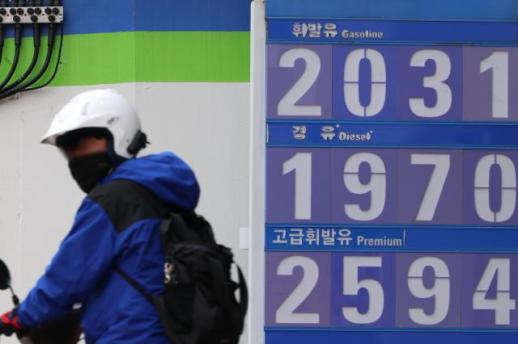 As Up to 6 Trillion Won in Fuel-Price Relief Nears, Financial Firms Keep Marketing Quiet High fuel-price relief payments are set to be distributed soon, but marketing across South Korea’s financial sector is quieter than in past years. Banks and card issuers are posting application instructions, yet few are offering customer promotions, citing concerns that marketing costs would deepen losses under a low-fee structure. Financial firms are using their websites and mobile apps to explain how to apply and outline the schedule ahead of the first round of applications, the industry said April 26. The first round begins with vulnerable groups, and eligibility expands from May 18 to the bottom 70% of income earners. Payments will range from 100,000 won to 600,000 won per person. Recipients can choose to receive the money through local gift certificates, credit or debit cards, or prepaid cards. Applications can be submitted through card company websites and apps, as well as automated phone systems. Spending will be limited to merchants with annual sales of 3 billion won or less, and use at big-box retailers, department stores and online shopping malls will be restricted. The financial industry expects many recipients to choose the card option again. With about 70% of last year’s consumer coupons delivered via credit and debit cards, the volume of card payments this time is estimated to reach as much as 6 trillion won. Even so, beyond basic guidance, customer acquisition events remain scarce. Only a few card issuers, including KB Kookmin Card and Shinhan Card, have launched promotions, while most have limited their efforts to application notices. The same is true for the four major banks—KB Kookmin, Shinhan, Hana and Woori—as well as online banks such as Toss, Kakao and K Bank. That contrasts with last year, when card companies ran a joint campaign and spent about 2.5 billion won on marketing, including distributing consumer coupons to a total of 310,000 people. This time, similar industrywide efforts have largely not materialized. Industry officials point to thin margins. Because spending is concentrated at small merchants, card fees are expected to remain in the 0.4% to 1.45% range. With added server operations and system-building costs, turning a profit is difficult. During the 2020 emergency relief program, card companies posted losses of about 8 billion won, the report said. A card industry official said some sectors, including gas stations, already face low fee rates, and that costs can rise further once card benefits such as discounts and reward points are included. “Relief payments are structurally a business where it is hard to expect profitability,” the official said. * This article has been translated by AI. 2026-04-26 15:34:33
 -
 South Korea to Check Crypto, Financial Assets in Debt Relief Reviews to Curb Abuse The South Korean government has secured a legal basis to let debt workout agencies review a debtor’s virtual assets, along with other financial holdings, during screening for debt relief programs. Officials said the goal is to curb moral hazard and focus support on people who genuinely need help. The Financial Services Commission said Thursday that a revision to the Credit Information Use and Protection Act passed the National Assembly’s plenary session the same day. The key change allows debt restructuring bodies to verify a debtor’s holdings of deposits, savings products and securities, as well as virtual assets, when assessing repayment capacity. Reviews previously relied mainly on real estate and tax information, which critics said left room for hiding assets. Under the revision, the agencies may obtain necessary financial and property information without a debtor’s prior consent, within a limited scope. Debtors must be notified individually that their information was provided and will be able to check the inquiry. The measure applies to government debt restructuring programs such as the Sae Do-yak Fund and the Sae Chulbal Fund. These entities buy the claims of long-term delinquent borrowers and provide support such as debt write-offs or reductions in principal and interest. The FSC said the change will make repayment-capacity reviews more precise, basing decisions on actual ability to repay rather than debt size alone, and easing fairness concerns for borrowers who repay in good faith. It also said the revision will allow full-scale debt adjustment procedures for cases among the Sae Do-yak Fund’s holdings that require repayment-capacity screening, which is expected to speed support for long-term delinquent borrowers seeking to get back on their feet. The revision is set to take effect three months after promulgation. The FSC said it will also update related subordinate regulations, including enforcement decrees.* This article has been translated by AI. 2026-04-23 17:51:20
 -
 Korea Activates Emergency Import Financing to Secure Naphtha Supplies Middle East instability has heightened uncertainty over naphtha supplies, prompting South Korea’s financial sector to activate an emergency financing support system for the petrochemical industry. The goal is to quickly raise import letter of credit (L/C) limits to prevent disruptions in raw material imports. The Financial Services Commission said on the 23rd it has set up a joint financial-sector support framework for naphtha imports linked to the Middle East situation. The move follows a recent surge in naphtha prices and growing supply uncertainty as the situation in the Middle East drags on. Naphtha is a key feedstock for South Korea’s petrochemical industry, and any import disruption could affect production across the sector. At the center of the plan is expanding L/C limits. Korea Development Bank, the Export-Import Bank of Korea and commercial banks plan to increase L/C issuance limits for companies that have signed naphtha import contracts, helping them secure funding. When a company applies for L/C support through its main creditor bank, the bank will review the request and, after consultations with the creditor group, move quickly to provide support. Costs will be shared based on each institution’s credit exposure, and the Korea Trade Insurance Corp. plans additional support through import insurance. To speed up assistance, financial authorities will streamline procedures. The time typically required to expand L/C limits — usually more than six weeks — will be cut to within three weeks through simplified due diligence. If needed, the main creditor bank will issue a letter of intent, or LOI, to help companies finalize import contracts. The Financial Services Commission and the Financial Supervisory Service also said they will apply liability protection for staff involved in the process when there is no intent or gross negligence, to encourage active support by financial institutions. At a meeting held the same day, financial-sector officials agreed to maintain close coordination in responding to the Middle East-driven risks and to be ready to execute naphtha import financing support immediately.* This article has been translated by AI. 2026-04-23 16:08:20
 -
 South Korea’s Youth Future Savings Plan to Offer Tax-Free Interest Up to 75 Million Won in Salary The South Korean government has finalized key details of its planned “Youth Future Savings Plan,” expanding the income threshold for benefits to 75 million won in annual salary and adopting a three-tier support structure that differs from the existing Youth Leap Account. On April 23, the Financial Services Commission said it shared the product structure and eligibility standards at a pre-launch review meeting held the previous day. The plan is a three-year, flexible installment savings product for people ages 19 to 34. Participants can deposit up to 500,000 won a month, with the government providing matching contributions depending on income and eligibility. Compared with the Youth Leap Account, the new plan simplifies support from five tiers to three. Enrollment will also shift from year-round sign-ups to recruitment twice a year, in June and December, making timing more important for applicants. Benefits will vary by total annual salary. The government raised the upper income limit from 60 million won under the Youth Leap Account to 75 million won. For those earning more than 60 million won and up to 75 million won, there will be no government contribution, but interest earned will be tax-free. For those earning 60 million won or less, the standard plan adds a government contribution equal to 6% of monthly deposits. If a participant deposits the 500,000 won monthly maximum, that equals 30,000 won a month, or 1.08 million won over three years, with interest also accruing on the contribution. A preferred plan applies to participants who meet additional requirements, such as employment at small and medium-sized enterprises. If conditions are met, including total annual salary of 36 million won or less, the contribution can rise to as much as 12% of monthly deposits. At the 500,000 won monthly maximum, that would be 60,000 won a month, or 2.16 million won over three years. Assuming a 6% interest rate, the commission said depositing 500,000 won a month for three years would build assets of about 20.8 million won under the standard plan and about 21.9 million won under the preferred plan, including government contributions and interest, on principal of 18 million won. The interest rate has not been set; the commission said it expects details to emerge around late May after selecting participating financial institutions. The maturity period is three years, shortened from five years under the Youth Leap Account. The product will be run as a flexible installment savings plan with a monthly cap of 500,000 won. Work-related conditions are included. Preferred-plan participants employed at small and medium-sized firms must remain on the job for a specified period before maturity to keep benefits, and job changes will be allowed no more than twice during the subscription period. The age rule will be partially eased. While the basic eligibility is ages 19 to 34, people who turned 35 in the gap between the end of the Youth Leap Account and the launch of the new product will be allowed to enroll as an exception. Military service time will be excluded when calculating age eligibility. Current Youth Leap Account holders will be allowed to switch to the Youth Future Savings Plan only during the first recruitment period in June. In that case, even if the existing account is closed early under a special termination process, government contributions and tax benefits will be maintained. Enrollment will be handled online through bank apps. Eligibility will be reviewed through electronic links with the National Tax Service and other systems, without requiring applicants to submit separate documents. 2026-04-23 15:25:05
 -
 Korea’s Insurance Industry Cuts Power Use, Limits Driving Amid Energy Supply Concerns The insurance industry has moved into a companywide conservation mode as energy supplies have become less stable due to the prolonged situation in the Middle East. Measures described as emergency steps are spreading across the sector, from limits on vehicle use to tighter controls on office electricity consumption. The Korea Life Insurance Association and the General Insurance Association of Korea said on the 23rd that insurers are actively joining energy-saving efforts in response to the energy crisis tied to the extended Middle East situation. The associations and insurers are pursuing voluntary reduction plans tailored to each workplace, in line with the government’s emergency energy response stance. With a “caution” alert issued over a resource security risk stemming from unstable crude oil supplies, insurers are implementing a five-day vehicle rotation system alongside public institutions. Some insurers have expanded the policy to an even-odd driving system depending on conditions. They are also encouraging public transit and using staggered work hours and remote work to spread out commuting demand. Insurers are also cutting energy use inside offices. They are turning off lights in shared areas after hours and emphasizing routine steps such as shutting down PCs when leaving work. To improve heating and cooling efficiency, they are maintaining recommended indoor temperatures and reducing unnecessary equipment operation to minimize waste across day-to-day operations. Additional steps are being expanded, including adjusting elevator operating hours and outdoor sign lighting times and improving lighting efficiency. Some insurers are running internal power-saving campaigns to encourage employee participation. 2026-04-23 14:33:18
 -
 NH NongHyup Property & Casualty Invests in Disability Employment Workplace OLMO NH NongHyup Property & Casualty Insurance has invested in a standard workplace for people with disabilities as it moves to strengthen its ESG management. The insurer said Thursday it made an equity investment in OLMO, a standard workplace for people with disabilities, to expand employment and advance social value. OLMO is a culture and arts-focused workplace that hires artists with disabilities and provides professional training and creative space. It operates hubs in areas including Ilsan, Bucheon and Hanam, contributing to job creation for people with disabilities. NH NongHyup Property & Casualty invested in OLMO Incheon. The investment is a shared-growth model combining an equity stake with cooperation in workplace operations. It aims to provide artists with disabilities a stable environment to create and a foundation for professional independence. CEO Song Chun-su said the investment is meant to go beyond providing jobs by building a base that allows artists with disabilities to continue their work. He said the company will continue support to advance social value. NongHyup Federation and its affiliates have been expanding social contribution programs — including support for rural communities, environmental protection, and assistance for people with disabilities and multicultural families — as they strengthen ESG management.* This article has been translated by AI. 2026-04-23 09:46:05
 -
 Korean Card Issuers Face Profit Squeeze as Mid-Rate Loans Rise and Card Loans Are Curbed Korean card issuers are being squeezed as they are pressed to expand mid-rate lending while facing tighter limits on card loans, a key profit driver. The policy mix is forcing companies to grow lower-margin loans and rein in higher-margin products, increasing strain across the industry. In the first quarter, card issuers’ mid-rate loan originations totaled 2.5708 trillion won, the highest quarterly figure on record, according to the financial sector on Tuesday. The rise contrasted with a declining share of mid-rate loans at commercial banks and a roughly 40% year-on-year drop in originations at savings banks, leaving card issuers as the main lenders expanding this segment. The increase has been driven largely by regulators’ policy direction. Authorities have repeatedly called for more mid-rate lending to improve access to credit for mid- and low-credit borrowers. As a result, card issuers’ mid-rate loan originations in 2025 rose 43% from a year earlier to 7.9190 trillion won. But profitability remains a concern: mid-rate loans carry relatively lower interest rates and higher risk, limiting returns for card issuers. At the same time, card loans — a major source of earnings — are under scrutiny. In the first quarter, the outstanding balance of card loans at nine card issuers (Lotte, BC, Samsung, Shinhan, Woori, Hana, Hyundai, KB Kookmin and NH NongHyup Card) reached a record 42.9942 trillion won. Financial authorities are reported to have capped this year’s growth in card issuers’ household lending balances at about 1% to 1.5% from the end of last year, citing household debt management. That is less than half last year’s target range of 3% to 5%. Industry officials say the combination is weighing on both profitability and asset management. With bank lending standards tightening, demand from mid- and low-credit borrowers has been flowing to card issuers, they said. If card loans are also constrained, issuers’ capacity to supply credit could shrink, raising concerns about overall lending operations. Regulators say they plan to offer incentives to encourage more mid-rate lending, but the industry argues the additional impact may be limited because volumes have already been expanded. “We have already increased mid-rate loans in line with the policy direction,” a card industry official said. “If card loans are regulated at the same time, it could make loan management itself difficult.” * This article has been translated by AI. 2026-04-22 15:57:00
 -
 FSS: More Financial Firms Put Consumer Protection on Board Agendas and KPIs Financial firms are increasingly adopting management practices that put consumer protection at the center, South Korea’s Financial Supervisory Service said. The watchdog said that, among 77 companies subject to its financial consumer protection assessment, 69 now report their consumer protection management strategy to their boards of directors. It also said 15 companies operate a consumer protection-related subcommittee within the board. The FSS said the biggest shift is the board’s role. The number of companies that directly report consumer protection strategies and policies to the board rose to 69 from 55, while those that set up a related board subcommittee increased to 15 from two. The agency said consumer protection is moving beyond day-to-day operations and into discussion at the top decision-making level. The FSS cited examples. Hana Securities runs a consumer risk management committee led by outside directors and regularly reviews related agenda items. Tongyang Life appointed an outside director with expertise in consumer protection policy and then created a Financial Consumer Protection Committee. The agency said boards are shifting from simply receiving reports to making judgments themselves. The standing of chief consumer officers, or CCOs, has also strengthened. The FSS said 64 companies granted CCOs the right to reach prior agreement on key matters such as KPI design and the authority to demand improvements. It said 51 companies now guarantee CCO terms of at least two years, giving consumer protection units a minimum level of authority to check sales-driven structures. Samsung Securities changed the appointment and dismissal of its CCO to a matter requiring a board resolution and put the CCO’s authority in writing, the FSS said. KB Card extended the CCO term to three years and arranged for an effective veto to apply in key decisions, it said. Changes are also spreading to performance and compensation systems. The FSS said 69 companies reflected consumer protection indicators in CEO KPIs, and some firms moved to expand related organizations and staffing. Still, the FSS said more work is needed for the system to take hold. It said 41 companies — about half — appointed directors with consumer protection expertise, and 45 reflected related indicators in employee KPIs. Follow-up actions managed through IT systems also fell short of half, it said. * This article has been translated by AI. 2026-04-22 12:05:36
 -
 Kakao Pay Insurance Revamps Policy for Elementary and Middle School Students Kakao Pay Insurance has revamped an insurance product for elementary and middle school students, strengthening coverage for risks tied to school life. The company said Tuesday it revised its “non-dividend elementary and middle school student insurance,” simplifying benefits and improving practicality. It reorganized the plan from seven basic coverages and five packages into six core coverages and two packages to make enrollment easier. The revision adds expanded protection related to school violence and legal disputes. It provides up to 1 million won in treatment costs for victims of school violence and up to 20 million won in civil lawsuit legal fees, broadening coverage from medical care to dispute response. The six core coverages are emergency room visit costs, school violence victim coverage, civil lawsuit legal fees, fracture diagnosis benefits, treatment costs for injuries from car accidents, and hospitalization benefits for traffic injuries. The product also offers 23 disease- and injury-related riders, covering illnesses such as influenza and pneumonia and accidents such as fractures and burns. The plan comes in a basic option and a more comprehensive option, and customers can also tailor coverage by selecting only the riders they need. A company official said the changes reflect risks that occur in school life and strengthen practical protection.* This article has been translated by AI. 2026-04-22 09:37:45
 -
 Korean Drivers Boost Auto Insurance Coverage While Cutting Premiums With Mileage Discounts Even as vehicle prices rise, auto insurance customers are increasingly buying higher coverage limits while paying less in premiums, reflecting a clear shift toward cost-conscious policies. Wider use of non-face-to-face sales channels and discount riders is helping drivers pursue both stronger protection and lower costs. According to the Korea Insurance Development Institute on Monday, its analysis of 2025 private passenger auto insurance policies found the average insured value of new cars rose to 52.43 million won in 2025 from 48.47 million won in 2023. As values climbed, 85% of policyholders carried property-damage liability limits of at least 300 million won, and 51% carried limits of 1 billion won or more. Comprehensive coverage for damage to the insured vehicle was purchased by 85.8% of drivers. Among electric-vehicle owners, the take-up rate reached 96.1%, reflecting battery replacement costs and the risk of total loss. The institute said the move toward higher coverage appears tied not only to higher vehicle prices but also to growing repair burdens driven by rising parts costs and labor rates. Sales channels are also shifting quickly toward online purchases. The share of policies sold through CM (online) channels, which tend to offer lower premiums, reached 51.4%, well ahead of in-person sales at 31.7%. Among drivers in their 30s, CM usage was 69.1%. The institute said online enrollment is also increasing among those 60 and older, narrowing the gap between channels. Discount riders have effectively become standard. The mileage-based discount rider had an enrollment rate of 88.4%, and 66% of those enrolled met the refund threshold, receiving an average refund of 133,000 won. The refund amounted to about 10% of total premiums. Discounts for advanced safety features are also expanding. Installation rates for automatic emergency braking and lane-keeping systems rose to about 44% each, and insurers are continuing to broaden eligibility for discounts. At the same time, the share of policyholders in preferred rating tiers that qualify for premium discounts increased to 89.5%. “The tendency to consider both expanded coverage and premium savings at the same time is strengthening,” the institute said.* This article has been translated by AI. 2026-04-21 18:33:42