

Journalist

Ryu Yuna
Julia37@ajunews.com
-
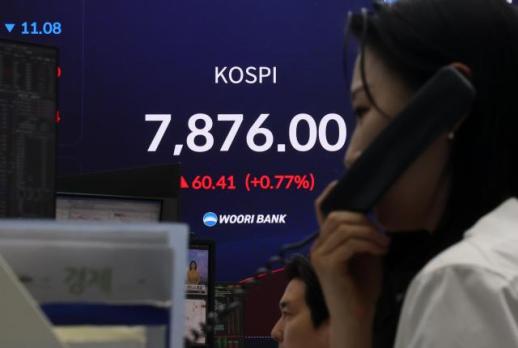 KOSDAQ triggers buy-side sidecar, Samsung Elec briefly tests 300,000 SEOUL, May 22 (AJP) - South Korean stocks erased early gains and turned lower Friday morning as foreign investors took profits after earlier record-breaking rally, while biotech and secondary-battery shares powered rally on the KOSDAQ. The benchmark KOSPI rose 0.62 percent to 7,863.71 at the opening bell, after surging 8.42 percent Thursday in its biggest single-day point gain on record. However, the index later turned lower as foreign investors extended heavy selling. As of 9:57 a.m., the benchmark index slipped 0.20 percent to 7,800.19, while the KOSDAQ jumped 5.09 percent to 1,162.25, triggering a sidecar trading curb for a second straight session. Retail investors remained aggressive buyers, purchasing a net 1.05 trillion won worth of KOSPI shares, while foreign investors sold a net 1.16 trillion won. The South Korean won remained stable, trading at 1,507.90 won against the greenback, compared with the previous session’s close of 1,506.10 won. Investor sentiment improved overnight after U.S. stocks ended higher on growing expectations of progress in negotiations involving Iran, easing concerns over a broader Middle East conflict and helping push oil prices and Treasury yields lower. The Dow Jones Industrial Average rose 0.55 percent to a record close of 50,285.66, while the S&P 500 added 0.17 percent and the Nasdaq Composite gained 0.09 percent. Chip-related shares remained a key driver of market sentiment. While Nvidia fell 1.77 percent on profit-taking despite strong earnings, memory-related stocks rallied after the company highlighted rising demand for high-capacity storage and memory products in AI data centers during its conference call. Micron Technology jumped 4.11 percent and SanDisk soared 10.75 percent, lifting sentiment toward South Korea’s semiconductor market. Samsung Electronics erased early gains after briefly touching the 300,000-won mark for the first time in intraday trading, falling 1.84 percent to 294,000 won after profit-taking accelerated following the previous session’s sharp rally. The stock also remained in focus as the company’s labor union began a six-day vote Friday on a tentative wage agreement reached earlier this week. Semiconductor equipment maker Jusung Engineering also surged 9.88 percent. The fellow chipmaker SK hynix slipped 0.46 percent to 1,931,000 won and SK Square declined 0.59 percent to 1,172,000 won. Among auto shares, Hyundai Motor dropped 2.55 percent to 649,000 won and Kia fell 2.20 percent to 164,200 won. Battery and industrial shares traded higher, with LG Energy Solution rising 2.49 percent to 411,000 won, Samsung Electro-Mechanics gaining 4.07 percent to 1,253,000 won and HD Hyundai Heavy Industries advancing 2.38 percent to 688,000 won. Doosan Enerbility also climbed 3.69 percent to 112,400 won. Financial and defense-related shares were mixed. Samsung Life Insurance rose 1.13 percent to 359,000 won, KB Financial gained 2.25 percent to 159,300 won and Hanwha Aerospace edged up 0.88 percent to 1,259,000 won, while Samsung C&T added 0.36 percent to 420,000 won. Samsung Biologics also rose 2.72 percent to 1,433,000 won. The junior KOSDAQ traded broadly higher, led by gains in biotech and secondary-battery shares. EcoPro BM surged 11.79 percent to 218,000 won, and EcoPro jumped 16.72 percent to 151,500 won. Biopharmaceutical shares were also strong, with Alteogen rising 7.68 percent to 378,500 won, Samchundang Pharm gaining 6.76 percent to 379,000 won and HLB climbing 11.54 percent to 52,200 won. Among other KOSDAQ heavyweights, Rainbow Robotics advanced 2.29 percent to 760,000 won, Leeno Industrial rose 1.54 percent to 105,600 won and EO Technics added 3.46 percent to 568,000 won. EcoPro Materials climbed 7.96 percent to 111,200 won, while JUSUNG Engineering gained 2.38 percent to 189,600 won. Oil prices also eased with Brent crude futures falling 2.32 percent to settle at $102.58 a barrel, and West Texas Intermediate crude dropped 1.94 percent to $96.35. The yield on the benchmark 10-year U.S. Treasury note slipped 0.8 basis point to 4.575 percent. Treasury yields nevertheless remained elevated as investors braced for a more hawkish Fed. Although the benchmark 10-year Treasury yield slipped 0.8 basis point overnight, it remained at 4.57 percent, while the two-year yield traded near 4.07 percent. 2026-05-22 10:41:42
 -
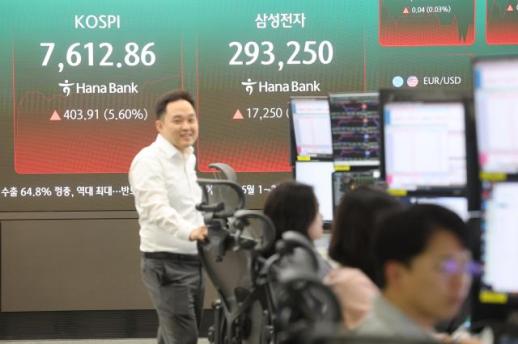 KOSPI recovers above 7,600 as Samsung averts strike SEOUL, May 21 (AJP) - South Korean stocks sharply rebounded on Thursday as investor sentiment improved on growing optimism over artificial intelligence and easing geopolitical tensions. Sentiment was also boosted after Samsung Electronics struck a tentative deal following marathon last-minute negotiations over wages and performance bonuses, easing concerns over a possible large-scale strike at the country's biggest chipmaker. The benchmark KOSPI surged 6.62 percent to 7,685.96 points as of around 10:30 a.m., while the junior KOSDAQ jumped 5.06 percent to 1,109.46. The sharp early gains triggered sidecar curbs on trading. Samsung Electronics' shares climbed 6.16 percent to 293,000 won, helping drive gains in the broader market. The South Korean won also strengthened as external uncertainties eased, trading at 1,499.5 won against the greenback, compared with the previous session’s close of 1,507.80 won. Investor sentiment improved after global oil prices and U.S. Treasury yields retreated overnight. WTI crude fell below the US$100-per-barrel mark to around $98, while the benchmark U.S. 10-year Treasury yield slipped back into the 4.5 percent range after U.S. President Donald Trump said negotiations with Iran were in the "final stages," raising hopes for a diplomatic breakthrough. The decline in oil prices and yields weakened demand for safe-haven assets and helped lift risk appetite across global markets from New York to Seoul. Chip stocks also surged, with SK hynix climbing 6.88 percent to 1,865,000 won and SK Square rising 7.48 percent to 1,106,000 won amid continued optimism over the AI-driven semiconductor boom. Automakers and industrial shares posted strong gains as well. Hyundai Motor advanced 7.43 percent to 636,000 won, Kia jumped 9.37 percent to 163,400 won and HD Hyundai Heavy Industries added 3.30 percent to 657,000 won. Battery and electronics-related shares moved higher across the board. LG Energy Solution rose 3.38 percent to 397,500 won, while Samsung SDI surged 11.12 percent to 1,179,000 won. Financial and biotech shares also joined the rally. Samsung Life Insurance soared 10.10 percent to 343,500 won, Samsung C&T climbed 7.96 percent to 400,000 won, Samsung Biologics gained 4.11 percent to 1,392,000 won and KB Financial rose 2.11 percent to 154,900 won. Defense shares were also firmer, with Hanwha Aerospace advancing 3.12 percent to 1,288,000 won. But much of the market's early gains were driven by Samsung after its management and labor union reached the deal the previous day through government-mediated talks, averting a planned strike and putting it to a union vote through May 27. The agreement eased concerns over labor unrest and addressed key union demands including bonuses and the removal of caps on incentive payments. Markets, however, would remain cautious ahead of the vote, with investors closely watching whether the deal will hold at the country's largest chipmaker, which makes up about one-fifth of the KOSPI by market capitalization. Meanwhile, across Asia, markets broadly moved higher, with Japan's Nikkei 225 surging 3.39 percent to 61,834.74, China's Shanghai Composite Index rising 0.84 percent to 4,196.94 and Hong Kong's Hang Seng Index adding 0.61 percent to 25,807.79 amid improving global risk sentiment. 2026-05-21 11:05:34
 -
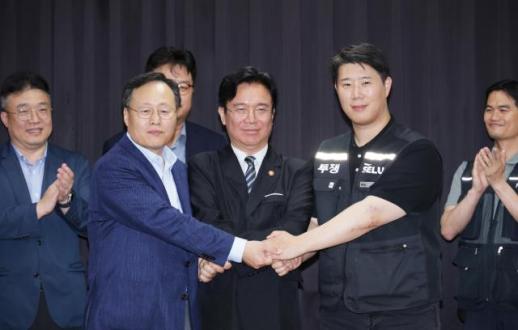 Samsung Live: Stock jumps 6% on labor accord, lifting KOSPI SEOUL, May 21 (AJP) - South Korean stocks jumped Thursday after Samsung Electronics and its labor union reached a last-minute tentative wage agreement led by Labor Minister Kim Young-hoon, easing fears of a large-scale strike at the country’s biggest chipmaker. Relief over the suspension of the planned strike fueled a sharp rally in Samsung Electronics shares, which jumped 6.43 percent to 293,750 won as of 9:33 a.m., helping lift the benchmark KOSPI 5.42 percent higher to 7,599.39. Investor sentiment improved sharply after the National Samsung Electronics Union announced that its planned May 21-June 7 general strike would be suspended "until further notice" pending a membership vote on the tentative 2026 wage agreement scheduled through May 27. Samsung Electronics, which accounts for roughly one-fifth of the KOSPI by market capitalization, has been one of the market's biggest drivers during the AI-fueled semiconductor rally. The labor dispute had centered on bonus structures, compensation for employees in loss-making divisions and the removal of caps on performance-based incentives. Under the tentative agreement signed late Wednesday at the Gyeonggi District Employment and Labor Office in Suwon, Samsung Electronics and the union agreed to separate bonuses into OPI (Overall Performance Incentive) payments and a special management incentive program for the semiconductor DS division. The DS division's special incentive pool was set at 10.5 percent of agreed business performance and, notably, will not be capped — one of the union’s key demands during negotiations. Under the agreement, 40 percent of the incentive pool will be distributed across the semiconductor division, while the remaining 60 percent will be allocated by individual business units. The DS incentives will be paid entirely in Samsung Electronics shares after tax. Employees will be allowed to sell one-third immediately, while the remaining shares will be locked up for one and two years, respectively. The two sides also agreed to postpone penalties for loss-making divisions until next year, while setting a 10-year validity period for the DS special incentive framework subject to minimum operating profit conditions. They further agreed to a 6.2 percent wage increase, including a 4.1 percent base salary raise and a 2.1 percent performance-based increase. Employees in the DX division will receive company shares worth 6 million won. The tentative agreement will be finalized following the union membership vote on the 27th. 2026-05-21 10:03:35
 -
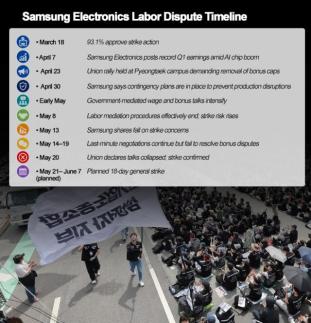 Timeline: Samsung Electronics labor dispute SEOUL, May 20 (AJP) - Samsung Electronics and its labor union failed to reach an agreement in government-mediated wage talks on Wednesday, one day before a planned strike, as disputes over bonus caps and compensation structures remained unresolved. The union said it would proceed with its planned general strike starting Thursday following the collapse of negotiations. Above is the timeline leading to the general strike, beginning with the March 18 vote in which 93.1 percent of participating union members approved strike action. At the heart of the dispute is the cap on bonus payouts, an issue that intensified after rival chipmaker SK hynix removed its bonus ceiling and distributed up to U.S. $477,000 per employee following its record 2025 performance — equivalent to 10 percent of the company’s annual operating profit. Samsung’s main labor union, which is largely led by semiconductor workers, is demanding that the company allocate 15 percent of annual operating profit to employee bonuses and remove the current payout cap altogether. 2026-05-20 15:31:06
 -
 KOSPI, Nikkei extend slide as global bond yields hit multi-decade highs SEOUL, May 20 (AJP) - South Korean and Japanese equities extended losses Wednesday as a global bond rout intensified, with surging long-term yields rattling stock markets that had largely shrugged off Middle East tensions amid the AI-driven rally. As of 10:13 a.m., the benchmark KOSPI fell 0.87 percent to 7,208.53, while the tech-heavy KOSDAQ dropped 1.97 percent to 1,062.49 amid persistent foreign selling. The Japanese Nikkei 225 also weakened as government bond yields climbed to fresh multi-decade highs, deepening concerns that elevated oil prices and stubborn inflation could keep global borrowing costs higher for longer. The Korean won also came under pressure, with the U.S. dollar rising to 1,511.50 won from 1,507.80 won in the previous session. The local market initially opened higher despite overnight losses on Wall Street, supported by rebounds in U.S. memory-chip stocks such as Micron and Sandisk following recent sharp declines. Samsung Electronics, which was set to hold a third round of wage talks with its labor union at 10 a.m. ahead of a planned general strike Thursday, edged up 0.91 percent to 278,000 won. SK hynix, however, reversed early gains to fall 1.38 percent to 1,721,000 won. Among other large-cap shares, HD Hyundai Heavy Industries surged 4.52 percent to 625,000 won, while SK Square gained 0.49 percent to 1,025,000 won and Samsung SDI added 0.55 percent to 181,800 won. Automakers and battery shares traded broadly lower. Hyundai Motor fell 1.99 percent to 592,000 won, Kia lost 2.39 percent to 151,200 won and LG Energy Solution slipped 1.37 percent to 394,500 won. Defense and industrial shares also weakened, with Hanwha Aerospace dropping 3.34 percent to 1,243,000 won, Doosan Enerbility falling 3.11 percent to 102,700 won and Samsung Electro-Mechanics declining 2.63 percent to 961,000 won. Financial and biotech shares mostly retreated as well. Samsung Life Insurance fell 2.24 percent to 305,000 won, Samsung Biologics dropped 2.30 percent to 1,315,000 won, Samsung C&T slid 3.02 percent to 369,000 won and KB Financial edged down 0.59 percent to 151,900 won. On the KOSDAQ, AI robotics and other high-valuation growth shares came under pressure as rising global yields dampened investor appetite for risk assets. Rainbow Robotics tumbled 4.05 percent to 639,000 won, extending the broader selloff in AI and robotics-related names. Secondary-battery and biotech shares also weakened. Alteogen fell 2.86 percent to 356,000 won, Ecopro dropped 2.63 percent to 118,400 won, Ecopro BM slipped 0.82 percent to 180,900 won and HLB declined 3.84 percent to 47,600 won. Samchundang Pharm plunged 7.80 percent to 337,000 won, while ABLBio lost 5.00 percent to 106,400 won and Kolon TissueGene fell 5.25 percent to 101,000 won. Overnight, the yield on the benchmark 30-year U.S. Treasury bond climbed as high as 5.197 percent, the highest level since 2007, fueling concerns that prolonged geopolitical tensions and elevated oil prices could reignite inflationary pressures. Japan's 10-year government bond yield also hit another fresh high, ending Tuesday at 2.793 percent, its highest level in nearly three decades. Japan's Nikkei 225 fell 1.11 percent to 59,881.16, while Hong Kong's Hang Seng Index dropped 0.70 percent to 25,616.02 and China’s Shanghai Composite slipped 0.46 percent to 4,150.46. 2026-05-20 10:37:47
 -
 Samsung strike threat highlights widening Korea-U.S. divide in AI-era pay SEOUL, May 19 (AJP) - With memory giants Samsung Electronics and SK Hynix posting operating margins above 70 percent and quarterly chip profits of $25 billion to $35 billion, South Korea's AI-boom windfall has laid bare a compensation system still tethered to the industrial era — and the workers who built it want their share. Marathon government-mediated labor talks, watched closely by the president, politicians and investors alike, underscore the national stakes: Samsung alone accounts for roughly 20 percent of Korea's outbound shipments, and any disruption to its chipmaking lines would reverberate far beyond the factory floor. At the center of the dispute is the bonus cap. The National Samsung Electronics Union is demanding that 15 percent of operating profit be allocated to bonuses and that existing caps be abolished — a demand that has reignited a broader debate over whether South Korean companies need more transparent, equitable compensation systems. "The problem isn't the money. There just aren't clear and transparent standards," said a 31-year-old employee at a large Seoul-based company. The tension reflects a structural divergence from the United States, where AI-driven growth has largely translated into intensified talent competition and equity-based rewards. In Korea, the same boom has triggered recurring labor conflict. Wage data illustrate how much Korean pay growth depends on bonuses. According to the Ministry of Employment and Labor's Labor Force Survey, special payments — including performance bonuses — rose 8.1 percent in the first half of 2025, far outpacing the 2.9 percent increase in fixed wages. Yet profit-sharing has been uneven in application. Ministry data submitted to lawmaker Kim Ui-sang of the People Power Party on May 8 show that 43.8 percent of employers with 300 or more workers and 46.2 percent of those with over 1,000 employees pay bonuses based on annual income — compared with just 6.4 percent of companies with fewer than 300 staff. Korea's so-called performance-sharing system distributes bonuses based on overall corporate results rather than individual contribution, in contrast to the more individualized, equity-driven models common at U.S. tech firms. And even within the chip sector, the rewards remain concentrated at the top. Samsung works with roughly 150 suppliers and some 35,000 subcontracted workers — none of whom are party to the bonus dispute. "In the U.S., compensation is increasingly treated as a function of measurable contribution and strategic importance rather than role equivalence," said Erik Cambria, a professor of artificial intelligence at Nanyang Technological University in Singapore. He said major U.S. tech companies are rapidly shifting toward selective compensation structures, concentrating equity and long-term incentives on engineers and researchers viewed as critical to AI development. The scale is striking. OpenAI's average stock-based compensation reached approximately $1.5 million per employee in 2025, among the highest levels in the industry, according to financial data reviewed by The Wall Street Journal. Meta reported $20.4 billion in share-based compensation that year, while Alphabet reported $27.1 billion. The demand for high-impact AI talent is also surging. U.S. job postings for "forward-deployed engineers" — specialists who integrate AI systems directly into enterprise operations — jumped roughly 729 percent over the past year, rising from 643 openings in April 2025 to 5,330 in April 2026, according to Indeed. "While AI is standardizing routine execution, the ability to create strategic value is becoming increasingly concentrated among a small group of 'superstar' talent," said Choi Jae-pil, a management professor at Sungkyunkwan University Graduate School of Business. Choi noted that AI could make performance assessments more quantifiable and transparent, potentially making differentiated pay structures more palatable to workers — but cautioned that the shift would be harder to implement in Korea, where cash bonuses and group-based compensation remain the norm. Structural differences in the labor market compound the problem, analysts say. "Dissatisfied workers in the U.S. can easily move to other firms, pushing companies to offer better compensation to retain talent," said Shin Hyun-han, a finance professor at Yonsei University. In Korea, changing jobs carries greater risks — income loss, social stigma and career uncertainty — leaving workers with fewer exit options and more internal grievance. "Even higher bonuses may not fully resolve the frustrations of workers who feel they cannot leave," Shin said. Korean firms also tend to rely on managers' subjective judgment, often informing employees of evaluation standards only after assessments are completed — partly, Shin said, out of concern that explicit criteria could expose companies to legal challenges. U.S. companies, by contrast, tend to disclose KPIs and OKRs upfront, driven by greater labor mobility and competition for talent. The simmering tensions within Samsung — spanning both its chip and non-chip divisions — reflect a broader sense of exclusion among workers who see record-breaking profits celebrated at the top while little trickles down. "We can only watch with envy," said an employee at a parts manufacturer, who said bonuses flow mainly to flagship companies while suppliers and subcontractors are left out. "The problem is that the standards constantly change or remain unclear." Yet experts warn that importing the U.S. model wholesale carries its own risks. "Higher rewards in the U.S. also come with greater risks, including layoffs and income volatility," said Kim Jin-young, an economics professor at Korea University. "If workers expect to share in profits, they must also be willing to share the risks when business conditions deteriorate." 2026-05-19 18:00:47
 -
 KOSPI opens lower as end-of-chip-rally fears hammer tech shares SEOUL, May 19 (AJP) - South Korean stocks opened lower Tuesday as growing concerns of a peak in the global memory-chip cycle triggered an overnight selloff in U.S. technology shares, dragging down semiconductor and artificial intelligence (AI)-related stocks. The benchmark KOSPI fell 2.47 percent to 7,330.44 about an hour into trading, while the junior KOSDAQ dropped 1.69 percent to 1,092.34. The South Korean won was largely unchanged at 1,500.10 per dollar, from 1,500.30 in the prior session. Technology heavyweights led the decline, with Samsung Electronics falling 2.49 percent to 274,000 won and SK hynix slipping 1.85 percent to 1.81 million won. Automakers and industrial shares also weakened sharply. Hyundai Motor plunged 6.64 percent to 619,000 won, Kia fell 3.75 percent to 156,400 won and Samsung C&T dropped 5.76 percent to 376,500 won. Samsung Electro-Mechanics declined 3.78 percent and Doosan Enerbility fell 3.21 percent. Defense and financial shares, however, outperformed the broader market. Hanwha Aerospace surged 7.74 percent to 1,322,000 won, HD Hyundai Heavy Industries rose 0.81 percent and Samsung Life Insurance gained 1.44 percent. KB Financial Group edged up 0.46 percent. The losses followed a volatile overnight session on Wall Street, where early gains faded and stocks finished mixed as geopolitical uncertainty and weakness in semiconductor shares weighed on investor sentiment. Stocks initially rose on indications that the U.S. could temporarily ease sanctions on Iranian oil exports and extend exemptions for Russian crude, raising hopes of improved global energy supply and lower oil prices. However, sentiment later reversed after the White House dismissed Iran's latest ceasefire proposal as largely symbolic and lacking meaningful concessions, while U.S. President Donald Trump delayed a planned military strike on Iran but warned that military action could still come at any time, reviving concerns over prolonged tensions in the Middle East. Semiconductor stocks came under additional pressure after Seagate Technology’s chief executive warned about capacity constraints in the memory-chip industry and the risk of overinvestment across the sector, fueling renewed concerns that the chip cycle may be nearing a peak. The Philadelphia Semiconductor Index fell 2.47 percent, with Micron plunging 5.95 percent and Nvidia and Sandisk also ending sharply lower. The Dow Jones Industrial Average rose 0.32 percent, while the S&P 500 and Nasdaq Composite fell 0.07 percent and 0.51 percent, respectively. Oil prices remained elevated amid persistent supply concerns. West Texas Intermediate crude traded above $106 a barrel, while Brent crude hovered near $109. The U.S. dollar index stayed in the upper 98 range. U.S. Treasury yields fluctuated during the session before ending lower, though they remained elevated as investors reassessed the outlook for inflation and interest rates. The two-year Treasury yield stood at 4.05 percent, while the benchmark 10-year yield traded at 4.58 percent. The 30-year yield remained above 5 percent at 5.13 percent. Elsewhere in Asia, Japan's Nikkei 225 fell 0.21 percent to 60,689.71, while Hong Kong's Hang Seng Index rose 0.53 percent to 25,811.11 and China's Shanghai Composite Index gained 0.13 percent to 4,136.76. 2026-05-19 10:46:43
 -
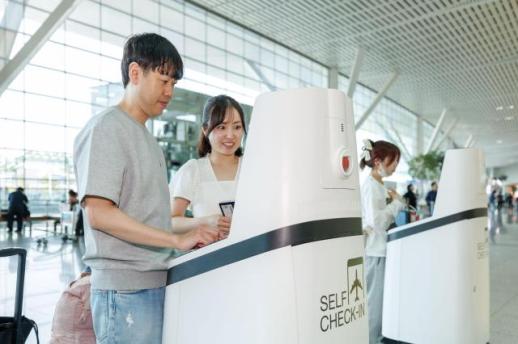 South Korea deploys more service robots amid rising labor costs SEOUL, May 18 (AJP) - South Korea’s main gateway, Incheon International Airport, has deployed autonomous service robots as the country accelerates automation across service industries amid rising wage costs and labor shortages. Incheon International Airport Corporation said Monday that it has begun full-scale operations of 31 autonomous robots, including self-check-in robots, guidance and patrol robots, and docent robots designed to assist passengers and provide cultural information across airport facilities. The rollout reflects a nationwide shift toward automation as South Korean businesses and major companies increasingly turn to service robots to offset mounting labor costs and staffing shortages. South Korea’s minimum wage rose to 10,320 won ($7.5) per hour in 2026, bringing minimum monthly pay for full-time workers to about 2.16 million won based on a 209-hour work month. As labor costs continue to climb, businesses in labor-intensive sectors such as tourism, retail and hospitality are increasingly adopting kiosks and service robots to reduce staffing burdens and maintain round-the-clock operations with fewer workers. According to pricing released by B-ROBOTICS, a robotics affiliate of Woowa Brothers, the operator of Baemin, South Korea’s largest food delivery platform, serving robots can be rented for as low as 299,000 won ($218) per month under a 36-month contract. By comparison, employing a full-time worker at a low-cost eatery such as Gimbap Cheonguk can cost restaurant owners roughly 2.4 million won to 2.8 million won ($1,750-$2,040) a month. The large cost gap is accelerating adoption among small business owners already struggling with rising wages and labor shortages. A survey conducted by part-time job portal Mediawill Networks on April 26 found that 73.7 percent of 114 small business owners said they had used unmanned devices such as kiosks, cooking robots or serving robots over the past year. 48.6 percent of respondents said kiosks helped reduce operating costs, reflecting growing interest in automation tools among small businesses facing rising labor expenses. The shift is also reshaping employment patterns in South Korea’s service sector. In a 2024 report based on surveys of 2,000 restaurants and bars in Seoul, the Korea Employment Information Service found that restaurants introducing kiosks reduced sales and serving staff by about 11.5 percent on average, while tablet ordering systems cut such jobs by roughly 7.5 percent. The report said 55 to 76 percent of businesses cited labor cost reduction as the main reason for adopting digital devices such as kiosks, tablets and service robots. The trend in service-sector automation reflects South Korea’s broader embrace of robotics across the economy. According to the International Federation of Robotics’ “World Robotics 2025” report released in April, South Korea has the highest concentration of industrial robots in the world, with 1,220 robots for every 10,000 manufacturing workers — more than six times the global average. Behind the trend is a deeper structural shift. South Korea officially became a “super-aged” society in 2025, with people aged 65 or older accounting for more than 20 percent of the population, according to the International Labour Organization. At the same time, the country’s working-age population has continued to shrink, intensifying labor shortages across service and manufacturing industries and pushing companies to accelerate investment in robotics and AI-powered automation technologies. 2026-05-18 16:27:28
 -
 KOSPI sinks as U.S. tech selloff and Samsung strike fears dampen sentiment SEOUL, May 18 (AJP) - South Korean stocks opened sharply lower on Monday, with the benchmark KOSPI falling below 7,300, after weeks of an unprecedented rally. The drop, the lowest since May 4, came as investors reacted to a global technology selloff and rising U.S. bond yields, while uncertainty over Samsung Electronics' ongoing labor dispute added further pressure. The index opened down 0.67 percent at 7,443.29 points before extending losses and falling as low as 7,142.71 in early trade, a drop steep enough to trigger a sell-side sidecar at 9:19 a.m. amid a simultaneous plunge in KOSPI 200 futures. The selloff came after the yield on the benchmark 10-year U.S. Treasury note climbed to as high as 4.60 percent on Friday, its highest level in roughly 15 months, fueling concerns that persistent inflation could keep interest rates elevated for longer than markets had expected. The junior KOSDAQ also slipped 4.29 percent to 1,081.30, while the South Korean won weakened slightly to 1,504.20 per dollar from 1,500.80 in the previous session. The decline also followed sharp losses on Wall Street late last week, where the Nasdaq fell 1.54 percent and semiconductor shares slid sharply as rising Treasury yields pressured technology stocks. Oil prices also rose sharply amid concerns over prolonged disruptions around the Strait of Hormuz, adding to worries that inflation could remain stubbornly high. Brent crude futures settled up 3.4 percent at US$109.26 a barrel, while U.S. West Texas Intermediate crude climbed 4.2 percent to $105.42. U.S. President Donald Trump's summit with Chinese President Xi Jinping also did little to calm markets, as the two leaders ended talks without concrete progress on broader geopolitical tensions involving Iran and Gulf countries including the Strait of Hormuz. The global semiconductor selloff spilled directly into Seoul, where Samsung Electronics traded at 270,000 won, down 0.18 percent, while SK hynix fell 3.13 percent to 1,762,000 won as investors pulled back from AI-linked chip stocks. Samsung Electronics has been facing growing labor tensions after its union threatened a strike later this week following a breakdown in wage negotiations. The union has been demanding higher incentives and the removal of caps on performance bonuses in proportion to the company's strong operating profits in its chip division amid an artificial intelligence (AI)-driven semiconductor supercycle. Investors worry that the electronics giant's prolonged dispute could raise labor costs or disrupt semiconductor production at a time when global AI demand remains heavily concentrated in advanced memory chips. The impending strike has added to uncertainty on the South Korean bourse, as semiconductors make up a large share of the country's exports and Samsung dominates it by market capitalization, leaving the sector especially sensitive to both global demand shocks and domestic labor risks. Losses spread broadly beyond semiconductors. Among major technology and industrial shares, Samsung SDI fell 4.95 percent to 960,000 won, LG Energy Solution dropped 5.52 percent to 394,000 won and Doosan Enerbility slid 5.96 percent to 104,200 won. Automakers also came under pressure, with Hyundai Motor falling 7.43 percent to 648,000 won and Kia declining 4.94 percent to 159,700 won. Defense and shipbuilding-related shares weakened as well, with HD Hyundai Heavy Industries dropping 7.34 percent to 593,000 won and Hanwha Aerospace slipping 1.15 percent to 1,202,000 won. Financial and biotech shares also moved lower, as KB Financial fell 3.08 percent to 150,800 won, Samsung Biologics declined 3.88 percent to 1,364,000 won and Samsung C&T dropped 5.04 percent to 376,500 won. Losses were equally broad on the KOSDAQ, where secondary-battery, biotech and robotics shares all traded sharply lower. Among battery-related stocks, EcoPro BM fell 2.57 percent to 185,600 won, while EcoPro dropped 5.26 percent to 122,400 won. Robotics firm Rainbow Robotics plunged 9.26 percent to 735,000 won, and aerospace company Korea Aerospace Industries slipped 3.76 percent to 107,400 won. Biotech shares also weakened, with Alteogen falling 5.42 percent to 349,000 won, Samchundang Pharm declining 7.47 percent to 359,000 won, HLB dropping 5.30 percent to 49,150 won and ABL Bio sliding 8.55 percent to 109,100 won. Jusung Engineering stood out as the only major gainer, surging 21.04 percent to 169,700 won. Despite the broad selloff, investors appear to remain on watch for upcoming catalysts that could shape the direction of AI-related semiconductor stocks. Nvidia is scheduled to report earnings results later this week, with markets closely watching whether the chipmaker can beat revenue forecasts of $78 billion and achieve a gross margin of 75 percent. Also in focus will be management's comments on demand from China, after Washington recently approved the sale of H200 chips to the country. Investors also remain attentive to developments in Nvidia's next-generation Blackwell chips and the timeline for its Rubin architecture, given the implications for South Korean suppliers such as Samsung Electronics and SK hynix. Elsewhere in Asia, markets moved lower as investors reacted to rising global bond yields and persistent inflation concerns. Japan's Nikkei 225 fell 1.40 percent to 60,547.46, pressured by profit-taking in semiconductor shares, Hong Kong's Hang Seng Index dropped 1.06 percent to 25,687.49 and China's Shanghai Composite Index also edged down 0.19 percent to 4,127.62. 2026-05-18 10:58:30
 -
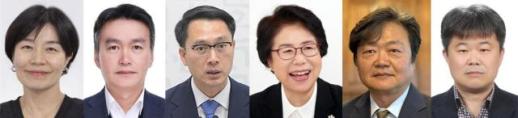 Korea's Lee replaces health and customs deputies SEOUL, May 15 (AJP) - South Korean President Lee Jae Myung replaced the country’s top health and customs officials Friday in a vice-ministerial reshuffle carried out less than a year after both incumbents took office, the presidential office said. Hyeon Su-yeop, spokesperson for the Ministry of Health and Welfare, was named first vice minister of health and welfare, while Lee Jong-wook, vice commissioner of the Korea Customs Service, was appointed customs commissioner, presidential spokesperson Lee Kyu-yeon said Friday. They replace First Vice Health Minister Lee Se-ran and Customs Commissioner Lee Myung-gu, who are stepping down less than a year after assuming office in June and July of last year, respectively. The presidential office dismissed speculation that the reshuffle amounted to disciplinary action. “It has been about a year, and the government believes new appointments are needed to move policies forward more quickly,” spokesperson Lee said, adding that the outgoing officials had helped lay the groundwork for the administration’s key initiatives during its early months in office. New Vice Health Minister Hyeon spent much of her career at the Health Ministry, serving in a broad range of healthcare and welfare policy roles. She previously handled issues involving emergency medical services, pharmaceutical policy, childcare and health technology, before later overseeing population and child policy and serving as ministry spokesperson. New Customs Commissioner Lee Jong-wook was described as a longtime customs official who held several senior posts within the Korea Customs Service, including head of planning and coordination. The presidential office said Lee played a key role in uncovering large-scale illegal export schemes designed to circumvent trade restrictions and tariffs, while also cooperating with Thai authorities to crack down on drug smuggling networks. 2026-05-15 18:00:10