

Journalist

최송희
alfie312@ajunews.com
-
 Singer Seo In-young to Remarry Businessman Choi Ji-hoon This Fall Singer Seo In-young is set to marry Choi Ji-hoon, the CEO of a content creative company, this fall. According to Yonhap News on June 7, Seo and Choi met through mutual acquaintances and have been in a relationship leading up to their upcoming marriage. Choi is six years older than Seo. Seo's representatives stated they are currently organizing their response following the marriage announcement. Seo In-young debuted in 2002 as a member of the girl group Jewelry. She gained popularity with hits like "One More Time" and "Super Star," and later launched her solo career in 2007 with the song "Cinderella." In 2023, she married a non-celebrity businessman but divorced amicably after about a year. Recently, she opened a YouTube channel titled "Turning Over a New Leaf Seo In-young," where she engages with fans and is experiencing a resurgence in popularity.* This article has been translated by AI. 2026-06-07 16:06:00
 -
 Director Yeon Sang-ho Discusses 'Gunchi' and Its Themes of AI and Collective Fear 'Gunchi' is on the verge of surpassing 5 million viewers, continuing its strong performance at the box office. The film first gained attention after being invited to the Midnight Screenings section of the 79th Cannes Film Festival and has steadily attracted audiences since its release. Yeon Sang-ho, known for expanding the K-zombie genre with films like 'Train to Busan' and 'Peninsula,' revisits themes of an unidentified infection, evolving collectives, and the choices of humans trying to survive. The interest sparked at Cannes has translated into theater attendance, showcasing Yeon’s continued relevance in genre filmmaking."We didn’t set out to make a zombie film from the beginning. I had many thematic discussions with writer Choi Gyu-seok. We talked about AI algorithms and the unresolved issues from 'Hell,' which made me reflect on what we find frightening about collectivity. There are moments when the consensus of universal thought can render individuality powerless. I believe that the discomfort stems from the moments when unique thoughts feel powerless. As we discussed how to express this cinematically, we thought we could explore it through zombies, which propelled the screenplay forward," Yeon said.The concept of collective intelligence naturally led to imagery of ants and collectives. During the research process, Yeon encountered the ecology of ants and the concept of collective intelligence, which influenced the visualization of the infected characters' movements and reboot-like actions, developed through extensive discussions with the choreography team."I think I started searching for information with the idea of creating a story about collective intelligence. I came across the ecology of ants and learned that the term 'collective intelligence' was first used in that context, which led me to focus my research on ants. This connection naturally led to considerations of how to visualize the rebooting process. While the script described it in abstract terms, there were many tasks to visualize it. We created it while discussing with the choreography team, which seemed to embody the mindset of the zombies in their movements," he explained.The infected characters in 'Gunchi' leave a strong impression on the audience with their bizarre movements, distinct from the familiar actions typically seen in zombie films. Yeon believes these characters require symbolic gestures that are memorable rather than fully explained."I wanted there to be very symbolic movements. For instance, in films like 'The Invasion of the Body Snatchers,' there are famous gestures aliens make when they discover humans. They are mechanical yet bizarre, and somewhat humorous, creating a strange feeling. I thought that such oddness could be completed with a certain force. Creating a signature movement is a matter of intensity, so I often encouraged the choreography team to be bold in their approach," he said.The casting of Jun Ji-hyun has been one of the film's biggest talking points. Yeon admitted he was unsure if she would be interested in the genre he typically works in. However, through their conversations, he discovered her strong understanding and interest in genre films."It felt almost simultaneous. I had my own color in the works I’ve done, and I didn’t know if Jun Ji-hyun was interested in that type of project. I wondered if she would take on this role. Surprisingly, I found out that she enjoys watching unique works, including unconventional American dramas. She clearly has a solid understanding of genre and a high level of comprehension regarding the script. I felt her interest in genre films was greater than I expected," he noted.Jun Ji-hyun's character, Kwon Se-jeong, is more of an intelligent character who reads situations rather than one focused on strong action. Yeon believes her striking appearance and movements keep the character engaging. He also expressed a desire to see her in a full-fledged action film in the future."Since the protagonist is an intelligent character, there weren’t many opportunities for action. However, her appearance is striking, and even her walking has a certain vigor, which kept her character from being dull. I think it would be great to see her in a full action film someday, as she has the physicality that suits action roles," he said.Regarding Koo Kyo-hwan, Yeon described him as an "extraordinary actor." He noted that Koo possesses a unique acting style that differs from traditional actors and has a remarkable ability to convince the audience."I think Koo Kyo-hwan is an extraordinary actor. He clearly has a different approach to acting compared to conventional actors, and he has a great ability to persuade the audience. He is a film enthusiast, which helps him connect well with the material. He is familiar with unique films and has a high understanding of unconventional expressions. Characters like Seo Young-cheol may appear strange, but there seems to be an intuitive understanding of why this role needs to be portrayed this way," he said.'Gunchi' is a fast-paced, experiential genre film. Yeon noted that while the initial script was lengthy, it ultimately needed to focus more on situational elements rather than character narratives."When I first wrote the script, it was about 168 pages long. However, when it came to presenting it as a film, I felt it needed to be more experiential and fast-paced. We had to reduce character narratives and focus on situations. As a result, relationships became more important, and those relationships themselves became the characters. It was crucial to leave room for the audience to imagine something based on those relationships, so I aimed to create unique pairings," he explained.Yeon’s exploration of the zombie genre continues. He remarked that once zombies are established, questions tend to multiply. Especially after the COVID-19 pandemic, the ethical confusion over whether to view zombies as patients or targets for elimination has intensified, expanding the realm of imagination."Once zombies are established, questions keep multiplying. For instance, the initial inability to suppress zombies raises the dilemma of whether to view them as patients or to shoot them. This ethical confusion seems to have grown, especially after experiencing the COVID-19 pandemic. Consequently, this leads to an expansion of imagination. Considering what zombies symbolize and what they truly represent can yield various interpretations," he said.When asked about his prolific creative output, Yeon expressed that he feels more excitement than fatigue. He finds the current industry environment, where the lines between film and OTT, as well as domestic and international projects, have blurred, to be stimulating rather than confusing."I don’t often feel fatigued. I find it enjoyable. I think these days are the most fun. One of the challenges facing filmmakers today is the undefined nature of the industry. In the past, it was straightforward—if it was a film, it was just a film. Now, with OTT and other complexities, I found myself wondering what to do. However, after working on 'Face' last year, I thought, 'Since it’s like this, let’s try anything.' This has made it even more enjoyable," he said.Looking ahead to the next decade, Yeon expressed a desire to focus on projects he hasn’t attempted before. He aims to experiment with unique methods and new production approaches rather than being overly concerned with box office success or scale."Unlike the past decade, I want to focus on things I haven’t done in the next ten years. I think I should not be overly concerned with size or box office and should continue to try unusual things. I believe that will allow me to spend this period without regrets. These days, trying different things has been very enjoyable," he concluded.* This article has been translated by AI. 2026-06-07 14:36:00
 -
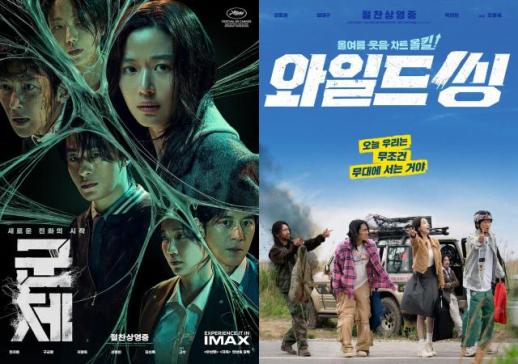 Jeon Ji-hyun's 'Gunchi' Leads Weekend Box Office, 'Wild Thing' Follows The films 'Gunchi' and 'Wild Thing' have showcased the strength of Korean cinema by dominating the weekend box office. 'Gunchi,' marking Jeon Ji-hyun's return to the screen, continues to draw audiences as it approaches 5 million ticket sales. Meanwhile, the comedy 'Wild Thing,' starring Kang Dong-won, Um Tae-goo, and Park Ji-hyun, is also performing well in its early release phase. According to the integrated ticket sales network on June 7, 'Gunchi' attracted 281,926 viewers on June 6, maintaining its position at the top of the box office. The film's cumulative audience now stands at 4,523,309. Released on May 21, 'Gunchi' has consistently ranked among the top films since its debut and is on the verge of surpassing 5 million viewers. 'Gunchi' tells the story of survivors trapped in a building due to an unidentified infection outbreak, facing off against infected individuals who evolve in unpredictable ways. Directed by Yeon Sang-ho, known for expanding the zombie genre with films like 'Train to Busan' and 'Peninsula,' the film features a cast that includes Jeon Ji-hyun, Koo Kyo-hwan, Ji Chang-wook, Shin Hyun-bin, Kim Shin-rok, and Go Soo. Notably, 'Gunchi' marks Jeon Ji-hyun's first return to the big screen in 11 years, generating significant interest. After being invited to the Midnight Screenings section of the 79th Cannes Film Festival, the film quickly gained traction in the domestic market, showcasing the strength of Yeon Sang-ho's K-zombie genre. In second place is 'Wild Thing,' which opened on June 3 and drew 149,040 viewers on June 6, bringing its total audience to 431,987. The film started strong with over 160,000 viewers on its opening day and continues to attract audiences as the weekend approaches. 'Wild Thing' is a comedy about a once-popular mixed-gender dance group called 'Triangle' that, after being embroiled in an unexpected incident, seeks a chance at redemption 20 years later. Kang Dong-won, Um Tae-goo, and Park Ji-hyun portray members of 'Triangle,' with supporting roles from Oh Jung-se and Shin Ha-kyun. Kang Dong-won's comedic transformation, along with the performances of Um Tae-goo and Park Ji-hyun, resonates with audiences, contributing to positive reactions. 'Wild Thing' has also received high ratings from early viewers, generating buzz. Among foreign films, 'Backroom' secured third place with 93,073 viewers, bringing its total to 731,840. 'Michael' attracted 28,968 viewers, with a cumulative total of 1,516,641. As the first weekend of June approaches, the box office is led by two Korean films, with 'Gunchi' entering a phase of long-term success while 'Wild Thing' expands its audience base. The performance of these films raises expectations for the recovery of Korean cinema in June.* This article has been translated by AI. 2026-06-07 10:39:00
 -
 Cannes Highlights Hirokazu Kore-eda's New Film 'The Sheep in the Box' Exploring Family in the AI Era Korean filmmaker Hirokazu Kore-eda, celebrated at Cannes, questions the meaning of family through the coexistence of humans and humanoids in his latest film, 'The Sheep in the Box.' Known for exploring relationships beyond blood ties in works like 'Shoplifters' and 'Monster,' Kore-eda delves into themes of love, loss, and the complexities of living together in this new project.On June 4, a press screening and conference for 'The Sheep in the Box' took place at Megabox COEX in Gangnam, Seoul. Kore-eda and actress Rimu Kuwaki attended the event to discuss the film.'The Sheep in the Box' tells the story of a 7-year-old humanoid that enters a household to replace a deceased child, exploring the joy of becoming a family and the anxiety of potential abandonment. This film marks Kore-eda's tenth entry into the Cannes Film Festival, where it has been invited to compete in the official selection.Kore-eda cited the rise of generative artificial intelligence (AI) as a catalyst for the film's concept. He explained, "The idea for the film came about two years ago. I heard about a business in China that uses generative AI to resurrect deceased individuals. During a work trip to China, I met the founder of this business, who showed me how they create AI representations using photos and videos left on the deceased's phones. This inspired the film's narrative."Kore-eda expressed curiosity about how audiences would receive the film, stating, "This is not a story where everyone lives happily ever after. It shows the remaining children and the departing adults, who do not know how the humanoid children will live. They will have to imagine and feel what is invisible. I wanted to convey that imagination to the audience."He emphasized that the relationship between humans and humanoids should not be viewed merely as a conflict between technology and humanity. Instead, he connected it to the dynamics of marriage, noting, "I thought about how difficult and interesting it is for two different beings to coexist. Just as glass and wood can harmonize, I wanted to express the coexistence of humans, plants, and humanoids in various ways. In the film, the mother who lost her child regrets harsh words spoken to her child, while the father regrets things left unsaid. They start as a couple with different regrets but live together in the same box, imagining their lost child, Kakeru. I wanted to convey something through the relationships of these disparate beings."At the center of the film is Rimu Kuwaki, who was selected from a competitive pool of 200 candidates. Kore-eda shared that he made the casting decision based on his first impression, saying, "I had a gut feeling about this child."He added, "We held multiple auditions, and the final decision was made with the consensus of the entire staff. The pivotal moment was a scene in the bathhouse towards the end of the film, where she acted alongside Daigo, who plays Kensuke. That performance solidified my decision to cast her."Kuwaki recalled the moment she learned she got the role, saying, "My family jumped for joy together. My dad, mom, and sister cried a lot. At first, I thought, 'Why are they crying so much?' But later, after my mom explained, I was so happy that I almost cried too."Kuwaki also praised Kore-eda's directing style, stating, "He told me to act naturally, to be myself. Other directors often give specific instructions, but Kore-eda made it comfortable by saying to just be yourself. He joked that it was okay to do it casually, but I think it was more than that."Kore-eda explained that he aimed to draw out natural performances from the young actors rather than giving detailed directions. He said, "In fact, there was no directing or instruction regarding the actors' performances. We practiced while Daigo and Kuwaki were conversing and waiting. Ayase also joined in, and when the atmosphere was right, we started filming."He praised Kuwaki's quick thinking, noting, "She has a rare quality. After the first take, she had the ability to change the mood or dialogue in the second take, showing a playful sense and adaptability. She acted with great enjoyment, which made me feel she was not just a child actor."Kuwaki's improvisation impressed Kore-eda, who recalled a scene in the bathhouse where she says, 'Please keep it a secret.' He noted, "There’s a line where she asks, 'What should I do?' while teasing her dad, and that was not something I directed. I was surprised she delivered it that way."In closing, Kuwaki expressed her gratitude, saying, "Thank you for watching 'The Sheep in the Box.' I believe this film is about love. It’s a movie that makes you think and reflect multiple times. I hope you watch it thoughtfully."Kore-eda also encouraged viewers to imagine the unseen elements of the film, stating, "Movies are made from what is visible, but the unfilmed parts are also important. Just as architecture suggests that the essence lies in the unseen, I was conscious of that while making this film."He added, "While the film shows various visible elements like forests and instant noodles, I hope you also imagine what is not visible."Meanwhile, 'The Sheep in the Box' is set to be released in South Korea on June 10.* This article has been translated by AI. 2026-06-04 17:18:00
 -
 Can AI Films Find a Place in Established Film Festivals? Artificial intelligence (AI) is no longer a distant concept in the film industry. With feature films created using generative AI now screening in theaters and discussions about the ethics of AI in filmmaking gaining traction at international film festivals and film markets, the industry is facing new standards.The Bucheon International Fantastic Film Festival (BIFAN) is a key example of this shift, having established a new section called 'Bucheon Choice: AI Films' last year, officially recognizing AI films as part of its screenings and competitions. This marks a significant step in questioning how AI films can be introduced and evaluated within existing international film festivals.BIFAN's initiative continued at this year's Cannes Film Market. Shin Chul, the executive director of BIFAN, was invited to present on 'BIFAN's AI Leadership Strategy' during the 'Cannes Next' program, which took place during the 79th Cannes Film Festival.This program brought together media, technology, investment, and policy stakeholders to discuss Asia's AI-driven cultural ecosystem. BIFAN shared its experiences and insights on operating an AI film section with international film industry representatives. Shin also participated in the 'AI for Talent Summit,' a key event at the Cannes Film Market, contributing to discussions on the evolving role of AI in the film industry.Cannes is approaching the topic cautiously. There remains a careful atmosphere regarding how to handle works where AI takes the lead in creation within major competition categories. However, discussions around AI production, investment, copyright, and creative ethics are expanding at the film market. The industry is navigating a path between using AI as a production tool and recognizing AI as a creative entity.As AI films begin to enter traditional film festivals, the next question is about evaluation criteria. The mere technical novelty of being created by AI is insufficient for acceptance within the language of film festivals. It is essential to assess the possibilities and limitations demonstrated by AI feature films that have been screened in theaters, as well as how they can navigate issues of creative ethics and rights.In South Korea, AI feature films have already begun to screen in theaters. In May, two films, 'I Am Popo' and 'The Man in Hanbok,' both created entirely with generative AI, premiered simultaneously. 'I Am Popo' tells the story of an AI robot born to serve humans who kills a potentially criminal human, while 'The Man in Hanbok' depicts a fictional historical drama where the Joseon scientist Jang Yeong-sil meets Leonardo da Vinci in Renaissance Florence. These films illustrate that AI filmmaking is no longer limited to short experiments but has entered the realm of feature narratives and theatrical releases.However, alongside their potential, limitations have also emerged. Both films attracted only a few hundred viewers, indicating limited commercial impact. Beyond technical experimentation, the challenge remains of how convincingly these films can engage audiences. Generative AI struggles to maintain consistent facial expressions and backgrounds over extended periods, and producing feature films requires numerous repetitive tasks and scene-by-scene adjustments.'Intermediate Realm,' directed by Kang Yoon-sung and noted as South Korea's first feature film utilizing AI, also showcases both potential and limitations. Kang revisited a screenplay he had prepared 25 years ago, modifying it with AI technology in mind, and visualized characters like the Twelve Zodiac Gods and Yeomra, the King of the Underworld, which were challenging to realize with existing budgets and technology. In an interview, he stated, "A screenwriter always thinks about the budget first. Using AI breaks that constraint. The moment you think, 'Is this possible?' you can envision a new world."However, for AI films to be accepted into established film festivals, technical feasibility alone is insufficient. Creative ethics and rights issues must be addressed first. The controversy surrounding the short film 'Meter Reader,' which used AI to replicate the face and voice of actress Yeom Hye-ran, directly highlighted this issue in the South Korean film industry. While the production team claimed they had obtained permission for the use of her likeness, her agency stated there had been no prior consultation or approval, leading to the video's removal from public view.Similar controversies are occurring internationally. In Hollywood, the emergence of the AI actor 'Tilly Norwood' has sparked backlash from industry professionals, including actors and directors, who fear that human performances and images could be replaced by cheap data. The American actors' and broadcasters' union is advocating for the introduction of a so-called 'Tilly Fee,' which would require AI actors to be compensated at rates comparable to human actors.Despite these challenges, creators are not entirely rejecting the use of AI. If proper consent, compensation, and rights protection are ensured, AI can enhance production efficiency and broaden creative expression. The issue lies in the fact that sufficient standards to support these possibilities have yet to be established. For AI to become a collaborator with creators, the sources of training data, rights compensation, and the scope of consent from actors and performers must be clarified.Film critic Yoon Seong noted, "Relying solely on the technical marvel of AI films looking 'just like real people' may be a one-dimensional approach. Ultimately, storytelling is what matters in film. The advantage of AI lies in its ability to attempt scenes that are physically difficult to realize without significant budgets, so how that technology is utilized to create unique characteristics in a work is crucial."He added, "For now, I believe it is appropriate to evaluate AI films in a separate section. The technology is not perfect, and there are points where immersion is broken compared to live-action films. However, we must now view the issue as how to utilize and tool AI within the films we know, rather than whether to recognize AI films as films at all."AI films are no longer confined to the realm of 'possibility.' They are already being created, screened, and becoming topics of discussion at film festivals and markets. What is now needed is to move beyond mere admiration for technological novelty to examine the completeness of these films as works, the involvement of creators, and issues of copyright, likeness rights, and industrial responsibility. As AI films begin to find their place within established film festivals, these festivals are becoming arenas to test both the potential and standards of this new medium.* This article has been translated by AI. 2026-06-04 13:00:00
 -
 'Wild Thing' Draws 160,000 Viewers on Opening Day, Surpassing 'The King and the Clown' The film 'Wild Thing' had a strong debut, attracting 160,748 viewers on its opening day. According to the integrated ticket sales network on June 4, 'Wild Thing' surpassed the opening day attendance of this year's top-grossing film, 'The King and the Clown,' which had 117,783 viewers on its first day. Despite being shown on a relatively limited number of screens, 'Wild Thing' achieved a high seat occupancy rate, securing the top spot at the box office for new releases. The film garnered attention prior to its release for its blend of 2000s pop music nostalgia and comedy, and early audience reactions have been positive. Audience feedback has been encouraging. 'Wild Thing' boasts a CGV Egg Index of 95%, a score of 9.2 on Lotte Cinema, and 9.01 on Naver, indicating strong ratings across major ticketing and review platforms. Viewers have commented, "It made me laugh and cry purely from its charm," "I laughed out loud for the first time in four years," "Just when I thought it would turn left, it made an unexpected U-turn," and "It's the essence of comedy that can make you laugh without a care in the world," reflecting their satisfaction with the humor and storyline. 'Wild Thing' is a comedy about a once-popular mixed-gender dance group, 'Triangle,' which was abruptly disbanded due to an unforeseen incident. The film follows the group's members as they embark on a reckless challenge to seize a second chance after 20 years. Actors Kang Dong-won, Um Tae-goo, and Park Ji-hyun portray the members of 'Triangle,' with supporting performances from Oh Jung-se and Shin Ha-kyun adding to the comedic dynamic. The film's nostalgic references to 2000s pop music and K-pop stage concepts, combined with the actors' performances, have captured the audience's interest in the early days of its release. Meanwhile, on the same day, 'The Army' maintained its position at the top of the box office, drawing 331,490 viewers and bringing its cumulative audience total to 4,043,759. 'Back Room' attracted 114,110 viewers, with a cumulative total of 572,775.* This article has been translated by AI. 2026-06-04 08:39:00
 -
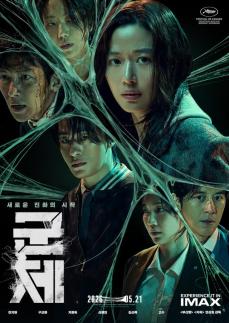 'Goonche', Surpasses 4 Million Viewers in 14 Days Amid Global Success ‘Goonche’ has surpassed 4 million viewers just 14 days after its release. The film is breaking records for the fastest box office success in South Korea this year, while also achieving the top opening box office in major Asian markets, indicating a strong global performance.According to the Korean Film Council's integrated ticketing system, as of 5:12 PM on June 3, ‘Goonche’ recorded a cumulative audience of 4,001,31. It reached this milestone just 14 days after its release on May 21, marking the fastest 4 million viewer count for a film released in 2026.‘Goonche’ achieved 1 million viewers on its fourth day, 2 million on the fifth day, and 3 million on the tenth day, continuing to set records for the shortest time to reach 4 million viewers. It surpassed the break-even point within ten days of its release and is now ranked second among the highest-grossing films of 2026.The film depicts survivors trapped in a quarantined building facing unpredictable forms of infected individuals amid an unidentified infection crisis. Directed by Yeon Sang-ho, known for expanding the zombie genre with films like ‘Train to Busan’ and ‘Peninsula,’ it features a cast that includes Jeon Ji-hyun, Koo Kyo-hwan, Ji Chang-wook, Shin Hyun-bin, Kim Shin-rok, and Go Soo.Interest from the international film community was significant even before its release. ‘Goonche’ was officially invited to the Midnight Screenings section of the 79th Cannes Film Festival, where it was first showcased to global audiences. Following its screening in Cannes, it garnered attention for its genre thrills and contemporary themes of collective intelligence and infection, creating buzz before its domestic release.In addition to its domestic success, ‘Goonche’ is also performing well internationally. It topped the opening box office in key Asian regions including Malaysia, Taiwan, the Philippines, Singapore, and Hong Kong.In Malaysia, where it opened on May 22, it surpassed ‘Parasite’ within three days to become the third highest-grossing Korean film, accumulating approximately 15.8 million ringgit (MYR) as of May 30, ranking second behind ‘Train to Busan.’ In Taiwan, it recorded approximately 110 million New Taiwan dollars (TWD) by May 31.The film is also seeing success in the Philippines, where it opened on May 27 and earned about 68.5 million pesos (PHP) within five days, ranking second among the highest-grossing Korean films after ‘Train to Busan.’ In Singapore, it recorded approximately 715,000 Singapore dollars (SGD) by May 31, positioning itself among the top Korean films at the box office.In Hong Kong, it opened on May 28, earning about 1.4 million Hong Kong dollars (HKD) on its first day, setting the highest opening box office record for a Korean film since ‘Peninsula’ in 2020. By May 31, its cumulative earnings reached approximately 6.4 million Hong Kong dollars.With a rapid increase in audience numbers in South Korea and ongoing interest in Yeon Sang-ho's K-zombie genre abroad, attention is focused on whether ‘Goonche’ can maintain its box office momentum both domestically and internationally.* This article has been translated by AI. 2026-06-03 17:45:00
 -
 Jeon Ji-hyun Returns to the Screen After 11 Years with 'Goonche' Jeon Ji-hyun, who captivated audiences with her role in the film 'Assassination,' has made her return to the screen after 11 years. Her latest film, 'Goonche,' directed by Yeon Sang-ho, has been officially invited to the Midnight Screenings section of the 79th Cannes Film Festival. Through her character, who embodies cold rationality, responsibility, and decisive action, Jeon aims to re-establish her presence that audiences have been eagerly awaiting."It's been 11 years since I last appeared on screen. The COVID-19 pandemic caused the film industry to slow down significantly, which naturally reduced opportunities to review scripts. During that time, I focused on series work, but I found the script for 'Goonche' to be intriguing. After working on longer series, I felt a bit bored, but reading Yeon Sang-ho's script reignited my desire to make a film. It was a movie I wanted to see myself. It was intense and thrilling," she said.This marks Jeon Ji-hyun's first official invitation to the Cannes Film Festival. Although she had previously visited as an ambassador, this is her first time walking the red carpet for a Korean film in which she starred. "The Cannes I visited before wasn't really Cannes," she remarked."It's a dream for every filmmaker to showcase their work at Cannes, and 'Goonche' was presented there for the first time. This is my first time attending Cannes with a Korean film. Although I've been there as an ambassador, this is my third visit, and the previous times didn't feel like Cannes. Haha. This time, I was able to take fun photos with Go Kyung-pyo, and I felt empowered as an actress. It was our own red carpet, and I was so excited. There was tension, but also moments of relaxation, and since I am comfortable with Kyung-pyo, we took playful photos together. The positive reactions and the promotional opportunities for the film were just perfect."Jeon Ji-hyun is known as a master of genre films, having excelled in works such as 'Blood,' 'The Thieves,' 'Berlin,' 'Assassination,' and dramas like 'Kingdom: Ashin of the North,' 'Jirisan,' and 'North Star.' She expressed her desire to work with leading creators in Korean genre films, stating, "I want to be an actress who is not limited to a specific genre.""I don't think being confined to one genre makes an actress a good one. Since childhood, I believed that an actress should act well, and I pondered what sets me apart from other actresses. I realized that the market needs to be broad. I thought that if I could work beyond Korea and in a wider world, it would be different. So, I took opportunities to work overseas when I could. This led me to action roles, as I believe there are enough aspects to connect with audiences through action without relying solely on dialogue. I think those elements have helped me in doing a zombie film," she added.One intriguing aspect of 'Goonche' is the dynamic between the ex-wife and current wife working towards the same goal. Jeon Ji-hyun admitted that she initially found this relationship setup unfamiliar. However, after watching the completed film, she found the structure of pursuing a common goal, despite being in different places, to be fascinating."At first, I wondered if such a setup was necessary. It can be uncomfortable for the ex-wife and current wife to drive the story together. The husband acting as a mediator might also seem strange. But after filming and seeing the finished product, I found it interesting to explore that relational dynamic. The fact that they are in different places but moving towards the same goal was compelling. Beyond the relationships, I appreciated the shared objective. I think the director's intended message about relationships comes through in this aspect," she explained.Kwon Se-jeong is a central character who guides the audience through the film. However, Jeon Ji-hyun believes that this character should be seen as someone who makes judgments and choices alongside the audience, rather than just being labeled as a strong female character."Compared to the female characters in Yeon Sang-ho's other works, I feel that 'Goonche' hasn't showcased enough yet. Kwon Se-jeong adapts to situations, but I felt there was a lack of agency in solving events. Kwon Se-jeong is the center of the film, guiding the audience and prompting them to ponder and understand her choices, so I felt a bit disappointed that I couldn't fully express myself as an actress in this character," she noted.Meeting audiences again through film after a long time, Jeon Ji-hyun expressed surprise at the changed theater culture. Unlike past stage greetings, she noted the energy created by the interaction between audiences and actors."I was surprised during the stage greetings. Nowadays, it feels more like a fan meeting. In the past, we would greet the audience in front of the screen and say, 'See you next time,' but now there's a culture of interaction that impressed me. I was truly touched by the orderliness and manners of Korean audiences. It feels like the culture has matured significantly," she said.Her return to film is also connected to changes in the film industry. The production environment has shifted since COVID-19, leading to fewer opportunities to review scripts and a natural focus on dramas and series. Jeon Ji-hyun mentioned that she considers the audience's time and money when choosing films."The film industry has changed significantly. After COVID-19, the production environment has altered, which has naturally led to a focus on dramas. With films, I feel a greater sense of responsibility. I believe I need to create works that audiences want to see, rather than just what I want to do. It's not easy for them to take the time and spend money to watch a film. I feel I have to take on that responsibility. I always want to make films that I want to see. While it may not always align, I felt that when I saw Yeon Sang-ho's work, it matched my desire. That was a significant factor for me," she explained.After meeting audiences again through film, Jeon Ji-hyun's thirst for the screen has grown. Although she hasn't been inactive during the past 11 years, reflecting on that time has left her with a sense of regret."Having made a film after a long time has made me want to work on films more frequently. I want to meet movie audiences again. I didn't think much about it being 11 years, but now that I realize it, I feel a bit regretful about the time I spent not making films, even though I wasn't completely inactive," she said.Kwon Se-jeong was a character that Jeon Ji-hyun could portray at this stage in her life. She expressed her desire to take on roles that reflect her age and emotions she can understand now."I don't think I could have played the character of Kwon Se-jeong if it weren't for this moment in my life. I wanted to portray a character that fits my age. I still feel the same way. I want to explore emotions that I can express and understand now," she concluded.'Goonche' also holds the potential for expanding the K-zombie genre. Jeon Ji-hyun believes that compared to the sci-fi genre, zombie films have already established themselves as a genre that audiences can accept and enjoy."There is a K-zombie genre. I feel that while sci-fi is still somewhat challenging for audiences to accept and realize, zombie films have already found their footing. I believe it is a genre that can resonate and be enjoyed. I think there will be opportunities to challenge it in the future," she said.* This article has been translated by AI. 2026-06-03 16:30:00
 -
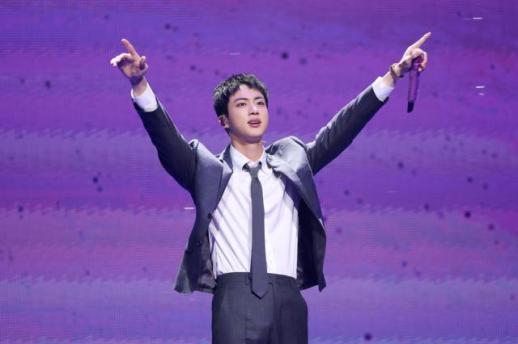 Entertainment Industry Encourages Voter Participation Ahead of Local Elections On June 3, as local elections approached, the entertainment industry continued its efforts to encourage voter participation. Stars shared selfies of their early voting and urged their followers to vote, while discussions about the political implications of social media posts and clothing colors emerged, creating a cautious atmosphere.Jin of BTS, who recently returned to Korea after performing in Las Vegas as part of their world tour 'ARIRANG,' cast his vote at the third polling station in Hannam-dong, Yongsan-gu, Seoul.Actors So Yoo-jin and Yoon Jong-hoon, broadcaster Jang Sung-kyu, and musical couple Kim So-hyun and Son Jun-ho, along with actors Jin Tae-hyun and Park Si-eun, also shared photos of their voting experiences, encouraging participation with messages like "Vote completed," "Everyone, please vote," and "Let’s share our precious votes."During the early voting period, participation from the entertainment sector continued. Singer Lee Seung-hwan, actress Kim Gyu-ri, and singer-actor Harisu posted their early voting selfies on their personal social media accounts on May 29 and 30. Members of the group Cortis, Martin and Joo-hoon, as well as If I members Won Hwa-yeon, Tae-rin, Ra-hee, and Kasia, also participated in early voting and shared their photos. Notably, Martin and Joo-hoon, both born in 2008 and voting for the first time, posted a photo holding their early voting confirmation on Weverse, expressing, "We’re adults now."Broadcaster Park Myung-soo discussed the importance of voting on his radio show. On May 29, during KBS Cool FM's 'Park Myung-soo's Radio Show,' he stated, "Voting is a duty that we must fulfill as citizens," and urged listeners to choose someone who can help the country prosper.Alongside the push for voter participation, incidents related to social media posts during the election season continued. On May 30, singer Lee Young-ji posted a recent photo with her hair dyed red and wearing a red shirt, accompanied by the song 'RED RED' by Cortis. After some online users suggested that the post evoked the colors of a specific political party, Lee Young-ji deleted the post.The following day, she apologized on social media, saying, "I uploaded a story that was not timely, and I understand it surprised many. I was aware of the importance of the timing but let my desire to communicate take precedence over that."Promise Nine's Baek Ji-heon also appeared conscious of her outfit's color during a live broadcast on the first day of early voting. Wearing a dark blue top, she remarked, "It’s election season, right?" and changed into a darker outfit to avoid any potential misunderstandings.Every election season, the colors of celebrities' outfits, hand gestures, and numbers are often interpreted politically. For instance, a past photo of Koyote's Shin Ji making a V sign circulated as a show of support for a specific candidate, and Aespa's Karina faced controversy for wearing a red jumper with the number 2. As similar interpretations arise during each election, some celebrities have shown caution regarding their social media posts and outfit colors during this election period.The 9th nationwide local elections took place on June 3 from 6 a.m. to 6 p.m. Early voting was conducted over two days, on May 29 and 30.* This article has been translated by AI. 2026-06-03 15:27:00
 -
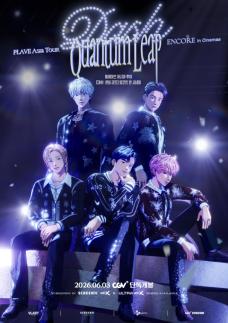 PLAVE Concert Film 'DASH: Quantum Leap' Premieres Today Virtual idol PLAVE's Asia tour encore concert film is now in theaters.The live performance film 'PLAVE Asia Tour DASH: Quantum Leap Encore in Cinema' premiered on June 3.This film captures the encore performance of PLAVE's Asia tour 'DASH: Quantum Leap,' featuring their sold-out concert at Gocheok Sky Dome in Seoul, marking a milestone as the first virtual idol to perform there.The film generated significant interest from fans, recording approximately 30,000 ticket pre-sales on May 20, just two weeks before its release. It showcases key moments from the tour, including the title stage, exclusive concert performances, and heartfelt fan songs that concluded the Asia tour.Additionally, the film includes special extra content to enhance the audience's experience. It is available in various formats, including 2D, 4DX, Ultra 4DX, and ScreenX. Theaters are also hosting special events, including giveaways for opening week audiences and a photo zone at CGV Yongsan I-Park Mall.PLAVE continues to achieve success in music and global charts. Their mini-album 'Caligo Pt.2,' released on April 13, surpassed 1.25 million copies in initial sales, setting a new record for the group. They also made their mark on the U.S. Billboard charts, entering the 'Billboard 200' and 'Billboard Artist 100,' confirming their global influence.As a virtual artist expanding their presence in the K-pop market, PLAVE reconnects with fans through this concert film following their music and performances. 'PLAVE Asia Tour DASH: Quantum Leap Encore in Cinema' is currently screening at CGV theaters nationwide.* This article has been translated by AI. 2026-06-03 14:15:00