
Journalist

Choi Song-hee
alfie312@ajunews.com
-
 Korean Film Directors Lee Joon-ik, Lee Byung-hun Move Into Short-Form Dramas Korean film directors are increasingly turning to short-form dramas, a format once seen largely as a proving ground for newcomers. After director Lee Byung-hun joined Lezhin Snack’s original series “The Baby’s Dad Is My Guy Friend” as planner and director, director Lee Joon-ik has also stepped into the space with “A Father’s Home-Cooked Meal.” Lezhin Snack said “A Father’s Home-Cooked Meal” wrapped filming March 24 and has moved into postproduction. Based on a webtoon of the same name by writer Gorita, the story follows a family after the wife, Soon-ae, can no longer cook following an accident. Her husband, Ha-eung, who has kept his distance from the kitchen his whole life, begins making home-cooked meals for the first time, and family relationships shift along the way. The company said the adaptation builds on the original’s emotional tone — using food to explore intergenerational ties — while deepening the narrative and character interpretations for the screen. Lee Joon-ik, known for films including “The King and the Clown,” “Dongju: The Portrait of a Poet” and “The Book of Fish,” is directing a short-form drama for the first time. His move from feature-length theatrical storytelling to a vertical frame and faster pacing has drawn industry attention. Lee said, “This is my first time trying a short-form drama. Within a vertical frame, you can clearly observe even the deepest corners of a character. I set it up so we don’t miss the good parts of the original, while allowing the story to gain depth.” The cast includes Jung Jin-young, Lee Jung-eun and Byun Yo-han. Jung plays Ha-eung, who takes responsibility for home cooking after his wife can no longer do it. Lee plays Soon-ae, who has long anchored the family table but suddenly forgets how to cook, disrupting everyday life. Byun plays their son, Myung-bok, who watches the changes up close. Their participation reflects a broader trend of lead-level actors joining short-form projects. The shift is not limited to Lee Joon-ik. Lee Byung-hun’s “The Baby’s Dad Is My Guy Friend” has continued to draw viewers since its release and has emerged as one of the platform’s notable hits, according to the report. The involvement of directors already recognized for commercial appeal and directing skill in film and television suggests the market mood around short formats is changing. Lezhin Snack said it is expanding production of “premium content” that delivers polished storytelling within the short-form format. The company described “A Father’s Home-Cooked Meal” as a project drawing expectations through its combination of source material, creators and cast — and as an example of its strategy to pursue both quality and broad appeal within a short runtime. The company’s upcoming slate also points to a widening range for short-form dramas. Beyond “A Father’s Home-Cooked Meal,” Lezhin Snack plans to roll out “Special Conditions of My Live-in Boyfriend,” “A Naughty Blind Date,” “Bad Kid Good Partner” and “Mujin: A Female Professor Seduces Her Student,” spanning family drama, romance, BL and revenge stories. “Mujin: A Female Professor Seduces Her Student” is directed by Kim Hwi, who made the films “The Neighbors” and “The Murder Case at Itaewon,” while “Bad Kid Good Partner” is directed by Kim Sun-bin, who has drawn attention in the independent film scene. With Lee Byung-hun followed by Lee Joon-ik moving into short-form drama directing, industry watchers are paying closer attention to how the format could reshape content strategies going forward.* This article has been translated by AI. 2026-04-07 16:09:14
 -
 SM Entertainment Subsidiary Studio Realive Names Kim Jong-min as CEO Studio Realive, a subsidiary of SM Entertainment, has appointed Chief Creative Officer Kim Jong-min as its new CEO. Kim previously co-founded GiiOii Studio and has worked as an XR curator for the Bucheon International Fantastic Film Festival. He has also served as an adjunct professor at the Korea National University of Arts and as a full-time professor at the Korea Creative Content Agency’s New Content Academy. He joined Studio Realive as CCO in 2024 and has built expertise in planning, curating and producing content based on creative technology. During his tenure as CCO, Kim established collaboration frameworks with Meta, Google DeepMind and Moment Factory. He led immersive spaces and content projects, focusing on internalizing technology and strengthening platform competitiveness. The company said he has been recognized for balancing artistic quality with business viability, drawing on on-the-ground experience as both a producer and curator. Studio Realive said it plans to accelerate efforts to expand innovative media projects into a sustainable business ecosystem under Kim’s leadership. Studio Realive is an “entertech” company that combines K-pop with artificial intelligence and extended reality technologies to design next-generation entertainment experiences. It aims to build an ecosystem in which fans participate as co-creators through a content universe based on SM’s intellectual property and story worlds, and to present a new entertainment paradigm built around new experiences and narratives.* This article has been translated by AI. 2026-04-07 14:12:15
 -
 3 Audience Members Injured After Safety Barrier Collapses at Super Junior Concert, SM Says Three audience members were injured at a Super Junior concert after a safety barrier in the seating area collapsed, SM Entertainment said. SM said on the 6th that the incident happened the previous day during Super Junior’s 20th anniversary world tour concert, “Super Show 10,” at KSPO Dome in Seoul’s Songpa district. The barrier gave way during the encore, and three people fell and were hurt. “The injured were immediately taken to a hospital for necessary tests and treatment,” SM said. Medical staff advised that they need about two weeks of rest and treatment for sprains and bruises, the company said. SM apologized to those affected and their families, saying it would support treatment and “do our best” until the injured fully recover. The company said it “deeply feels the heavy responsibility” as the concert organizer and would strengthen facility safety checks and crowd safety management to prevent a recurrence.* This article has been translated by AI. 2026-04-06 17:39:15
 -
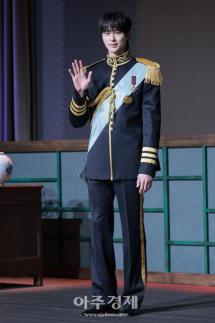 Byeon Woo-seok Returns in MBC’s ‘21st Century Grand Princess’ After Two-Year Gap Actor Byeon Woo-seok shared his thoughts on returning to viewers about two years after “Lovely Runner.” A production presentation for MBC’s drama “21st Century Grand Princess” (written by Yoo Ji-won; directed by Park Jun-hwa and Bae Hee-young) was held on the afternoon of April 6 at Josun Palace Seoul Gangnam in Seoul. Director Park and cast members IU, Byeon, Noh Sang-hyun, Gong Seung-yeon, Yoo Su-bin and Lee Yeon attended. Byeon said he was grateful for the attention and love he received for “Lovely Runner.” “Rather than feeling pressured, I hope people will love me even more,” he said. “As much as I’m given interest and support, I’ll keep improving and do my best.” He added, “I really like the attention. As someone who works as an actor, I think it’s the mindset you should have when you act.” On playing Prince Ian, a role that requires delicate emotional acting, Byeon said he built the character through extensive talks with the director. “I also did my best in this project to play Prince Ian,” he said. “I paid attention so viewers could empathize emotionally, and I tried to focus on his story.” “21st Century Grand Princess” is set in a 21st century constitutional monarchy. It follows a romance between a wealthy conglomerate heiress frustrated that she is only a commoner by status and a king’s son saddened that he cannot have anything, as they try to shape their own fate and break through class barriers. It will be released at 9:40 p.m. on April 10 on MBC and Disney+.* This article has been translated by AI. 2026-04-06 15:48:40
 -
 IU Says Switching From Netflix Hit to MBC’s ‘21st Century Grand Princess’ Feels Easier Singer and actor IU is returning with a new role after the popularity of the Netflix series ‘When Life Gives You Tangerines.’ MBC held a production presentation on April 6 at Josun Palace Seoul Gangnam in Seoul for its drama ‘21st Century Grand Princess,’ written by Yoo Ji-won and directed by Park Joon-hwa and Bae Hee-young. Director Park and cast members IU, Byeon Woo-seok, Noh Sang-hyun, Gong Seung-yeon, Yoo Soo-bin and Lee Yeon attended. IU previously drew global attention for her performances as Ae-soon and Geum-myeong in ‘When Life Gives You Tangerines.’ In the new drama, she plays Seong Hee-joo, described as having a prickly personality. “Because ‘When Life Gives You Tangerines’ received so much love, and it was a character I filmed for a long time and immersed myself in, choosing something very different actually felt easier,” IU said. She added, “I do feel pressure about ‘21st Century Grand Princess,’ but I don’t feel pressure about showing a different kind of project and character from ‘When Life Gives You Tangerines.’ If anything, I feel more at ease.” ‘21st Century Grand Princess’ is set in a 21st century constitutional monarchy. It follows a wealthy conglomerate heiress frustrated that she is only a commoner, and a king’s son saddened that he cannot have anything, as they pursue romance while trying to break through class barriers. The series will be released at 9:40 p.m. on April 10 on MBC and Disney+.* This article has been translated by AI. 2026-04-06 15:39:06
 -
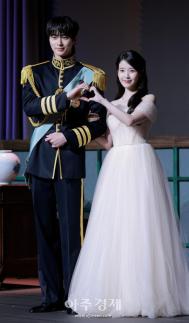 IU, Byeon Woo-seok Reunite for MBC’s ‘21st Century Grand Prince’s Wife’ IU and Byeon Woo-seok, who previously worked together in the drama “Moon Lovers: Scarlet Heart Ryeo” a decade ago, are reuniting in MBC’s new series “21st Century Grand Prince’s Wife,” a romantic comedy set in a constitutional monarchy. A production presentation for the drama was held on April 6 at Josun Palace Seoul Gangnam in Seoul. Director Park Jun-hwa attended with cast members IU, Byeon, Noh Sang-hyun, Gong Seung-yeon, Yoo Su-bin and Lee Yeon. “21st Century Grand Prince’s Wife” follows a wealthy conglomerate heiress who has everything except noble status, and a king’s son who, despite his title, cannot have anything. The drama centers on their romance and efforts to break through class barriers. Park said the constitutional monarchy setting would offer “a unique kind of excitement” and keep viewers engaged. He said the production aimed to feel plausible through costumes and spaces so audiences could think it “could exist.” The series marks Park’s first drama for MBC. He said he felt pressure to deliver and emphasized the cast as the show’s biggest draw, adding that watching the visuals on set made monitoring footage enjoyable. Park also shared a casting anecdote, saying IU and Byeon were already attached when he joined the project and that their casting was one reason he decided to take it. He added, laughing, that his daughter is a big fan and urged him to do the drama. IU plays Seong Hee-joo, a character who is “annoyed” by lacking status despite her wealth. IU described Hee-joo as a layered figure full of irritation, anger and ambition, but also “cute,” and said the role was so appealing she decided quickly to join. She said Hee-joo is less a conventional chaebol figure than a celebrity who draws attention wherever she goes. Byeon plays Prince Ian, the king’s second son, a beloved royal who is not allowed to shine. Referring to the character’s nickname, “the 21st century Prince Suyang,” Byeon said Ian may look tough and twisted on the outside but carries inner wounds, and he focused his performance on that side. The reunion of IU and Byeon is a key point of interest. IU said she approached the new project determined to make up for “mistakes” from the past, noting that in their earlier drama Byeon played her boyfriend who had an affair with her close friend. She said it felt meaningful to work together again 10 years later and that Byeon brought an ease that felt like he had been preparing for a decade. Byeon said he felt their chemistry had continued since then and that filming was fun because IU made him comfortable on set. Noh plays Prime Minister Min Jung-woo, described as highly responsible, while Gong plays Queen Yoon Yi-rang, who appears cold but works to protect the royal family. Yoo plays Prince Ian’s aide, Choi Hyun, and Lee plays Hee-joo’s capable secretary, Do Hye-jung. Asked about comparisons to the earlier hit drama “Princess Hours,” Park called it “a great drama” and said the team would work to make this series remembered as well in 2026. He said Episodes 1 through 4 each offer different kinds of fun. With the drama set to reach global viewers via Disney+, the team also highlighted its Korean aesthetic. Noh said the blend of modern and traditional elements is reflected in architecture and costumes and would present Korea in a refined way. Park said the series includes many Korean elements, but its relationships are built around themes anyone can relate to. IU said the drama becomes more entertaining as it goes, adding that the director promised it would be a breakout project for the cast. She asked viewers to stay with the series to the end. “21st Century Grand Prince’s Wife” premieres April 10 at 9:40 p.m. on MBC and Disney+. 2026-04-06 15:33:53
 -
 YH Entertainment’s rookie boy band AND2BLE sets May 26 debut YH Entertainment’s rookie boy group AND2BLE has confirmed it will debut May 26. After opening an Instagram account on April 1, the group expanded its official social media presence at midnight on April 6 by launching accounts on YouTube, X, Facebook and TikTok, kicking off its debut countdown. The name AND2BLE combines “AND” and “DOUBLE,” reflecting the idea of layering different sides of oneself to broaden a sense of identity. The agency said the concept also signals the group’s direction: blending each member’s individuality into a distinct image and building it into a brand. A newly released logo motion drew attention by visually emphasizing that identity. The repeated “AND2BLE” typography is designed to represent the combination of multiple inner selves, the agency said. AND2BLE is YH Entertainment’s first new boy group in about four years since TEMPEST. The group has drawn strong interest even before its official debut, including appearing on real-time social media trending lists. The group also opened a debut promotion page featuring an interactive tag-making tool. Visitors can choose three design elements to create a personalized tag by mixing styles, colors and moods, then share the finished tag with other users. The agency described it as an experiential way to extend the group’s “branding of individuality” concept. AND2BLE is set to roll out additional content in stages ahead of its May 26 debut.* This article has been translated by AI. 2026-04-06 14:18:00
 -
 SEVENTEEN Renews Contract With Pledis Entertainment for Second Time SEVENTEEN has announced a second contract renewal with its agency, Pledis Entertainment. The group delivered the news on the final night of its encore concerts April 4-5 at Incheon Asiad Main Stadium, which wrapped its world tour that began at the same venue in September. Including the encore shows, SEVENTEEN performed 31 times in 14 cities worldwide, drawing more than 900,000 fans. Leader S.Coups told the crowd the members plan to stay together with Pledis. “We will keep rowing forward together in the same boat,” he said, adding that the group is preparing for its second renewal with the company. The members cited their fandom, CARAT, as a key reason for renewing. They said they wanted to tell everyone they love them and asked fans to “wait a little longer,” saying they would “return as 13 soon.” They also said they would continue unit and solo work while staying close to fans. Jeonghan and Wonwoo, who are fulfilling mandatory military service, attended from the audience in support. SEVENTEEN will continue both unit and group activities. DK and Seungkwan will hold “DXS ‘Soya-gok’ On Stage” from April 17-19 at Inspire Arena in Incheon. S.Coups and Mingyu will stage “CXM ‘Double Up’ Live Party” from April 24-26 at Kaohsiung Arena. The group is also set to hold its “2026 SEVENTEEN 10TH Fan Meeting ‘SEVENTEEN in CARAT LAND’” on June 20-21 at Incheon Asiad Main Stadium.* This article has been translated by AI. 2026-04-06 11:21:16
 -
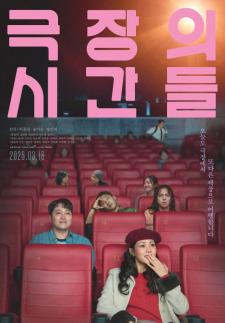 Korean Anthology Film 'The Times of the Theater' Invited to Moscow International Film Festival 영화 ‘극장의 시간들’이 제48회 모스크바국제영화제에 초청됐다. ‘극장의 시간들’은 Lee Jong-pil, Yoon Ga-eun and Jang Kun-jae taking part in an anthology of three short films. The work captures memories and emotions tied to theaters and movies, warmly exploring what the space of a “theater” means. The film was selected for the Francois Truffaut retrospective section at the 48th Moscow International Film Festival. The festival, Russia’s leading international film event, began in 1935 and will run from April 16 to 23. ‘극장의 시간들’ previously met domestic audiences after being invited last year to the Busan International Film Festival, the Seoul Independent Film Festival and the Mise-en-scene Short Film Festival. During its Busan screening, it drew attention after reports said President Lee Jae-myung and his spouse attended. Festival organizers said the film recalls the cinematic world of Truffaut, a leading figure of the French New Wave. Executive committee chairman Nikita Mikhalkov said, “This film, reminiscent of ‘Jules and Jim,’ is a notable example of contemporary directors superbly carrying on the traditions of film history.” A Tcast official said it was meaningful for the film to reach audiences beyond South Korea, adding that the company hopes it will renew appreciation for the value of watching movies in theaters despite the industry’s challenges. ‘극장의 시간들’ opened March 18 and is now showing in theaters nationwide.* This article has been translated by AI. 2026-04-06 09:36:15
 -
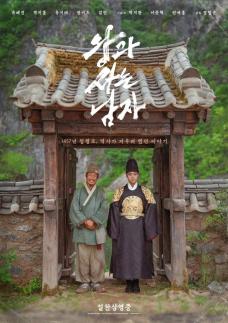 Jang Hang-jun’s ‘A Man Living With the King’ Tops 16 Million Admissions, Eyes No. 2 All Time The film ‘A Man Living With the King’ has surpassed 16 million admissions, becoming the third release in Korea to reach that mark after ‘The Admiral: Roaring Currents’ and ‘Extreme Job.’ According to the Korean Film Council’s integrated box office database on the 6th, the movie drew 270,274 viewers from April 3 to 5, bringing its cumulative total to 16,000,697. It opened Feb. 4, crossed 10 million admissions on its 31st day of release on March 6, and topped 15 million on its 60th day on March 25 before adding another milestone at 16 million. With the latest tally, ‘A Man Living With the King’ joins ‘The Admiral: Roaring Currents’ (17.61 million) and ‘Extreme Job’ (16.26 million) as the only films to exceed 16 million admissions. Set in 1457 at Cheongnyeongpo, the historical drama follows a village chief who chooses exile to revive his community and a young former king who is forced into exile after being driven from the throne. It was directed by Jang Hang-jun and stars Yoo Hae-jin and Park Ji-hoon. In the weekend box office, Ryan Gosling’s ‘Project Hail Mary’ ranked No. 1. It drew 328,750 viewers over the weekend for a cumulative 1,635,219. The science fiction film follows Grace, who wakes up alone in deep space with no memory and sets out on a final mission to save humanity. It is based on Andy Weir’s novel of the same name. No. 3 was Bae Seong-woo’s return film, ‘Endgame Investigation.’ The movie, which opened April 2, drew 41,699 viewers for a cumulative 56,316. It is a crime investigation drama about a detective, Jae-hyeok, who is transferred to a rural post and heads to Seoul with rookie detective Jung-ho to catch the real killer in a murder case involving two suspects.* This article has been translated by AI. 2026-04-06 08:18:37