
Journalist

Ahn Seon-Young
asy728@ajunews.com
-
 IBK Bank Eyes Potential 400% Return as 'King and the Man Who Lives With Him' Tops 15 Million Viewers As the film 'King and the Man Who Lives With Him' ("Wangsanim") passed 15 million moviegoers, attention has turned to the investment results of IBK Industrial Bank of Korea, one of its main backers. Industry watchers are cautiously raising the possibility that its return could surpass the current No. 1, 'Extreme Job.' According to the Korean Film Council’s integrated box office system, Wangsanim had drawn a cumulative 15.78 million viewers as of April 1. At the current pace, it is expected to top 16 million after the weekend. Cumulative revenue was tallied at 152.2 billion won. With a net production cost of 10.5 billion won and a break-even point of about 2.6 million admissions including marketing, the film recouped its investment early in its run, and most additional revenue is being booked as profit. With the film posting standout box-office results, investors’ profit expectations have also risen. IBK invested 1 billion won in the project, and the industry estimates the final rate of return could be around 400%. IBK’s previous best performer was 'Extreme Job.' The bank invested 790 million won and posted a 337% return. The film’s revenue was 15.5 times its total production cost, the highest ratio on record for a Korean film. Wangsanim’s total production cost has not been finalized, but the industry puts it at about 13 billion won. On that basis, revenue would be about 11.7 times production cost. The film is still in theaters, and additional income remains from overseas sales and OTT rights, which could lift the final return. For Korean films, theater revenue typically accounts for 60% to 70%, while exports and ancillary rights distribution make up 30% to 40%. That is why expectations are growing that Wangsanim could overtake 'Extreme Job' as the top-returning film. As IBK-backed films continue to succeed, the bank’s investment approach is also drawing renewed attention. The bank is known for closely reviewing production structure and risk factors rather than relying only on budget size or star casting. It is reported to consider whether small and midsize firms participate in production, whether the film contains political or religious elements, and whether the director or actors have a history of controversy. In the final adjustment stage, IBK applies unusual criteria, including a 10% deduction if the director is 60 or older, a 10% deduction if the director has had three consecutive hits, and a 10% addition if the director’s previous film failed to break even. In that sense, director Jang Hang-jun’s prior film 'Rebound' failing to reach break-even is described as having helped lead to IBK’s investment. Based on these standards, IBK has directly or indirectly invested in 13 of the 16 Korean films that have surpassed 10 million admissions, including 'The Admiral: Roaring Currents,' 'Ode to My Father' and 'Along With the Gods.' The average return on the bank’s investments in those 10-million-viewer films stands at 172%. 2026-04-02 15:09:00
 -
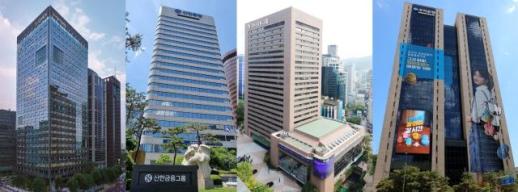 South Korea’s Big Four Financial Groups Seen Earning Over 5 Trillion Won in Q1; Woori Profit Up 30% South Korea’s four major financial holding companies — KB, Shinhan, Hana and Woori — are expected to post combined net profit of more than 5 trillion won in the first quarter, supported by steady interest income and a recovery in noninterest earnings. Woori Financial Group is projected to stand out, with profit expected to jump more than 30% as one-off costs fade. According to market estimates compiled by financial data firm FnGuide on Tuesday, the four groups’ combined first-quarter net profit consensus totals 5.1968 trillion won, up 5.4% from 4.9289 trillion won a year earlier. By group, KB Financial Group is expected to remain the top earner with 1.7124 trillion won, followed by Shinhan Financial Group at 1.5247 trillion won and Hana Financial Group at 1.1565 trillion won. While the top three are seen posting modest growth of 0% to the low 2% range, Woori is forecast to rise 30.2% to 803.2 billion won. Woori’s improvement is largely attributed to base effects. Large one-time expenses booked in the first quarter of last year — including costs tied to launching a securities unit and voluntary retirement programs — are no longer weighing on results, along with higher selling and administrative expenses linked to expanded digital investment. In the first quarter, Woori is also expected to record gains from selling part of its stake in K Bank and related gains tied to its remaining shares. Noninterest income is projected to rise more than 40%, helped by the acquisition of Tongyang Life Insurance and ABL Life Insurance and improved performance at Woori Investment & Securities. Across the sector, balanced growth in interest and noninterest income is seen supporting results. The groups are expected to have defended their net interest margins amid tighter household lending rules, while nonbank affiliates such as securities and insurance units contributed through higher fee income. Analysts also expect lower credit costs, as last year’s provisioning issues — including those tied to Hong Kong H-index-linked equity-linked securities and loan-to-value-related fines — have not resurfaced. Still, a weaker won is expected to be a headwind. The average weekly closing rate for the won against the U.S. dollar in the first quarter was 1,465 won, the highest level since the 1998 Asian financial crisis. A sharp rise in the exchange rate can lead to sizable foreign-exchange losses on foreign-currency assets, weighing on profitability. The market expects foreign-exchange translation losses ranging from tens of billions of won to around 100 billion won, depending on the company. The groups’ total shareholder return ratio for the first quarter is expected to settle in the 40% to 50% range. Under the government’s value-up policy, financial holding companies use capital above a 13% common equity Tier 1 ratio for shareholder returns. Woori’s CET1 ratio stood at 12.9% at the end of last year, but its total shareholder return ratio is expected to rise to about 45% to 46% this year as net profit surges. KB’s ratio is projected to exceed 55%. “Greater exchange-rate volatility could create temporary loss factors, but overall earnings capacity is being maintained,” a financial industry official said. “As provisioning pressure gradually eases and nonbank portfolios help offset results, financial holding companies’ performance this year is expected to remain stable without major swings.”* This article has been translated by AI. 2026-04-01 17:03:00
 -
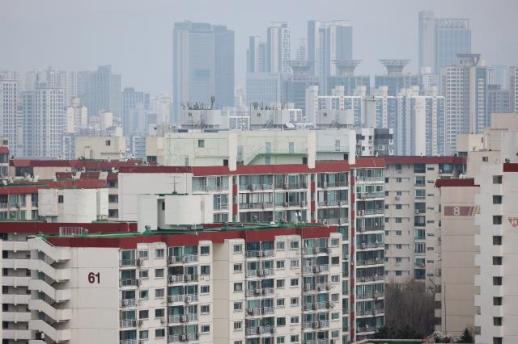 South Korea to Bar Loan Maturity Extensions for Multi-Homeowners, Tighten Household Debt Growth Financial regulators are set to announce new measures this week aimed at curbing household lending, including a plan to generally bar extensions of loan maturities for borrowers who own multiple homes. The steps are expected to align with tighter real estate rules by sharply lowering the target growth rate for total household debt and setting a separate target for mortgage lending. According to the financial sector on March 30, the Financial Services Commission will hold a household debt review meeting on April 1 chaired by FSC Chairman Lee Eok-won and will 발표 its household debt management plan for this year. The plan had been scheduled for late February but was delayed by more than a month as issues involving multi-homeowners moved to the forefront. The measures are expected to include a principle of not allowing maturity extensions on mortgages held by multi-homeowners. The aim is to encourage repayment of principal and interest when loans come due, increasing pressure on owners to put homes on the market. An exception is expected for homes under ongoing jeonse or monthly-rent contracts, with extensions allowed until the lease ends to protect tenants’ housing stability. Regulators expect the move could bring about 10,000 homes owned by multi-homeowners onto the market in Seoul and the surrounding capital region. Rental business operators hold about 12,000 apartments in the capital region, and more than 80% are estimated to reach maturity this year. The total could rise further when including second-tier financial institutions and individual multi-homeowners. Measures related to what President Lee Jae-myung described as speculative, nonresident single-homeowners are likely to be announced after additional review. The report said it is difficult to separately classify speculative borrowers because nonresident ownership can stem from various reasons, including caring for parents or children’s education. Total household debt growth this year is expected to be reduced further from last year’s 1.8%. Authorities are widely considering setting the target growth rate at around 1%, and they have not ruled out presenting a target in the 0% range. Financial Supervisory Service Gov. Lee Chan-jin said at a news briefing on March 26, “It will be difficult to expect (the total target) to increase by financial sector,” adding that the target would be tightened and managed at “no more than half” the nominal GDP growth rate. For mortgages, which have led the rise in household lending, regulators are expected to issue more specific guidance. While rules have focused on overall household lending, officials are considering setting a separate target for total mortgage lending and raising the minimum risk weight from 20% to 25%. In the second-tier financial sector, lending standards are expected to tighten, particularly at mutual financial institutions. Household loans at Saemaul Geumgo exceeded the previous year’s target by four times last year, and regulators are requiring this year’s loan balance to be managed at or below the level at the end of last year. The steps are seen as an effort to decisively slow household loan growth and cut off funding flowing into the real estate market. Household loans across the financial sector rose 37.6 trillion won last year, with the increase narrowing by about 4 trillion won from the previous year. This year, however, loans rose 1.4 trillion won in January and 2.9 trillion won in February, posting increases for two straight months. 2026-03-30 14:54:00
 -
 Kim Yong-hwan Warns Current Turmoil Resembles 2008 Crisis as Uncertainty Grows Kim Yong-hwan, who has spent more than four decades on the front lines of South Korea’s financial sector, warned that today’s conditions resemble the 2008 global financial crisis. Kim, who served as senior deputy governor of the Financial Supervisory Service in 2008, was involved in the country’s response at the time. In a telephone interview with Aju Economy on the 19th, Kim said the collapse of subprime mortgages in 2008 has “only changed form,” now appearing as troubled private lending tied to U.S. big tech companies in 2026. “Anxiety is rising that it is similar to that time,” he said, adding that uncertainty at home and abroad is unusually high. Private lending refers to companies borrowing through funds raised by nonbank financial firms, a form of private debt. As concerns grow about potential weakness centered on U.S. big tech, it has emerged as a new flashpoint in global finance. With the global private-lending market swelling to the trillions of won, rising delinquency at some firms and fears of tighter liquidity are, critics say, rapidly building “hidden risks.” Kim said that when global shocks hit, South Korea’s markets tend to swing more sharply than those of major economies. With tensions rising in the Middle East, domestic stocks have been seesawing by roughly 10%. He attributed the volatility to a narrow investment base rather than weak fundamentals. “It’s not that Korea’s fundamentals are weak, but the capital market is not broad-based, so the financial market is more exposed to volatility,” he said, arguing that a deeper direct-financing market would make Korea less sensitive to external shocks. He also voiced concern about Korea’s growth structure. “Only a very small number of conglomerates such as Samsung, SK and Hyundai are doing well, while small and mid-sized firms continue to struggle,” Kim said. He added that per capita gross national income has failed for 12 years to break through the $30,000 threshold, and said Korea should consider whether it can grow like Taiwan, which entered the $40,000 era last year. Unlike South Korea, where a handful of large companies account for most exports and investment, Taiwan is often assessed as having a more dispersed industrial base built around small and mid-sized firms. Kim said Korea needs a structure in which large companies and smaller firms grow together for stable development, underscoring the need for balanced growth. Drawing on experience with multiple financial crises and industrial shifts, Kim advised younger officials that the most important thing in policymaking is to avoid haste and keep the big picture in view. “Especially in an era like this, when people expect AI to solve everything, policymakers need judgment and balance that come from experience,” he said. Kim entered public service in 1979 through the 23rd class of the state civil service exam and held posts including director of the Welfare and Living Affairs Division at the Ministry of Finance and Economy, director general of Supervisory Policy Bureau II at the Financial Supervisory Commission, standing commissioner at the Financial Services Commission, and senior deputy governor at the Financial Supervisory Service. He later served as president of the Export-Import Bank of Korea and chairman of NH NongHyup Financial Group, and now works as an adviser at Shin &u0026 Kim. Earlier this month, he published a memoir, “Flow Like Water, Stand by Principles.” 2026-03-19 15:03:00
 -
 Shinhan Bank’s Ddaenggyeoyo delivery app tops 8.5 million users, fueled by low fees Shinhan Bank’s food delivery platform Ddaenggyeoyo, once known as “a delivery app made by a bank,” has grown into a nationwide service, drawing 8.5 million users in four years. Analysts attribute the growth to a “shared-growth” model that pairs low brokerage fees with a no-ad-fee structure, appealing to both customers and small merchants. Shinhan Bank said March 16 that Ddaenggyeoyo surpassed 8.5 million cumulative users as of the end of February, four years after its official launch. The total rose by 500,000 in two months after topping 8 million at the end of last year. The number of affiliated merchants has also expanded rapidly, increasing by about 120,000 in a year from fewer than 200,000 at the end of 2024. Order volume has climbed even faster. Annual orders were under 100 billion won in 2023, rose to 113.6 billion won in 2024, and surged to 669.8 billion won in 2025. Orders totaled 143.2 billion won in the first two months of this year. Some forecasts say annual orders could exceed 1 trillion won if the pace continues. More than two-thirds of users — 72% — place repeat orders, suggesting the service has built stable customer satisfaction, the bank said. Ddaenggyeoyo entered a fiercely competitive market dominated by a handful of large platforms, where high brokerage fees and advertising costs have been a major complaint among self-employed business owners. Positioning itself as a public-minded delivery app, Ddaenggyeoyo has focused on local small businesses. While some apps charge brokerage fees of about 9% to 10% plus advertising fees, Ddaenggyeoyo keeps its brokerage fee at about 2% and does not charge advertising fees, the bank said. In the financial sector, Ddaenggyeoyo’s growth is also being viewed as an example of a bank expanding into everyday financial services. The “Ddaenggyeoyo interest-subsidy loan,” linked to the platform, is aimed at reducing financing costs for affiliated small merchants. The program began in Seoul in July 2025 and, as of February, had issued 2 billion won in Seoul and 3.4 billion won nationwide that month, pushing cumulative lending past 50 billion won. Shinhan Bank has also expanded related services, including Ddaenggyeoyo savings products, a rider-only check card and promotions such as discount coupons to connect merchants, riders and users. Lee Eun-hee, a professor of consumer science at Inha University, said Ddaenggyeoyo reduces fee burdens for store owners while offering incentives such as coupons to encourage use. She said the key to sustained growth will be whether the platform can maintain market share boosted by public delivery-app consumer coupons and convert it into a self-sustaining user base.* This article has been translated by AI. 2026-03-17 06:03:00
 -
 Korea’s Elder Care Demand Surges as Nursing Home Rules Slow New Supply South Korea’s shift into a super-aged society is driving a sharp rise in demand for elder care, but the supply of nursing homes is falling far short, constrained by regulations that make it difficult to open new facilities. Industry officials warn that a “care gap” could soon become reality as entry barriers keep capacity from expanding fast enough. As of Tuesday, industry sources said nursing home bed capacity has increased by an average of 8.4% a year since 2008. However, only 38% of facilities earned A or B grades in evaluations by the National Health Insurance Service, which are generally preferred by families. About one in four facilities was cited for violating staffing standards (24.9%), and 28.5% fell short on adequate toileting services, failing to meet basic requirements. The mismatch is already visible on the ground. Mid- to large-sized nursing homes typically have capacity for about 200 residents, but waiting lists can run into the thousands depending on the facility, according to industry accounts. With population aging accelerating, the number of people waiting is expected to grow, yet new construction is not keeping pace. Under the enforcement rules of the Elderly Welfare Act, operators seeking to build elderly medical welfare facilities or senior welfare housing must first secure land and buildings that meet set standards. In practice, that means a provider cannot establish a facility based only on operating capability or a service model; it must first obtain physical infrastructure, such as purchasing land and constructing a building or leasing suitable premises. Industry officials say those requirements function as a steep barrier to entry. In urban areas, it is difficult to secure enough land for a nursing home, and land purchases and construction costs can range from tens of billions to hundreds of billions of won, effectively limiting new entrants. Factoring in the opportunity cost tied to owning land and buildings, losses in Seoul are estimated at about 8 million won a month, excluding noncovered service revenue. The Ministry of Health and Welfare, the lead agency, has acknowledged the need to improve regulations and is reviewing revisions. But industry groups say steps such as limited easing of facility standards or streamlined administrative procedures have had little impact in the field. Related organizations have formally urged the government to relax establishment requirements and expand the use of public land for facilities. Some experts also argue for a larger role for private nursing homes. Compared with public facilities, private providers can offer more varied services and more tailored care, and can differentiate themselves through facility conditions and programs. They also tend to have shorter waiting periods and can operate more flexibly in areas such as family visits and daily convenience, the article said. Experts say the government should focus on oversight and safety nets while supporting private providers behind the scenes as the main source of supply. Jang Si-ryeong, a senior researcher at the Bank of Korea’s Economic Research Institute, said, “With the end-of-life elderly population set to double over the next 25 years, it is clear that public finances alone have limits.” She added that policymakers should consider ways to offset high real estate costs in major metropolitan areas such as Seoul and Busan to encourage a stable supply of facilities in city centers.* This article has been translated by AI. 2026-03-12 06:04:30
 -
 Oil Tops $100 as Bond Yields Rise, Raising Risk of 7% Mortgage Rates in South Korea Rising geopolitical tensions in the Middle East pushed international oil prices above $100 a barrel, adding to upward pressure on market interest rates. If bond yields keep climbing, some analysts say mortgage rates could top 7%. As of the 9th, the five major commercial banks — KB Kookmin, Shinhan, Hana, Woori and NH NongHyup — were offering five-year fixed (hybrid) mortgage rates of 4.14% to 6.74%, according to the banking sector. Compared with early this year’s 3.94% to 6.24%, the top end has risen 0.50 percentage points in about two months. Mortgage rates have continued to rise even though the Bank of Korea has kept its policy rate unchanged for six straight meetings, largely because yields on financial bonds used as benchmarks have moved higher. The five-year financial bond yield jumped 43.1 basis points — from 3.497% in early January to 3.928% on the 9th. (One basis point equals 0.01 percentage point.) Markets have also seen weakening expectations for rate cuts, while talk of a possible supplementary budget has raised concerns about heavier government bond issuance and supply-demand pressure. Analysts say the latest surge in oil prices has added to the upward push on bond yields. West Texas Intermediate futures briefly rose to $111.24 on the morning of the 9th, breaking above the psychological $100 level for the first time since July 2022, when prices were driven up by the war in Ukraine. With oil rising, the upper end of mortgage rates is expected to exceed 7% soon. Market estimates suggest a 10% rise in oil prices could lift government bond yields by up to 15 basis points. If banks’ funding costs and spreads are also adjusted, the increase in mortgage rates could widen to around 40 basis points, analysts said. In July 2022, five-year fixed mortgage rates were about 4.2% to 6.1%. As the impact of oil above $100 filtered through with a lag, rates topped 7% by October that year, reaching 5.3% to 7.4%. With the Iran situation raising even a “$150 oil scenario,” some analysts say mortgage rates could climb into the mid-7% range if tensions persist. Banks’ efforts to manage household lending are also accelerating the rise in borrowing costs. KakaoBank raised mortgage rates by 0.36 percentage points on March 5, lifting its maximum rate to about 6.5%. It was the bank’s second increase this year, following a 0.1-point hike in January. Industrial Bank of Korea also reduced the limits on its interest-rate discount coupons for mortgages and jeonse loans by 0.1 percentage point and 0.2 percentage point, respectively. Cutting preferential rates has the effect of raising borrowers’ loan rates. Kim Jina, a researcher at Eugene Investment & Securities, said worries are resurfacing that higher oil prices could fuel inflation, lead to policy-rate hikes and push up market rates, as seen during the Russia-Ukraine war. “Korea is especially sensitive to inflation and rate increases, so the swings will be severe,” she said. 2026-03-09 15:57:00
 -
 Korean Banks See Rush Into ETFs as Market Volatility Spurs Dip Buying Geopolitical tensions in the Middle East have fueled volatility in South Korea’s stock market, prompting even typically conservative bank customers to look at investment products. As more investors try to buy after sharp declines in hopes of a rebound, bank counters and private-banking centers have seen a rise in inquiries about funds and exchange-traded funds, or ETFs. On March 8, the financial industry said demand for investment consultations and product sign-ups has noticeably increased at banks as swings in the Kospi have grown. Customers who had focused on safer assets such as savings deposits are increasingly viewing market sell-offs as a chance to buy at lower prices, banks said. Branch visits have climbed particularly among older customers who are less comfortable using mobile apps. Some branches have seen customers arrive with cash ranging from tens of millions of won to, in some cases, hundreds of millions of won to ask about signing up for products, reflecting demand for in-person advice during a steep downturn. At the four major banks — KB Kookmin, Shinhan, Hana and Woori — ETFs sold in trust form totaled 7.3351 trillion won in January and 8.2819 trillion won in February, for a combined 16.8450 trillion won, according to the industry. The figures marked record highs for two straight months. Sales in January and February last year were under 1.5 trillion won, meaning the total rose more than tenfold in a year. This month, the Kospi fell sharply for two consecutive days on March 3 and 4 amid the Middle East situation, but banks still sold 1.2279 trillion won of ETFs over that period. Banks attribute much of the increase to a surge in demand from middle-aged and older customers. Younger investors who are used to trading stocks tend to buy and sell ETFs through brokerage apps, while older, wealthier clients often prefer to select products with help from private bankers and purchase them through banks, industry officials said. The rush has also created bottlenecks online. For some fund products and ETF-linked trust products, non-face-to-face sign-ups require a video call to explain investment risks, and heavy demand has led to waits of 30 minutes to more than an hour in many cases. A private-banking official at one bank said, “High-net-worth clients at banks used to focus on tax strategies or stable asset allocation, but recently there has been a clear move to look for investment opportunities that take advantage of market volatility.” The official added, “Some customers often move funds in the hundreds of millions of won to sign up for investment products.” Banks cautioned, however, that investors should avoid overextending themselves while uncertainty remains high. A banking industry official said inquiries have surged, but “given concerns about short-term volatility, decisions should fully consider investment goals and risk tolerance.”* This article has been translated by AI. 2026-03-08 14:03:49
 -
 Korean Bank Overdraft Loans Jump 1.3 Trillion Won in Five Days as Demand Deposits Fall 8.6 Trillion Volatility tied to the Iran situation has prompted some South Korean retail investors to treat the market swings as a buying opportunity, tapping bank credit lines to invest in stocks. Overdraft-style personal credit balances at major banks have surged in a short period while deposits have fallen, suggesting money is moving quickly into the market. As of March 5, personal overdraft loan balances at the five major banks — KB, Shinhan, Hana, Woori and NH NongHyup — totaled 40.7227 trillion won, according to the financial industry on Saturday. That figure reflects outstanding amounts actually used and rose 1.2979 trillion won in five days from the end of February (39.4249 trillion won). Adjusted for business days (March 3-5), the increase was effectively nearly 1.3 trillion won in three days. The balance is the largest for an end-of-month level since December 2022 (42.0546 trillion won). While the data cover only five days, the increase of 1.2979 trillion won is the biggest monthly-scale jump since November 2020 (+2.1263 trillion won). In the second half of 2020, ultra-low interest rates aimed at cushioning the COVID-19 shock fueled heavy borrowing for home purchases and stock investing. In the second half of last year, overdraft balances also climbed into the 40 trillion won range, reaching 40.0837 trillion won at the end of November, amid strong markets and spillover effects from tighter mortgage rules. After year-end and early-year bonuses helped bring balances back into the 39 trillion won range, overdraft borrowing has risen again following two days of sharp stock declines on March 3-4 linked to the Iran situation. At some banks, overdraft balances jumped by nearly 200 billion won in five days, an unusual move. Most of the funds are believed to have moved to brokerage firms. The surge in overdraft-led credit lending contrasts with mortgages, which have been flat or declining amid regulations and weak housing transactions. As of March 5, mortgage balances at the five banks stood at 610.1417 trillion won, down 579.4 billion won from the end of February (610.7211 trillion won). By contrast, total credit loans — general unsecured loans plus overdraft lines — rose 1.3945 trillion won in five days to 105.0765 trillion won. If that pace holds through month-end, it would be the largest increase since July 2021 (+1.8637 trillion won). Deposits have also seen sizable outflows. Time deposits at the five banks totaled 944.1025 trillion won as of March 5, down 2.7872 trillion won from the end of last month. Demand deposits, often viewed as idle cash awaiting investment, fell 8.5993 trillion won over the same period, to 676.2610 trillion won from 684.8604 trillion won. A commercial bank official said deposit rates have generally been rising along with market rates, yet deposits are still shrinking. The official said it is too early to draw firm conclusions but added that credit lending could increase further and more funds could continue flowing into stocks depending on developments in the Middle East and market conditions at home and abroad.* This article has been translated by AI. 2026-03-08 14:03:18
 -
 Delayed Korea Household Debt Plan Leaves Banks Uncertain; KB Kookmin, Toss Watch Closely South Korea’s Financial Services Commission has delayed its annual household debt management plan by more than a month, leaving banks unable to lock in yearly caps for household lending and finalize business strategies. With talk that regulators could tighten overall lending limits, some lenders are weighing broader changes to their loan portfolios. Financial authorities are now expected to push the plan — originally slated for late February — to after the end of this month, the financial industry said Tuesday. The delay is widely attributed to last-minute adjustments tied to tougher rules for loans to multi-home owners and rental business operators, which require further revisions to the target growth rate for total household lending. All banks face uncertainty without a confirmed annual target, but the burden is heavier for lenders that exceeded last year’s goals. Regulators plan to impose a penalty by deducting the overage from this year’s limit, though they have not disclosed the deduction rate or calculation method. Among the five major banks, KB Kookmin Bank was the only one to exceed its target. Its household loan growth last year totaled 2.127 trillion won, surpassing its 2.0061 trillion won target by 120.9 billion won. Some internet-only banks and regional lenders are also believed to have exceeded their targets, raising the prospect of tighter constraints on lending this year. Regulators are expected to keep the principle of deducting excess growth, but may consider that annual growth targets were cut to about half during last year’s June 27 real estate measures. That has fueled expectations that authorities could add safeguards rather than apply a uniform penalty, given the policy-driven adjustment. Tension is higher among mutual finance institutions. Saemaul Geumgo’s household loan growth last year exceeded its target by 5.31 trillion won — about four times the originally set growth-rate goal. Authorities are reviewing an option to set this year’s household loan growth target near 0%. If adopted, new lending would be effectively constrained, forcing a broad overhaul of business plans. Regulators also see a need to strengthen Saemaul Geumgo’s household debt management system, raising the possibility of additional measures. Analysts say tougher household debt controls could reshape banks’ growth strategies and earnings. Stronger caps would limit loan expansion and directly pressure interest income, a key revenue source. Internet-only lender Toss Bank is also watching closely. It plans to launch a mortgage product this year, but would need approval of terms and an allocation of lending capacity under a tighter cap regime. For now, it is focusing less on target calculations and more on building systems and reviewing risk management. “Stronger total-volume controls are an unavoidable trend, but the delay in detailed standards makes it hard to set strategy,” a banking industry official said. “If the regulatory intensity is higher than expected, it could affect loan growth plans and the profit structure as well.” 2026-03-03 15:39:00