

Journalist

Ahn Seon-young and Seo Hye Seung
asy728@ajunews.com
-
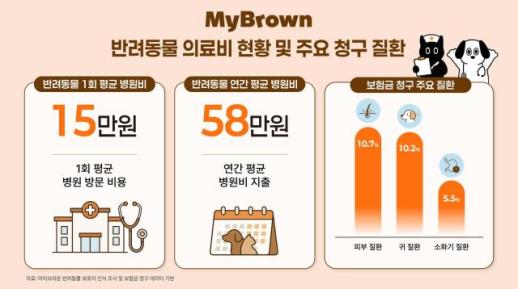 Pet Insurance Market Shifts Toward Everyday Coverage as Vet Visits Rise As pet owners increasingly utilize veterinary services, the pet insurance market is seeing a rise in products that offer coverage for routine exams and minor illnesses. While past policies focused primarily on high-cost surgeries and severe conditions, there is now a growing demand for coverage that can be used frequently during regular vet visits. A survey conducted by MyBrown, a pet insurance company, among 300 female pet owners aged 30 to 49 living in Seoul and the surrounding metropolitan area, revealed that over 70% reported visiting the vet two to five times a year. The primary reasons for these visits were vaccinations and parasite prevention. The survey also indicated a high demand for treatment related to common conditions such as skin diseases, gastrointestinal issues, and dental problems. The financial burden of veterinary care is a consistent concern. The average cost per vet visit was approximately 150,000 won, with annual veterinary expenses averaging around 580,000 won. Pet owners of cats reported even higher annual costs, averaging 710,000 won. Pet medical expenses are increasingly resembling regular living costs, as they are incurred repeatedly with each vet visit rather than as one-time expenses for surgeries. Unexpected situations, such as pets swallowing toys or foreign objects, or the rising demand for MRIs and CT scans for aging pets, contribute to the financial strain that owners frequently experience. Conditions like skin diseases and gastrointestinal issues, which require frequent vet visits, also lead to recurring expenses. In response, the pet insurance market is expanding its coverage to include not only major surgeries but also the frequent exams and treatments that pet owners encounter. This trend is reflected in insurance claim data. The most commonly claimed conditions included atopic, bacterial, and fungal dermatitis (10.7%), otitis externa and ear canal infections (10.2%), and gastroenteritis (5.5%). Other common issues, such as foreign bodies in the gastrointestinal tract and vomiting, also ranked among the top claims. Lee Yong-hwan, CEO of MyBrown, stated, "As pet ownership involvement increases, there is a growing interest in insurance that covers not only major surgeries and severe illnesses but also everyday diseases that require frequent care."* This article has been translated by AI. 2026-05-30 07:03:00
 -
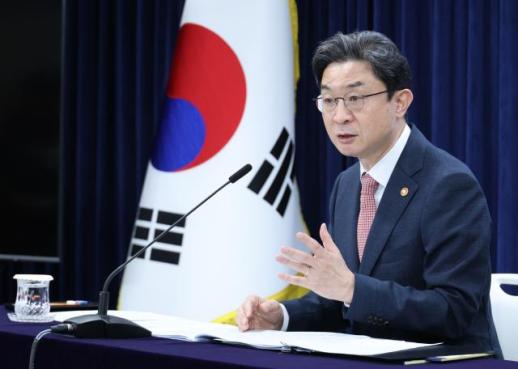 South Korea Launches Financial Reform Initiative Under President Lee Jae-myung The Financial Services Commission has initiated a financial reform effort under the banner of "Inclusive Finance Transformation." President Lee Jae-myung has sharply criticized the financial sector, describing it as engaging in "primitive predatory finance" and emphasizing the need for policies that enhance the public nature of finance and protect vulnerable populations. During the 5th meeting on Inclusive Finance Transformation held at the Credit Recovery Committee's Integrated Support Center for Low-Income Individuals on May 28, Financial Services Commission Chairman Lee Ok-keun stated, "It is now time to examine the structural causes of repeated financial exclusion and develop fundamental improvement measures. Inclusive finance is a transformative process aimed at making finance beneficial to people's lives and saving lives." This meeting aims to redesign the financial system into an "inclusive structure," going beyond merely expanding access to financial services for low-income individuals. President Lee has recently conveyed messages targeting the financial sector, stating, "The belief that 'making money is the only goal' is problematic," and that it is inappropriate to enjoy benefits without bearing burdens, underscoring the necessity for financial reform. The newly launched Inclusive Finance Strategy Promotion Team will operate through four divisions: supervision, policy for low-income individuals, financial industry, and credit infrastructure. Each division will discuss ways to incorporate inclusive finance principles into the management of financial institutions and improve soundness regulations. Notably, the credit infrastructure division will work on enhancing access to finance for low- and medium-credit individuals by moving away from the current credit evaluation methods that favor high-credit individuals and utilizing non-financial information. Additionally, the Financial Services Commission plans to transition the debt collection industry from a registration system to a licensing system to improve long-standing and excessive collection practices. This change aims to strengthen debtor protection through effective management and oversight and to eliminate regulatory arbitrage. Consequently, only corporations with over 50% investment from financial companies that include at least five professionals, such as lawyers, and meet cybersecurity requirements will be allowed to operate in the debt collection industry. To curb excessive collection incentives, the Financial Services Commission will also restrict the dual operation of lending and loan brokerage businesses. This measure aims to reduce the practice of repeatedly engaging in excessive collections after acquiring long-term delinquent debts and to embed debtor protection within the system. The Financial Services Commission plans to prepare a legislative amendment to the Moneylending Business Act, which includes the transition to a licensing system for the debt collection industry, by August and aims to complete the legislative process in the National Assembly by the end of the year. The financial sector anticipates increased pressure for both the expansion of low-income financial services and the tightening of debt collection regulations. Chairman Lee stated, "We will ensure that inclusive finance is not a temporary measure but a structure that operates sustainably within financial companies and the financial system. We will thoroughly discuss and institutionalize this through the promotion team. If the transition to a licensing system for the debt collection industry is implemented smoothly, the industry will qualitatively grow, supporting the credit system while protecting debtors and transforming into a trustworthy market." 2026-05-28 15:34:00
 -
 NH Nonghyup Bank Accelerates Transition to Agentic AI Banking with Direct Investment in AI Firm NH Nonghyup Bank is accelerating its transition to an Agentic AI bank through direct investments in AI companies. This move aligns with the government's focus on fostering AI and the trend toward productive finance, aiming to strengthen the integration of finance and advanced technology. On May 28, Nonghyup Bank announced it has signed a memorandum of understanding (MOU) with AI firm Agile Soda for direct investment and business collaboration. The bank determined that strategic investments in AI companies are essential for integrating AI technology across its financial services. This initiative is being recognized as a productive finance example, where the financial sector directly invests in tech firms to support their growth. Through this direct investment, Nonghyup Bank aims to enhance its AI capabilities and plans to establish an AI agent-based banking system by 2027. To achieve this, the bank intends to finalize investment contracts and regulatory filings by June and to launch the AI agent development project in July, accelerating its transition to an AX model. Kang Tae-young, President of Nonghyup Bank, stated, "To achieve the AX transition, having excellent AI professionals is crucial. This direct investment in AI companies will propel us toward becoming an Agentic AI bank that integrates AI into the daily lives of our customers and employees."* This article has been translated by AI. 2026-05-28 15:32:00
 -
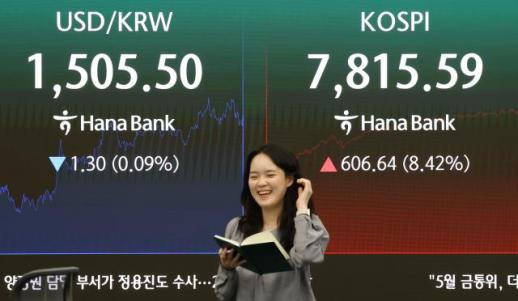 Single-Stock Leveraged ETFs Set to Launch, Potential for 60% Daily Loss As exchange-traded funds (ETFs) become a popular investment tool in South Korea, interest is growing in the upcoming launch of single-stock leveraged ETFs. While the introduction of various investment options centered around major semiconductor stocks like Samsung Electronics and SK Hynix is welcomed, investors should be cautious of the potential for daily losses of up to 60%. According to financial industry sources, leveraged and inverse products based on single stocks will be listed on the domestic stock market starting May 27. This includes ETFs that aim to double the returns of stocks like Samsung Electronics and SK Hynix. Some asset management firms are also set to introduce inverse products that bet on stock price declines. Single-stock leveraged products follow the daily returns of individual stocks, meaning if the ETF rises, the returns are doubled. However, if the stock moves contrary to investor expectations, significant losses can occur in a short period. Given that domestic stock prices can fluctuate by ±30%, losses of up to 60% in a single day are possible. Investors should also be aware that even if a single stock's price fluctuates without a net change, the value of leveraged products can steadily decline. For instance, if stock A drops from 100 won to 80 won (-20%) and then recovers to 100 won (+25%), a leveraged product starting at 100 won could fall to 60 won (-40%) and then rise to 90 won (+50%), resulting in a loss of 10 won. In fact, a comparison of specific stocks in the U.S. market last year showed that while individual stocks yielded an 18% return, a double-leveraged product recorded a 20% loss instead of the expected double return. Unlike general ETFs that track indices, single-stock leveraged ETFs expose investors directly to risks associated with individual companies, such as poor performance or negative news. Due to the high-risk nature of these products, investors must deposit a minimum of 10 million won and complete two hours of training through the Financial Investment Association's learning system—one hour of general education and one hour of advanced education. Previously, only one hour of training was required to invest in overseas leveraged ETFs. Yoon Jae-hong, a researcher at Mirae Asset Securities, noted, "Considering the size of the domestic ETF market and the trading patterns of individual investors, the inflow of funds into the 14 leveraged ETFs is estimated to be around 1.7 trillion won conservatively, and up to 5.3 trillion won aggressively. Given that initial capital tends to concentrate in the first five trading days, investors should be cautious of potential spikes in short-term volatility during this period."* This article has been translated by AI. 2026-05-23 20:20:16
 -
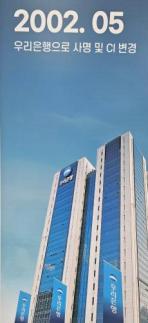 Woori Bank: A 127-Year Legacy in South Korean Finance Woori Bank, which began as Daehan Cheonil Bank 127 years ago, has played a significant role in the evolution of South Korea's financial landscape through industrialization, economic crises, digital transformation, and global expansion. More than just the oldest bank, it represents a living financial heritage intertwined with the growth of the South Korean financial industry. According to the financial sector, Woori Bank recently designated 15 branches that have been operational for over a century as "century-old branches." The oldest branch is the Incheon branch, which opened in 1899. Other notable branches include the Pyeongtaek Financial Center (1907), Seoul Station Financial Center (1908), Gupo branch (1912), Jinhae branch (1913), Seoul City Hall Financial Center (1915), and Jongno 4-ga Financial Center (1916). The Jongno Financial Center, Yongsan Financial Center, Cheongju Financial Center, and Iksan branch have also maintained their presence since their openings in 1924. While the banking industry is rapidly consolidating branches and shifting towards non-face-to-face services, Woori Bank emphasizes its "accumulation of time" as a competitive advantage. The bank positions itself not merely as a service point but as a space that has supported customers' livelihoods and the regional economy, reflecting the trajectory of South Korea's industrialization. Woori Bank's history is closely linked to the history of South Korea's financial industry. It began with the establishment of Daehan Cheonil Bank in 1899, the first bank founded with domestic capital during the Korean Empire, symbolizing a shift from foreign capital dominance in the financial market. In 1911, it changed its name to Chosun Commercial Bank, helping to establish a modern financial system. The main building, constructed in 1909, is now the Jongno Financial Center, symbolizing the bank's historical significance. After Korea's liberation, Woori Bank continued to lead changes in the domestic financial industry. It was listed among the first companies on the stock exchange in 1956 and opened the country's first female-only safe deposit box in 1959. In 1961, it became the first financial institution to establish a service center, expanding its role beyond simple deposits and loans to provide comprehensive financial services including finance, investment, real estate, and legal consultations. The bank also quickly embraced digital transformation. In 1977, it became the first commercial bank to start online operations between Seoul and Busan, and in 1980, it introduced the country's first bank loan system. In 1989, in collaboration with Samsung Electronics, it launched the first corporate banking system, allowing businesses to handle import letters of credit without visiting the bank, essentially laying the groundwork for modern corporate internet banking and digital finance. Since the 1990s, Woori Bank has introduced a series of innovations in non-face-to-face banking. It started ATM services in 1993 as the first Korean bank and launched home banking-based overseas remittance services in 1996, enabling customers to send money abroad from home or the office during the early spread of the internet and PC communication. In 1997, it implemented an image system that allowed exporters to be notified on the same day of opening a letter of credit, accelerating the digitization of trade finance. The restructuring of the financial sector following the 1997 Asian financial crisis marked another turning point in Woori Bank's history. In 1999, Korea Commercial Bank and Hanil Bank merged to form Hanbit Bank, and in 2001, the first financial holding company system was established in the country. In 2002, the bank changed its name to Woori Bank, establishing the brand that exists today. Recently, Woori Bank has been transforming from a traditional financial institution into a digital platform company. In 2022, it launched the first digital supply chain platform in the financial sector, "WonBiz Plaza," and in 2024, it introduced an AI-based service called "AI Banker." This evolution underscores Woori Bank's position as a symbolic financial institution that showcases the past, present, and future of South Korean finance, built on 127 years of accumulated financial DNA.* This article has been translated by AI. 2026-05-21 21:28:32
 -
 Shinhan Financial Group to Launch 'Shinhan Super SOL' App in June Shinhan Financial Group announced on May 18 that it will launch the 'Shinhan Super SOL' app on June 17. The Shinhan Super SOL is an integrated financial platform that consolidates services from major subsidiaries, allowing users to access banking, cards, securities, and insurance all in one place. The app will feature a generative AI-based agent service to facilitate easier and more convenient access to financial services. In conjunction with the launch, Shinhan Bank will accept pre-registration for event participation until June 12. Customers can access the pre-registration event page through the event sections of major group company apps or via SMS notifications. The program will operate on a tiered benefit system, where the maximum reward of My Shinhan Points per participant will vary based on the number of participants. As more customers join, the maximum benefit limit will increase from 100,000 points to 3 million points. A Shinhan Bank representative stated, "We will continue to expand the benefits and services of 'Shinhan Super SOL' to ensure that customers can access Shinhan Financial's financial and lifestyle services more easily and conveniently."* This article has been translated by AI. 2026-05-18 21:49:44
 -
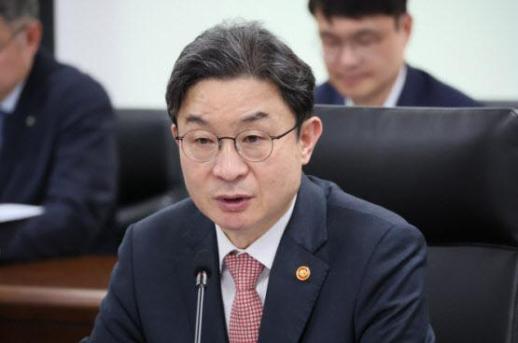 Government Pushes to Expand National Growth Fund Amid Global AI Investment Trends The government is addressing concerns over the National Growth Fund, which has faced criticism for potentially supporting large corporations and distorting the market. Officials emphasized that the fund serves as a catalyst to attract private investment, given the nature of advanced industry investments that require substantial long-term funding and risk-sharing. On May 18, the Financial Services Commission held a seminar at the Korea Development Bank's IR Center to assess the National Growth Fund's performance and explore future directions. During the seminar, Financial Services Commission Chairman Lee Eok-won stated, "Since the National Growth Fund began full operations earlier this year, it has rapidly deployed funds to invigorate advanced industries. Over the past four months, more than half of the 8.4 trillion won in support has been allocated to local areas, broadening investment opportunities for promising regional companies." However, concerns persist in the market regarding the inclusion of large corporations with their own funding capabilities as beneficiaries of policy financing. Critics question whether government funding might discourage private investment. There are also worries about potential overvaluation of companies and market overheating, particularly as funds increasingly flow into sectors like AI. In response, the Financial Services Commission and experts argue that due to the significant initial capital requirements and long investment recovery periods characteristic of advanced industries, a certain level of policy risk-sharing is unavoidable. They assert that support should not only focus on individual companies but also aim to enhance the overall competitiveness of the industrial ecosystem. Lee Byeong-yun, a senior researcher at the Financial Research Institute, remarked, "It is advisable to concentrate national energy on areas with the highest potential for global competitiveness to secure economies of scale for achieving a significant gap. This can also enable the co-growth of related small and medium-sized enterprises through anchor companies in the ecosystem." Recent global venture capital investments have been increasingly concentrated among top firms. In 2025, global venture capital investments rose by 31% year-on-year to $512.1 billion, marking the third-highest level in history. Notably, in the fourth quarter of 2025 alone, eight AI companies raised over 50 trillion won in funding, with valuations skyrocketing in subsequent investment rounds, reflecting a global trend. Additionally, the government is accelerating efforts to create mechanisms for sharing the results of advanced industry investments with the general public. This initiative aims to expand opportunities for citizens to directly participate in growth industry investments beyond policy financing. The Public Participation Growth Fund, set to launch on the 22nd, will offer tax deductions and separate taxation benefits on dividend income, with the government absorbing 20% of initial losses. More than 20% of the available shares will be allocated exclusively for low-income individuals. Kang Seong-ho, head of the National Growth Fund at the Financial Services Commission, explained, "We have included tax deductions to incentivize public participation in long-term capital (with a five-year maturity). To ensure tax equity, we have established measures such as excluding tax benefits for those subject to comprehensive taxation on financial income, gradually reducing the deduction rate, and applying a comprehensive limit on deductions."* This article has been translated by AI. 2026-05-18 16:14:17
 -
 Housing Loans in South Korea Increase by 5.5 Trillion Won as Authorities Target Business Loan Loopholes The increase in housing loans from financial institutions in South Korea expanded in April, reaching the highest level in eight months. Financial authorities are closely monitoring the potential for rising household loans as housing transactions increase, while also significantly tightening regulations on the misuse of business loans for real estate purchases. According to the Financial Services Commission on May 17, total household loans across all financial sectors rose by 3.5 trillion won in April, maintaining the same level as the previous month. Household loans have increased for four consecutive months since a decline of 1.2 trillion won in December 2025. By category, mortgage loans surged by 5.5 trillion won last month, a significant increase from 3 trillion won in March. This marks the largest increase since August 2025, when it reached 5.8 trillion won. Other loans decreased by 2 trillion won, reversing a gain of 500 billion won from the previous month. The decline in credit loans also widened from 2 trillion won to 8 trillion won. By sector, mortgage loans from banks shifted from a decrease of 200 billion won in March to an increase of 27 trillion won in April. Bank-originated mortgages also rebounded from a decrease of 15 trillion won to an increase of 13 trillion won. Loans from non-bank financial institutions rose by 13 trillion won, although this was a decrease from the previous month’s increase of 31 trillion won. Earlier, the Financial Services Commission held a "Household Debt Monitoring Meeting" on May 14, focusing on the management of total household debt, trends in household loans across financial sectors, and the monitoring of illegal activities related to the misuse of business loans for real estate. Shin Jin-chang, the Secretary General of the Financial Services Commission, stated, "The increase in housing transactions during the first quarter is likely to be reflected with a lag, contributing to the upward trend in bank-originated mortgages, indicating that potential risk factors remain. We plan to strengthen monitoring to ensure compliance with the newly established management targets for bank-originated mortgages this year." In particular, financial authorities are intensively inspecting the circumvention of real estate regulations through the use of business loans. The Financial Supervisory Service began on-site inspections of the misuse of business loans across all financial sectors at the end of March, focusing on high-risk types such as loans taken immediately after business registration or those related to businesses in the affluent Gangnam area. The Financial Supervisory Service identified a total of 127 cases of misuse of business loans in the second half of last year. In the first half of this year, it plans to revise inspection guidelines for each financial sector, extending the prohibition period for loan issuance to three years for the first offense and ten years for the second. For individual business owners, restrictions will be placed not only on business loans but also on new household loans to crack down on illegal and improper lending practices. Shin emphasized, "While the downward stabilization trend of household debt continues, the incentive to use loans to circumvent regulations for housing purchases still exists. We will maintain a strong management stance to eradicate illegal activities related to the misuse of business loans in real estate."* This article has been translated by AI. 2026-05-17 14:55:26
 -
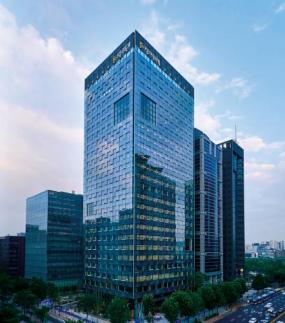 KB Financial Completes Technology Validation for Won-Based Stablecoin Payments and Remittances KB Financial Group has successfully completed a technology validation for payments and remittances based on a won stablecoin. By integrating QR payments and overseas remittances into a single blockchain flow, the company is accelerating the establishment of financial infrastructure in preparation for the institutionalization of digital assets. On May 17, KB Financial announced that it has successfully concluded a proof of concept (PoC) in collaboration with electronic payment firm KG Inicis, global Layer 1 blockchain platform Kaia, and digital asset solution provider Open Asset. This validation encompasses all stages of won stablecoin payments, settlements, and deposits. The validation represents a comprehensive demonstration that connects the entire financial service process, from the issuance of the won stablecoin to offline payments, merchant settlements, and overseas remittances. It maintains the existing methods of customer financial service usage while transitioning the internal settlement structure to a blockchain-based system. KB Financial confirmed the practical applicability of financial services through the implementation of a real-world payment model for digital assets. The real-world payment model was demonstrated through offline kiosk payments at the coffee chain Hollys. Consumers can make payments via QR codes without needing to install a separate digital wallet, with blockchain smart contracts automatically executed during the settlement phase. In the overseas remittance validation, the won stablecoin was converted into a dollar stablecoin using Kaia's on-chain liquidity, and the process was completed by transferring it to a local partner in Vietnam, ultimately reaching a real bank account. Unlike the traditional SWIFT method, which can take hours to days, the entire process was completed in under three minutes, with fees reduced by approximately 87% compared to existing methods. Based on this validation, KB Financial plans to enhance its operational capabilities to launch actual services promptly in line with the timing of relevant legislation and institutionalization of digital assets.* This article has been translated by AI. 2026-05-17 13:42:00
 -
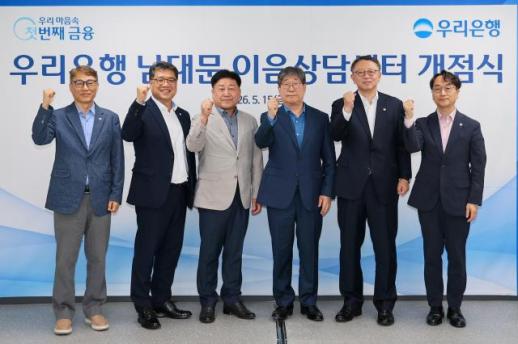 Woori Bank Opens Financial Counseling Centers in Seoul's Namdaemun, Gangnam, and Hongdae Woori Bank is establishing three specialized financial counseling centers in key locations in Seoul, including Namdaemun, Gangnam, and Hongdae. The initiative aims to go beyond simple product sales and address customers' financial concerns with tailored solutions. On May 15, Woori Bank held an opening ceremony for the 'Namdaemun Connection Counseling Center' at the Shin Nammun Building on Namdaemun Road in Jung-gu, Seoul. The event was attended by Woori Bank President Jeong Jin-wan, Park Chil-bok, representative of the Seoul Namdaemun Market, and Moon Nam-yeop, representative of the Namdaemun Market Merchants Association. Unlike traditional bank branches, the Connection Counseling Centers focus on resolving customers' financial issues rather than selling financial products. They will operate until 9 p.m. on weekdays and until 6 p.m. on weekends. The centers will provide personalized financial counseling across various life stages, including loans, asset management, and retirement planning, by carefully assessing customers' situations and needs. Woori Bank plans to staff these centers with professionals who possess practical experience and financial expertise to offer effective solutions. "The Connection Counseling Center is not a space for selling financial products, but a channel focused on solving customers' financial concerns together," said Woori Bank President Jeong Jin-wan. "We aim to create a warm communication space that connects customers with the bank and links the community with finance." 2026-05-17 10:09:00